How Is Engine Power Limited via OTA Being Sold to You?

An electric car's motor can do more than what you see when you open the hood. Of two vehicles built with the same chassis, the same battery, the same electric motor and the same inverter, one can list 201 hp and the other 228 hp - the difference lies not in any mechanical part, but is limited only by a limit the manufacturer set in software. One of the most debated examples of 2025 concretized exactly this: In the UK, Volkswagen put the full power of the ID.3 Pro and Pro S behind a paid upgrade. The hardware is already there; what is being sold is a software key that unlocks that hardware. So how is motor power locked by software, why has it become a sellable product, and what do these limits mean in everyday use?
Software-Defined Vehicles and the Fragmentation of Performance into Pieces
In electric vehicles, power generation is made possible by the software-based coordination of the battery, inverter, electric motor and energy management systems; no matter how capable any of these components is, the vehicle cannot produce usable power unless the software that governs the entire system allows it. In today's automotive world, nearly all innovations come from software, and a vehicle's success has come to depend more on software than on the mechanical side. For manufacturers, this also offers a serious advantage on the cost side: prioritizing software can reduce R&D, development and production costs in the long run.
The natural consequence of this structure is that the lifecycles of hardware and software can diverge. If the user needs more power to tow a trailer, this need can be met not by a mechanical intervention, but by updating the software. And it is precisely at this point that a business model is born: as long as it stays within the physical limits of the existing hardware, the performance increase becomes sellable as a performance package, an acceleration upgrade or a subscription.
The Volkswagen ID.3 Example: 27 Horsepower That Can Be Unlocked
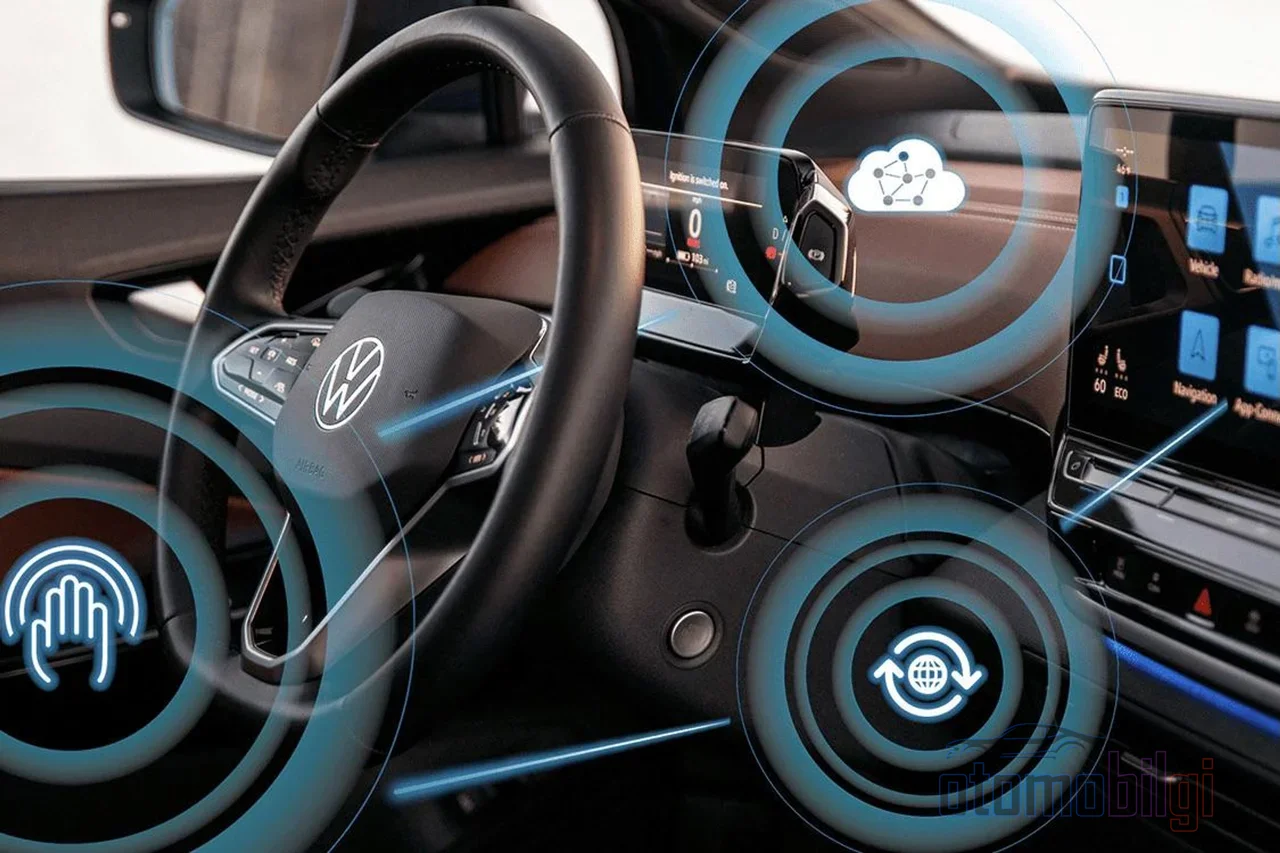
In August 2025, Volkswagen offered ID.3 Pro and Pro S owners in the UK the option to unlock the motor's full power with a paid upgrade. The base model is listed at 201 hp; full power reaching 228 hp is unlocked only for those who pay. The upgrade increases net power by 27 hp and raises torque from 265 Nm to 310 Nm.
Highlights
- The full power of the Volkswagen ID.3 Pro and Pro S is 228 hp, while the base software limit is 201 hp.
- The upgrade costs about $22.50 per month or a one-time $879.
- Torque rises from 265 Nm to 310 Nm; the increase is 27 hp.
- For the Polestar 2, a one-time $1,195 OTA upgrade provided a permanent increase of 68 hp.
- For Mercedes EQ models, the Acceleration Increase package started at $1,200 per year.
The pricing runs along two tracks: about $22.50 per month (also listed as approximately $22.34) or a one-time, lifetime-unlock fee of $879. The annual equivalent comes to roughly £165. According to Volkswagen, the power increase does not affect range, and since the vehicle is officially registered at the factory as 228 hp, no insurance update is required. Another confirmed detail is that the performance upgrade stays with the vehicle: when the vehicle changes hands, the benefit of the upgrade continues for the new owner.
The manufacturer's defense is based on a familiar logic: for years, gasoline and diesel vehicles with the same engine displacement have sold their more powerful, upper-tier versions at higher prices. When it comes to electric vehicles, however, the criticism focuses here - the vehicle is in fact produced with the full power hardware, but part of that power is deliberately kept locked. The fact that a vehicle is sold with full power while part of it is delivered switched off stands out on user forums as the most troubling aspect of this practice.
Other Manufacturers: Paid Performance Upgrades from Tesla to Cadillac Lyriq
Volkswagen is neither the first nor the only player in this field. Tesla was one of the first major examples to offer acceleration and performance gains through paid software upgrades; this approach was followed by the Polestar 2 and, more recently, the Cadillac Lyriq. BMW is also mentioned as one of the first manufacturers to charge per feature in the past.
The upgrade offered for the dual-motor versions of the Polestar 2 provided a permanent 68 hp and 15 lb-ft increase for a one-time $1,195; the Canadian price was at the level of 1,595 CAD. According to the manufacturer's statement, the increase is felt especially in acceleration between 70-130 km/h and reduced the 0-100 km/h time to 4.4 seconds. On the Mercedes-Benz side, the Acceleration Increase package offered for EQ models promised a faster 0-60 mph at a price starting from $1,200 per year, with monthly, yearly, or lifetime purchase options.
| Manufacturer / Model | Upgrade | Pricing model |
|---|---|---|
| Volkswagen ID.3 Pro / Pro S | +27 hp, +45 Nm torque | ~$22.50 monthly or one-time $879 |
| Polestar 2 (dual motor) | +68 hp, permanent increase | One-time $1,195 |
| Mercedes-Benz EQ series | Faster 0-60 mph | Monthly, yearly (~$1,200/year), or lifetime |
The three approaches in the table are different commercializations of the same idea: the hardware stays fixed, the software limit is priced as a product. The difference lies in permanence and payment structure. While brands charging a one-time fee offer the increase permanently, the subscription model positions power as an ongoing service - and leaves open the question of what happens when the subscription stops.
Why and How Is Engine Power Limited by Software?
The technical answer to the question lies in power electronics. In an electric motor, torque is linearly related to the current sent to the motor; since the inverter controls the output current, torque can be directly restricted by current limits defined at the software level. The motor controller first calculates the current limitation, converts it into a torque limit, and when necessary automatically throttles the current to protect itself. Complaints like weak acceleration or low motor output often stem not from insufficient hardware, but precisely from these software-based torque limits or the protective current reduction.
The key point here is: power restricted by software on the same hardware is a software limit held below the physical limits of the motor and inverter. The manufacturer uses this limit for two purposes. First, to leave a safety margin; second, to create a product range by dividing a single hardware platform into software-based segments. In the internal combustion era, different power versions of the same displacement engine required different manifolds, electronic units, or turbo settings; in an electric vehicle, this distinction is made with a few software parameters.
Thermal Limits and Derating: The Real Performance Boundary
Even after you unlock the software, physics stands in your way. In power electronics, the real limit is the temperature of the components. The method called derating keeps the components within a safe temperature range by limiting power levels and prevents damage; as thermal limits are approached, torque or charging power is gradually reduced. The traction inverter receives torque commands, continuously monitors voltage, current, and temperature, and applies thermal derating when it deems necessary. So a high-performance upgrade does not mean the motor can run at full power continuously; under intensive use, thermal protection kicks in.
The engineering details of this thermal management are quite specific as well. Strategies have been developed that intelligently change the switching frequency to keep the junction temperature of semiconductors within a safe range; in liquid-cooled inverters, the coolants remove more than 95% of the heat generated by the IGBT. In electric vehicles, real sustained performance is often determined not by electronics but by thermal limits - which is why paid upgrades are designed as short-term acceleration increases and are generally felt during overtaking maneuvers in the mid-to-high speed range.
Warranty, Insurance, and Second-Hand: What Is the Price of the Unlocked Power?
Extra power and range unlocking is usually not a physical modification but a software setting - and it is precisely for this reason that it sits on different ground from classic chiptuning debates. Still, questions are not few. While the battery and drivetrain warranty is still valid, what about the long-term effects of the unlocked performance? Whether software-unlocked features will accelerate battery wear stands at the center of warranty and lifespan debates. Volkswagen states that the range is not affected, but the thermal load under heavy use and its effect on battery life is a separate and long-lasting question.
There are gray areas on the insurance side as well. Since the vehicle was officially registered as 228 hp, Volkswagen says an insurance update is not required; however, among users there is an ongoing legal debate that insurance should be priced according to the unlocked power, not the locked power. As for its second-hand value: In the VW example, the upgrade is tied to the vehicle, so the new owner benefits too; however, in software-dependent vehicles, aging hardware, loss of support, and technological obsolescence can undermine long-term value. Whether these locks can be removed with aftermarket software is an unresolved topic discussed in Mustang Mach-E owner groups.
Why Has Engine Power Become a Sellable Feature?
The short answer is this: in an electric vehicle, torque can be controlled directly at the software level through the inverter's current limits, so the manufacturer can draw a power limit anywhere below the thermal limits of the motor and inverter - and can change that limit via software without ever touching the production line. A single hardware, multiple price tiers; an almost pure profit margin. Critics of the subscription model argue that acceleration is different from services like navigation or connectivity that have ongoing costs, and that the hardware having already been purchased turns this sale into the enforcement of micro-transaction boundaries.
The argument on the manufacturer's side connects exactly here: power-tier-based pricing has been the industry's normal practice since the internal combustion era; only the method of creating the tier difference has changed. Instead of mechanical intervention, a software parameter arrived. The question the reader should ask is simple: when you buy a vehicle, how much of it do you actually own? The answer to this question will become clear in the coming years, along with how far manufacturers take this model.
Sources
- Volkswagen ID.3 full horsepower locked behind $22+ monthly subscription
- VW introduces monthly subscription to increase car power
- Volkswagen's monthly fee to unlock horsepower sparks subscription economy debate
- Polestar 2 performance software upgrade
- Polestar 2 Gets a Permanent Performance OTA Upgrade
- Carmakers Charge for Speed Upgrades in a Tesla-Led Trend
- EV Fundamentals: Inverter Control System
- The Role of Derating in Thermal Management
- How software is reshaping the automotive value chain
- The Subscription Nightmare: Pay Monthly to Unlock Your EV's Acceleration?