Pagani Utopia Coupé Horacio: Pure V12
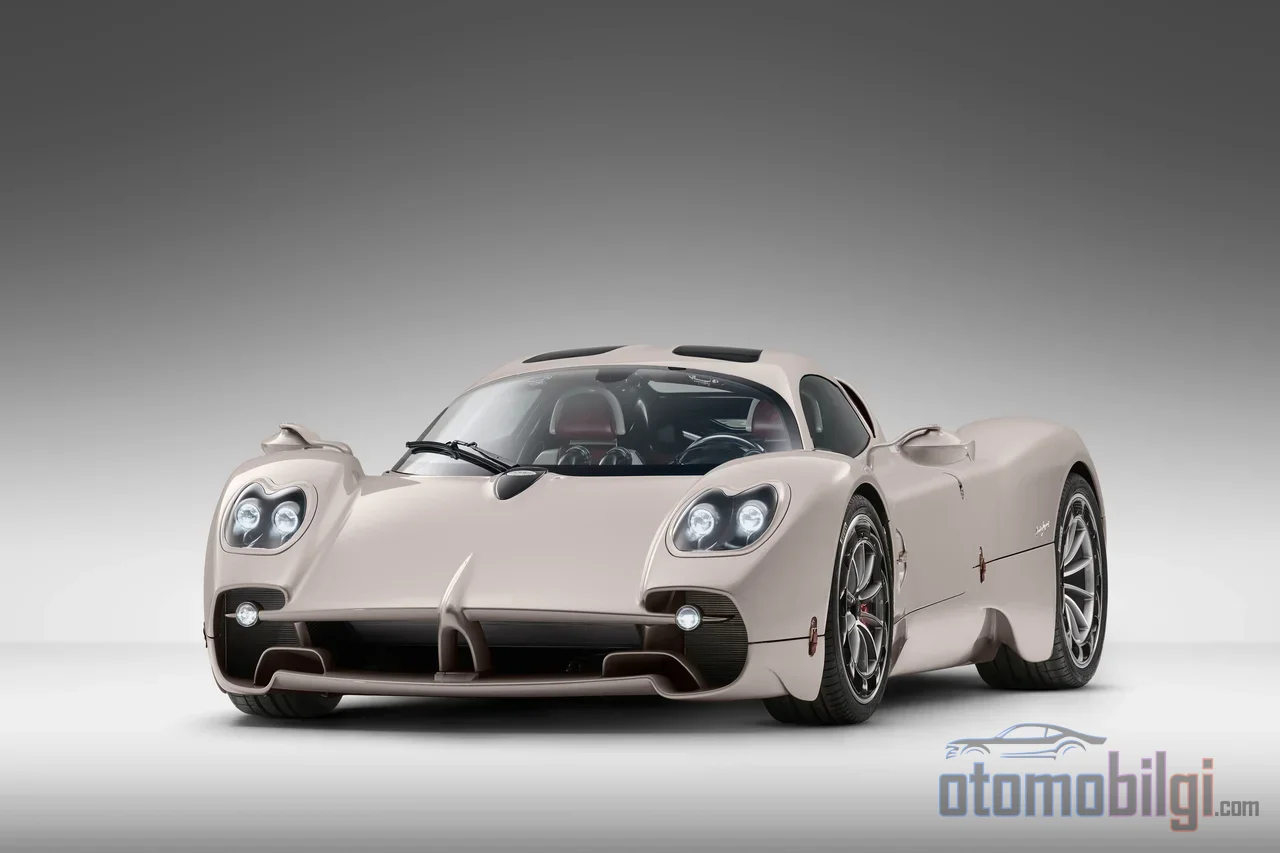
In an age of hypercars where nearly every peak model has gone hybrid, one car emerging from a workshop in the town of San Cesario sul Panaro, Italy, says the exact opposite: no heavy battery, no hybrid assist, no dual-clutch automatic - just a naturally aspirated V12 and, if you want, a gear lever. The Pagani Utopia, the brand's third model after the Zonda and Huayra, was built precisely at this point, and it re-asked the most expensive question in the hypercar world: should an expensive car sell technology, or simplicity?
In this article, we examine the Utopia Coupé on a technical level: the power of the Mercedes-AMG-sourced 6.0-liter V12, the details of the manual gearbox developed with Xtrac, the carbon-titanium monocoque, the production run, the price point, and why Horacio Pagani deliberately designed this car with a retro engineering choice.
The Pagani Utopia's V12 Engine: 864 PS and 1,100 Nm
At the heart of the Utopia lies the 5.98-liter twin-turbocharged V12 coded M158, built by Mercedes-AMG for Pagani. The official figures are clear: 864 PS (852 hp) at 6,000 rpm and 1,100 Nm of torque between 2,800 and 5,900 rpm. The engine's dry weight is 262 kg. Delivering this torque to the road without turning the forced induction into a traction control problem is a detail that complicates the rear tires' job and will also show up in driving impressions.
Pagani's production culture has a tangible counterpart on the engine line as well: each Utopia engine is assembled by a single technician. This approach is unusual for a series-production hypercar, and it is a sign that the brand carries its handcraftsmanship all the way to the engine block.
Highlights
- 6.0-liter twin-turbocharged Mercedes-AMG V12 producing 864 PS and 1,100 Nm
- 1,280 kg dry weight, carbon-titanium monocoque chassis
- Choice of a 7-speed manual or automated manual gearbox developed with Xtrac
- Only 99 units of the Coupé excluding prototypes - all of them already allocated to customers
- Base price of USD 2.19 million; the first customer car was delivered in October 2023
Why Does the Utopia Have a Manual Gearbox When the Huayra Didn't?
Perhaps the most important engineering decision that sets the Utopia apart from its rivals was made in the gearbox department. The 7-speed unit jointly developed with Xtrac is mounted transversely and offered in two different configurations: a purely mechanical manual, or an automated manual operated via paddle shifters. Both versions feature a triple-plate clutch and an electro-mechanical differential.
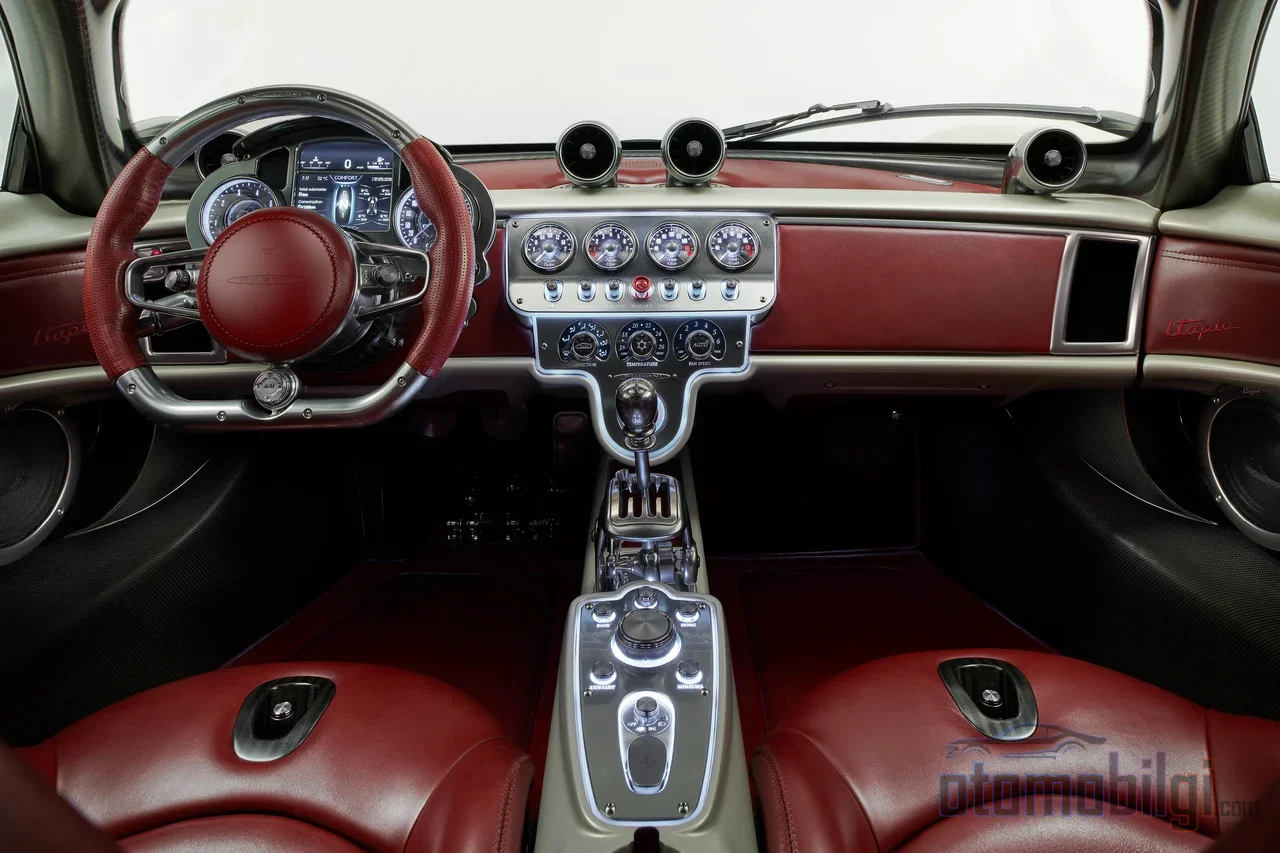
Those who choose the manual are rewarded with a classic detail: a gated shift lever in a dogleg layout - a lever with a titanium mesh and exposed mechanism that moves inside a metal gate as you push the gear back and forth. This feeling was never offered in the Huayra; in this respect, the Utopia marks a turning point in Pagani's history. Test drives observed that the gearbox shifts more smoothly and lightly than expected, and that its self-centering mechanism is calibrated so intelligently that it could fool the driver. The fact that the same Xtrac unit is also used in Gordon Murray's T.50 demonstrates this gearbox's reputation in the hypercar world.
Chassis and Weight: How Does the Carbon-Titanium Monocoque Work?
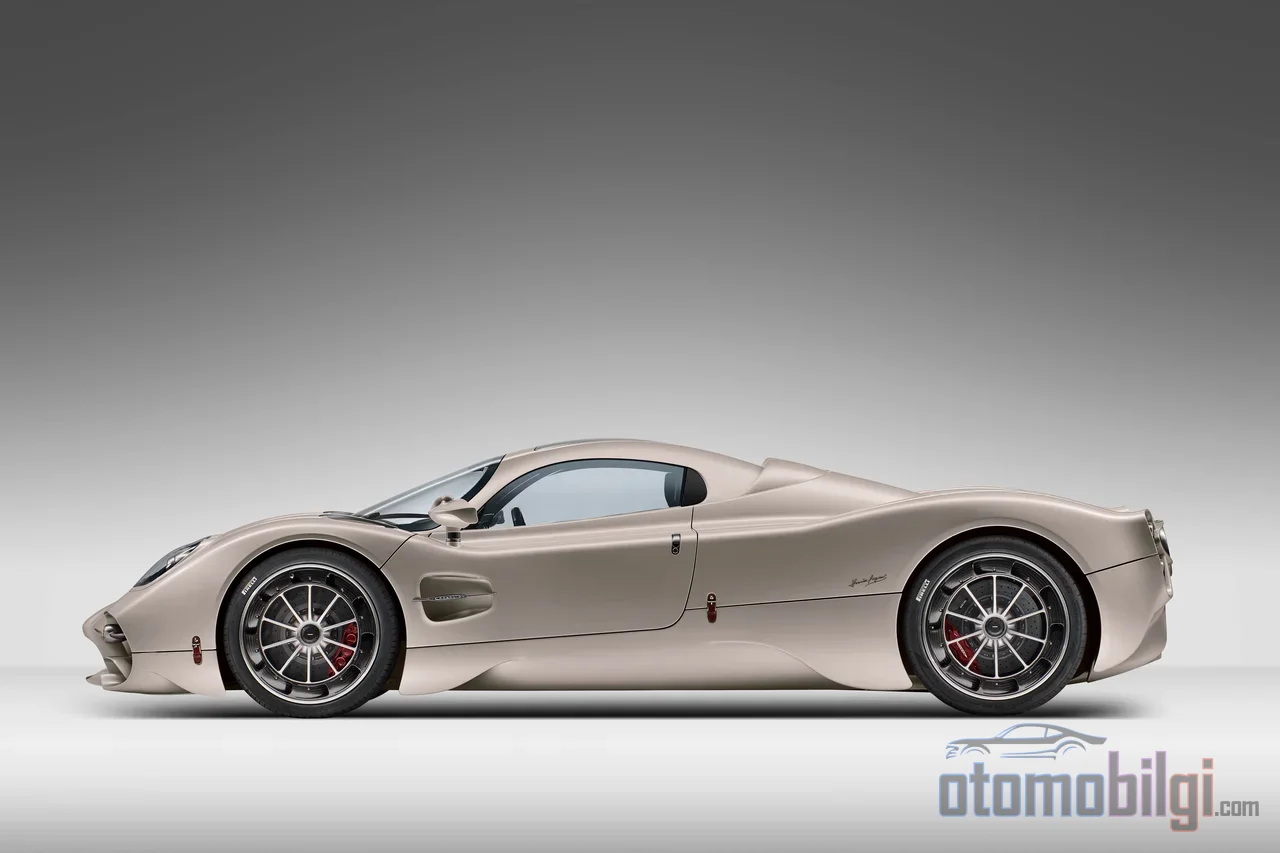
Utopia's body-chassis structure is Pagani's signature technology, the carbon-titanium monocoque. More than 40 composite formulations are used in chassis production, including Carbo-Titanium HP62-G2 and Carbo-Triax HP62. The result is a remarkably low figure for this class of power and performance: 1,280 kg dry weight. Test cars can be seen with slightly higher configuration weights, but the factory figure is 1,280 kg dry.
On the suspension side, a forged aluminum double-wishbone layout was preferred; experience gained from the Huayra R's track development program was transferred directly here. The eight suspension triangles are machined from solid blocks of aerospace-grade aluminum alloy at Pagani's own Modena Design workshop. Active suspension, electronic differential, and electronic traction control make up the rest of the hardware components.
Tires, Dimensions, and Cockpit
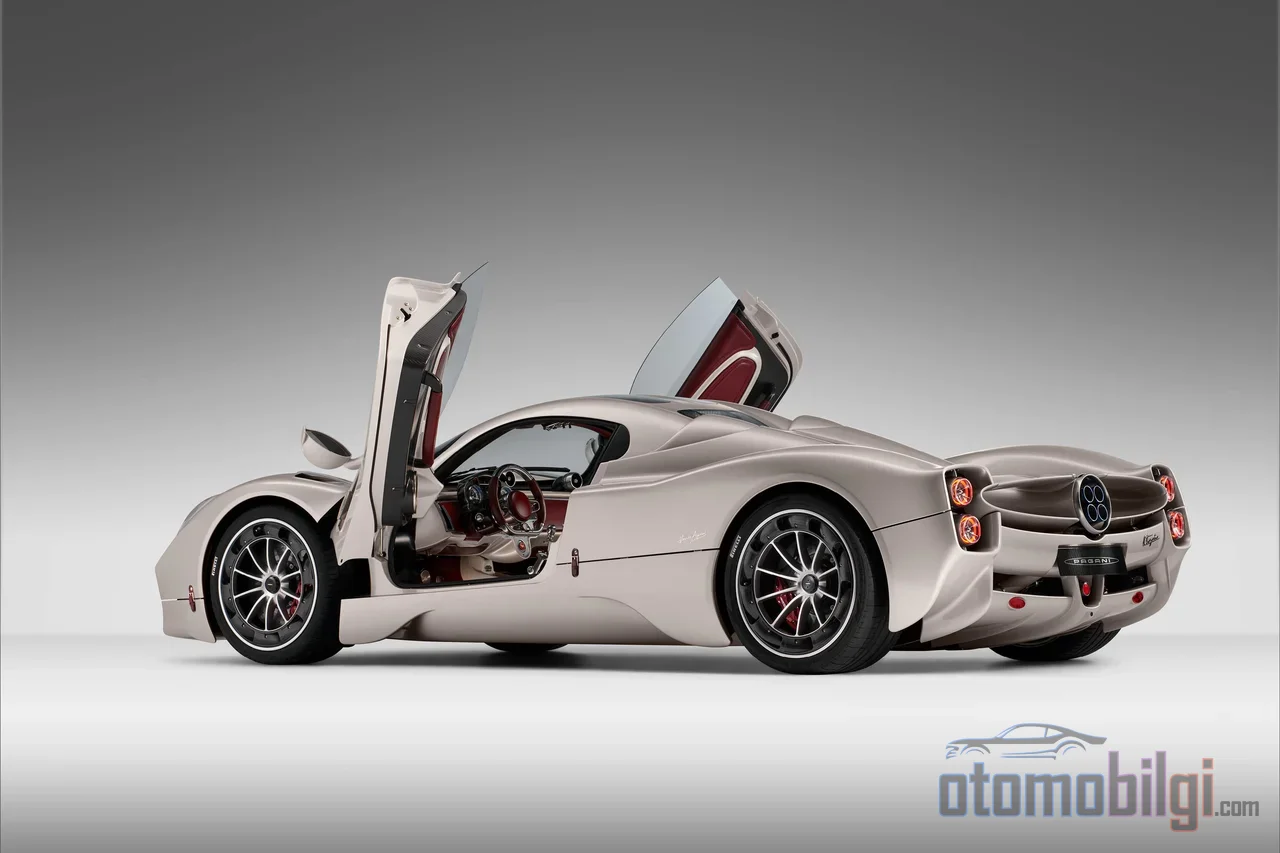
Utopia comes with Pirelli Cyber Tyre technology with embedded sensors: standard tires are P Zero Corsa and P Zero Winter, with the track-focused Trofeo RS offered as an option. Wheel sizes are 21 inches at the front and 22 inches at the rear. The dimensions are classic for a mid-engine berlinetta: a 2,794 mm wheelbase, 4,597 mm length, 2,037 mm width, and only 1,169 mm height. The butterfly-style doors also continue Pagani's signature.
In the cockpit, digitization has been deliberately dialed back: a large speedometer and tachometer, four analog dials in the center showing data such as oil pressure and temperature, and just a single small screen. That screen supports CarPlay and, just like in a modern car, is operated via a clickwheel.
| Technical Specification | Value |
|---|---|
| Engine | Mercedes-AMG M158, 5.98 L twin-turbocharged V12 |
| Power | 864 PS (852 hp) @ 6,000 rpm |
| Torque | 1,100 Nm @ 2,800-5,900 rpm |
| Engine weight | 262 kg (dry) |
| Transmission | Xtrac 7-speed, manual or automated manual |
| Dry weight | 1,280 kg |
| Wheelbase | 2,794 mm |
| Production run (Coupe) | 99 units |
| Base price | USD 2.19 million |
How Expensive Is It and How Many Were Produced?
Utopia Coupe's commercial picture is short and precise: 99 units are planned for production, excluding prototypes, and all 99 Coupes have been assigned to customers. A striking detail is that the first 99 were sold a full year before the cars' appearance was revealed to the public. The first customer car was delivered in October 2023. The starting price is around USD 2.19 million.
The Utopia Roadster, unveiled at Monterey Car Week in July 2024, carries the same engine-transmission combination and the same 1,280 kg dry weight; production is limited to 130 units. With the Coupe now sold out, Pagani currently has no new model available for sale - while the possibility of a track-focused variant in the future continues to be discussed.
Horacio Pagani's Design Philosophy: A No to Hybridization
The name Utopia describes an unattainable ideal - but also a philosophy that, precisely because of this, fuels the pursuit of perfection. Horacio Pagani's stance on the project is consistent with this name: no heavy batteries and no hybrid assist; no dual-clutch automatic. In the brand's official presentation, the goal is described as connecting with the past and reclaiming the simplicity sacrificed solely for the sake of performance. Pagani's vision of the union of Art and Science, inspired by Leonardo da Vinci, appears here as an engineering decision.
The same references are found in the design details: it is noted that the headlights draw inspiration from the Vespa, and the aesthetics from 1950s Bianchi bicycles and Riva speedboats. The steering wheel is itself an engineering showpiece - a 43 kg aluminum block is reduced to 1.6 kg in 28 hours with five-axis machining and polished by hand. In the Utopia, the number of components machined from aluminum castings by Pagani totals 777.
How It Drives on the Road: Smoothness, Torque, and 6,700 rpm
The Utopia's driving character offers a different balance than the figures on paper would suggest. A smooth and serene driving feel, an easy-to-operate clutch, and a dramatic engine character stand out - even though the rev limit of 6,700 rpm remains low in hypercar comparisons. There are impressions that the steering is quick but offers limited feedback; the magnitude of the torque, meanwhile, seriously challenges traction control.
In design assessments, the front section was found overly detailed by some testers, and the sunken glass area was criticized; the rear view, however, was considered successful. A laudatory analogy given for the cockpit is also striking: driving the car was described as being inside a Baroque theater, almost. In comparisons with Gordon Murray's T.50, which has a tenser and more direct character, the Utopia positions itself as the representative of the comfortable and flamboyant side.
Against the Hybrid Summit: The Utopia's Answer and Value
The Utopia's sales figures prove that this analog path is commercially defensible as well: approximately 70 percent of customers have chosen the manual transmission. This statistically unusual figure for a hypercar is concrete proof that the gated manual feel has found a market. While Bugatti Tourbillon, Koenigsegg Jesko, and similar peak models on the rival side are hybridizing or focusing on speed records, the Utopia occupies its own niche on the side of craftsmanship and balanced character.
The summary rationale is clear: The Utopia Coupé, which combines an 864 PS V12 with a 1,280 kg carbon-titanium monocoque and an optional gated manual gearbox, is a hypercar limited to 99 units that deliberately resists hybridization. Horacio Pagani's thesis was that a definition of excellence outside the technology race could still find buyers - and the complete sell-out of all 99 Coupés was the strongest answer to that thesis.
Sources
- Utopia | Pagani (official)
- Utopia Roadster | Pagani
- Pagani Utopia - Wikipedia
- Pagani Utopia Press Release
- Pagani Says 70 Percent of Utopias Sold Have Manual - Motor1
- Testing the V12, manual Pagani Utopia - Top Gear
- Pagani Utopia Roadster review - Top Gear
- 2024 Pagani Utopia Review, Pricing, and Specs - Car and Driver
- Inside Pagani Utopia's Manual Bet - CarBuzz
- Pagani Utopia Roadster revealed - Motor1