Hennessey Venom F5: Targeting 500 km/h
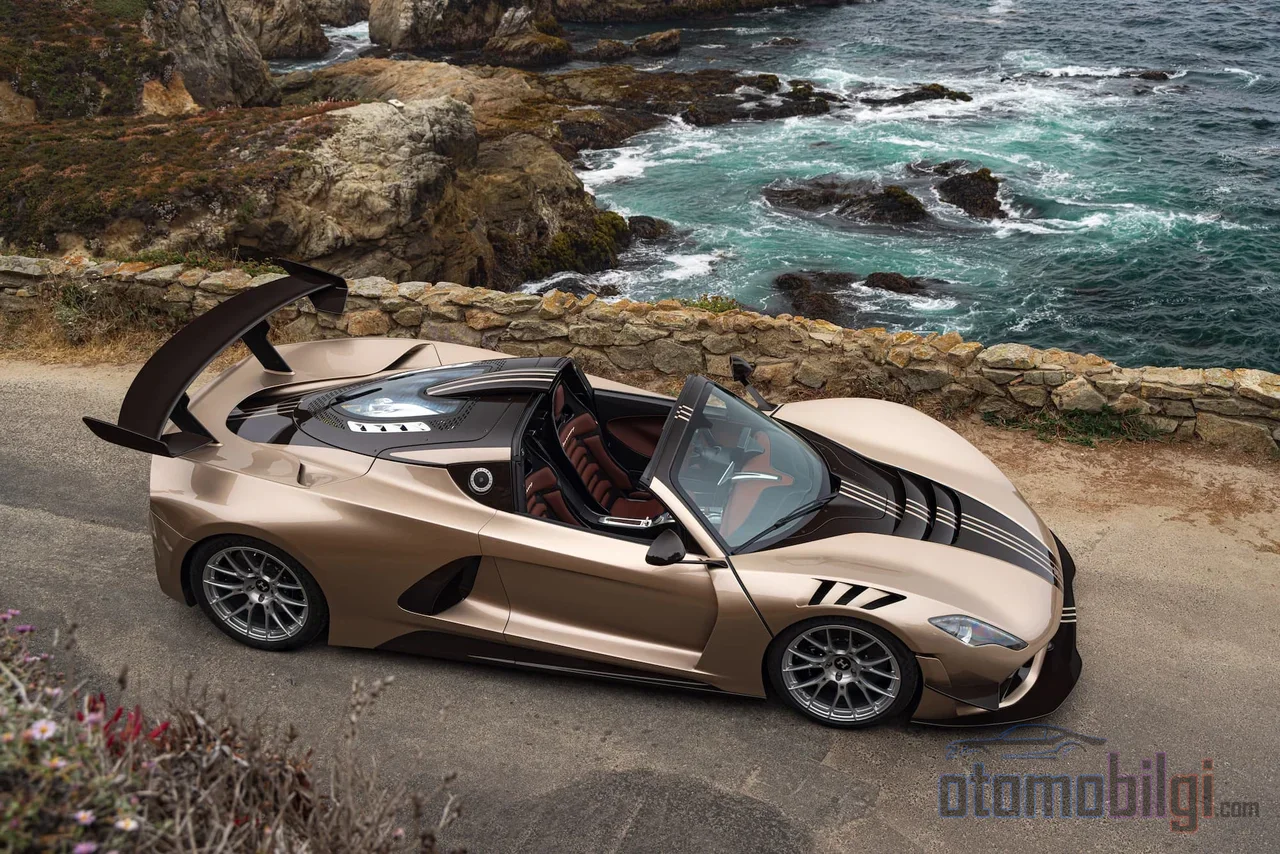
500 km/h is still an unbroken threshold for a production car. Hennessey developed the Venom F5 not merely as its single trump card for breaking this threshold, but as a complete engineering package: a carbon fiber monocoque of its own design, a 6.6-liter twin-turbo V8, and a production plan capped at 99 units. However, as of 2026, there is still no verified two-way 500 km/h run. So is the math and aerodynamics behind this goal actually consistent?
On this page, we will cover the four body variants of the Venom F5 family, the technical anatomy of the engine called Fury, the numerical foundations of the chassis, and the aerodynamic work done on the road to the 500 km/h target. The answer lies not in the scale of a single figure of power; it is hidden in how power, weight, and drag coefficient balance each other.
What Is the Venom F5 and Why Is It So Ambitious?
The Venom F5 is a hypercar assembled by Texas-based Hennessey Special Vehicles in Sealy, Texas, and it is the brand's first vehicle developed from scratch as an accredited manufacturer. Production began in 2020; the design bears Nathan Malinick's signature. It takes its name from the F5, the highest tornado rating on the Fujita scale; this rating describes wind speeds in the 420-512 km/h range. The name choice is not symbolic, it is a direct declaration of the goal: the car must reach the wind speed it is named after.
The architecture is built on the classic hypercar recipe: a mid-rear engine layout, rear-wheel drive, butterfly doors, and a chassis and body made almost entirely of carbon fiber. The wheelbase is 2,799 mm, length 4,666 mm, width 1,958 mm, and height 1,130 mm. The figures show that a long and low body is compressed into a compact package.
Highlights
- 6.6-liter twin-turbo Fury V8 producing 1,817 hp of power and 1,617 Nm of torque
- Carbon fiber chassis weighs only 86 kg, with a torsional rigidity of 52,000 Nm/degree
- Official power-to-weight ratio of 1,298 hp/ton, with a dry weight of 1,360 kg
- Verified highest test speed of 271.6 mph (437 km/h); theoretical simulation of 328 mph
- Total production limited to 99 units; the Evolution package delivers 2,031 bhp
The Fury V8: From 6.6 Liters to 1,817 Horsepower
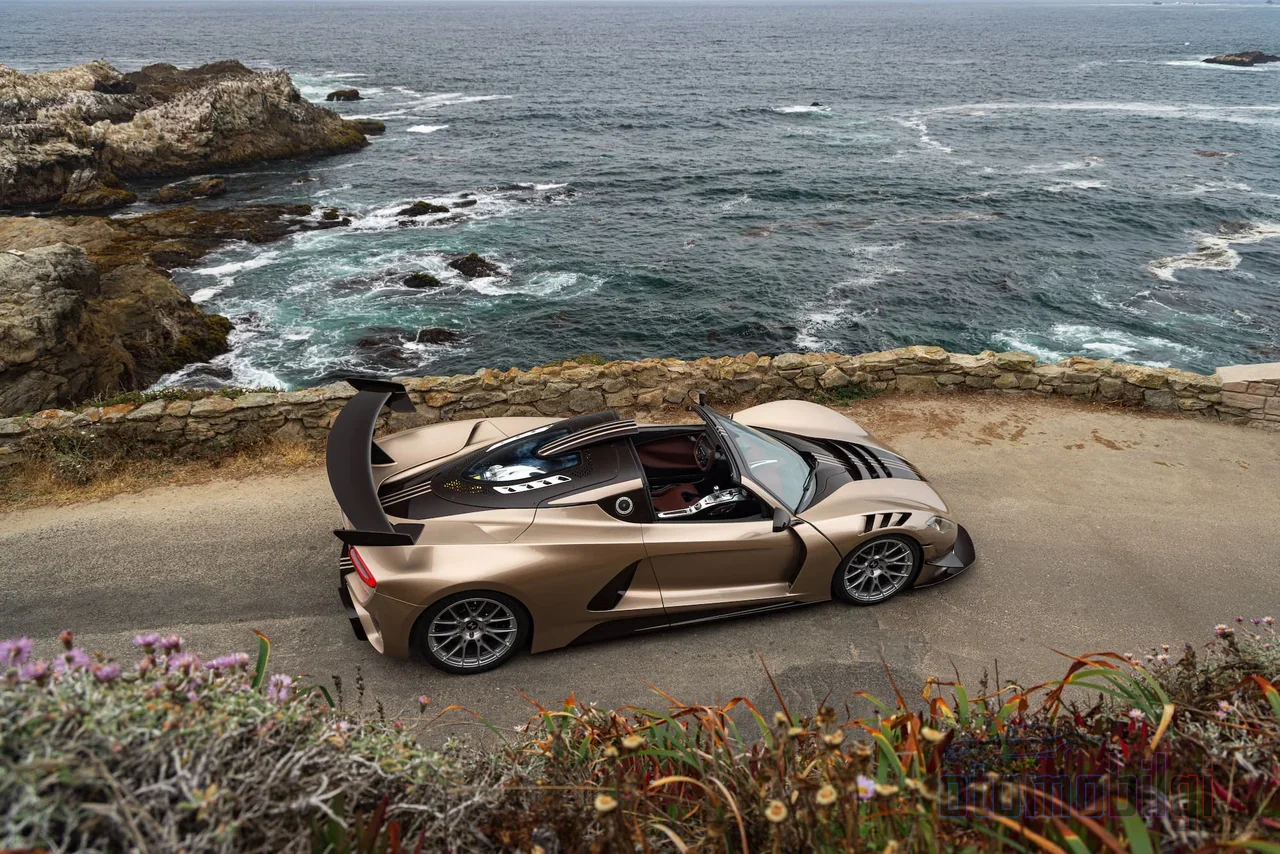
The heart of the F5 is a 6.6-liter (400 CID) twin-turbo engine derived from the classic American LS-based V8 architecture. In standard form it produces 1,817 hp (1,355 kW) at 8,000 rpm and 1,617 Nm of torque at 5,500 rpm; redline is at 8,200 rpm. The power density of 277 hp per liter is a remarkable value for this displacement, and this is why the engine is named Fury: the target was 1,600 hp, and the dynamometer result exceeded that target.
Strength Engineering Inside the Engine
The internal structure has been aggressively reinforced to handle this power: forged aluminum pistons with a 10.0:1 compression ratio, lightweight H-profile forged steel connecting rods, a billet steel crankshaft, and six-bolt main caps per cylinder. Titanium intake valves, Inconel exhaust valves; Lubrication is provided by a Dailey Engineering four-stage dry sump system, and Pennzoil 10w60 synthetic oil is used.
On the turbine side, there are two Precision turbochargers with ball bearings; with 76 mm billet compressor wheels and 3D-printed titanium compressor housings, the total power target is met at 1,350 bhp per turbo, that is, at 23 psi of boost. A custom intake manifold placed between the turbochargers positions the intercooler plenum right in front of the cylinder heads, lowering intake temperatures and increasing air density. The torque curve also has character: over 1,000 lb-ft of torque is available throughout the entire 2,000-8,000 rpm range.
Evolution Package: 2,031 bhp
The Evolution package, announced with tests completed in April 2025, was developed in collaboration with Ilmor Engineering. With Shell E85 pump fuel, the engine produces 2,031 bhp and 1,445 lb-ft of torque; Ilmor's contribution alone is 214 bhp. The result is measurable: the 0-200 mph (322 km/h) time drops to 10.3 seconds. The package is priced at USD 285,000 and can be applied to all existing F5 owners, including the Coupe, Roadster, and Revolution.
Carbon Monocoque: 86 Kilograms and 52,000 Nm/Degree
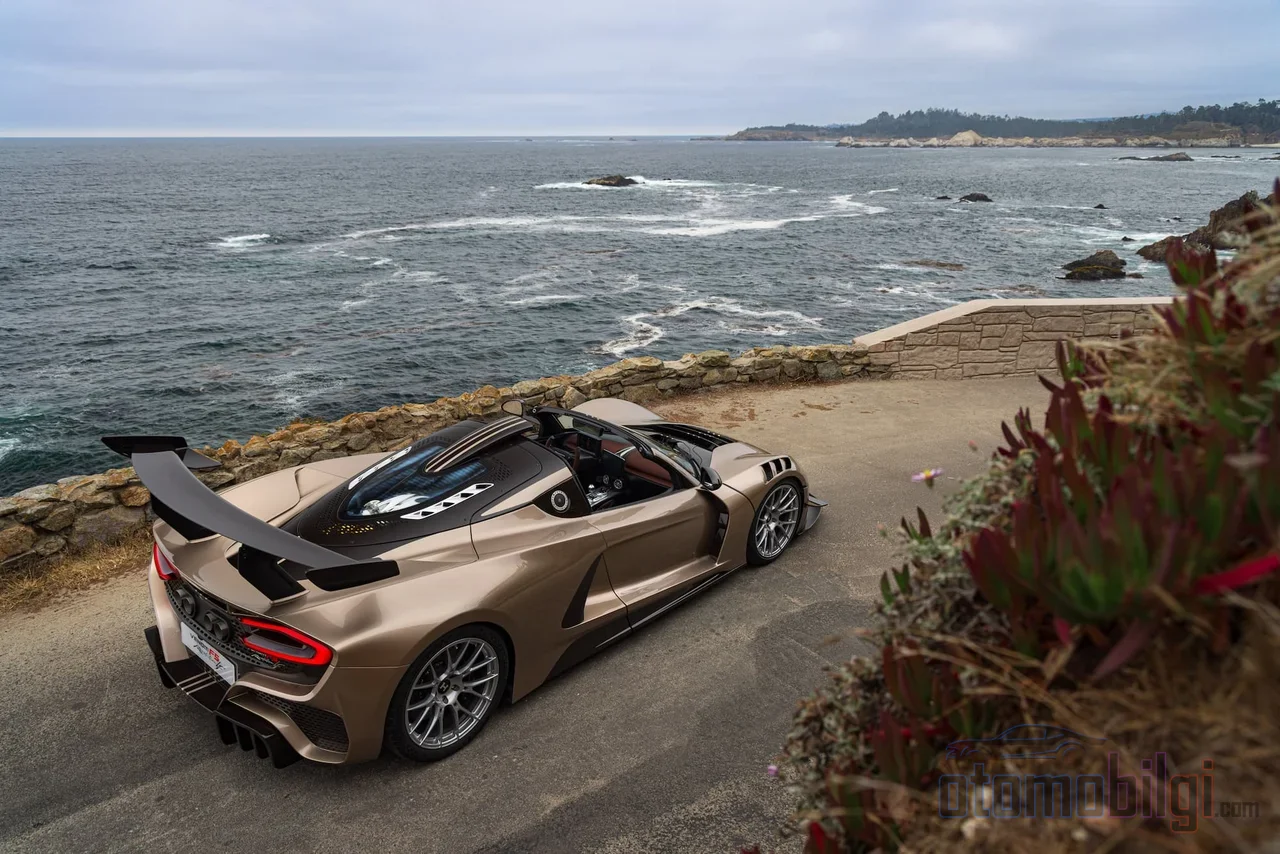
The second pillar of the speed target is mass. The carbon fiber chassis called the F5 offers 52,000 Nm/degree of torsional rigidity despite weighing only 86 kg; Delta Motorsport collaborated in its development. The engine's mass is 280 kg. According to official figures, the vehicle's dry weight is 1,360 kg, which raises the power-to-weight ratio to 1,298 hp/ton. John Hennessey's formula is clear: over 1,800 bhp of power, under 3,000 lb of weight. Various sources reported in the press also cite values in the 1,338-1,385 kg range; this discrepancy stems from the definitional difference between dry weight and measurement including fluids, and the official manufacturer figures should be taken as the basis.
Power delivery is handled by a CIMA-produced 7-speed single-clutch automated manual transmission and a progressive limited-slip differential; gear changes are made via the paddles behind the steering wheel. 1,298 hp/ton is an extreme figure even for a hypercar; for comparison, this ratio leaves many racing cars behind as well.
The 500 km/h Target: Aerodynamic Realities and Test Data
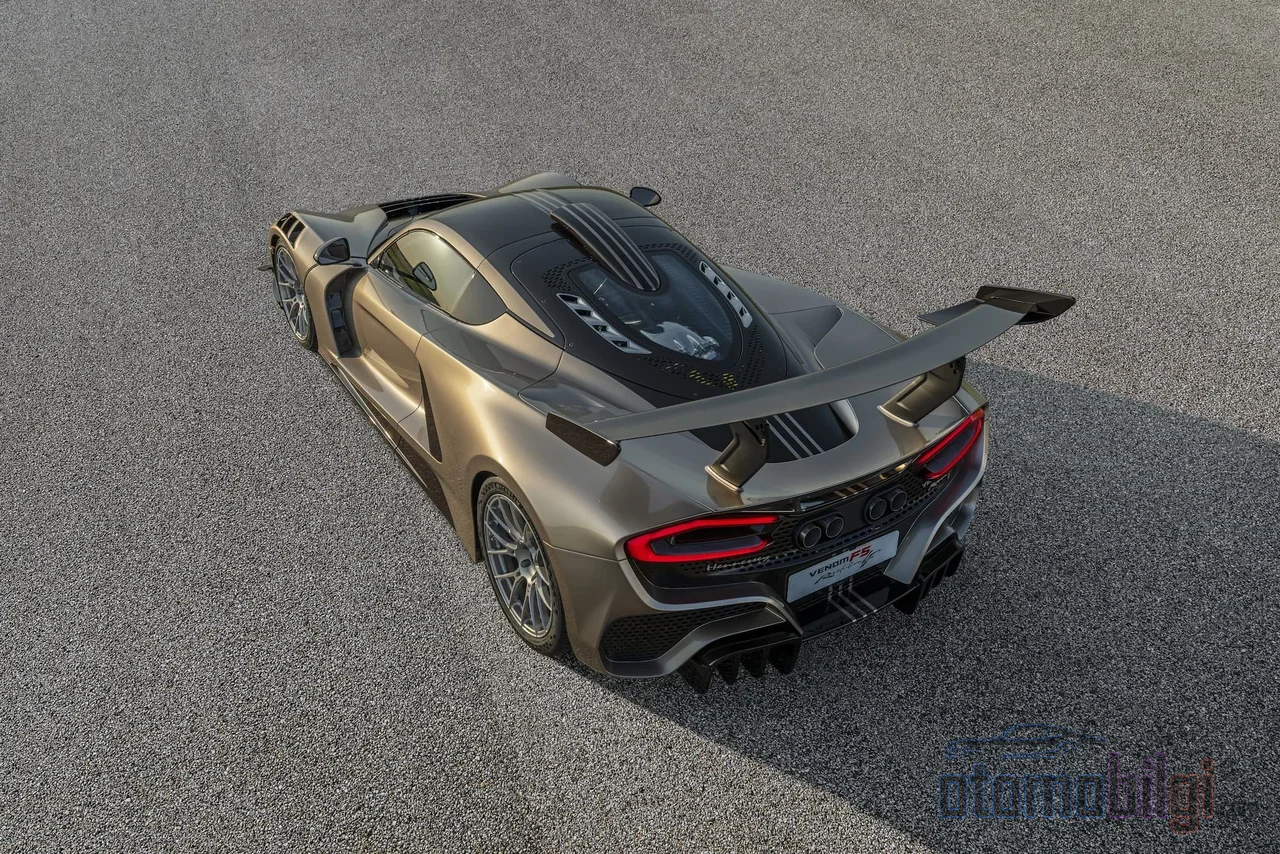
Hennessey's goal is to reach over 500 km/h (311 mph) in a two-way, independently verified run with a production vehicle. John Hennessey clearly states that the simulated theoretical top speed is 328 mph, but that it is not this figure being chased, but breaking the 300 mph threshold in both directions. The difference is significant: simulation is no guarantee in runs and at tire limits.
The Compromise in the Drag Coefficient
There is a critical turn in aerodynamics. The drag coefficient (Cd), which was 0.33 at the concept stage, rose to 0.39 in the production version; the active aerodynamics system was removed and replaced with small fixed spoilers. Although this may seem like a step back on the surface, it is a costly balancing decision for high-speed stability. In the Evolution package, this balance was reworked: With aerodynamicist Dr. Mark Handford, who has an F1 and IndyCar background, the front splitter was redesigned from scratch, and the biggest changes were made to the underside of the car. A single dive plane was added in front of the front wheels, tire wake deflectors to the underbody, and louvres above each wheel arch; a Gurney flap was mounted on the trailing edge of the rear deck spoilers for high-speed stability.
Speeds Achieved So Far
Verified test data clarifies where the story stands: On the former NASA Shuttle Landing Facility at Cape Canaveral, the F5 reached a speed of 271.6 mph (437 km/h) in the official test video. On July 30, 2024, the 1/2 mile (805 m) record was broken with production cars in Florida: 14.44 seconds and 219 mph (353 km/h) at the finish, with John Hennessey himself in the seat. Other records: 6.77 seconds @ 121 mph in the 1/8 mile and 9.82 seconds @ 169 mph in the 1/4 mile. The Revolution set a production car lap record at Circuit of The Americas; following that record, it was announced that the 300 mph attempt would proceed. However, as of 2026, there is no completed 500 km/h run, and there is no concluded publicly available report of the top speed attempt planned for 2024. This uncertainty is part of an honest assessment of the matter.
The Venom F5 Family: Coupe, Roadster, Revolution, and F5-M
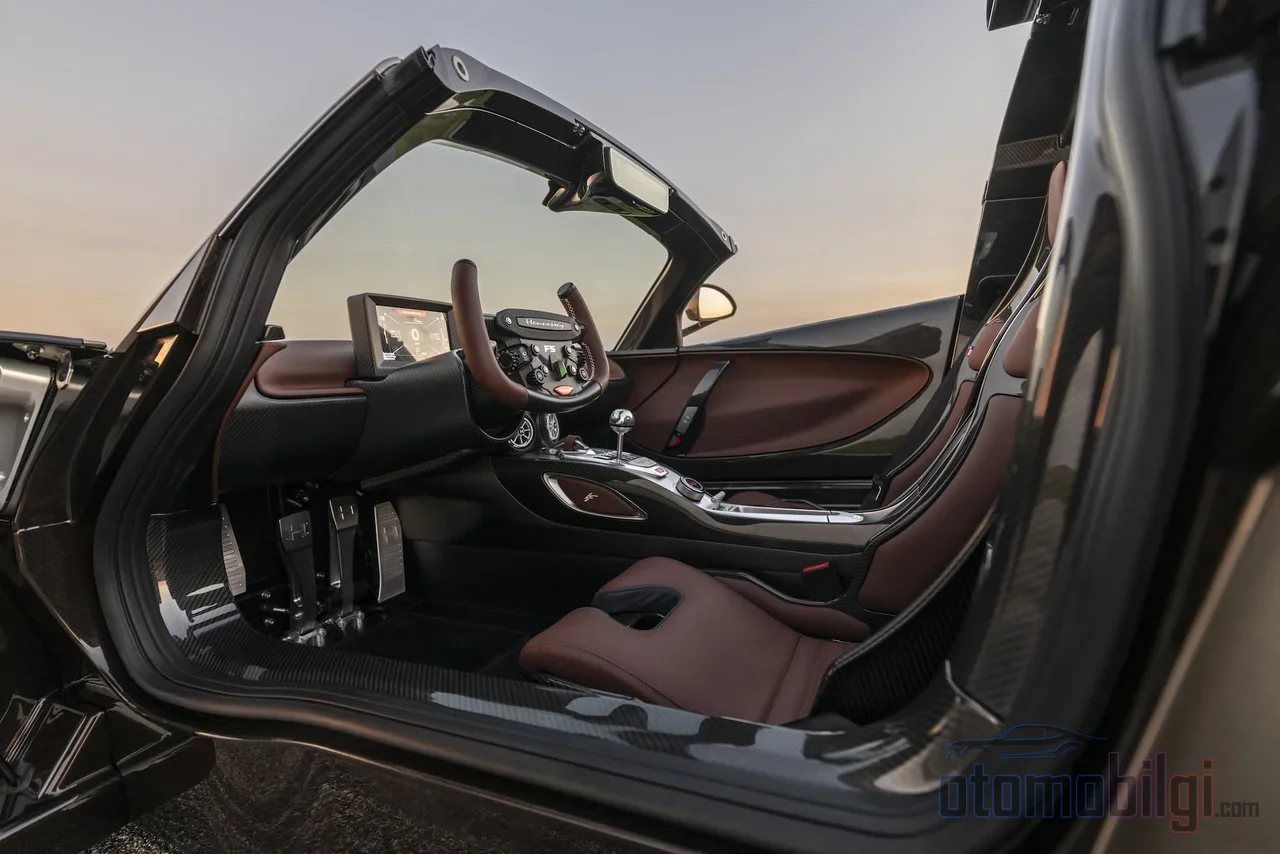
The F5 is not a single body, but a family made up of four different characters. The Coupe is the main body focused on the 500 km/h target, and sales are sold out; the price was initially 1.6 million USD in the US, rising to 2.1 million USD for the final 12 cars. The Roadster is the version that prioritizes the open-top experience, and a few examples are still on sale. The Revolution is the track-focused derivative offered with Coupe and Roadster bodies: it comes with revised aerodynamics, retuned suspension, lightweight wheels, a roof-mounted air intake, and in-car digital telemetry; with a price of approximately 2.7 million USD, it prioritizes weight reduction and grip. Development was led by former GM engineer John Heinricy.
The newest member of the family, the F5-M Roadster, was unveiled in production form at the Goodwood Festival of Speed on July 9, 2026, and is positioned as the world's most powerful manual production car. It comes with a six-speed gated manual transmission, a model-specific stripe package, a central stabilization fin, and a new center console that includes the gear lever. While the official page states 1,817 bhp, the announcement and some publications point to 2,031 bhp; the difference between the two figures depends on the relationship to the Evolution package over the standard version. It was also announced that the transmission and updated chassis architecture will become options for the Coupe, Roadster, and Revolution after launch. In addition, Hennessey's Maverick division produced a one-off Revolution LF with a manual transmission and 2,031 hp.
| Body | Focus | Status / Price |
|---|---|---|
| Coupe | 500 km/h top speed | Sold out; 2.1 million USD (final 12) |
| Roadster | Open-top experience | A few examples on sale |
| Revolution (Coupe/Roadster) | Track performance | ~2.7 million USD |
| F5-M Roadster | 6-speed manual transmission | Goodwood 2026 debut |
Limited Production Strategy: 99 Units in Total
The production plan is built on scarcity. Total Venom F5 production is limited to 99 units. The first Coupe series was 24 vehicles, and it was announced in August 2021 that all had been sold; 12 were allocated to the US, and 12 to the international market. There is a 36-vehicle allocation for the Revolution: 24 Coupes and 12 Roadsters, and the Revolution Roadster allocation is sold out. The total allocation for the Roadster family is around 30 vehicles. John Hennessey stated that as of April 2025, approximately 30 F5s had been delivered to customers worldwide over the past three years; meaning production is well behind the cap. The details that come with each car are also part of the strategy: it is delivered with a key and a Treasure Chest aluminum box made from a piece of metal that came from the Space Shuttle's body panel.
Conclusion: Is 500 km/h Achievable?
The short and honest answer is this: the engineering foundation holds, but verification has not yet arrived. There are three concrete pillars supporting the Venom F5's 500 km/h target: engine power exceeding 1,817 hp (2,031 bhp with the Evolution), a power-to-weight ratio of 1,298 hp/ton preserved by the 86 kg carbon chassis, and its reworked aerodynamics. In contrast, the highest verified speed on hand is 437 km/h; the distance remaining from the 271.6 mph test value to the 311 mph target, including tire technology and run conditions, requires a major engineering leap. Hennessey keeps defending the target by reiterating it; until the 99-unit family is completed and a two-way run is made, the Venom F5's story stands as a strong hypothesis, an ambitious but unfinished engineering endeavor.