Zenvo Aurora Tur: The Math Behind 1,850 Horsepower
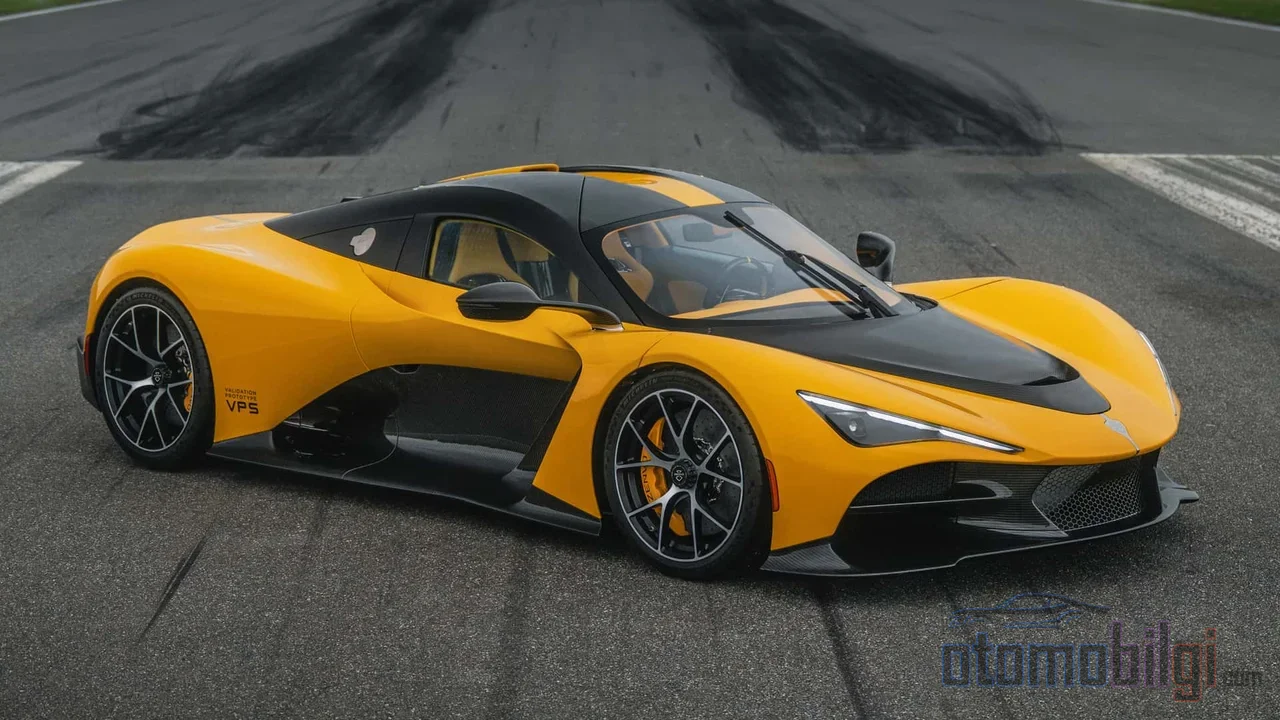
In the Danish town of Præstø, an engineering team working on a tiny fraction of the budgets of the major manufacturers has unveiled one of the most ambitious power figures in its class: 1,850 horsepower. The Zenvo Aurora is a machine whose name has long been circulating in hypercar circles, but whose technical details only reached production form in 2026. The question seems simple, but the answer is not: What exactly does 1,850 horsepower mean, where does this power come from, and how does this split shape the character of the car? The answer is not a single huge engine; it is the arithmetic of a carefully constructed hybrid architecture.
Mjølner: Four Turbos Fitted Inside Twelve Cylinders
At the heart of the Aurora lies an engine named Mjølner, borrowed from Thor's hammer in Norse mythology: a 6.6-liter, quad-turbocharged V12. The engine was co-developed with the British engineering firm MAHLE Powertrain and is produced in England. The most striking detail of the design is that the four turbochargers are placed inside the V angle of the cylinder block; this layout both shortens the plumbing on the exhaust side and provides the advantage of a low center of gravity that gathers the power.
On its own, the engine produces 1,250 bhp and, with a rev limit of 9,800 rpm, it is called the most powerful V12 ever fitted to a road vehicle. One of the technologies used to reach this level is a pre-chamber technology called Jet Ignition: A very small, high-energy spark cluster is sent into the main combustion chamber, allowing the pressure wave inside the cylinder to propagate far more homogeneously. The result is stable and complete combustion even in a huge engine; meaning high power at full load and efficiency at partial load.
Highlights
- Mjølner V12 alone 1,250 bhp, rev limit 9,800 rpm
- Aurora Tur totals 1,850 bhp and 1,700 Nm, estimated top speed 420 km/h
- 0-100 km/h acceleration in 2.3 seconds, claimed weight 1,300 kg (Agil)
- Production limited to 100 units: 50 Tur + 50 Agil, priced at approximately 2.8 million euros
The Mathematics of 1850 Horsepower: V12 Plus Three Electric Motors
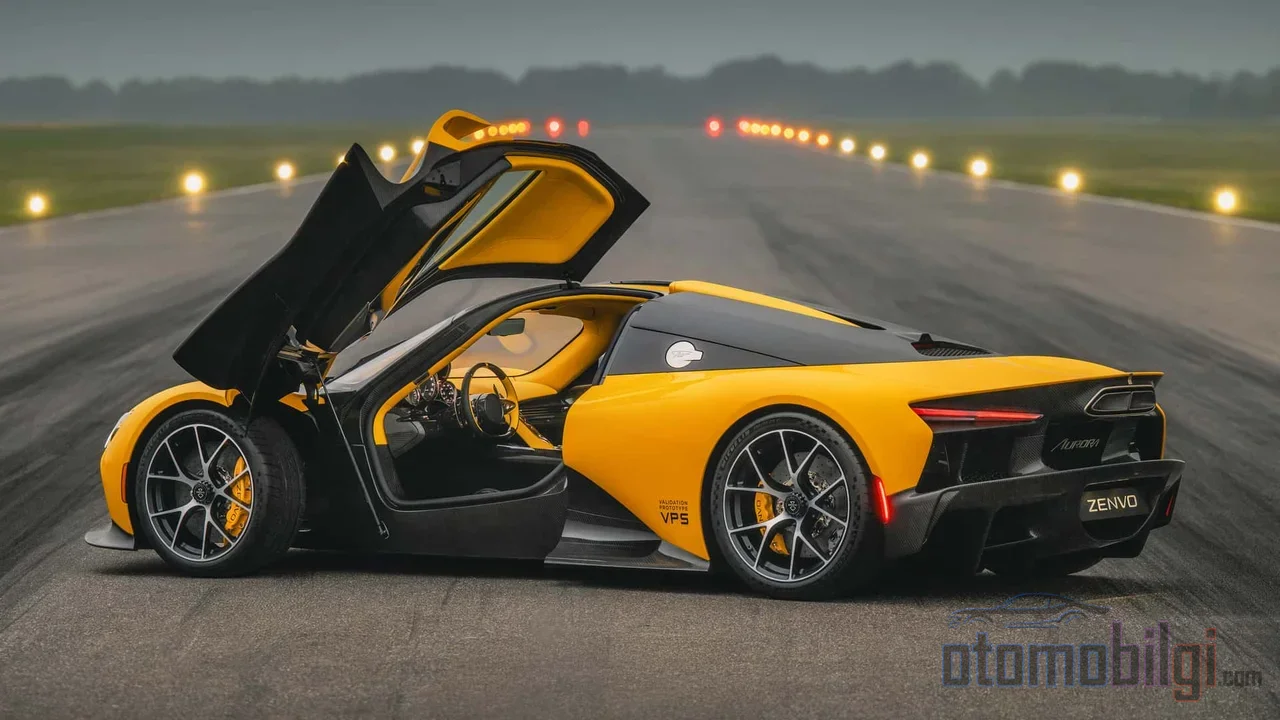
The figure in the headline is not the product of a single engine. In the Aurora Tur, three electric motors accompany the internal combustion engine; each produces 200 bhp. So 600 horsepower of electric power is added to the 1,250-horsepower V12, resulting in a total system output of 1,850 horsepower. On the torque side, the figure being discussed is 1,700 Nm.
The distribution is conceived as follows: Two electric motors sit on the front axle, working independently of each other; the third is integrated into the Ricardo-built 8-speed transaxle gearbox at the rear. This creates a critical distinction in the drivetrain: The front axle motors do not merely provide a power contribution; they also serve as the electric torque vectoring system itself. There is no gearbox, differential, or mechanical connection on the front axle; instantaneous positive or negative torque can be sent to each front wheel. Applying excess torque to the outer wheel and insufficient torque to the inner wheel in a corner is something classic mechanical differentials have long aimed for but have never managed with this level of finesse; with electric motors, this can be done within milliseconds, without mechanical loss.
The entire system operates as four-wheel drive, and the hybrid architecture allows the internal combustion engine and electric motors in the Tur version to be used in fully electric or combined modes. In other words, the Aurora, in its grand touring version, is a machine that can also move silently and smoothly.
Tur and Agil: Same Body, Two Different Characters
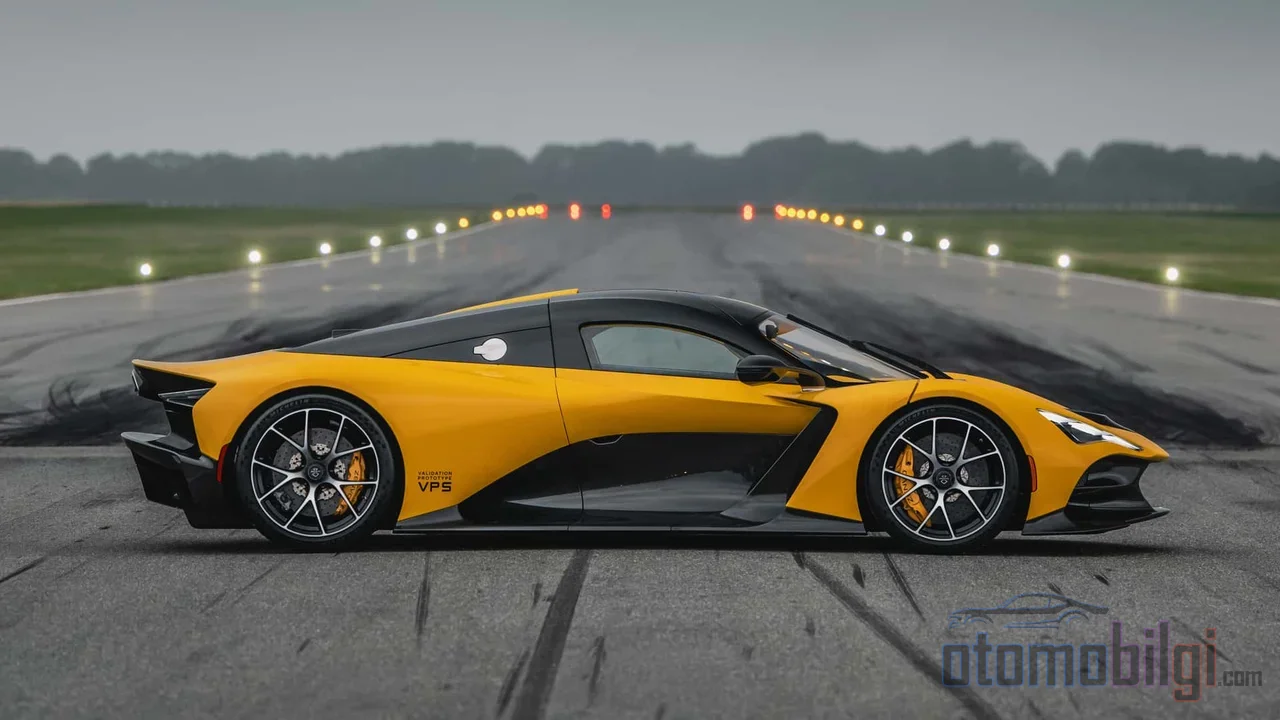
Zenvo offers the Aurora in two versions, and the difference between the two versions goes much deeper than a simplification of the drivetrain. The road-focused Aurora Tur comes with the full hybrid architecture described above. The track-focused Aurora Agil has made a more radical choice: It uses only a single 200 bhp electric motor, is rear-wheel drive, and its total power drops to 1.450 bhp / 1.400 Nm.
| Specification | Aurora Tur | Aurora Agil |
|---|---|---|
| System power | 1.850 bhp | 1.450 bhp |
| Torque | 1.700 Nm | 1.400 Nm |
| Drive | 4WD (three electric motors) | RWD (single electric motor) |
| Top speed | 420 km/h (estimated) | 360 km/h |
| Focus | Road / grand touring | Track |
The Agil's lower power is not a step backward, but a design decision. In track use, the mass brought by the four-wheel-drive system and heavy hybrid components has been sacrificed in favor of sharpness. The announced weight figure confirms this philosophy: Thanks to extensive use of carbon fiber, a car at around 1.300 kg is being talked about. That is an extraordinarily light figure for a 1.450 bhp hypercar; it translates to roughly 1.1 kg/bhp per unit of power-to-weight ratio.
The Twisting Rear Axle Claim and the Reality of the Drivetrain
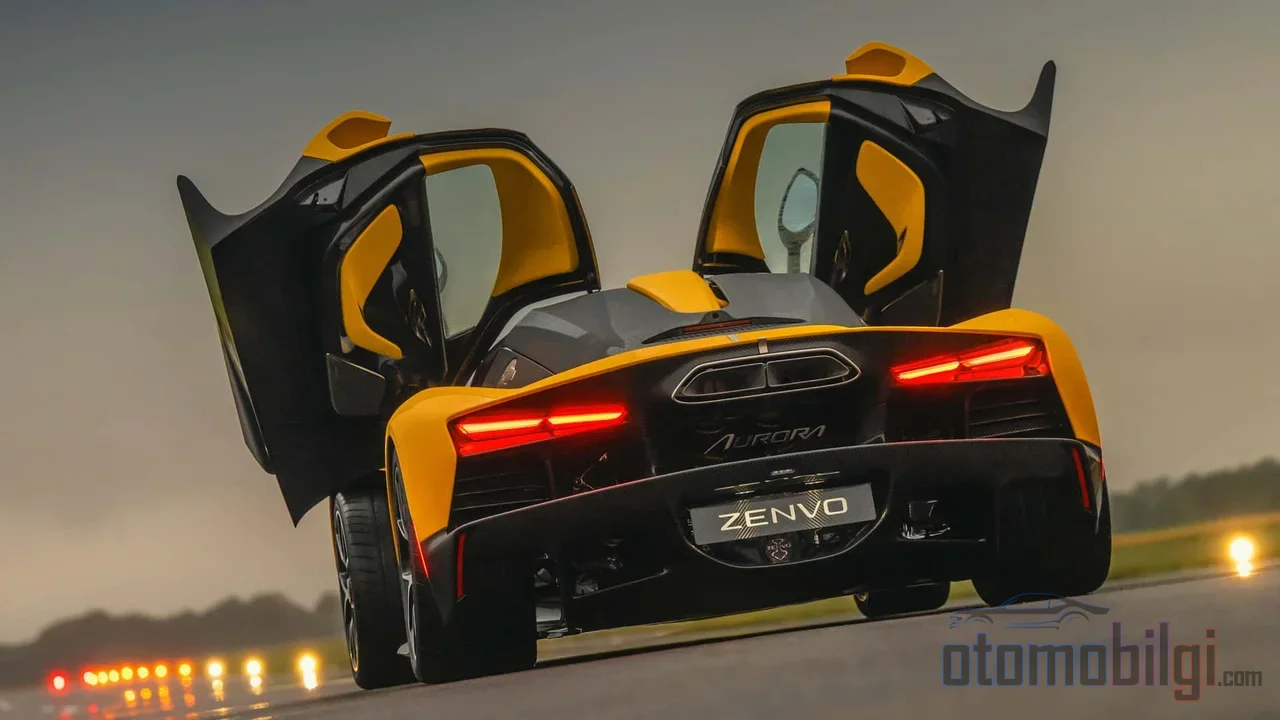
In the technical narratives circulating around the Aurora, there is occasional mention of a twisting rear axle or a similar system. The manufacturer's own technical documentation contains no verified statement about such a rear axle system; instead, two concrete engineering solutions stand out. The first is the front-axle electric torque vectoring system described above. The second is at the rear: A patented active rear spoiler called the Centripetal Wing.
What makes the Centripetal Wing unusual is not only that it changes height and angle, but that it can tilt sideways. In a corner, the spoiler leaning toward the outside of the corner gives the vehicle a stabilizing force component within the corner; while a classic spoiler pushes down only in a vertical plane, this design generates support in the horizontal plane as well. In the Agil version, this spoiler also works as an active air brake, producing up to 800 kg of downforce at 250 km/h.
In short, the real innovation in Aurora's drivetrain is not in a fabricated rear axle figure; it lies in electric torque vectoring completely bypassing the mechanism on the front axle and in the third motor integrated into the Ricardo transaxle. This setup manages both power distribution and cornering dynamics in a single package.
Where Does Aurora Stand in the Hypercar Class?
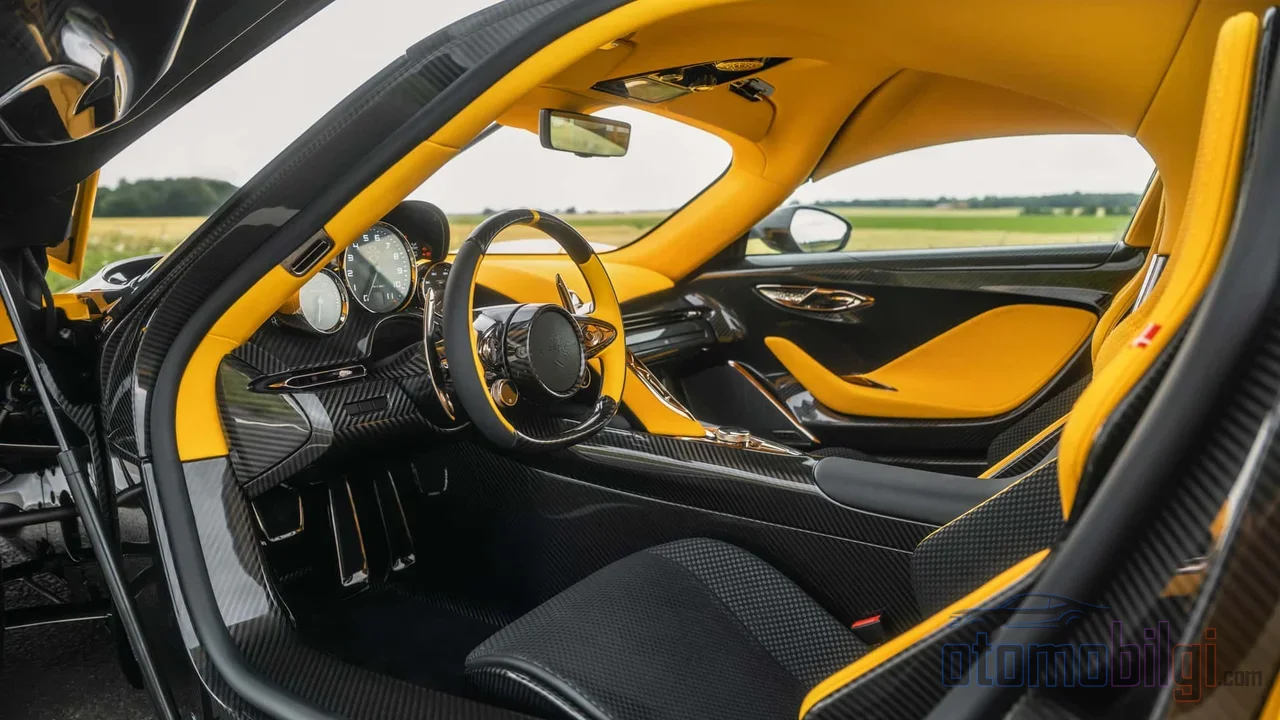
Numbers alone do not determine a hypercar's place, but they draw a frame for comparison. In current power rankings, the Aurora Tur, with 1,850 horsepower of system output, is among the top ten most powerful vehicles on sale; at the top of the list sits the 2,300-horsepower Koenigsegg Gemera. So Aurora is not the champion of the absolute power race, and Zenvo does not seem to see that as a shortcoming: The official narrative positions the car as the driver's hypercar; grip, steering feel, and lightness take priority over absolute power.
This positioning has a technical counterpart as well: a weight of 1,300 kg, a four-turbocharged but high-revving V12 instead of natural aspiration, and an engineering choice that deliberately reduces power in the track version. Against the approach of a four-seat, power-focused megacar like the Gemera, it offers a lightweight, communicative track weapon in the Agil that settles for 360 km/h.
Production, Timeline, and the State of the Figures
Aurora was first unveiled at Monterey Car Week; the production-specification Aurora Tur prototype was then shown publicly at the Goodwood Festival of Speed on July 10, 2026. The Agil version also made its East Coast debut with an event held in New York in 2026. Total production is limited to 100 units: 50 Tur and 50 Agil. Deliveries are planned to begin from the second quarter onward, and the announced price is at the level of approximately 2.8 million euros.
One point worth noting is the status of the figures. The manufacturer has not yet released the final production performance figures in an independently verified form; the official estimate for top speed is 420 km/h, but higher claims are also circulating. The figure being talked about for 0-100 km/h is 2.3 seconds. In the hypercar world, this is a familiar situation: With extremely limited-production vehicles, precise performance data usually becomes clear after the first customer deliveries.
Conclusion: How Is 1850 Horsepower Achieved?
The short answer is this: The Aurora Tur reaches 1,850 horsepower by adding the 600-horsepower contribution of three electric motors in total - two operating independently on the front axle and one integrated into the Ricardo transaxle - to the 1,250 horsepower it derives from its four-turbocharged 6.6-liter Mjølner V12, which revs up to 9,800 rpm. The track-focused Agil removes two motors from this equation, returns to rear-wheel drive, and stops at 1,450 horsepower.
The real story is not about the number itself. Aurora's architecture does not just gather power; with electric torque vectoring on the front axle and the tilting Centripetal Wing rear spoiler, it directly touches the car's dynamic balance system. With a production run of 100 units and a price tag of 2.8 million euros, the Danish manufacturer's ambition is clear: To win not the race for absolute power, but the race for driver experience.