Aston Martin Valkyrie: The Cosworth V12 Suits It Perfectly
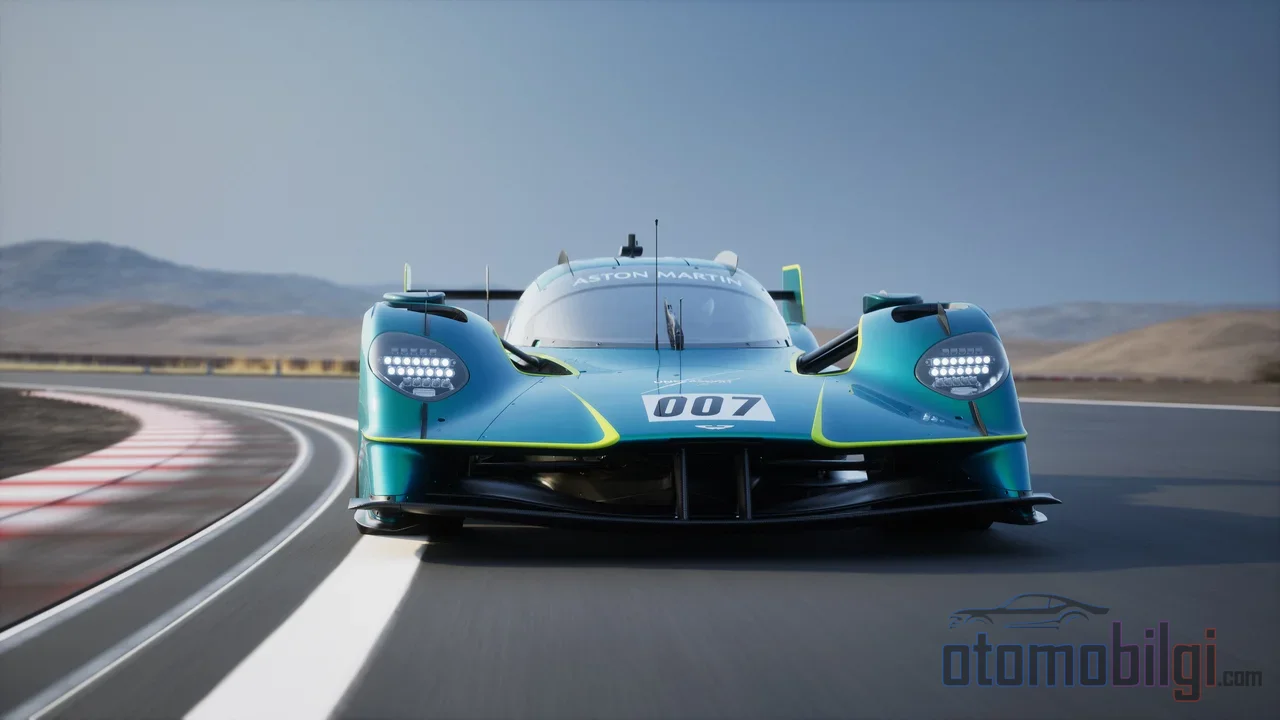
If a road car's engine cuts out in the red zone at 11,100 rpm and that engine is still naturally aspirated, then what you are looking at is no ordinary hypercar. The Aston Martin Valkyrie, with Cosworth's 6.5-liter V12, Rimac-signed hybrid support, and aerodynamics led by Adrian Newey, is the boldest example of the attempt to fit Formula 1 engineering into road regulations. So how exactly F1 is this car, and how much road car?
Highlights
- 1,139 hp total output: Cosworth V12 plus hybrid support sourced from Rimac
- The naturally aspirated V12 revs to a 11,100 rpm red zone, producing 1,000 hp on its own
- Total production of 275 vehicles: 150 Coupé, 85 Spider, 40 AMR Pro
- 0-100 km/h in approximately 2.3-2.4 seconds, top speed 354 km/h
- The AMR Pro track version produces approximately 2 tons of aerodynamic downforce at 300 km/h
A Hypercar from Adrian Newey's Drawing Board
The Valkyrie's story began in 2016, under the codename AM-RB 001, introduced as a hybrid concept. The name itself summed up the project's nature: The first product of the Aston Martin (AM) and Red Bull (RB) partnership. The car was developed in collaboration between Aston Martin and Red Bull Advanced Technologies; while the aerodynamic profile was the responsibility of the Red Bull side, the body design was overseen by the Aston Martin team under Miles Nurnberger. One of the chief designers was, of course, Adrian Newey himself.
The interesting part is that the project partially emerged from a virtual world. The Red Bull X2010, X2011, and X2014 concepts Newey drew for the Gran Turismo games directly formed the basis of the Valkyrie's design. In other words, this road-going car is actually the physical embodiment of a simulation idea: a prototype race car logic adapted to road regulations, where the driving is largely determined by aerodynamics. The body, built on a carbon fiber monocoque, carries this logic too; there are no steel panels or an aluminum frame - the entire car is conceived as a single structural shell.
The Cosworth 6.5-Liter V12: A Naturally Aspirated Dinosaur, or a Masterpiece?
In modern performance engines, power almost always comes from forced induction. The Valkyrie's engine completely rejects this formula: A 6.5-liter, 65° bank angle, naturally aspirated V12. No turbo, no supercharger; all the power comes from intake-side efficiency and revs. Built by Cosworth, this unit weighs 206 kg and produces 1,000 hp on its own. It is reported to reach 1,000 hp at 10,500 rpm, while torque peaks at around 740 Nm at 7,000 rpm.
To grasp the scale of these figures, one need only look at the rev limit. The red zone is 11,100 rpm - nearly double that of a modern road car engine. This is the only realistic way to produce power in a naturally aspirated engine: as the volume per cylinder remains small, the engine needs to breathe fast. The sharp, high-pitched running character reminiscent of Formula 1 engines is also a direct result of this high revving. Aston Martin positions this engine as the most powerful naturally aspirated engine ever used in any road vehicle; and in terms of technical logic this claim holds firm, because no turbocharged or supercharged rival operates in this rev range.
Rimac-Sourced Hybrid Support: Where Does Electricity Come In?
The Valkyrie is a full hybrid, but the role of the electric side is unique. The system features a battery-electric KERS with a 1.3 kWh capacity developed by Rimac - essentially the road version of the energy recovery logic used in Formula 1. According to Aston Martin's official announcement dated March 2019, this system provides an additional 160 hp of power and 280 Nm of torque.
The approach here is very different from the large battery, long-range electric mode path followed by most of today's hypercars. The electric system does not replace the engine, it complements it: it fills the torque gap at low revs and carries the total power into the 1,139-1,160 hp band, depending on the source. The small difference between the figures stems from the manufacturer stating the system's effective output differently under different measurement conditions; both values describe the same power unit. The 0-100 km/h time is given as 2.3-2.4 seconds, with the maximum speed limited to 354 km/h.
| Feature | Value |
|---|---|
| Engine | 6.5L (6,499 cc) naturally aspirated V12, Cosworth |
| V12 power alone | 1,000 hp |
| Redline | 11,100 rpm |
| Hybrid support | +160 hp / +280 Nm, Rimac KERS (1.3 kWh) |
| Total power | 1,139-1,160 hp |
| 0-100 km/h | 2.3-2.4 s |
| Maximum speed | 354 km/h (limited) |
| Wheelbase / length | 2,770 mm / 4,500 mm |
Production: 275 Vehicles Out of Gaydon
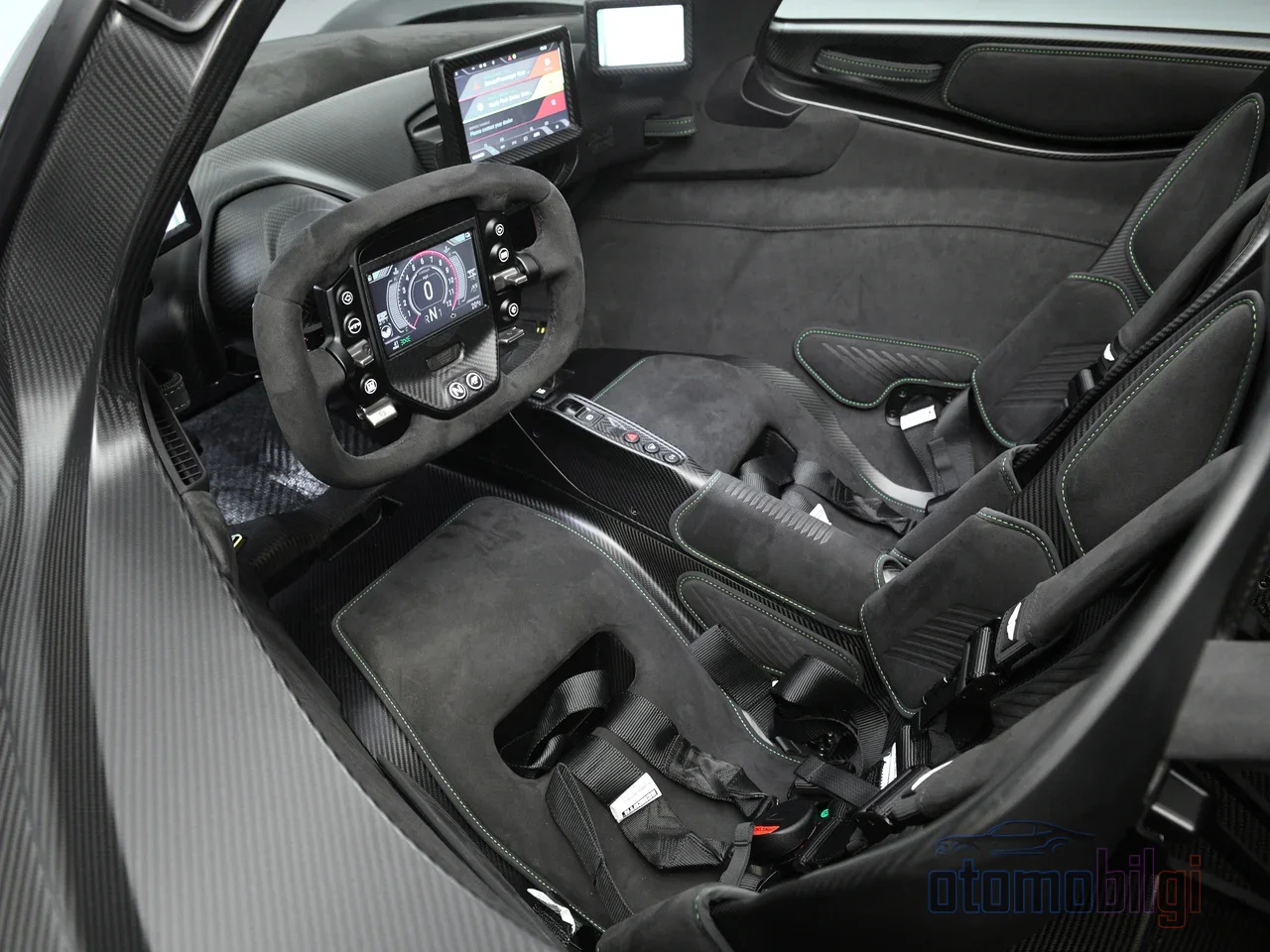
The production story of the Valkyrie also shows the price of ambitious engineering. Production began at the Gaydon facility in England, and the first customer car was completed in November 2021; up until that date, the project had endured long delays and reliability problems. When production ended in December 2024, there were a total of 275 vehicles: 150 Coupés, 85 Spiders and 40 AMR Pros. The firm that developed the steering wheel produced a unit with 84 part numbers, working to a target of under 1.5 kg for the 150 Coupés and 85 Spiders; the period from the start of the project to final delivery was approximately eight years.
On the pricing side, the vehicle was initially valued at £2.5 million to $4.3 million depending on the market. Given the limited production and hand-built nature, these figures are within the standards of its class; but the extension of the project timeline also prolonged the wait for customers who ordered early.
What Is the Difference Between the Road Version and the AMR Pro?
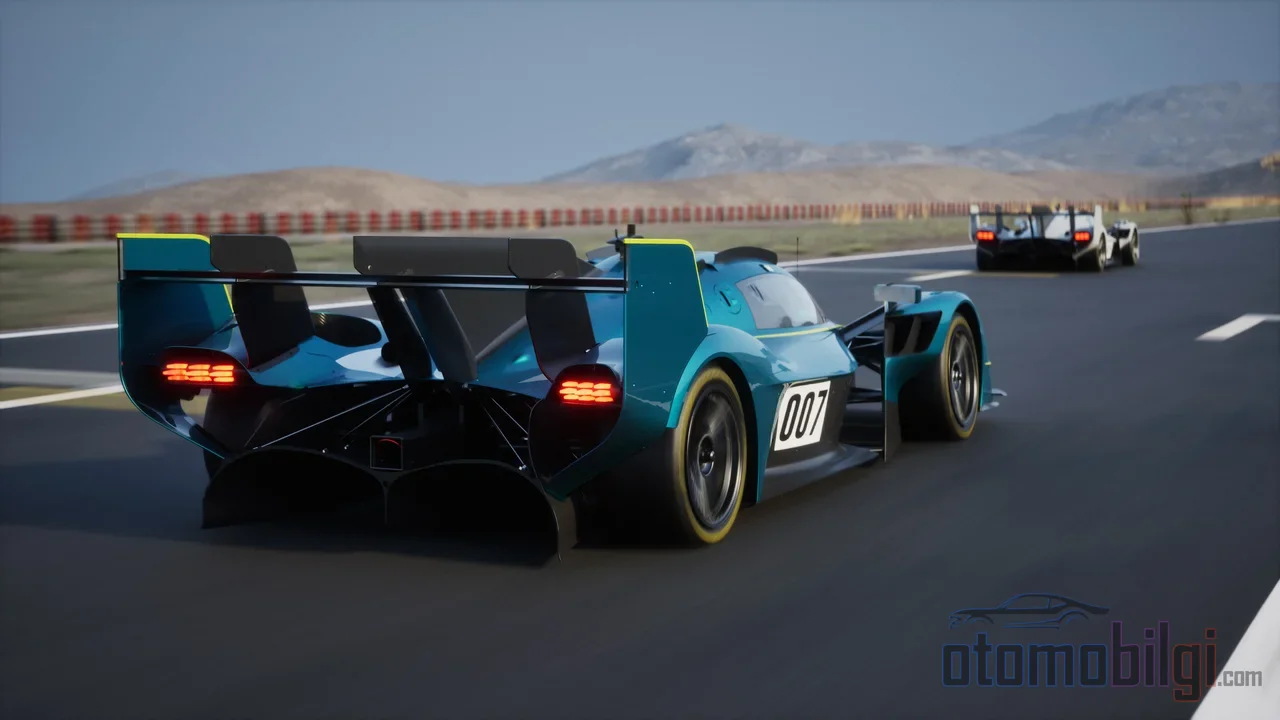
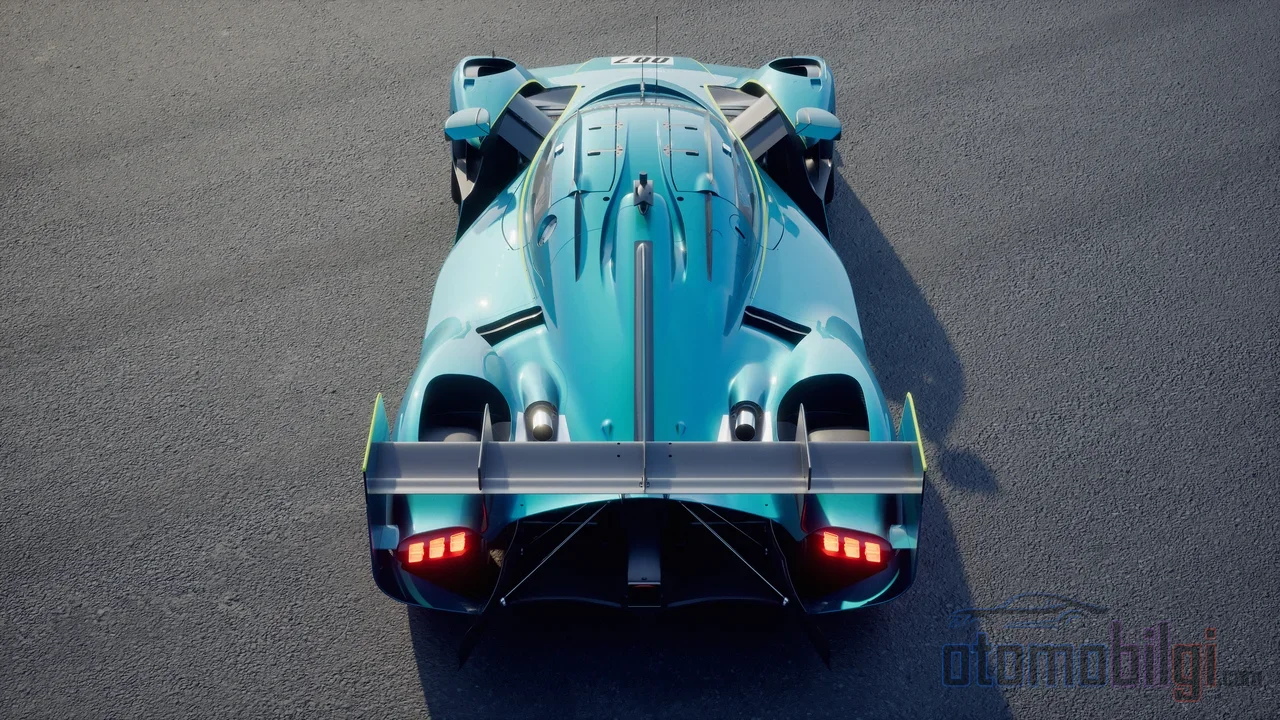
The AMR Pro is the rule-free, track-only version of the Valkyrie. The difference is not cosmetic, but geometric: The AMR Pro has a wheelbase 380 mm longer and an overall length 266 mm greater; a track width 96 mm wider at the front axle and 115 mm wider in total. This extra volume is devoted directly to aerodynamics - the track version generates approximately 2 tons of aerodynamic pressure at 300 km/h. For comparison: a value close to the pressure produced by an LMP2-class endurance race car.
The road version takes one step back from this aerodynamic aggressiveness to comply with road legality: the same engine and hybrid architecture, but hardware, suspension, and a comfort balance that permit plate-legal use. The family also has a racing member: the Valkyrie LMH, a race car carrying the same 6.5-liter V12, competes in endurance series and can make its pit exit in electric mode.
Its Position in the Hypercar Class: Against the Tourbillon and the W1
A remarkable feature of the Valkyrie is that all three great hypercars of that era carry a Formula 1 connection: the Mercedes-AMG One uses a direct F1 hybrid powertrain, the McLaren side carries on its F1 heritage with its own hybrid architecture, and the Valkyrie bears the signature of Red Bull and Newey. Among this trio, what sets the Valkyrie apart is that it derives its power not from forced induction but from revs. While rivals like the Bugatti Tourbillon grow their engines through forced induction, the Valkyrie reaches the same goal through mechanical compression, high revs, and lightness.
Another interesting point in the comparison is Red Bull's own road-legal RB17 project - also a Newey design, also appealing to the same audience. So the collaboration the Valkyrie established paved the way, over time, for its main partner to produce an independent rival as well. As of 2026, the hypercar class is experiencing the most intense period in its history with the joining of the Tourbillon, the Ferrari F80, and the McLaren W1; in this picture, the Valkyrie stands as the last great representative of the naturally aspirated V12 philosophy. The car also attended the Goodwood Festival of Speed 2026 as a trio with the Valkyrie, Valhalla, and Vanquish; the model's place in the brand's showcase remains central.
Conclusion: An F1 or a Road Car?
The clear answer to the question is this: The Valkyrie is a Formula 1 car to the extent that road legislation allows. A carbon fiber monocoque, a naturally aspirated V12 revving to 11,100 rpm, hybrid support working on KERS logic, and the signature of an F1 aerodynamicist are the four pillars that make up the track car DNA. The road version adds a license plate, equipment, and usability on top of these pillars; while the AMR Pro leaves the same DNA on the track without any softening.
In engineering terms, the true legacy may be this: proving that a naturally aspirated engine can produce 1,000 hp in the era of forced induction. The production run of 275 cars shows that this is not a series-production logic, but a thesis being defended. And that thesis says that while the rest of the class turns to forced induction or electrification, the naturally aspirated V12 has not died - it has simply been revved much higher.
Sources
- Aston Martin Valkyrie - Aston Martin (official model page)
- Aston Martin Valkyrie - The Ultimate Hybrid Powertrain - Aston Martin (official)
- First Aston Martin Valkyrie customer car complete - Aston Martin (official)
- Aston Martin Valkyrie AMR Pro - Aston Martin (official)
- 12 cylinders, 11,000rpm: Aston Martin's new engine is a monster - Ars Technica
- Aston Martin Valkyrie - Wikipedia
- Codename AM-RB 001 becomes Aston Martin Valkyrie - Red Bull
- Aston Martin Valkyrie AMR Pro: Harris drives the track-only racer - Top Gear
- Aston Martin Valkyrie is testing out in the wild - Hagerty
- Long-delayed Aston Martin Valkyrie ready for deliveries - Drive.com.au