Pininfarina Battista: How Was 1900 Horsepower Produced?
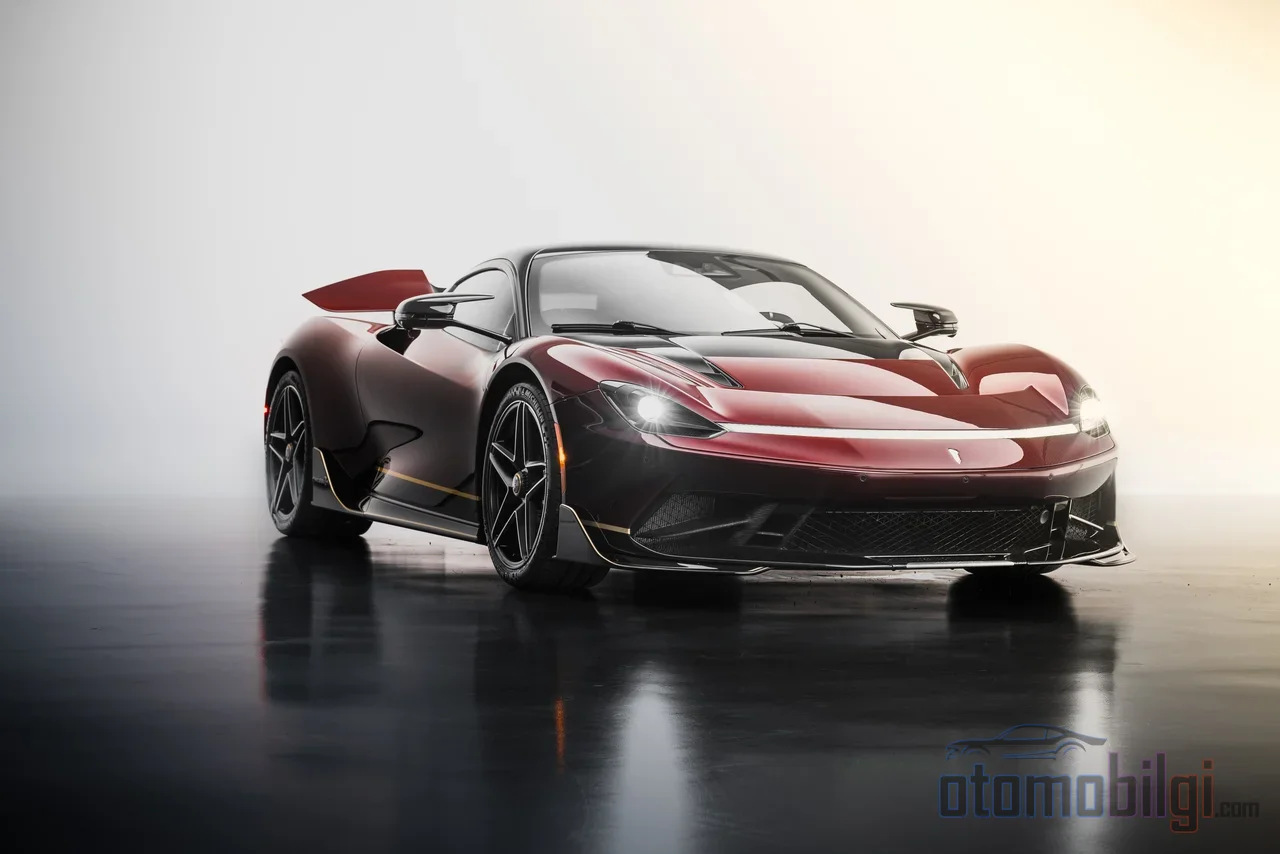
1900 horsepower, four electric motors and a 0-100 km/h time under 2 seconds... These figures were once merely products of imagination; Pininfarina Battista brought them together in a single car. What's more, the brand that achieved this has opened a new door to the electric age of the Italian design legend. So how is this power generated, and how does this hyper GT, limited to 150 units, come to life?
Unlike most hypercar stories, the story of the Battista begins with a single question: Is it possible to combine Italian craftsmanship and design heritage with a fully electric powertrain? Automobili Pininfarina presented its answer to this question in Geneva in 2019 and positioned it as the world's first fully electric hyper GT. The car's name carries the memory of the company's founder, Battista Farina.
The Four-Motor Electric Architecture: How Is 1900 Horsepower Distributed?
At the heart of the Battista's technical identity lie four electric motors, one for each wheel. This setup requires an engineering approach radically different from conventional single-motor electric cars. Power is shared between the motors arranged in pairs on each axle and delivered independently to each of the four wheels.
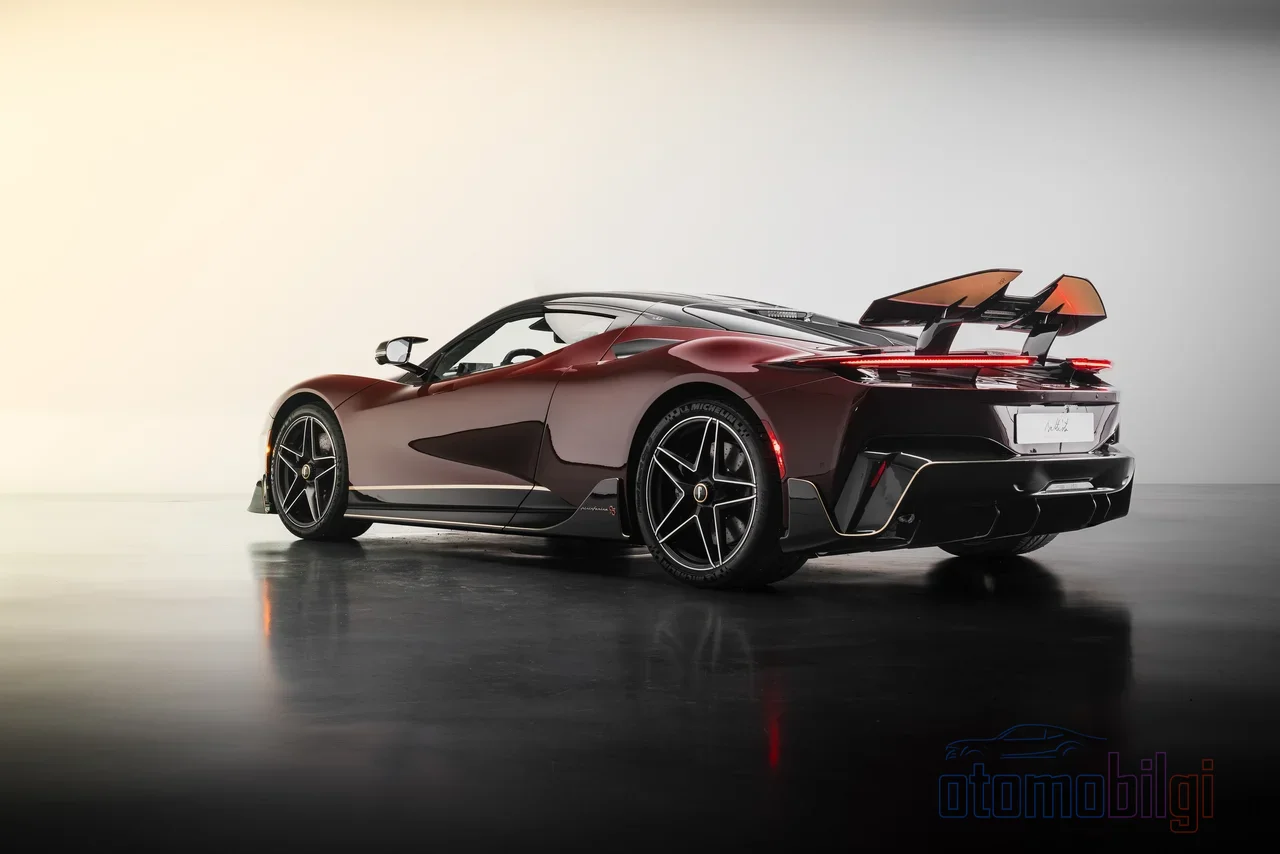
The power distribution is asymmetric: while each rear motor produces 603 bhp, the front motors are at 350 bhp each. This is a classic performance strategy of sending more power to the rear axle, which carries the car's weight during acceleration, so that traction is used most efficiently. The total system output is 1,900 hp (1,400 kW), and the torque is stated as 2,340 Nm in the manufacturer's current press releases. Some early promotional texts mention a figure of 2,300 Nm; the difference stems from the manufacturer updating the official figures it clarified over time.
The real advantage of the four-motor architecture emerges in torque vectoring. When the torque of each wheel can be controlled individually, the car manages its balance in corners not only with brakes and steering, but directly through power distribution. This Rimac-sourced system enables traction to be optimized wheel by wheel within milliseconds, even on wet surfaces.
What Do the Performance Figures Mean?
The officially verified figures are as follows: 0-100 km/h in 1.86 seconds, 0-200 km/h in 4.75 seconds, and 0-300 km/h in under 12 seconds. At the launch in the UAE in November 2022, it was confirmed that along with these figures, 0-60 mph dropped to 1.79 seconds and the 100-0 km/h braking distance to 31 meters; this braking distance was announced as a world record for an electric car. Top speed is electronically limited to 350 km/h.
A comparison is useful to put these figures into context: the Rimac Nevera, which shares the same platform, produces 1,914 hp and 2,360 Nm, and completes 0-100 km/h in 1.97 seconds. With its own verified figure of 1.86 seconds, the Battista is one-tenth of a second faster than its sibling. In terms of physics, this means a powertrain that uses the grip limit of all four tires to the very end.
Highlights
- Total power 1,900 hp, torque 2,340 Nm, four electric motors with all-wheel drive
- 0-100 km/h in 1.86 seconds, top speed 350 km/h (electronically limited)
- 120 kWh T-shaped battery, WLTP range of 476 km
- Only 150 units produced; approximately 1,250 hours of handcrafting per example
- Starting price of 2.2 million Euro + local taxes
T-Shaped Battery and Carbon Fiber Monocoque
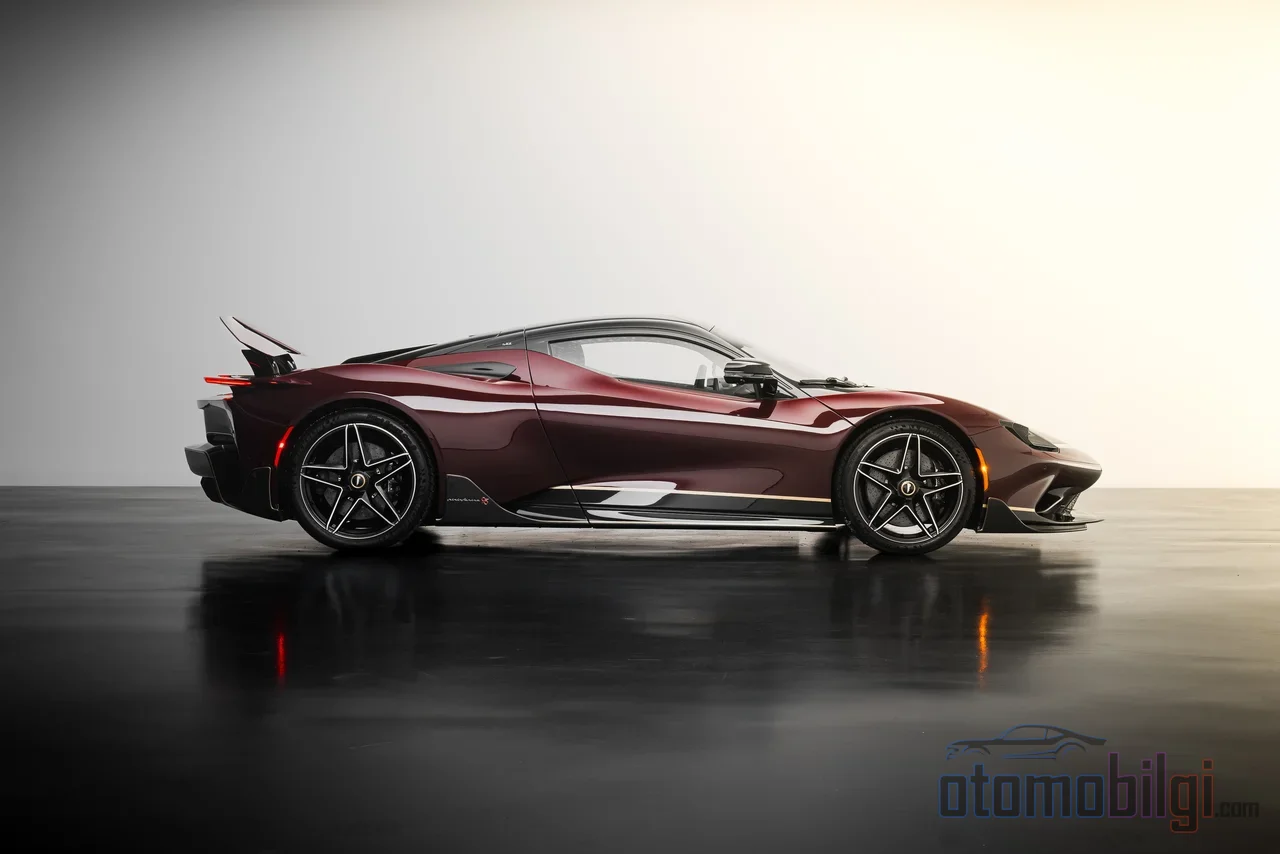
The most critical design decision in the Battista's architecture is the placement of the 120 kWh lithium-ion battery pack. The T-shaped pack carries its main body inside the transmission tunnel, with its cross section located behind the seats. This layout brings two engineering gains: the battery's weight is concentrated at the exact center of the vehicle and as low as possible, thus lowering the center of mass and balancing the car's moment of inertia around its axes.
The pack is mounted in a low-positioned T-shaped carbon fiber frame and reaches a weight of approximately 750 kg. This frame is an integral part of the vehicle's load-bearing structure. This is because the Battista's backbone is a monocoque chassis made entirely of carbon fiber. Since the monocoque structure distributes loads across the entire shell, it eliminates the need for a separate chassis frame; the result is a load-bearing structure that is both lightweight and extremely rigid.
On the powertrain side, things are simple: the single-speed automatic setup does not require a gearbox, thanks to the electric motors producing constant torque across a wide rpm range. The powertrain technology comes from Rimac in Croatia; while the carbon monocoque body, design and handcrafting are the responsibility of the Italian side. The Battista is a joint product of these two engineering cultures.
Range Expectations
The range according to the WLTP cycle is announced as 476 km. In the US EPA combined rating, this figure is at the level of 300 miles. Since this is a 1,900 hp hyper GT, these range figures can be counted among the best in its class; compared to the Nevera's 287-mile combined range, the Battista is one step ahead.
Technical Data at a Glance
| Specification | Value |
|---|---|
| Motors | 4 x electric motors (one per wheel) |
| Total power | 1,900 hp (1,400 kW) |
| Torque | 2,340 Nm |
| Transmission / drive | Single-speed automatic / all-wheel drive |
| Battery | 120 kWh lithium-ion, T-shaped |
| 0-100 km/h | 1.86 s |
| 0-200 km/h | 4.75 s |
| Top speed | 350 km/h (electronically limited) |
| Range (WLTP) | 476 km |
| Price | Starting from 2.2 million Euro + taxes |
The Atelier in Cambiano: The Handcrafted Journey of 150 Vehicles
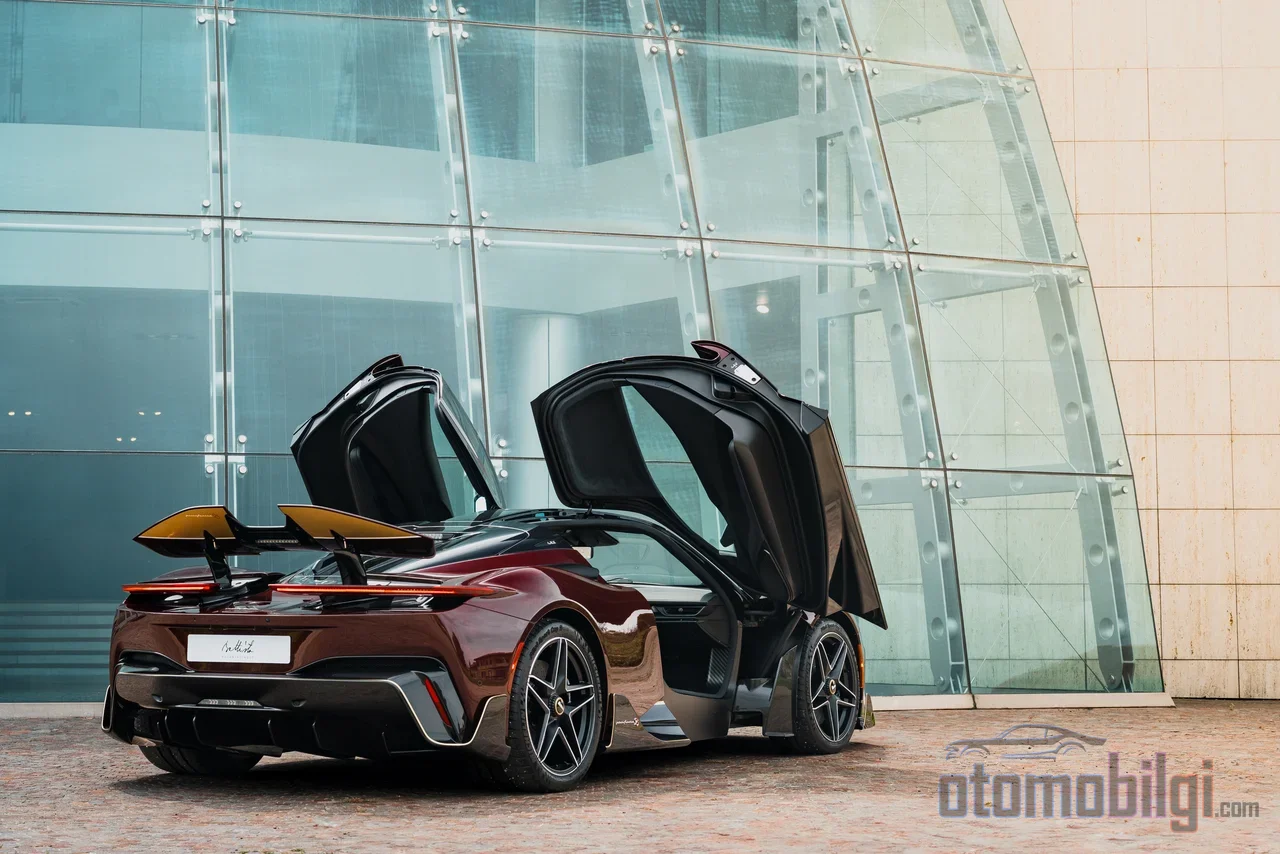
Production began in July 2022 in Cambiano, in Italy's Piedmont region, at the 2,300-square-meter Battista Atelier built for this purpose. Talking about a classic assembly line here would be misleading: the atelier is divided into 14 separate zones, and the production of a single car takes at least 10 weeks.
In the first step of the process, the rolling chassis is taken into evaluation: the carbon fiber monocoque, T-shaped battery, electric drivetrain and electrical systems are brought together, and every component is inspected one by one. The team of 10 craftsmen spends approximately 1,250 hours on each example. This is an intensity that cannot be compared with mass-production cars; for comparison, total production was limited to 150 units, 5 of which were reserved for the special Battista Anniversario version.
The Anniversario was prepared for the brand's 90th anniversary, and with a starting price of around 2.6 million Euro, it is the most special member of the series. Each one carries a three-tone hand-painted finish made up of Bianco Sestriere, Grigio Antonelliano and Iconica Blu colors; for this painting process, the body is disassembled and reassembled three times. Equipped with forged aluminum wheels, the version can reach a top speed of 350 km/h.
Other Special Versions
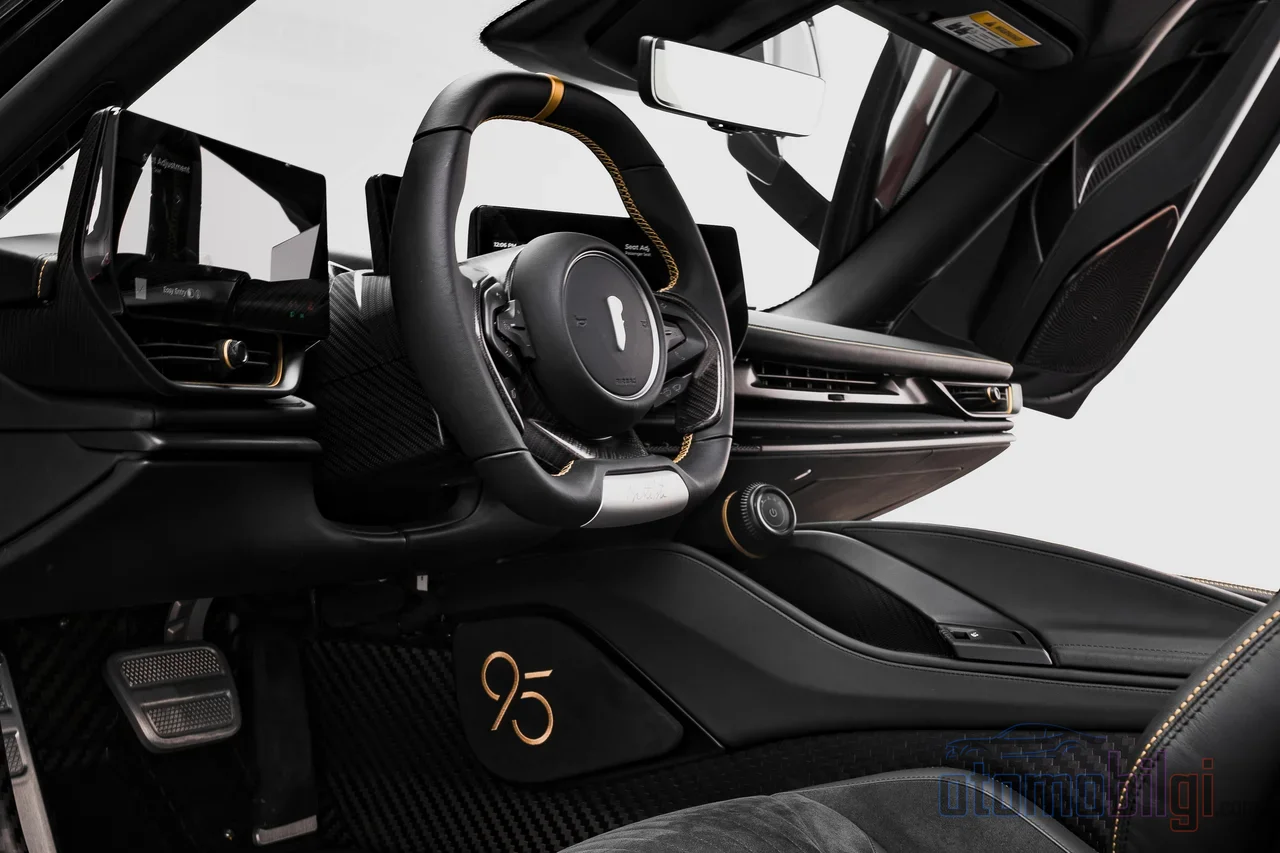
Also, the Cinquantacinque introduced at the Japan launch and the Novantacinque, produced as a single example for the brand's 95th anniversary, are among the most collectible pieces of the 150-unit series. The share allocated to Europe was 50 units, as announced in 2019. Production was completed between 2022 and 2025; meaning it is not possible to order a new Battista today.
How Real Is the Brotherhood with the Rimac Nevera?
The most debated aspect of the Battista is the platform and power transmission technology it shares with the Rimac Nevera. The two cars use the same 120 kWh battery architecture and four-motor torque vectoring system. However, this does not mean they are two versions of the same car: the carbon monocoque body, design language, interior and suspension settings create two entirely different characters.
On the performance side, differences are measured in tenths of a second: The Battista's 1.86-second 0-100 km/h figure puts it ahead of the Nevera's 1.97 seconds. On the price side, the Battista starts from 2.2 million Euro, while the Nevera starts at around 2 million Euro. In the similar electric hypercar segment, the Lotus Evija's 0-100 km/h figure is announced as under 3 seconds; meaning even in this league, the Battista's acceleration figures are in a category of their own.
Where Does 1900 Horsepower Come From? Short Answer
The Battista's 1,900 horsepower is the total of four synchronous electric motors capable of applying independent torque control to each wheel (603 bhp at the rear, 350 bhp each at the front); this power is fed by the 120 kWh T-shaped battery and transferred to the road through a single-speed drivetrain. The torque, meanwhile, comes from the instantaneous torque character of the four motors: 2,340 Nm can be directed to the wheels the moment the throttle is pressed, without waiting for any gear change or rev buildup. This means the electric architecture solves, with zero delay, something that internal combustion hypercars struggle with due to turbo lag and gear shifts.
Assessment
The Pininfarina Battista deserves to be evaluated as one of the cars that opened the electric hypercar era. The six world records confirmed in November 2022 and its finalist position in the 2025 Car of the Year evaluation show that the car was tested not only on paper but also in the real world. The completed series of 150 units stands as the first hand-built hyper GT collection of the electric era in automotive history.
From an engineering standpoint, Battista's true legacy lies in its architecture: the combination of the T-shaped battery placed low at the center of mass, the carbon fiber monocoque, and four-motor independent torque control is the concrete recipe for making this power controllable. 1900 horsepower is a number; the architecture that safely transfers it to the road is the real story.
Sources
- Automobili Pininfarina | Battista
- Automobili Pininfarina | Battista Returns 'Home' to Italy
- Automobili Pininfarina | Made in Italy: Battista Takes to the Road
- Automobili Pininfarina | World Premiere: Battista Anniversario
- Pininfarina Battista 120 kWh (1900 Hp) AWD technical specifications
- 1900-HP Pininfarina Battista Going into Production
- Pininfarina begins building the 1,900-horsepower Battista
- Pininfarina's 1,900 horsepower Battista is one of the fastest EVs on the planet
- Pininfarina Battista unveiled: 1900-horsepower electric