Rimac Nevera: The 2000-Horsepower Electric Summit
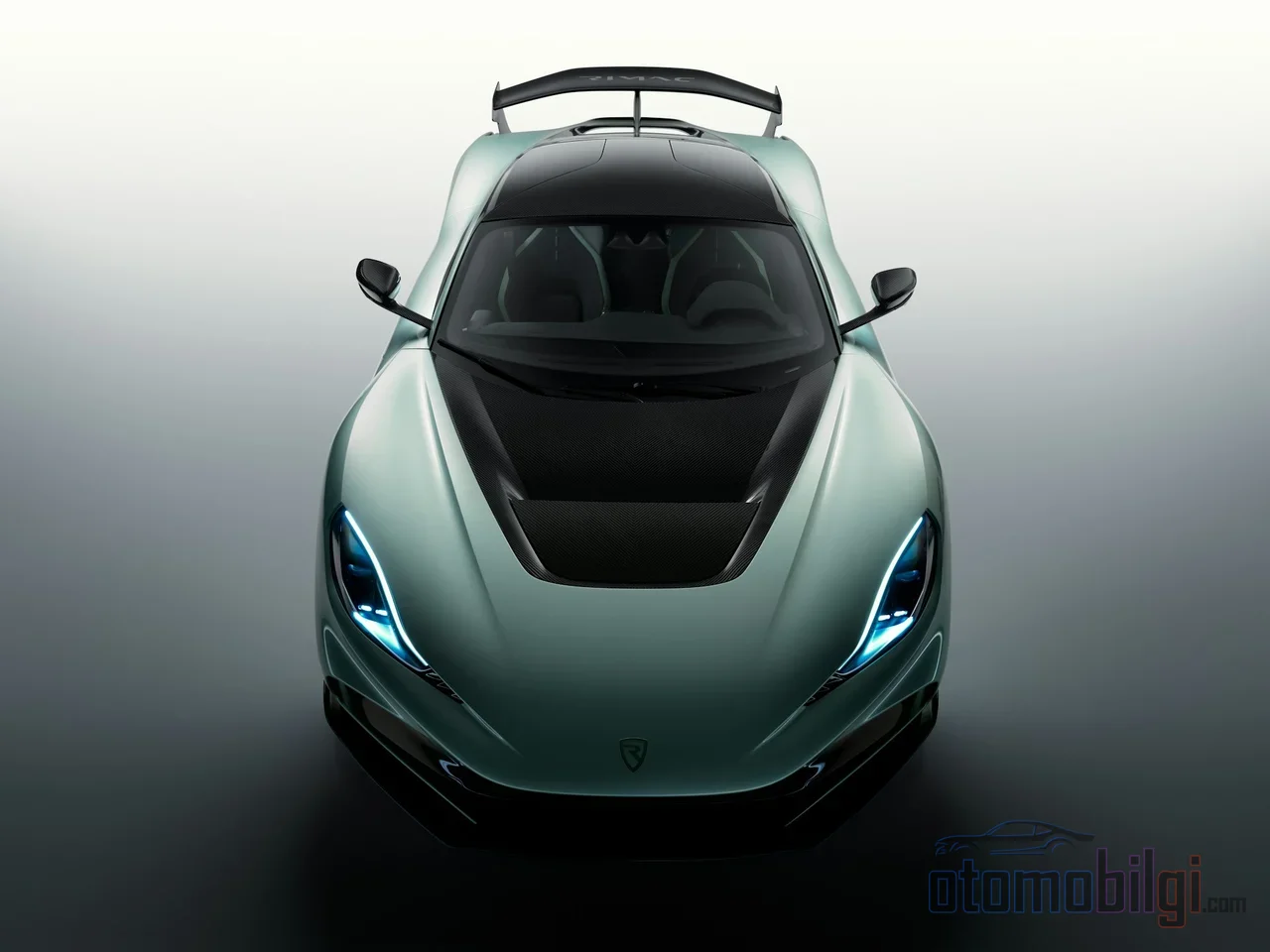
On November 15, 2022, on the flats of Papenburg, four electric motors carried a 2.3-tonne body to 412 km/h and drew a new threshold for series-production electric cars. Rimac Nevera filled the first few pages the hypercar world had devoted to internal combustion engines with these experiments. But this car's story is not limited to a single acceleration run: Before you stands an engineering statement that drives each wheel with an independent motor, runs on an 800-volt electrical architecture, and exceeds 1,914 PS of total power.
The Nevera's launch began as the C_Two concept at the 2018 Geneva Motor Show; the production version took the name Nevera. The name comes from the Croatian word for the short but violent storms that suddenly break out along Croatia's Adriatic coast. As the brand's second production vehicle, the Nevera is hand-assembled at a rate of roughly one car per week at the Sveta Nedelja and Veliko Trgovišće facilities in Croatia.
How Does the Four-Motor Architecture Work?
To summarize the Nevera's technical identity in a single sentence: each of the four wheels is driven by its own carbon-sleeved permanent-magnet synchronous motor and single-speed gearbox. This is a radical departure from the central power unit and drivetrain layout we are accustomed to in internal-combustion hypercars. There is no gearbox, no clutch, and no differential in the classical sense; the entire distribution of torque is managed by software.
The power split is asymmetric: on the front axle, two motors of 226 kW (307 hp) with 270 N·m of torque, and on the rear axle, two motors of 450 kW (612 hp) with 900 N·m of torque. In total, this means 1,914 PS (1,408 kW) of power and 2,360 N·m of motor torque - torque reaching the wheels is at the level of 13,430 N·m. Here, a matter of unit precision is important: seeing values like 1,888 hp in some sources stems from the measurement difference between hp and PS; the vehicle expresses the same physical power in both units.
The heart of the system is R-AWTV, the all-wheel torque vectoring system. The control unit recalculates the torque sent to each wheel more than 100 times per second and distributes it according to grip level. In an internal-combustion hypercar, mechanical differentials and driver reflexes would do this job; in the Nevera, everything is resolved digitally within milliseconds.
Highlights
- Total power: 1,914 PS (standard Nevera), 2,107 PS in the Nevera R
- 0-100 km/h: 1.81 seconds in the standard version, 1.72 seconds in the Nevera R
- Top speed: 412 km/h in the standard version, 431.45 km/h in the Nevera R
- Nurburgring series-production electric record: 7:05.298 (August 2023)
- Production: limited to 150 units for the standard Nevera and 40 units for the Nevera R
Battery, Chassis, and Weight Balance
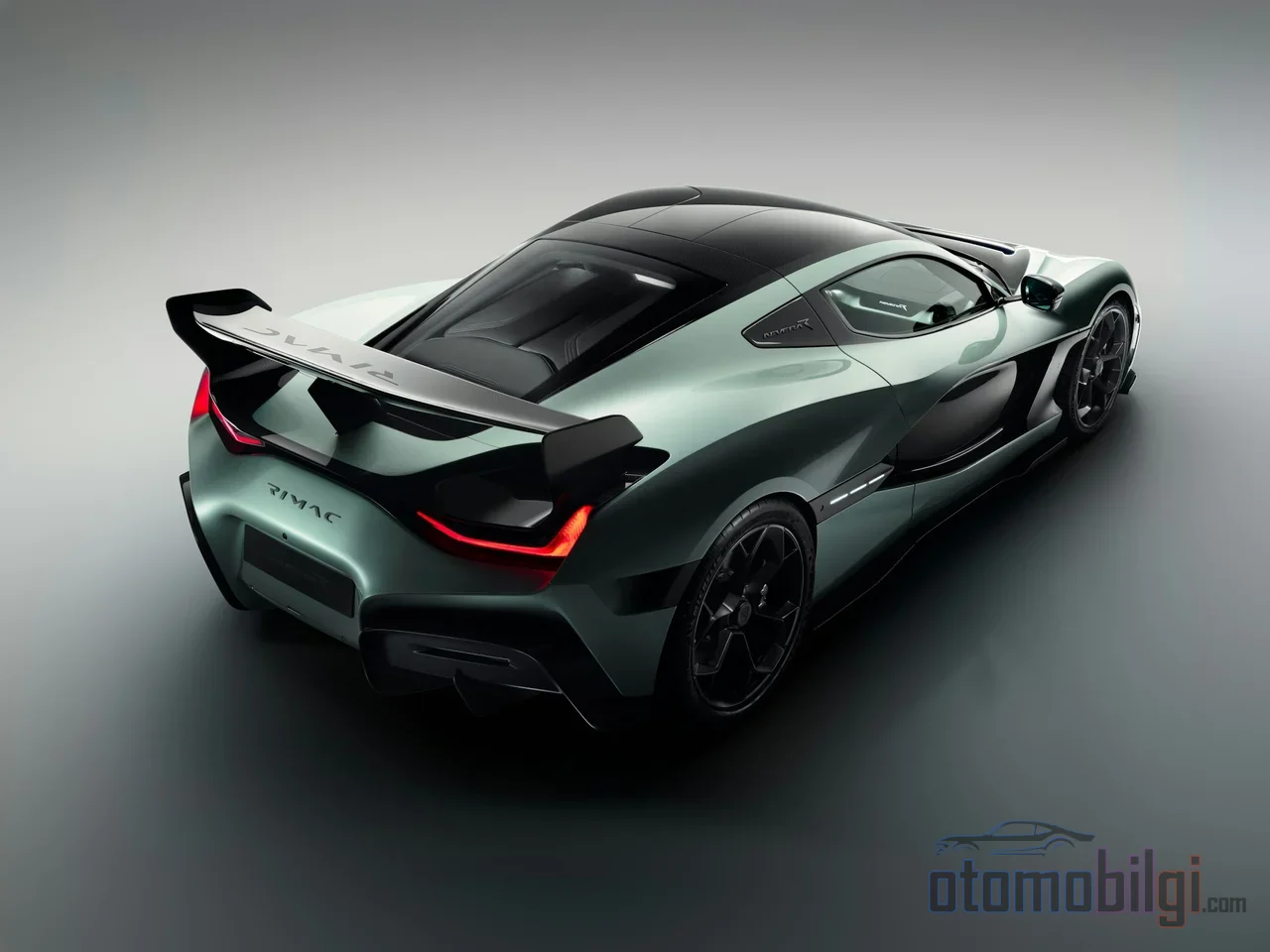
The question that truly challenges an electric hypercar is this: how do you package the battery required to carry 2,000 PS without paying the weight penalty? The Nevera's answer is structural integration. The 120 kWh lithium-manganese-nickel battery consists of 6,960 cylindrical 2170-format cells and is embedded directly inside the carbon fiber monocoque. The monocoque, weighing approximately 200 kg, serves as the core structure carrying both the passenger cabin and the powertrain.
The result: A total weight of 2,300 kg and a weight distribution of 48% front, 52% rear. Although this mass seems high by hypercar standards, it is actively managed through instant torque control of the four motors. The chassis features double wishbone suspension, Brembo carbon-ceramic brake discs, and regenerative braking of up to 300 kW; the tires are Michelin Pilot Sport 4S.
The practical figures on the battery side also point to a usable vehicle profile: With a WLTP range of 489-490 km and 500 kW DC fast charging support, charging from 0% to 80% in 19 minutes. In addition, the vehicle is equipped with 13 cameras, 6 radars, and 12 ultrasonic sensors; the sensor infrastructure required for SAE Level 4 autonomous driving is already in place.
Performance Records: Nevera in Numbers
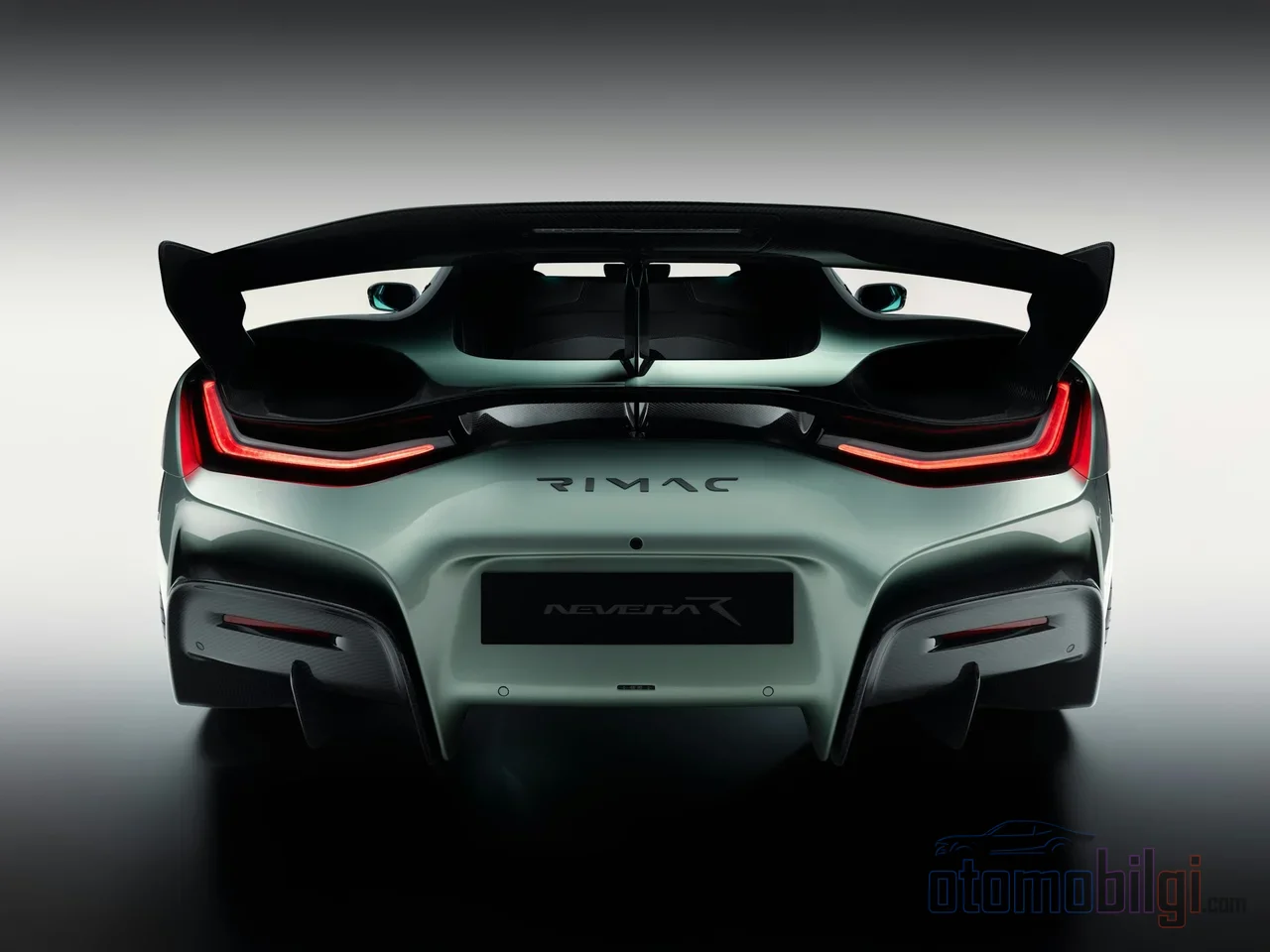
In May 2023, Rimac set 23 performance records in a single day with a standard Nevera. The highlights of this record set are as follows:
- 0-100 km/h: 1.81 seconds (measured with one foot roll-out)
- 0-300 km/h: 9.22 seconds
- Quarter mile: 8.25 seconds
- 0-400-0 km/h: 29.93 seconds
- Top speed: 412 km/h
To be honest about the measurement method: The 1.74-second figure announced for 0-60 mph is based on the so-called one foot roll-out measurement method, in which the first 30 cm of movement is excluded from the time. This method is the main reason why results ranging between 1.66 and 1.88 seconds circulate in different tests; the car is the same, the measurement criterion differs.
Track Records: Goodwood and Nurburgring
Setting aside straight-line acceleration, the Nevera also proved itself on the track. On July 17, 2023, at the Goodwood Festival of Speed, it claimed the record for the fastest production electric car with a climb of 49.32 seconds. The truly impressive result, however, came on August 18, 2023: The car driven by Martin Kodrić broke the production electric car record at the Nurburgring Nordschleife with 7:05.298, beating the previous record by around 20 seconds.
Differences Between the Nevera and the Nevera R
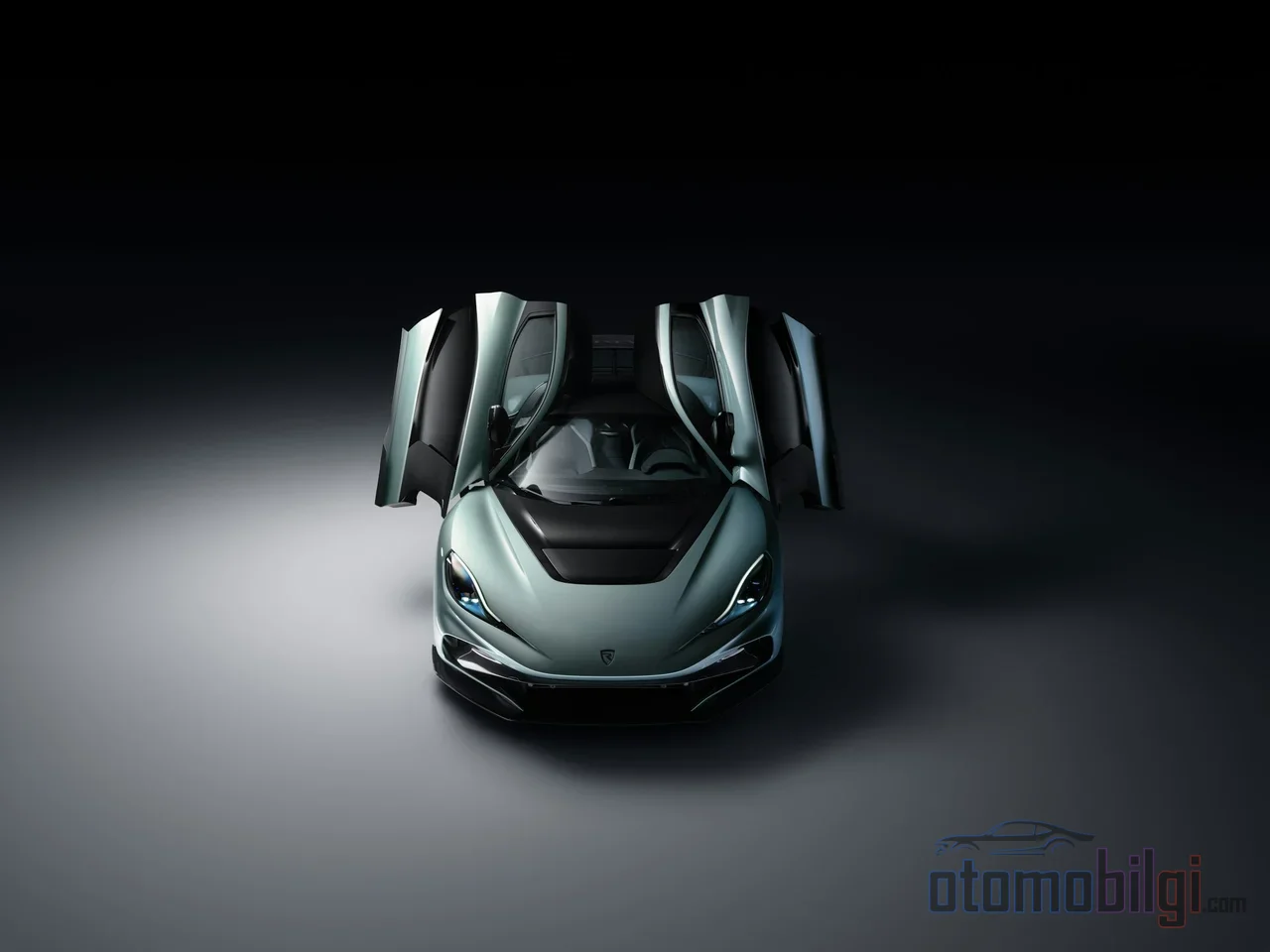
Introduced on August 17, 2024, the Nevera R is built on the technical foundation of the standard model but is a version that differs in three main axes. The motors have been improved; total power was raised to 2,107 PS (1,550 kW), while weight was reduced to as low as 2,265 kg. On the aerodynamics side, a fixed rear spoiler, a large diffuser, and a redesigned front bumper; providing 15% more downforce and 10% higher aerodynamic efficiency. Michelin Cup 2 tires and advanced torque vectoring result in 10% less understeer in cornering behavior.
The Nevera R's Papenburg day on July 10, 2025, was the tangible reflection of these improvements: 24 world records in a single day. The most striking among them is the 25.79 seconds achieved in the 0-400-0 km/h run - this time surpassed the Koenigsegg Jesko Absolut's 27.93-second record from July 2, 2024, and turned the competition between internal combustion and electric into a score this clear for the first time. The Nevera R also claimed the title of fastest electric car with 431.45 km/h; 0-100 km/h was measured at 1.72 seconds, and 0-300 km/h at 7.89 seconds.
| Specification | Nevera | Nevera R |
|---|---|---|
| Total power | 1,914 PS | 2,107 PS |
| 0-100 km/h | 1.81 s | 1.72 s |
| 0-300 km/h | 9.22 s | 7.89 s |
| 0-400-0 km/h | 29.93 s | 25.79 s |
| Top speed | 412 km/h | 431.45 km/h |
| Weight | 2,300 kg | ~2,265 kg |
| Production count | 150 | 40 |
Production Numbers, Price and Availability
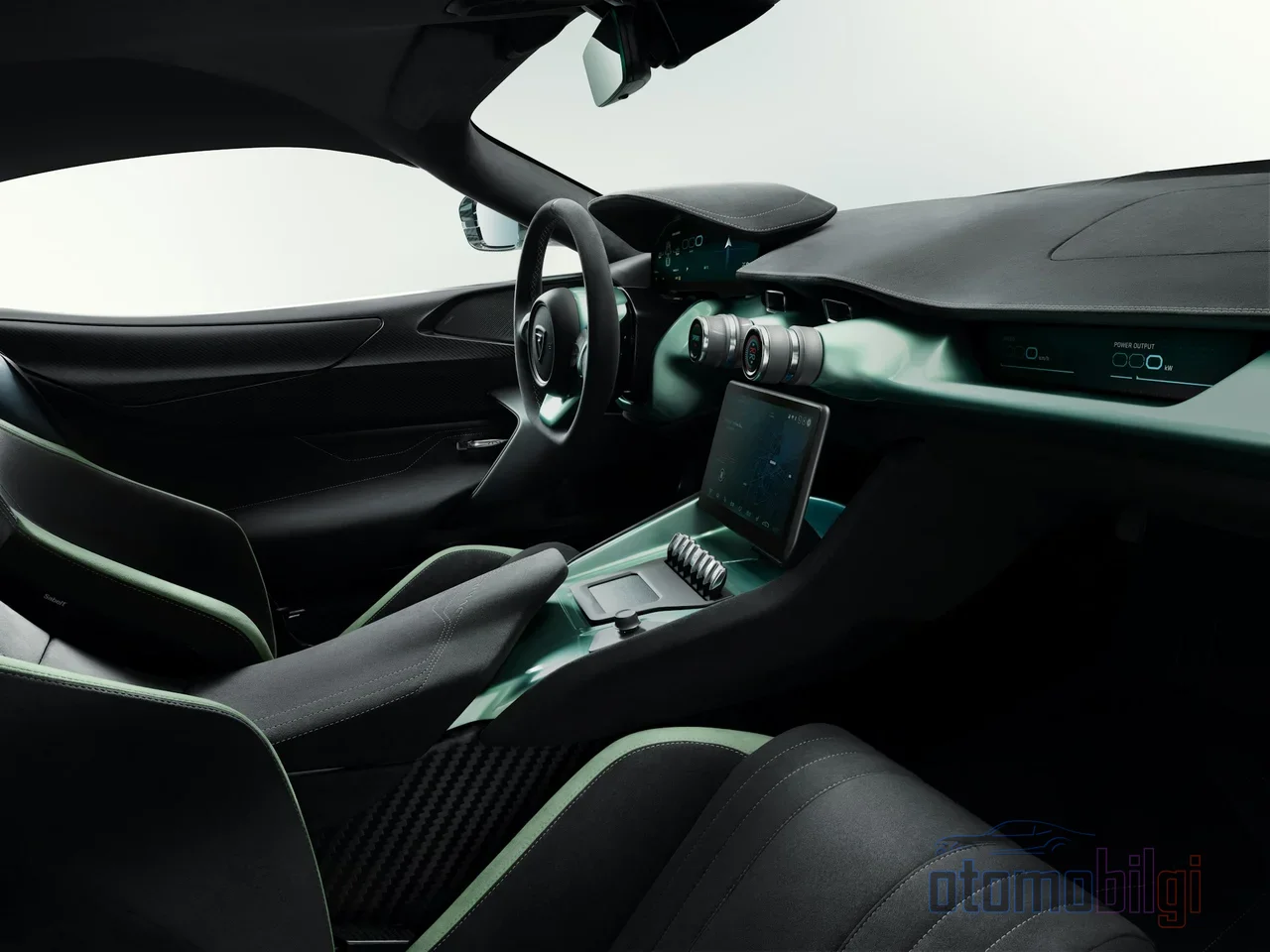
The Nevera has a limited production run of 150 units. The first production car was delivered to Formula 1 champion Nico Rosberg in August 2022; US deliveries began in June 2023. However, the production pace fell behind plan: founder Mate Rimac announced in May 2024 that more than 50 cars had been delivered. Some secondary calculations suggest production ended at a total of 71 cars; officially verified information states that production was limited to 150 units, so caution is needed about the exact number.
On the pricing side, the Nevera R is priced at around $2.5 million and limited to 40 units; additionally, a 10-unit Nevera R Founder's Edition is being offered. For the standard Nevera, a price range starting at around $2.2 million and extending to $3 million is projected for the 2026 model year. Sharing the same platform and assembly line as the Pininfarina Battista, this production setup relies on hand craftsmanship at a pace of one car per week.
The Nevera's Place in Hypercar History
So what do these figures tell us about hypercar history? The short answer is this: With its four-motor electric architecture exceeding the two-thousand-horsepower threshold, the Rimac Nevera is the most concrete proof that the center of hypercar performance has shifted from internal combustion engines to electric powertrains. 0-100 km/h figures dropping to 1.7 seconds, Nurburgring laps approaching under 7 minutes, and speeds exceeding 430 km/h were territories that belonged to the monopoly of internal combustion hypercars a decade ago.
Assessments from the press are also consistent with this profile: automotive journalists described the Nevera as one of the most advanced and most powerful cars ever made, and some found its acceleration unstoppable; the same assessments also noted that braking performance required getting used to and that the design remained calmer than some of its rivals. Even these criticisms do not change the main picture: the Nevera is one of the reference vehicles that define the electric hypercar category.
Ultimately, the Nevera's legacy will be measured not by a single record but by an architectural shift. Four independent motors, structural battery integration, and software-managed torque distribution; these three elements together seem to have already written the spec for the next decade of hypercar engineering.