Aspark Owl: Four Motors, Two Guinness Records
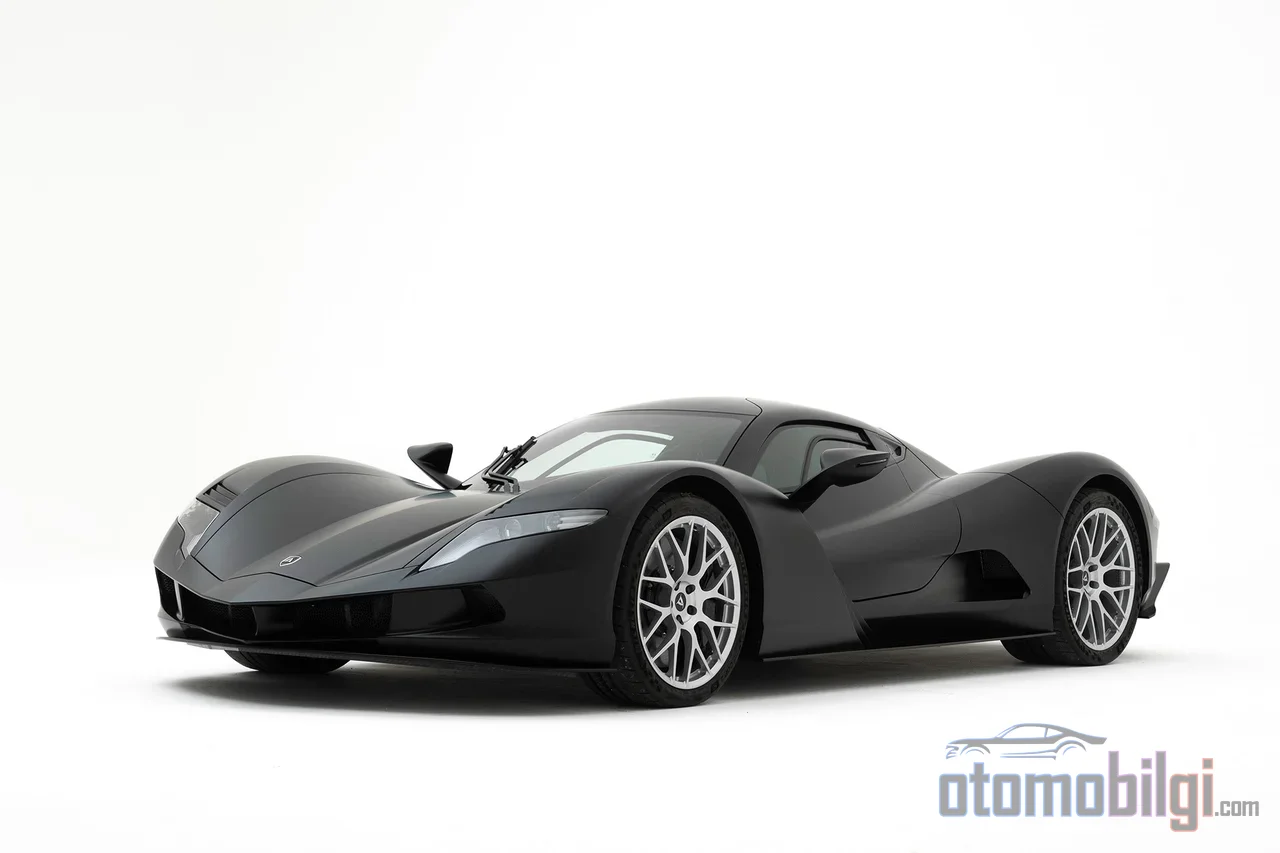
For a car to reach 100 km/h, the speed of a city intersection, in under two seconds is still an engineering feat that is hard to wrap your head around. The Owl model from Japanese engineering firm Aspark is one of the few production cars to drop below exactly this threshold: it holds two Guinness World Records and carries the title of the fastest-accelerating production car with a 0-100 km/h time of 1.78 seconds. In this issue, we take a technical look at the Owl's four-motor electric powertrain, its 120-kilogram carbon fiber monocoque chassis, and its performance in the record attempts, along with the technical data.
What Kind of Project Is the Aspark Owl?
Aspark is an engineering firm founded in Osaka in 2005; it entered the automotive world not as a familiar manufacturer but in the role of supplier and developer. The Owl project began in Japan in 2014. The concept was first unveiled at the 2017 Frankfurt Motor Show, while the production version was introduced at the Dubai International Motor Show in November 2019. Series production ran between 2020 and 2024, with the model year listed as 2021.
Production of the car was undertaken by Manifattura Automobili Torino in Italy. In other words, the Owl is a project where Japanese engineering discipline meets Italian low-volume production know-how. Responsibility for the design and development process lies with founder and CEO Masanori Yoshida. A total production run of limited to 50 units was planned; the Roadster version introduced in September 2025 is limited to 20 units.
Highlights
- Four electric motors delivering a total of 1,953 hp and 2,000 Nm of torque
- 0-100 km/h in 1.78 seconds: the title of the fastest-accelerating production car and two Guinness World Records
- The Owl SP600 set the electric car speed record in June 2024 at 438.7 km/h
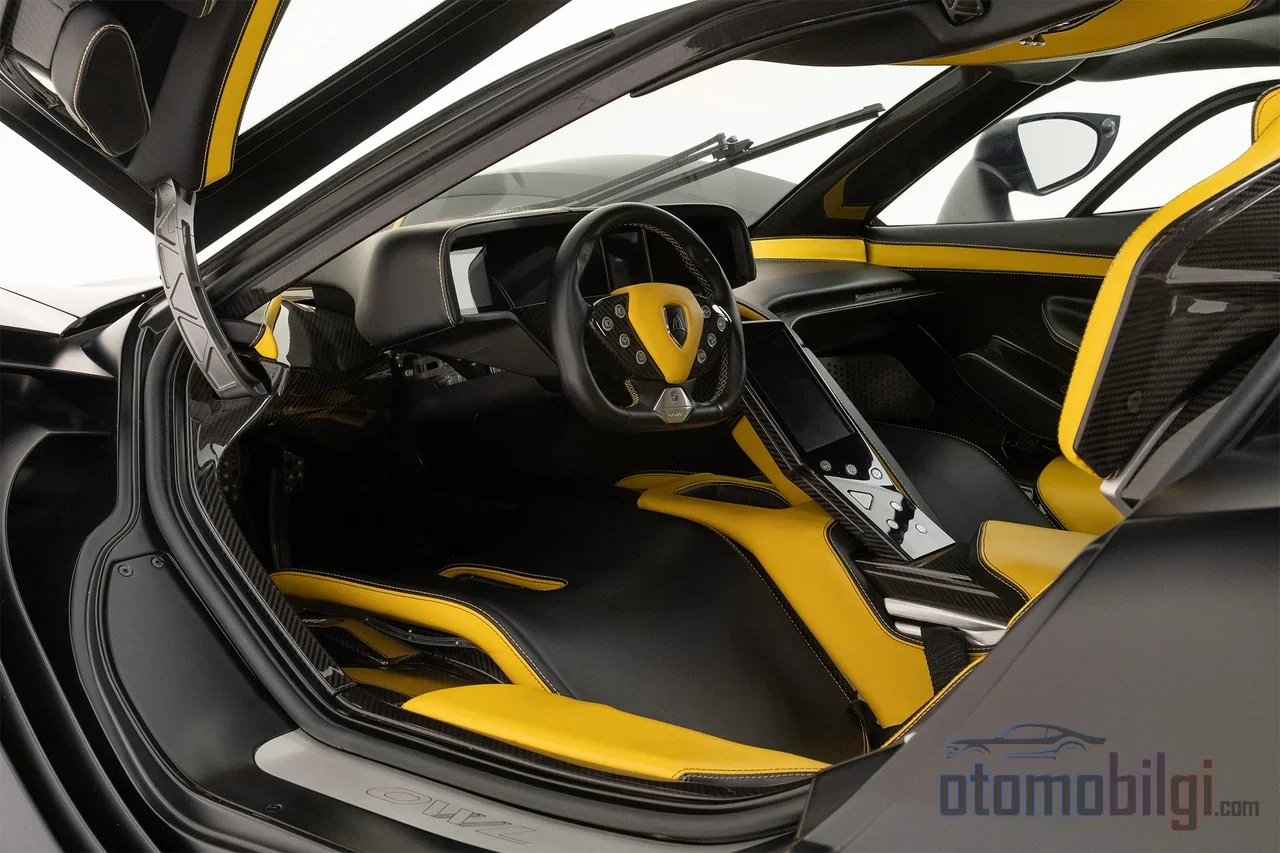
- The carbon fiber monocoque chassis weighs only 120 kg; total weight is 2,000 kg
- A production run of 50 units, with a price range of approximately 2.5-2.9 million euros
The Four-Motor Powertrain: What Do the Numbers Mean?
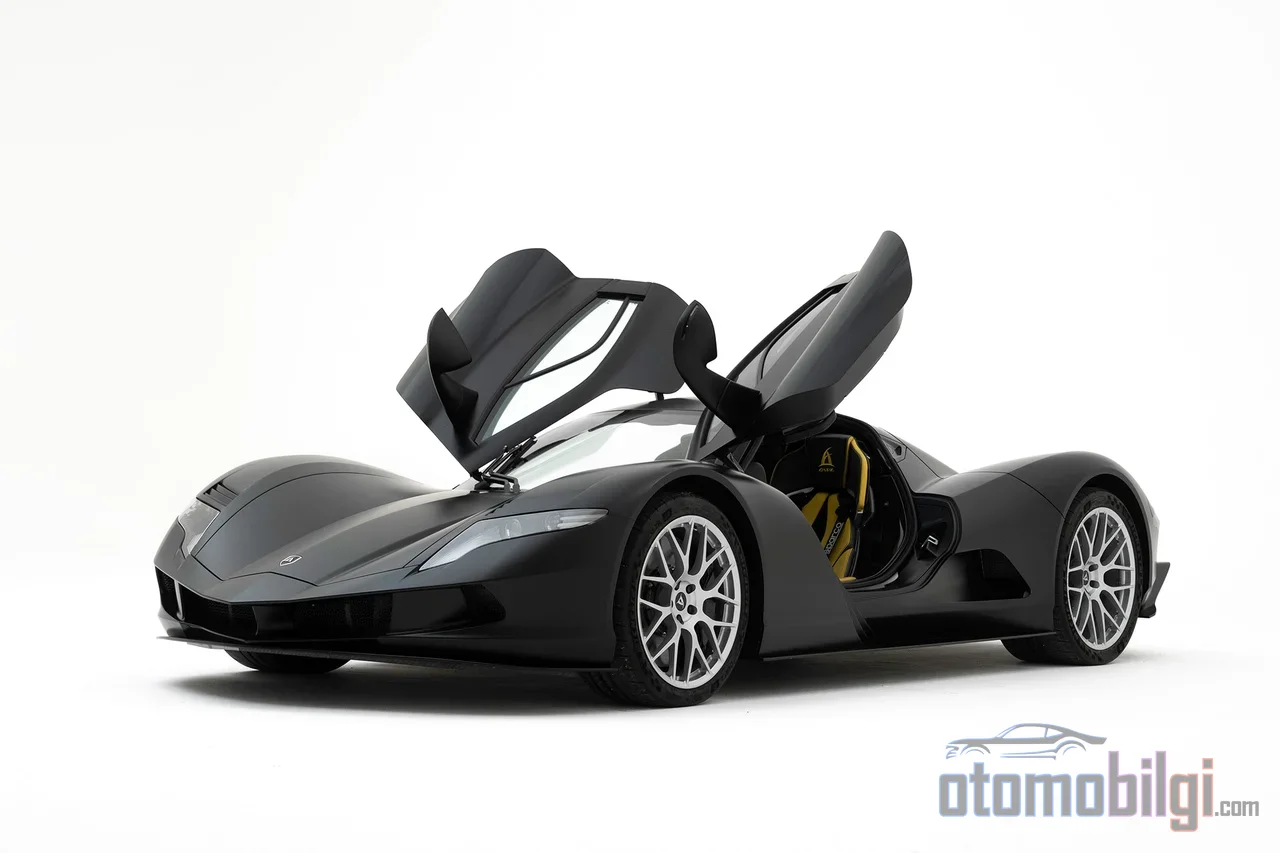
The element that defines the Owl's technical identity is its powertrain architecture. Four electric motors are used, with one motor allocated to each wheel; two motors drive the front axle and two drive the rear axle. This layout achieves all-wheel drive directly by having each wheel produce its own torque.
The system's total output, according to official figures, is 1,953 hp (1,456 kW). There is a small but noteworthy historical difference here: press materials from the 2019-2020 period circulated higher figures such as 1,480 kW and 2,012 hp; the current manufacturer figure stands at 1,953 hp. This difference most likely stems from revisions during the model year and development phase; the official figure valid today is 1,953 hp.
Torque and torque vectoring
On the coupe side, the combined torque figure is 2,000 Nm according to Wikipedia data, while for the Roadster the manufacturer reports 1,920 Nm. The real engineering challenge is transferring this enormous torque to the ground. The Owl manages the torque going to each wheel individually through its torque vectoring system; by distributing different torque to the outer and inner wheels in corners, it optimizes both traction and grip. The official time for 0-100 km/h is 1.78 seconds; the declared value for 0-300 km/h is 10.6 seconds. The manufacturer's early claims also included a figure of 1.72 seconds, and independent V-Box measurements shared verified results of 1.87 seconds. The time that counts for the Guinness record and forms the basis of today's title is 1.78 seconds.
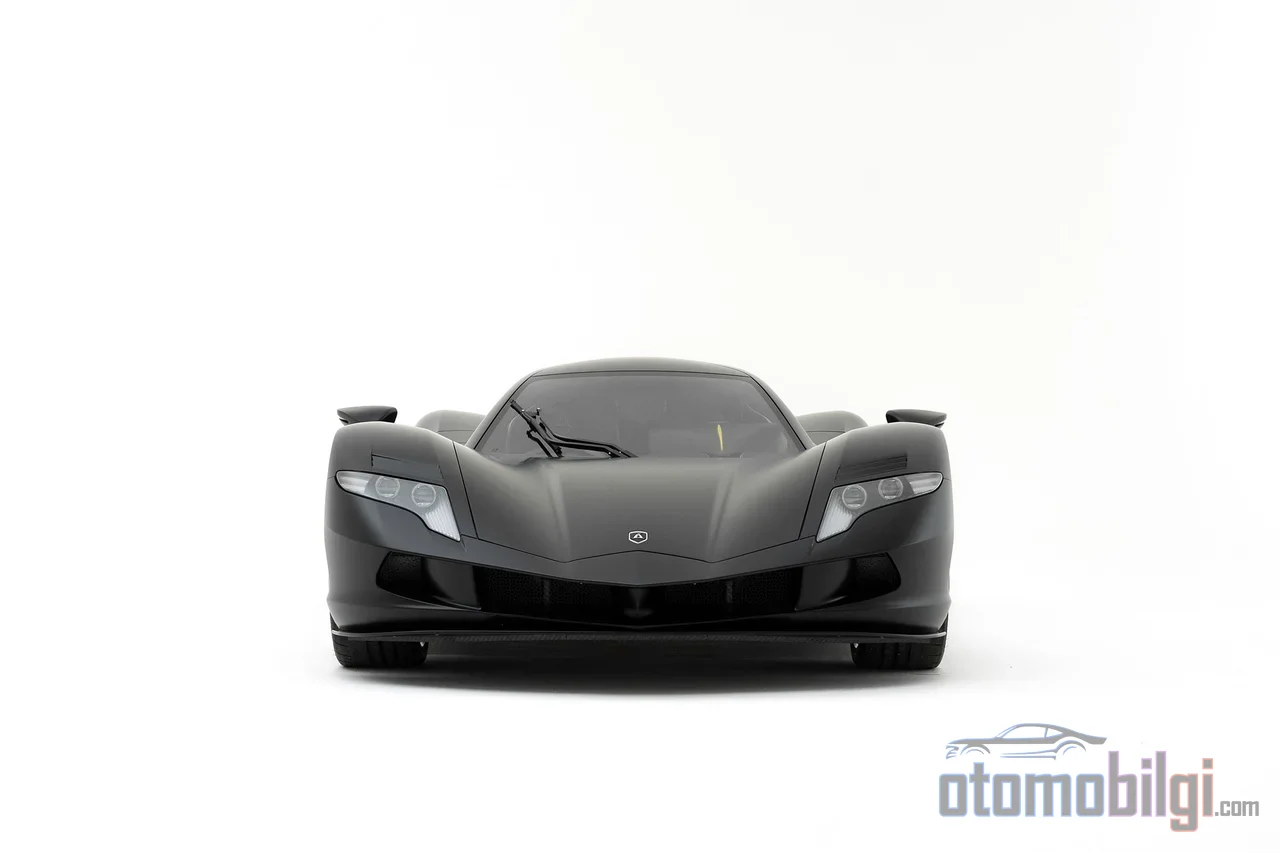
Technical Specifications: Aspark Owl Coupe
| Specification | Value |
|---|---|
| Powertrain | 4 electric motors, all-wheel drive |
| Total power | 1,953 hp (1,456 kW) |
| Total torque | 2,000 Nm |
| 0-100 km/h | 1.78 s (Guinness time) |
| 0-300 km/h | 10.6 s (manufacturer's claim) |
| Top speed | 413 km/h |
| Battery | 69 kWh lithium-ion |
| Range | 451 km |
| Full charging time | Approximately 40 minutes |
| Dry weight | 2,000 kg |
An honest note is needed for two items not shown in the table: the consumption figure and trunk capacity were not disclosed by the manufacturer. On the range side, the manufacturer's conservative claim of around 400 km stands alongside the 451 km figure based on cycle tests; in real-world use, a band of 400-450 km is a reasonable reference.
Carbon Monocoque Chassis and the Weight Calculation
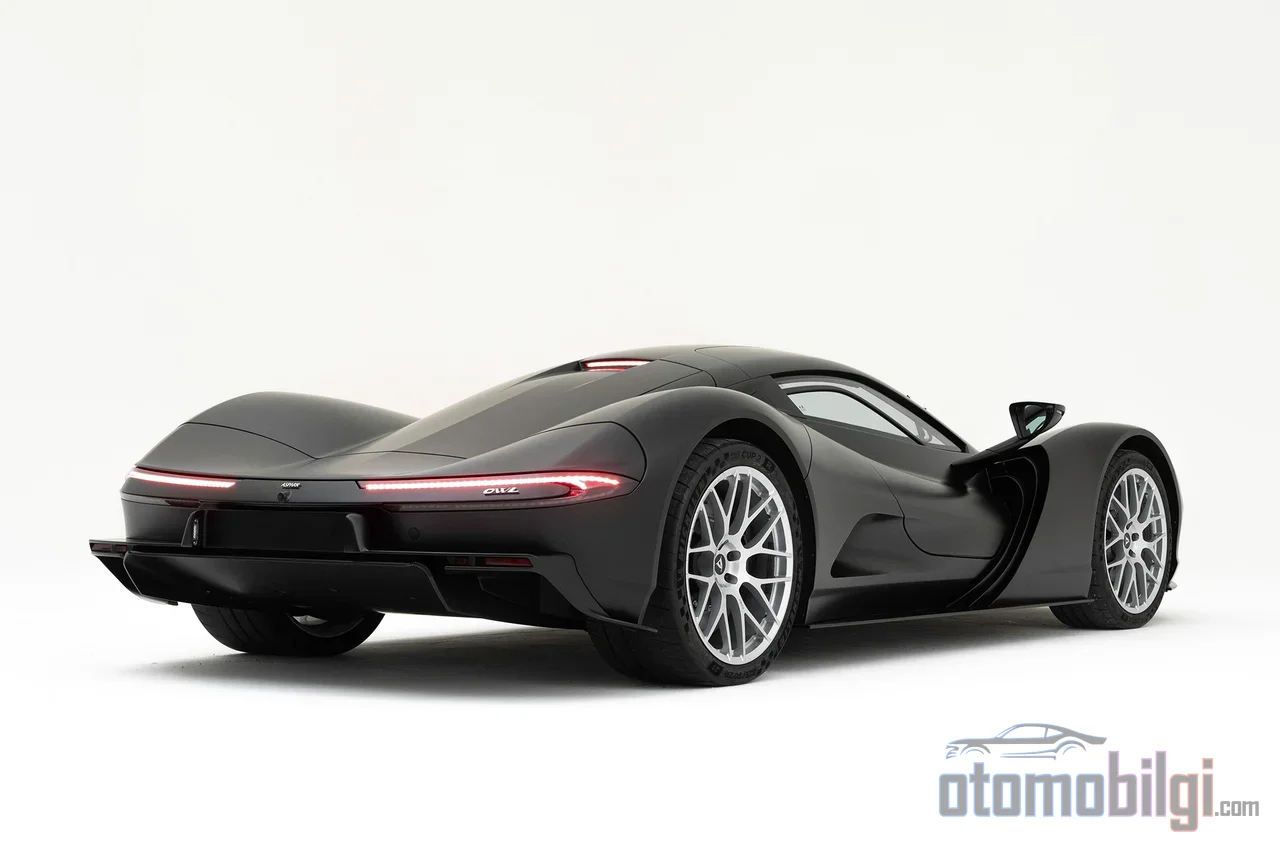
With the battery exceeding 600 kg inside the 2,000 kg total weight, the answer to how this figure remains so low lies in the chassis. The Owl has a full carbon fiber monocoque structure, and this monocoque weighs only 120 kg. The Coupe version has a stainless steel support structure in the roof; in the Roadster, this element is naturally absent.
Let's do a simple calculation: The ratio of 1,953 hp to 2,000 kg means approximately one horsepower per kilogram. According to the approach mentioned in the information note, roughly 44 kg corresponds to every 43 hp. This power-to-weight ratio explains the mathematics behind acceleration times dropping below two seconds: When 2,000 Nm of torque is instantly distributed to all four wheels, the traction limit falls to the tires, and the Owl manages this limit with special tires.
Suspension, brakes and battery
The suspension is set up with double wishbone arrangements at all four corners and hydraulic dampers. On the braking side, carbon-ceramic discs are used; the front axle is squeezed by 10-piston calipers, the rear axle by 4-piston calipers. Regarding the battery, the Owl carries a dedicated battery monitoring system at the head of the 69 kWh lithium-ion package. The detailed architecture of the battery cooling system was not disclosed by the manufacturer; it is clear that battery thermal management is critical during 2,000 Nm instant torque traction events, but the technical details have not yet been shared. Manifattura Automobili Torino emphasizes that the low total weight is preserved thanks to the monocoque structure despite the battery weight exceeding 600 kg.
Record Attempts: 438.7 km/h and Beyond
On June 8, 2024, Owl's developed prototype, the SP600, reached a speed of 438.7 km/h at the Automotive Testing Papenburg facility in Germany, breaking the Rimac Nevera's electric car top speed record and claiming the title of the world's fastest electric hypercar. This was the highest point of the Owl story.
But this title did not last long. In August 2025, BYD's Yangwang U9 Track Edition reached a speed of 472.41 km/h, taking the electric top speed record from the Owl. Soon after, the bar was raised even further when a value of 503.17 km/h was reported with the Yangwang U9 Xtreme. Therefore, the correct description of the Owl today is this: the top speed record is not in its hands, but the title of the fastest-accelerating production car with its 0-100 km/h time of 1.78 seconds still stands. On the other hand, it should also be noted that on the Rimac side, the Nevera R was announced to have set 24 performance records, including 0-400-0; the competition in the acceleration field continues in every respect.
Owl Roadster: A New Chapter in September 2025
In September 2025, Aspark held the world premiere of the Owl Roadster at the Salon Automobile event in Lyon. The event also marked the first time the three Owl models - the road-legal coupe, the SP600 prototype, and the Roadster - were displayed together on the same stage. At the same event, Aspark also announced that it had established a sales network in Europe, the Middle East, and Asia.
Technically, the Roadster shares the same backbone as the coupe, but it has its own character: 1,953 hp of power, 1,920 Nm of torque, 0-100 km/h in 1.78 seconds. The top speed is stated as 413 km/h; for road use, it is electronically limited to 350 km/h. The 69 kWh battery, a range of over 250 km, and a dry weight of 1,900 kg are the other key figures. The car comes with 20-inch wheels and Michelin Pilot Sport Cup 2R tires; hydraulic double-wishbone suspension, an active rear spoiler, and four drive modes - Rain-Snow, City-Comfort, Sport-Dynamic, and High Boost - are part of the hardware. Production is limited to 20 units, and the price is estimated to be above the $3.5 million level.
Dimensions, Price, and the Reality of Ownership
The Owl's silhouette is unusually low: the height is just 910 mm. Length is 4,791 mm, width is 1,914 mm. These measurements, together with the 910 mm roofline, create a visual identity that is etched into the memory of anyone who sees the Owl on the road.
On the price side, a base value of 2.5 million euros stands out for the coupe version; figures such as 2.9 million euros and 3.2 million dollars also appear in different periods and sources. The production run of 50 units and this price band show that the Owl is positioned as a collector's item beyond being a performance vehicle. Aspark's new sales network aims to deliver this small fleet to buyers in Europe, the Middle East, and Asia.
Conclusion: Where Does the Owl Stand?
When evaluating the Owl, two separate record categories need to be distinguished from each other. The top speed record, despite the 438.7 km/h achievement in 2024, no longer belongs to the Owl; Yangwang's 472.41 km/h in 2025 and the subsequent 503.17 km/h changed the picture. In contrast, the situation is different on the acceleration front: The 0-100 km/h time of 1.78 seconds, two Guinness World Records, and its four-motor torque-vectoring architecture keep the Owl at the very peak of acceleration among production cars.
The Aspark Owl's real achievement is that it has established a measurable reference point for what an electric hypercar can do. Four motors, a 120 kg carbon monocoque, and roughly one horsepower per kilogram: this trio is the engineering equation behind the 1.78-second time. The acceleration record will of course one day pass to someone else; but the Owl has already secured its place in hypercar history as the first and clearest production car to go under this threshold.