Rimac Nevera R: 2,107 Horsepower and 24 World Records
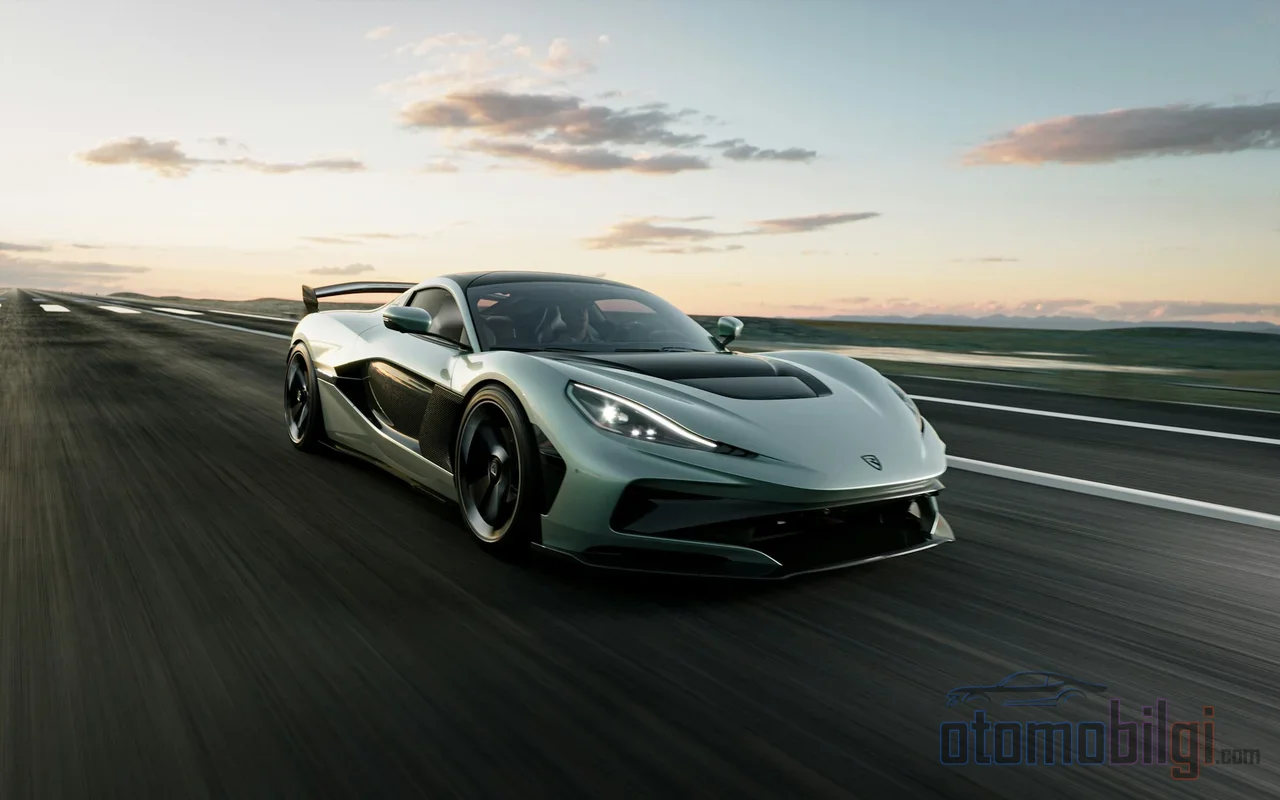
The Rimac Nevera was a car that rewrote the definition of the electric hypercar class; but for Rimac engineers, this was by no means a finished story. The standard Nevera was designed as a Grand Tourer: long-distance comfort, four seats, and a four-motor powertrain with 1,814 hp. Some customers, however, wanted something far more aggressive and corner-focused from the same platform. The answer was the Nevera R: 2,107 hp, an aerodynamic package renewed from front to rear, and a production run planned at just 40 units. So how exactly different is this R version from the standard Nevera? This page examines the Nevera R only as a model in its own right.
From Hyper GT to Hyper Sportscar
Rimac positions the standard Nevera as a Hyper GT; in the brand's classification, the Nevera R is a Hyper Sportscar. This is not a marketing nuance, but a definition that summarizes the car's development goal. Mate Rimac, the founder of the Nevera family, openly explained that the standard model was developed with a Grand Tourer character, while the R version was born specifically to highlight cornering ability. The numbers also confirm this intent: The Nevera R completes a full lap of the Nardo test track 3.8 seconds faster than the standard Nevera.
There is no single change that makes this possible. The increase in the powertrain, the comprehensive aerodynamic revision, new tires, and retuned chassis control systems all work together. Only about 30 percent of the car's parts are carried over from the standard Nevera; the rest was designed for the R. One detail Mate Rimac emphasized is striking: the R has the largest and stiffest carbon fiber structure ever made.
Highlights
- Total power 2,107 hp, with four electric motors
- 0-100 km/h in 1.81 seconds; 1.72 seconds in its record run
- Top speed 412 km/h; 431.45 km/h in the record attempt
- Production run 40 units; according to current reports, only 20 remain
- Downforce increase of 15 percent, with a 10 percent improvement in aerodynamic efficiency
2,107 hp: What Changed in the Powertrain?
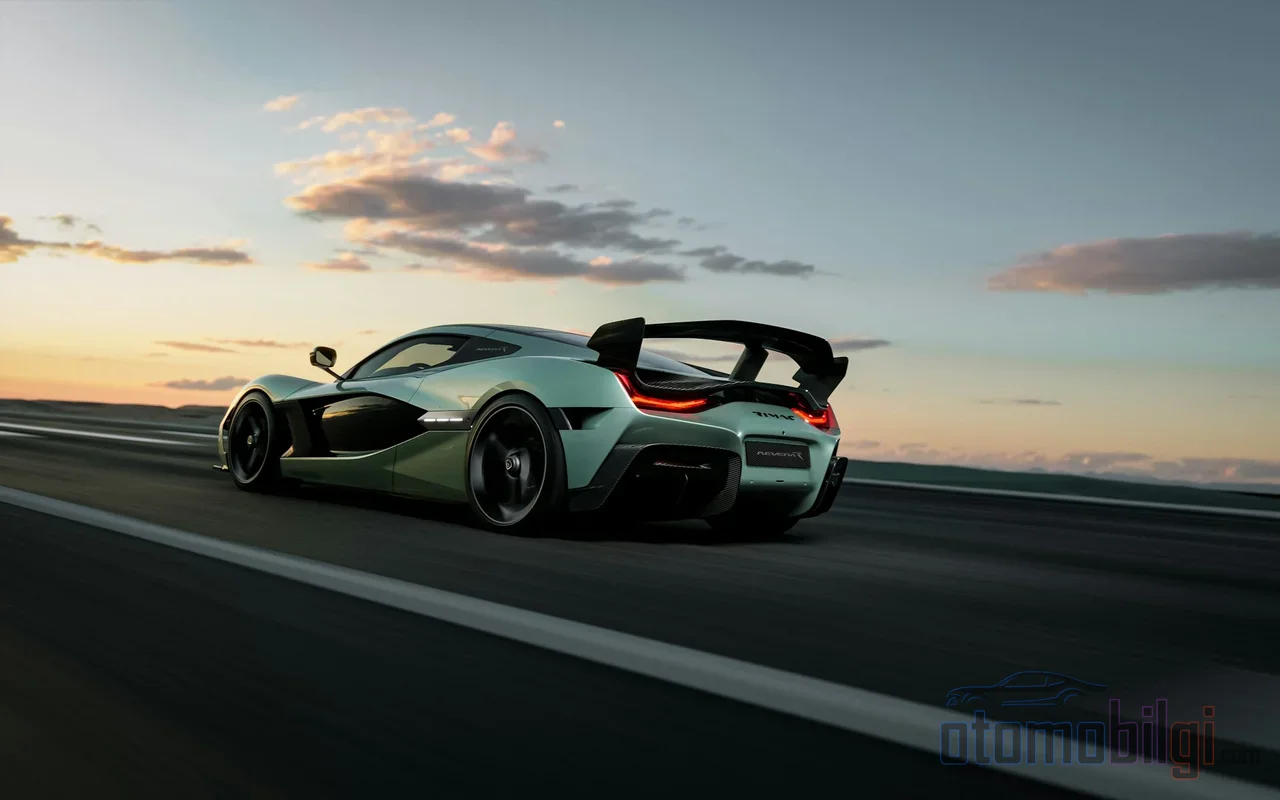
The Nevera R uses four electric motors, just like the standard model; each wheel is driven by its own motor. The difference lies in output power: while the standard Nevera produces 1,814 hp, the R reaches 2,107 hp. This means an increase of roughly 293 hp and is concrete proof of how quickly electric power can be scaled.
The torque question
The situation on the torque side is somewhat more complicated. Rimac has not shared the R version's peak torque figure in its official technical documents. Technical data lists in the automotive press put the value at 2,360 Nm; that is the same level as the 2,360 Nm the manufacturer itself reports for the standard Nevera on its own page. So the power increase appears to come largely from a widened rev range and expanded power electronics, but this interpretation is based not on an official statement, but on a comparison of the two cars' data sheets.
New battery architecture
The more significant engineering change is in the battery. The Nevera R uses a new-generation 108 kWh Rimac battery pack. Where the standard Nevera uses NCA (nickel-cobalt-aluminum) chemistry, the R has an NMC (nickel-manganese-cobalt) pack arranged in a T shape. The reason for this choice is track use: NMC chemistry behaves more stably under high and sustained power draw. In short, the R was designed not for a one-off acceleration show, but for repeatable performance lap after lap.
Performance: 0-100 in 1.72 Seconds and 24 World Records
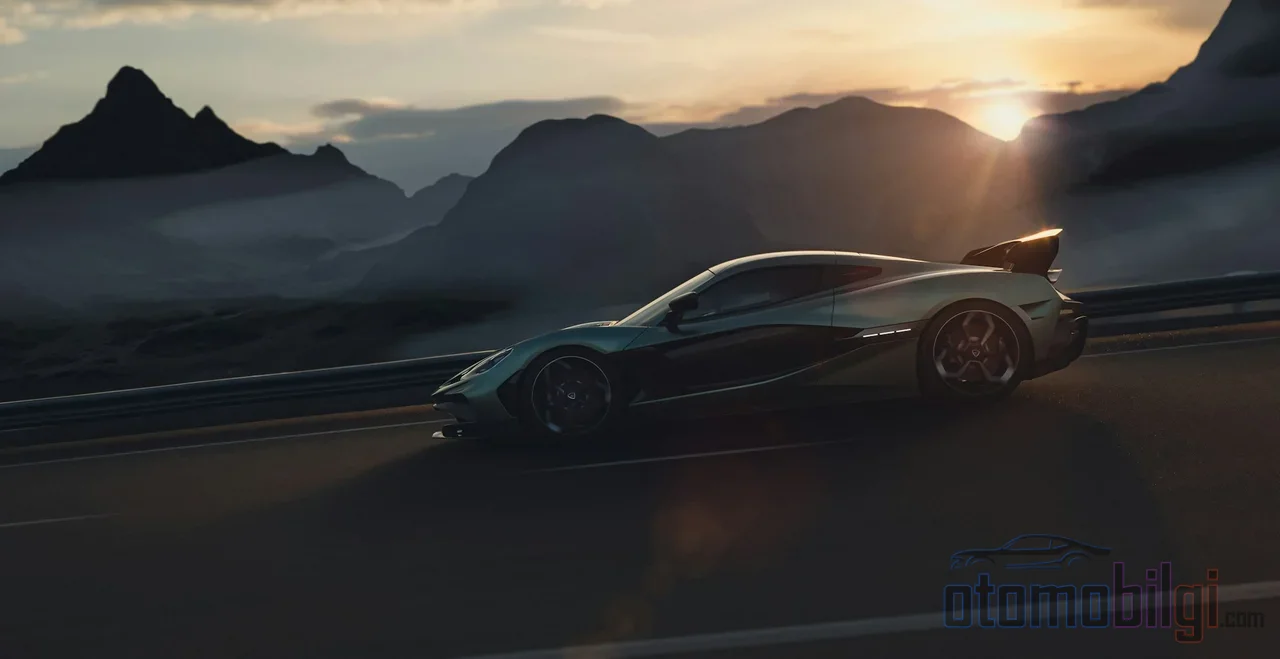
The Nevera R's spec-sheet figures are striking on their own: 0-100 km/h in 1.81 seconds, 0-200 km/h in 4.38 seconds, 0-300 km/h in 7.89 seconds. But the real story was written on July 10, 2025, at the Automotive Testing Papenburg track in Germany. There, the Nevera R set 24 world records in a single day: 0-100 km/h dropped to 1.72 seconds, top speed reached 431.45 km/h, and the 0-400-0 km/h run was completed in 25.79 seconds. On the same day, another separate record was logged by reaching 275 km/h in reverse in 17.79 seconds.
The record run also produced an interesting result on the 0-60 mph side: The Nevera R completed it in 1.66 seconds, breaking the standard Nevera's 1.74-second record. The top speed value in the manufacturer's catalog is stated as 412 km/h; 431.45 km/h, meanwhile, is the result of the special record attempt, and these two figures describe different contexts.
Honesty is required on the range front: There is no certified range figure for the Nevera R yet. Rimac targets approximately 250 miles (around 400 km) on the WLTP cycle; According to the US EPA methodology, this value is expected to roughly correspond to 213 miles. On the charging side, peak power is 500 kW and the onboard charger is at the 22 kW level.
Aerodynamics, Tires and Chassis: The R's Real Difference
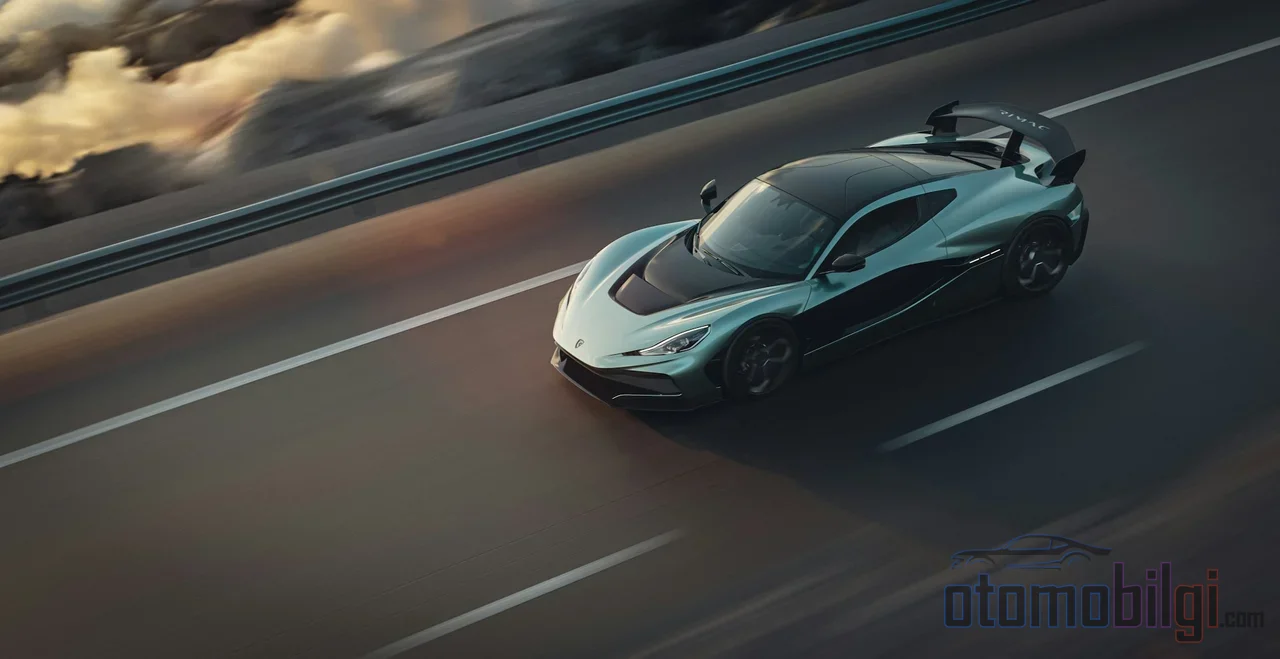
While the power increase is the most striking number at first glance, what truly makes the R an R is the reworking of aerodynamics and mechanical grip. A newly designed one-piece front clip and front splitter at the front, and an enlarged diffuser and a large fixed rear spoiler (two-piece construction, for weight savings) at the rear, redefined along the entire vehicle. The result: a 15 percent increase in downforce and a 10 percent increase in aerodynamic efficiency compared to the standard Nevera.
The tires are a critical part of this equation. The Nevera R comes with Michelin Pilot Sport Cup 2 tires, and this switch has measurable results: understeer is reduced by 10 percent overall, and lateral grip increases by 5 percent. Rimac's new-generation R-AWTV (Rimac All-Wheel Torque Vectoring) torque vectoring system was recalibrated from the ground up to exploit the potential of these high-performance tires; the traction control system was revised, drift mode was adapted to the new tires, and the steering system was sharpened.
On the braking side, EVO2 carbon-ceramic brakes are used; the silicon matrix layered structure was improved over the previous generation, especially in terms of cooling and track durability. The wheel sizing is also specific: 20-inch at the front, 21-inch at the rear, with newly designed wheels. The characterization Mate Rimac puts forward for the Nevera R is ambitious: the only car in the world that brakes as fast as it accelerates in a straight line. This is a manufacturer claim; but the 0-400-0 time of 25.79 seconds shows there is serious engineering behind the claim.
Nevera R and Standard Nevera: Technical Comparison
| Feature | Nevera R | Standard Nevera |
|---|---|---|
| Total power | 2,107 hp | 1,814 hp |
| Number of motors | 4 electric motors | 4 electric motors |
| 0-100 km/h | 1.81 s (record: 1.72 s) | Standard Nevera holds the 0-60 mph record at 1.74 s |
| 0-300 km/h | 7.89 s | Not additionally disclosed by the manufacturer |
| Top speed | 412 km/h (record: 431.45 km/h) | Not disclosed by the manufacturer in comparison with the R |
| Battery | 108 kWh, NMC (T-shaped) | 108 kWh, NCA chemistry |
| Charging power (peak) | 500 kW | Not disclosed by the manufacturer in comparison with the R |
| Production count | 40 planned (20 produced) | 150-190 planned (71 produced) |
| Estimated price (USA) | Approximately 2.5 million dollars | Not disclosed by the manufacturer on this page |
What stands out in the table is that although the two cars sit on the same architecture, they differ in almost every measurable area. The power difference is 293 hp; yet the improvement in 0-100 km/h is at the level of tenths of a second. The reason is simple: the standard Nevera was already operating at the limits of physics. The real gain the R delivers lies in cornering and sustained performance, as seen in the 3.8-second lap time reduction at Nardo.
The Production Story: 40 Planned, 20 Produced
When it was announced that the Nevera R was planned for a limited production of 40 units, its price also became clear: approximately 2.5 million dollars in the US market. Deliveries were targeted to begin in 2025; it was announced at the 2025 Monterey Car Week that the first 10 cars would be prepared as the Founder's Edition. The car also won a design award such as the Red Dot Design Award.
However, the current chapter of the story did not unfold as expected. Nevera production ended at a total of 71 vehicles without reaching the planned number; on the Nevera R side, only 20 of the 40 planned cars were produced. This makes the R version not only powerful, but also a collector's piece that exited production early.
Conclusion: How Does the R Differ from the Standard Nevera?
The short and clear answer: The Nevera R is a corner-focused version, limited to a planned run of 40 units, that raises the standard Nevera's 1,814 hp to 2,107 hp, features a new 108 kWh battery with NMC chemistry, Michelin Pilot Sport Cup 2 tires, an aerodynamic package producing 15 percent more downforce, and a retuned torque vectoring system. There are improvements in acceleration and top speed figures; but the real transformation lies in its track character.
From an engineering standpoint, the Nevera R is less a power update and more a change of philosophy. No matter how fast the standard Nevera was, it preserved the balance of a Grand Tourer; Whereas the R deliberately broke that balance. The 0-100 in 1.72 seconds, the record speed of 431.45 km/h, and the 0-400-0 time of 25.79 seconds are the measurable results of this decision. Ending production with just 20 examples leaves this car firmly in place as one of the most radical pages of the electric hypercar era.