Czinger 21C: The Hypercar Made with a 3D Printer
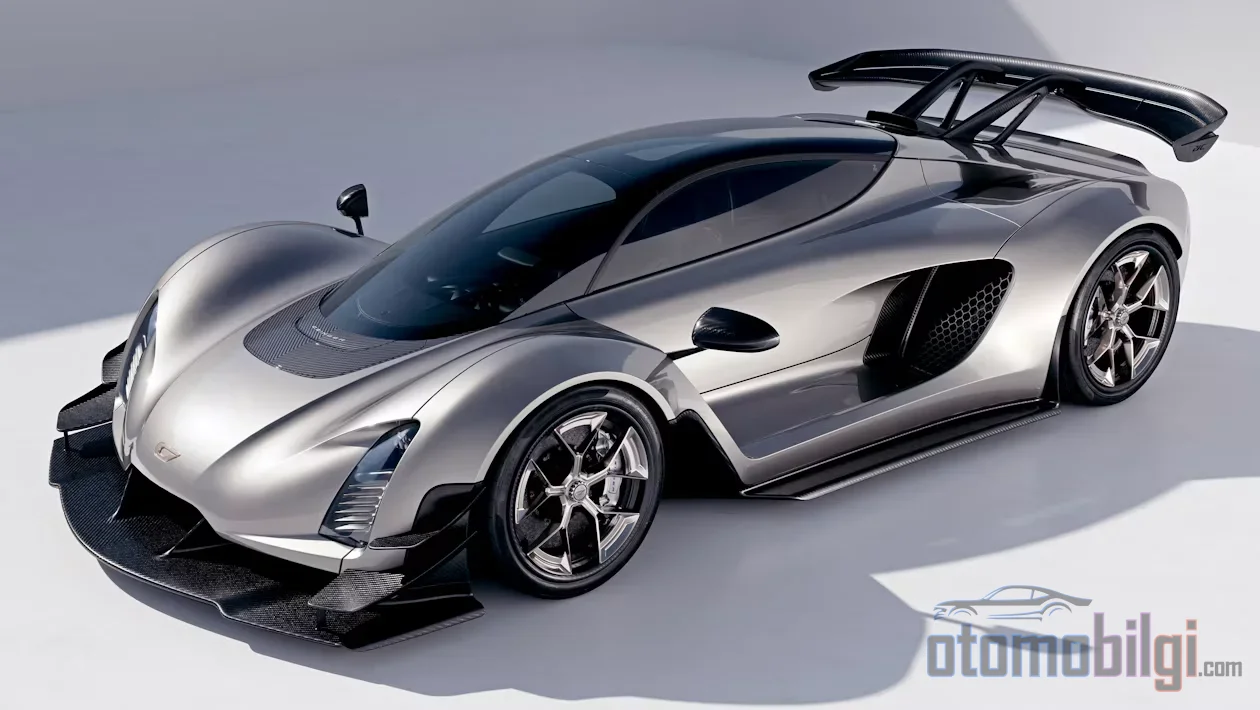
At a production facility in Los Angeles, parts that most hypercar makers would source from a foundry or supplier are printed layer by layer, with a laser melting metal powder on site. The Czinger 21C is a car born precisely from this point: 3D-printed aluminum components, part geometries optimized by artificial intelligence, and a hybrid powertrain exceeding 1,250 hp all come together. The result is a hypercar limited to 80 units that completes 0-100 km/h acceleration in 1.9 seconds.
But the real story of the 21C goes beyond the speed figures. The car is the most tangible output of digital manufacturing company Divergent in the automotive world, and its production method is built on a logic that seriously challenges the industry's conventional patterns.
The Divergent System: AI Designs, 3D Printing Manufactures
Czinger emerged as a subsidiary of Divergent; the two companies operate in a vertically integrated manner. The Divergent system combines three stages into a single chain: AI-driven generative design, additive manufacturing i.e. 3D printing, and automated robotic assembly. In classical manufacturing, an engineer draws the part and then revises the design according to the constraints of the manufacturing method. Here the order is reversed: artificial intelligence generates each part's geometry from scratch, considering load, stiffness, weight and aerodynamic criteria simultaneously.
The result is shapes that cannot be produced with conventional methods. The front upper suspension control arm is the clearest example of this: a hollow part with a three-dimensional internal structure. This geometry, designed not for its outer surface but to carry internal load paths, can only be manufactured by additive manufacturing. The 3D-printed aluminum suspension arms are 20 percent lighter than their conventionally manufactured counterparts; the tapering cross-section of the lower arms reduces friction by 10 percent.
The 21C features more than 350 metal 3D-printed components, and 23 percent of the car's weight is produced by additive manufacturing. These parts combine with the carbon fiber monocoque to form what the company calls the BioLogic chassis structure. At the core of the BioLogic approach is the Node convention: combining multiple systems into a single structure. The MegaNode brings the steering box, engine block, front suspension and front crash structure together in one piece, delivering a weight gain of approximately 25 percent. The same logic applies on the braking side as well: The BrakeNode combines the caliper, mirror arm and hydraulic channels in a single piece; pressed from Z301 aluminum alloy, this structure is up to 30 percent lighter and stiffer, and withstands a 500-bar pressure test. The exhaust and intake manifolds, catalytic converter assembly and thermal management system are also 3D-printed.
Highlights
- 0-100 km/h acceleration: 1.9 seconds (official figure)
- Total system power: 1,250 hp, 936 Nm of torque
- Production: a total of 80 units, with the Spyder limited to 30 units
- 21C Spyder starting price: 2.75 million dollars
- More than 350 metal 3D-printed components; 23 percent of the car is a product of additive manufacturing
Powertrain: 2.88-Liter V8 and Three Electric Motors
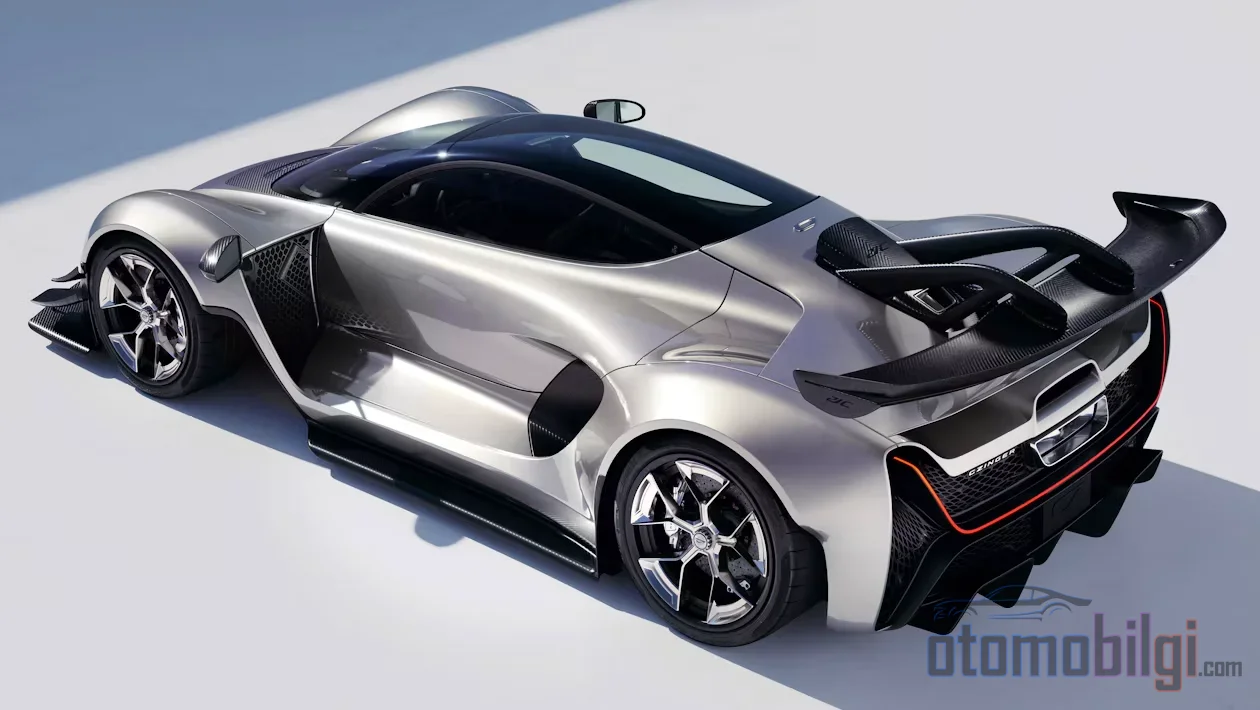
At the heart of the 21C lies a 2.88-liter V8 developed by the company itself. Designed with an 80-degree bank angle, flat-plane crank, 9.5:1 compression ratio and an 11,000 rpm redline, the engine is twin-turbocharged with 73 mm turbos and is flex-fuel capable. On 91-octane fuel it produces 750 hp; that means 260 hp per liter, and the company describes this figure as the highest power density among homologated V8s. The engine itself weighs only 105 kg.
On the hybrid side, three electric motors are at work. At the front, two permanent-magnet synchronous motors, each producing 268 hp, power the front wheels individually; meaning traction is at all four wheels. A third motor connected to the crankshaft works as a generator and compensates for turbo lag with instant torque support. Total system output is 1,250 hp and 936 Nm of torque. Some publications mention figures of around 1,350 hp; this difference probably stems from different fuel and configuration definitions.
The unit transferring power to the road is a 7-speed single-clutch sequential gearbox developed with Xtrac. It shifts in under 100 ms and, with a total system weight of 110 kg, offers 750 Nm of torque capacity per kilogram. The gearbox housing is also topology-optimized and 3D-printed; it is stated to be the first housing to carry this feature in series production. On the battery side, an architecture is used with a dual 2.1 kWh, totaling 4.2 kWh capacity at 800 Volts.
Performance: 1.9 Seconds and Speed Differences by Variant
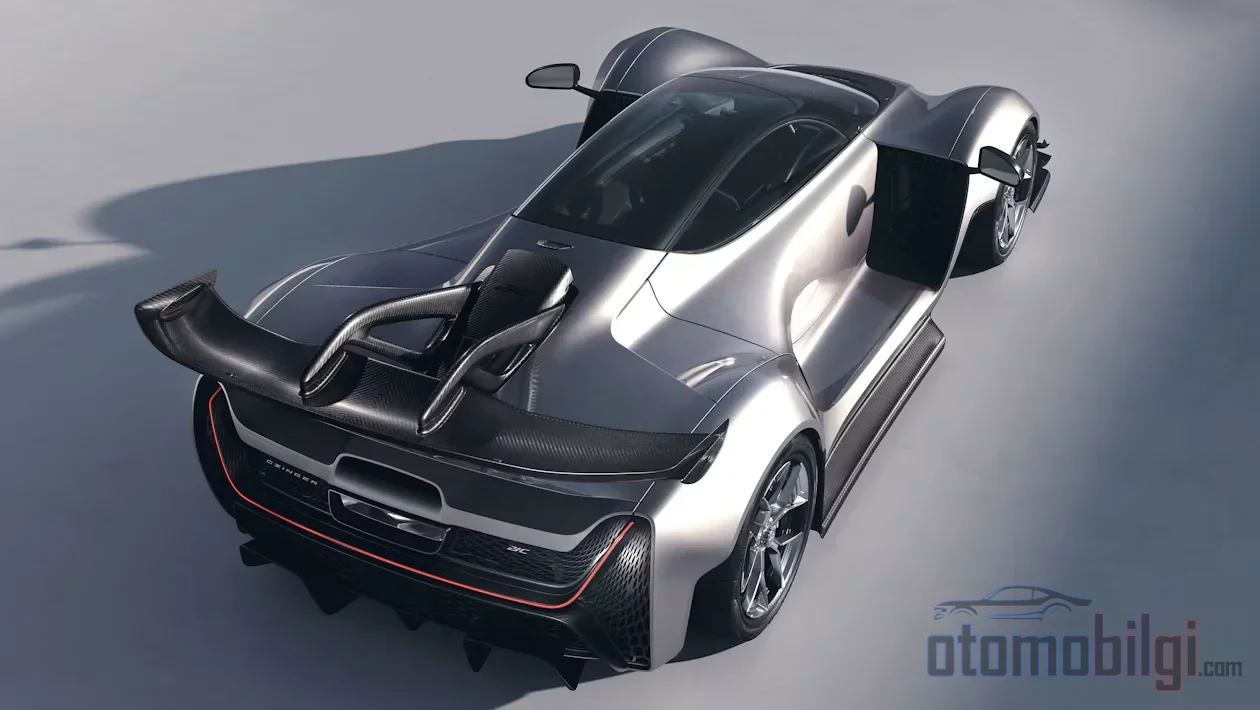
According to official figures, the 21C reaches 0-100 km/h in 1.9 seconds. Based on 2020 launch data, the quarter mile takes 8.1 seconds; for the Spyder version, this figure is stated as 8.7 seconds. The production-spec car can reach 0-300 km/h in 8.5 seconds and 0-400 km/h in 21.3 seconds.
Maximum speed varies by variant, and this distinction matters. The standard 21C and HDF package are in the class of approximately 219 mph, or 352 km/h; the Spyder can reach 330 km/h with the roof closed. The V Max lives up to its name: in the target region, figures are announced in the range of 253-268 mph, i.e. around 407-431 km/h. It is known that this trim plays in the same speed league as the Koenigsegg Jesko Absolut.
The weight also became clear over the years. At the 2020 launch, a dry weight under 1,200 kg and a 1:1 power-to-weight ratio were targeted; according to current official data, the Spyder's dry weight is 1,620 kg, 10 kg heavier than the HDF. In aerodynamics, while the HDF package produces more than 2,000 kg of downforce at 190 mph, up to 2,500 kg at 200 mph can be achieved with the most aggressive aero setting. The Spyder provides 1,500 kg of downforce at 150 mph with the roof closed; this is the highest figure among open-top road cars.
| Feature | Value |
|---|---|
| Engine | 2,885 cc twin-turbo V8, flat-plane crank |
| V8 power | 750 hp (91 octane) |
| Total system power | 1,250 hp |
| System torque | 936 Nm |
| Gearbox | 7-speed sequential, single-clutch (Xtrac) |
| Battery | 4.2 kWh, 800 Volt |
| 0-100 km/h | 1.9 seconds |
| 0-400 km/h | 21.3 seconds |
| Dry weight (Spyder) | 1,620 kg |
| Production count | 80 units (Spyder: 30 units) |
Cockpit: Driver-Centered Layout Inspired by Fighter Jet Logic
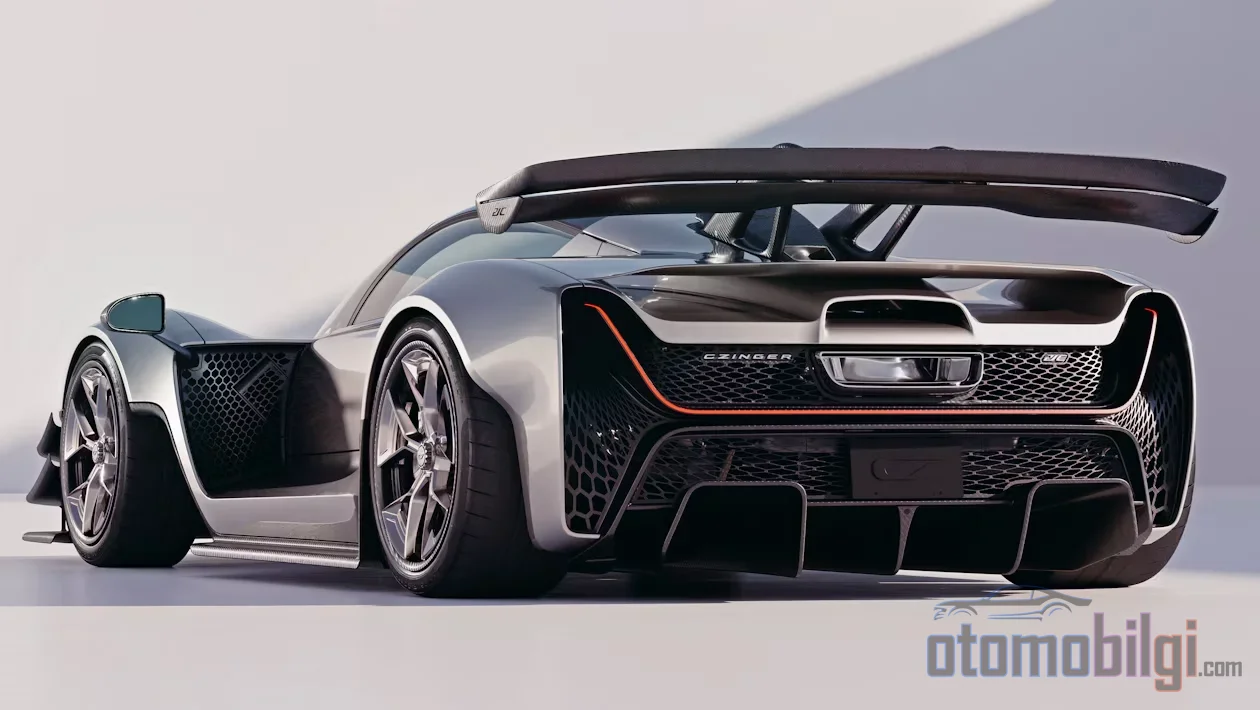
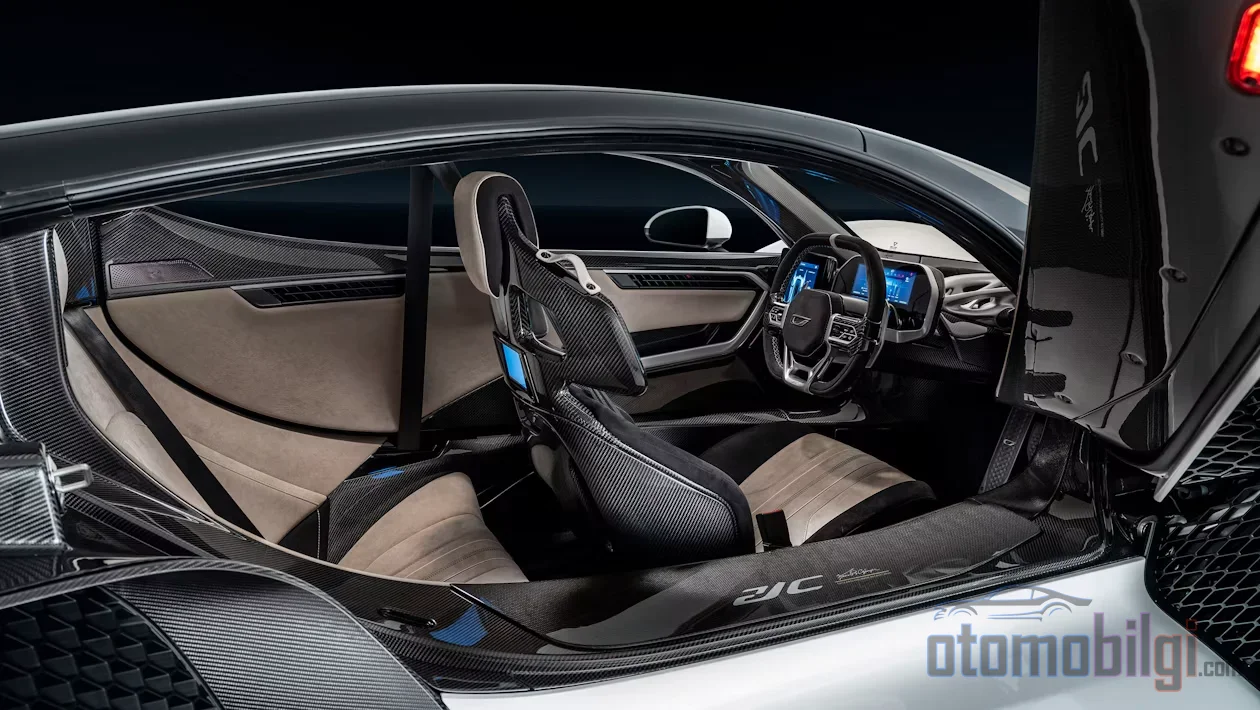
The interior of the 21C offers road cars an unconventional solution: the driver sits dead center, with the passenger behind and slightly offset to the side, in a position reminiscent of the tandem layout of a fighter jet. The engineering rationale behind this layout is clear: the narrow cabin reduces frontal area, centers weight distribution along the vehicle's axis, and provides the driver with an uninterrupted panoramic view. The rear seat can even accommodate a passenger up to approximately 196 cm tall.
The pedals, steering wheel and driver seat are aligned with each other; the left foot is in the ideal position for braking. In the Spyder version, the 10 kg carbon fiber hard roof can be removed with two latches, and the car also has a stowable soft top on board. The NeuralNode architecture, which turns the instrument panel into a single integrated control center, is equipped with wireless Apple CarPlay support and a 650-watt sound system with 8 speakers housed in carbon fiber cones. The electronically adjustable dampers stiffen by 50 percent in Track+ mode, and the ride height drops by 25 mm.
Production, Price and Track Records
The 21C is produced with hand-built assembly at the Area 21 facility in Los Angeles, and total production is limited to 80 units. The car is offered in three variants: the standard 21C, the high-downforce-focused HDF, and the speed-focused V Max; the Spyder, with a lower limit of 30 units, is the newest member of the family. On the pricing side, the officially announced current figure belongs to the Spyder: a starting price of 2.75 million dollars. No current official price has been announced for the standard 21C; third-party figures range between 2.05 and 2.5 million dollars. The car is emissions-compliant and fully homologated in all 50 US states.
On the track, the 21C speaks in numbers. At Laguna Seca, it reclaimed the lap record from the Koenigsegg Jesko Sadair's Spear with a lap time of 1:25.446, by a margin of roughly 2 seconds. At Chuckwalla Valley, it also set the best lap among production cars with a 1:46.55. In 2025, the V Max drive was released, and in early 2026 the car was the subject of a long review; in these tests, a top speed of 268 mph is mentioned for the V Max.
Why Is the Czinger 21C So Significant?
To summarize briefly: The Czinger 21C is a hybrid hypercar producing 1,250 hp and 936 Nm of torque, completing 0-100 km/h in 1.9 seconds, limited to 80 units, with the Spyder starting at 2.75 million dollars; and roughly a quarter of this car consists of components designed with artificial intelligence and manufactured by 3D printing.
This is where the real debate begins. 3D printing and generative design may remain a showcase project in the hypercar world, or they may permanently change the cost and weight equation of small-scale series production. The fact that Divergent also uses the same technology for drone components for defense industry players such as General Atomics shows that the method is not just a flashy marketing story. In this context, the 21C is more than a speed machine: proof that additive manufacturing is scalable in a homologated road car. The lasting question is this: can this method go beyond a series of 80 units? The answer will be given as much on the factory floor of Divergent as by the 21C's track records.
Sources
- Czinger unveils pathbreaking 21C and presents vision for the future of automotive design and manufacturing
- Czinger Unveils 21C Spyder: The BioLogic Engineered Open-Air Hypercar
- Driven: 2025 Czinger 21C V Max, a Fighter Jet for the Road
- Czinger 21C: 1250 HP Supercar
- 2024 Czinger 21C Specifications & Performance
- Czinger - Dominating Performance