SSC Tuatara: 5.9 L Twin-Turbo V8
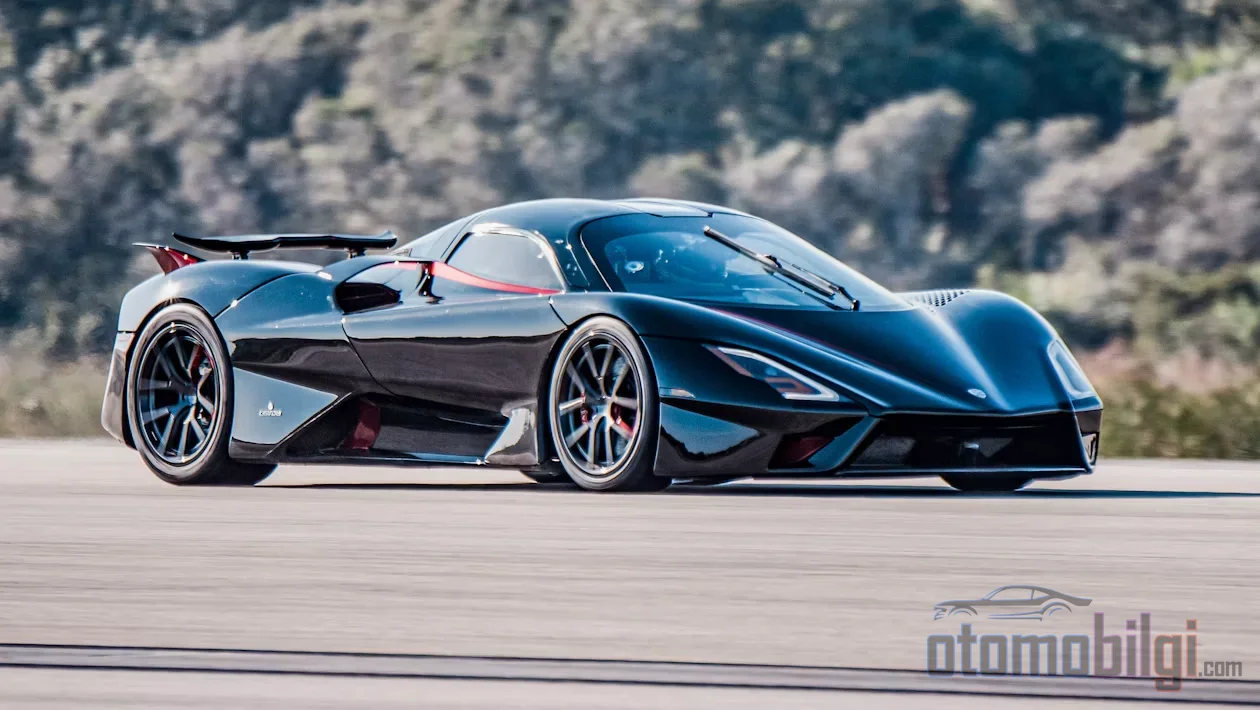
On October 10, 2020, in the Nevada desert, on a 7-mile closed stretch of highway outside Las Vegas, Oliver Webb's SSC Tuatara kicked off one of the most debated speed runs in world automotive history. SSC announced absurd figures: 331.15 mph (532.93 km/h) in one direction and a 316.11 mph (508.73 km/h) two-way average. But the real question soon emerged: Were these figures actually accurate, and could the Tuatara legend return and stand on firmer ground?
On this page, we cover the complete record story of the SSC Tuatara, along with all of its engineering underpinnings - from its 1,750-horsepower twin-turbo V8 engine to its active aerodynamics - and a full technical data table. The 300 km/h threshold mentioned in the title is an interesting detail of the story: The actual benchmark on record was 300 mph - that is, the 483 km/h level - and the question of whether that benchmark had been surpassed became a turning point that reshaped the Tuatara's identity.
What is the SSC Tuatara, and where does its 1,750 horsepower come from?
The SSC Tuatara is an American hypercar designed by SSC North America (formerly Shelby SuperCars Inc.) and produced in limited numbers of 100 units at the company's dedicated facility in Richland, Washington. The successor to the brand's previous model, the SSC Ultimate Aero, the Tuatara was first shown as a concept at the 2011 Pebble Beach Concours d'Elegance; the production version was introduced in August 2018. The design bears the signature of Jason Castriota, who has a Pininfarina background, and draws inspiration from the aviation industry. The car's name comes from the tuatara reptile, which is endemic to New Zealand and considered one of the living creatures with the fastest molecular evolution.
At its heart works a 5.9-liter (360.8 cu in) twin-turbo, flat-plane crank V8. The engine was developed with Nelson Racing Engines; although the block is based on the GM small-block architecture, only proprietary parts are used, and the block is cast by Nelson. An interesting engineering decision lies here as well: The engine was originally designed at 6.9 liters, but was reduced to 5.9 liters for a higher redline target of 8,800 rpm. A smaller displacement, a higher rev limit; combined with turbocharging, this is a logical choice for a speed-focused platform.
Highlights
- 5.9-liter twin-turbo V8: 1,350 hp (91 octane) / 1,750 hp (E85)
- 0-60 mph (0-97 km/h): 2.5 seconds
- Drag coefficient: Cd 0.279
- Verified top speed: 295 mph (475 km/h), May 2022
- Total production: 100 units, approximate price 1.9 million dollars
Fuel choice determines power
The Tuatara's power figures are directly tied to the pump. On 91-octane gasoline, the engine produces 1,350 hp and 1,350 Nm, while on E85 flex fuel these figures rise to 1,750 hp and 1,800 Nm. The backbone of the system is the combination of dual 76 mm turbos with water-to-air intercoolers and direct injection. The engine upgrade offered in the out-of-spec Aggressor variant climbs to up to 2,200 hp and 2,150 Nm. Power is sent to the rear wheels through a CIMA 7-speed automated manual transmission that shifts in under 50 ms; the mid-engine and rear-wheel-drive layout follows the classic land speed record car architecture in terms of weight distribution and traction.
The 300 mph barrier and the controversial Nevada run
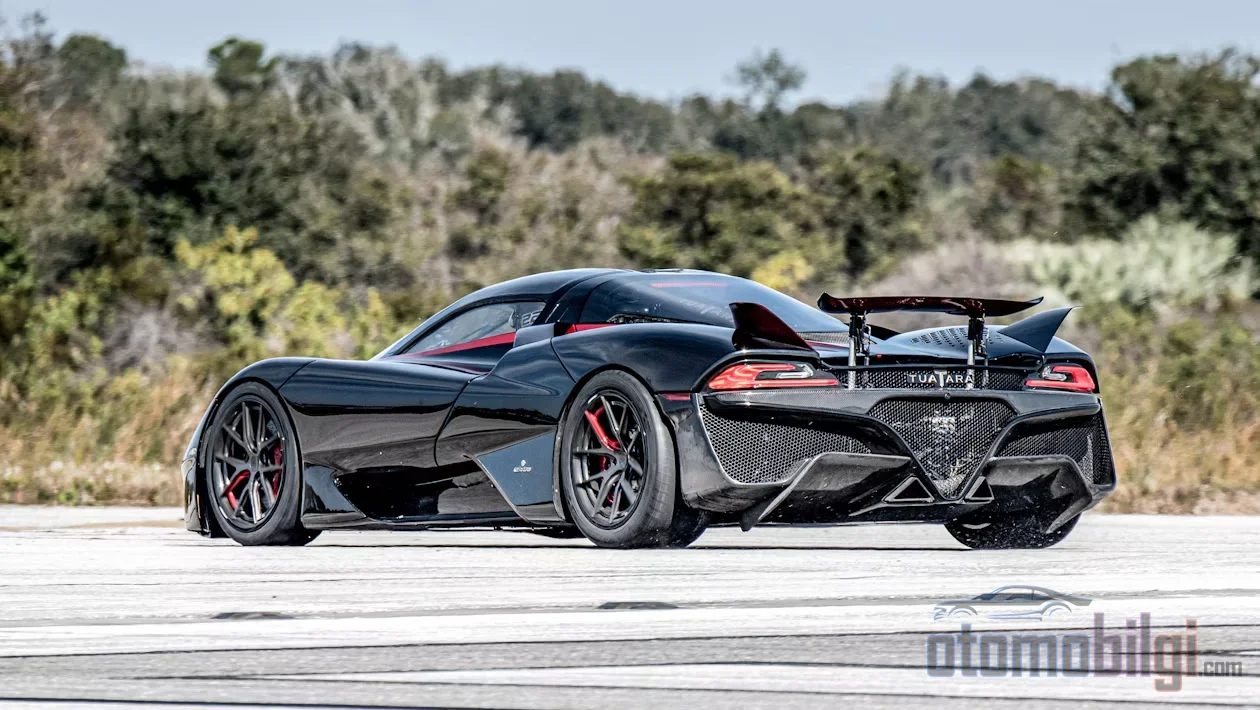
The Tuatara was designed by SSC from the ground up with a target speed of over 300 mph (482 km/h); the instrument cluster measures up to a full 300 mph. The first major attempt took place on October 10, 2020, on Nevada State Route 160 near Pahrump. According to figures released by SSC, the car recorded 331.15 mph (532.93 km/h) one-way and a two-way average of 316.11 mph (508.73 km/h), which meant beating the record set by the Koenigsegg Agera RS on the same highway in 2017 by roughly 75 km/h.
However, independent verification was lacking, and serious claims of distance and data inconsistencies soon came to light. The company's founder, Jerod Shelby, announced in a video on October 30, 2020 that the run had been invalidated and the record would be attempted again. The process reached its conclusion on July 21, 2021: SSC officially acknowledged that the first run had not exceeded the 300 mph barrier. This was a rare move of transparency in the hypercar world, and it turned the Tuatara's story in a more interesting direction.
Verified records: Kennedy Space Center runs
On January 17, 2021, the Tuatara was taken this time to the Kennedy Space Center in Florida, to the 2.3-mile strip of Johnny Bohmer Proving Grounds. In the driver's seat was the car's owner, Larry Caplin. With speeds of 279.7 mph (450.1 km/h) northbound and 286.1 mph (460.4 km/h) southbound, the two-way average was measured at 282.9 mph (455.3 km/h). This time, a verification infrastructure involving Racelogic, Life Racing, Garmin and IMRA satellites was in place, and the Racelogic certificate was announced with SSC's official press release. This certified result placed the Tuatara above the Agera RS.
The story did not end there either. In April 2021, while heading to Utah for a record re-attempt, the trailer overturned due to wind and the car was damaged. The repaired Tuatara was driven again by Caplin at the Kennedy Space Center on May 14, 2022, reaching a speed of 295 mph (475 km/h) one-way over the 2.3 miles. Two Racelogic VBOX GNSS units and a Life Racing GPS verified the speed, along with a Racelogic technician present on site. As of December 2026, the Tuatara's verified top speed belongs to this run. Today, in rankings of the world's fastest production vehicles, the Tuatara is cited with this 295 mph figure; but comparisons with the Bugatti Chiron Super Sport and Koenigsegg Jesko continue to be debated in the industry.
Aerodynamics and chassis: The platform carrying the 483 km/h target
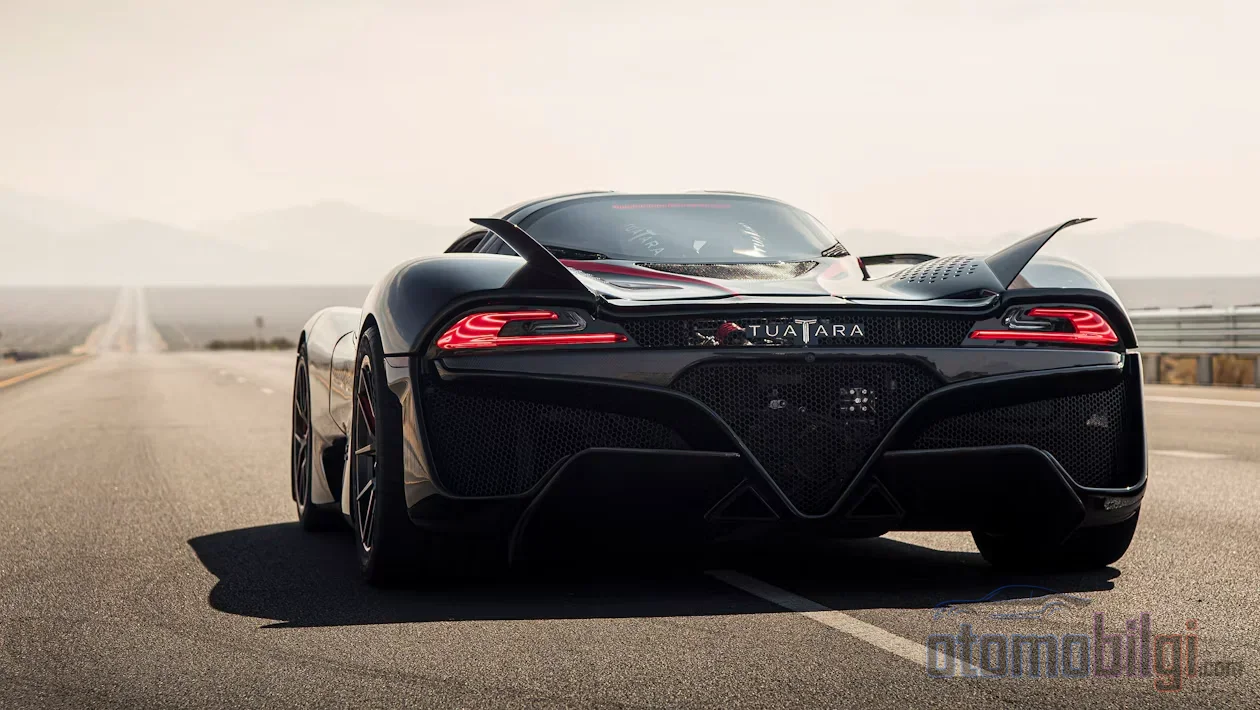
High speed is as much a matter of air management as it is of power. The Tuatara's drag coefficient is Cd 0.279, and SSC considers it the lowest in its class. Carbon fiber body, a structure reinforced with aluminum crash structures, and active aerodynamic elements are the carriers of this low drag. While the downforce value of the standard car is stated as 349 kg, the track-focused Striker variant was configured with its special aero package to generate 500 kg of downforce at 160 mph.
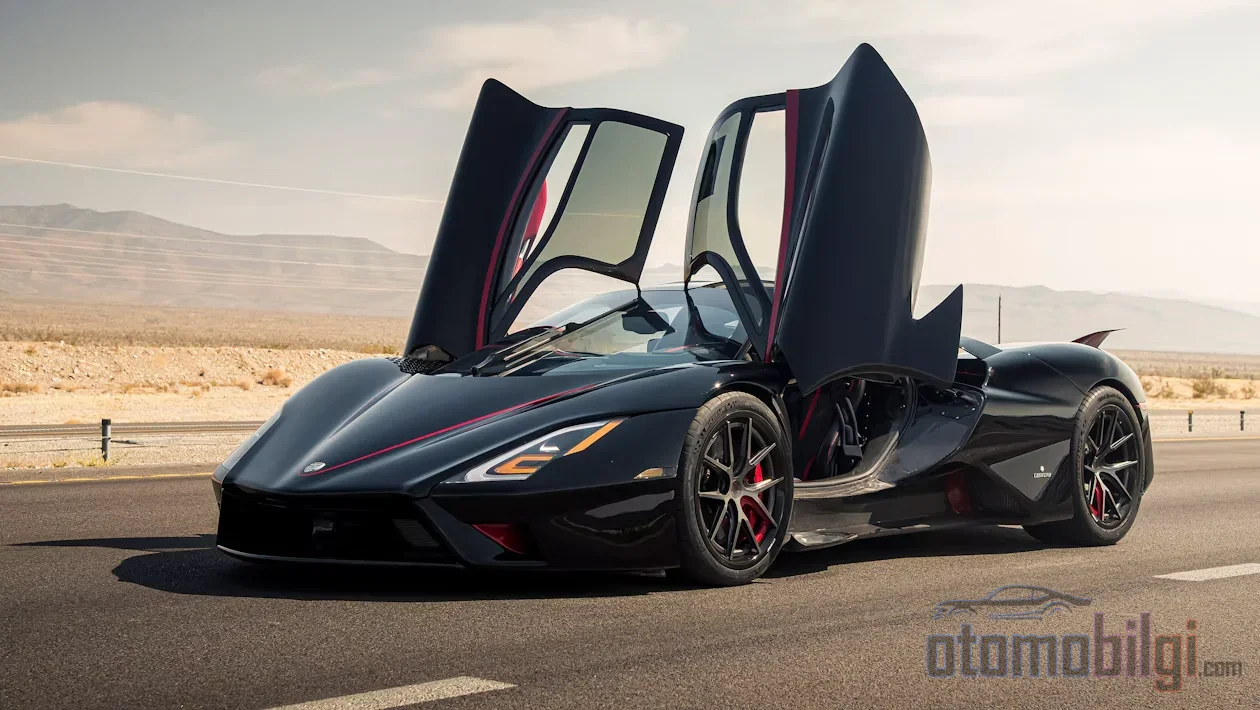
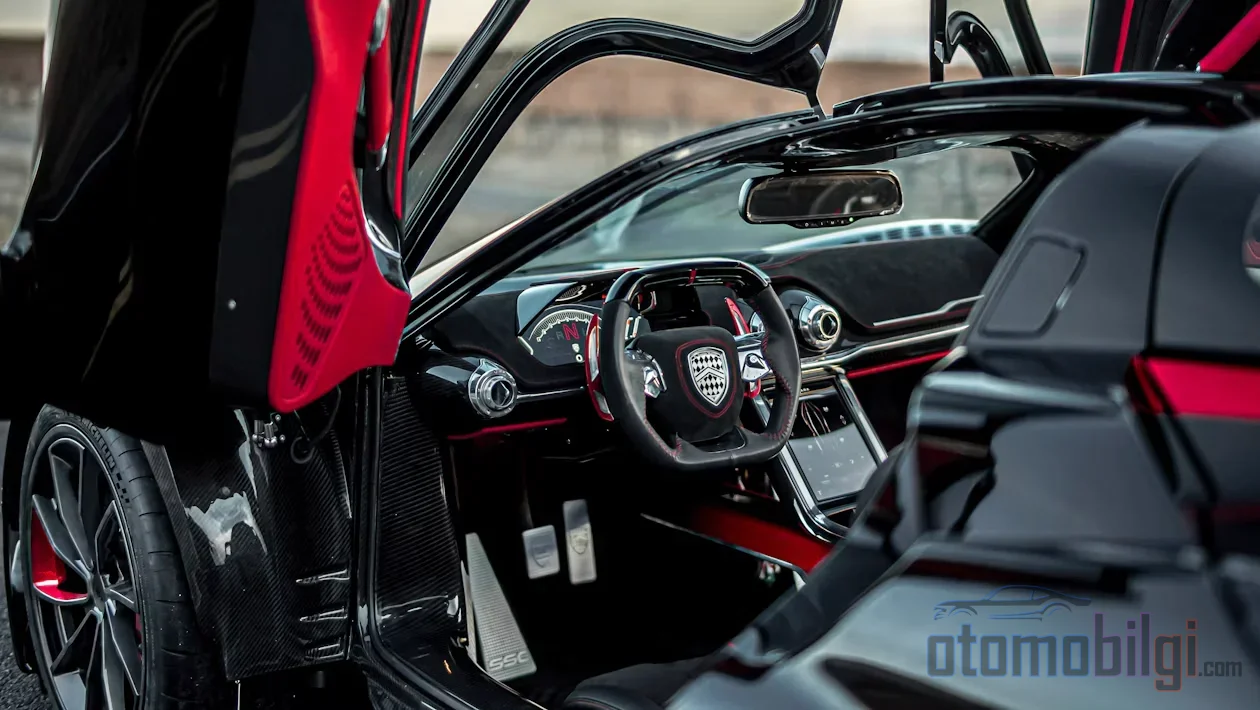
The car offers three drive modes: In Sport mode, 102 mm at the front and 114 mm at the rear; In Track mode, a ride height of 70 mm at the front and 95 mm at the rear; Lift mode provides protection for speed bumps. Inside, there are butterfly doors, camera-based side mirrors, a touchscreen on the center console, and a gauge showing 300 mph; leather and Alcantara upholstery meets the expectations of a limited-production hypercar.
Technical data: SSC Tuatara acceleration, engine and dimensions table
| Feature | Value |
|---|---|
| Engine | 5.9 L twin-turbo V8, flat-plane crank (Nelson Racing Engines) |
| Power | 1,350 hp (91 octane) / 1,750 hp (E85) |
| Torque | 1,350 Nm (91 octane) / 1,800 Nm (E85) |
| 0-60 mph (0-97 km/h) | 2.5 seconds |
| 0-100 km/h | Not disclosed by the manufacturer (secondary data ~2.5-2.6 s) |
| Transmission / drive | CIMA 7-speed automated manual, rear-wheel drive |
| Drag coefficient (Cd) | 0.279 |
| Dry weight | 1,247 kg |
| Length / width / height | 4,633 mm / 2,065 mm / 1,067 mm |
| Price | Approximately 1.9 million dollars |
A few notes: No definitive value for 0-100 km/h was shared by the manufacturer; the manufacturer's table gives 2.5 seconds for 0-60 mph (0-97 km/h), and secondary sources point to approximately 2.5-2.6 seconds for 100 km/h. The length and width figures circulate with differences of a few centimeters between sources (for example, 4,633 mm versus 4,756 mm); this stems from rounding and differences in measurement definitions. Values such as fuel consumption and luggage capacity were not disclosed by the manufacturer.
Variants: Striker and Aggressor
Two track-focused versions were announced in May 2020. The Striker comes with an additional aerodynamic package that produces increased downforce. The Aggressor is not road legal: it offers racing seats and a 2,200 hp / 2,150 Nm engine upgrade, limited to only 10 units. Total production of the three versions is being kept at 100 units. On the brand front, Jerod Shelby stated that a more accessible model than the Tuatara is in the early development stage; the target is a price band of 400-500 thousand dollars and a supercar with 700-800 hp.
Conclusion: Did the Tuatara break the 300 mph barrier?
The clear answer is this: SSC Tuatara admitted that the 331 mph speed announced in its first ambitious run in 2020 could not be verified, and officially declared that the first attempt did not exceed the 300 mph (483 km/h) barrier; in return, in January 2021 it set a certified record of 282.9 mph (455.3 km/h) with a two-way average, and in May 2022 it raised its verified top speed to 295 mph (475 km/h) in one direction.
This result transforms the Tuatara's story from a mere speed contest into a story of engineering discipline and measurable verification. With 1,750 horsepower, a 0.279 drag coefficient, and a dry weight of 1,247 kg, it retains its status as one of the production vehicles that came closest to the 483 km/h mark. When its place in the record books is evaluated together with the transparency of its measurement methods, it can be said that the Tuatara has earned the technical respect it deserves in the hypercar world.
Sources
- SSC North America - Tuatara official model page
- SSC North America - Tuatara 295 mph record announcement
- SSC North America - Racelogic-certified 282.9 mph press release
- SSC Tuatara - Wikipedia
- Nelson Racing Engines - TT Tuatara 5.9L V8 engine page
- Car and Driver - SSC stated that the Tuatara did not exceed 300 mph
- Car and Driver - Tuatara production car speed record
- Top Gear - Seven features of the 1,750 bhp SSC Tuatara
- Hagerty Media - The verified 295 mph run
- Auto-Data.net - SSC Tuatara technical specifications