Koenigsegg Sadair's Spear: 30 Examples, All Sold Out
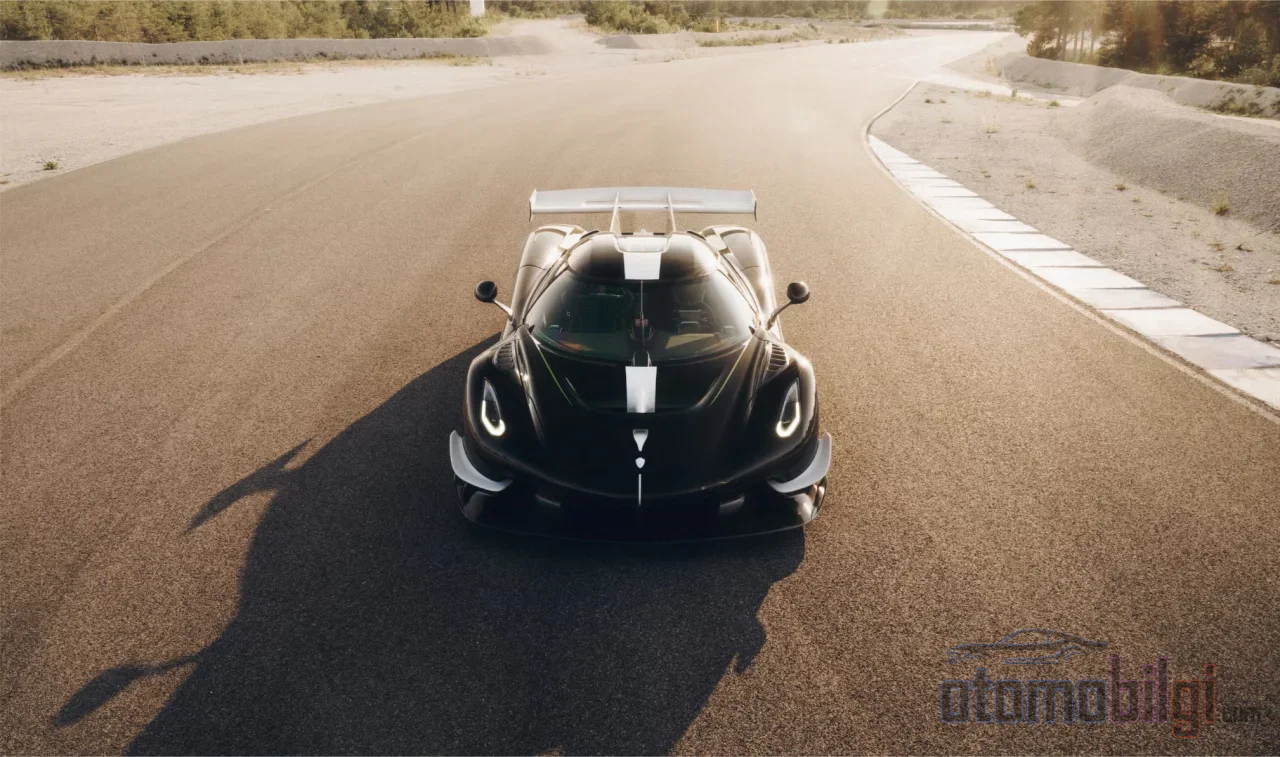
What happens when the name of a racehorse ends up on the hood of a 1,625-horsepower V8? Koenigsegg answered this question in 2025 with the Sadair's Spear: A derivative of the Jesko family and the most track-focused hypercar the brand has ever built. It is road legal, but it is a machine in which every decision was made with the stopwatch in mind on the track. Moreover, the production run of 30 examples sold out completely at the special event where it was unveiled. This article takes on the technical story of this vehicle with spec-sheet precision: the revised engine, the redesigned aerodynamics package and, of course, the family story behind that name.
First, a correction is in order, because part of the lore circulating about the name of the Sadair's Spear is not accurate. The car is not dedicated to a motorsport legend but to the beloved racehorse of Jesko von Koenigsegg, the father of Christian von Koenigsegg. During the years Jesko von Koenigsegg raced as an amateur jockey, he entered his final race in 1976 with a horse named Sadair's Spear. The Koenigsegg family had already named the brand's Jesko model after the father as well, in honor of his 80th birthday, in his honor; the Sadair's Spear stands as the track-focused continuation of that family tribute.
What Is the Sadair's Spear, and How Does It Differ From the Jesko?
The Sadair's Spear is built on the same underlying platform as the Jesko but sets itself apart with clear differences in three axes: more power, less weight and improved aerodynamics. Koenigsegg positions this car with the Track Legend, Road Legal concept; that is, it is fully road legal in markets worldwide, yet its design priority is entirely track performance.
Let's look at the numbers. On gasoline, power was raised from 1,280 to 1,300 horsepower, and on E85 fuel from 1,600 to 1,625 horsepower. Dry weight dropped by roughly 35 kg compared to the Jesko, down to 1,320 kg. On the aerodynamics side, 20 percent more downforce and 5 percent less drag were achieved compared to the Jesko. These three factors push the power-to-weight ratio above 1:1; Koenigsegg emphasizes that it is the only premier manufacturer in the world to exceed this threshold in a fully homologated road car.
Highlights
- 5.0-liter twin-turbo V8: 1,300 hp on gasoline, 1,625 hp on E85
- Dry weight 1,320 kg, maximum downforce 1,765 kg
- Top speed 360 km/h; 0-100 km/h not disclosed by the manufacturer
- Only 30 examples will be produced, all of them sold
- The price was reported to be around 3.8 million euros
Engine: The Twin-Turbo V8 Carried to 1,625 Horsepower
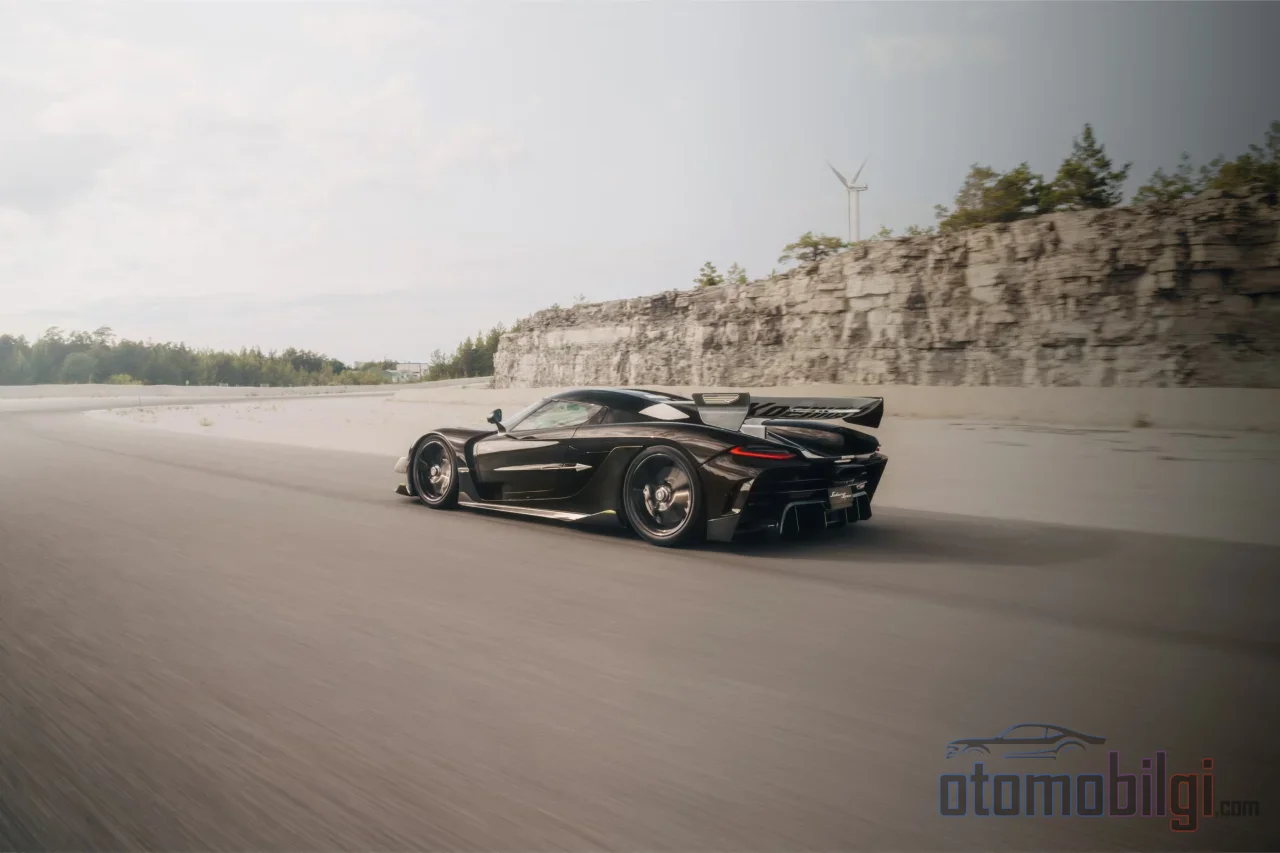
At its heart sits the 5.0-liter, aluminum-block twin-turbo V8 we know from the Jesko. The architecture is familiar: four valves per cylinder, a flat-plane crankshaft, dual overhead camshafts and a dry sump lubrication system. The compression ratio is 9.0:1, bore is 92 mm, stroke is 95.25 mm, and the entire engine weighs just 189 kg. Horsepower peaks at 7,800 rpm, with the rev limiter kicking in at 8,500 rpm. On the torque side, the picture has two stages: 1,000 Nm in normal operation between 2,700-6,170 rpm, peaking with E85 at 1,500 Nm (at 5,100 rpm). Turbo boost climbs to 1.7 bar on gasoline and 2.2 bar with E85.
There are two concrete interventions that deliver the power increase: revised engine mapping and the air intakes added to the hood. The cooling package has also been supported by an enlarged hood vent and optimization of the radiator outlet flow. The engine retains its flywheel-free operating arrangement; this allows the V8 to rev from idle to 8,500 rpm in 0.2 seconds.
Transmission: LST with Steering Wheel Paddles
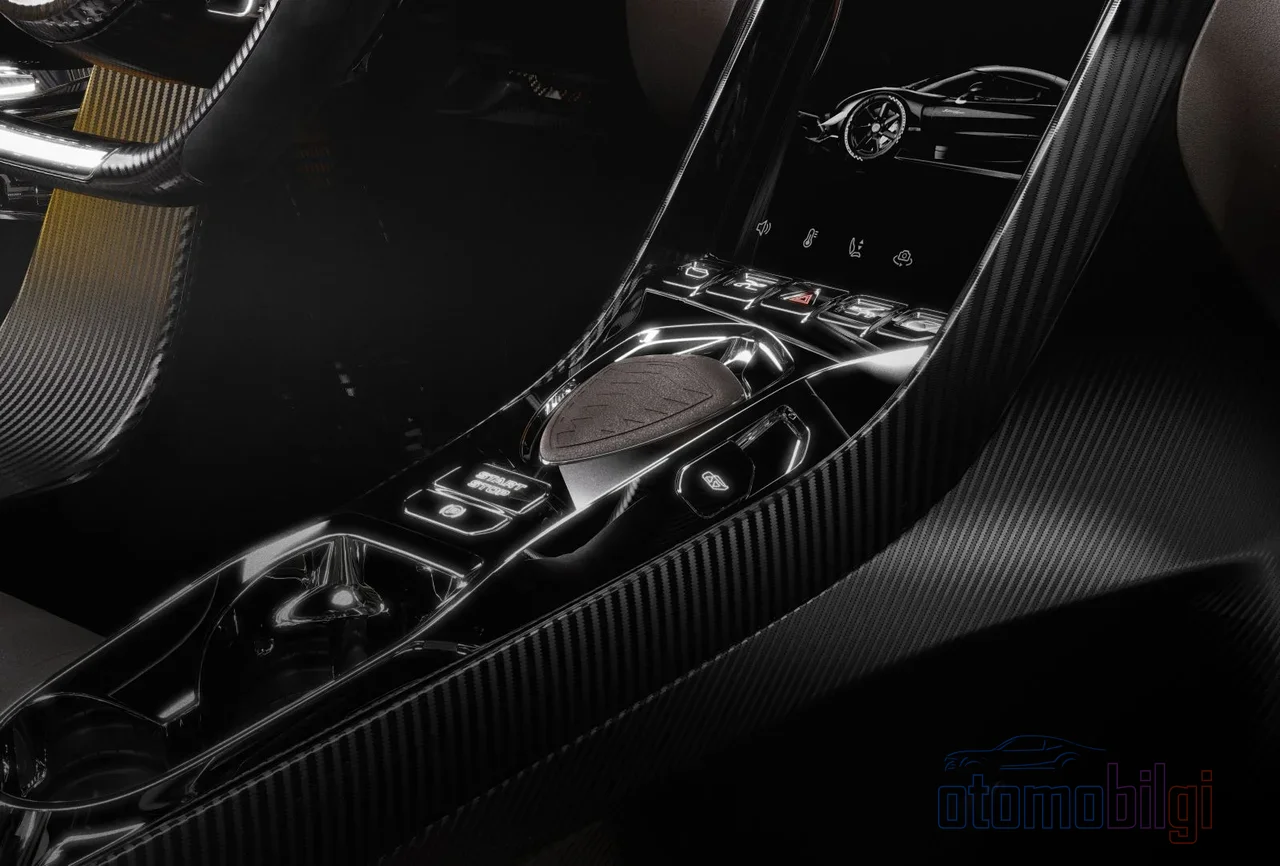
Power is delivered to the rear-wheel-drive layout through Koenigsegg's 9-speed Light Speed Transmission (LST) and electronic differential. A notable cabin decision in the Sadair's Spear also stems from this: the center gear mechanism has been completely removed, replaced by a key holder. Gear changes are made only via the paddles on the steering wheel. This is a clear engineering choice that simplifies the cabin in a track-focused car and keeps the driver's hands on the wheel.
Aerodynamics: How 20 Percent More Downforce Was Achieved
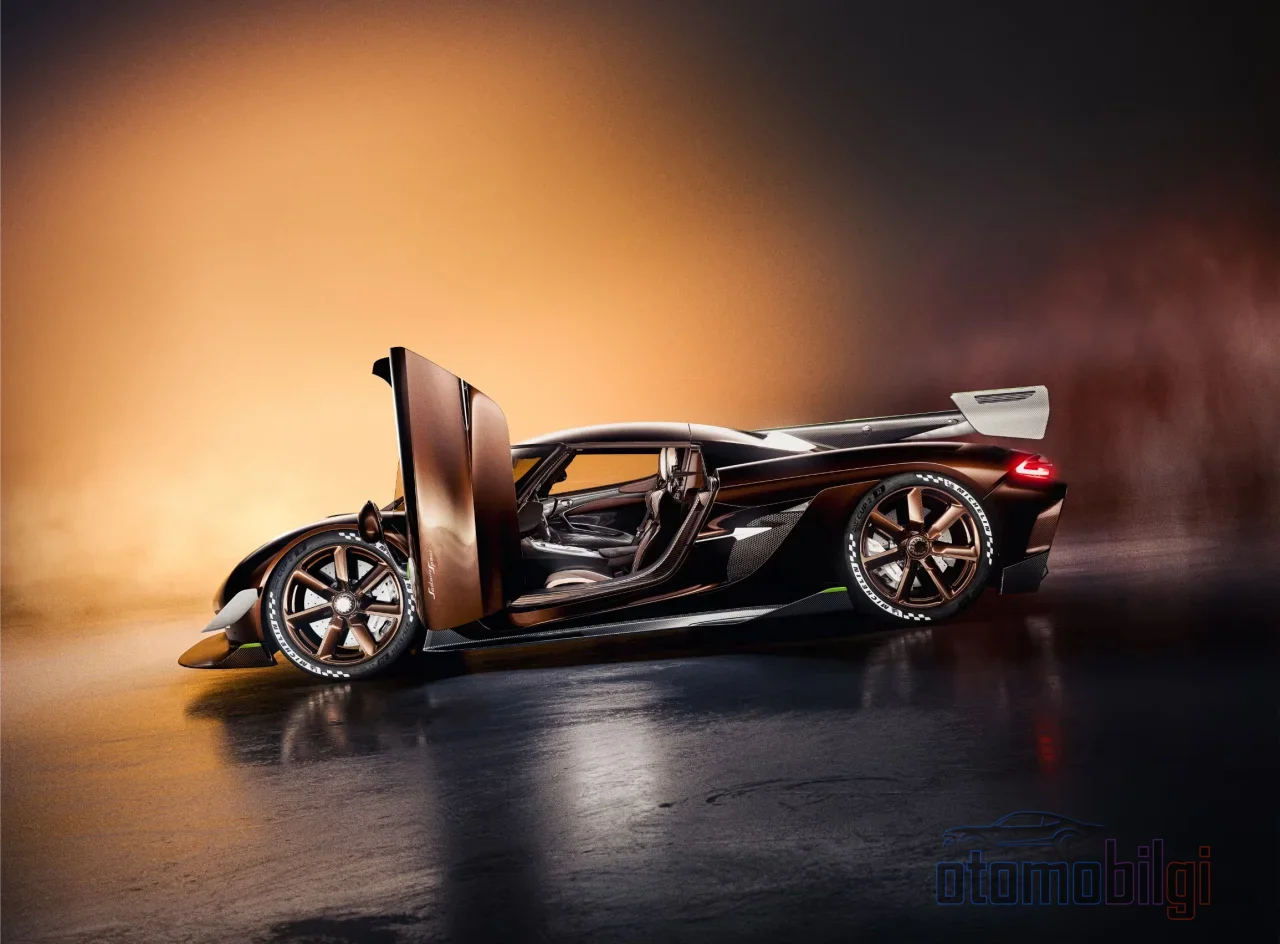
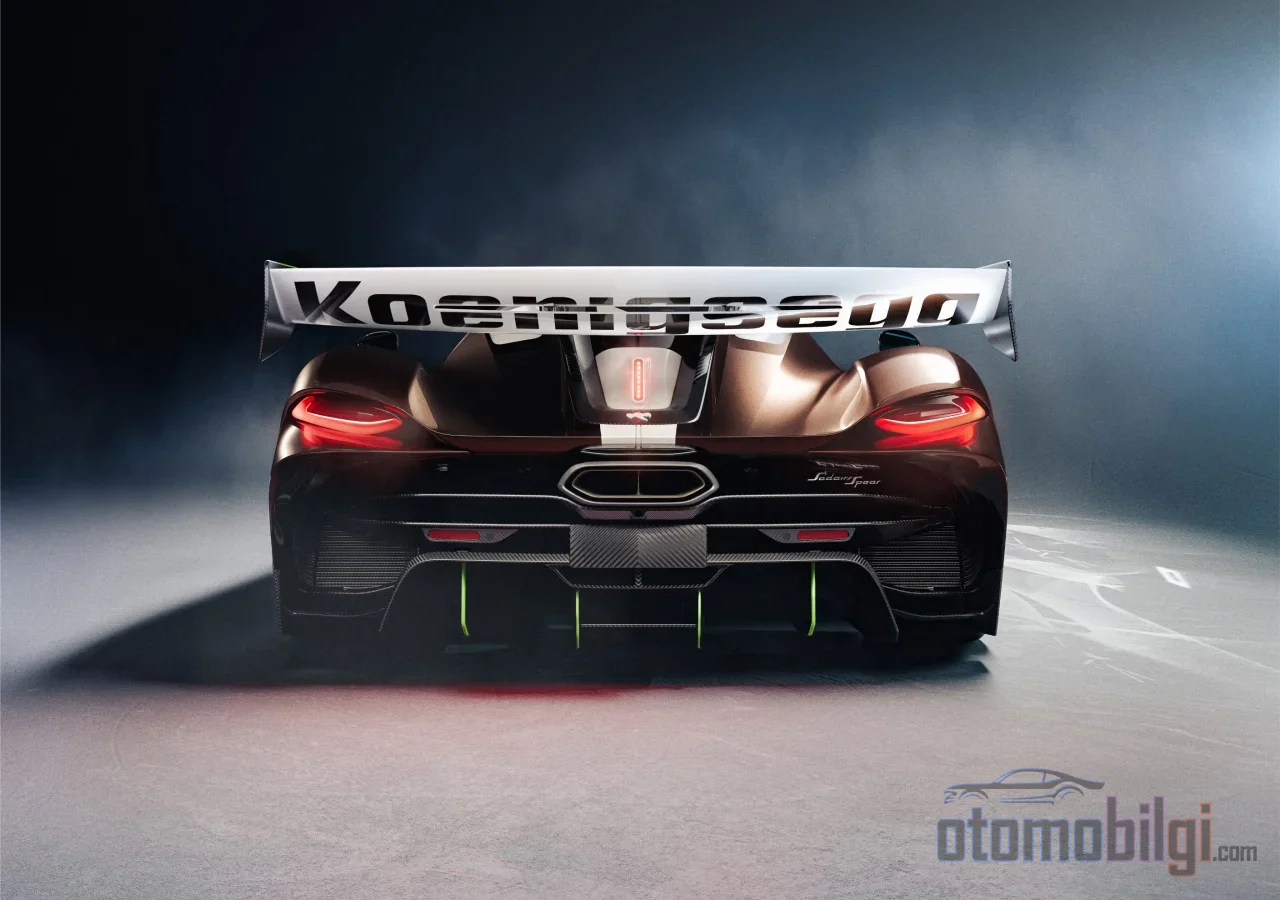
The most visible area where the Sadair's Spear differs from the Jesko is aerodynamics. Total downforce reaches 850 kg at 250 km/h, rising to 1,765 kg at its peak. The road to these figures runs through a series of coordinated solutions extending from front to rear.
- Active, top-mounted twin-blade rear spoiler: with a flat-profile design to produce more downforce at low speeds
- Enlarged front splitter, active front underbody aero vanes operating independently left and right
- Large canards and a hood vent with Gurney flap
- Underbody strakes and wheel arch louvres managing in-wheel pressure balance
- Extended rear end through CFD work; for stability and downforce gains
When you read the list as a whole, the chain of logic becomes clear: rather than pursuing downforce with the spoiler alone, there is a holistic approach that also puts the airflow under the car to work. The ability of the active underbody vanes to operate independently left and right provides the ability to precisely shift load distribution in corners. Combined with the 5 percent reduction in drag, this makes it possible to gain cornering performance without sacrificing straight-line speed.
Chassis, Suspension and Braking System
The carrier structure is an aluminum honeycomb carbon fiber monocoque with an integrated fuel tank. Torsional rigidity is 65,000 Nm/degree; this figure provides the stiff base required for transferring the active aerodynamic elements and high downforce loads through the chassis. The suspension comes with a double wishbone layout and active ride height adjustment; Triplex dampers are used at the front and rear.
On the braking side, a carbon ceramic system is in service: 410 mm discs with 6-piston calipers at the front, and 395 mm discs with 4-piston calipers at the rear. Tire size is 275/35-20 at the front, 335/30-21 at the rear. Standard equipment is Michelin Cup 2, while Cup 2 R is available as an option. One of the components that plants the car's feet firmly on the ground is the carbon wheels with a 7-spoke turbine design featuring Aircore technology.
Koenigsegg Sadair's Spear Technical Specifications Table
| Specification | Value |
|---|---|
| Engine | 5.0 L twin-turbo V8, 189 kg |
| Power (gasoline / E85) | 1,300 hp @ 7,800 rpm / 1,625 hp |
| Torque | 1,000 Nm (2,700-6,170 rpm); max. with E85 1,500 Nm @ 5,100 rpm |
| Transmission | 9-speed LST, rear-wheel drive |
| 0-100 km/h | Not disclosed by the manufacturer |
| Top speed | 360 km/h |
| Dry weight / With driver | 1,320 kg / 1,385 kg |
| Maximum downforce | 1,765 kg |
| Dimensions (L/W/H) | 4,690 / 2,030 / 1,210 mm |
| Brakes | Carbon ceramic, 410 mm front / 395 mm rear |
A few more practical values complete the table: wheelbase 2,700 mm, fuel tank 72 liters, trunk volume 50 liters each front and rear. The summary, in short, is this: Sadair's Spear is a road-legal track hypercar with 1,625 hp, a 1,320 kg dry weight, a 360 km/h top speed, and limited to 30 examples. As for the 0-100 km/h figure, Koenigsegg has not officially announced this number; third-party publications share estimates ranging from 2.4 to 2.6 seconds, but there is no verified official figure.
Production, Price, and Track Record
Production is planned not in Switzerland, but at the brand's established facility in Ängelholm (Sweden); announcements about the vehicle contain no verified information about a Swiss production line. The Ängelholm factory itself is part of the brand's culture: the facility is located on a site that once hosted the Swedish Air Force and the JAS 39 Gripen fleet.
Production is limited to 30 examples, and all of them were sold at the launch event. As for the price, there is no single clear official figure; publications have cited figures ranging from approximately 3.8 million euros to over 5 million dollars. On the track side, the first lines of its record have already been written: in its initial shake-down tests, it beat the Jesko Attack's track record at the Gotland Ring by 1.1 seconds. Claims that it set a new lap record at Laguna Seca for homologated series-production cars should, for now, be treated as information with a low level of independent verification.
Assessment: A Family Memory Expressed in the Language of Engineering
What makes the Sadair's Spear special is a coherence that the technical table alone cannot convey. The name of Jesko von Koenigsegg's last racehorse from 1976 was given to the most radical member of the model family bearing his father's name, and the engineering team did its job with the same consistency: 45 extra horsepower, 35 kg saved, 20 percent more downforce, and 5 percent less drag. Each of these figures represents gains achieved while the Jesko was already at its limit; not a marginal improvement, but a systemic optimization.
The remaining question is where the owners of these 30 cars will use them. The answer is actually hidden in the concept itself: since it is road legal, a machine that can leave the garage and reach the track gate under its own power, programmed to break records there. In Christian von Koenigsegg's words, the most meaningful way to celebrate the most track-focused car they have ever built was to name it after his father's favorite racehorse. In Koenigsegg's language, no heavier farewell could be imagined.
Sources
- Technical Specifications - Sadair's Spear
- Sadair's Spear - Model Page
- The Koenigsegg Sadair's Spear Is the Swedish Automaker's Most Track-Focused Hypercar Yet
- Koenigsegg Sadair's Spear Is the Brand's Most Aggressive Hypercar Yet
- 'Sadair's Spear' Is the Most Extreme Koenigsegg Jesko Yet
- 2026 Koenigsegg Sadair's Spear is nuts