Koenigsegg Gemera: A Four-Seat Hypercar
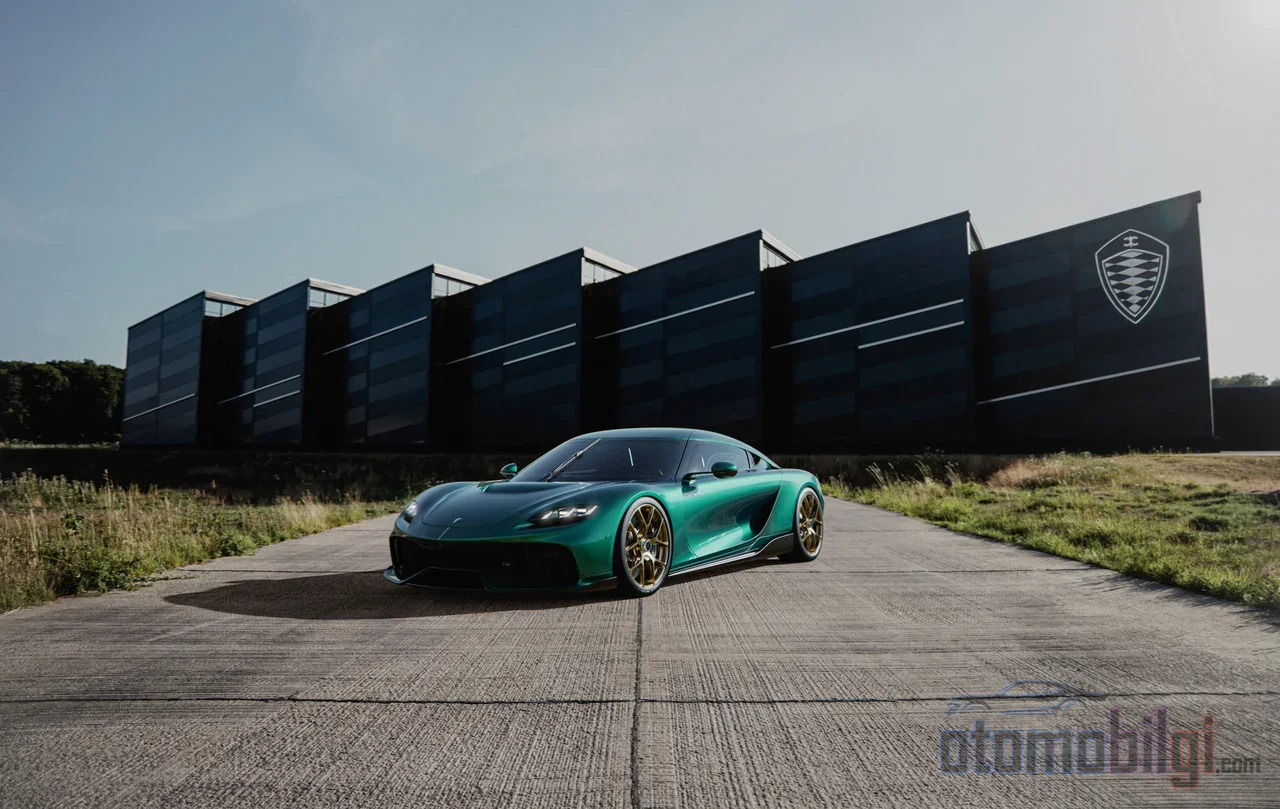
Four seats long seemed like a contradiction in the hypercar world: The cabins of cars producing over 1 MW were traditionally two-seaters, with trunk space enough for a weekend bag. Koenigsegg broke this acceptance in March 2020 with an online presentation made due to the cancellation of the Geneva Motor Show. The Gemera was introduced as the Swedish manufacturer's first four-seater and first all-wheel-drive car, and the brand gave it a new category it called Mega-GT. But the story doesn't end there: the powertrain shown at the presentation and the version that entered series production differ significantly. On this page, we cover how the Gemera carries four people, its cabin solutions, and the current technical figures that entered production after a six-year wait.
The Mega-GT Concept: Is a Four-Seater Hypercar Really Possible?
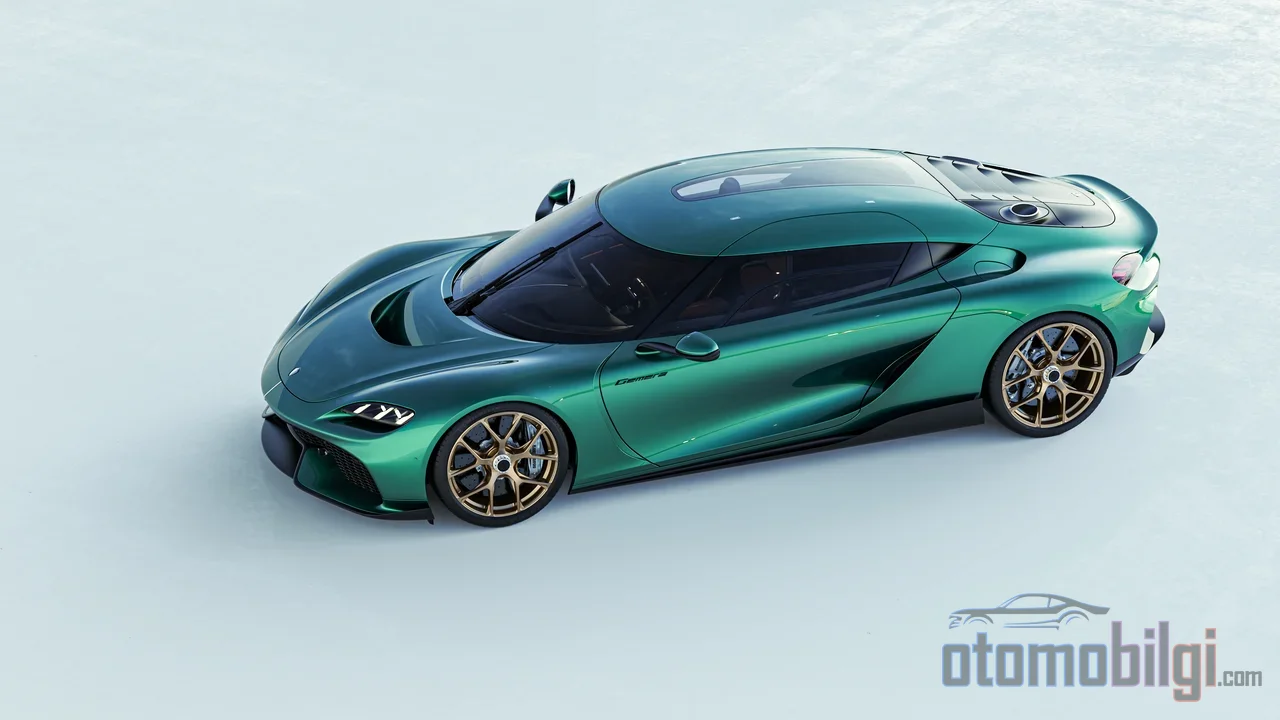
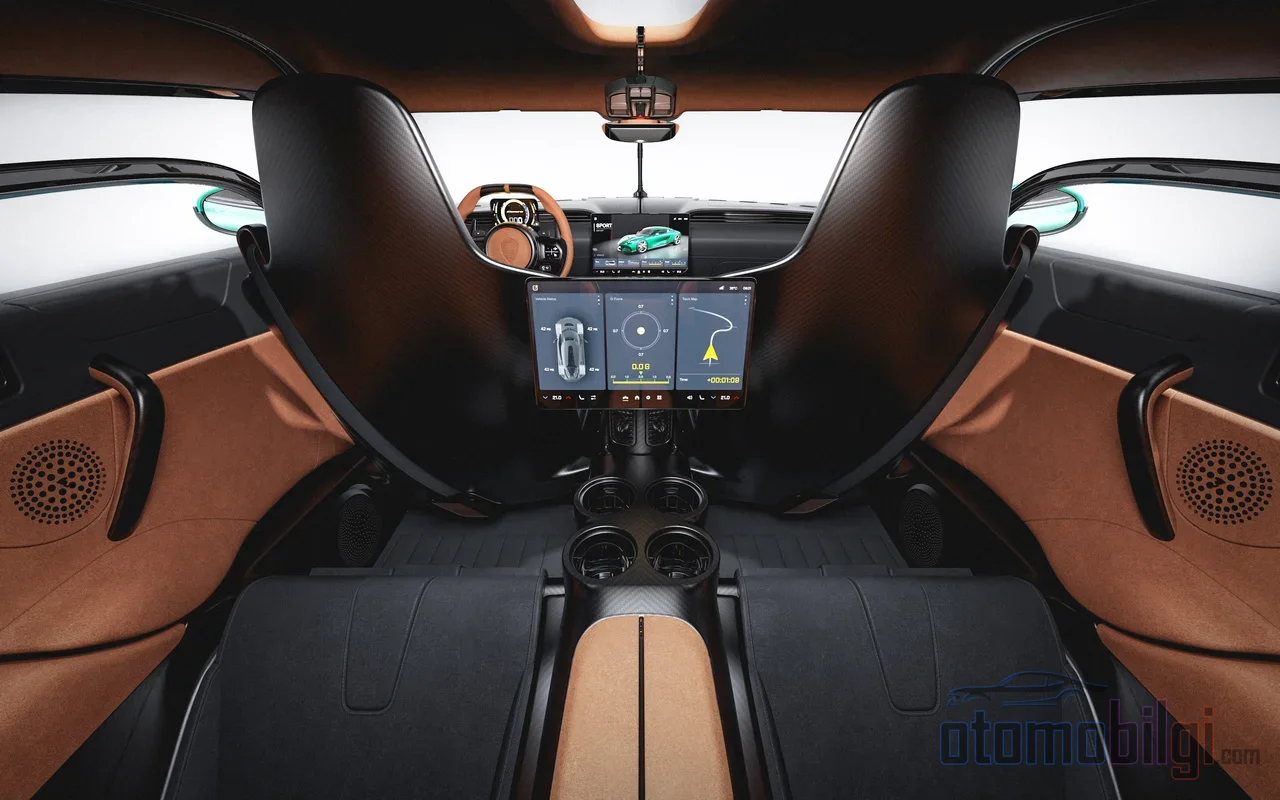
The name Gemera comes from the Swedish words "ge" and "mera"; together they mean "to give more." The name is not an empty promise. The car measures 4,975 mm in length, 1,988 mm in width, and has a 3,000 mm wheelbase; this wheelbase was deliberately kept long so that four adults could find a reasonable seating position even in the rear. According to the manufacturer, the seats offer comfortable seating for four tall adults, and four carry-on bags can be stored in the rear compartment.
The practicality details match grand tourer expectations: eight cup holders (four heated, four cooled), wireless phone charging front and rear, three-zone climate control, electric seats with memory foam padding, an 11-speaker sound system, and 200 liters of trunk space. Child seat anchor points are also available in the rear seats; in other words, the Gemera is not a marketing construct but is conceived as a hypercar that can take a family on a long journey.
B-Pillar-Free Doors and Cabin Access
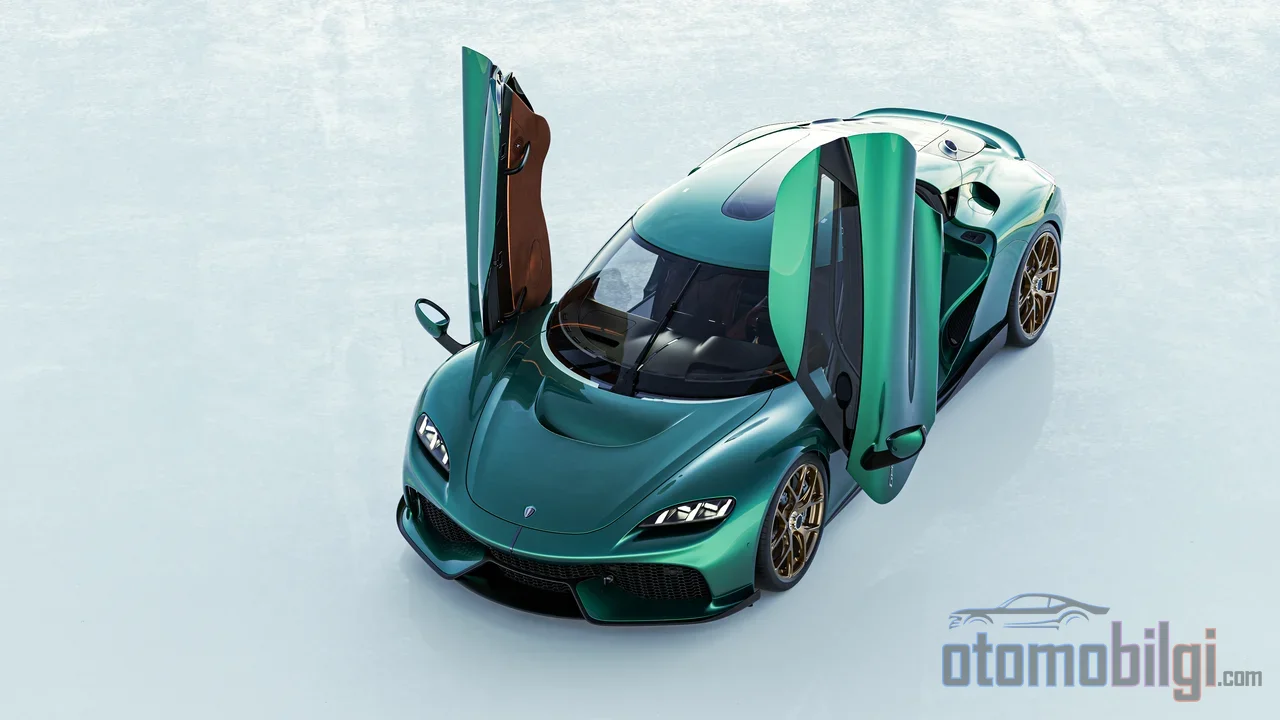
Koenigsegg's signature Dihedral Synchro-Helix doors faced a new problem here: since there was no B-pillar, the doors also needed to provide access for rear passengers. The solution was to design the doors to open forward. The doors were also equipped with sensors to prevent the risk of hitting the garage ceiling; opening safety in tight spaces was considered.
The Changing Story of the Powertrain
The most talked-about aspect of the Gemera is the difference in powertrain between the 2020 presentation and the 2026 production version, and the car cannot be understood without clarifying this difference. The configuration highlighted at the presentation gave way to an entirely different solution in production.
Highlights
- The Gemera is Koenigsegg's first four-seater and first all-wheel-drive car.
- The production version produces 2,300 hp (with E85 fuel) and 2,750 Nm of torque.
- Production is limited to 300 units and all units have been sold; production began in March 2026.
- Acceleration from 0-100 km/h is stated as 1.9 seconds.
- Total range is 1,463 km, with a fully electric range of 50 km.
Presented But Never Produced: Tiny Friendly Giant
In 2020, at the heart of the Gemera was a 2.0-liter three-cylinder, twin-turbocharged Tiny Friendly Giant (TFG) engine. The most striking feature of this engine was its Freevalve technology: it had no camshafts, and the valves operated entirely through electro-hydraulic control. Producing 600 hp at 7,500 rpm and 600 Nm across the 2,000-7,000 rpm band, the engine revved up to 8,500 rpm. The combination of the TFG with three electric motors was targeted to produce a total of 1,700 hp and 3,500 Nm; together with Hydracoup in the drivetrain, torque of up to 11,000 Nm could be delivered to the wheels.
For this version, figures of 0-100 km/h in 1.9 seconds and a top speed of 400 km/h were announced; in fully electric mode, the speed could reach 300 km/h. However, in July 2024, Christian von Koenigsegg announced that the three-cylinder option would not enter production due to a lack of customer demand. Thus, the Gemera continued on with only the V8 hybrid configuration; the 1,700 hp figure remained as a historical promotional figure.
The Production Solution: HV8 V8 and the Dark Matter Electric Motor
The series-production Gemera comes with an updated 5.0-liter twin-turbocharged hot-V V8 engine from the Jesko. The turbochargers were moved into the V gap of the block, reducing the package size. This HV8 engine works together with Koenigsegg's own-developed Dark Matter electric motor, positioned on the front axle.
The Dark Matter features a hybrid design called "raxial flux": a dominant axial flux component is accompanied by a small radial flux component, and with its six-phase architecture and carbon fiber rotor-stator-housing construction, it produces 800 hp and 1,250 Nm at a weight of 39 kg. On the rear axle, there are two separate motors, each delivering 500 hp and 1,000 Nm per wheel. With E85 fuel, the system's total output reaches 2,300 hp and 2,750 Nm; on gasoline, this value stands at approximately 2,269 hp. The brand positions this output as a record for a fully homologated production car, and the vehicle's power-to-weight ratio is announced as 1.11 hp/kg.
Transmission: From the Single-Speed KDD to the Nine-Stage LSTT
In the public reveal, the notable element in the Gemera's power transmission was a single-speed, direct-drive layout called the KDD (Koenigsegg Direct Drive); it transmitted motion through a hydraulic torque-slip clutch and contained no gear changes. This solution belonged to the cancelled TFG version and did not enter production.
In the production car, however, the Light Speed Tourbillon Transmission (LSTT) is used: a modified version of the Jesko's LST for the Gemera, it is a nine-speed, multi-clutch layout. During its development, approximately 150 kg of weight savings were achieved in the drivetrain; this made it possible to fit the hot-V V8 into the space allocated to the engine. In the transmission, six clutches manage the shifts, consisting of three forward gears each. There is no conventional differential in the system; a cassette-based structure that wraps around the motor is used, and bevel gears are active on the front axle. The Gemera, Koenigsegg's first all-wheel-drive model, also carries torque vectoring at all four wheels and a four-wheel steering system; all three are firsts in the brand's history.
Chassis, Dimensions and Equipment
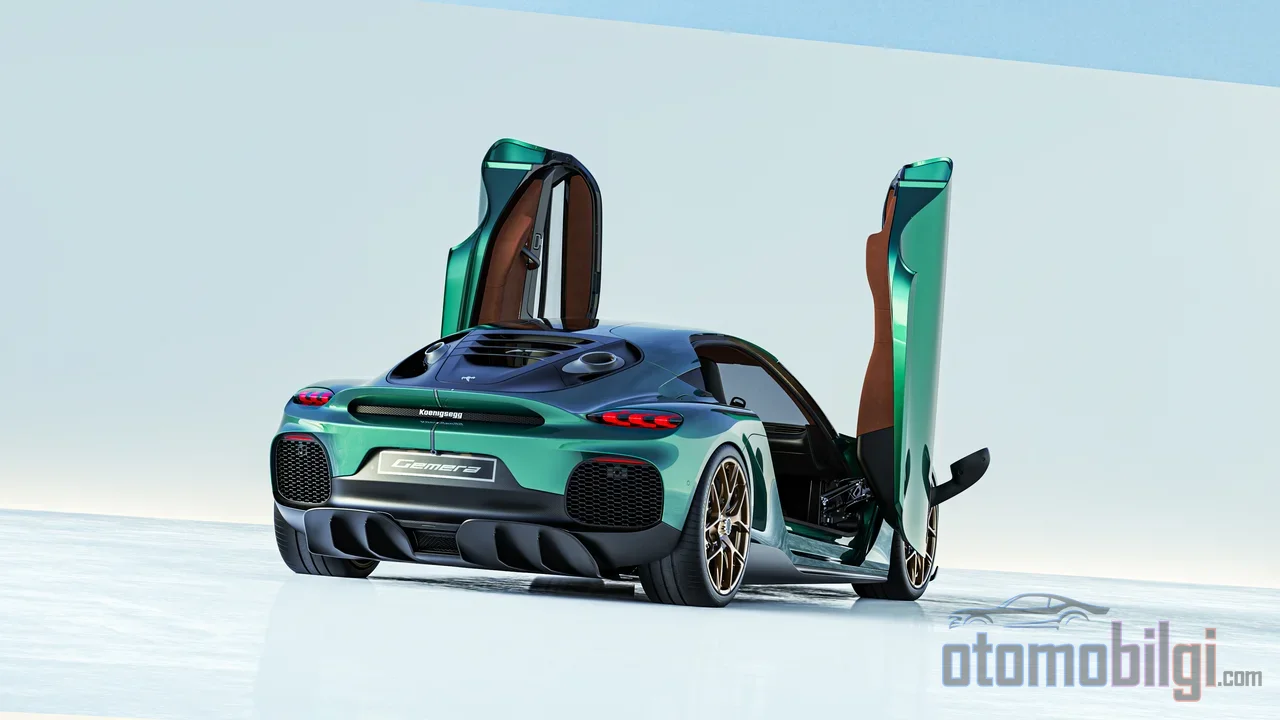
The body consists of a carbon fiber monocoque and carbon fiber panels; aluminum is used in the substructures. An electronically adjustable ride height and an Akrapovič titanium exhaust with electrically deployed cameras are part of the hypercar routine. Inside the cabin, four touchscreens including two 13-inch center displays, Apple CarPlay and Wi-Fi connectivity are offered.
| Feature | Value |
|---|---|
| Length / width / height | 4,975 / 1,988 / 1,295 mm |
| Wheelbase | 3,000 mm |
| System power (HV8 + Dark Matter, E85) | 2,300 hp / 2,750 Nm |
| 0-100 km/h | 1.9 seconds |
| Battery | 850 V, 14 kWh |
| Total range / electric range | 1,463 km / 50 km |
| Brakes (front / rear) | 410 mm / 395 mm ceramic |
| Production count | 300 |
On the safety and stance side, 21-inch forged aluminum wheels at the front and 22-inch at the rear (optional Aircore carbon fiber wheels), Michelin Pilot Sport 4S or Cup 2R tires, and ceramic brakes with six pistons at the front and four at the rear do the job. An electric brake booster also supports the system. The battery operates with an 850 V architecture and has a capacity of 14 kWh; together with the 115-liter fuel tank, the total range is stated as 1,463 km.
Production, Sales Status and the Brand's Positioning
Production of the Gemera began exactly six years after its unveiling, in March 2026, at the facility in Ängelholm. Production is limited to 300 units and all units of the car have already been sold; first deliveries are taking place within 2026. In 2022, the construction of a new factory was announced for the car, and it was stated that once complete, the facility would exceed 30,000 m². No official pricing data has been shared; the listing for sale on the second-hand market of a 2026 build slot belonging to one of the first 15 global deliveries indirectly reveals the market value of the cars.
The brand's positioning is clear: The Gemera breaks the two-seat hypercar mold and combines over 1 MW of power with a four-seat grand tourer cabin, making it the first example of the class called "Mega-GT". The 0-100 km/h acceleration of the 2,300 hp version tested at the Nürburgring is also reported as 1.9 seconds; meaning that despite its four-seat structure, the performance remains above the hypercar threshold.
In short: How Does the Gemera Carry Four People?
The answer lies in the combination of three engineering decisions: A long 3,000 mm wheelbase, a four-seat cabin accessed through B-pillarless, forward-opening wide doors, and a hybrid architecture that compresses the power into a small displacement. Production Gemera places the hot-V V8 and the 39 kg Dark Matter electric motor inside a body that fits three more passengers next to the driver; the 2,300 hp output is delivered with this package. Setting off with four people, four hand luggage and eight cupholders, this car marks the closing of the two-seat hypercar era.