Koenigsegg Jesko Absolut: Engineering for 500 km/h
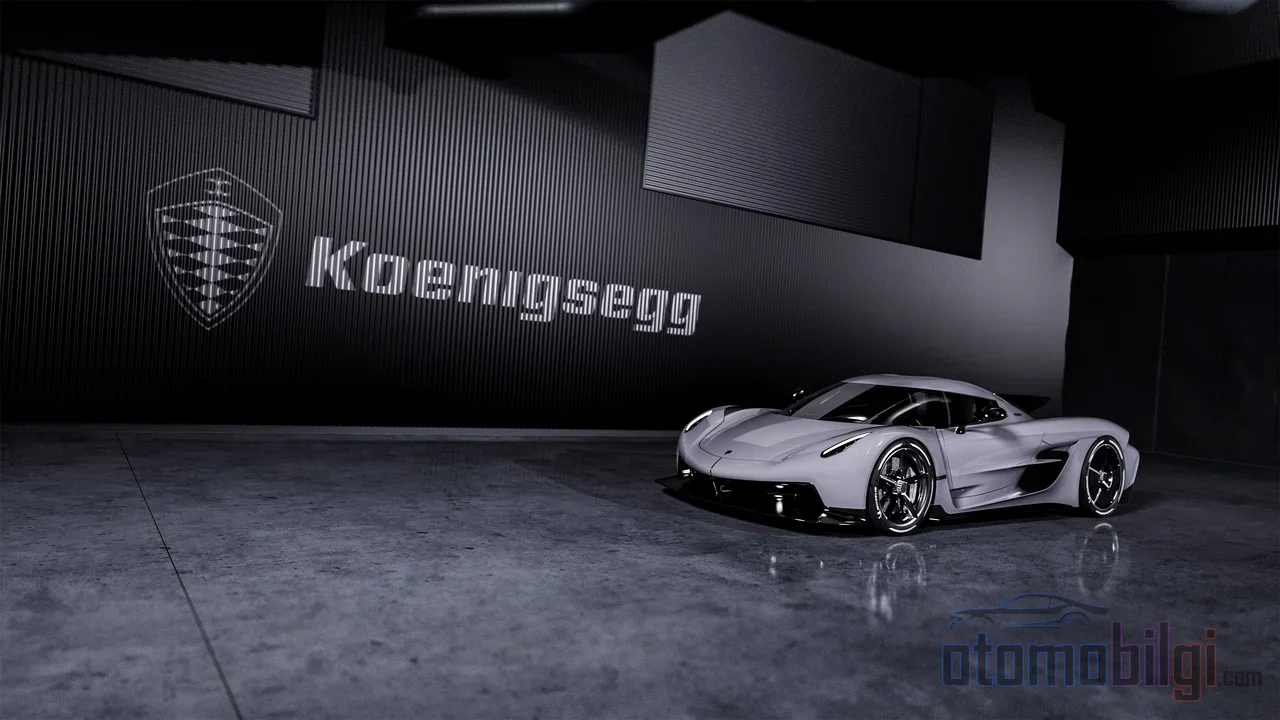
On a hot August 2025 day at Orebro Airport in Sweden, a Jesko Absolut accelerated to 400 km/h, then braked to a stop, and the stopwatch read 25.21 seconds. That was the fastest 0-400-0 km/h run ever recorded for a production car. The most interesting part, however, is this: that is not the car's true purpose. Koenigsegg's Absolut variant was designed to answer a single question - how do you reach the 500 km/h target while reducing drag to the lowest possible level?
The Jesko Absolut was introduced online in March 2020 alongside the Gemera and is one of three variants in the Jesko family: while the Absolut is focused on low drag and top speed, the Attack is aligned toward the track with high downforce, and the Sadair's Spear is aligned toward extreme track use. The family is limited to 125 units in total, and the production quota was completely sold out during the 2019 Geneva Motor Show period; the first customer car was delivered in June 2023. This page examines the engineering of the Absolut along this axis of goals.
Highlights
- The 5.0-liter supercharged V8 produces 1600 hp of power on E85 fuel
- Drag coefficient of Cd 0.278, target top speed 500 km/h
- 0-400-0 km/h world record: 25.21 seconds (August 7, 2025)
- Quarter-mile production car record: 8.54 seconds, with a trap speed of 305 km/h (June 2026)
- Dry weight of just 1290 kg, with the 9-speed LST transmission weighing 90 kg
The 1600-Horsepower Supercharged V8 Engine
At the heart of it lies Koenigsegg's own 5.0-liter twin-turbo, and therefore supercharged, V8. A flat-plane, or 180-degree, crankshaft, four valves per cylinder and an 8.6:1 compression ratio form the foundation of a high-revving character. Horsepower varies depending on the fuel: on gasoline, 1280 hp is produced at 7800 rpm, with the redline beginning at 8500 rpm; with E85 fuel, power rises to 1600 hp. On the torque side, the picture is broader: 1000 Nm is sustained between 2700 and 6170 rpm; maximum torque of 1500 Nm appears at 5100 rpm.
Two details of the engine set it apart from its rivals. The first is the crankshaft: at 12.5 kg, it holds the title of the world's lightest V8 crankshaft, saving 5 kg compared to the Agera's engine while raising the rev limit from 8250 to 8500 rpm. The second is the pressure sensors placed in each cylinder - a system applied for the first time in a production car. To solve the turbo lag problem, a 20-liter carbon fiber air tank and an electric compressor are employed; with 20 bar of supply from the tank, the turbines are awakened instantly. Boost pressure runs at 24.65 PSI on gasoline and around 32 PSI on E85.
Light Speed Transmission: Gear Changes in 20 Milliseconds
The task of delivering power to the road belongs entirely to Koenigsegg's own 9-speed transmission called the Light Speed Transmission (LST). This 90 kg unit does not resemble a conventional dual-clutch gearbox; thanks to its multi-clutch design, it can shift between any two gears without interrupting power, and gear changes are completed within 20-30 milliseconds. The fact that a nine-speed gearbox weighs so little is critical for the top speed goal: every kilogram means drag on the road to the 500 km/h limit.
The gear ratios are spread across a wide range: the series starts at 4.7200:1 and drops to 0.6566:1 in ninth gear. This wide ratio is the key to keeping the engine in its efficient rev range at high speeds.
0.278 Cd: The Aerodynamic Anatomy of the Absolut
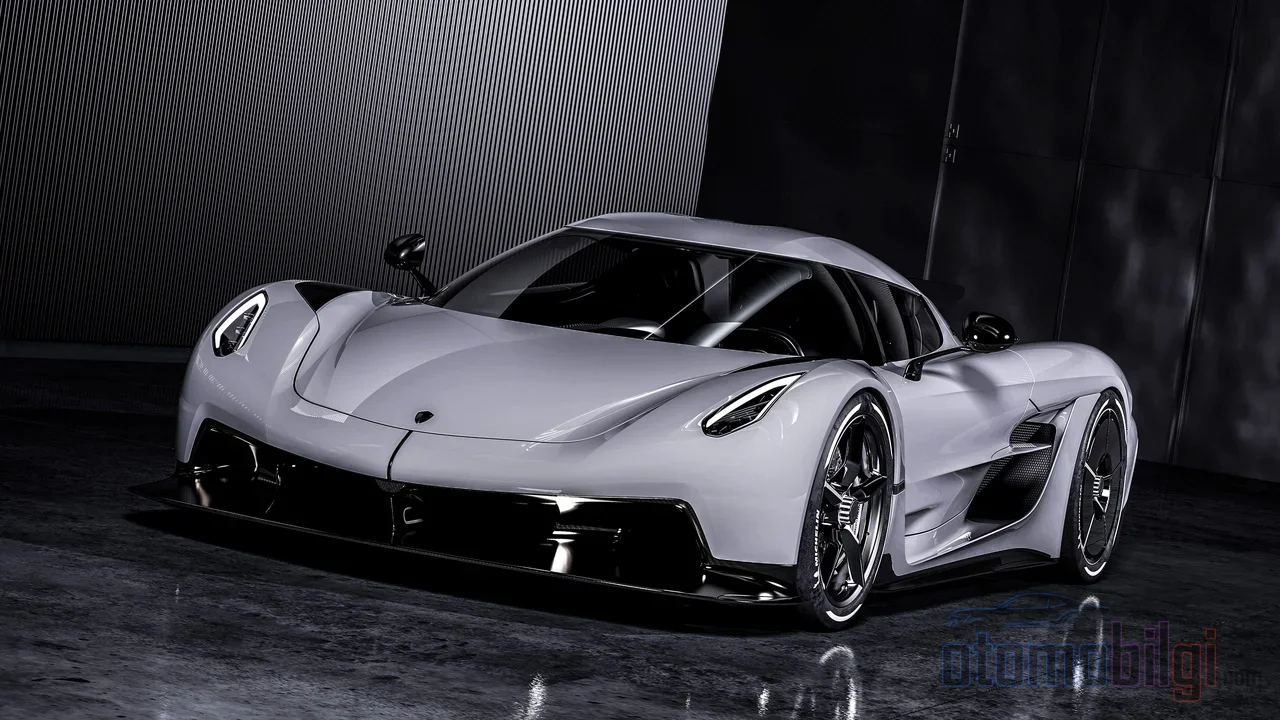
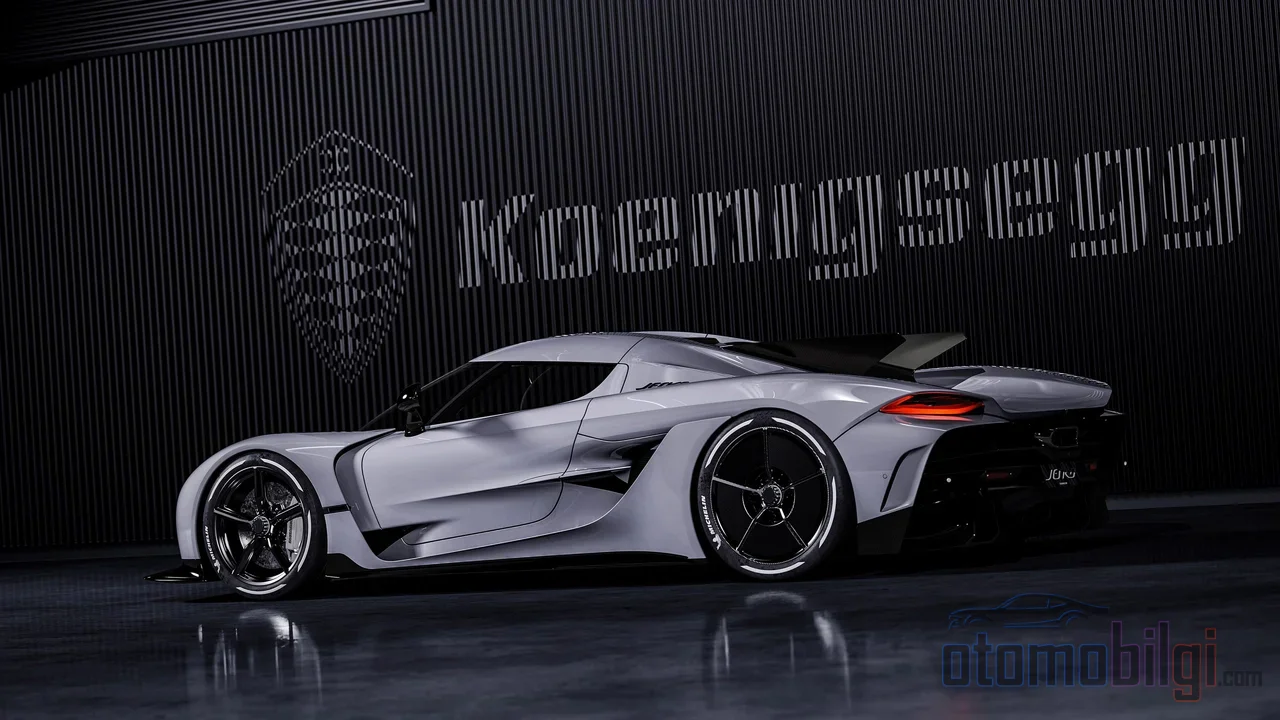
The difference between the Jesko Absolut and the Attack is largely a matter of aerodynamic choice. The Attack carries a massive rear wing to generate downforce on the track, creating up to 1400 kg of pressing force. On the Absolut, this wing was completely removed; replaced by two rear fins, and downforce dropped to 150 kg. On the track this is a loss, but on flat ground it is quite the opposite - a gain: less pressing force to generate also means less friction.
To speak in numbers: the target Cd was set at 0.28, and the CFD team managed to bring it down to 0.278; the frontal area is 1.88 m². Roughly 3000 hours of computational fluid dynamics (CFD) simulation and 5000 hours of design and engineering work were done to reach this result. The concrete changes are also visible: smoother front splitter winglets, redesigned front louvers, an 85 mm extended tail, and removable wheel covers. Each one is a small but cumulative move that improves the way air leaves the car.
Record Book: 0-400-0, Quarter Mile and Half Mile
The Absolut has not yet attempted its 500 km/h top speed run, but the short-distance records prove the speed goal is serious. Chronologically, three milestones stand out:
- June 26, 2024, Orebro Airport: with test driver Markus Lundh, 0-400-0 km/h in 27.83 seconds; 0-400 km/h one-way in 18.82 seconds.
- August 7, 2025, again at Orebro: 0-400-0 km/h dropped to 25.21 seconds; 0-400 km/h in 16.77 seconds, 0-250-0 mph in 25.67 seconds. This run brought the record held by the Rimac Nevera back to Koenigsegg.
- June 2026: production car record in the quarter mile of 8.54 seconds, with an exit speed of 305 km/h; the half mile took 12.76 seconds, reaching 232 mph in the half mile, with 412.72 km/h seen at full distance.
Looking at the split acceleration figures, the picture is striking: according to unofficial measurements, 0-100 km/h in about 3.3 seconds, 100-200 km/h in about 3.2 seconds, 200-300 km/h in about 4.2 seconds. But the most remarkable segment is between 300-400 km/h: about 8.4 seconds. While most cars disappear entirely within this range, the Absolut is still accelerating hard - this is the joint achievement of aerodynamics and the ninth gear.
Koenigsegg Jesko Absolut Technical Specifications
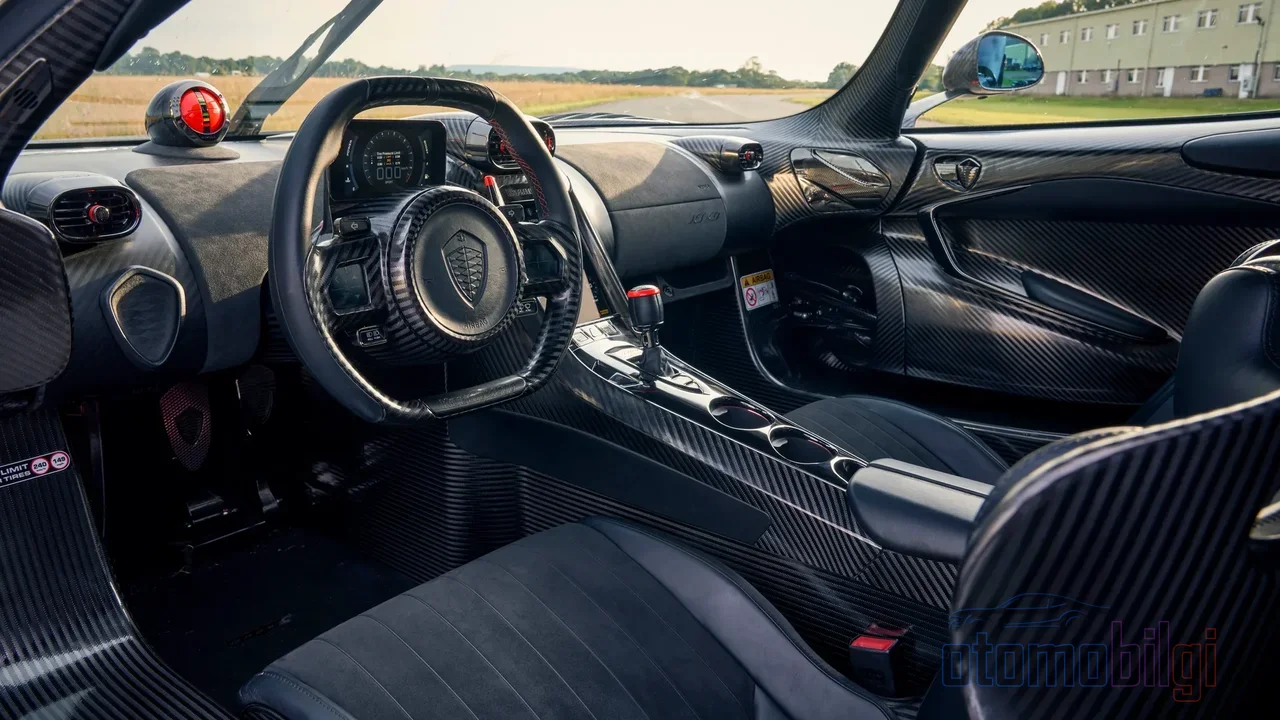
| Specification | Value |
|---|---|
| Engine | 5.0 L twin-turbocharged V8, 32 valves |
| Power | 1280 hp (gasoline) / 1600 hp (E85) |
| Torque | 1500 Nm @ 5100 rpm (1000 Nm, 2700-6170 rpm) |
| Transmission | 9-speed LST, 90 kg |
| Length / Width / Height | 4845 / 2030 / 1210 mm |
| Wheelbase | 2700 mm |
| Dry weight | 1290 kg (fully loaded: 1390 kg) |
| Fuel tank / Luggage | 72 L / 100 L at the front, 50 L at the rear |
| Tires | Michelin Pilot Sport Cup 2, front 265/35 20, rear 345/30 21 |
| Target top speed | 500 km/h |
To complete the table, a few blanks must honestly be marked as well. The manufacturer has not announced an official 0-100 km/h value for the Absolut; third-party measurements hover in the 2.6-2.8 second range. No official data was shared on fuel consumption - not surprising for a 1600 hp hypercar. A similar situation applies to the price: the base price of the Jesko family is estimated at around 3 million US dollars, but no official price specific to the Absolut variant was announced; if one thing is known, it is that the Absolut will be more expensive than the Attack, because the cost of the drag-reduction improvements requires it.
Did It Reach Its 500 km/h Target?
The short answer to the question: not yet, and this is a deliberate choice. The target top speed announced by the manufacturer is 500 km/h (310 mph); theoretical calculations, however, show that the car could reach a range of 531-563 km/h (330-350 mph). But this is not a value that has been independently verified to date. The top speed attempt has still not taken place; Koenigsegg instead seems to prefer showcasing the car's potential gradually through short-distance records.
There is a sound engineering reason for this. Above 500 km/h, tires, track length and safety margins are serious limiting factors; the 0-400-0 and quarter-mile records serve as steps where every component of the system is tested under controlled conditions. The two record attempts at Orebro and the quarter-half mile achievement in June 2026 are parts of this gradual roadmap.
In essence, the Jesko Absolut is an engineering exercise dedicated to a single purpose: reducing the drag coefficient to 0.278, fitting a 1600 hp supercharged V8 into a 1290 kg body, and systematically approaching the 500 km/h limit. The record book is already full; the only remaining question is when and where that final threshold will be attempted.
Frequently Asked Questions
What is the difference between the Jesko Absolut and the Jesko Attack?
The Attack was designed for high downforce and track use; it carries a large rear spoiler producing 1400 kg of downforce and set track records at Gotland Ring and Laguna Seca. The Absolut, on the other hand, removed this spoiler and placed two rear fins in its place, reduced downforce to 150 kg, and with a Cd of 0.278 focused on top speed.
Can the Jesko Absolut really reach 500 km/h?
The manufacturer's target is 500 km/h and theoretical calculations point to a range of 531-563 km/h; however, independent verification has not yet been done and the top speed attempt has not taken place.
How many units are produced?
The Jesko family is limited to 125 units in total; annual production is at a level of 40-50 units, and all quotas were sold in 2019.
Sources
- Jesko Absolut - Koenigsegg Official Website
- Jesko Absolut Technical Specifications - Koenigsegg Official Website
- Koenigsegg Jesko - Wikipedia
- Jesko Absolut Model Information - Koenigsegg Chicago
- Koenigsegg Jesko: Review, Price and Specs - Car and Driver
- Jesko Absolut 0-400-0 km/h World Record Official Video
- 5.0L Twin-Turbo V8 Engine Analysis - SlashGear