Koenigsegg CC850 and the Secret of the Twin Magic Transmission
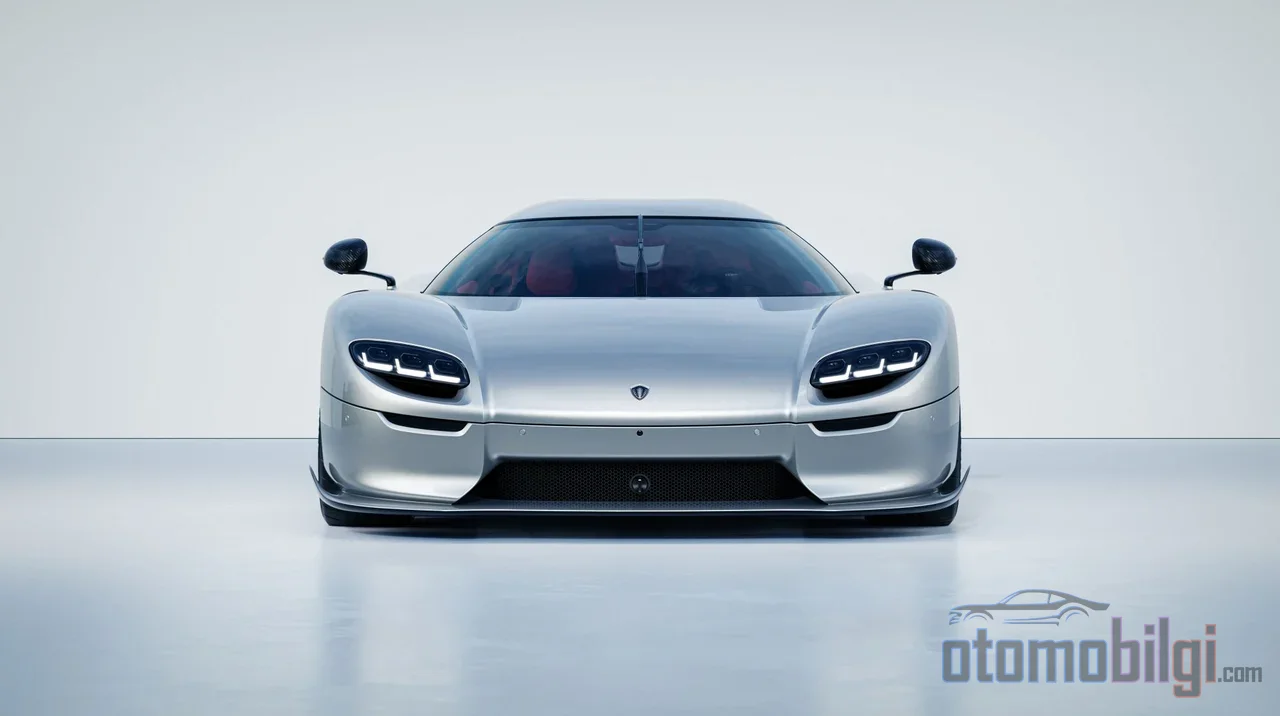
When you press the throttle of a hypercar, a twin-turbo V8 with 1,385 hp kicks in, but under your left foot there is a real clutch pedal and under your hand there is a gated gear lever. A few seconds later, you can drive the same car with the paddles, with a fully automatic 9-speed transmission. The Koenigsegg CC850 is built entirely around this paradox: Christian von Koenigsegg brought the manual gear experience from the early years of the company he founded thirty years ago back into the middle of one of the most powerful production engines of 2022. So how can the same transmission be both a 6-speed manual and a 9-speed automatic?
The answer lies hidden in the system Koenigsegg calls the Engage Shifter System and internally refers to as Twin Magic. On this page, we examine the CC850's award-winning transmission piece by piece: how clutch pedal simulation works, how mechanical gears and electronic control coexist, why drive modes change the gear ratios, and how all of this differs from the Jesko's Light Speed Transmission (LST).
CC850: A Tribute to 20 Years Ago, with Today's Engineering
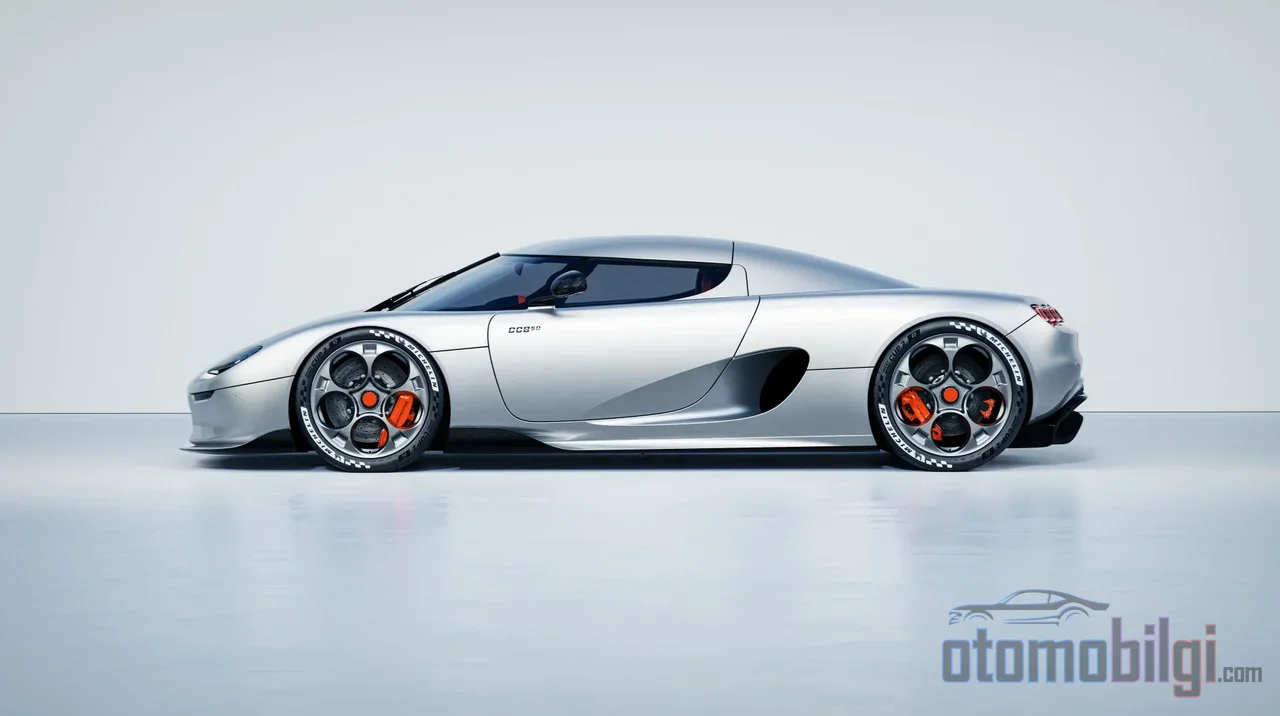
The CC850 was unveiled on August 19, 2022, in Pebble Beach, California. The purpose was a double celebration: 20th anniversary of the company's first production car, the CC8S, anniversary of the company's first production car, the CC8S, and founder Christian von Koenigsegg's 50th birthday. Although it references the CC8S, the car is not a visual nostalgia project; it shares no parts with the CC8S. The chassis and suspension come from the Jesko: double wishbone multi-link suspension, hydraulic and gas-hydraulic dampers, Triplex dampers at the rear, and rack and pinion steering.
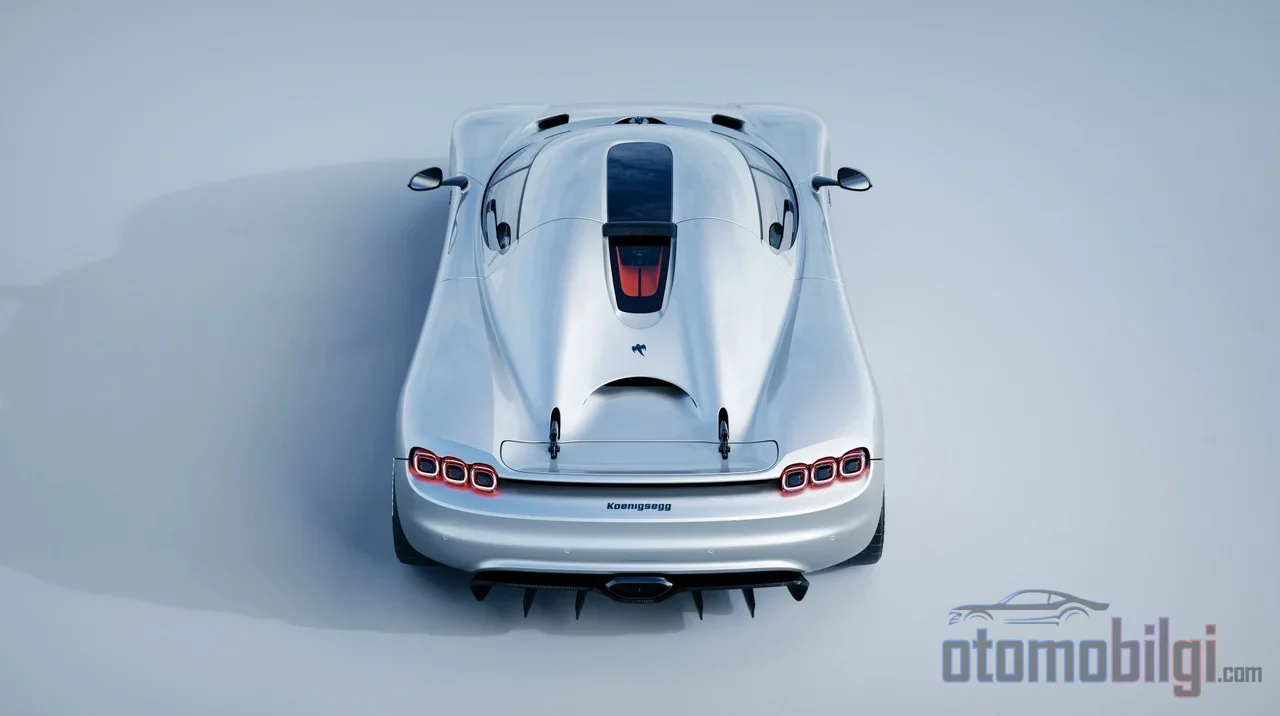
The production story is interesting too. The car was announced limited to 50 units, but when demand exceeded expectations, 20 more were added on August 25, 2022, and the total 70-unit limited production was finalized. Production has been ongoing since 2024 at the factory in Ängelholm, Sweden. The transmission's designers are Christian von Koenigsegg himself and Sasha Selipanov.
Highlights
- Engage Shifter System: 6-speed manual and 9-speed automatic modes in a single transmission
- 5.0-liter twin-turbo V8: 1,385 hp on E85, 1,185 hp on gasoline
- Torque: 1,385 Nm @ 4,800 rpm
- Dry weight of 1,385 kg for a one-to-one power-to-weight ratio
- Total production: 70 units (50 + 20 expansion)
How Does the Twin Magic Transmission Work?
The Engage Shifter System is built on the proprietary 9-speed Light Speed Transmission used in the Jesko. The LST is a multi-clutch structure designed and produced entirely in-house at Koenigsegg: 3 compound gear sets each with 3 gears, meaning 9 gears in total. Weighing approximately 90 kg, it is similar in size to an ordinary 6-speed transmission. A notable detail: there is no conventional flywheel and clutch between the engine and the transmission.
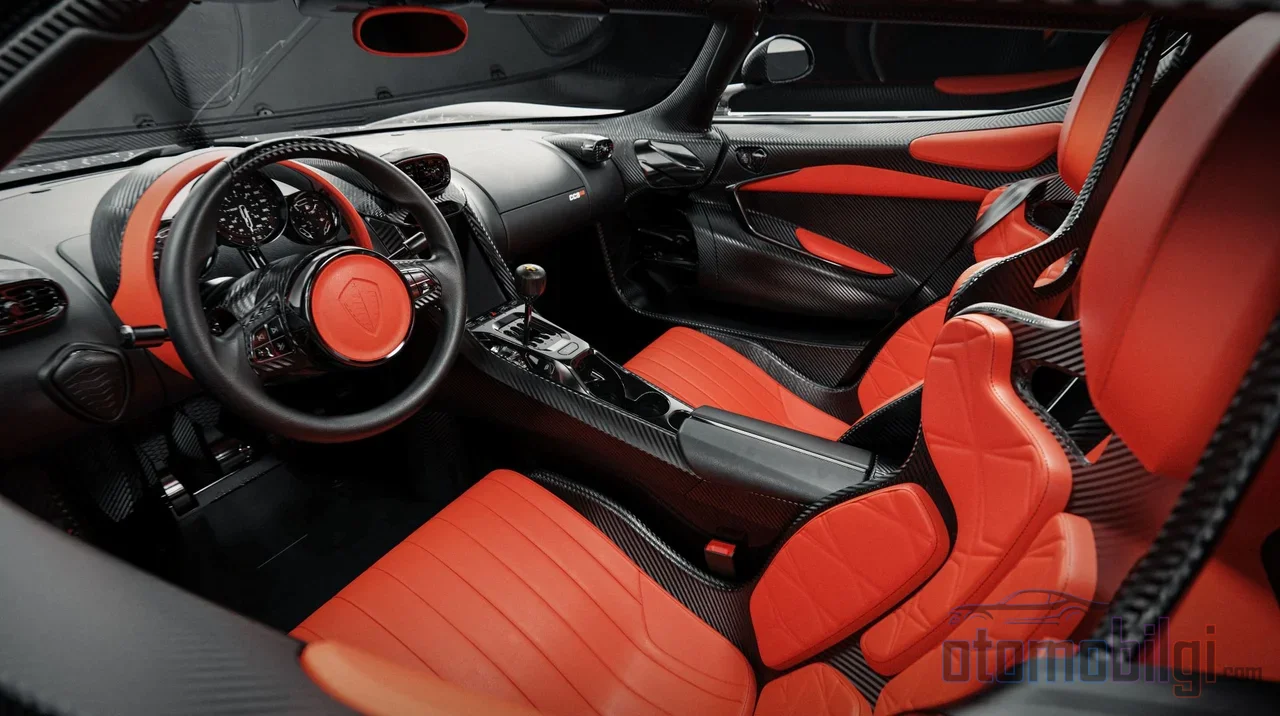
The ESS adds two things to this foundation: a gated physical gear lever and a real clutch pedal. When the driver slides the gear lever to the right-down position, the car switches to fully automatic 9-speed mode; when you turn the lever back, it returns to 6-speed manual mode. Mode changes can be made at any moment the driver wishes, even while driving.
Clutch Pedal Simulation: Where Does the Feel Come From?
The critical engineering point here is this: there is no direct mechanical linkage, front to back, between the pedal and the clutches. Instead, there is a hydraulic connection, and the force you apply to the pedal is transmitted in a way that creates the exact same pressure feel on the clutches. In other words, the feel is natural, while the connection is managed through electronic and hydraulic control.
The fine details of the system have not been left unattended either. During quick gear changes, the synchromesh offers resistance feel; when the clutch is pressed hard, the pedal becomes slightly heavier due to inertia, just like in a real mechanical system. This is a simulation, but the result is quite real: the car can be stalled, a jump start can be performed, and even a burnout is possible. This is why Koenigsegg positions its system not as a manual imitation, but as a system that delivers a real manual experience through a different architecture.
Gear Ratios That Change According to Modes
The most unusual feature of the ESS is that, for the first time in a manual transmission, gear ratios change according to the driving mode. This is made possible by pairing the 9 gears in different combinations:
- In Track mode: the lever's position corresponding to 1st gear actually selects the 3rd gear, because the real 1st gear in the 9-speed layout is too short for track use. The steps from 2nd to 6th are spaced very closely together.
- In Normal mode: 1st gear selects the 2nd of the 9 gears, and 2nd gear selects the 4th; gear selects the 4th; it is stated that these ratios correspond exactly to the first two gears of a classic 6-speed manual.
- In Comfort mode: a different, softer ratio map comes into play again.
In other words, even though the lever's physical position stays the same, which gear is turning behind it is remapped according to the mode you select. The system's multi-clutch structure is also the technical foundation that enables this flexibility: different clutch combinations make different ratio selections possible.
How Does It Differ from the Jesko's LST?
To summarize briefly: The Jesko's LST is a fully automatic, multi-clutch 9-speed transmission with no clutch pedal. The CC850's ESS, on the other hand, adds a gated 6-speed manual mode and clutch pedal simulation to the same 9-speed LST foundation; the two merge in a single body. In Koenigsegg's own words, the Jesko platform and the LST formed the technical foundation for the development of the ESS.
The practical difference is this: the Jesko driver wants speed-focused, millisecond gear shifts; the CC850 driver, however, wants automatic comfort on weekdays and real manual interaction on weekends, in the same car. The CC850 preserves the LST's friction-free and very fast automatic shifts exactly as they are; it adds the manual layer on top of this.
Official Technical Data
The CC850 uses the 5.0-liter twin-turbo aluminum V8 engine taken from the Jesko; smaller turbochargers were preferred in the CC850. The engine features a 4-valve-per-cylinder layout with a flat-plane crank and weighs 185 kg in total. It offers two different power figures depending on the fuel type: 1,185 hp on standard gasoline and 1,385 hp on E85, both at 7,800 rpm, with an 8,500 rpm redline. With a dry weight of 1,385 kg, this achieves a one-to-one power-to-weight ratio on E85.
| Specification | Value |
|---|---|
| Engine | 5.0 L twin-turbo V8, flat-plane (5,065 cc) |
| Power (gasoline) | 1,185 hp @ 7,800 rpm |
| Power (E85) | 1,385 hp @ 7,800 rpm |
| Torque | 1,385 Nm @ 4,800 rpm |
| Transmission | 9-speed LST, ESS (including a 6-speed manual mode) |
| Dry weight | 1,385 kg |
| Length / Width / Height | 4,364 / 2,024 / 1,127 mm |
| Wheelbase | 2,700 mm |
| Brakes | 410 mm 6-piston front, 395 mm 4-piston rear |
| Production run | 70 units |
No 0-100 km/h acceleration figure has been announced by the manufacturer; Koenigsegg's official technical data does not include this figure. Some unofficial figures in circulation are not reported here as values because they could not be verified with official sources. On the body side, it features a 2-door targa top structure, dihedral synchro-helix doors, and a rear-wheel-drive layout. Forged aluminum wheels are 20 inches at the front and 21 inches at the rear; the tires are Michelin Pilot Sport 4S, 265/35R-20 front and 325/30R-21 rear. The gauge design is also part of the story: The second generation of the Chronocluster designed for the CCX offers a single multifaceted dial with revs on the outside, speed in the middle, and turbo boost information at the center.
In summary: A Real Manual, or an Elegant Simulation?
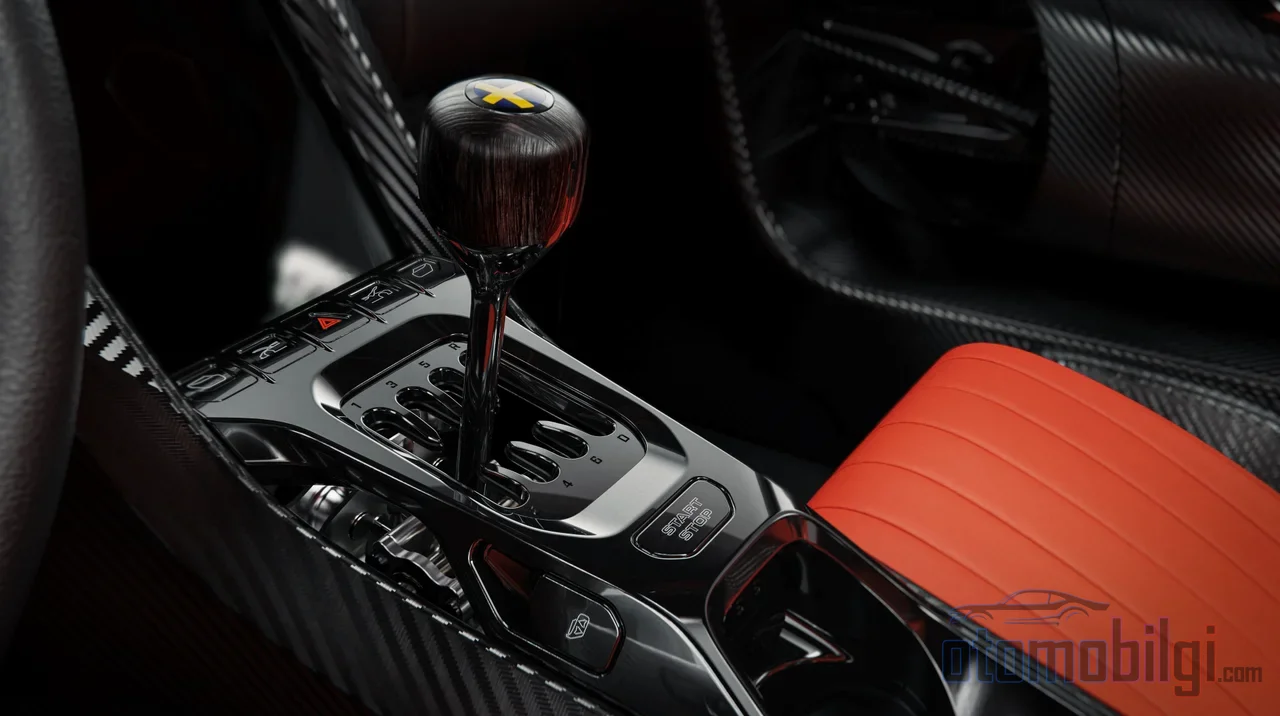
The clear answer to the question is this: The CC850's transmission delivers a genuinely manual experience with its truly gated shifter, the feel of a hydraulically linked real clutch pedal, and a character that can stall and perform burnouts; it achieves this using hydraulic linkage and electronic control architecture instead of the classic front-to-back mechanical connection, built on the foundation of a 9-speed multi-clutch LST. The mechanical gears are there, the clutches are there; the only thing that changes is who controls them, and how.
With its production run of 70 units and 1,385 hp of power, the CC850 achieved something with no equivalent in the automotive world: it placed the soul of the manual gearbox into a modern hypercar without compromising any performance. The clearest indication of what this project meant to him is that Christian von Koenigsegg himself bought and kept the first preproduction-transmission show car he unveiled in Monterey in 2022.