Gordon Murray S1 LM: Three Seats, Zero Luggage
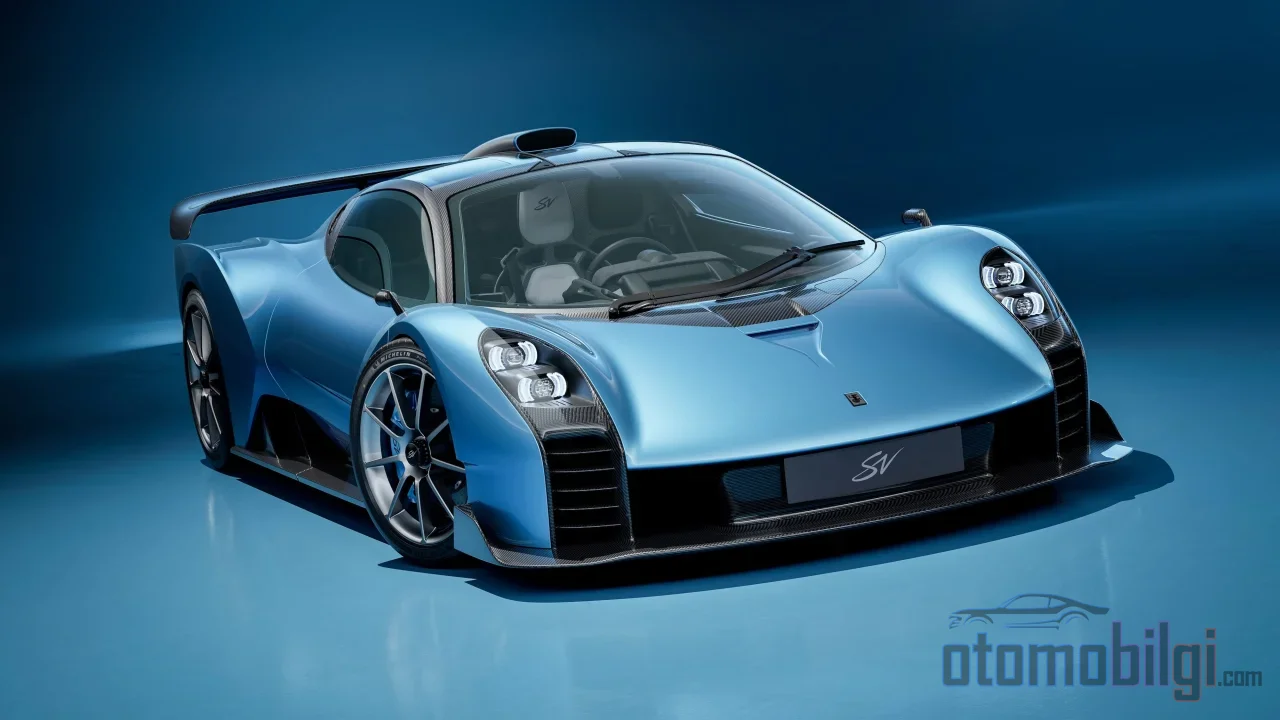
The quietest yet most striking launch of Monterey Car Week in August 2025 was a V12 hypercar with a central driving position, three seats and a manual-only gearbox: Gordon Murray S1 LM. On the December night it went to market, the first chassis changed hands for a price you will find no equivalent of for any contemporary supercar. The story of this car is the product of an engineering reckoning reaching back to the 1995 Le Mans victory.
Some write that only 24 units of this car were produced; in reality, only 5 examples of the S1 LM will see the light of day, and one of them has already been sold at auction. The number 24 is merely a confusion arising from the car's tribute to the 24 Hours of Le Mans. On this page, we will go through the entire technical identity of the S1 LM one by one, based on the official technical documentation.
Highlights
- Cosworth-derived 4.3-liter naturally aspirated V12 with approximately 730 PS @ 11,500 rpm
- Total weight under 986 kg, power-to-weight ratio of approximately 762.8 PS/ton
- Only 5 examples will be produced; the first chassis sold for USD 20,630,000
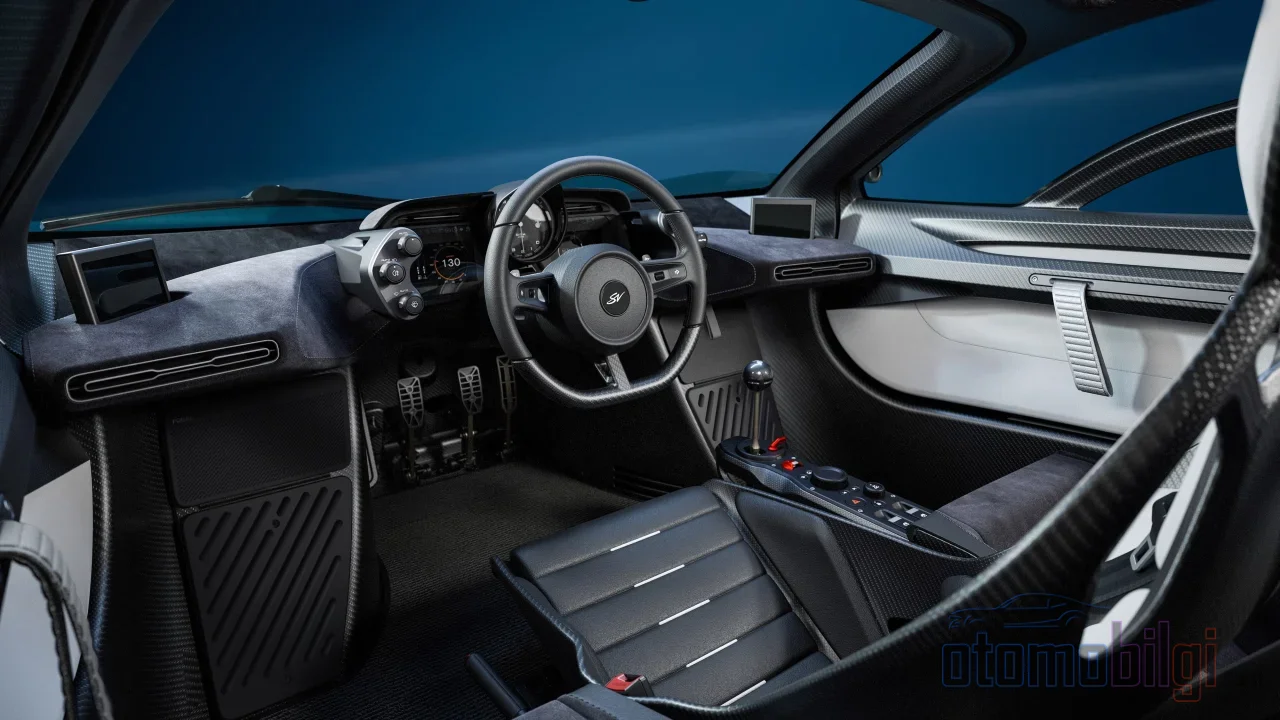
- Central driving position, three-seat layout, 6-speed manual gearbox
- The 0-100 km/h figure has not been disclosed by the manufacturer
What Is the S1 LM: A Modern Salute to the McLaren F1 GTR
The S1 LM is a road-legal but race-spirited hypercar developed by Gordon Murray, founder of Gordon Murray Automotive, as a tribute to the McLaren F1 GTR that won the 1995 24 Hours of Le Mans. It was unveiled at The Quail in August 2025, and the year of the unveiling was itself symbolic: it marked the 60th year of Murray's design career. It continues the classic McLaren F1 layout with a central driving position and two side passenger seats; the ground effect-based aerodynamics and fixed rear wing do not hide its track origins.
The car's most radical decision lies in how the power is delivered. While 1,500 PS hybrid systems are the norm in the hypercar league of 2026, the S1 LM combines a naturally aspirated V12 revving to 12,100 rpm with a 6-speed H-pattern manual gearbox. This is not a nostalgia gimmick; it is the result of an engineering philosophy in which lightness is worth more than every additional horsepower.
The Cosworth V12: A Heart Rising at 12,100 rpm
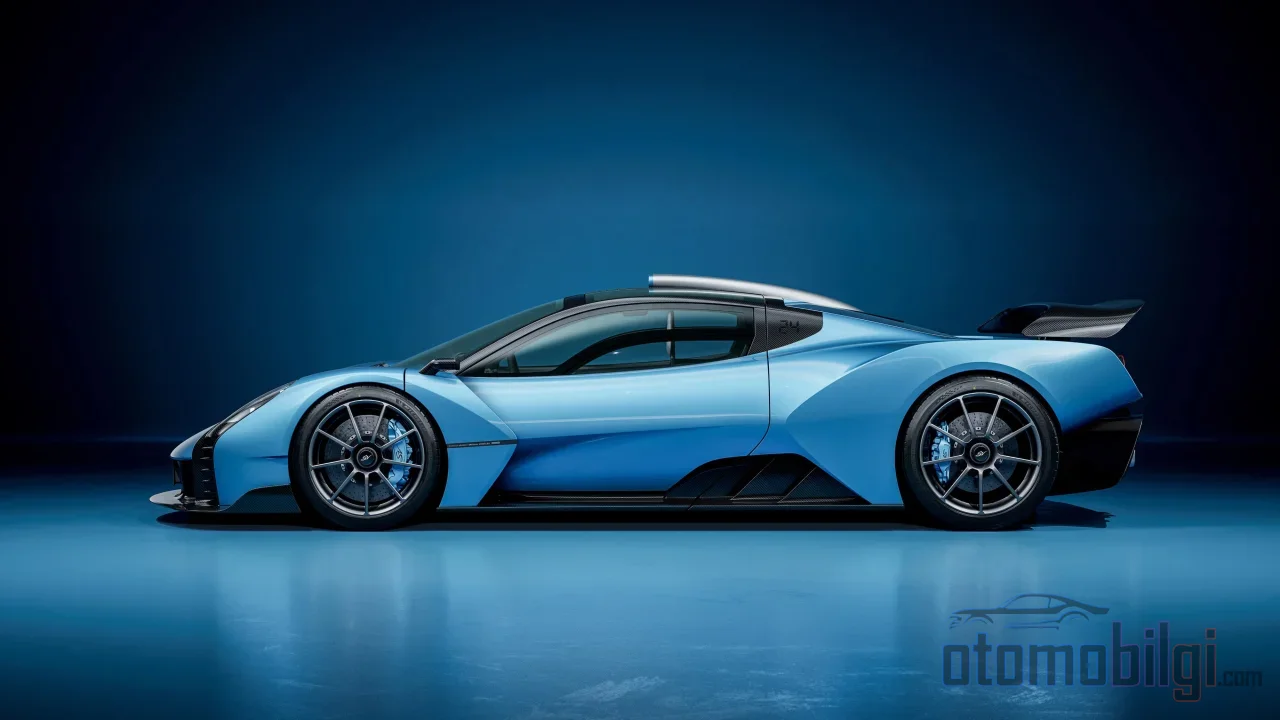
The engine is a specially developed GMA V12 built with Cosworth: a fully naturally aspirated unit with a 65-degree V angle, 4.3-liter displacement (bore 84 mm, stroke 63.8 mm) and a high 14:1 compression ratio. Maximum power is approximately 730 PS @ 11,500 rpm, while maximum torque is approximately 470 Nm @ 9,000 rpm. Power density is approximately 169.7 PS per liter; an extraordinary figure achieved without turbocharging or electric assistance.
Its character is defined by flexibility as much as by the numbers: the engine can deliver 71% of its maximum torque at 2,500 rpm. In other words, despite its 12,100 rpm ceiling, this V12 has usable low-rev behavior for city driving. Gear-driven double overhead camshafts, four valves per cylinder, and variable valve timing on both intake and exhaust make this possible. The intake side features a RAM induction airbox, four throttle bodies, and an acoustic system called DPIS that directs the intake sound straight into the cabin.
Material selection is tightly tied to the lightness goal: aluminum alloy block and cylinder heads, titanium connecting rods and valves, Inconel and titanium exhaust system. With dry sump lubrication, the engine weighs just 178 kg and, thanks to its semi-structural mounting, it is a load-bearing part of the chassis itself. The 48V integrated starter/generator unit (20 kW) forms the engine's dual-role electrical infrastructure.
Chassis, Aerodynamics and Lightweight Engineering
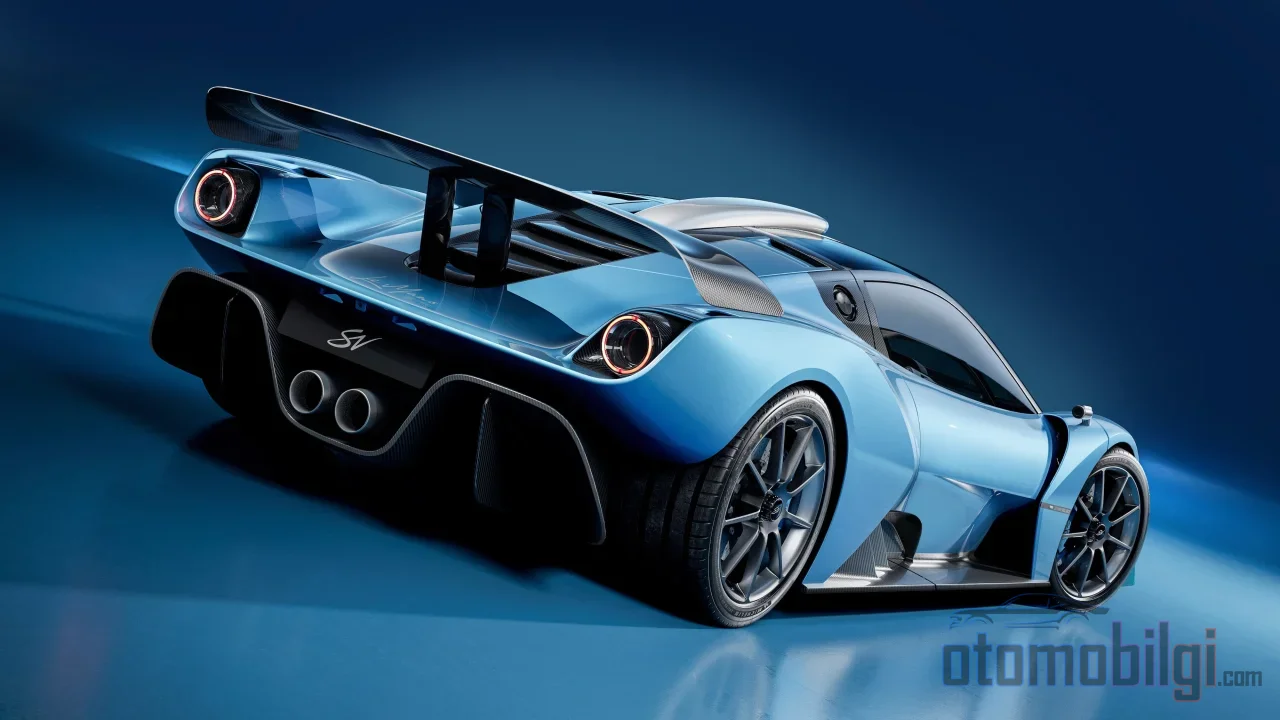
The S1 LM carries on the tradition that began with the T.50 and T.33: a monocoque made of multi-part bonded carbon fiber sandwich panels with an aluminum honeycomb core. The semi-stressed engine and the 80.5 kg transmission are the complementary elements of this structure. A Salisbury-type limited-slip differential and a 184 mm-diameter triple-plate carbon clutch are the final links in the chain that transmits power to the rear wheels.
The result is a mass at roughly half the level of its rivals: weight under 986 kg, dry weight under 957 kg. The power-to-weight ratio is approximately 762.8 PS/ton; that comes to about 131 kg per 100 PS. Pushrod double-wishbone suspension, CCM-R carbon-ceramic brakes with six pistons up front (370x34 mm) and four at the rear (340x34 mm), forged aluminum wheels (19-inch 10J front, 20-inch 12J rear) with Michelin Pilot Sport Cup 2 tires (265/35 ZR19 and 335/30 ZR20) are a continuation of the lightness philosophy.
Gordon Murray S1 LM Technical Specifications
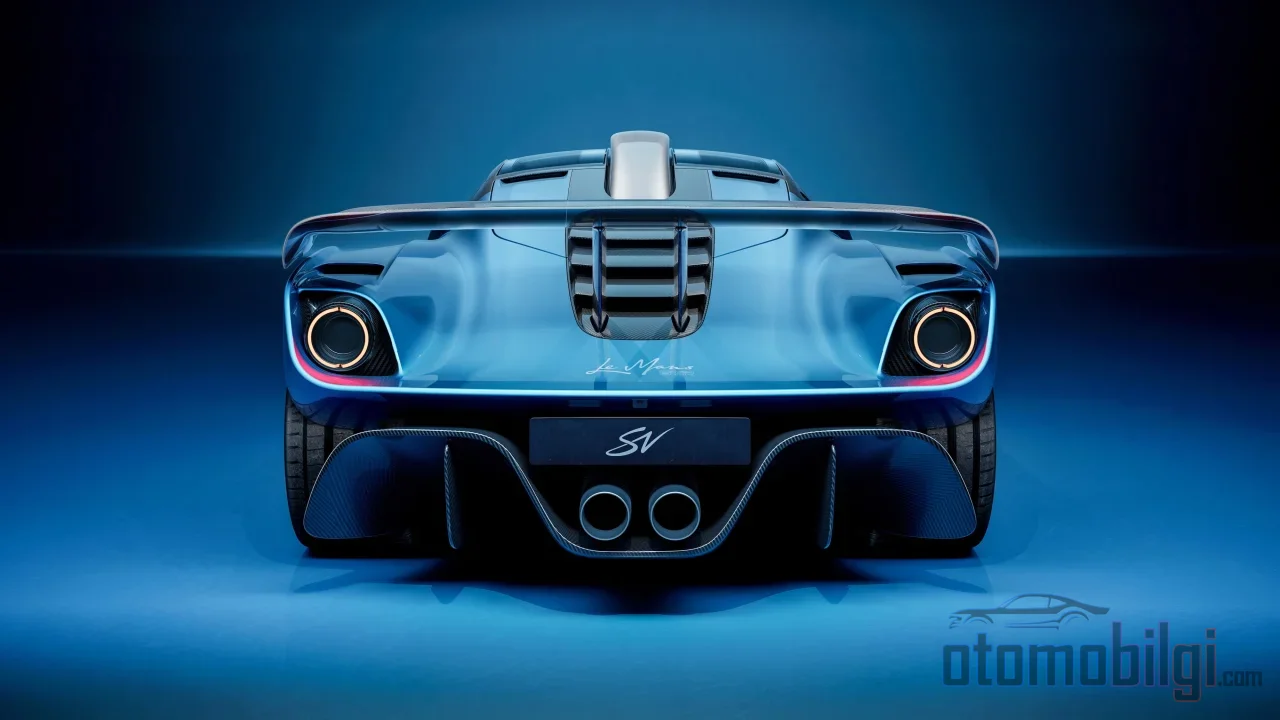
The table below was compiled from the values in the manufacturer's official technical documentation. Power and torque figures are given by the manufacturer as approximate (~); the small differences arising from different publications' PS, bhp and kW conversions stem from this.
| Specification | Value |
|---|---|
| Engine | Cosworth GMA 4.3 L naturally aspirated V12, 65° |
| Maximum power | ~730 PS @ 11,500 rpm |
| Maximum torque | ~470 Nm @ 9,000 rpm |
| Transmission | 6-speed manual (H-pattern), carbon clutch |
| Length / Width / Height | 4,443 / 1,891 / 1,149 mm |
| Wheelbase | 2,700 mm |
| Weight | < 986 kg (dry: < 957 kg) |
| Fuel tank | 80 liters (including 6-liter reserve) |
| Brakes | CCM-R carbon ceramic, 6 pistons front / 4 rear |
| Production run | 5 units |
Two values not included in the table call for honesty: the 0-100 km/h acceleration time was not disclosed by the manufacturer. Likewise, the vehicle's sale price was never officially announced. The official technical documentation gives a flat zero for luggage capacity too; like its name, the S1 LM was not designed to carry suitcases - it is a vehicle with track spirit.
The Murray Legacy: A Line Extending from Brabham to the T.50
To understand the S1 LM, it is enough to look at Gordon Murray's career path. Murray, who contributed to the 1981 and 1983 championships with the Brabham Formula 1 team and designed McLaren's back-to-back championships in 1988-1989-1990, became a legend on the road car side with the McLaren F1 and its 1995 Le Mans victory. Gordon Murray Automotive carried this philosophy forward with the T.50 (2020), T.50s Niki Lauda (2021), T.33 (2022) and T.33 Spider (2023).
The S1 LM is the most race-focused point on this line. Unlike the T.50's fan-assisted active aerodynamics, it settles for ground effect and a fixed rear wing; because the aim is to keep the Le Mans GTR spirit on the road. Murray's signature lightweight solutions (a 178 kg engine, an 80.5 kg gearbox, the use of titanium and Inconel) are visible in every sub-system of the car.
The $20.63 Million Auction and the Touring-Focused S1
At RM Sotheby's auction in Las Vegas in December 2025, S1 LM chassis 1 sold for $20,630,000, setting a record for a contemporary supercar. Deliveries of the five customer cars, whose price was never disclosed, begin in 2026 in Windlesham, England; some estimates extend the schedule to 2027.
The story does not end here. On August 14, 2026, GMSV introduced the S1, a touring-focused model derived from the S1 LM, at The Quail. In the S1, the V12 derivative with displacement reduced to 4.2 liters produces around 690 PS, 80% of torque is available from 2,500 rpm, and an active rear aerodynamic system is used instead of a fixed wing; the suspension is raised by 10 mm. The entire 64-unit S1 production run has sold out, with a target weight below the T.50's. In short, while the LM remains limited to five people, the S1 carries the philosophy to a broader but still very limited audience.
Frequently Asked Questions About the S1 LM
How many units of the Gordon Murray S1 LM were produced?
Only 5 examples: the first chassis went to auction, and delivery of the remaining four customer cars begins in 2026. The claim of 24 examples in circulation is incorrect information stemming from the car's 24 Hours of Le Mans theme.
What is the 0-100 km/h time?
It has not been announced by the manufacturer. A weight under 986 kg and around 730 PS of power point to very serious acceleration on paper; however, we believe speculating without an official figure would not befit engineering respect.
What is the difference between the S1 LM and the S1?
S1 LM: 4.3-liter engine, fixed rear wing, ground effect focused, 5 units, racing spirit. S1: 4.2-liter engine, active rear aerodynamics, suspension 10 mm higher, 64 units, and focused on grand touring.
Conclusion: An Engineering Triumph of the Few
The Gordon Murray S1 LM is a manifesto that refuses to join the power war of the 2026 hypercar league. Around 730 PS and a weight under 986 kg, 12,100 rpm and an H-pattern manual gearbox, three seats and zero luggage space: every decision is a choice of priority rather than a compromise. Its limitation to five examples and the first chassis changing hands for $20.63 million concretize the value the market assigns to this philosophy. This car, full of numbers yet never using a single number unnecessarily, is one of the purest living lessons of the lightweight school.
Sources
- GMSV S1 LM Technical Specification (official PDF)
- Gordon Murray reveals the S1 (official press release)
- Gordon Murray's new S1 is a reborn McLaren F1 - Top Gear
- Gordon Murray Strikes Again with the S1 - Car and Driver
- 2026 Gordon Murray Automotive S1 LM Specifications - Ultimatecarpage
- Gordon Murray S1 LM chassis no. 1 to be auctioned - The Supercar Blog
- Gordon Murray S1 LM - RM Sotheby's
- Gordon Murray S1 LM Market - classic.com