Gordon Murray T.33: The Cosworth V12 That Revs to 11,100 rpm
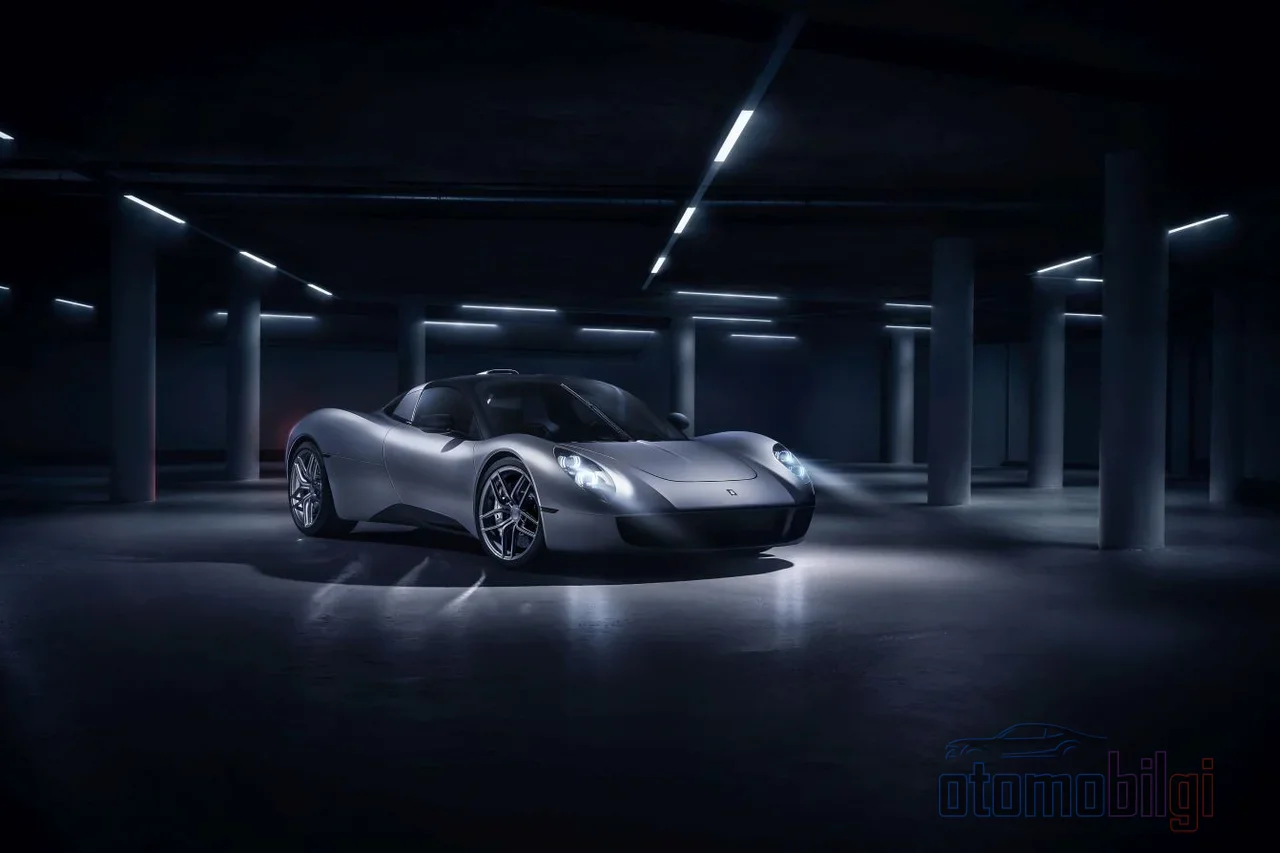
What makes a supercar valuable is not always horsepower; sometimes it is the question an engineer asked. Gordon Murray Automotive's second road car, the T.33, is the product of exactly such a question: after the T.50's revolutionary fan aerodynamics and 12,100 rpm redline mayhem, it asks how the same philosophy could live in everyday life. The answer comes with a naturally aspirated 617 PS Cosworth V12, a dry weight of 1,090 kilograms, and a set of technical solutions simple enough to look odd.
When the T.33 was introduced in early 2022, it surprised many observers. Because it is not a copy of the T.50; parts shared between the two cars are below ten percent. So why did Murray design a less flashy, more usable car right after the world's most talked-about hypercar? This entire page lays out the technical answer to that question.
Highlights
- Cosworth GMA.2 3,994 cc V12: 617 PS @ 10,250 rpm, 451 Nm @ 6,750 rpm
- Dry weight 1,090 kg; power-to-weight ratio of 566 PS/tonne
- Parts shared with the T.50 below 10%; passive ground effect aerodynamics instead of a fan
- Production of 100 coupes + 100 Spiders; price of GBP 1.37 million (before taxes)
- Top speed of around 335 km/h; 0-100 km/h not officially announced
What Is the T.33: The Sibling That Pulls Back the Fan Show
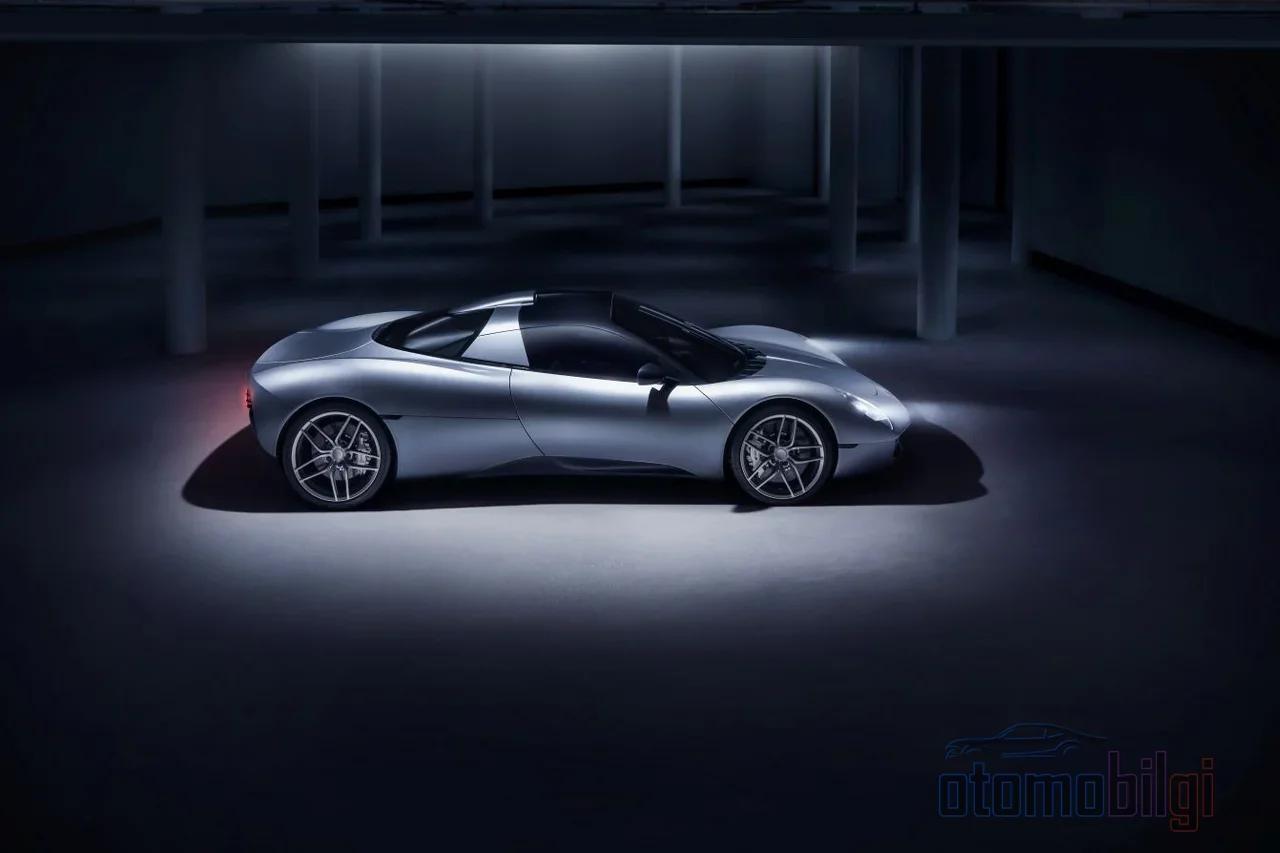
With the T.50, Gordon Murray Automotive pushed the limits of the naturally aspirated V12 and lightness, reinventing ground effect aerodynamics with a fan mounted at the rear spinning at 40 km/h. The T.33 is the second member of the same family, but it stands at a different point in character: Murray positions this car as a supercar GT, even a daily-usable supercar. It is clear that the design was inspired by the grand tourers of the 1960s, especially the silhouettes of the Ferrari Dino and Lamborghini Miura; butterfly doors and an entirely carbon fiber body sit this retro line into a modern engineering shell.
The critical point is this: the T.33's aim was not to shrink or cheapen the T.50. The two cars were deliberately kept apart, with parts sharing remaining below ten percent with the T.50. While the T.50 goes down in history as the vehicle of a revolutionary aerodynamic show, the T.33 carries the same V12 philosophy with an aerodynamic package like conventional cars - fanless, wingless, yet still relying on ground effect. Production takes place at the facility in Dunsfold, Surrey.
Cosworth GMA.2 V12: 617 PS and 11,100 RPM
The heart of the T.33 is the 3,994 cc, 65-degree V-angle naturally aspirated V12 engine coded GMA.2, developed with Cosworth. Bore is 81.5 mm and stroke is 63.8 mm, in other words a short-stroke architecture; this is the structural reason for its high-revving character. The compression ratio is 14:1, a remarkably aggressive figure for a naturally aspirated road engine.
According to official technical data, maximum power is 617 PS @ 10,250 rpm and maximum torque is 451 Nm @ 6,750 rpm. Although figures like 615 PS and 607 hp circulated in the press during the launch period, the current official specification is based on 617 PS. The figure that truly defines the engine's character is the rev range: the redline begins at 11,100 rpm. That is more restrained than the T.50's 12,100 rpm, but still an extreme figure compared to any of today's emission-restricted V12s.
The torque curve is also engineered for usability rather than show: 75 percent of maximum torque is available at 2,500 rpm, and 90 percent in the range between 4,500 and 10,500 rpm. So despite being an engine revving to 11,100 rpm, it remains drivable in the city as well. A power density of 158 PS per liter and an engine weight of 178 kilograms summarize the engineering intensity of this naturally aspirated engine. Dry sump lubrication, a ram induction system with an airbox independent of the chassis, twin injection per cylinder, and a 48-volt integrated starter generator (ISG) are the other parts of the package. GMA deliberately chose an acoustic setup that places the induction sound ahead of the exhaust note.
Transmission: The insistence on an H-pattern manual
Power is transmitted through an 82-kilogram six-speed Xtrac H-pattern manual gearbox to a Salisbury locked differential. GMA describes this gearbox as the lightest manual ever fitted to a supercar; a 184 mm diameter low-inertia clutch is used. This investment in the shifter's feel and pedal response is the most tangible indicator of the car's analog character decision. Indeed, the Spider version is offered only with a manual gearbox; the intense demand for the manual in the coupé directly shaped this decision.
Chassis and Lightness: A 1,090-Kilogram Discipline
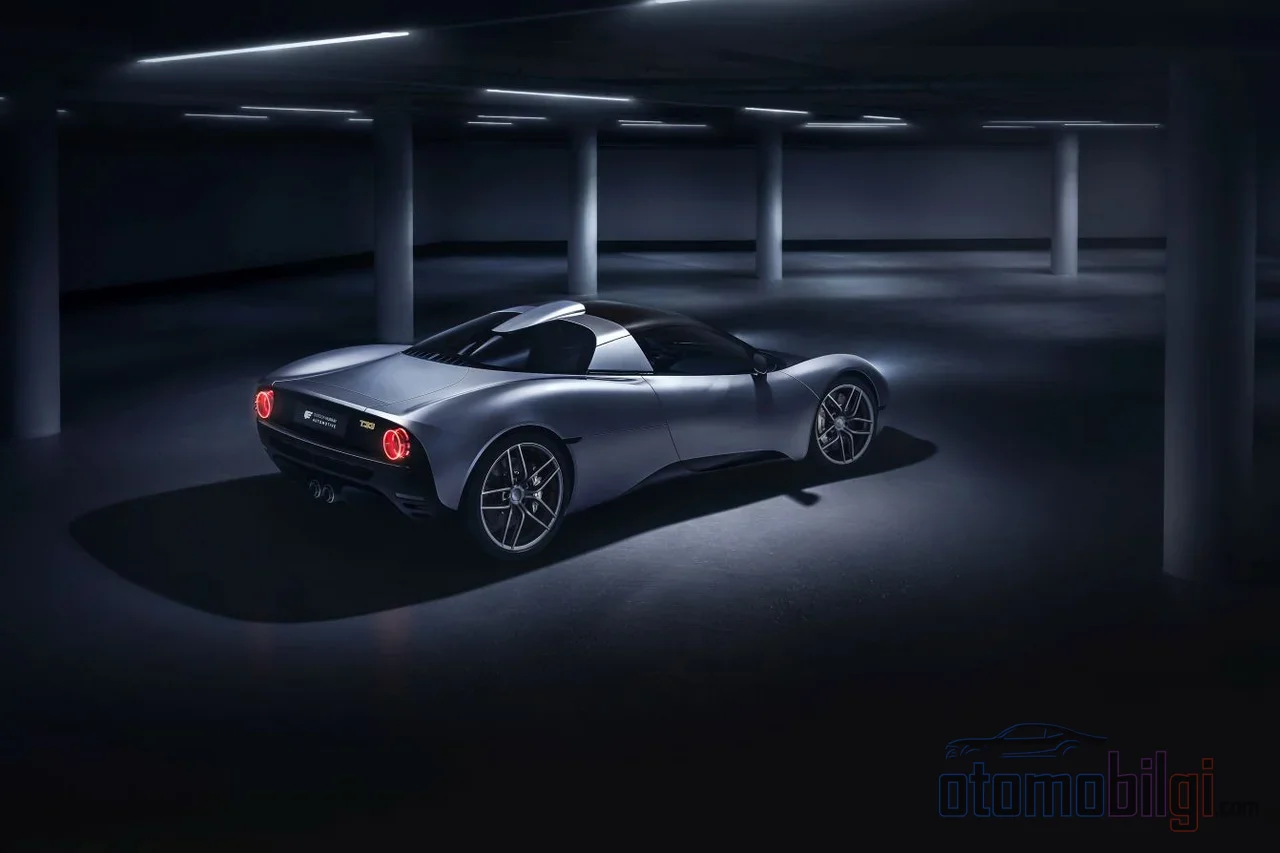
Murray's fondness for lightness is well known; in the T.33 this materializes in a carbon monocoque structure called iStream Ultralight. This chassis approach, consisting of carbon fiber panels, extruded aluminum tubes, and cast junction points, is said to save approximately 300 kilograms compared to conventional configurations. Result: the coupé weighs 1,090 kg dry, the Spider 1,108 kg. The power-to-weight ratio is 566 PS/ton for the coupé and 557 PS/ton for the Spider; these figures surpass the McLaren F1's ratio.
Dimensions: length 4,398 mm, width 1,850 mm, height 1,135 mm, wheelbase 2,735 mm. Despite these compact exterior dimensions, a 295-liter luggage capacity is offered; this layout, consisting of a front compartment and compartments ahead of the rear wheels, is consistent with the car's GT identity. With the 75-liter fuel tank, the standard range is approximately 400 miles, extendable up to 440 miles with the optional overdrive sixth gear.
Differences from the T.50: Fanless Aerodynamics and PBLC
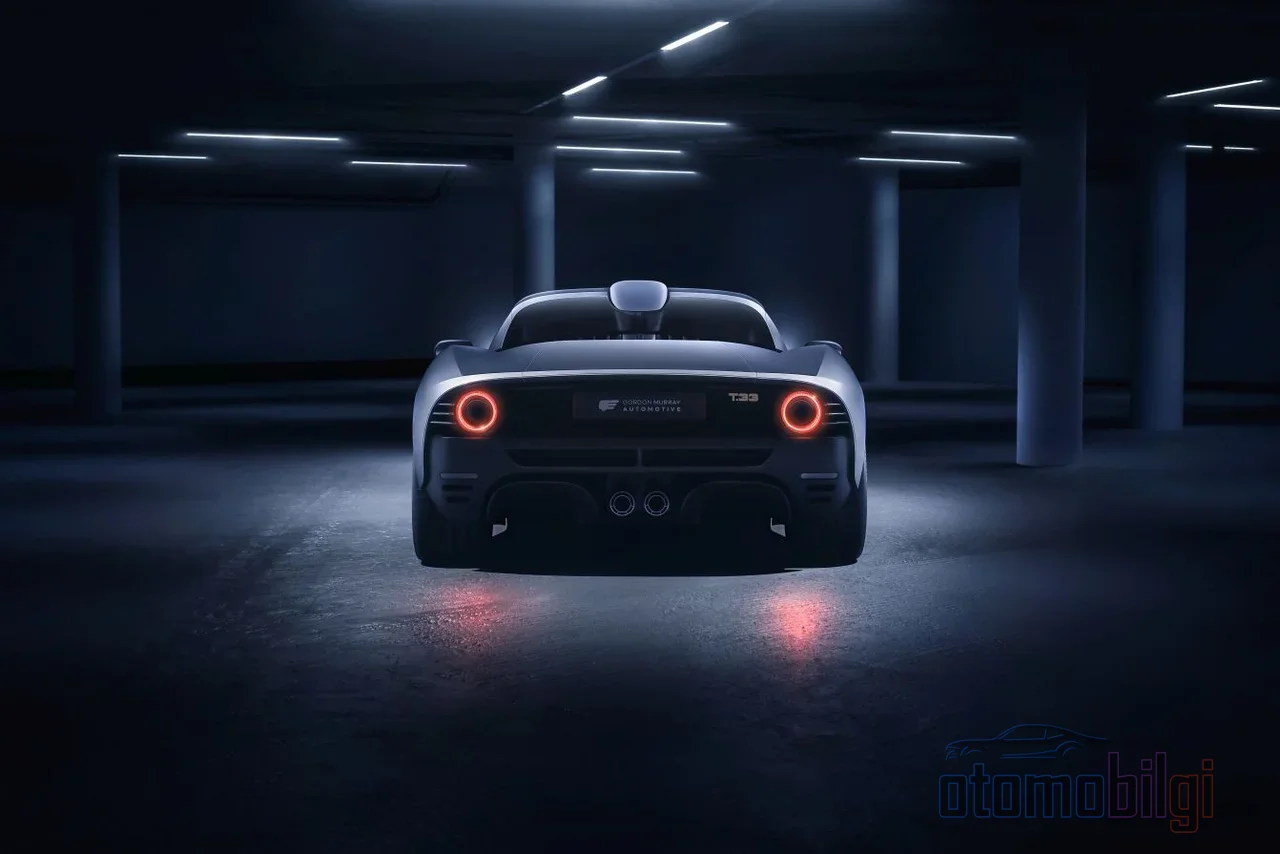
The T.33's most interesting engineering decision is on the aerodynamics side. In the T.50, the fan that could operate at speeds up to 40 km/h drew air from beneath the car at a steep angle, dramatically increasing downforce. In the T.33, this system has been replaced by a package that contains neither a fan nor wings but relies on ground effect: air drawn from the front intakes is channeled underfloor and managed at the rear diffuser through passive boundary layer control called Passive Boundary Layer Control (PBLC). The active rear spoiler is the package's only movable aerodynamic element.
The numbers show just how balanced this design is: The T.33 produces 150 kg of downforce at 150 mph and 312 kg at top speed. GMA states that this passive solution is roughly 30 percent more efficient than conventional ground effect aerodynamics. On the other hand, Murray openly says the T.33 produces about 70 percent less downforce compared to the active-fanned T.50. This is not a shortcoming, but a deliberate priority: What the T.33 needed was not maximum downforce, but a balance of driving position, visibility and everyday usability.
On the braking side, there are carbon ceramic discs with six pistons of 370 mm diameter on the front axle and four pistons of 340 mm diameter on the rear axle. The forged aluminum wheels come in 19 and 20 inch sizes; Michelin Pilot Sport 4S tires are used in 235/35 R19 front and 295/30 R20 rear sizes. Top speed is stated as 208 mph in the official specification, approximately 335 km/h.
Technical Specifications Table
| Feature | Value |
|---|---|
| Engine | Cosworth GMA.2, V12, 65°, naturally aspirated |
| Displacement | 3,994 cc |
| Maximum power | 617 PS @ 10,250 rpm |
| Maximum torque | 451 Nm @ 6,750 rpm |
| Transmission | 6-speed Xtrac H-pattern manual |
| Dry weight | 1,090 kg (coupé) |
| Power-to-weight | 566 PS/tonne |
| Top speed | 208 mph (~335 km/h) |
| Length / width / height | 4,398 / 1,850 / 1,135 mm |
| Luggage capacity / fuel tank | 295 liters / 75 liters |
The 0-100 km/h acceleration figure has not been announced by the manufacturer; GMA does not include this metric in the official specification. Although it is estimated to fall in the mid-three-second range based on the power-to-weight ratio, presenting an unverified figure as a value would not be right.
Interior and Driving Character
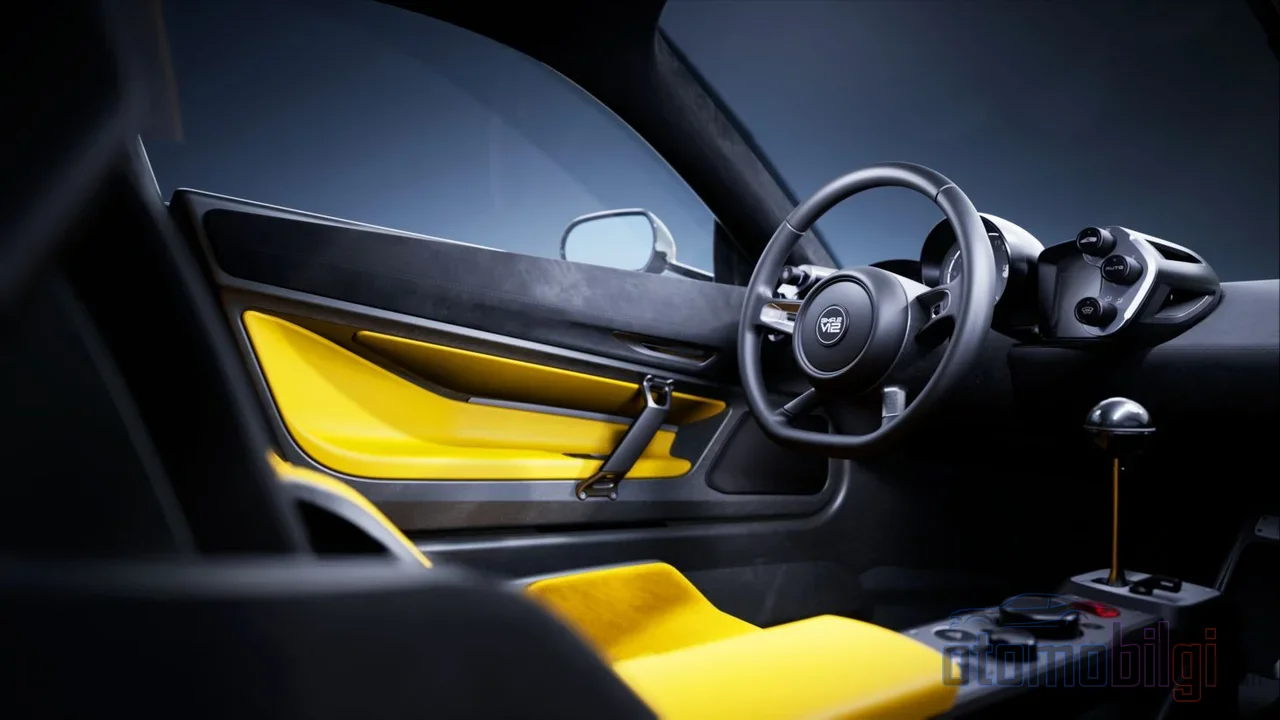
The cockpit is the clearest example of Murray's anti-touchscreen approach: a 120 mm analog tachometer, a 350 mm carbon steering wheel, spoke buttons carrying the indicator and horn functions, and machined aluminum controls. There is not a single stalk on the steering column. Wireless Apple CarPlay and Android Auto support has been added alongside the analog insistence as an acceptable layer of modernity. The driver assistance systems are introduced with non-intrusive, non-judgmental calibrations: meaning the car does not take over from the driver, it supports the driver.
In answering the question of whether the T.33 is a better car than the McLaren F1, Murray shows no hesitation and says that both the engine and the transmission are better. During the testing process, the development cars were driven by Dario Franchitti. The seating position and field of view, inspired by 1960s GTs, lie at the heart of the car's claim to everyday usability.
Production, Price and the State of Affairs in 2026
The T.33 consists of 100 coupés and 100 Spiders, each limited by its own allocation. The price is £1.37 million before taxes; which corresponds to around £1.65 million including UK VAT. US press reports launch prices at around the $1.8 million level. All 100 units of the coupé were sold as of February 2022.
The timeline records: first deliveries were planned for early 2024, but were pushed back to 2026 because GMA prioritized the T.50. As of 2026, the cars have been seen in winter testing, and production is reported to begin at the end of 2026, with the first cars hitting the road as 2027 model year vehicles. Spider production starts after the coupé, at the Windlesham facility. We also know that a track-focused T.33 S variant has been confirmed.
Assessment: The T.33 Stands on Its Own
Reading the T.33 as a cheaper alternative in the shadow of the T.50 misses the car's engineering logic. This car is a self-sufficient design that can uphold the trio of a naturally aspirated V12, a manual gearbox, and one ton of weight without a fanfare show, a claim of revolution, or a red-zone record. 617 PS and 451 Nm are distributed with a curve balanced enough that one wouldn't expect it today from an 11,100-rpm engine; 1,090 kilograms makes this power palpable at every rpm. With Murray's recipe, a supercar GT: a car built not to break speed records, but to preserve the driving experience in its purest form. In today's climate of emissions and electrification, the likelihood of such a product being produced as a series again is low; precisely for that reason, the T.33, despite its plain appearance, is a rare engineering document.