Aston Martin Valhalla: A Beauty with F1 Technology
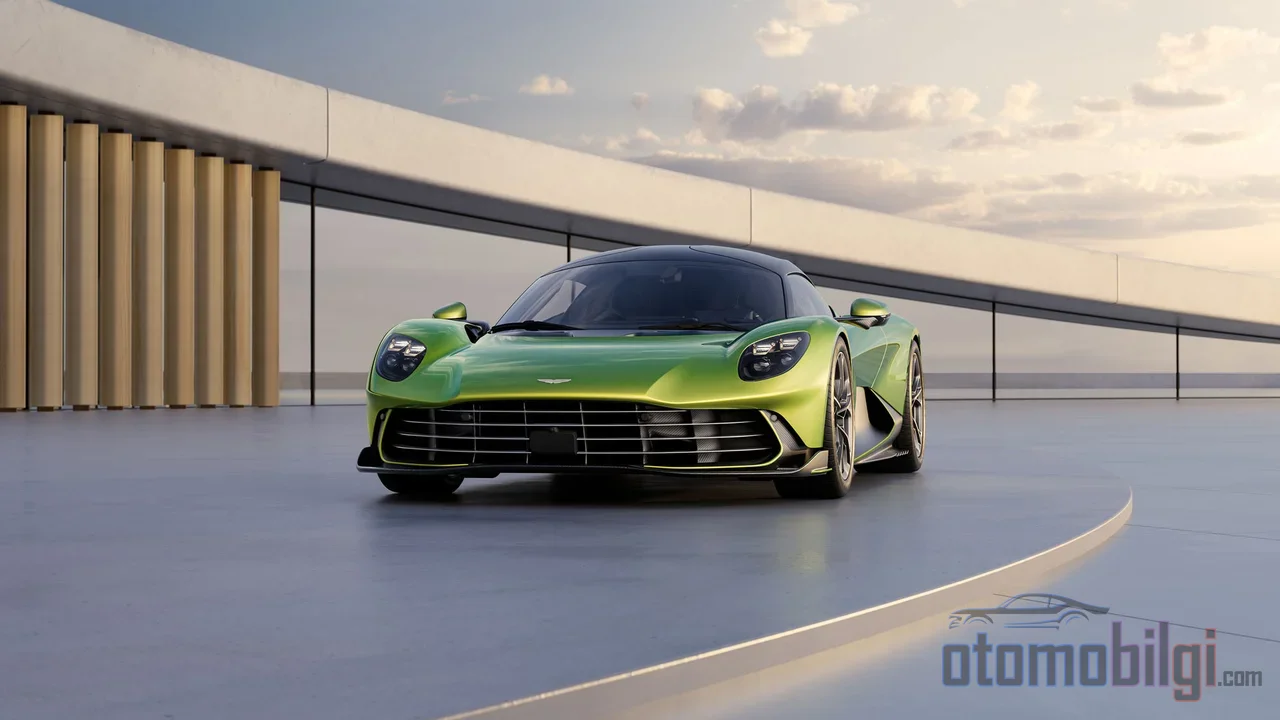
Lying underneath a road car and imagining you are beneath a Formula 1 machine is normally not possible. For the Aston Martin Valhalla, that sentence is no exaggeration: the project was born out of a technical collaboration with Red Bull Racing, its aerodynamic signature bears Adrian Newey's mark, and many solutions, from the suspension architecture to the driver's seating position, were taken directly from the Grand Prix world and hardened into a road-going supercar. So what was the engineering rationale behind this transfer, and what numbers do the results show?
The short answer to that question is ready; but the short answer means little unless you examine Valhalla's hybrid architecture, active aerodynamics and everyday-usability balance in isolation. On this page we unpack each layer one by one.
What Is Valhalla, and Where Does It Sit Next to the Valkyrie?
Valhalla is Aston Martin's first series-production mid-engine plug-in hybrid (PHEV) supercar. Its codename during development was AM-RB 003; it is positioned just below the Valkyrie, but as a vehicle noticeably more usable every day. That positioning sentence is not empty marketing talk: while the Valkyrie hovers near racing-car territory, both track and road performance are expected from the Valhalla.
The design team included Miles Nurnberger alongside Adrian Newey; Newey also serves as team principal, technical director and co-owner of the Aston Martin F1 team from 2026 onward. Production began in 2025 in England, at the Gaydon facilities; the first customer car was delivered in December 2025. Production is limited to 999 units, and the US base price is announced at the USD 1,051,700 level. Following the closed-body version, the Valhalla Spider was unveiled on October 28, 2026; its deliveries will begin in the third quarter of 2027.
Highlights
- Total system output of 1,079 PS (1,064 hp) and torque of 1,100 Nm
- 0-100 km/h in 2.5 seconds, top speed of 217 mph (approximately 349 km/h)
- Active aerodynamic downforce of over 600 kg at 150 mph
- Production limited to 999 units, first deliveries in December 2025
- Pure EV mode with a range of approximately 6 miles
Hybrid Architecture: Twin-Turbo V8 Plus Three Electric Motors
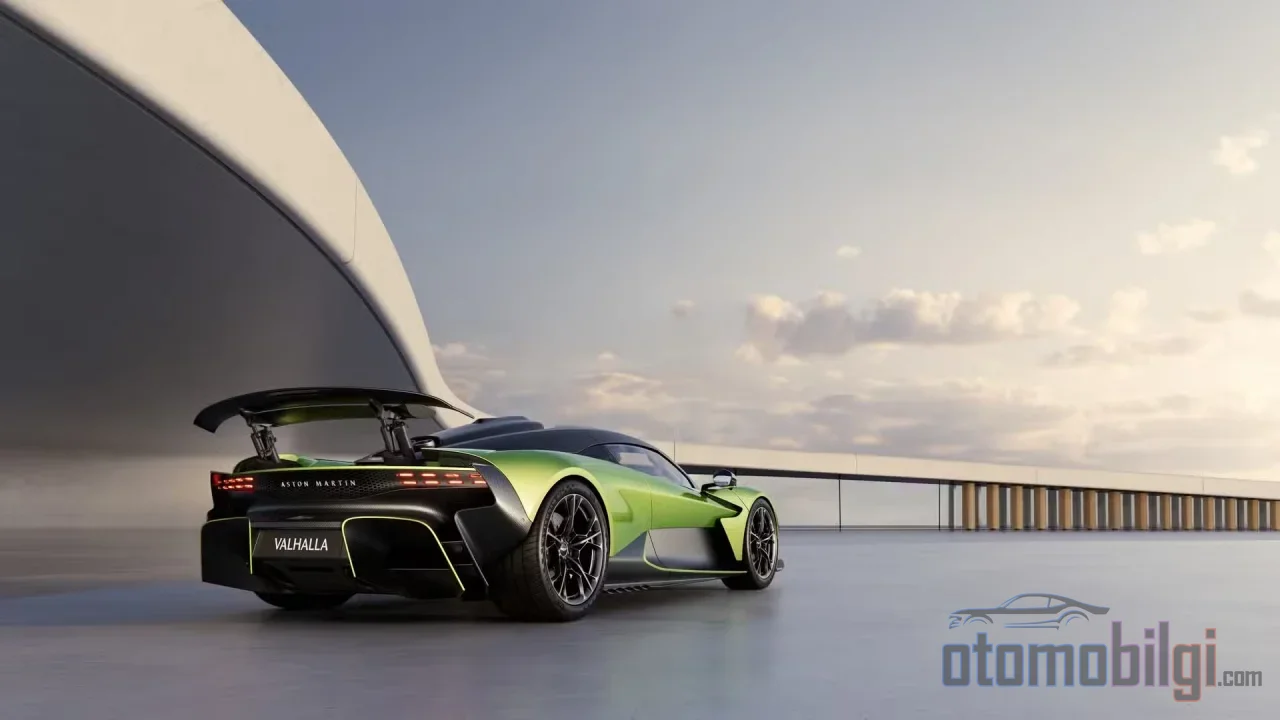
At the heart of the system lies a 3,982 cc twin-turbo V8 engine coded M178 LS2 sourced from Mercedes-AMG. This flat-plane-crank unit alone produces around 817 hp and 632 lb-ft; Aston Martin lists the engine as 828 PS in its official data. Whichever figure you take, it means the most powerful V8 ever fitted to an Aston Martin.
The interesting part is on the electric side. The system is completed by three electric motors: two on the front axle, each producing 161 hp and 85 lb-ft; the third, integrated into the transmission, acts as a 201 hp and 148 lb-ft starter-generator. In total, system output reaches 1,079 PS (1,064 hp / 793 kW) and torque of 1,100 Nm. Power is sent to the road through an 8-speed Graziano dual-clutch transmission and an electronically controlled limited-slip rear differential.
Why Are There Two Motors on the Front Axle?
The front e-motors solve three separate tasks at once. First, torque vectoring: managing power distribution wheel by wheel on the front axle significantly improves in-corner balance. Second, eliminating turbo lag: the electric torque fills the gap in the range where the V8's turbocharging systems are not yet active. Third, the Pure EV mode: the car can move entirely on electric power using only front-axle drive.
On the battery side, there is a hybrid system with 6.1 kWh capacity, a 400 V architecture and 150 kW of power; AC charging peak rate is 3.5 kW and the electric range is about 6 miles. These figures are not in the range-focused PHEV scale; here the battery exists to manage power flow. One more engineering detail: the front e-motors also take over the reverse function, so the mechanical reverse gear has been completely eliminated, saving weight.
On the performance side, the official figures are clear: 0-100 km/h in 2.5 seconds and a 217 mph top speed. Independent test estimates put 0-60 mph at around 2.1 seconds and the quarter mile at around 9.5 seconds. In terms of fuel economy, a combined 16 mpg and around 32 MPGe including electric use are projected; a reasonable balance for a mid-engine hybrid with over 1000 hp.
How and Where Did F1 Technology Enter the Valhalla?
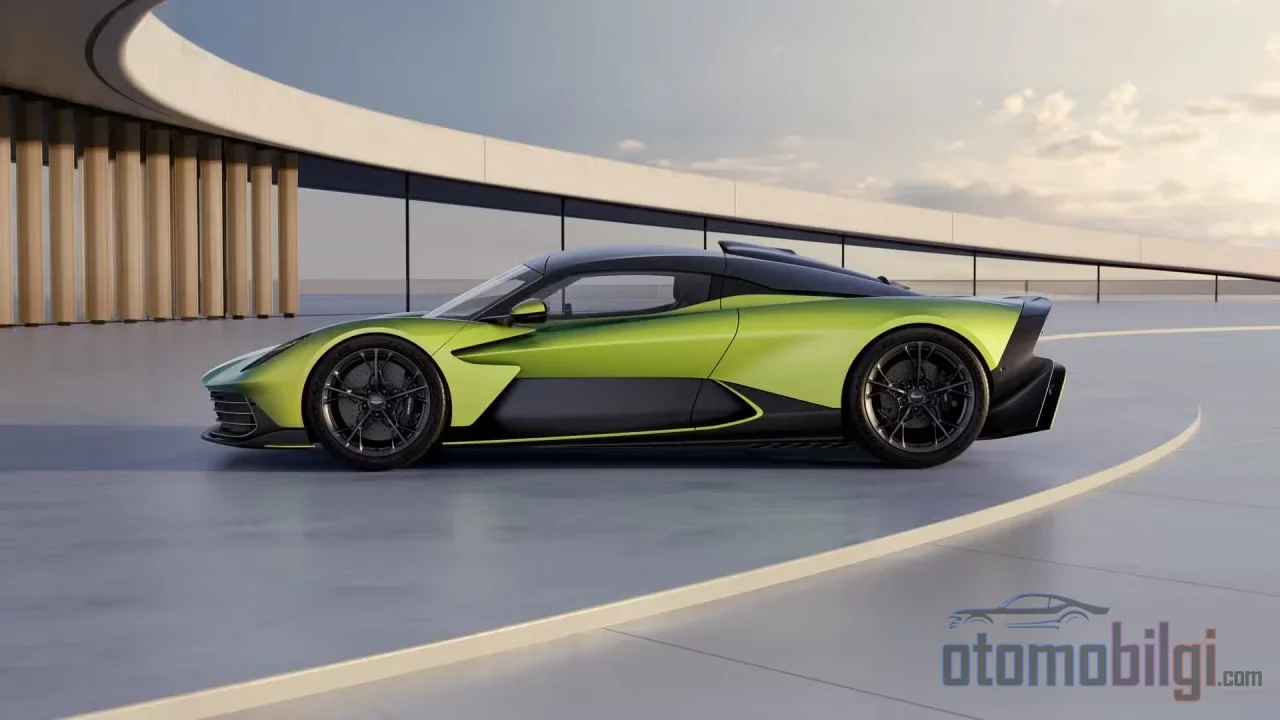
Since the question carries the key to the headline, let's go through the concrete parts. The Formula 1 origin is not an aesthetic reference; it is a design discipline that provides justification for specific engineering decisions.
Push-Rod Suspension and Inboard-Mounted Springs
The front suspension is built with an F1-style push-rod architecture; the springs and dampers are mounted inside the body. The sole justification for this is not keeping the aerodynamic flow clean in the front region: the volume opened up inside provides space for the two front electric motors. In other words, suspension geometry and the hybrid packaging problem are solved with a single decision. At the rear, a five-link suspension and specially tuned Bilstein DTX dampers are at work.
Roof Snorkel and Air Management
The F1-inspired roof snorkel takes on the task of routing air to the turbochargers, air-to-water intercoolers and the V8. In track cars, a top-mounted air intake is the most efficient way to get pressurized, turbulence-free airflow; the Valhalla applies this principle in road car clothing. Below, a concave underbody with five vortex generators manages the airflow under the body in a controlled manner.
Driver Position and Steering Wheel
The traces continue inside the cabin too: the steering wheel has an F1-inspired design, and the seats feature an F1 seating position with raised heels and a low center layout. The driver sits almost in a reclined position, with the heels raised; this position lowers the center of mass and increases the sense of control at high lateral speeds. A 10.25-inch column-mounted digital screen is used as the instrument display. In Race mode, the tachometer is displayed in a linear format.
Active Aerodynamics: How Is 600 kg of Downforce Managed?
Valhalla's aero package relies on active elements. The front spoiler is hidden behind the grille; the rear spoiler rises 255 mm, and both elements respond in 0.5 seconds. In Race mode, over 600 kg of downforce is generated at 150 mph, and the system maintains this value from 150 mph up to top speed; when not in use, the elements close to preserve the car's signature silhouette.
The practical meaning of this is: with a fixed wing area, as downforce increases, drag increases too and top speed drops. Valhalla solves this dilemma with moving elements; the body is pressed down in corners, and the system retracts on the straights. At the concept stage, a rear spoiler called FlexFoil, which adjusted downforce without changing the angle of attack, was tested; in the production version, this approach was left to a classic active wing architecture. The flat-bottomed underbody also contributes to flow efficiency.
The Overall Picture with Chassis, Body and Figures
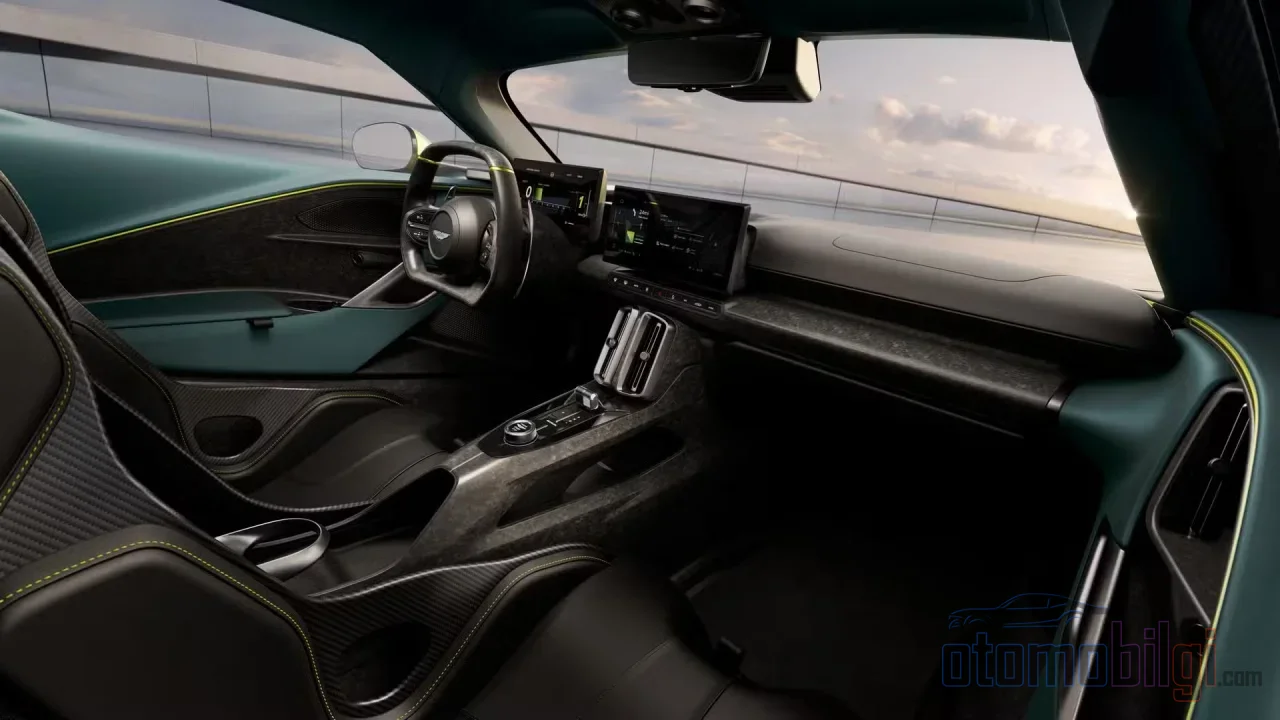
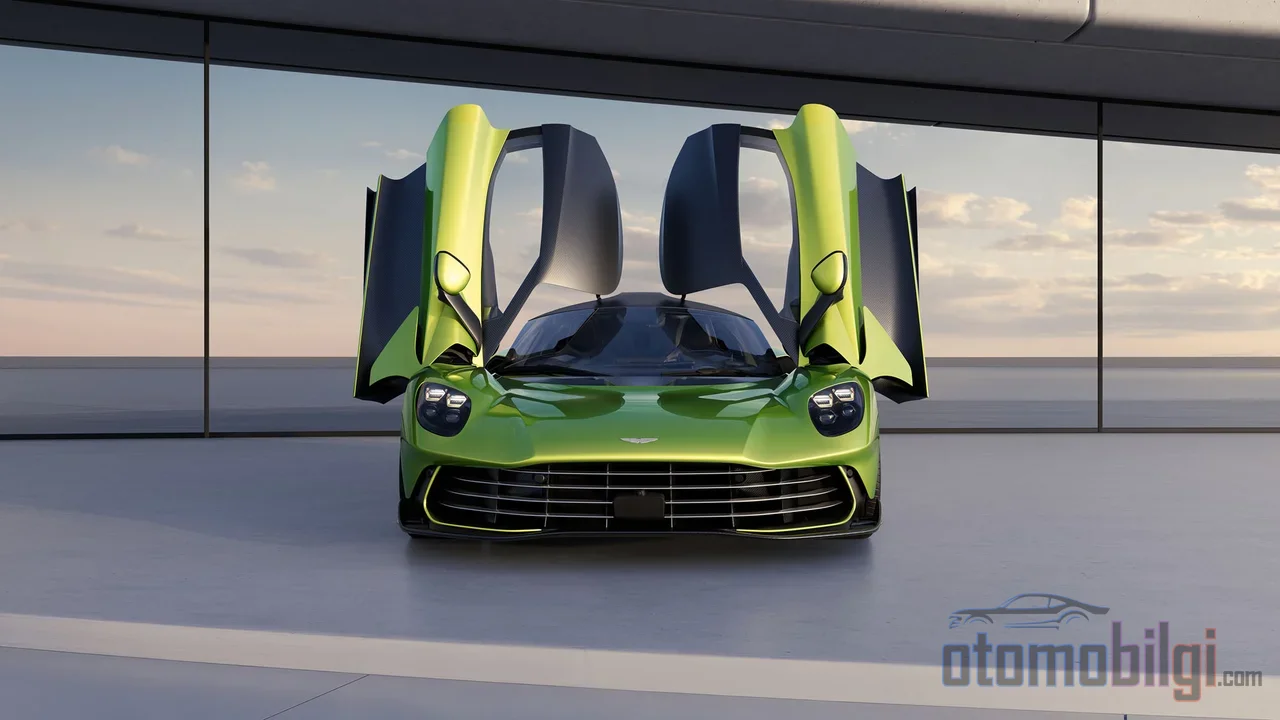
The body consists of a carbon fiber structure, a variant of the Valkyrie monocoque, and lightweight aluminum subframes. Carbon-ceramic brakes are standard, while the dihedral doors are the most recognizable detail from the outside. Dimensions: length 4,748 mm, width 2,014 mm, height 1,161 mm. There is no single officially verified figure for the weight; the factory figure is 1,655 kg, while independent tests estimate 4,000 lb, which is about 1,814 kg. The difference between them comes from measurement method and equipment level; this distinction should be noted when quoting.
| Feature | Value |
|---|---|
| Total system power | 1,079 PS (1,064 hp / 793 kW) |
| Torque | 1,100 Nm |
| Internal combustion unit | 4.0 L twin-turbo V8 (M178 LS2) |
| Transmission | 8-speed dual-clutch (DCT) |
| 0-100 km/h | 2.5 s |
| Top speed | 217 mph |
| Downforce (Race mode) | Over 600 kg at 150 mph |
| Electric range | About 6 miles |
| Production count | 999 |
From a power-to-weight perspective, 1,079 PS moving a mass of 1,655-1,814 kg means comfortable entry into the class's 1,000 hp-plus hybrid mid-engine club. Car and Driver reviews discuss the Valhalla in the same frame as the McLaren W1, Artura and Ferrari 296 GTB; while the W1's 0-60 mph time was measured at 2.7 seconds, the Valhalla appears on a similar tier, even a step ahead with its official 0-100 km/h figure.
Valhalla as a Road Car: Compliance at What Cost?
For a car with expected track performance, the most striking finding is its character on the road: according to first drive experiences, the Valhalla is surprisingly compliant and pleasant to drive. The engineering logic behind this is simple; most of the 999 customers will use the car on weekdays too, so the flexibility of the hybrid system and the retractable nature of the active aerodynamics make daily use scenarios possible.
To be honest about its costs, too. The car has no trunk section; There is no rear window, so visibility is supported by a digital interior rearview mirror (FDM). This means the camera-based mirror system is a necessity, not a comfort feature. On the safety side, candidate equipment such as automatic emergency braking, Adaptive Cruise Control, and blind spot monitoring (optional) is listed. Warranty is 3 years / unlimited mileage (limited, covering powertrain), and no maintenance package is offered. Inside, carbon fiber single-piece seats and a 745 W, 14-speaker Bowers & Wilkins sound system carry the comfort side. In the Spider version, the 217 mph top speed is maintained even with the roof open; separate aerodynamic and ESP calibrations are applied for the open and closed roof positions.
The Clear Answer to the Question: Why Is F1 Technology Present in the Valhalla?
Now the opening question can be fully answered. The Valhalla carries F1 technology because this car is the direct product of the collaboration established with Red Bull Racing and Adrian Newey; the push-rod suspension architecture both makes room for the two electric motors on the front axle and cleans up the airflow, the roof snorkel supplies pressurized air to the turbocharger and cooling systems, the active aerodynamics generate over 600 kg of downforce at 150 mph and can retract, and the driver's seat lowers the center of mass with an F1 seating position. None of these elements are for show; each one solves a measurable performance or packaging requirement.
The Valkyrie remained a semi-race car; the Valhalla's difference is that it has transformed the same way of thinking into a road car with a 1,079 PS hybrid system that its 999 owners can genuinely use. Here, the F1 heritage is not a badge but an engineering method embedded in every critical subsystem of the car.