McLaren Artura: The Supercar with 31 km of Electric Range
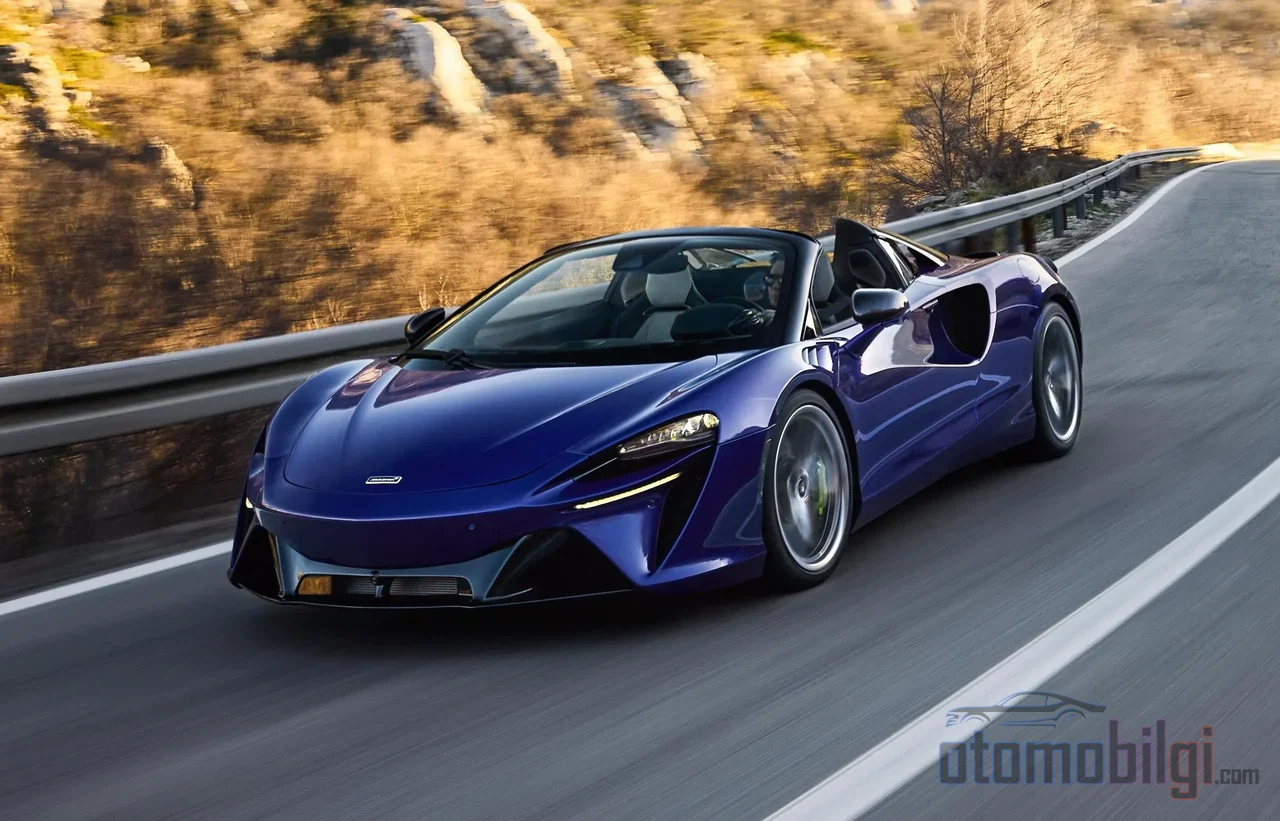
While the McLaren 750S is debated as one of the last and most refined representatives of the pure V8 architecture, a far more radical question sat on Woking's table: can a hybrid supercar be a truly daily-driveable car? McLaren Artura was born as the answer to that question. It is the company's third hybrid after the P1 and Speedtail, and at the same time the first McLaren with a V6 engine. However, the real matter is not a showcase of technical novelty; it is whether the joint mind of the 3.0-liter twin-turbo V6 and the 95 PS e-motor can live in the same car, from grocery shopping to the race track. On this page, we will discuss exactly that, with measurable data.
The Engineering Logic of the Hybrid V6 Architecture
At the heart of the Artura lies a twin-turbo V6 with a displacement of 2,993 cc, coded M630. The engine's most striking detail is its 120-degree bank angle, a world first among production V6 engines. This wide angle makes possible the hot-vee layout, where the turbochargers are placed in the V gap between the cylinder banks. The practical result: exhaust manifolds and turbos are closer to the engine, the center of gravity is lower, and the gas flow is shorter. The all-aluminum-bodied engine reaches its redline at 8,500 rpm.
On its own, the gasoline engine produces 585 PS and 584 Nm of torque. Beside it works an axial-flux electric motor positioned inside the transmission: 95 PS and 225 Nm. Total system output, according to the original launch data, is 680 PS at 7,500 rpm and 720 Nm at 2,250 rpm. In recent model years, the gasoline engine's output was raised; for the 2027 model year, the combination is reported as 690 hp and 531 lb-ft. So the Artura received a quiet power increase over its lifecycle.
Transmission and Differential: The E-Motor's Second Job
The 8-speed SSG dual-clutch automatic transmission that carries power to the rear wheels houses a clever detail: the e-motor takes the place of the reverse gear. So the electric motor both provides drive and prevents the need for a separate reverse mechanism in the transmission. A similar approach exists in the Ferrari SF90 Stradale as well. The Artura also uses an electronic differential (e-diff) for the first time in McLaren history; previous models managed with an open differential and brake-based torque vectoring. The new multi-link rear suspension increases toe stiffness by 75%, contributing to in-corner stability.
The Weight Accounting: How Is the Hybrid Burden Hidden?
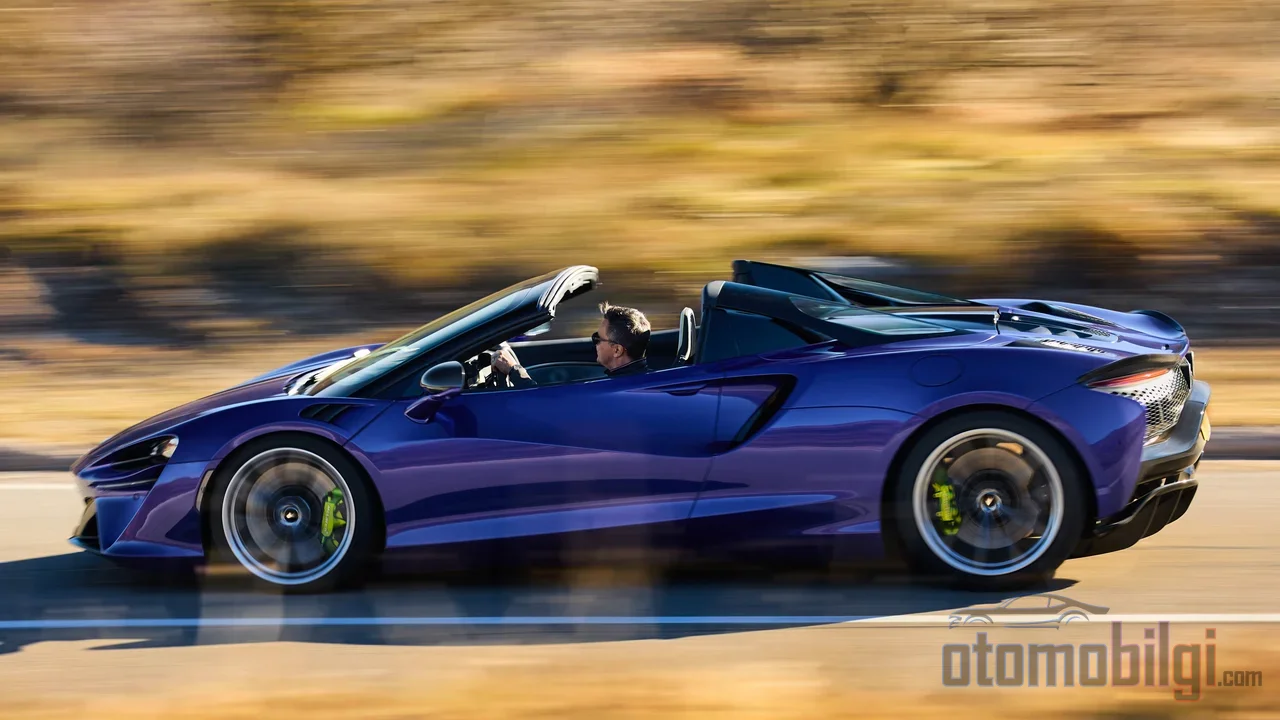
The classic criticism of hybridization is weight. The Artura answers this criticism with its new MCLA (McLaren Carbon Lightweight Architecture) carbon fiber chassis. The 7.4 kWh lithium-ion battery weighs 88 kg; all of the electric components total 130 kg. Thanks to this, the Artura is only 46 kg heavier than its predecessor, the 570S: kerb weight is 1,498 kg for the Coupe and 1,560 kg for the Spider. We are talking about a car that stays in compact-class dimensions, with a length of 4,539 mm and a wheelbase of 2,640 mm. The performance side is consistent too: 0-100 km/h in 2.9 seconds, 0-200 km/h in 8.3 seconds, top speed 330 km/h.
Highlights
- 3.0-liter twin-turbo V6 + e-motor: 680 PS / 720 Nm (current model year 690 hp)
- Electric range: 31 km WLTP, 11 miles EPA measurement
- Kerb weight 1,498 kg; only 46 kg more than its predecessor, the 570S
- 0-100 km/h in 2.9 seconds, top speed 330 km/h
- Warranty: 5 years / unlimited miles + 3 years free maintenance
How Real Is the Electric Range Really?
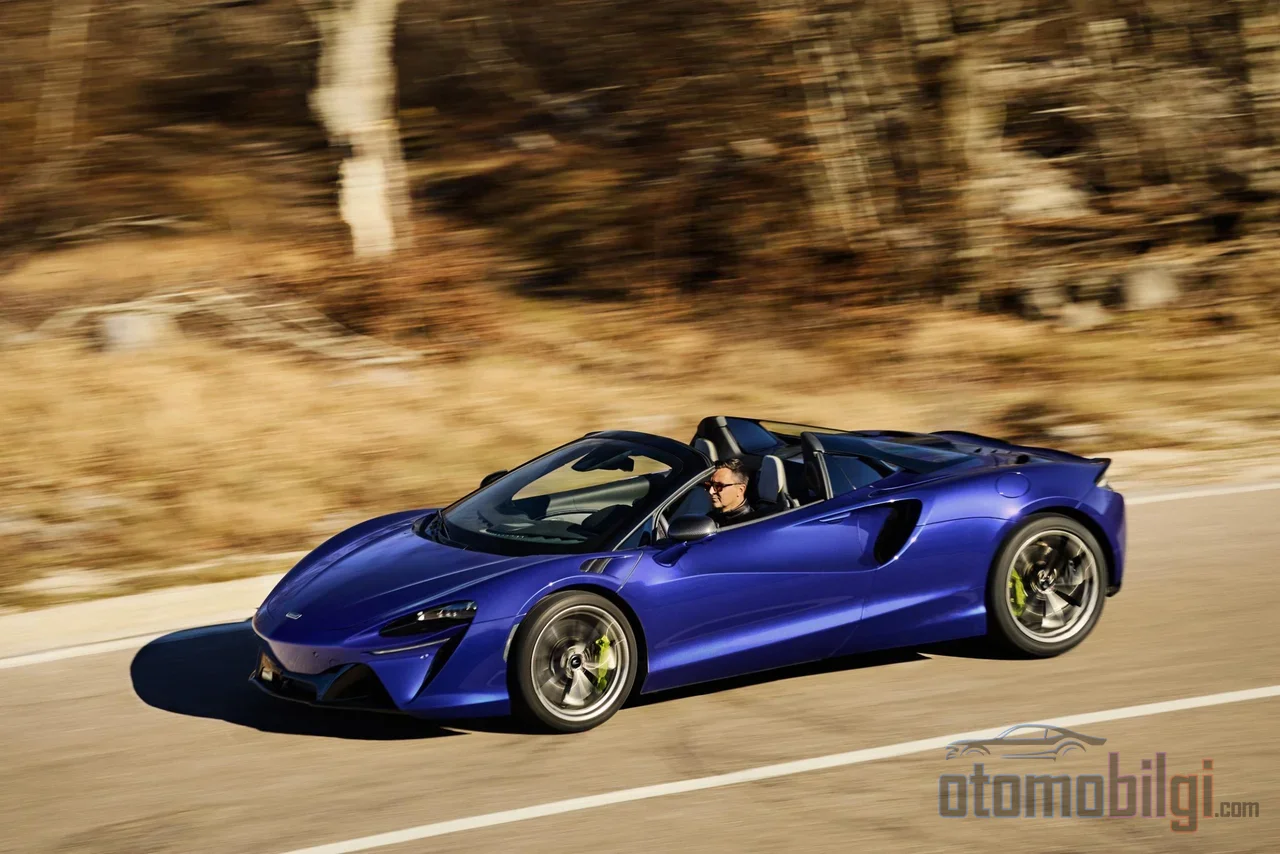
The most critical data point for the daily-use question is range. Here, the measurement methodology is decisive: According to the WLTP cycle, there is 31 km of fully electric range. The stricter US EPA measurement shows 11 miles (approximately 18 km); McLaren, however, states that up to 21 miles is possible under favorable conditions. The difference between the figures stems from differing definitions, not from the car changing character. On the charging side, 80% capacity is reached in 2.5 hours with the EVSE cable.
The usage scenario is clear: The Artura, especially the Spider version, starts in EV mode by default and can go entirely electric at speeds of up to about 130 km/h. That is more than sufficient a threshold for short daily commutes. In the city, the car behaves as a quiet, vibration-free, zero local-emission sports coupe.
The opposing view is also noteworthy: some commentators argue that a 10-11 mile range is too short to be worth plugging in, and remains limited even under ideal conditions. This criticism undoubtedly carries a valid core; but when you read the range within a daily task profile, the picture changes. The fuel consumption figure is also balanced: EPA shows 18 mpg combined (approximately 13 L/100 km), and 45 MPGe with gasoline and electricity together. Even with an empty battery, you encounter supercar consumption in the 12-14 L/100 km band.
Comfort and City Livability
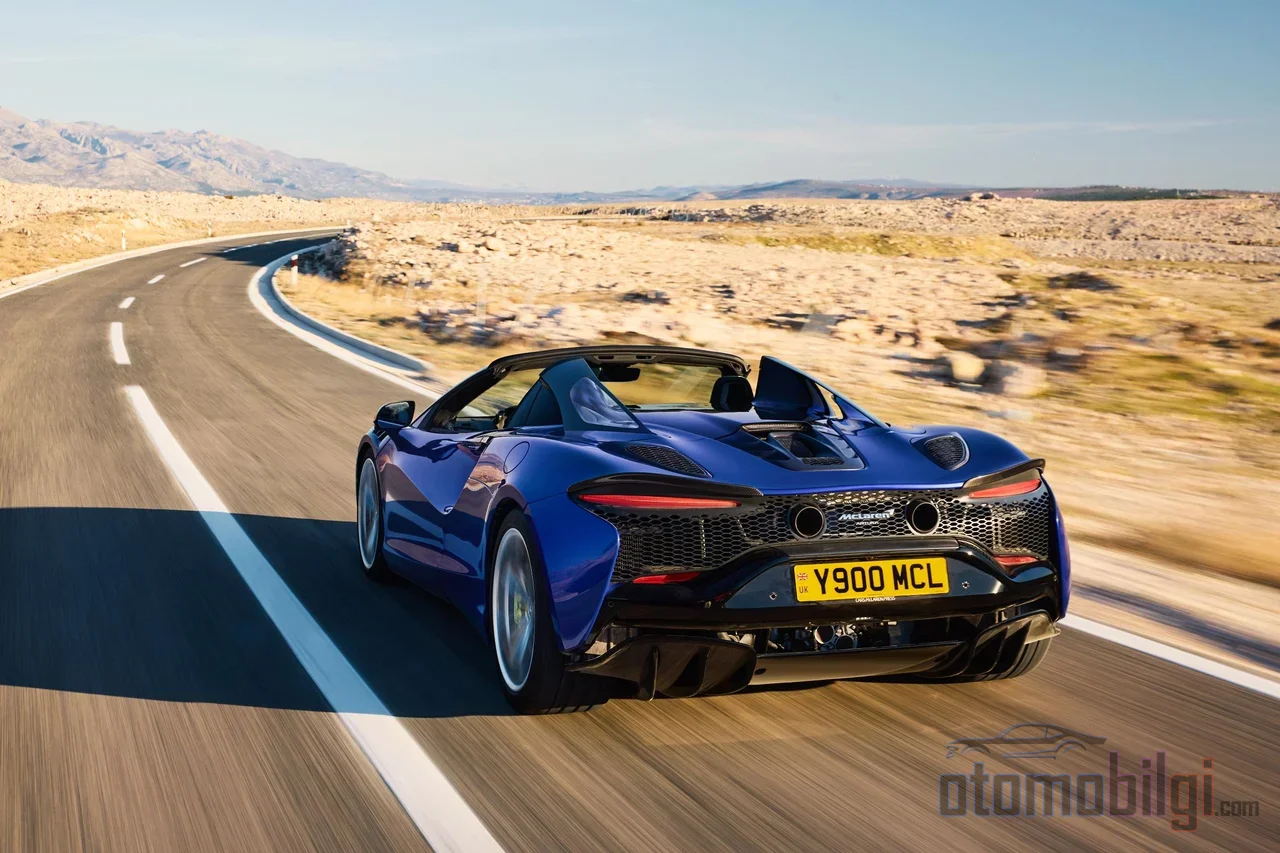
The most concrete element supporting the Artura's claim as a daily car is its dual-character chassis. While grip is assertive about cornering sharpness, the suspension handles potholes with equal skill in Comfort mode. There are consistent test assessments that Comfort mode is the right choice for real fluidity on fast country roads, and that Sport mode should be reserved for rougher surfaces. Long-term ownership experiences also point in the same direction: the sensors make real-time adjustments, delivering an unexpectedly smooth and controlled ride even on the worst roads.
Seats, Luggage and Technology
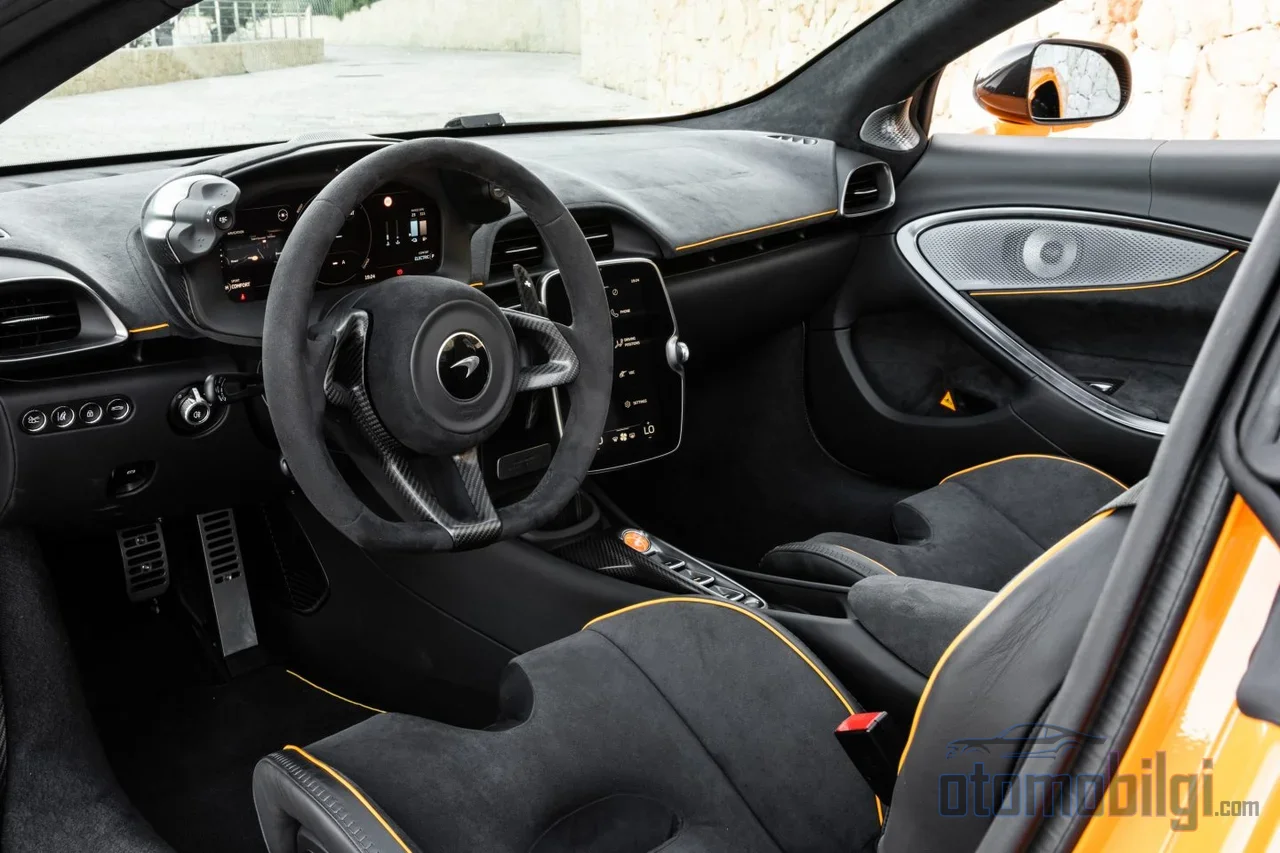
Thanks to the wide adjustment range in the steering wheel and seats, finding a comfortable driving position is easy; even the Racing bucket seats do not cause discomfort over long distances. The weak link is luggage: there is about 161 liters (6 cubic feet) of space in the front compartment, and this is not generous compared to the large-capacity examples of the GT segment. In the two-seat layout, there are no rear seats anyway.
The technology side starts with an 8-inch vertical touchscreen, Apple CarPlay, Bluetooth and navigation. What is truly remarkable is the driver assistance package rarely seen in this segment: standard lane departure warning and traffic sign recognition, optional blind spot monitoring and rear cross-traffic detection. The exhaust was redesigned for a more passionate sound in the 2025 model year; even so, it does not reach the fullness of V8s, which is inherent to a six-cylinder configuration. For the McLaren customer whose ears are accustomed to V8s, this remains the most visible compromise.
Maintenance, Warranty and Cost of Ownership
Cost of ownership is the often-neglected half of the daily use question. The Artura holds a surprisingly strong hand here: a 5-year / unlimited-mile limited and powertrain warranty, plus a 3-year free maintenance plan and 5 years of roadside assistance. At supercar scale, this coverage is unusually generous; even the earliest production cars are still under warranty.
Maintenance costs can run above average; performance parts and specialist servicing requirements are the main reason. A full service at a competent workshop runs in the range of 2,000-3,800 pounds, with an interim service in the 700-1,500 pound band. Owner experiences strike a positive balance: reasonable pricing, cheaper spare parts, and the expectation that the ceramic brakes will most likely not need replacement within a normal ownership period. On the pricing side, the 2027 Artura Coupe starts at 270,000 dollars and goes up to 304,040 dollars depending on equipment; the Spider's base price is 281,008 dollars.
Competitor Comparison: Positioning Against the Ferrari 296 GTB
The Artura's most natural rival is the Ferrari 296 GTB. The rival is about 150 hp more powerful and half a second ahead in the 0-100 km/h sprint. In return, the Artura starts at a price about 46,000 pounds more affordable in the United Kingdom; on a US basis, the gap widens to as much as 85,000 dollars. Their philosophies also differ: while the 296 GTB focuses on maximum drama and exit performance, the Artura emphasizes light-footed precision and usability. In driver experience comparisons, it is noted that the 296 is a very good car in every area, while the Artura is praised for its handling advantage.
Conclusion: Is the Artura Suitable for Daily Use?
When we put the data on the table, the answer becomes clear: With its 31 km of electric range, silent EV mode up to 130 km/h, a dual-character comfortable chassis and a 5-year unlimited-mileage warranty, the McLaren Artura is the supercar on the market today that takes daily use most seriously. There is no compromise on track performance either; a 2.9-second 0-100 km/h and a 330 km/h top speed prove that this claim comes at no cost. There are realistic limits too: EV range shortens outside ideal conditions, the 161-liter front trunk is impractical, and the exhaust sound does not fully satisfy V8 habits. These compromises are not the price of daily usability; they are the acceptable cost of a 1,498 kg hybrid supercar. McLaren's electrification philosophy was carried over from the 916 PS hypercar experience in the W1 to the Artura, and the result is not contradiction but complement: the hybrid structure does not weaken performance, it combines it with everyday life.