Maserati MCPura: The Rebirth of the MC20
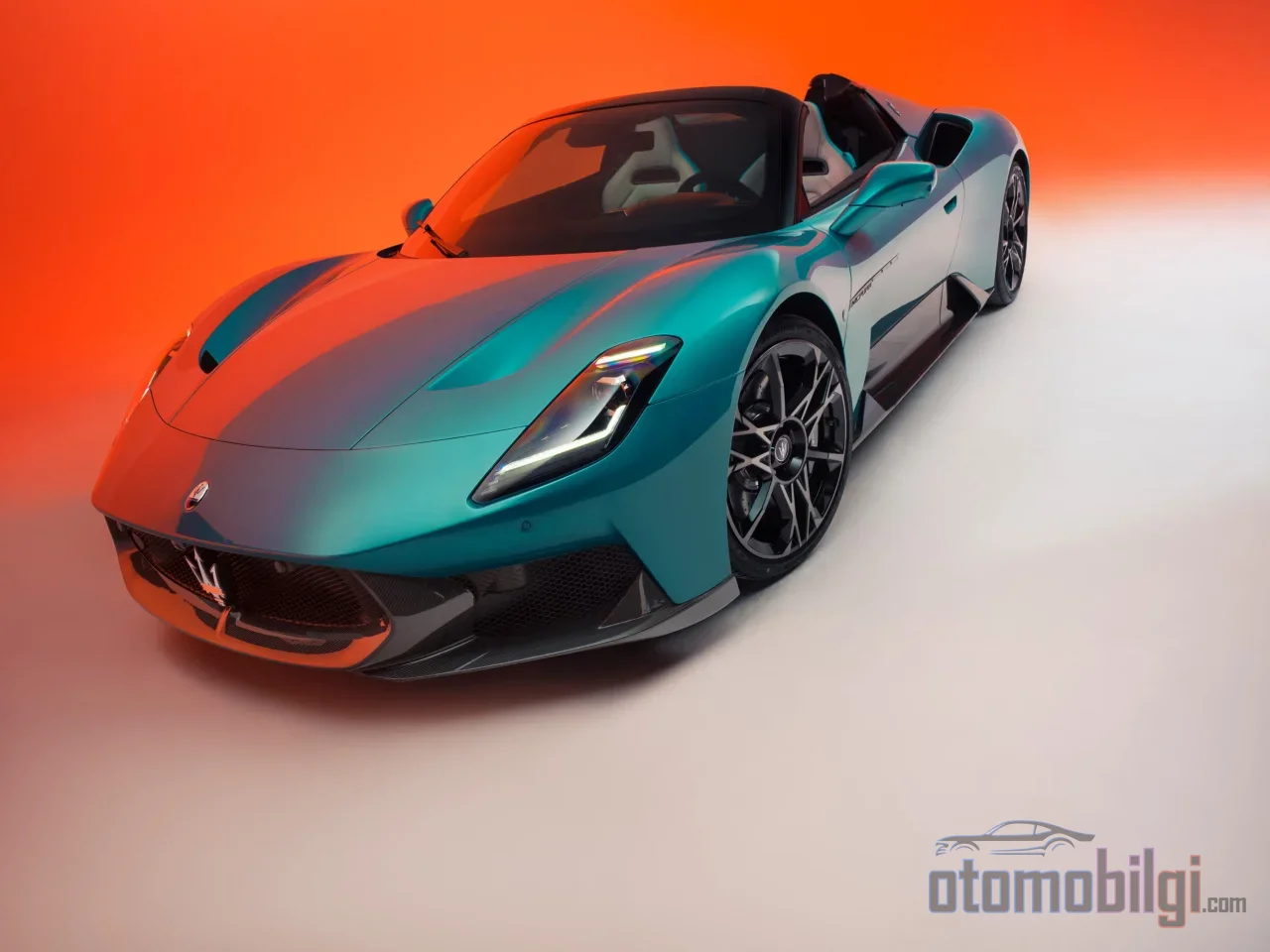
Renaming a supercar usually signals a major transformation under the hood as well. With the Maserati MCPura, it's the other way around: the brand retired the MC20 name in 2025, yet kept intact the three core pillars that define the car: the carbon fiber monocoque chassis, the Netuno V6 engine, and the silhouette. So does this renaming go beyond a facelift, or is it simply a new chapter in the MC20's evolution? How real are the differences between the closed MCPura and the open-top MCPura Cielo? On this page, we compare the two body types through technical data, using the figures announced by the manufacturer.
What Changed from the MC20 to the MCPura?
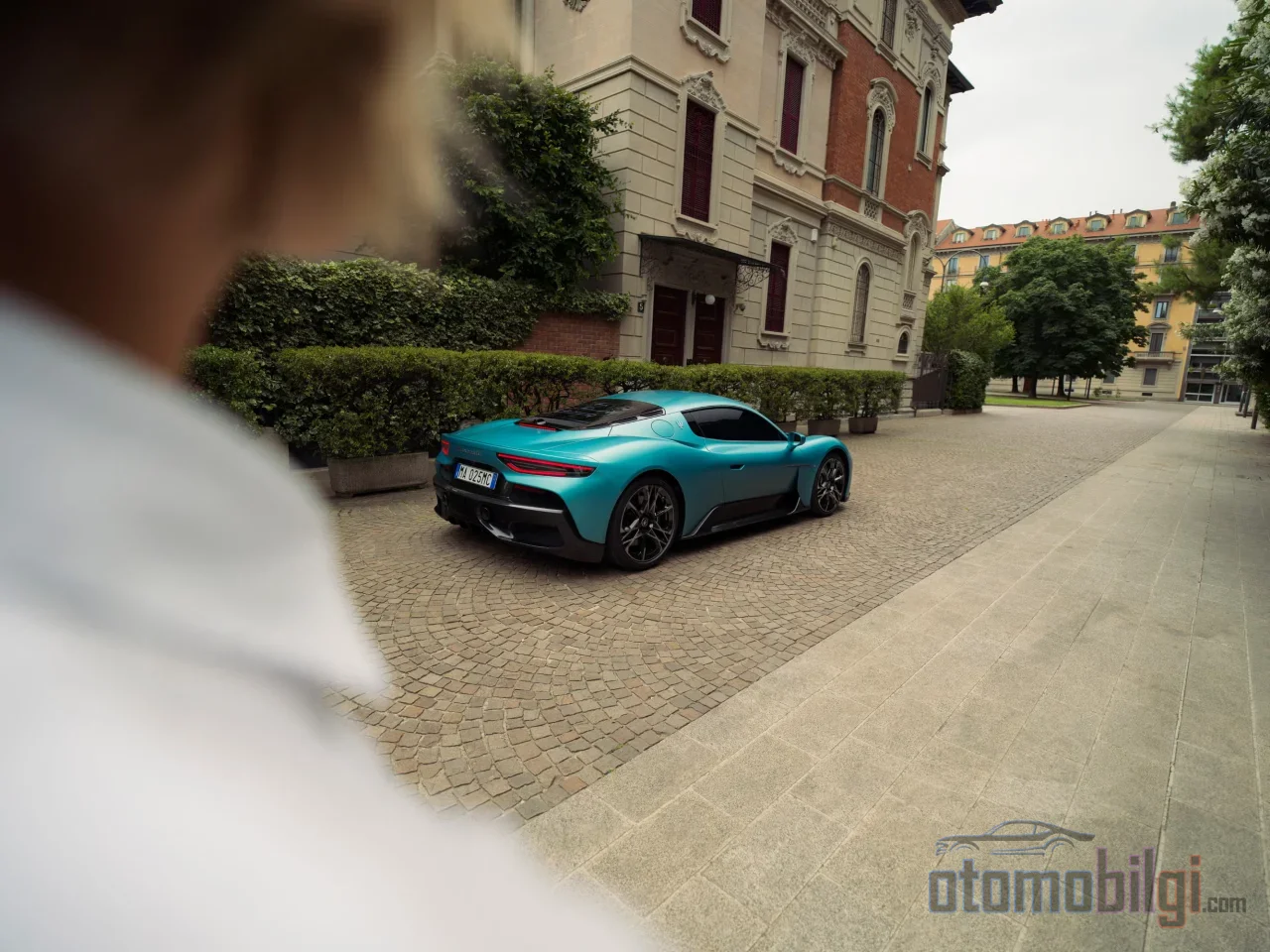
The MCPura made its world premiere at the Goodwood Festival of Speed on July 10, 2025 and was offered in coupe and open-top body styles named Cielo. To correctly read the nature of this transformation, we need to look at what didn't change: the carbon fiber monocoque, the engine, and all drivetrain components were carried over unchanged from the MC20. In other words, this is not a generational change, but a maturation of the existing platform.
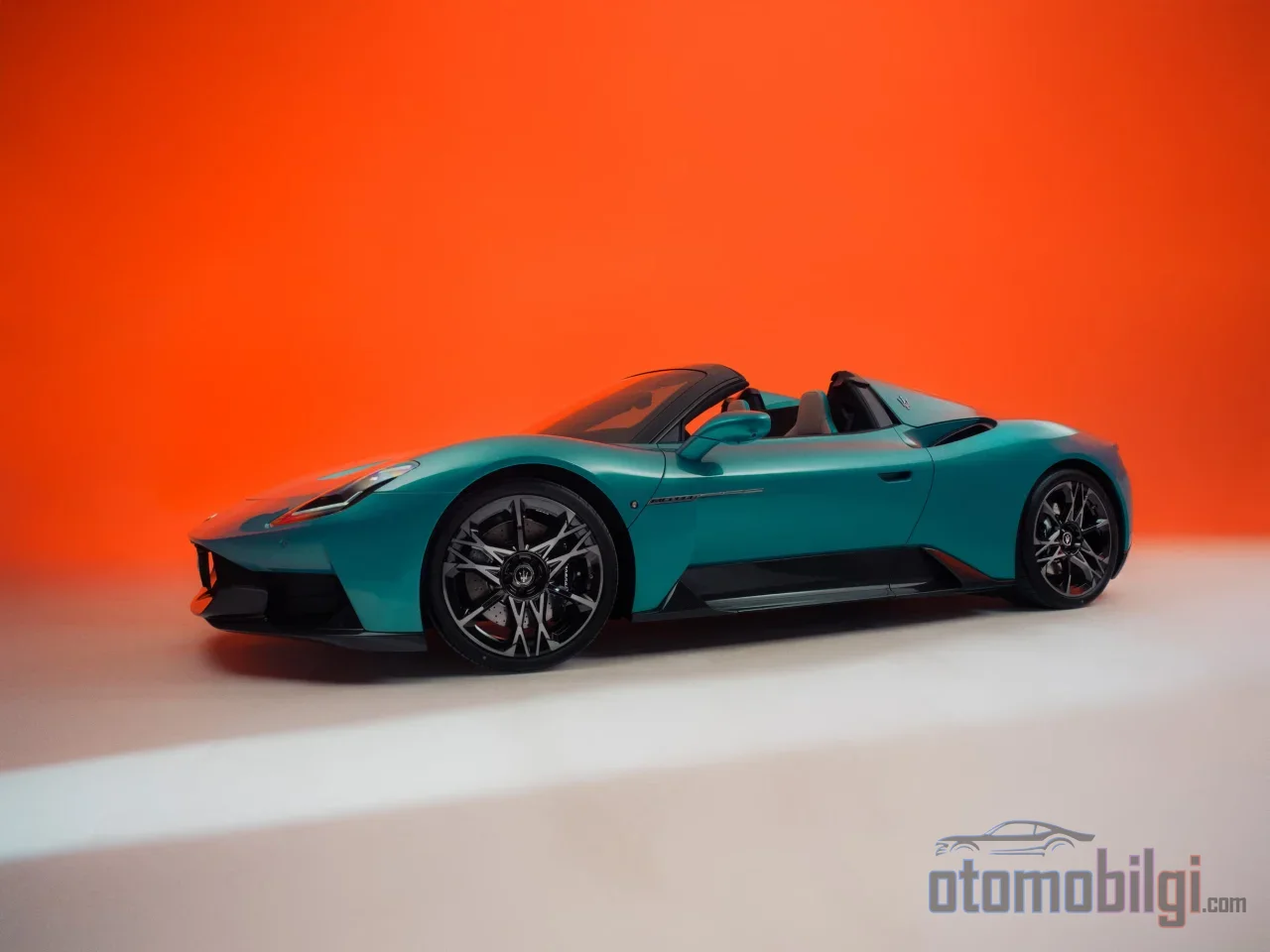
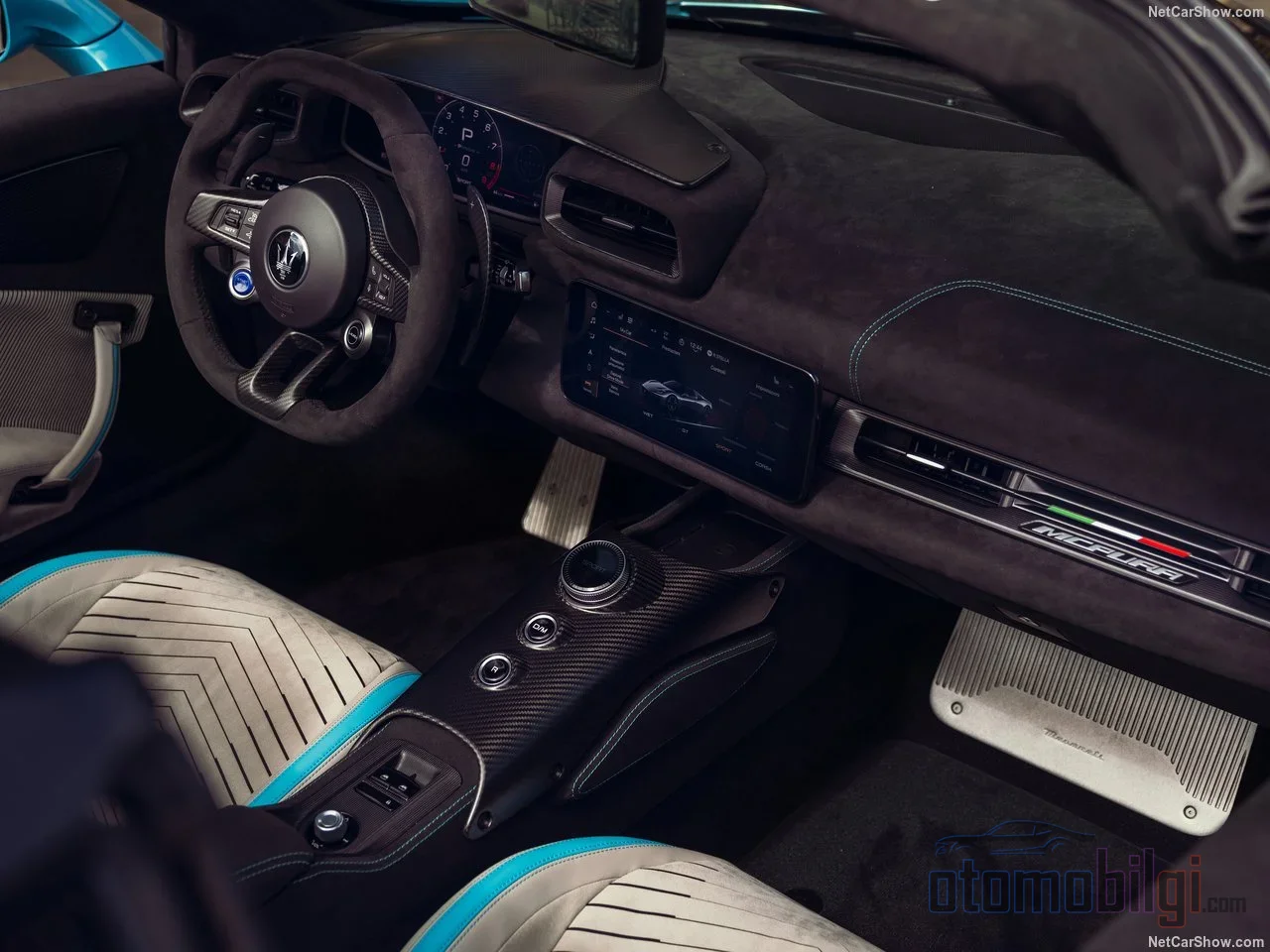
At the visible level, the change is tangible. The front and rear bumpers were redesigned; the front fascia gained a slightly sharper character, and the front air intakes were reshaped to improve airflow distribution. Inside, the leather upholstery of the MC20 gave way to full Alcantara; this choice aims for both a more sporty focus and weight reduction. The expanded range of paint options is also one of the most noticeable updates from the outside.
In short, the MCPura is the MC20 aerodynamically refined, with material quality shifted toward a driving-focused simplification. On the power side, there are no changes at all; we will return to this in detail in the engine section.
Highlights
- 630 CV (463 kW) @ 7500 rpm and 720 Nm of torque: the Netuno V6 carries on unchanged
- 0-100 km/h in 2.9 seconds, top speed over 325 km/h (coupe)
- The Cielo's PDLC glass roof opens in 12 seconds and switches instantly between transparent and opaque
- A facelift with a full Alcantara interior, new bumpers, and new paint options
- Estimated US base price: $250,000 for the coupe, $285,000 for the Cielo
Netuno V6: The Unchanged Heart, The Unchanged Figures
The MCPura's engine is a 3.0-liter twin-turbocharged V6 unit named Netuno with a displacement of 2992 cc. With a 90-degree angle, aluminum block and heads, this engine uses direct injection and operates with a Formula 1-derived twin-combustion system. Its total weight is approximately 220 kg, which means a compact and lightweight unit for this class. Its dry-sump version serves in the racing-derived GT2 Stradale.
The power and torque figures are exactly identical to the MC20: 630 CV (463 kW) @ 7500 rpm and 720 Nm of maximum torque. In US sources, the same engine is quoted as 621 hp and 538 lb-ft (approximately 730 Nm); this difference stems from metric vs. mechanical horsepower and lb-ft/Nm conversions; the official manufacturer figure is fixed at 720 Nm. On the drivetrain side, an 8-speed dual-clutch automatic transmission sends all the power to the rear wheels only.
Maserati MCPura Technical Specifications Table
The table below combines the manufacturer's official figures with reliable measurements. A separate official acceleration and weight table specific to the Cielo has not yet been published by the manufacturer; therefore, data from the predecessor MC20 Cielo (0-100 km/h approx. 2.9 s, 0-200 km/h 9.2 s, top speed over 320 km/h) can be used as a reference for the open-top version.
| Specification | MCPura (Coupe) | MCPura Cielo |
|---|---|---|
| Engine | 3.0 L twin-turbo V6 (Netuno) | 3.0 L twin-turbo V6 (Netuno) |
| Power | 630 CV @ 7500 rpm | 630 CV @ 7500 rpm |
| Torque | 720 Nm | 720 Nm |
| Transmission / Drive | 8-speed DCT / RWD | 8-speed DCT / RWD |
| 0-100 km/h | 2.9 s | Approx. 2.9 s |
| Top speed | Over 325 km/h | Over 320 km/h (predecessor figure) |
| Length / Width | 4667 mm / 1965 mm | 4667 mm / 1965 mm |
| Height | 1226 mm | 1214-1226 mm (depending on variant) |
| Rear luggage capacity | 100 L | Manufacturer figure not published |
| Estimated US price | $250,000 | $285,000 |
Front track measures 1681 mm and front overhang 1075 mm. On the consumption side, 11.5-11.7 L/100 km is reported on the Australian test cycle; US EPA figures (based on the MC20) stand at 15 mpg city, 25 mpg highway and 18 mpg combined. The European WLTP combined consumption figure has not yet been officially announced.
MCPura Cielo: Can the Open-Top Version Make a Difference?
Two factors define the Cielo's technical identity. The first is the polymer-dispersed liquid crystal (PDLC) glass roof, used for the first time in its class: With a single command, it switches instantly between transparent and opaque, offering a choice between open sky and a shaded cabin. The second is the retractable hard-top structure of the roof itself, which opens and closes in 12 seconds.
In terms of performance, the picture is more balanced than one might expect. The Cielo is only marginally heavier than the coupe; according to experiences, the difference between the two bodies is small enough to be practically imperceptible, and the 0-100 km/h time is around 2.9 seconds in both versions. When it comes to top speed, however, the distinction becomes clear: only the fully closed coupe breaks the 200 mph (approximately 322 km/h) barrier. The aerodynamic penalty of the retractable roof makes a difference in the longer gears.
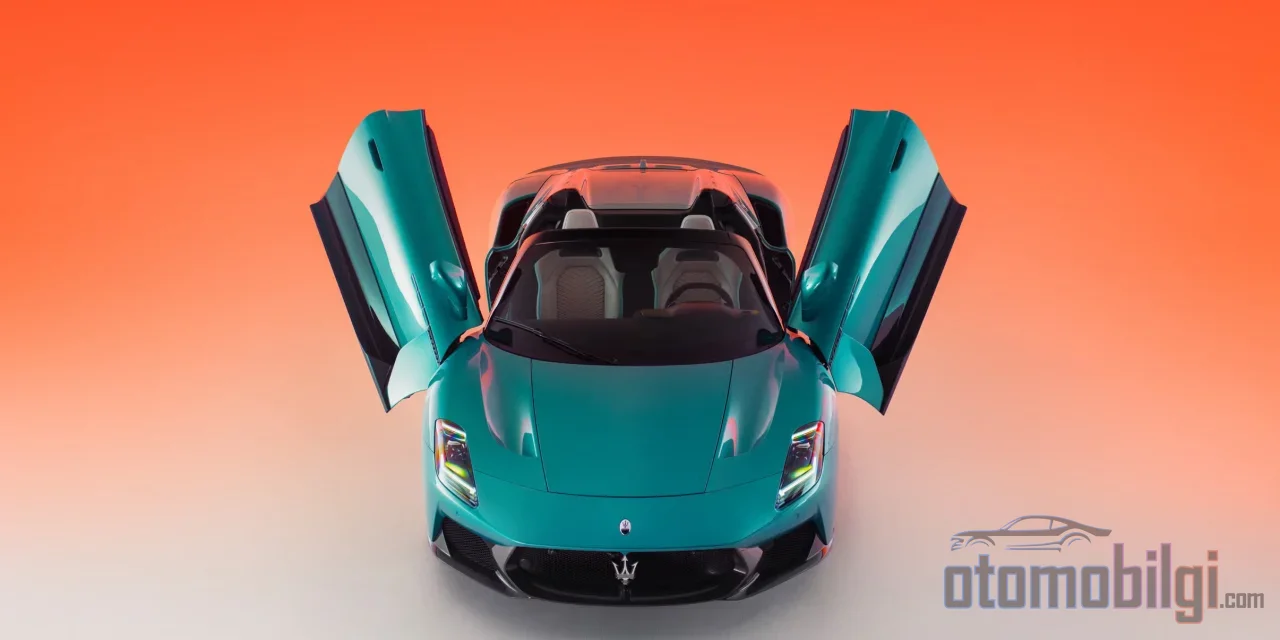
In practical use, luggage space is limited in both bodies: there is a 100-liter storage compartment at the rear, but the total volume (approximately 141 L front and rear combined) does not meet the expectations of this class. In the Cielo, the roof mechanism restricts this already narrow space a little further. The cabin is driver-focused and minimal: butterfly-style upward-opening doors, the absence of a rear seat, a 10.3-inch touchscreen infotainment display and a 10.3-inch digital instrument cluster are the cornerstones of this layout. Google-based interface, Apple CarPlay and Android Auto standard; On the audio side, a 6-speaker setup is basic, while the 12-speaker Sonus Faber system is optional.
Is 630 CV Enough in This Day and Age?
The most debated aspect of the MCPura is its power figure. In an era of electric and gasoline rivals reaching four-digit horsepower figures, this value, which appears to be 621 hp (US measurement), falls behind rivals like the Ferrari 296 GTB or McLaren 750S on paper. In tests, the old MC20's 0-60 mph time was 3.2 seconds, with an estimated 1/4 mile time of 11.0-11.2 seconds; the estimated vehicle weight is in the range of 3750-3900 pounds.
However, this is not the full picture. The power-to-weight ratio is still at a respectable level; the car carries 621 hp with a curb weight of around 3,300 pounds. The common assessment among critics is that the car's character and driving pleasure take precedence over pure speed. In other words, the MCPura is a supercar positioned around the driving experience rather than competing with its rivals at the drag strip. It can also be said that this positioning has paid off: the car won the 2026 Dream Car award, and in the jury's evaluation, the carbon fiber monocoque and the 630 hp engine were listed as standout features.
Prices and Market Position
Pricing varies considerably from market to market. In the US, the estimated base price is around $250,000 for the coupe and $285,000 for the Cielo, and a similar starting figure is expected for the 2027 model year. In the UK, the coupe sells for slightly above £200,000, while the Cielo is priced close to £230,000.
In other markets, the picture is as follows: In Canada, the coupe's MSRP is 286,000 CAD (293,095 CAD with taxes); In Australia, the indicative drive-away price is 501,423 AUD for the MY27 coupe and 577,723 AUD for the Cielo; In India, the coupe launched at an indicative showroom price of 4.12 crore rupees and the Cielo at 5.12 crore rupees, just a few weeks after the global launch. On the warranty side, the US offers a 4-year/50,000-mile limited warranty and a powertrain warranty, but there is no complimentary maintenance package; In Australia, a 3-year unlimited-kilometer warranty applies.
MCPura or MCPura Cielo - Which Should You Choose?
The question has a clear answer: This is not an update, but a refined and renamed version of the MC20. The powertrain, chassis, and core performance figures are unchanged; what has changed are the aerodynamic details, interior materials, and the name. The story of the MCPura is not an engineering revolution, but the effort of a mature platform to reach its best form.
As for body style choice, the criteria are clear. Those who want to exceed the 322 km/h threshold at top speed and desire the purest aerodynamic profile should go for the coupe; because only the closed version joins the 200 mph club. For those who prioritize daylight and a flexible cabin experience, the Cielo is a convincing alternative with a weight difference that is practically imperceptible and a PDLC glass roof that opens in 12 seconds and can be made opaque. Both body styles offer the same 2.9-second 0-100 km/h acceleration; a choice of lifestyle, not speed.