Alfa Romeo 33 Stradale: A Handmade Italian Legend
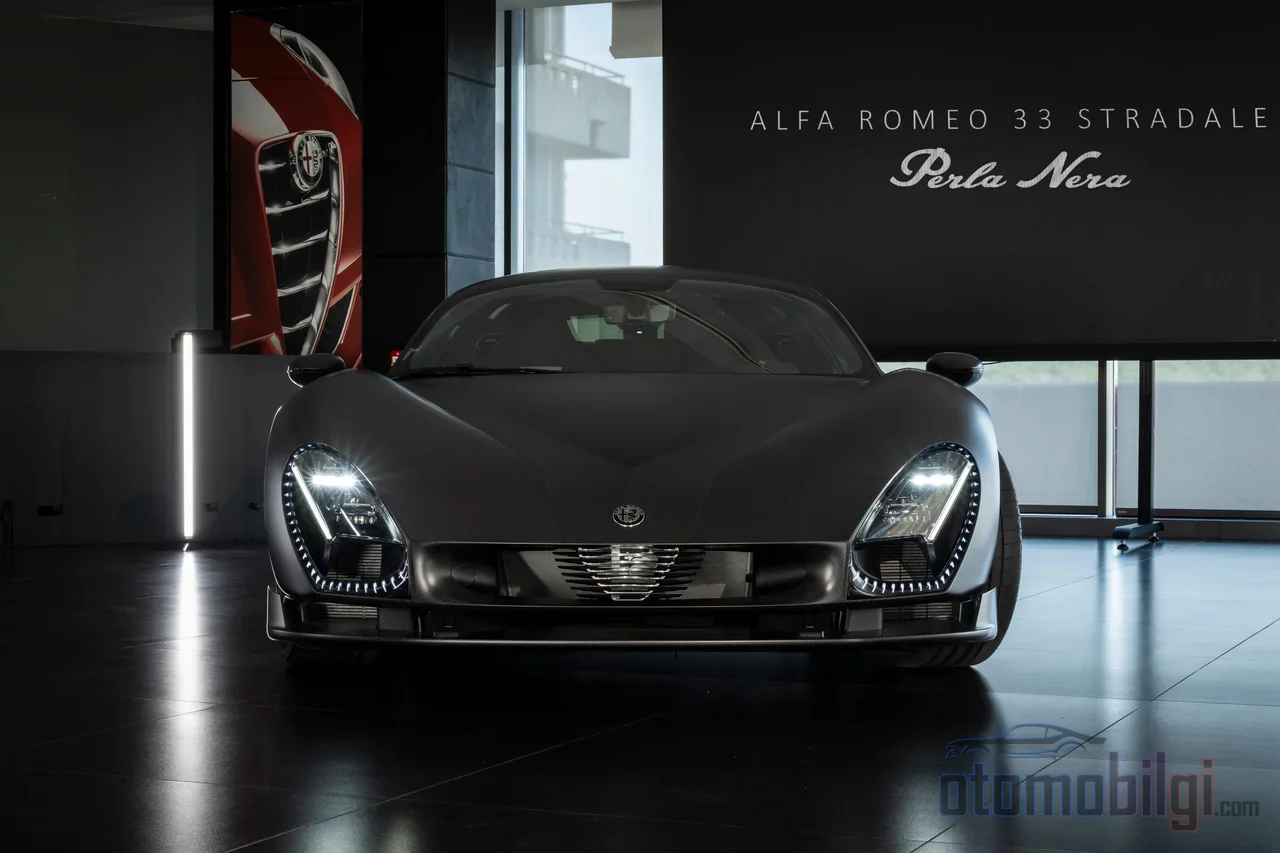
In September 2022, during the Italian Grand Prix weekend at Monza, Alfa Romeo gathered a small group of invitees behind closed doors. At the center stood a prototype whose name had not even been announced yet; the aim was to sell this car to an extremely exclusive clientele of 33 buyers. Within weeks, all 33 cars had been ordered. A year later, on August 30, 2023, the 33 Stradale was officially unveiled and took center stage in the automotive world as a modern interpretation of the 1967 legend. So what exactly makes this hand-built supercar so special?
The Alfa Romeo 33 Stradale represents a rare proposition in the modern supercar segment: limited production, hand craftsmanship, and two different powertrain options meeting in the same body. Buyers were offered the choice between a 620 hp gasoline V6 or a 750 hp fully electric version; both come with the promise of 0-100 km/h acceleration in under 3 seconds. On this page, we examine the car's technical architecture, its production story, and the point it has reached as of 2026 through an engineer's eye.
From the 1967 Legacy to the 2023 Unveiling: The Birth of the Project
The original 33 Stradale, of which only 18 units were produced between 1967 and 1969, was the road version of the Tipo 33 Le Mans race car. Its body, drawn by Franco Scaglione, is regarded as one of the most beautiful designs in automotive history; the first prototype was built in Autodelta's workshop in Settimo Milanese, with the body produced by Carrozzeria Marazzi. The new 33 Stradale was designed as a deliberate homage to this legacy.
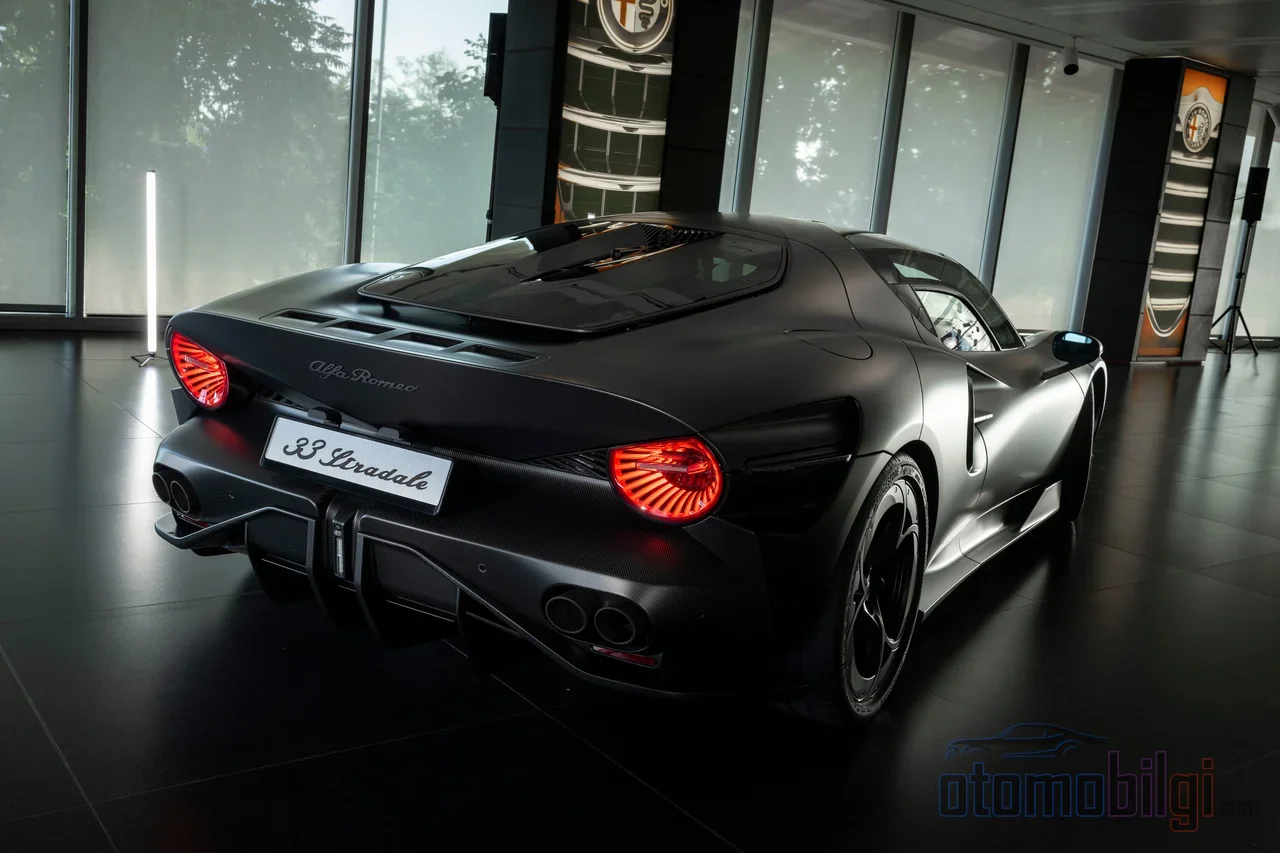
The project was kicked off in June 2022 at the initiative of Alfa Romeo CEO Jean-Philippe Imparato. An interesting engineering detail is this: the development work did not start from scratch. The development know-how inherited from a project that the brand had shelved years earlier and that later became the Maserati MC20 formed the foundation of the new car. The design, meanwhile, was completed at Alfa Romeo Centro Stile by César Barreau, under the leadership of Alejandro Mesonero-Romanos. The retro touches are not random ornamentation: the round taillights, the split side windows, and the wraparound windshield are design codes carried over directly from the 1967 original.
Highlights
- Only 33 units were produced; all of them were sold before the official unveiling
- Dual power option: 620 hp twin-turbo V6 or 750 hp three-motor electric version
- 0-100 km/h in under 3 seconds in both versions, with the gasoline version's top speed at 333 km/h
- Carbon fiber monocoque chassis, built in Milan with Touring Superleggera hand craftsmanship
- Starting price of over 2 million dollars
Chassis and Suspension Architecture
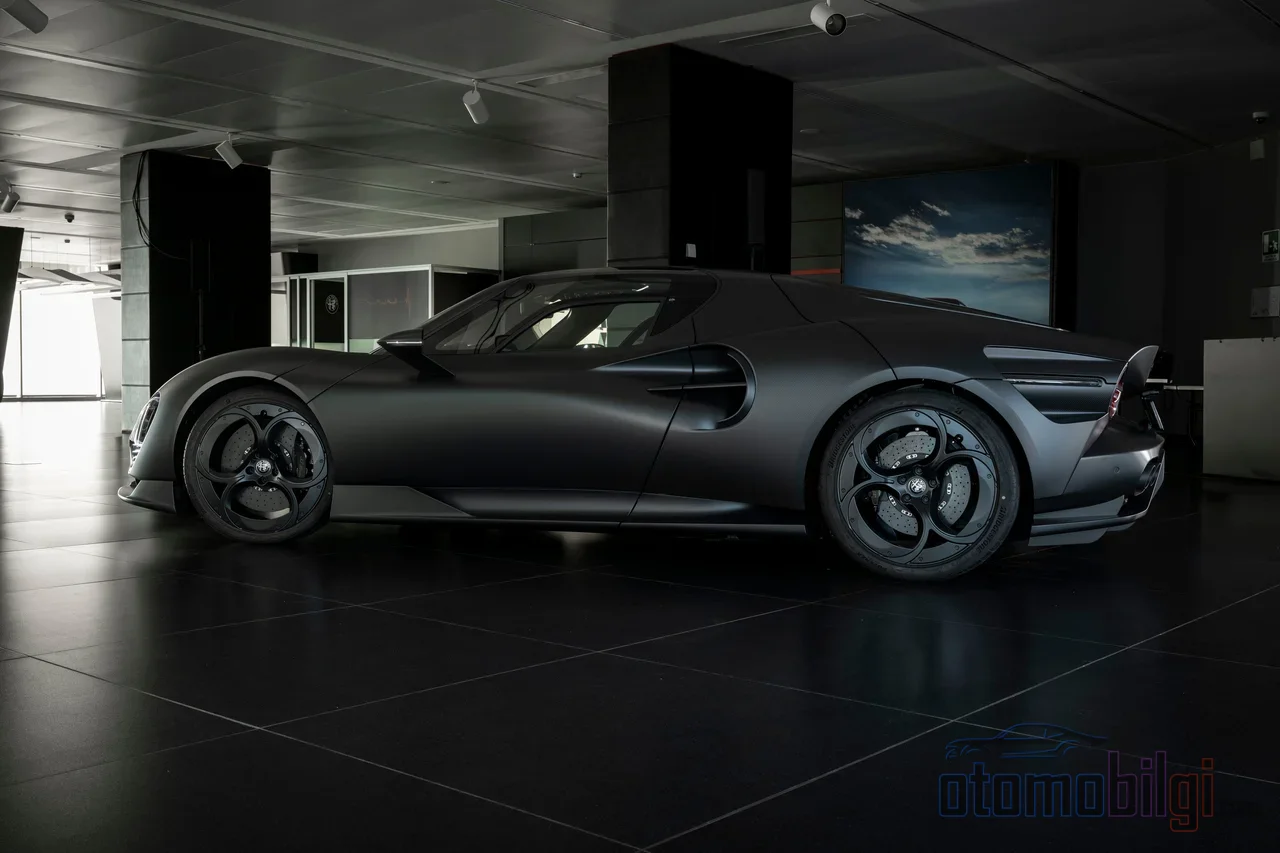
The 33 Stradale's load-bearing structure is a two-layer engineering solution: a carbon fiber monocoque body is completed by an aluminum H-frame to which the engine and rear suspension are attached. This setup keeps rigidity high while optimizing weight distribution. The gasoline version's curb weight of approximately 1,500 kg is a quite reasonable figure for supercharged supercars in its class.
The suspension features double-arm geometry, active dampers, and a front axle lift system. The braking system is equipped with Brembo carbon-ceramic discs; front discs are 390 mm and rear discs are 360 mm in diameter. A brake-by-wire setup accompanies the system, meaning the pedal transmits braking force electronically rather than through a mechanical linkage. Tire sizes are set at 245/35 R20 front and 305/30 R20 rear; the 0.375 drag coefficient (Cx) value stands as measurable proof of the body's aerodynamic efficiency.
The butterfly doors, part of the visual signature, are not merely an aesthetic choice: the carbon fiber window frames and polycarbonate rear glass are examples of weight discipline aligned with the design language.
Two Powertrains: 620 hp V6 and 750 hp Electric
some publications describe it as an evolution of the 2.9-liter V6 in the Giulia and Stelvio Quadrifoglio, while others see it directly as a 3.0-liter block sourced from the Maserati MC20.
In the gasoline version, a 3.0-liter V6 engine with a 90-degree V angle, twin-turbo charging, and the 690T code does the work. According to manufacturer data, power is at 620 hp (463 kW). Two different definitions of the engine's origin are in circulation: some publications describe it as an evolution of the 2.9-liter V6 in the Giulia and Stelvio Quadrifoglio, while others see it directly as the 3.0-liter block derived from the Maserati MC20. The output is the same in both cases; the difference lies in the identification. No official torque value has been announced by the manufacturer for the 33 Stradale. As a reference, the same engine family produces 600 Nm of torque in Quadrifoglio applications; but this figure is not a confirmed number for the 33 Stradale.
Power is sent to the rear wheels through a rear-wheel-drive layout, ZF's 8-speed dual-clutch transmission, and an electronically controlled limited-slip differential. 0-100 km/h acceleration is under 3 seconds; the 333 km/h top speed target was verified in dynamic tests at the Nardò track. With a 60-liter fuel tank and a 1,500 kg kerb weight, the vehicle reaches a power-to-weight ratio of 2.4 kg/hp.
Three-Motor Fully Electric Version
The electric version comes with three permanent-magnet synchronous (PMS) motors; total power is 750 hp (559 kW) according to the WLTP cycle. The all-wheel-drive system is offered with a single-speed setup. The battery has a 102 kWh installed and 90 kWh usable capacity. The WLTP range is listed as 450 km; lower figures such as 386 km also appear in some publications, and this difference stems from measurement method and cycle definitions. As for the electric version's top speed, a value of 310 km/h appears in technical listings; the manufacturer's general statement had emphasized a 333 km/h target for both versions. The kerb weight of approximately 2,100 kg is the price of the 600 kg battery and drivetrain. The torque value of the electric version was not announced by the manufacturer.
| Specification | V6 Gasoline | Electric |
|---|---|---|
| Engine | 3.0 L twin-turbo V6 (690T) | 3 x PMS electric motors |
| Power | 620 hp (463 kW) | 750 hp (559 kW, WLTP) |
| Torque | Not announced by the manufacturer | Not announced by the manufacturer |
| Drivetrain | Rear-wheel drive | All-wheel drive |
| Transmission | ZF 8-speed DCT | Single gear |
| 0-100 km/h | Under 3.0 s | Under 3.0 s |
| Top speed | 333 km/h | 310 km/h (technical listings) |
| Kerb weight | Approximately 1,500 kg | Approximately 2,100 kg |
| Battery / fuel tank | 60 L fuel tank | 102 kWh installed / 90 kWh usable |
| Range | - | 450 km (WLTP) |
Handcrafted Production: Touring Superleggera Workshop
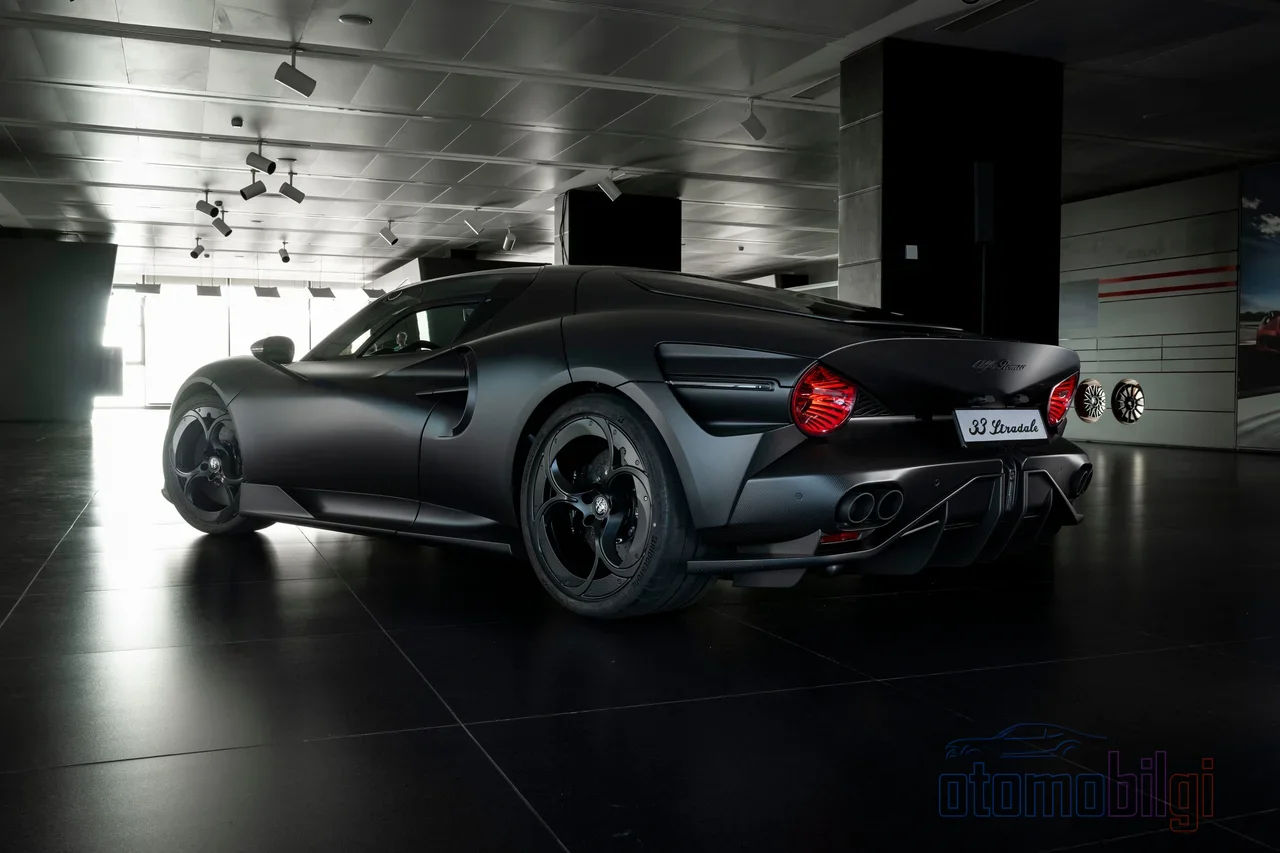
Series production started in December 2024, and the cars are being hand-built by Carrozzeria Touring Superleggera in Milan. The production philosophy here is closer to a workshop than an assembly line in the modern automotive sense: every body panel and assembly is crafted by hand with the mastery and discipline of the Italian coachbuilding tradition. The total volume of 33 vehicles per year makes it possible to follow quality control on a one-to-one basis throughout the process.
The dimensions are average for the mid-engine supercar class: length 4,637 mm, width 1,966 mm, height 1,226 mm, wheelbase 2,700 mm. Some data, such as trunk capacity and consumption figures, were not disclosed by the manufacturer; this can be considered a deliberate part of the car's information policy.
Price and Ownership: A Collector's Piece Above 2 Million Dollars
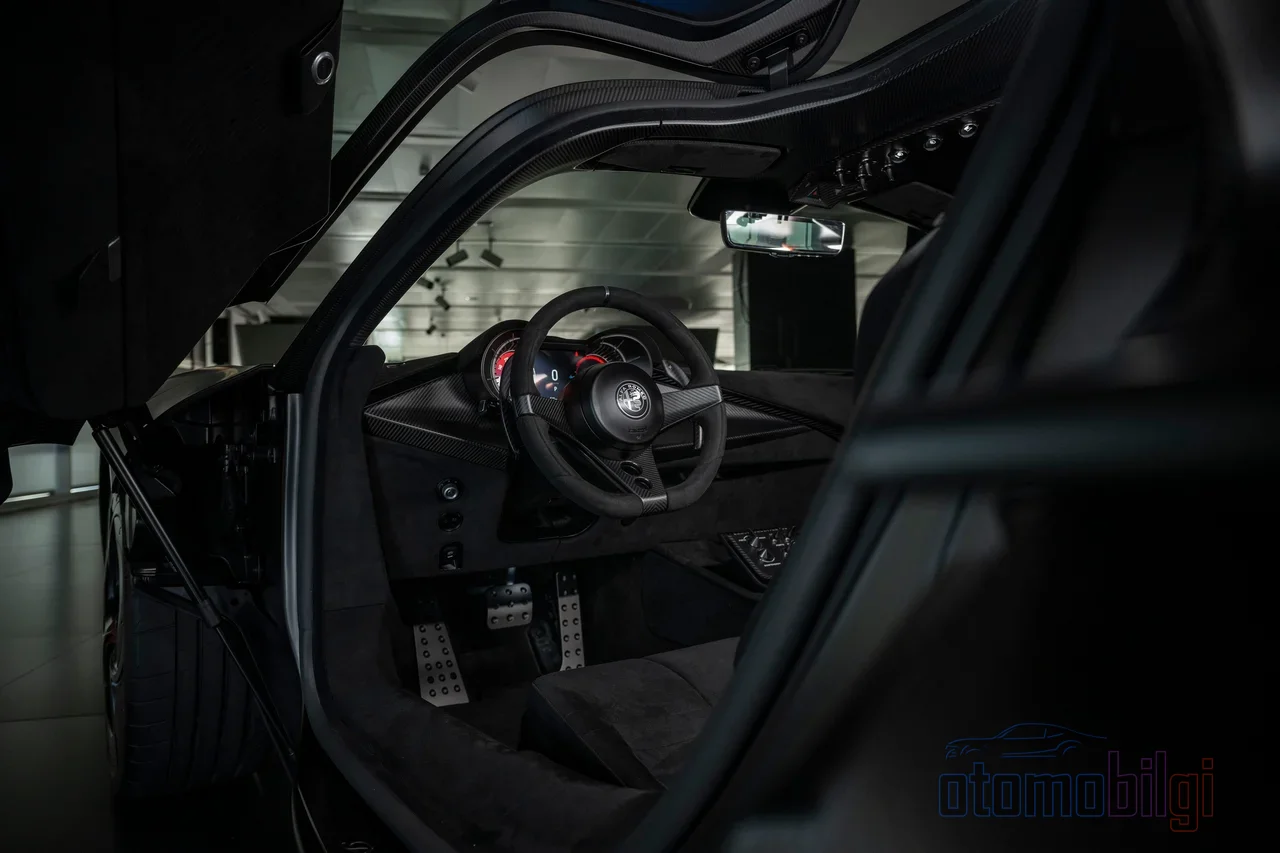
The car's starting price was announced as over 2 million dollars, and some European sources cite values exceeding 2.5 million pounds; it is also reported that one owner valued their car at more than 3 million euros. However, the true measure of the 33 Stradale is not its price, but its availability: the entire production run of 33 units sold out before the official presentation. The depth of personalization offered to buyers effectively turns each car into a unique commission.
Where Things Stand in 2026: Deliveries and Perla Nera
2026 was a year that consolidated the car's place in the world of collecting. In August-September 2026, at the Alfa Romeo Museum in Arese, Perla Nera was unveiled - a unique example among the 33 cars, ordered with a body of fully exposed carbon fiber. During the same period, the brand celebrated its first deliveries in the USA; two ultra-rare examples reached their owners within a single week. The car was also displayed in April 2026 at the Fuorisalone event as part of Milan Design Week.
The most meaningful signal from the brand's management concerns the future: Imparato confirmed that the 33 Stradale will not be Alfa Romeo's last special car, and that fully bespoke additional models are planned. So this production run of 33 units is positioned not as a farewell, but as the first step of a new beginning.
Conclusion: What Does the Alfa Romeo 33 Stradale Promise?
To summarize briefly: The Alfa Romeo 33 Stradale is a supercar limited to 33 units, built with Touring Superleggera craftsmanship, and featuring a carbon fiber monocoque chassis. It offers a choice between a 620 hp twin-turbo V6 with rear-wheel-drive ZF DCT, or a fully electric version with 750 hp, three motors, all-wheel drive and a 102 kWh battery; both versions accelerate from 0-100 km/h in under 3 seconds, and the gasoline version's top speed is 333 km/h. Combining design codes faithful to the 1967 legend with modern engineering, the car sold out before production even began, despite a starting price of over 2 million dollars.
As an engineering assessment, it can be said that the real success of the 33 Stradale lies not in the numbers but in how it strikes a balance: homage design with contemporary carbon monocoque architecture, handcrafted production with a verified performance target of 333 km/h, and the meeting of two opposing powertrain philosophies in a single body. As the first link in Alfa Romeo's special models series, it is a serious statement of intent for the brand's next decade.