Aston Martin Valiant: 745 PS V12 with Manual Transmission
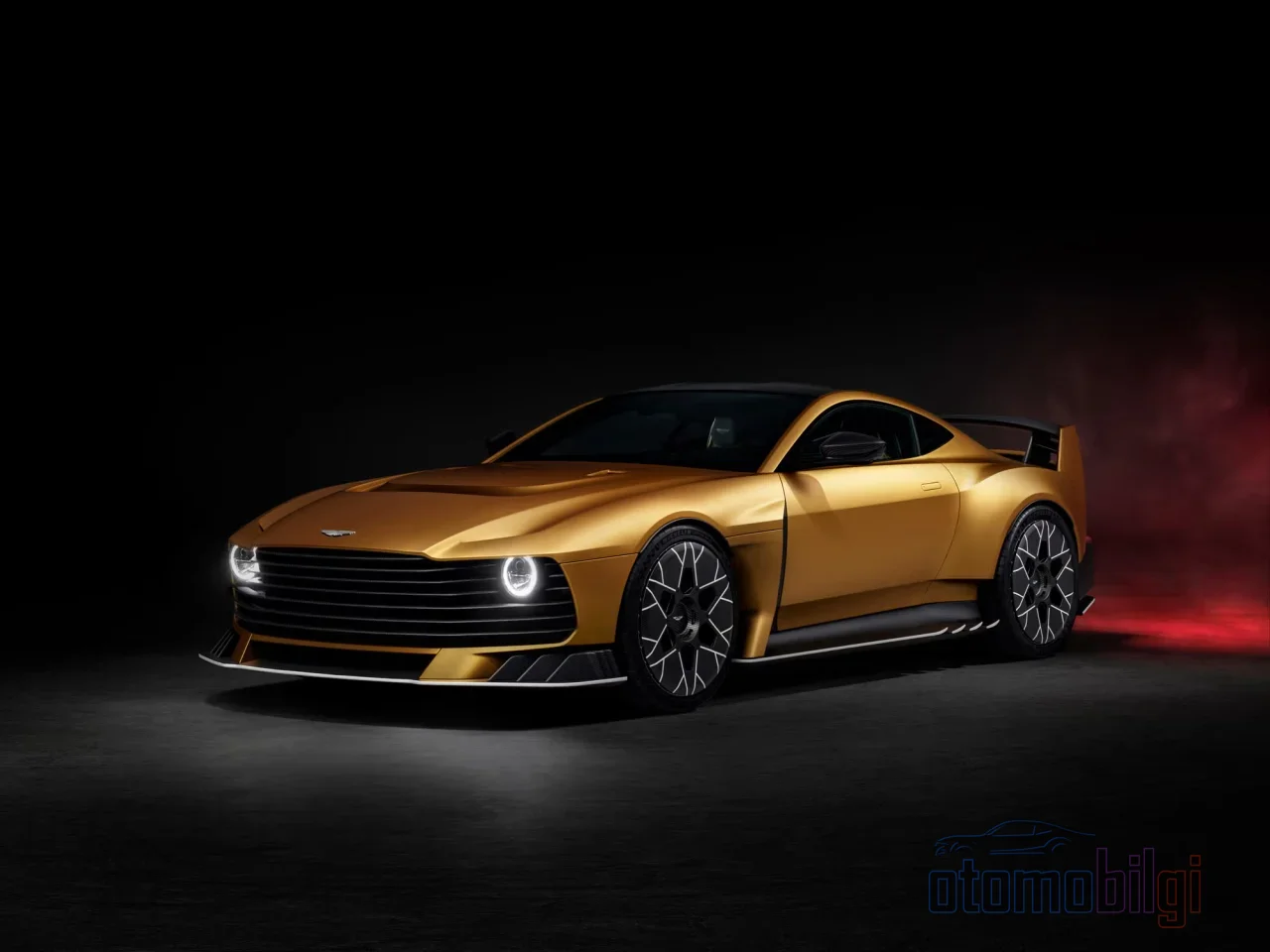
In an era where supercar manufacturers boast about their most powerful engines, their fastest gearboxes and their most advanced electronics packages, Aston Martin walked in exactly the opposite direction: It put a six-speed manual gearbox behind the 5.2-liter twin-turbo V12, stripped out the screens and buttons, and named the car Valiant. Only 38 examples of this track-focused yet road-legal machine were built, and as of 2026 deliveries continue to lucky owners around the world. So what exactly is it that makes this car so different?
The Aston Martin Valiant is an ultra-limited production special series developed by the brand's special projects division, Q by Aston Martin. Moreover, it is more than just an engineering exercise: It was born from Fernando Alonso's personal request, from the accumulated experience of his 23-year Formula 1 career, and from the desire for a lightweight, race-focused Valour. With the company's current model lineup featuring entirely different philosophies such as the saloon-focused Vanquish and the hybrid Valhalla, the Valiant is the sole representative in Aston Martin's lineup that places mechanical connection and driver engagement at its center.
745 horsepower and 753 Nm: 5.2-Liter Twin-Turbo V12
At the heart of the Valiant lies a twin-turbocharged V12 engine with a displacement of 5.2 liters (5,203 cc). With a bore of 89 mm and a stroke of 69.7 mm per cylinder, this unit features a characteristically short-stroke architecture, producing 745 PS (735 hp) of power at 6,500 rpm and 753 Nm of torque at 5,500 rpm. Until the launch of the new Aston Martin Valen, which offers an updated 850 PS version of the same engine with an 8-speed ZF automatic gearbox, these figures represented the pinnacle of the brand's front-engine lineup.
But in the Valiant's story, the real issue is not power, but how that power is transmitted. Because this V12 reaches the driver through a direct mechanical connection, with no automatic, dual-clutch or semi-automatic system layered on top of it.
Why a Six-Speed Manual Gearbox?
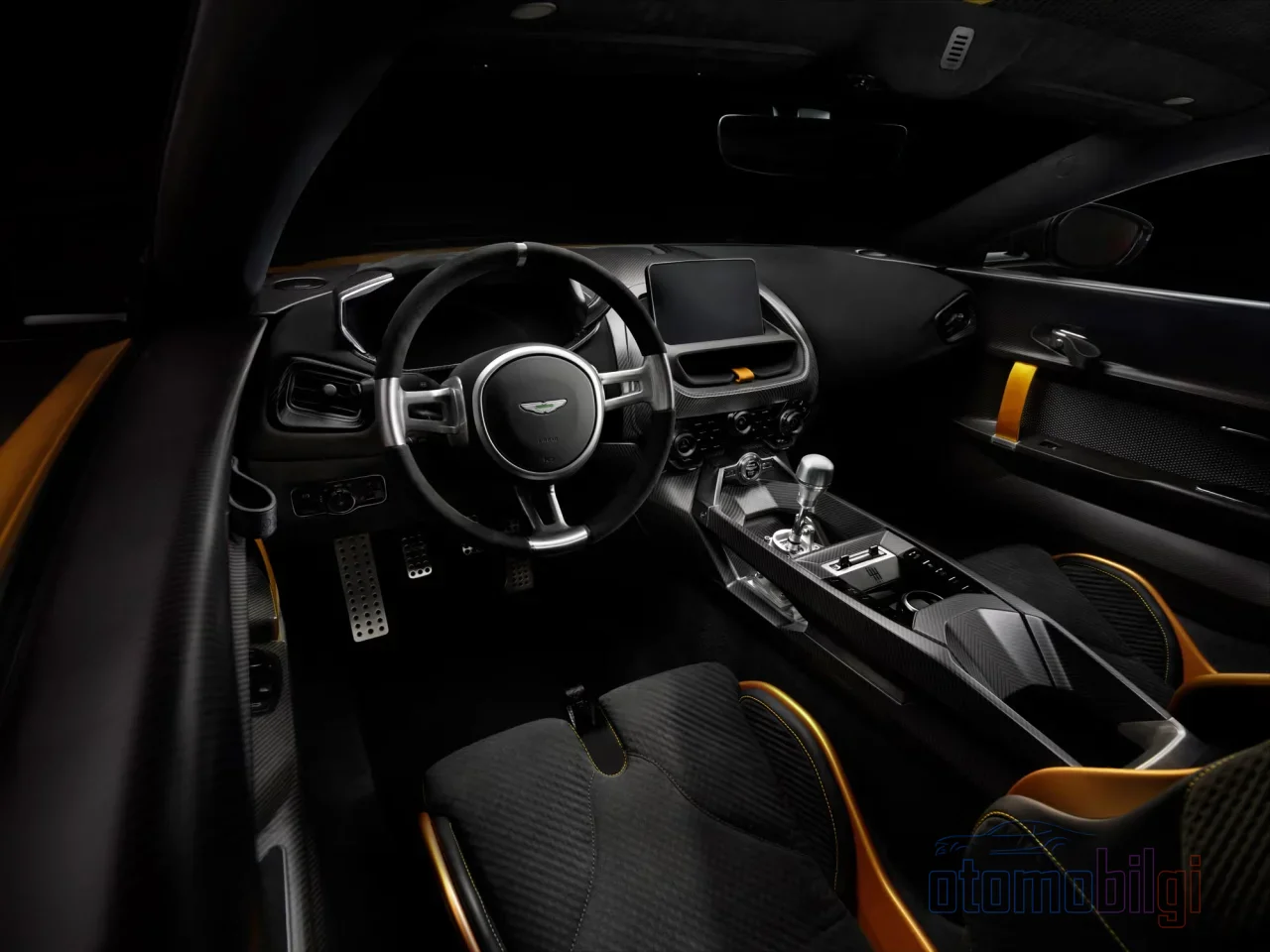
The Graziano-built six-speed manual gearbox is mounted on the rear axle in a transaxle layout. This architecture contributes to the weight distribution while working together with a mechanical limited-slip differential and a magnesium torque tube. The magnesium torque tube alone is 9.5 kg lighter than the previous application. The shift mechanism, meanwhile, is left completely exposed: the steel linkage arm, the machined anodized aluminum shift knob - the driver feels the mechanics of every gear change directly in hand and foot.
The logic behind this choice is simple but effective: In most modern fast supercars, gear shifts are completed automatically within milliseconds. In the Valiant, however, every gear change demands precision and timing; every throttle input is meaningful. What makes the car fast is not electronic aids, but the driver's skill and the vehicle's honest feedback. Three driving modes allow switching between road and track use without compromising this pure character.
Highlights
- 5.2-liter twin-turbo V12: 745 PS of power and 753 Nm of torque
- 6-speed manual transmission, transaxle layout and mechanical limited-slip differential
- The aero package generates a total of 383 kg of downforce
- Kerb weight is only 1,695 kg
- Production limited to 38 units, all of which have been allocated
Aero Package and 383 kg of Downforce
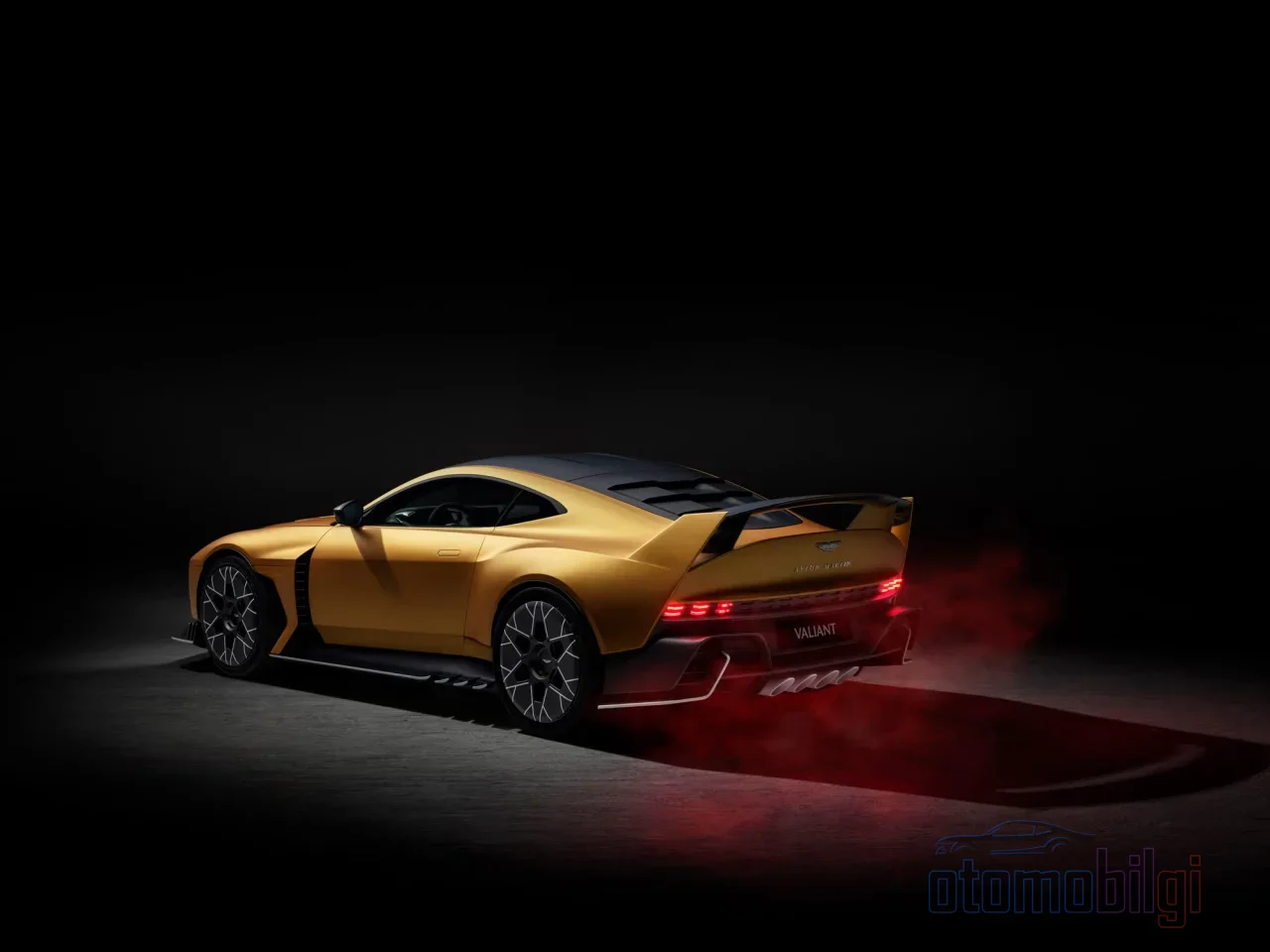
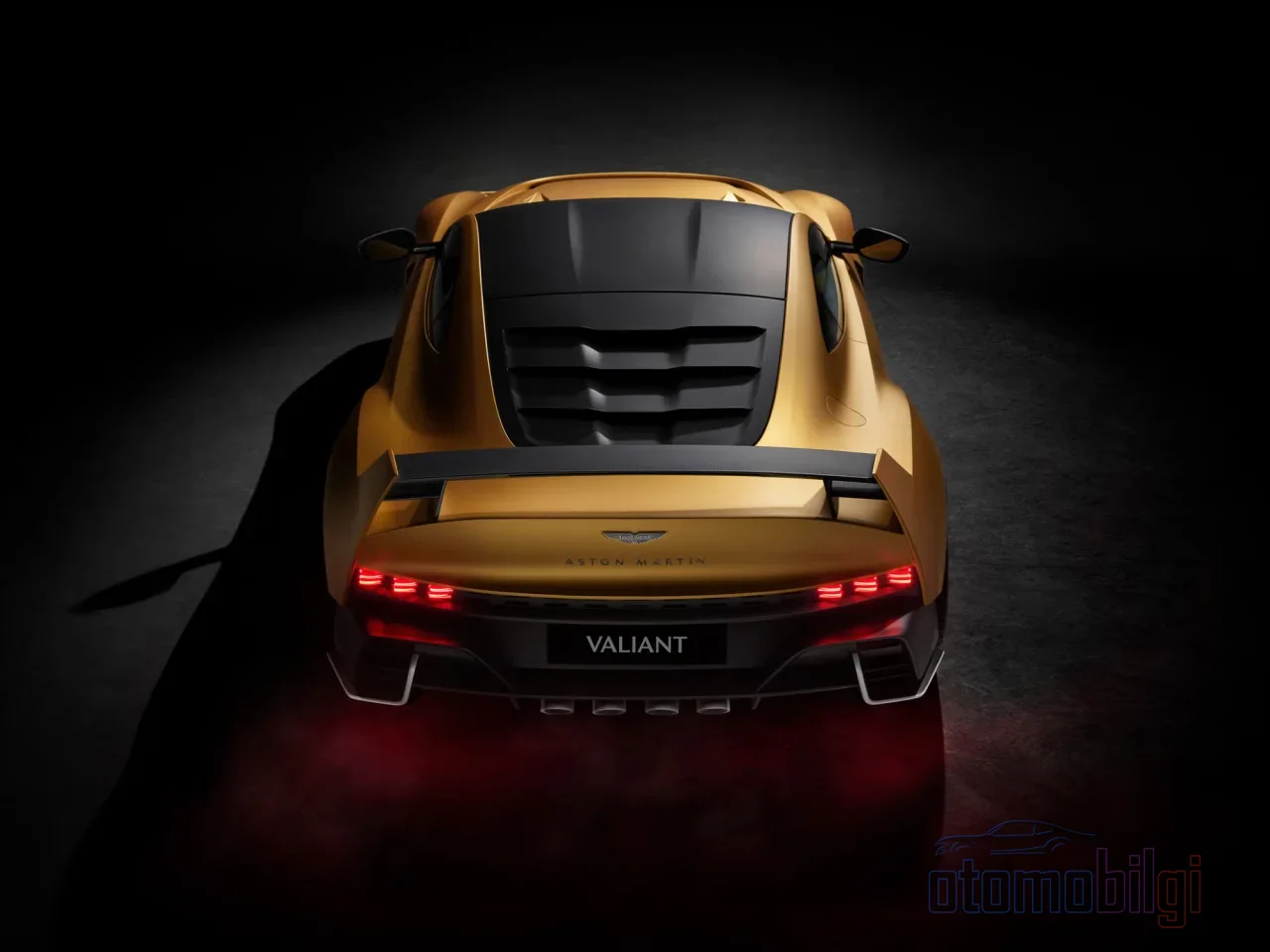
The Valiant's body takes its inspiration from the Aston Martin V8 race cars of the 1970s and 80s, particularly the race car of that era nicknamed Muncher. The 70s-inspired rear spoiler, front splitter and carbon fiber aero covers are a modern interpretation of this heritage. The body panels, made entirely of carbon fiber, are mounted on a lightweight bonded aluminum chassis.
The result is not just but measurable aerodynamic efficiency: the comprehensive aero package generates a total of 383 kg of downforce. This figure is a serious number for a front-engined road car with a fixed wing. The increase in downforce raises the tires' pressure on the road, and thus their grip potential, at high speeds; the trade-off is drag and therefore top speed. The Valiant is a car that has deliberately set this balance in favor of the track.
Weight Gains: A Kilogram by Kilogram Calculated Diet
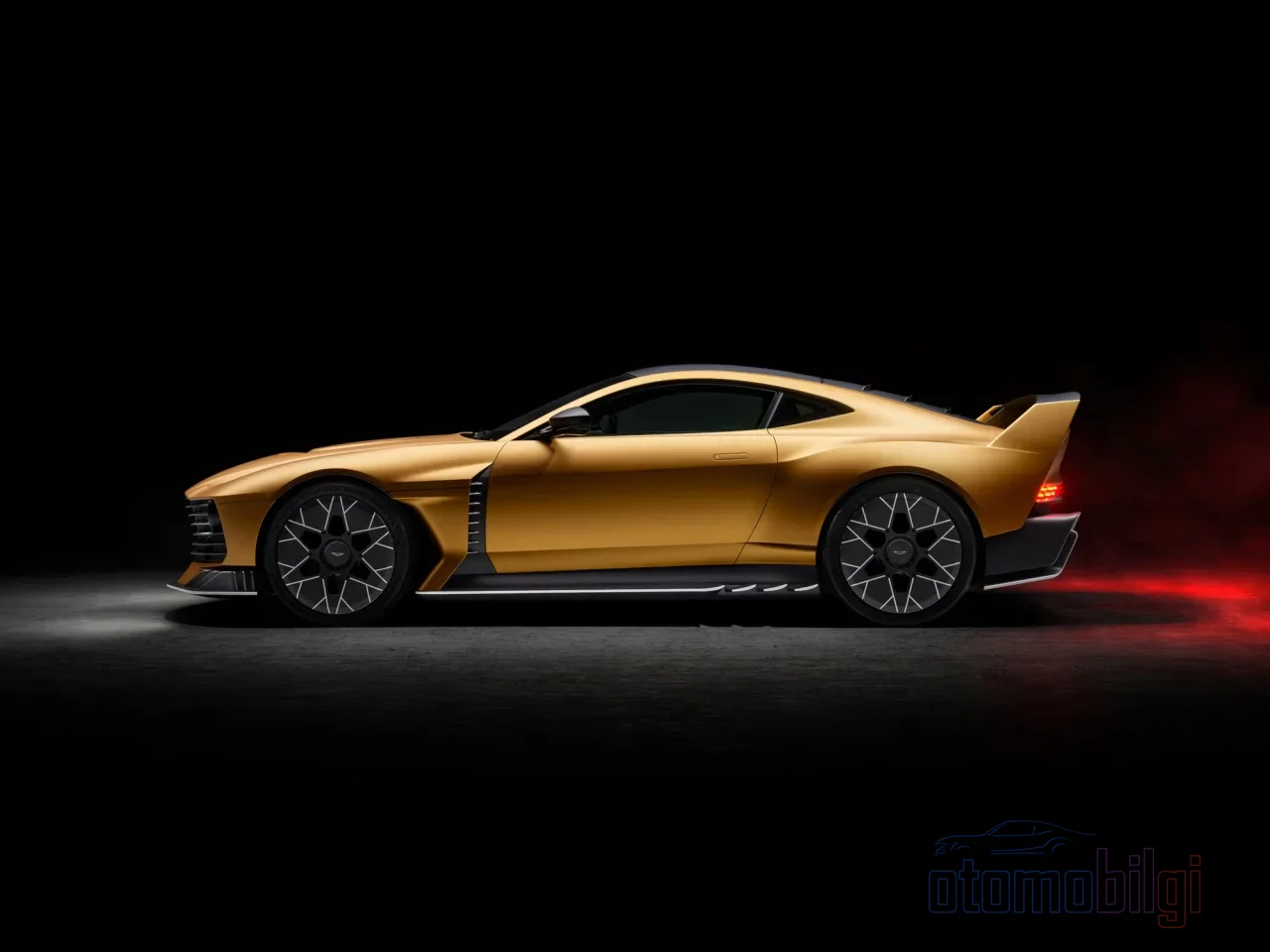
The other element that is as decisive in the Valiant's engineering identity as the engine is mass management. The car's kerb weight is 1,695 kg; to reach this figure, a serious weight-saving program was applied on top of the Valour. One of the most striking gains is in the magnesium wheels: magnesium is a metal 1.5 times less dense than aluminum, and these wheels provide a total of 14 kg of unsprung mass savings. The magnesium wheel and torque tube package together brought a reduction of 24.6 kg compared to the previous model.
The list doesn't end here: the lithium-ion battery alone saves 12.5 kg. The doors, center console and seat frames are made of carbon fiber. The first road-approved Aston Martin half cage is made of high-strength steel using powder coating technique and significantly increases chassis rigidity; Multimatic-produced four-point racing harnesses are offered as an option.
Chassis, Brakes and Suspension
Low mass is only enough up to a point; the real issue is being able to control it. In the Valiant, this job is entrusted to Multimatic's Adaptive Spool Valve (ASV) dampers. Since the compression and rebound settings can be adjusted independently, the car can be set up for both road and track use. On the braking side, 410 mm diameter, six-piston front carbon ceramic discs and 360 mm diameter, four-piston rear carbon ceramic discs do the job. The tires are 275/35 R21 on the front axle and 325/30 R21 on the rear axle; the titanium quad-exit exhaust system contributes to both mass and the sound character.
Interior: A Cockpit with Everything Excessive Removed
When you step into the interior, the Valiant's philosophy first meets you as simplification. The steering wheel was designed specifically for the Valiant and is deliberately bare: no buttons, no stalks, no other controls. Alcantara and semi-aniline leather finishes come together with a machined aluminum hub. The drilled steel pedals allow heel-and-toe downshifting, that is, matching revs by using throttle and brake at the same time.
The summary of this cockpit philosophy is this: anything that would distract the driver has been removed, leaving behind only mechanical feel. No screen is added here, no settings menu there; because the most legitimate thing to do inside the Valiant is drive.
Valiant, Vanquish and Valhalla: Three Different Answers from the Same Marque
Aston Martin's current lineup actually represents three different philosophies of the supercar world at once, and to understand the Valiant's position, these three need to be put side by side.
- Vanquish: A refined grand tourer that continues the flagship formula. Comfort and long-distance capability come first; it is not a track-focused weapon.
- Valhalla: A new-generation mid-engined, hybrid supercar fed by Formula 1 philosophy. Active aerodynamics and automated power delivery represent a technical direction that is the exact opposite of the Valiant's.
- Valiant: Front-engined, rear-wheel drive, manual gearbox and track-oriented. Not digital performance metrics, but mechanical connection and emotional feedback take priority.
In other words, in a segment dominated by hybrid power units approaching a thousand horsepower and millisecond gear changes, the Valiant deliberately answers a different question: not the fastest lap time, but the most intense driving experience. The Valen, introduced in 2026 and pairing the same 5.2-liter V12 with 850 PS and an 8-speed automatic, took over the marque's superior power claim; but the Valiant's manual approach remained in its own league, outside the power race.
Aston Martin Valiant Technical Specifications Table
| Specification | Value |
|---|---|
| Engine | 5.2 L (5,203 cc) twin-turbo V12 |
| Power | 745 PS (735 hp) @ 6,500 rpm |
| Torque | 753 Nm @ 5,500 rpm |
| Transmission | 6-speed manual (Graziano, transaxle) |
| Differential | Mechanical limited-slip |
| Downforce | 383 kg |
| Kerb weight | 1,695 kg |
| Brakes | Front 410 mm / Rear 360 mm carbon ceramic |
| 0-100 km/h | Not announced by the manufacturer |
| Production count | 38 units (all allocated) |
Note: There is no primary manufacturer-stated value for the 0-100 km/h acceleration, top speed and official sales price; therefore, third-party estimates were not included in the table. The price information of around 2.5 million dollars circulating on social media also does not constitute an official source, so it is not presented as verified data.
Production of 38 Units and the Valiant's Value
Introduced in June 2024 and making its dynamic debut at Goodwood, the Valiant was produced in only 38 units worldwide, and all examples were allocated in advance. Deliveries continue as of 2026: within the year, a second Valiant was delivered in Monaco, and the sole Canadian allocation also reached its owner. This delivery pace shows that the car lives its life not as a collection piece, but as a genuinely used track-oriented machine.
The short answer is this: The Aston Martin Valiant is a road-legal, track-focused supercar powered by a 5.2-liter twin-turbo V12 producing 745 PS and 753 Nm of torque with a six-speed manual transmission, equipped with an aero package generating 383 kg of downforce, weighing 1,695 kg, and produced in only 38 units. The aim of this formula is not simply to be fast, but to place the driver right at the center of the process. Automotive history adds another representative of great power with a manual transmission every year; and the Valiant holds one of the most treasured spots on that list.