Porsche 911 GT3: A Naturally Aspirated Beauty
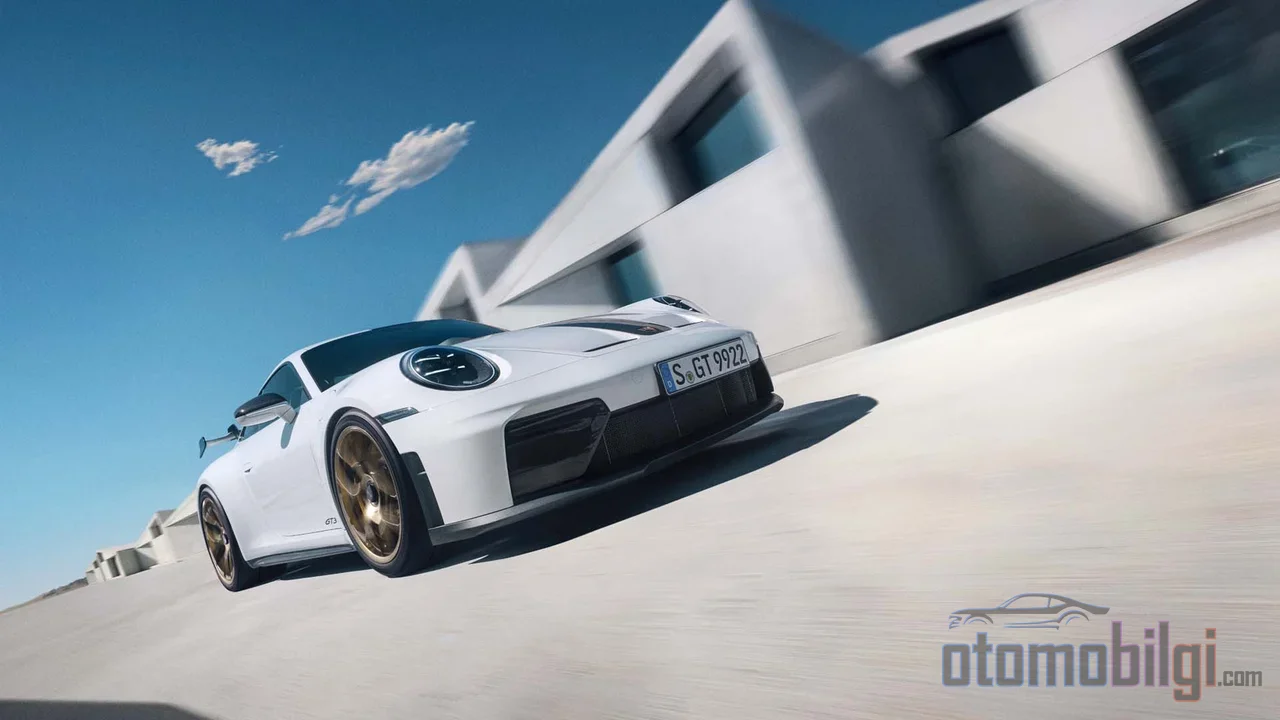
Power, torque, and rev balance are engineering decisions; The 4.0-liter naturally aspirated Boxer engine of the Porsche 911 GT3 still defends that same decision in an era where turbocharging has taken over nearly the entire supercar world. While turbocharged and hybrid rivals climb above 700, 800, 1000 horsepower, the GT3 stays alive with a flat-six that revs up to 9,000 rpm. This is not a matter of pride; there are measurable engineering reasons. And these reasons are being pushed a little harder every year.
The current 992 GT3: The Figures of the 4.0 Boxer Engine
At the heart of the current 992 generation GT3 lies a naturally aspirated flat-six engine with a displacement of 3,996 cc. Porsche gave this unit the MA2.75 code; a DOHC 24-valve structure with direct injection, aluminum block and heads. Power is produced around 8,400-8,500 rpm: 503 hp (510 PS). Torque is 470 N⋅m and peaks at 6,250 rpm. The redline begins at 9,000 rpm.
This distribution looks nothing like a modern forced-induction engine. A turbocharged engine delivers torque early and abundantly at low revs; the GT3's naturally aspirated unit, on the other hand, spreads its power across the top of the rev range. The driver keeps the throttle open up to 9,000 and uses the engine to its fullest. The 6-speed manual gearbox, available instead of the PDK, accentuates this character even further; the 7-speed dual-clutch PDK is the practical way to never let revs drop in performance-oriented driving.
The performance figures are impressive too: 0-100 km/h in 3.4 seconds, top speed approximately 311 km/h. The 6:55.34 lap recorded by Lars Kern on the Nurburgring Nordschleife in September 2020 is tangible proof of how serious this package is on the track.
| Specification | Value |
|---|---|
| Displacement | 3,996 cc |
| Power | 503 hp (510 PS) @ 8,400 rpm |
| Torque | 470 N⋅m @ 6,250 rpm |
| Redline | 9,000 rpm |
| 0-100 km/h | 3.4 s |
| Top speed | ~311 km/h |
| Transmission | 7-speed PDK or 6-speed manual |
Highlights
- The 4.0-liter naturally aspirated Boxer engine revs up to 9,000 rpm
- 503 hp of power at 8,400 rpm, torque peaks at 6,250 rpm
- Nurburgring lap time: 6:55.34 (Lars Kern, 2020)
- Transmission choice: PDK or 6-speed manual
- The GT3 RS generates 860 kg of downforce at 285 km/h
No Turbo, Variable Intake Instead: How the Power Is Achieved
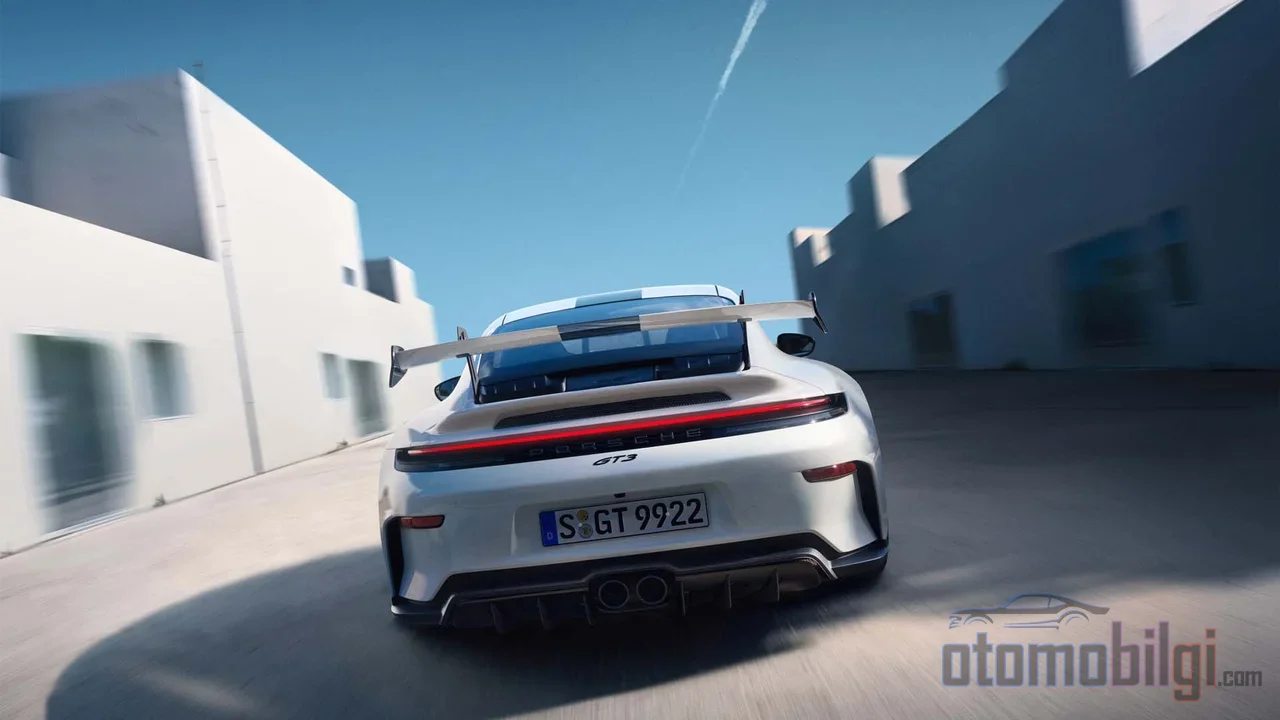
Getting more than 125 hp per liter from a naturally aspirated engine means serious engineering without forced induction. Porsche's method focuses on variable intake systems and high revs: minimizing friction, sharpening throttle response, and spreading the torque curve across a wide rev band. In other words, it substitutes the mid-range abundance of a turbo with top-end continuity.
Weight is also part of the equation. Porsche's reasoning is a clearly measurable equation: forced induction increases power but brings extra weight and cooling requirements to equalize torque. The naturally aspirated unit offers a lighter, more compact and cooler-running structure. The GT3's power-to-weight balance benefits from this lightness; and the ability to rev beyond 9,000 rpm is the result of racing car-level solutions in the pistons, connecting rods and valvetrain. In the 991 generation, titanium connecting rods and forged pistons were used to reach the 9,000 rpm threshold; this approach continued in the 4.0-liter generation as well.
From Mezger to MA2.75: The Engine's Family Tree
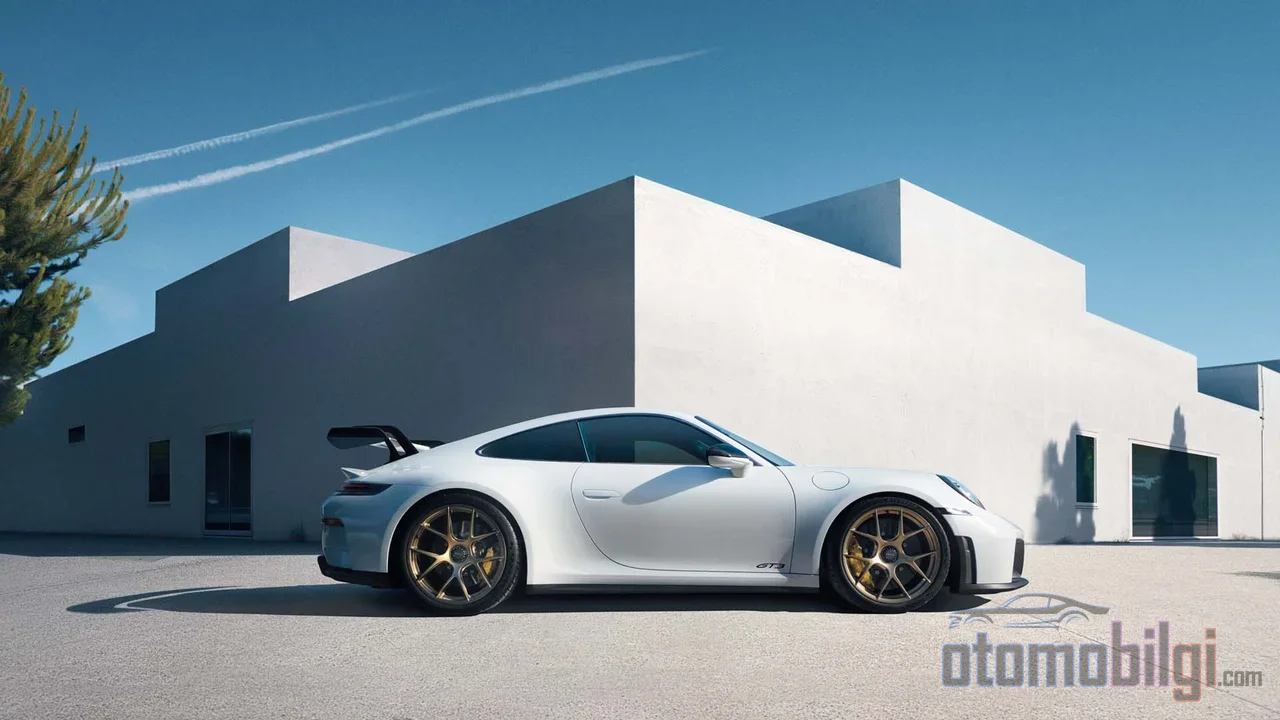
The GT3 name was born in 1999 with the 996 and has been carried with homologation logic ever since. The first GT3 engine was the road version of the engine designed by Hans Mezger that served in the 962 and 911 GT1 race cars; dry sump lubrication and an external oil tank were a racing heritage that prevented oil loss during sudden lateral loads on the track.
- 996 GT3: 3.6 liters, 360-380 PS, 1,380 kg; Walter Rohrl completed the Nurburgring in 7:56.
- 997 GT3 (2006): 415 PS and zero lift aerodynamics; the first GT3 with PASM.
- 991 GT3 (2013): 3.8 liters, 475 PS; PDK and rear-axle steering arrived.
- 991.2 GT3 (2017): A 4.0-liter engine derived from the GT3 R and Cup race cars, 500 PS, 9,000 rpm and the return of the manual gearbox.
- 992 GT3 (2021): Today's 503 hp unit based on the MA2.75.
This family tree has its setbacks too: in 2014, 785 vehicles were recalled due to a connecting rod bolt fault and fitted with new engines. It is a concrete example of how rigorous quality control a racing engine operating at the limits of series production requires in road use.
Chassis and Aerodynamics: Between Road Car and Track
The 992 GT3 has a double wishbone suspension of unequal lengths at the front, influenced by the 991 RSR race car; this architecture keeps the front wheel's camber angle better under load than a classic MacPherson setup. At the rear, the wing is attached to the body with a swan-neck mount: the underside of the wing stays cleaner and aerodynamic efficiency increases.
Development on the track side continues as well. The current standard GT3 inherited its sibling RS's suspension components; in particular, the aerodynamically improved front track control arms contribute directly to the GT3's road holding. For those who want more, there is the Manthey Kit: in road mode, 355 kg of total downforce at 285 km/h, and in track mode up to 540 kg.
Where Is the GT3 RS Headed?
The RS side of the same family takes aerodynamics to a different level. The 992 GT3 RS produces 860 kg of downforce at 285 km/h; nearly double the value of the previous RS. A wing that can be controlled from the steering wheel reduces drag on the straights while increasing load in corners, with a DRS-inspired approach. The 6:44.848 Nurburgring lap set by Jörg Bergmeister in October 2022 is the result of this approach. The GT3, on the other hand, offers a more balanced road-track package: it has a wing, but daily usability is still at the center of the design.
Is It Usable in Traffic? The Reality of Daily Use
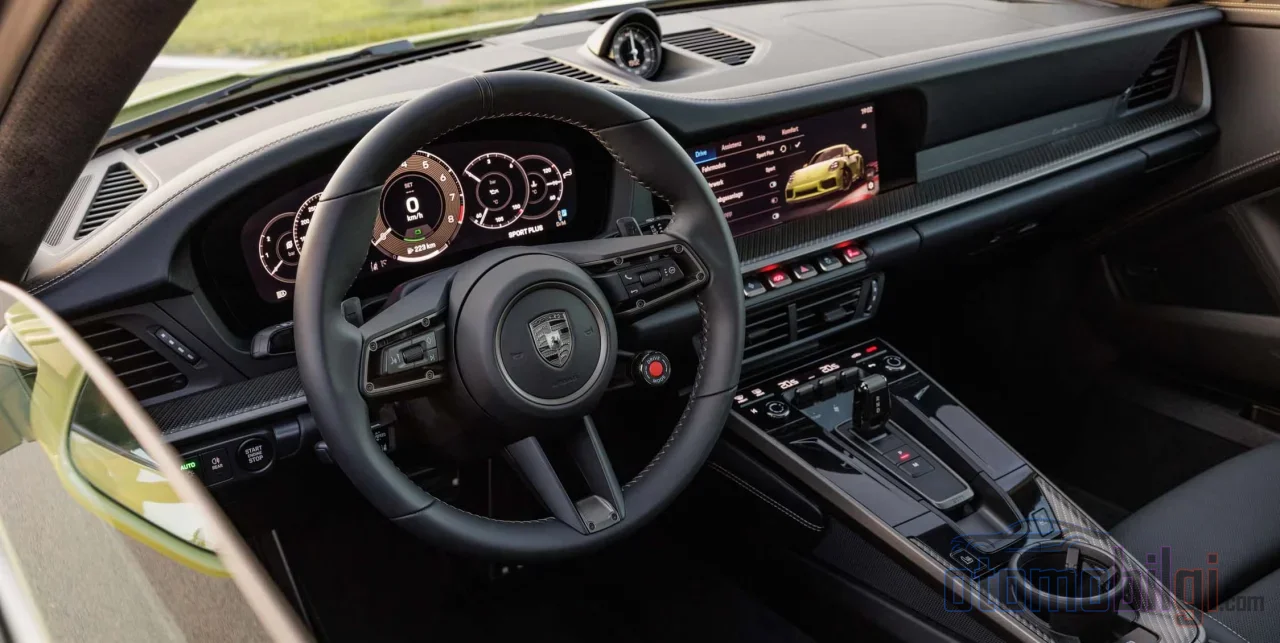
A 9,000 rpm engine and a race-derived chassis might seem like a contradiction in terms of daily use. The reality is more nuanced. In current GT3 reviews, steering precision, characterful sound and a surprising level of comfort are listed as positives; the cabin is considered functional and livable outside the track. With the PDK option, traffic is actually not as challenging as one might think.
There is a limit, though: on long journeys, the suspension firmness draws criticism, and the car does not offer as broad a spectrum of use as a versatile grand tourer like the Turbo S. In short, the GT3 is usable every day, but it sits at the firm end of the comfort scale; the buyer makes a conscious choice. The cabriolet-bodied GT3 S/C, offered for the first time (2027 model year), takes this dual balance one step further: mechanically a pure GT3 Touring, the S/C is priced from USD 273,000 with a fully automatic folding roof and lightweight construction.
How Long Will the Naturally Aspirated Engine Survive?
At present, the GT3 is one of the few naturally aspirated performance vehicles still on sale. There is also a dark shadow: reports attributed to Porsche's GT boss suggest the naturally aspirated 4.0's days may be numbered and the next generation could be forced induction; there is also a rumor circulating that a facelift prototype was spotted with a claimed turbocharged 3.6-liter engine, but none of these have been confirmed yet. At the same time, the 2026 GT3 R race car continues the naturally aspirated platform: engine speed rises to 9,250 rpm on the track, producing around 565 hp, with individual throttle bodies per wheel and direct injection.
The opposing view is strong too: as emphasized in MotorTrend's first test, in the era of forced induction and hybrids, no manufacturer could easily afford a super sports car producing only 502 hp. This figure has become a matter of character: not a lack of power, but purity of power delivery and response.
Conclusion: Why Is the GT3 Still Naturally Aspirated?
The answer to this question comes down to three measurable reasons: lower weight, uninterrupted and predictable power delivery, and a package freed from the extra mass and cooling load brought by forced induction systems. The GT3 is not designed for maximum horsepower, but for the match between power, chassis and driver; a 0-100 time of 3.4 seconds and a top speed of 311 km/h show this is no weak compromise. The naturally aspirated engine here is not nostalgia, but a proven engineering choice. It is unknown when emissions rules will end this choice; but today, this engine revving to 9,000 rpm stands as the clearest proof of what a naturally aspirated engine can do in series-production road cars.
Sources
- Porsche 911 GT3 - Wikipedia
- 911 GT3 S/C with a high-revving naturally aspirated engine
- 2027 Porsche 911 GT3 S/C - Porsche Newsroom
- The new 911 GT3 - Porsche Newsroom (PDF)
- The 911 GT3 R (2026) - Porsche Racing
- 2027 Porsche 911 GT3 Review, Pricing, and Specs
- Why Porsche Won't Turbocharge the Next 911 GT3 and GT3 RS
- 2026 Porsche 911 GT3 First Test
- 2026 Porsche 911 GT3 review
- Next-Gen Porsche 911 GT3 Might Be Turbocharged