Ford Mustang GTD: 800 Horsepower with a Supercharged V8

Breaking the seven-minute barrier at the Nurburgring Nordschleife in a Mustang was not a claim anyone would have taken seriously a few years ago. The Ford Mustang GTD did it; and on top of that, with its race-derived suspension co-developed with Multimatic, active aerodynamics, and a 5.2-liter supercharged V8, it stepped outside the traditional muscle car formula. So how does a track car put its plate on and go out on the street? On this page, we break down the GTD's engineering piece by piece.
What Is the Mustang GTD, and How Does It Differ from the Standard Mustang?
Ford positions the GTD as a performance car that is street legal, yet engineered to a level where it can race on the track. The short formula is this: The technology of the Mustang GT3 race car is wrapped in a carbon fiber Mustang body and released onto the road. The GTD, according to Ford, is the most track-focused production Mustang ever built.
The difference from the standard model also becomes clear in the numbers. The ordinary Mustang EcoBoost, with its 2.3-liter turbocharged four-cylinder engine, produces 315 hp, while the GT produces 480-486 hp with the 5.0-liter Coyote V8. The GTD, however, plays in a completely different league: A dry-sump 5.2-liter supercharged V8 derived from the GT500's Predator V8 holds the title of the most powerful Mustang to come out of the factory. With carbon fiber body panels and magnesium wheels, the car's weight distribution is balanced at approximately 50/50.
Highlights
- 815 hp of power at 7,400 rpm; 664 lb-ft of torque at 4,800 rpm
- Top speed: 202 mph (approximately 325 km/h)
- Multimatic Adaptive Spool Valve (ASV) semi-active suspension
- A DRS-supported active aerodynamics system
- The first American production car to dip under seven minutes at the Nordschleife, with 6:40.835
The 5.2-Liter Supercharged V8: 815 Horsepower and 664 lb-ft of Torque
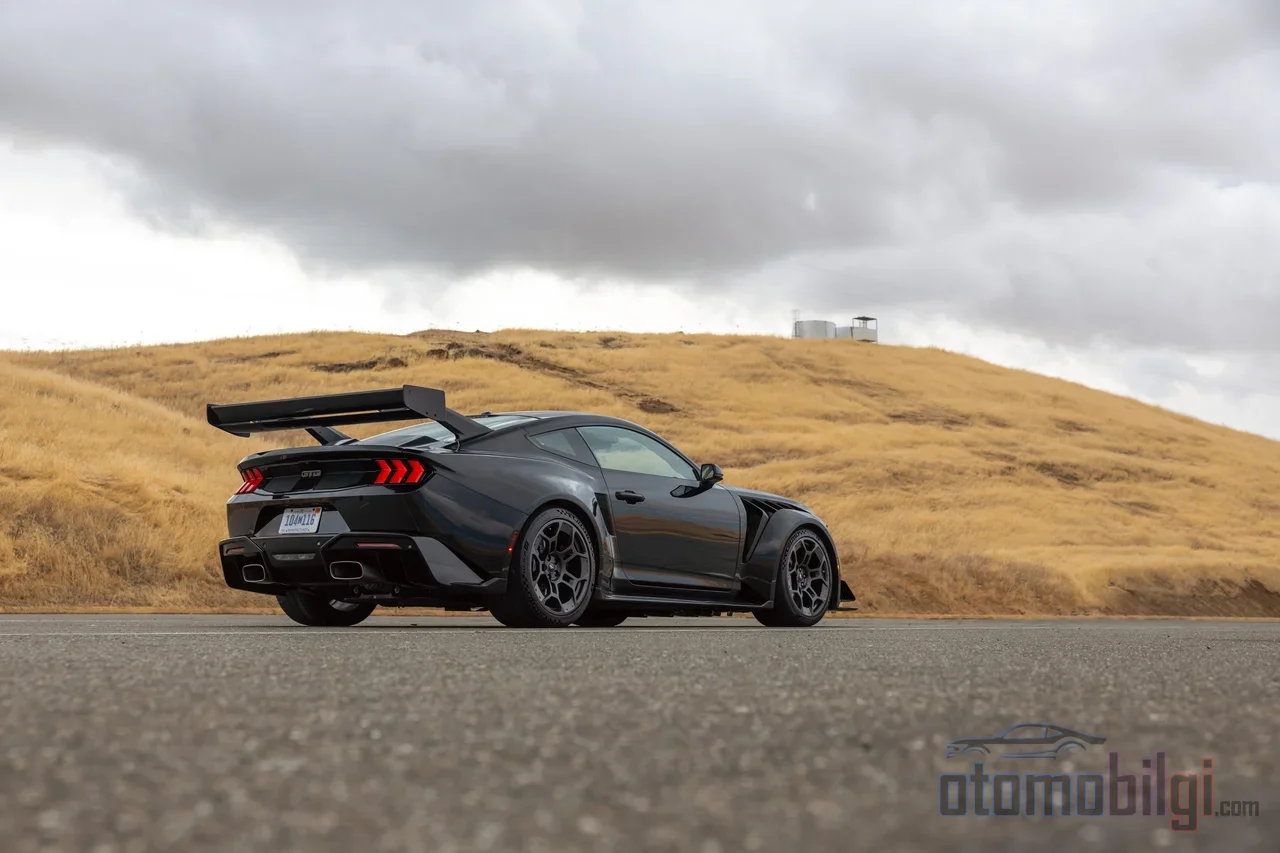
The heart of the GTD is a 5.2-liter V8 fed by a mechanical compressor (supercharger). According to Ford's official figures, the engine produces 815 hp at 7,400 rpm and 664 lb-ft of torque at 4,800 rpm. It is also known that the engine's revs are limited to around 7,500 rpm; and the dry-sump lubrication system is the solution required to maintain oil pressure in a track car subjected to high lateral accelerations.
It departs from the classic Mustang layout in power transmission: The 8-speed dual-clutch transmission (DCT) is mounted on the rear axle. This layout both improves weight distribution and enables a clutch speed comparable to rapid gear changes. The result is the top speed Ford announced as 202 mph (325 km/h).
| Model | Engine | Power |
|---|---|---|
| Mustang EcoBoost | 2.3L turbo I4 | 315 hp |
| Mustang GT | 5.0L Coyote V8 | 480-486 hp |
| Mustang GTD | 5.2L supercharged V8 | 815 hp |
The Multimatic Collaboration: How Does the Semi-Active Suspension Work?
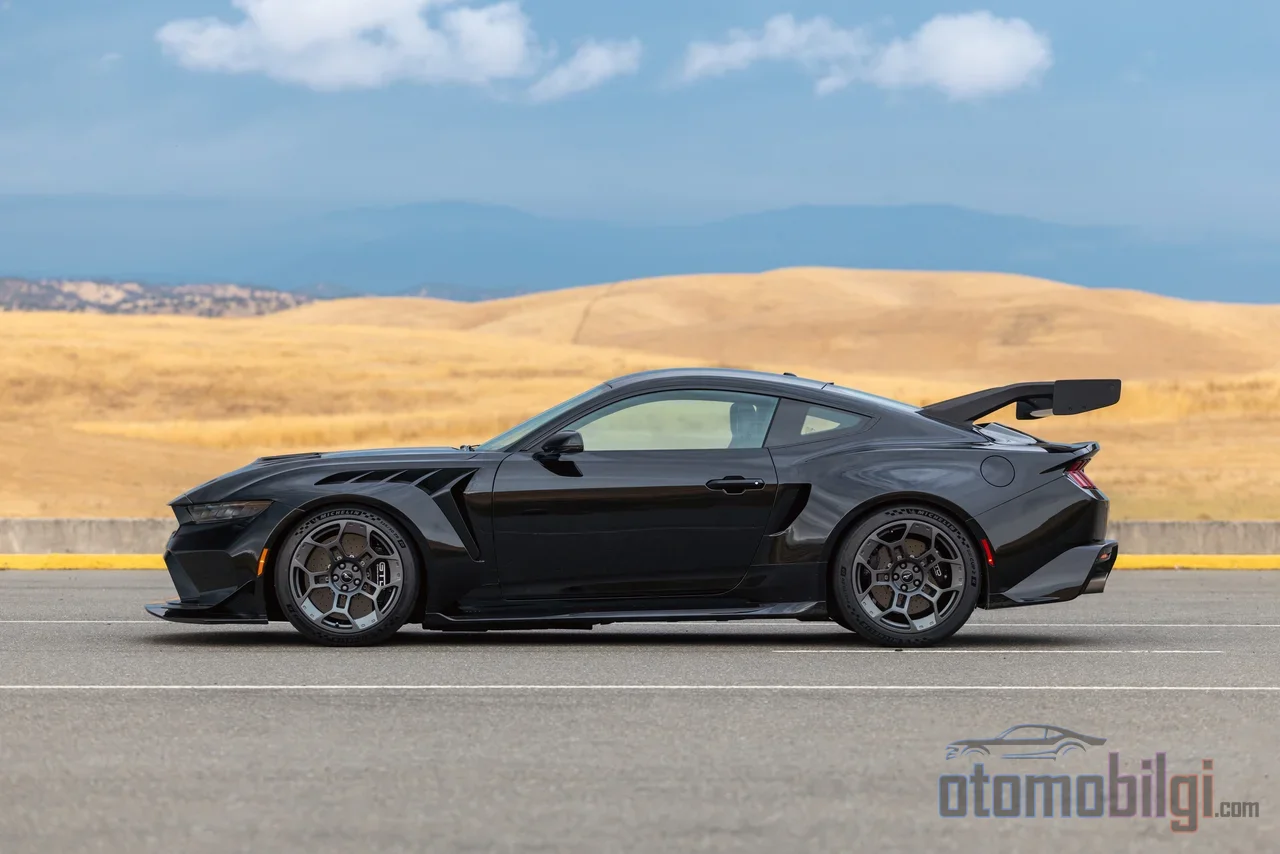
The layer that truly separates the GTD from an ordinary powerful Mustang is the suspension. Ford co-developed the GTD with Multimatic, the renowned suspension supplier of the racing world. The dampers use Multimatic's patented Adaptive Spool Valve (ASV) technology: The precision of DSSV spool valve damping is combined with continuous electronic adaptive control. In practice, this means the damper can switch from its softest to firmest setting in around 15 milliseconds - on track use, body control is instantly recalibrated as the surface grip changes. It is stated that Ford has pushed beyond the limits allowed in the racing world with these dampers.
The rear axle features a race-proven pushrod-actuated setup. Multimatic's Dual Height/Rate (DHR) system adjusts both ride height and spring rate via a hydraulic locking mechanism: While driving at a reasonable height for the road, it is possible to lower the car and stiffen the springs for a track day. In short, the GTD's suspension is the engineering answer to combining two different worlds in a single chassis.
Active Aerodynamics: DRS: Speed on the Straights, Grip in the Corners
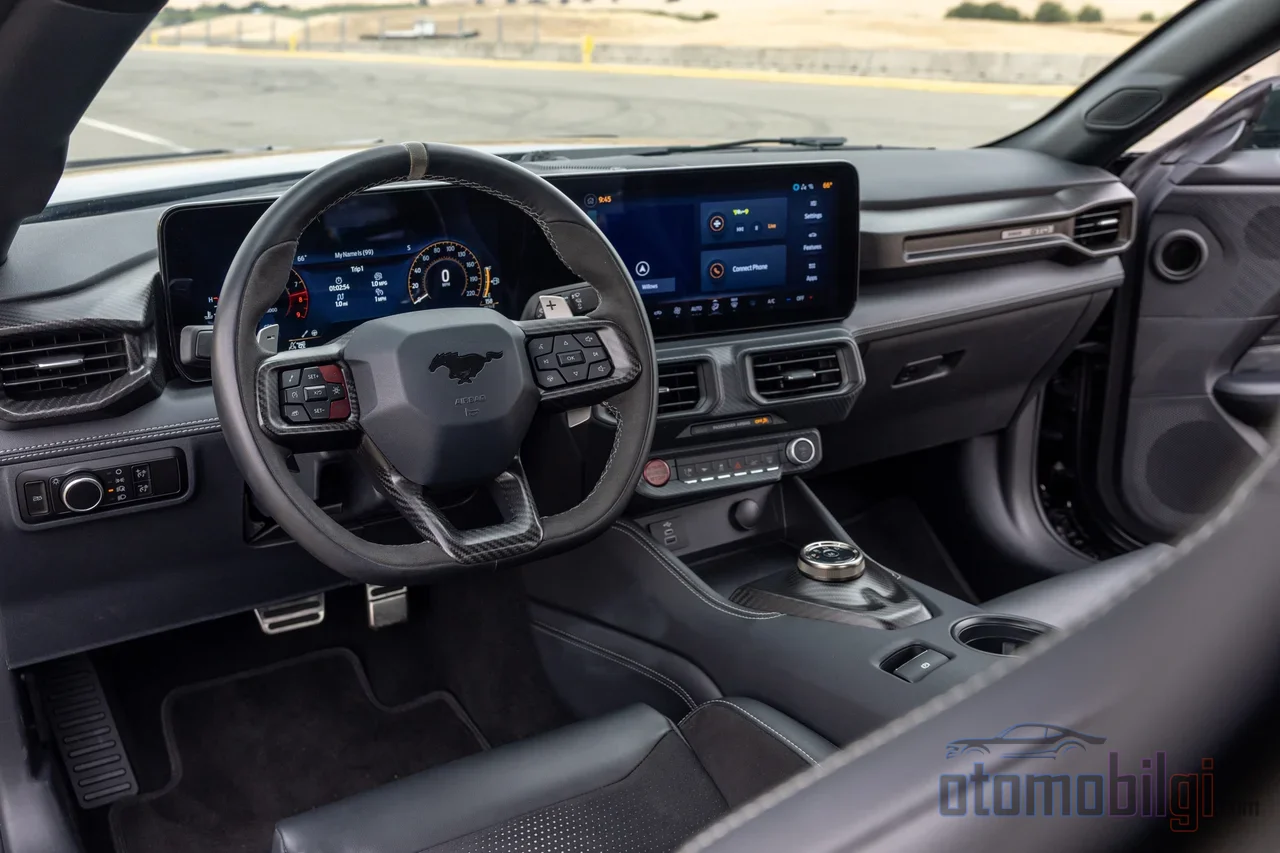
At the heart of the GTD's aerodynamics is a concept familiar from Formula 1: Drag Reduction System (DRS). A hydraulic system can change the angle of the rear wing. On the straights, the wing angle is reduced to cut drag, enabling a top speed of 202 mph; before entering a corner, the system restores downforce to keep the 815 hp of power under control. The active aerodynamic elements at the front and rear work together - a capability not even found on most race cars.
The logic chain is simple but effective: As downforce increases, cornering speed rises, but drag also increases and straight-line speed drops. A fixed aerodynamic setup must compromise between these two goals; an active system can demand both in every sector. On a long and dual-character track like the Nordschleife, this advantage translates directly into lap time.
The Nurburgring Target and the 6:40.835 Lap
Ford's initial target was clear: To break the seven-minute barrier on the Nordschleife. The first GTD achieved this, becoming the first American production car to dip under seven minutes. The real leap came in April 2026: The Mustang GTD Competition, driven by Multimatic Motorsports, completed the Nordschleife in 6:40.835. With this lap, the GTD overtook the Manthey-prepared Porsche 911 GT3 RS, taking a place among the fastest lap times on the track.
Meanwhile, special attempts made with limited-production GTDs are also drawing attention: A 1,000 hp Whipple supercharged, aerodynamically enhanced GTD is known to have recorded an unofficial lap at around 6:41.74 - this non-factory figure is significant in demonstrating the potential of the GTD platform, but should not be read as an official Ford achievement.
Comparison with the Corvette ZR1: GTD on the Track, ZR1X on the Straights
The two lobes of the American supercar scene can be compared clearly using Nordschleife data. Records show the Chevrolet Corvette ZR1 completed a 6:50.763 lap, while the ZR1X holds the record with a 6:49.275 lap. The GTD Competition's 6:40.835 is markedly faster than both. However, the picture is not one-sided: The ZR1X's estimated 233 mph top speed exceeds the GTD's 202 mph. So the Corvette wins on straight-line speed, while the GTD is ahead on lap time.
Test track comparisons also reveal the character of the two cars: On the short circuit, the GTD reaches higher apex speeds and signs off a 1:15.61 lap with a 137 mph top speed; both cars promise driver-focused fun. But in terms of positioning, the two should not be counted in the same category. The ZR1 sits at the top of a natural hierarchy as the pinnacle of the Corvette family; the GTD, on the other hand, is a deliberately detached, bespoke construction with a semi-race car character, cut from the standard Mustang family. Reading the GTD as "one trim above the Mustang" is to overlook the car's engineering identity.
Is the GTD Really Road Legal, and How Many Are Being Produced?
Yes - the GTD is a car that can be licensed and driven on the street. Road legality means that solutions such as the adaptive control in the suspension or the hydraulic system in the aerodynamics are not cosmetic marketing but genuinely working mechanisms: The systems keep functioning both in track mode and in everyday use.
On production numbers and price, Ford prefers a deliberate ambiguity: Production is stated to be "very limited," and a registration list that gathers demand is being managed. No concrete figure is disclosed; which places the GTD in a class of car to be evaluated not on a price-performance scale but as a work of engineering.
Assessment: How Was Track Engineering Adapted to the Road?
The short answer to the question is this: The Mustang GTD is a road-legal track car that carries suspension, drivetrain, and aerodynamic solutions born from the GT3 racing program into a carbon fiber body through series production processes, produces 815 hp and 664 lb-ft of torque, features DRS-assisted active aerodynamics and Multimatic ASV suspension - and it proved this at the Nordschleife with a 6:40.835.
The GTD's real achievement lies not in a single figure but in its balance decisions. Not semi-solid, but semi-active suspension; not fixed, but variable aerodynamics; not a standard muscle car gearbox, but a DCT on the rear axle. Every decision is aimed at solving the duality of "race on the track, live on the road" in a single package. The Corvette ZR1 may be faster on the straights; but as of 2026, when lap times are discussed, the fastest card among American automakers at the Nordschleife is the Mustang GTD.
Sources
- 2026 Ford Mustang GTD | Performance Supercar
- Adaptive Spool Valve Dampers - Multimatic
- The Ford Mustang GTD Is the Most Powerful Factory-Built Mustang Ever
- Ford Mustang GTD's suspension is the stuff of race cars
- American Psychos: Corvette ZR1 vs Mustang GTD
- 2026 Ford Mustang GTD Review, Pricing, and Specs
- Ford Mustang GTD: Specs, Price, Performance