Porsche 911 GT3 RS: Racing Physics in a Road Car
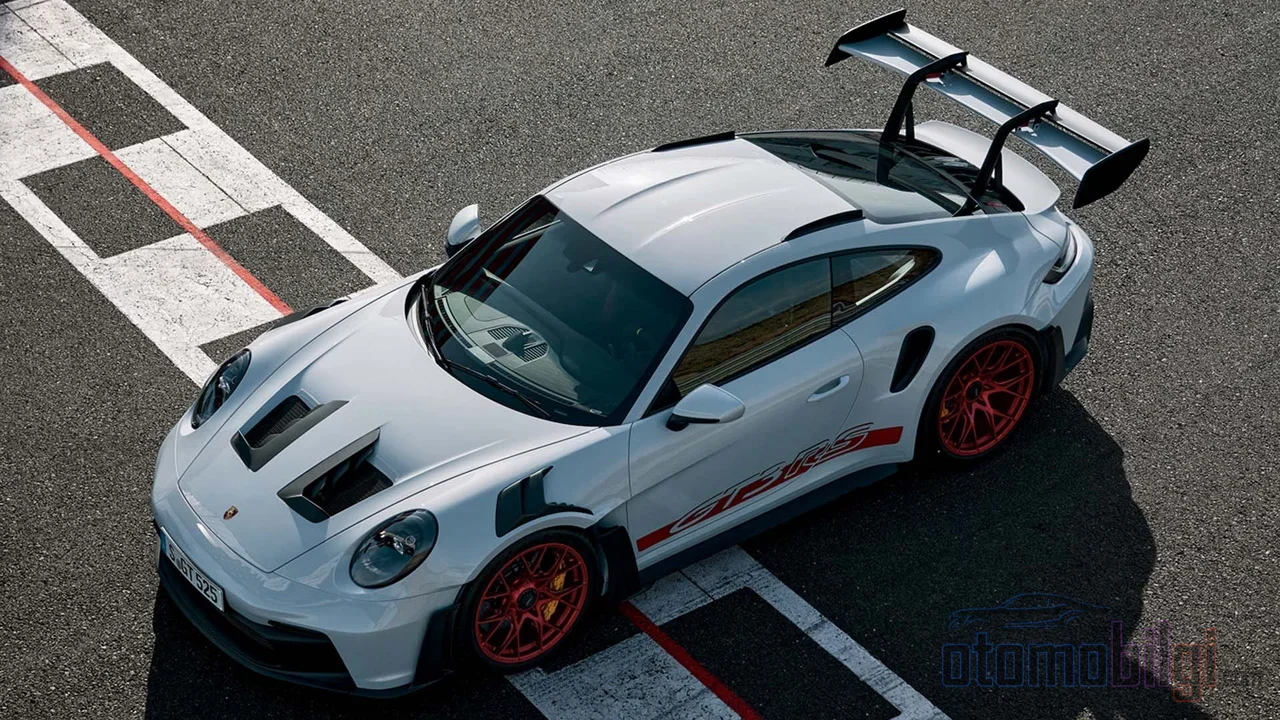
What happens when the downforce a road car generates approaches its own weight? The Porsche 911 GT3 RS is a machine designed precisely as the answer to that question. Producing 860 kg of downforce at 285 km/h, this car grips the road at the same speed almost as if it were pressing its own weight into the ground. So with a GT3 already in existence, and with its naturally aspirated engine more than satisfying the passion for the track, where does the RS model derive its reason for being? The answer is not in the engine; it lies in the aerodynamics, the chassis settings, and the car's character being entirely track-focused.
On this page, we will examine on a data-driven basis the engineering rationale behind the GT3 RS being a track-focused road car, from its active aerodynamics system to its suspension settings, and from its differences from the GT3 to its Nurburgring lap times.
Engine: High-Revving Naturally Aspirated Character
The 992-generation GT3 RS carries a 4.0-liter, turbo-free naturally aspirated engine, a Boxer Engine. It produces 525 PS (518 hp) at 8,500 rpm and 465 Nm of torque at 6,300 rpm, with the rev counter extending up to 9,000. The performance figures are clear: 0-100 km/h acceleration in 3.2 seconds, top speed of 296 km/h. Its combined consumption in the WLTP cycle is 13.2 l/100 km, with CO2 emissions at a level of 299 g/km.
Viewed on their own, these figures might lead one to interpret the GT3 RS as merely a power increase. Indeed, its sibling, the 911 GT3, uses the same 4.0-liter naturally aspirated Boxer Engine and, with 510 PS and torque values ranging between 450-470 Nm, offers a similar 9,000-rpm character. So in the RS's story, the engine is not the lead role. The difference lies in how the car transfers this power to the road, and how much of it it presses down while doing so.
Highlights
- 4.0-liter naturally aspirated Boxer Engine, 525 PS @ 8,500 rpm, character extending up to 9,000 rpm
- 860 kg of downforce at 285 km/h; roughly three times that of the 992 GT3
- The first 911 in the road car market to use an F1-style DRS system
- Nurburgring Nordschleife standard lap time: 6:49.328
- With the Manthey Kit, the lap time drops to 6:45.389
Aerodynamics: DRS System and 860 Kilograms of Downforce
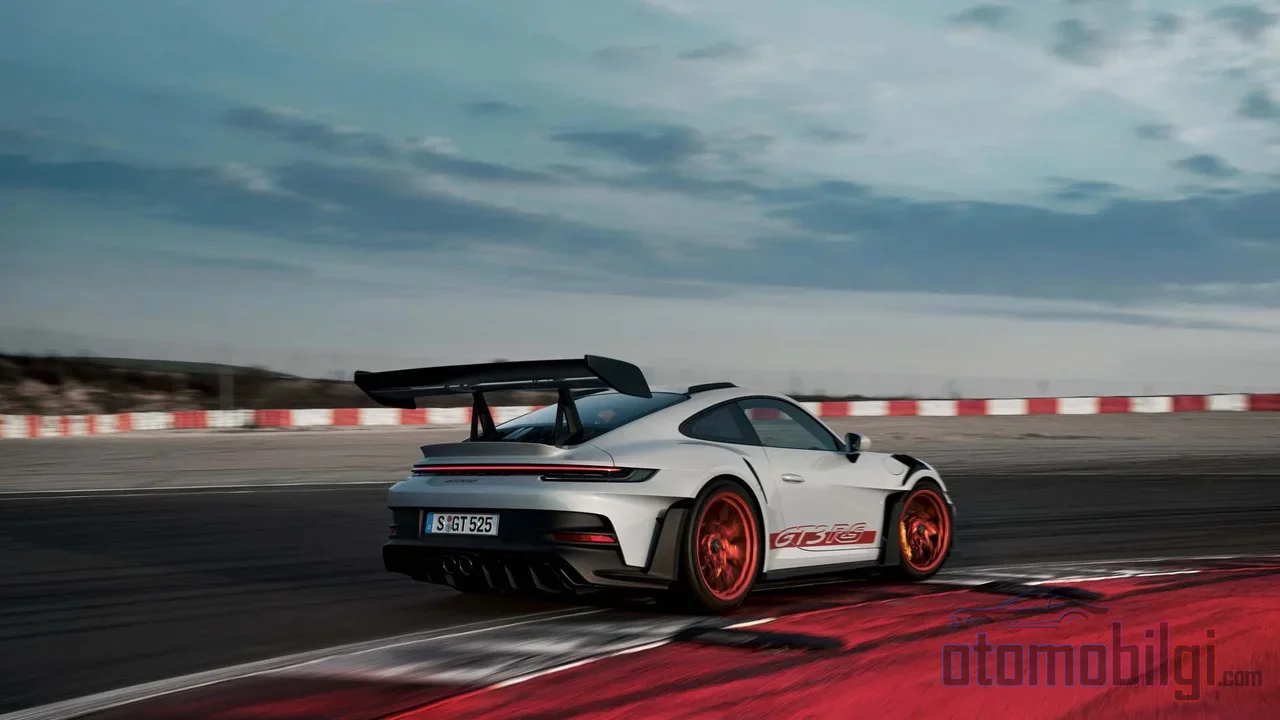
This is where the GT3 RS's reason for being begins. The car is the first 911 in the road car market to use a Formula 1-style DRS (drag reduction system). The logic of the system is simple but its impact is significant: On straight sections, the angle of the two-piece rear spoiler and the active elements in the front fenders is automatically changed to reduce air resistance; at the entry to a corner, the spoiler returns to its full downforce position. Developed with roots in the world of motorsport, this function engages automatically in high-downforce mode.
The numbers show the seriousness of the system. The GT3 RS produces 409-410 kg of downforce at 200 km/h and 860 kg at 285 km/h. This value is roughly twice that of the previous generation, the 991 GT3 RS, and three times that of the current 992 GT3. For a road car, this means cornering speeds directly increase, braking distances shorten, and at high speed the car puts more vertical load on the wheels.
The Three Jobs of the Rear Spoiler
The two-piece rear spoiler is not designed for a single job, but for three separate tasks. It supports the front-rear balance by increasing downforce in corners and fast direction changes; it acts as an air brake under hard braking, providing aerodynamic deceleration to the car; and on straights, together with DRS, it reduces drag to serve speed. The wing elements are continuously adjustable and position themselves automatically for maximum downforce.
Front Section and Balance Management
The system does not stay at the rear only. The front diffusers feature movable elements that work in harmony with the rear spoiler; these elements maintain the front-rear aerodynamic balance. The S-Duct structure at the front and the single radiator concept, together with the body at Turbo width, aim for a balanced pressure distribution at high speed. In other words, in the GT3 RS, aerodynamics is not the success of a single part; it is the whole of a system working together from front to rear.
Chassis and Adjustability: Track Setup from the Steering Wheel
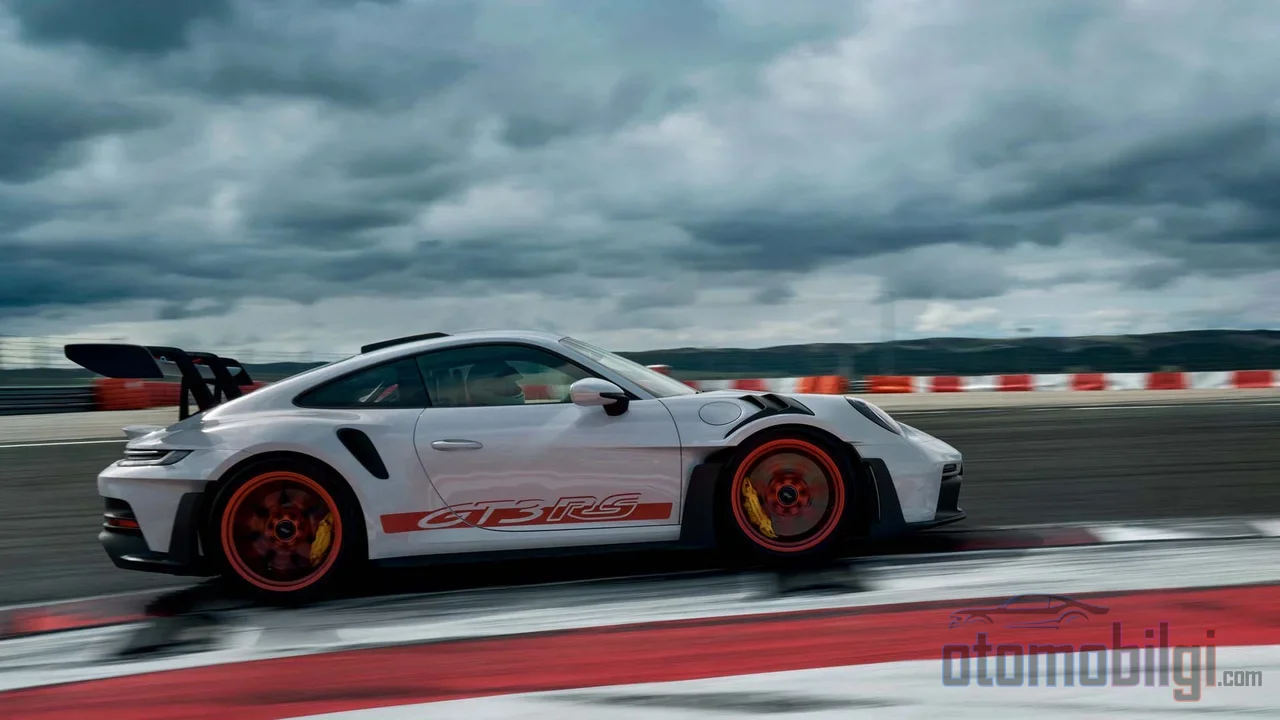
Setting up the aerodynamics correctly is not enough; the car also needs to carry it mechanically. In the GT3 RS, the PASM (Porsche Active Suspension Management) system can be adjusted directly via the PASM button on the steering wheel in Track mode. The driver can change the suspension character according to the situation on track; this also gives the car the flexibility to soften the stiffness when returning from track to road.
The factory camber setting is approximately -2.6 to -2.8 degrees at the front and varies according to ride height. This is a relatively aggressive value to protect the contact surface of the front tires in corners, and one of the tangible indicators of the car's track priority. The same priority exists in the GT3 RS's component selection: Tires, brakes and suspension parts wear faster and maintenance intervals shorten. This is a cost for daily use; but for track performance, it is an accepted price.
What Is the Difference Between the GT3 and GT3 RS?
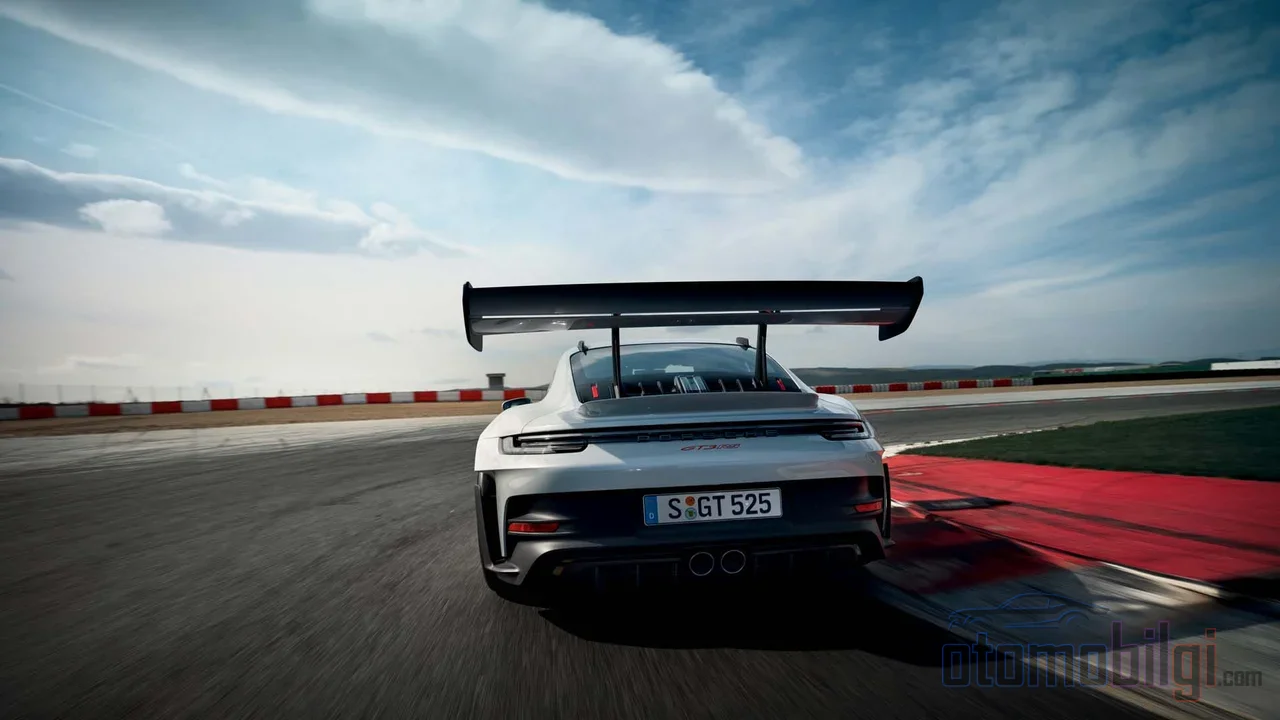
The difference between the two models lies more in character than in horsepower. The GT3, with its fixed rear spoiler body and 510 PS naturally aspirated engine, is positioned to balance track passion with daily use. The GT3 RS, with its active aerodynamics, much higher downforce and aggressive suspension settings, aims directly at lap times. In one, comfort and breadth of use come to the fore; in the other, track physics.
| Feature | 911 GT3 (992.2) | 911 GT3 RS (992) |
|---|---|---|
| Engine | 4.0 L naturally aspirated Boxer | 4.0 L naturally aspirated Boxer |
| Power | 510 PS | 525 PS |
| Torque | 450-470 Nm | 465 Nm |
| Aerodynamics | Fixed rear spoiler | Active system with DRS |
| 285 km/h downforce | About one third of the 860 kg | 860 kg |
| Nordschleife lap | 6:56.29 | 6:49.328 |
| WLTP consumption | 13.7-13.8 l/100 km | 13.2 l/100 km |
This table also determines the practical outcome. If lap time and track focus are the priority, the RS; if daily use, purchase and insurance costs are the priority, the GT3 is the more sensible choice. Compared to the RS, the GT3 is more comfortable, less extreme, and more flexible on the road. The RS, on the other hand, insists on making you feel its track character in every kilometer.
Nurburgring: Where Theory Turns into Seconds
The Nordschleife is where aerodynamic claims are measured. The standard GT3 RS set an official lap of 6:49.328 with Jorg Bergmeister at the wheel. The same-generation GT3, meanwhile, holds the manual-transmission production car record with 6:56.29. The roughly seven-second gap is too large to be explained by the 15 PS power difference; the real source is three times the downforce and a chassis adapted to the track.
A GT3 RS equipped with the Manthey track package, however, dropped to 6:45.389. The kit; includes aerodynamic and suspension components, and the brakes are optimized for the demands of track days. This lap, about four seconds faster than the standard car, shows how much room for development even factory settings leave.
Comparison with a Track Car: Where Does the RS Stand?
The limit test shows best that, despite its track character, the GT3 RS is still a road car: Thanks to its slick tires and greater aerodynamic load, the GT3 Cup race car is generally faster than the GT3 RS on most tracks. In other words, the RS is a design that takes the track logic of the series-production car world to its limit; while staying within homologation boundaries.
On the road side, the picture is balanced: The RS has a stiffer and more demanding setup than the GT3; it makes its character felt on long journeys and broken surfaces. The fact that its WLTP consumption is slightly lower than the GT3's (13.2 vs 13.7-13.8 l/100 km) is a concrete reflection of the DRS's drag-reduction effect.
Conclusion: Why Is the GT3 RS a Track-Focused Road Car?
The answer can be summed up in one sentence: The Porsche 911 GT3 RS, because it combines its 525 PS naturally aspirated engine with an active aerodynamic system that produces 860 kg of downforce at 285 km/h, a suspension adjustable from the steering wheel, and components engineered for track use. While the GT3 represents naturally aspirated character and balanced use, the RS adds a motorsport-derived aerodynamic weapon to the same foundation. The difference is not power; it is the car's character. The lap time of 6:49.328 is also the measurable proof of this philosophy.
In short, the GT3 RS fulfills the requirements of being a road-legal car while leaning every engineering decision toward the lap time. It is usable on the road; but its reason for existence is driving physics oriented toward the track.
Sources
- 911 GT3 RS - Porsche International
- PORSCHE 911 GT3 RS (992) Specs - autoevolution
- 2027 Porsche 911 GT3 Review, Pricing, and Specs - Car and Driver
- Porsche 911 GT3 - Wikipedia
- 2026 Porsche 911 GT3 Touring (992.2) Specifications - stuttcars
- 2026 Porsche GT3RS - John Hennessey Test Drive & Review
- Porsche GT3 RS Rear Wing: F1-Style DRS for Downforce - Gadinsider