Porsche 911 Turbo S: Return to the Summit with 800 Nm of Torque
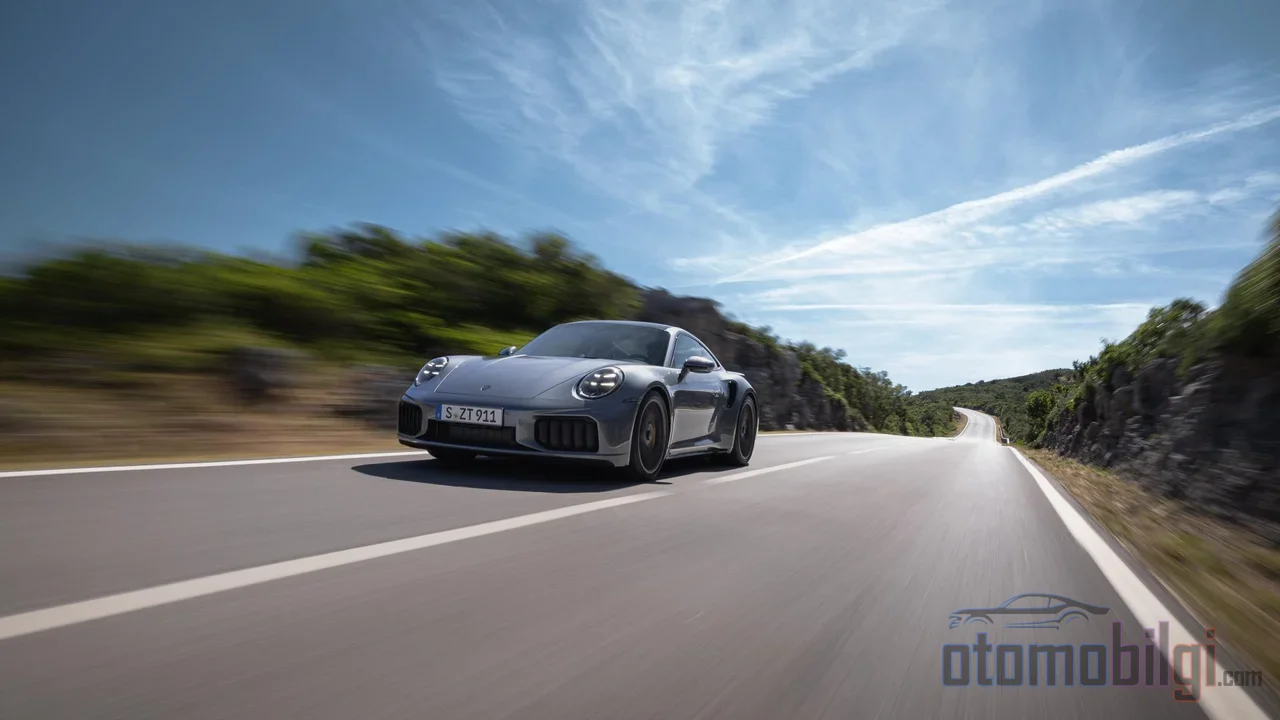
A 911 GT3 exists to savor its revs climbing to 9,000; a GT3 RS exists for the track. So what is the Turbo S for? With the 2026 model year, Porsche moved the 911 Turbo S to a hybrid powertrain for the first time in its history, and the result became the most powerful road car of the 992.2 generation. The question is: are we looking at a Turbo S left in the shadow of its naturally aspirated siblings, or does this package of all-wheel drive, twin turbocharging and electric support still hold its place at the top of the supercar hierarchy? The answer requires reading the figures and the use cases together.
T-Hybrid: How Does the Turbo S's New Heart Work?
The engine of the current-generation 911 Turbo S is fundamentally different from the previous generation. The 3.6-liter twin-turbocharged, intercooled flat-six Boxer engine now works with the T-Hybrid system. The key point of the system is that the turbochargers are supported not only by exhaust gases but also by an electric motor integrated into the body of each turbocharger. This setup sharpens the turbine's throttle response and largely eliminates the classic lag problem of turbocharged engines.
On the electrical side of the system, there is an electric motor integrated directly into the PDK transmission housing and a lithium-ion battery with a capacity of 1.9 kWh. The vehicle does not need to be plugged into the grid; the battery charges itself with energy recovered from exhaust heat. This solution is the production version of the approach Porsche raced with in its 919 Hybrid Le Mans prototype. The infrastructure of the 400V-based system rests on technology matured in the Cayenne and Panamera hybrids.
Highlights
- System power 701 hp, combined torque 800 Nm (590 lb-ft)
- 0-60 mph in 2.4 seconds per manufacturer figures (with Sport Chrono)
- Top speed 322 km/h (200 mph)
- Nurburgring Nordschleife lap of 7:03.92, roughly 14 seconds faster than the previous generation
- US starting price of $270,300
Power and Torque Figures
Combined system power of 701 hp; this figure is the sum of the internal combustion engine producing 631 hp and the electric motor contributing 80 hp. With the metric calculation, the same power is also expressed as 711 PS. On the torque side, the picture is even more striking: 590 lb-ft, or roughly 800 Nm of combined torque, is already on standby from the internal combustion engine at around 2300 rpm; the electric motor completes this figure with its 138 lb-ft share. One detail is important: the 701 hp peak value is accessed with Launch Control; continuous power is somewhat lower. Even so, this engine is one horsepower stronger than the GT2 RS and is the unit Porsche describes as the most powerful 911 of all time.
Performance: The 2.4-Second World and the Nordschleife Figure
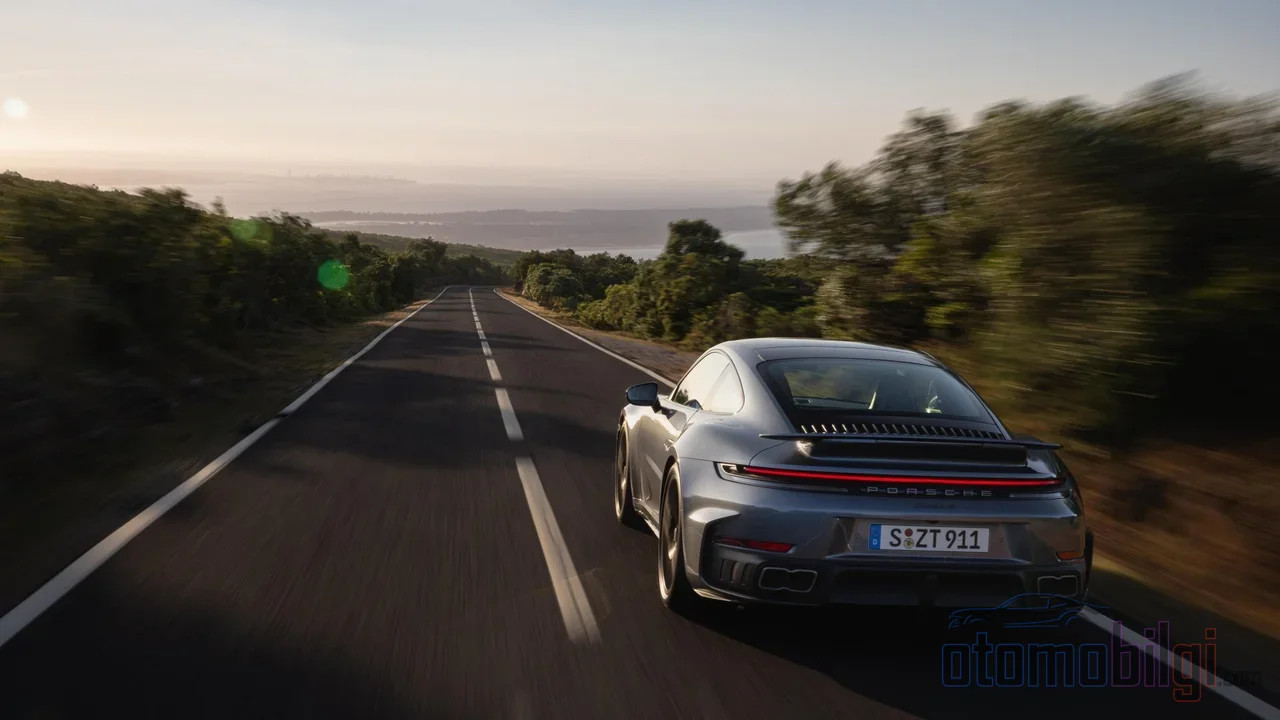
On the acceleration side, the manufacturer's official figure is 2.4 seconds for 0-60 mph with the Sport Chrono Package. No official value was announced by the manufacturer for 0-100 km/h; however, the 0-60 mph reference indicates that the 0-100 km/h figure also remains around 2.5 seconds. Independent tests take the table even further: In Car and Driver's measurement, the car completed 0-60 mph in 2.0 seconds and covered the quarter mile in 9.7 seconds at 142 mph. MotorTrend's measurement, meanwhile, shows 2.2 seconds for 0-60 mph and 9.9 seconds for the quarter mile. Measurement methodology, weather conditions and tire temperature naturally explain such differences; regardless of who measured, the picture is clear: the Turbo S delivers acceleration at a level only a handful of supercars can reach.
Top speed is 200 mph on summer tires, which means 322 km/h. Its trump card on the track side is the Nurburgring Nordschleife: with the lap time announced by Porsche of 7:03.92, roughly 14 seconds faster than the previous generation. A daily-driver car crossing to this side of barriers that years ago only homologation specials could break is concrete proof of hybridization's contribution to performance.
Brakes, Tires and Grip
The brake package that accompanies this speed is standard carbon-ceramic: 16.5-inch discs at the front, 16.1-inch discs at the rear. The tires are Pirelli P Zero R, 255/35ZR-20 on the front axle and 325/30ZR-21 on the rear axle. In an independent test of the Cabriolet version, 60-0 mph braking measured 89 feet and skidpad lateral grip 1.12 g. These figures show that the all-wheel-drive system and chassis hardware not only accelerate the car but keep it under control: the AWD system can manage up to 369 lb-ft of torque on the rear axle.
Technical Specifications at a Glance
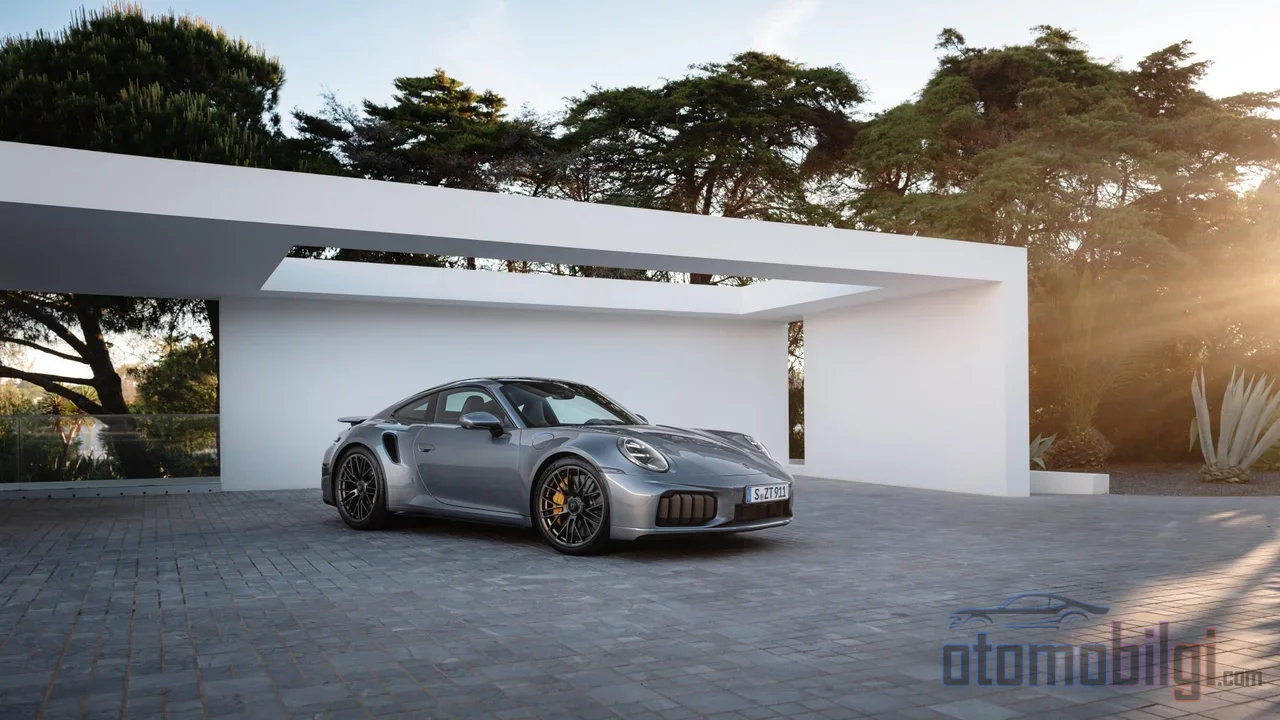
| Specification | Value |
|---|---|
| Engine | 3.6 L twin-turbo flat-six, T-Hybrid |
| System power | 701 hp (631 hp engine + 80 hp electric) |
| Combined torque | 800 Nm (590 lb-ft) |
| Transmission | 8-speed PDK |
| Drivetrain | Standard all-wheel drive (AWD) |
| 0-60 mph (manufacturer) | 2.4 s (with Sport Chrono) |
| Top speed | 322 km/h |
| Weight | Approximately 1739 kg |
| Length | 455 cm |
| Consumption (WLTP combined) | 11.5-11.8 l/100 km |
The weight figure is quoted in a range of approximately 1725-1739 kg; the difference stems from variation in the measurement standard and equipment differences. On the dimensions side, length is 455 cm, width 74.8 inches, height 51.3 inches and wheelbase 96.5 inches. Consumption on the EPA cycle is 15 mpg city and 22 mpg highway; the WLTP combined figure is 11.5-11.8 l/100 km. These numbers are acceptable for a 701 hp car, but it is clear they do not mean cheap running costs.
Daily Usability: The Turbo S's Real Trump Card?
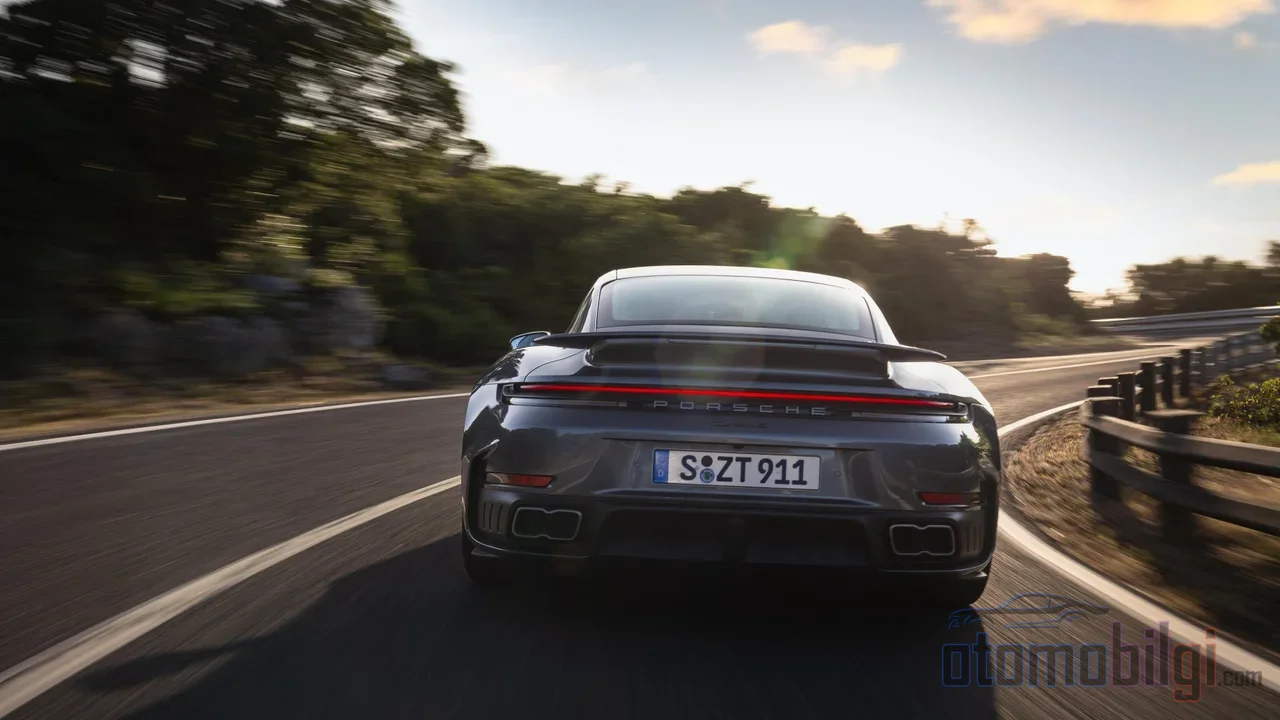
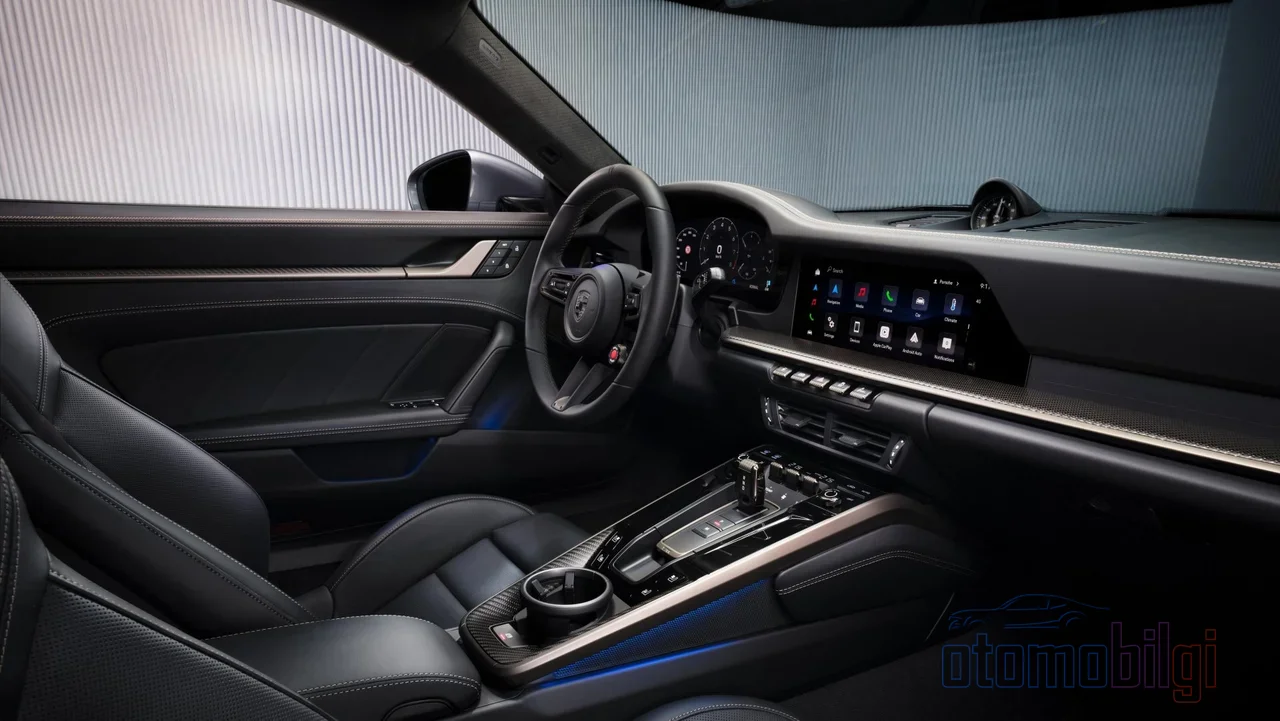
While the GT3 and GT3 RS push the boundaries of a road car with their track-focused philosophies, the center of the Turbo S's story has always been usability. This generation continues along the same line: a friendly character in relaxed driving, standard PASM active damping, an active electro-hydraulic anti-roll system, GT Sport steering and adaptive Sport Seats Plus. The interior features a 10.9-inch touchscreen, a 12.6-inch digital instrument cluster, wireless CarPlay and Android Auto, a standard BOSE sound system and an optional Burmester package.
The practicality side is also extraordinary for a supercar: the front trunk offers 5 cubic feet, and folding the rear seats reveals a wide, flat cargo area. The active front diffuser and adaptive rear spoiler serve both aerodynamics and everyday comfort. In short, the car is a suitable choice for drivers who need a weekday commuter that prioritizes performance and accepts high running costs. The description of real hypercar performance wrapped in a car usable every day still holds true for this generation.
Where Does It Differ from the GT3 and GT3 RS?
In the hierarchy debate, the numbers speak. The 911 GT3 produces 502 hp from its 4.0-liter naturally aspirated flat-six, revs up to 9000 rpm, and completes 0-60 mph in 3.2 seconds; its starting price in the US is $235,800. The Turbo S offers roughly 200 hp more power than the GT3, far higher torque, and acceleration nearly a second quicker. So in the outright speed war, the Turbo S's rival is not the GT3; it is far more expensive and far more limited-production supercars.
But this picture alone can be misleading. The GT3 and GT3 RS buy character through a naturally aspirated engine that builds a mechanical bond with the driver, a lighter structure, and track-focused aerodynamics. The Turbo S, on the other hand, sells results with all-wheel drive, instant torque, and a wide usable range. The two philosophies are deliberately separated within the same brand: emotional purity versus engineering efficiency. Since a Carrera can offer similar excitement at a much lower price, the Turbo S's position can be defined as the top link of luxury performance.
Price and Positioning: Is the Peak Still Valid?
In the US, the 2026 Turbo S Coupe starts at $270,300 with its official list price; the Cabriolet opens at $284,300. When loaded with options, test cars are seen to exceed $286,000. This price band places the car in the same pool as Ferrari's and Lamborghini's entry-level super sport models; yet the combination of 2.4-second acceleration, a 322 km/h top speed, and four-season all-wheel-drive usability is still a hand few rivals in this pool can match.
The historical perspective is also interesting: the 991-generation Turbo S, which can be considered the ancestor of the Turbo S, had a 0-100 km/h time of 4.6 seconds and a 290 km/h top speed in its day. In the years since, acceleration has nearly been halved. This compression is the real reason the Turbo S keeps its place in the supercar hierarchy: in every generation, it is a 911 approaching the performance of far more expensive cars, while still carrying two seats and a trunk behind it.
The Clear Answer
The Turbo S is still at the peak, but it holds the peak on its own terms. Its 701 hp and 800 Nm hybrid power, the manufacturer's 2.4-second acceleration figure, and the 7:03.92 Nordschleife lap make it the fastest and most powerful member of the current 911 family; the naturally aspirated GT3 and GT3 RS represent track feel, while the Turbo S represents the peak of everyday-usable performance. No changes have been announced for the 2027 model year; this generation is a sign that the balance it has achieved is firmly established.