Chevrolet Corvette ZR1: Eyes on the Summit with 1,064 Horsepower
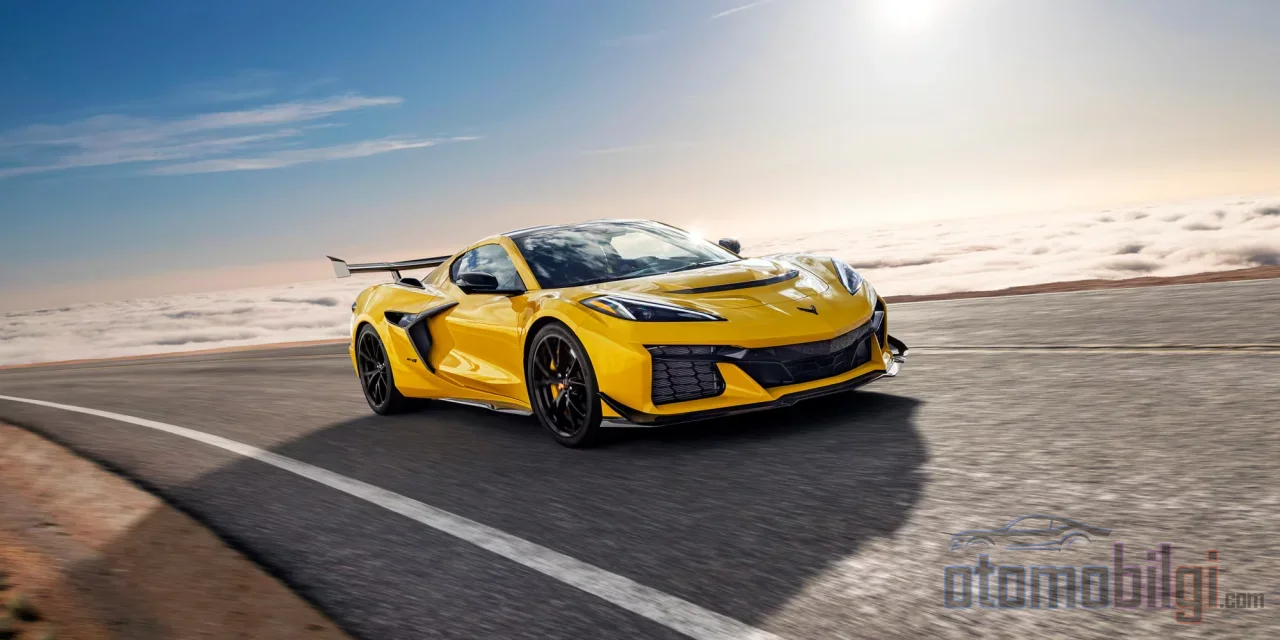
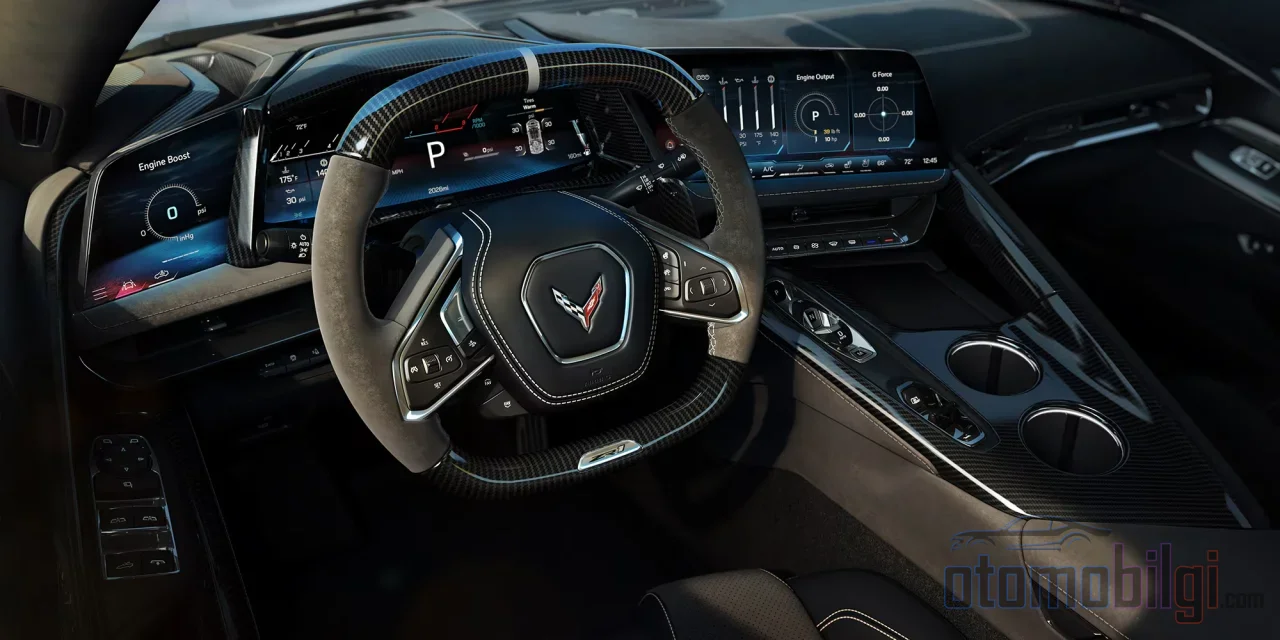
The Corvette Z06's 5.5-liter naturally aspirated LT6 V8, with its flat-plane crank architecture and 8,000 rpm character, was seen as America's clearest answer to European supercars. So what happens if there is a step above in this story? Chevrolet's answer is the ZR1: adding twin turbos to the same 5.5-liter displacement to reach 1,064 hp of power and 828 lb-ft of torque - a rear-wheel-drive engineering statement that chooses no rivals. The numbers are only half the story; what makes the ZR1 truly interesting is how new the design of the engine carrying this power is, and the unusual path chosen in aerodynamics.
LT7: Not Just an LT6 With Turbos
At the heart of the ZR1 runs a 5.5-liter twin-turbocharged, DOHC, flat-plane crank V8 called the LT7. It produces 1,064 hp at 7,000 rpm and 828 lb-ft of torque at 6,000 rpm, with its redline ending at 8,000 rpm. That rev range is remarkable for a turbocharged engine; part of the Z06's naturally aspirated character lives on here too.
Contrary to popular belief, the LT7 is not the Z06's LT6 engine with turbos bolted on. While the engine is based on the LT6, the intake system was designed from scratch; secondary port injection was added, and the pistons and connecting rods were specially developed. The compression ratio was lowered to 9.8:1, internal components strengthened, and the block castings are different. The CNC-machined cylinder head ports unique to the LT6, however, remained in place. These details are enough to make the LT7 not a practical upgrade, but an entirely new engine definition in its own right.
C8.R Heritage and Turbo Architecture
The LT7's architecture carries traces of Chevrolet's C8.R racing program. The twin 76 mm mono-scroll turbochargers feature ball bearings and are controlled by electronic wastegates. A seven-stage dry-sump lubrication system and piston oil squirters are also standard. Power is sent to the rear wheels through an 8-speed dual-clutch transmission; there is no hybrid assistance - the ZR1 is a pure internal combustion, rear-wheel-drive car.
Highlights
- 5.5-liter twin-turbo V8: 1,064 hp, 828 lb-ft of torque
- 0-60 mph in 2.3 seconds (with the ZTK package); quarter mile in 9.6 s
- 1,200 pounds of downforce without active aerodynamics
- Starting price of $182,000 for the Coupe
- Top speed claimed by Chevrolet is 233 mph
Performance: What Do the Numbers Say?
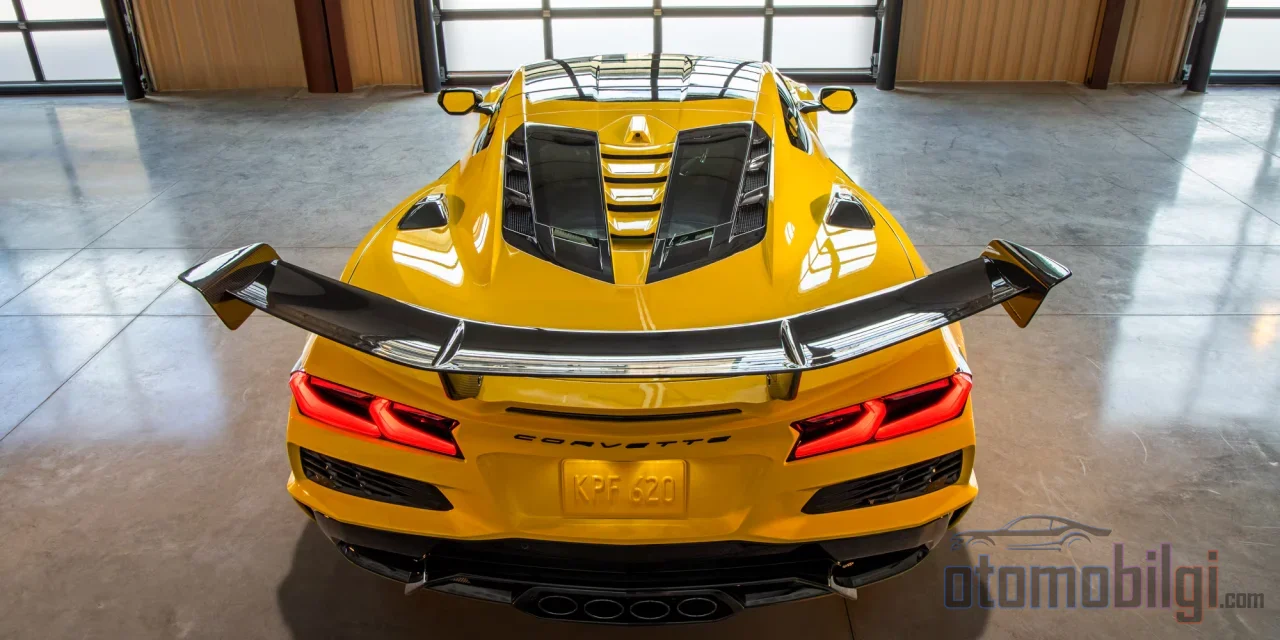
With the ZTK Performance Package, the ZR1 completes its 0-60 mph sprint in 2.3 seconds. In independent tests, this figure was measured as low as 2.2 seconds; the quarter mile was also completed in around 9.5 seconds at approximately 149 mph. While four-digit power figures are being discussed this difference may seem small, but going below 2 seconds is the domain of hybrid-assisted versions like the ZR1X alone.
On top speed, clarity matters: Chevrolet quotes a top speed of 233 mph for the ZR1; it is stated that this figure was measured on a closed test track. Some technical documents, however, list 225 mph. The difference between the two figures falls within a range that can be explained by measurement conditions and hardware variations. On the weight side too, a dry weight figure of 3,670 pounds is quoted for the coupe body; that is roughly 236 pounds more than the Z06's 3,434 pounds, a price that is expected given the turbo systems, intercoolers and cooling hardware.
Aerodynamics: No Active System, Plenty of Downforce
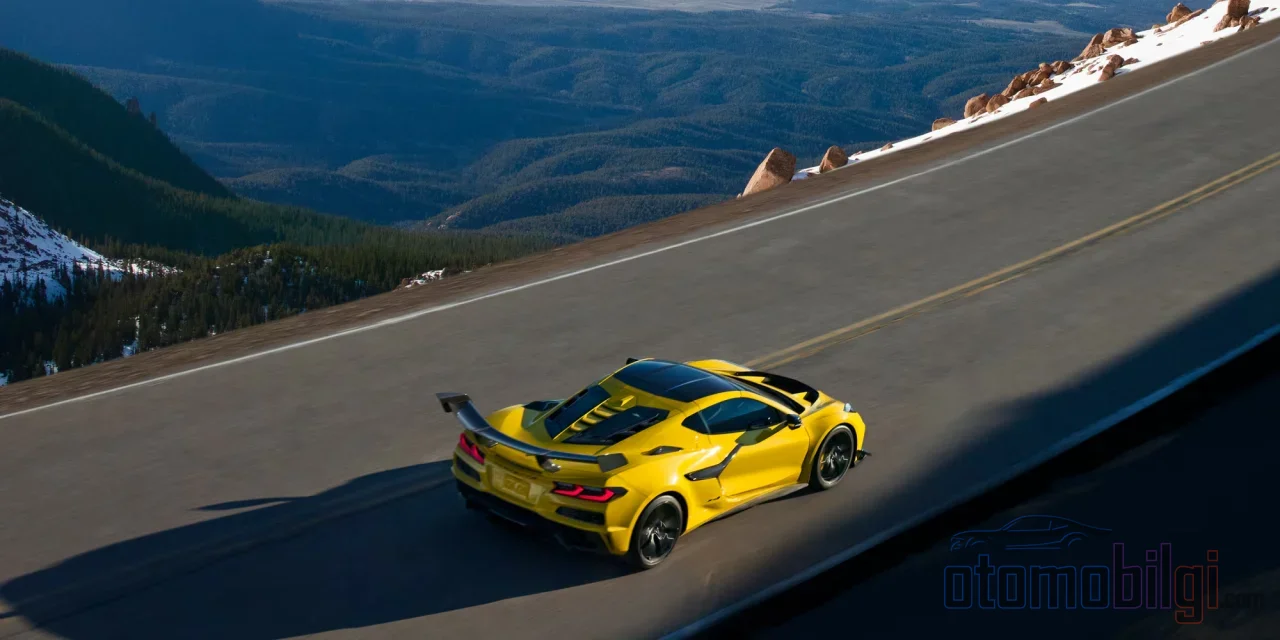
One of the ZR1's most interesting engineering decisions lies in the aerodynamics: the car uses no active aero system at all. Even so, it can generate up to 1,200 pounds of downforce with passive aerodynamic elements. Chevrolet engineers chose this approach, citing that they did not need an active system.
While the standard aero configuration produces 734 pounds of downforce, the ZTK Performance Package raises this figure to 1,200 pounds by adding a high-mounted carbon fiber rear wing, front dive planes and underbody strakes. The price of this increase is a loss of about 9 mph in top speed. The flow-through passages in the hood cool the intercoolers while also adding downforce to the front axle. The split rear window, returning on the 2026 coupe models, is also a functional element that supports airflow and cooling.
There is one compromise on the practicality side: the front trunk (frunk) has been sacrificed for aerodynamics and engine cooling. Cargo volume has been preserved enough to hold two cabin-size suitcases or a golf bag.
Z06, E-Ray and ZR1X: Positioning Within the Family
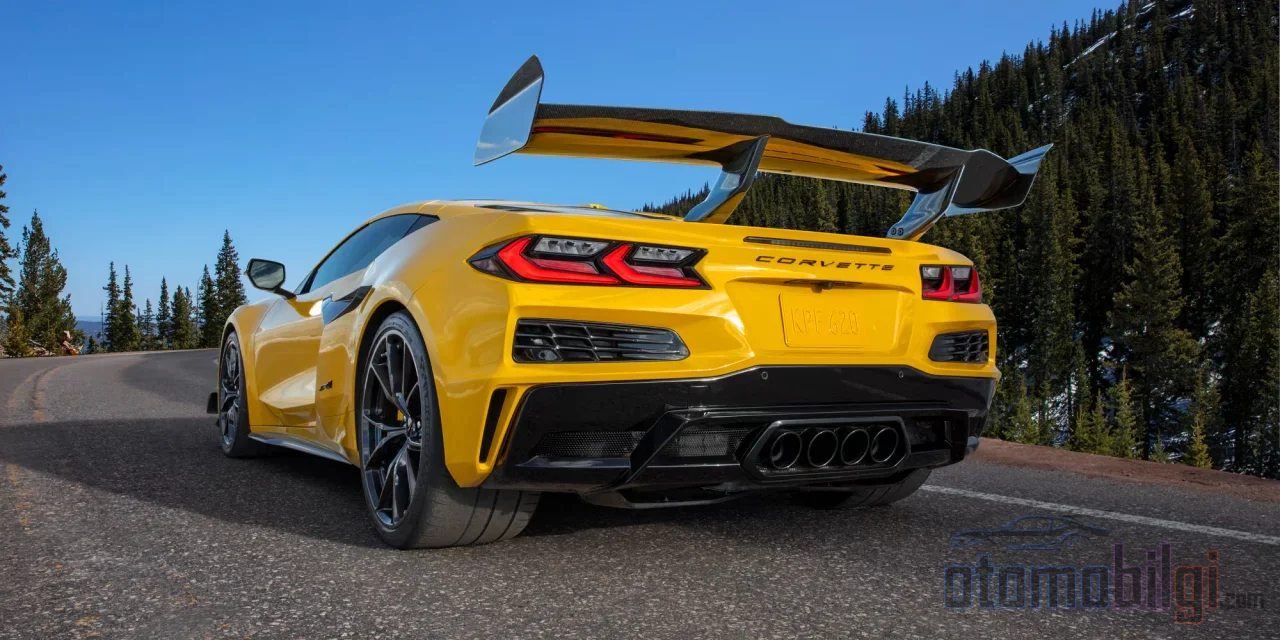
In the Corvette family, every version has a clear mission. The Stingray represents balanced everyday performance. The Z06 carries a track-focused character with its naturally aspirated LT6 V8. The E-Ray is the hybrid step, offering all-wheel drive with an electric motor on the front axle. The ZR1, with its twin-turbo LT7 and rear-wheel drive, represents the peak of power.
The ZR1's body is based on the Z06's wide-body architecture and takes it further; the huge rear wing is also the ZR1 and ZR1X's most distinctive feature. At the top of the family sits the ZR1X: alongside the LT7, a front electric motor taken from the E-Ray but raised from 160 hp to 186 hp is added. A total of 1,250 hp and 988 lb-ft of torque is sent to the eAWD drive system. According to Chevrolet, 0-60 mph is covered in 1.89 seconds, the quarter mile in 8.99 seconds, with a trap speed of 157 mph. The ZR1X's starting price is $227,800.
Track Results and Records
The ZR1 also proved its claims on the track. In Car and Driver's 2026 Lightning Lap test, the 1,064 hp ZR1 finished first with the fastest lap time. At Canada's Mosport circuit, Ron Fellows set a production car record of 1:18.2 with the 2026 ZR1. The ZR1 with the ZTK package is recorded to have lapped the Nurburgring in 6:50.8.
The most striking of the family records belongs to the ZR1X: GM vehicle dynamics engineer Drew Cattell set a 6:49.275 lap with the ZR1X, breaking the record for the fastest lap by a non-professional driver at the Nurburgring. The ZR1X also proved its braking performance in the 0-150-0 mph test, decelerating from 289 to 192 km/h at 1.9G.
Comparison With European Supercars: The Price-Performance Equation
The ZR1's $182,000 starting price (1LZ Coupe) is the most striking side of the equation when compared with its European rivals. The Ferrari SF90 Stradale produces 986 hp and completes 0-60 mph in 2.4 seconds; its price, however, is $524,950. The Lamborghini Revuelto finishes 0-60 mph in 2.2 seconds but costs more than twice the ZR1's base price. The McLaren 750S offers 740 hp for $324,100; the Ford Mustang GTD delivers 815 hp, 2.8 seconds and $325,000.
| Automobile | Power | 0-60 mph | Starting Price |
|---|---|---|---|
| Corvette ZR1 | 1,064 hp | 2.3 s | $182,000 |
| Ferrari SF90 Stradale | 986 hp | 2.4 s | $524,950 |
| Lamborghini Revuelto | - | 2.2 s | $400,000+ |
| McLaren 750S | 740 hp | 2.7 s | $324,100 |
| Ford Mustang GTD | 815 hp | 2.8 s | $325,000 |
There is only one exception on the acceleration front, the Porsche 911 Turbo: it completes 0-60 mph in 2.0 seconds, making it faster than the ZR1. But in quarter-mile drag races, the ZR1 left the Ferrari SF90 and Lamborghini Revuelto behind. The comfort figures are not bad either: EPA figures are 12 mpg city, 18 mpg highway and 14 mpg combined (19 mpg highway for the ZR1X).
Production and Deliveries
It is stated that fewer than 200 examples of the ZR1 were produced globally in the 2025 production run; the car naturally remains limited in number. The first deliveries in Europe were made through the UK-based distributor channel.
Where Does the ZR1 Really Stand?
The clear answer to the question is this: The Corvette ZR1 is an American supercar that delivers the performance of European supercars, with its 1,064 hp twin-turbo V8, sub-2.3-second acceleration and 1,200 pounds of passive downforce, at roughly one-third of the price level. While the Z06 represents the high-revving purity of the naturally aspirated engine and the E-Ray the confidence of hybrid drive, the ZR1 represents the pinnacle of power and track capability. Its rejection of active aerodynamics, its sacrifice of the frunk for cooling, and the development of the LT7 as an engine from scratch are signs of how Chevrolet approached this car: an ambitious approach, but one in which every decision was made with an engineering rationale. It is one of the few cars that can compete, dollar for horsepower, in the playground of Ferrari, Lamborghini and McLaren.
Sources
- 2027 Corvette ZR1 | Chevrolet (official)
- Corvette ZR1X | Chevrolet (official)
- Chevrolet Corvette ZR1 conquers Car and Driver's Lightning Lap - GM Newsroom
- Nürburgring takeover: ZR1X and ZR1 - GM Newsroom
- 2027 Chevrolet Corvette ZR1 / ZR1X - Car and Driver
- 2026 Corvette ZR1 In-Depth Guide - CorvSport
- 2026 Corvette ZR1 Power and Performance - Cable Dahmer Chevrolet
- Here's Why The Corvette ZR1 Doesn't Have Active Aero - Motor1
- Corvette ZR1X vs. Stingray, E-Ray, Z06 and ZR1 - Edmunds
- Clive Sutton Delivers Europe's First Corvette ZR1 - Clive Sutton