Corvette Z06: Red-Hot with a Naturally Aspirated V8
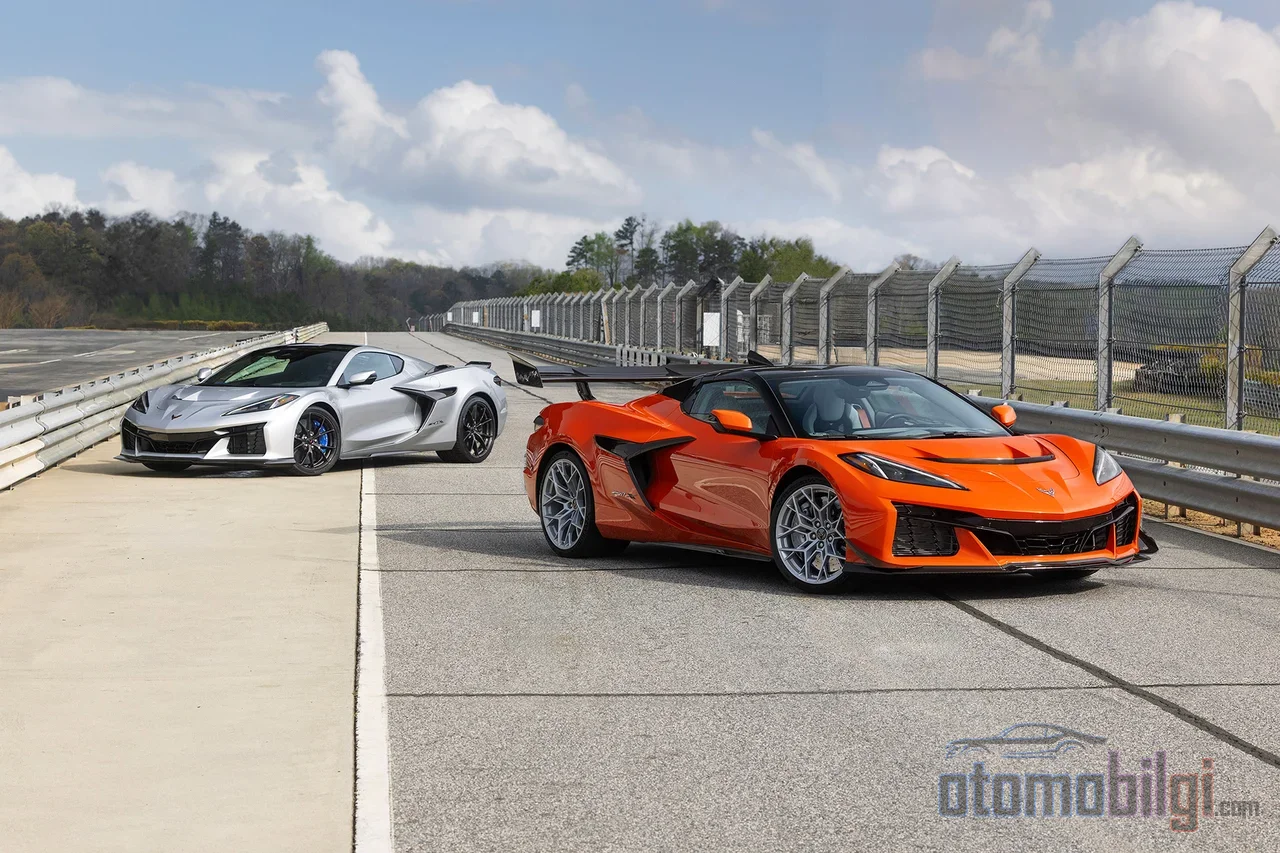
The sound of a Chevrolet Corvette exiting the redline at 8,600 rpm is not what most people expect from an American V8. The LT6 engine at the heart of the C8 Corvette Z06 has completely set aside the familiar pushrod architecture - it is a design that brings dual overhead camshafts, a flat-plane crank, and 670 horsepower of racing engine logic to series production. So why did General Motors invest so heavily in a naturally aspirated V8 at a time when everyone is turning to turbochargers or hybrids? The answer lies in the engineering decisions embedded in every stage of the engine.
LT6: A V8 Born from a Clean Sheet
The LT6 is a V8 with a 5.5-liter displacement (5,463 cc), a 90-degree angle, DOHC architecture, and a flat-plane crank. A member of GM's Gemini small-block family, the engine entered production in 2022 and was first introduced with the C8 Z06 in October 2021; it went on sale for the 2023 model year. The critical point is this: This engine is a ground-up development, mechanically unrelated to LS-based Chevrolet engines and Cadillac's Blackwing V8. GM engineers openly state that although the engine is called a small-block due to its 4.4-inch bore spacing, it does not descend from the traditional Chevrolet small-block lineage.
There is an interesting detail in the development process: To understand the flat-plane V8 architecture, Chevrolet engineers bought a crashed Ferrari 458 Italia engine on eBay, disassembled it, and studied it. Since there was no ready starting point in the Gemini architecture, analyzing the reference solutions of the competition was one of the design team's early steps. The C8.R race car has also been using a modified version of the LT6 since 2019; many features in the road car came directly from this racing program.
Highlights
- 670 hp @ 8,400 rpm, 624 Nm of torque @ 6,300 rpm, 8,600 rpm redline
- The most powerful naturally aspirated series-production V8 of all time
- The largest naturally aspirated flat-plane V8 in a series-production car
- Nurburgring lap time: 7:11.826
- 2027 model year prices in the US start at $121,800
Where Do the Numbers Take the LT6?

670 horsepower (500 kW) peaks at 8,400 rpm, while 624 Nm of torque peaks at 6,300 rpm. With these figures, the LT6 surpasses the previous record holder, the 6.2-liter M159 engine producing 622 hp in the Mercedes-Benz SLS AMG Black Series, and holds the title of the most powerful naturally aspirated series-production V8 of all time. It is also the largest naturally aspirated flat-plane V8 used in a series-production car; it inherited the size record in this field from Ford's Voodoo engine.
The engine is paired with an eight-speed dual-clutch transmission. According to Chevrolet's official figures, the Z06 completes 0-100 km/h in approximately 2.6 seconds in its current configuration, and covers the quarter mile in 10.6 seconds with a exit speed of 131 mph (approximately 211 km/h). In independent tests, the convertible version was measured reaching 60 mph in 2.7 seconds.
The Engineering Foundation of the High-Revving Character
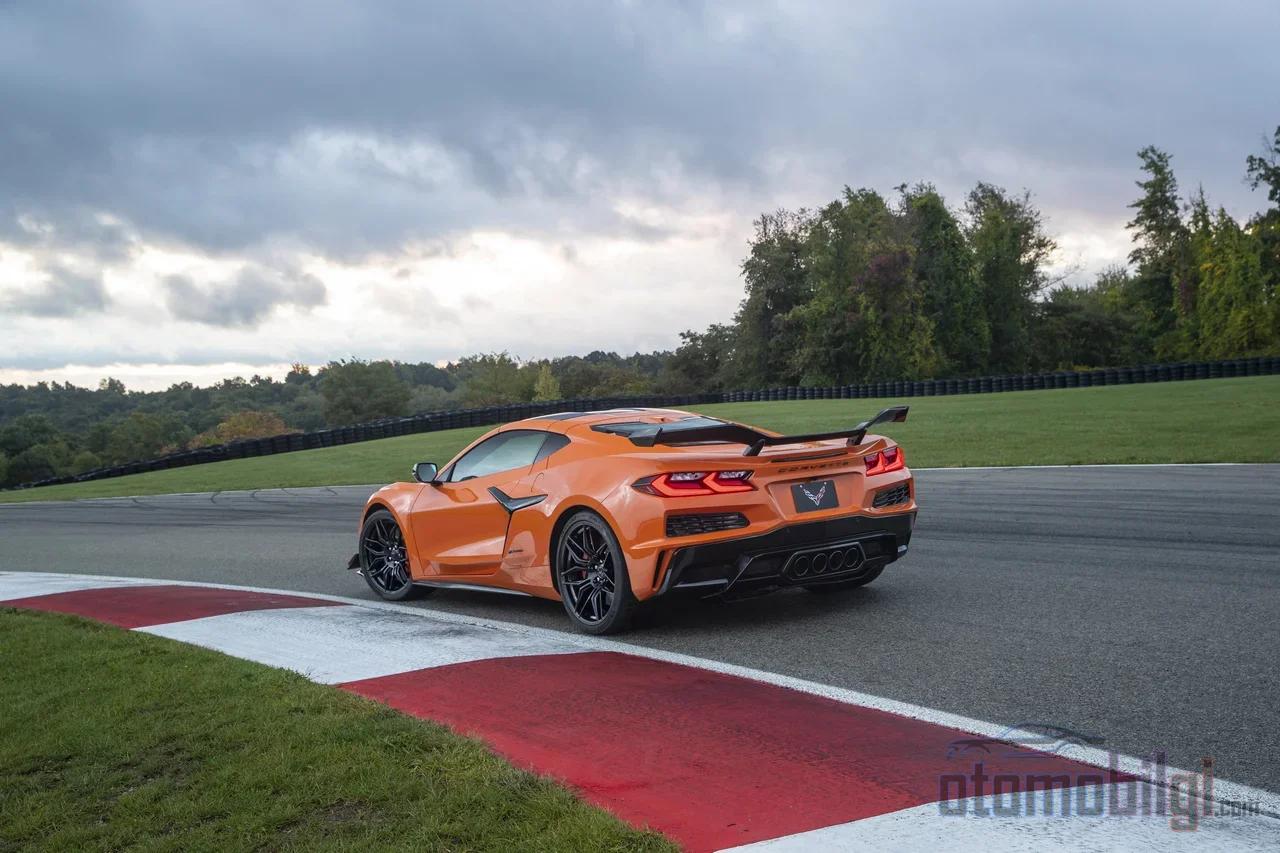
An 8,600 rpm redline is a serious engineering challenge in the V8 world. The GM team initially targeted an engine approaching 9,000 rpm; during development this target settled at 8,600, and the 5.5-liter displacement was deliberately chosen to balance low-end torque response with flat-plane character.
Mechanical Hardware
Cylinder dimensions are 104.25 x 80 mm (bore x stroke), with a compression ratio of 12.5:1. The block is A319-T7 sand-cast aluminum reinforced with pressed cast-iron cylinder liners; the cylinder heads are A356-T6 aluminum castings. On the valve side, there are 42 mm titanium intake valves and 35 mm sodium-filled exhaust valves, a mechanical finger follower valvetrain, and dual-coil valve springs that maintain valve control at high rpm. The pistons are forged aluminum, the connecting rods forged titanium. An active split intake manifold and twin 87 mm throttles work together with a 4-2-1 stainless steel exhaust manifold.
Fuel and Ignition System
The direct injection system operates at up to 350 bar (5,076 psi) maximum pressure; the firing order is defined as 1-4-3-8-7-6-5-2. Engine management is handled by a 32-bit GM E68 electronic control unit. On the lubrication side, Dexos R 5W50 synthetic oil and piston cooling oil jets are used.
Dry Sump: A Solution Born on the Track
One of the LT6's most distinctive subsystems is its truly race-derived six-stage dry sump lubrication system. The one-piece oil pan divides the cylinder pairs into four separate compartments; each compartment is scavenged of oil separately via its own pickup line, and the collected oil is carried through a Y-shaped manifold. The bottom of the sump is not an oil reservoir - the engine's oil supply continues uninterrupted even in track use, where high lateral forces occur. The engines are hand-assembled at the Performance Build Center in Bowling Green, Kentucky; customers can participate in a special engine assembly program.
Why Is the Flat-Plane Crank So Important?
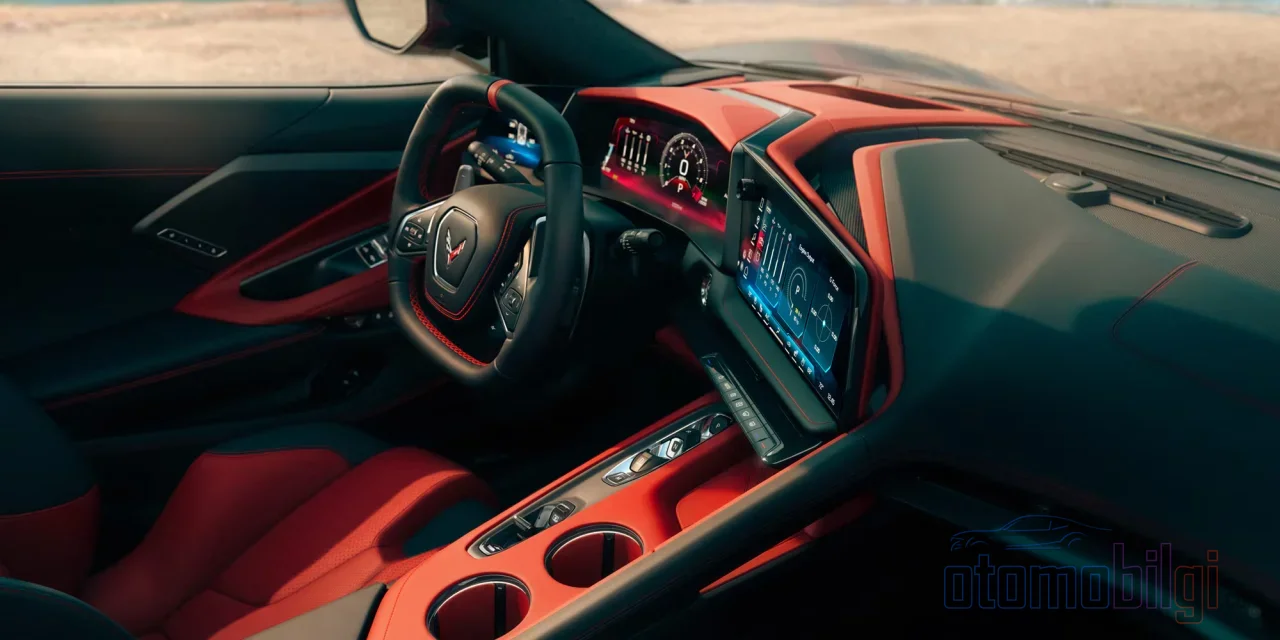
The flat-plane crank departs fundamentally from the classic cross-plane American V8 architecture: It is an architecture in which vibrations grow with displacement intervals, but in return it allows a much higher rev range and evenly spaced exhaust pulses. Bringing a flat-plane V8 of this size to series production is regarded as a remarkable engineering achievement in its own right. The LT6 already stands out as the highest-revving American V8 of the last decade; its power output per liter is also considered the peak among series-production V8s.
There is also a comparison on the displacement side: A frequently asked question is how the LT6 produces 670 hp despite being smaller than the Stingray's 6.2-liter LT2 engine. The answer is simple - the high rev range, the dual overhead camshaft architecture, and the breathing capacity provided by the flat-plane crank compensate for the displacement advantage.
Staying Naturally Aspirated: A Deliberate Differentiation
The Z06's use of no turbo or supercharger is not a cost decision, but a positioning decision. As GM engineers explained, the LT6 was designed around character, and the Z06 is positioned as a track-focused monster. The company's logic is clear: There are almost no mid-engine naturally aspirated V8 sports cars left on the market; By offering both naturally aspirated and supercharged options, the Corvette family represents a diversity that others do not offer. Indeed, in the 2027 model year the Chevrolet Corvette lineup is split across three engines: The 6.7-liter 535 hp LS6 in the Grand Sport (721 hp combined with the electric motor), the LT6 in the Z06, and the twin-turbo 1,064 hp LT7 in the ZR1. The LT7 is a twin-turbo derivative of the LT6 and operates with an 8,000 rpm redline; In the ZR1X it reaches a combined 1,250 hp.
There is also a technical debate about staying naturally aspirated: Some analyses argue that naturally aspirated engines have improved fuel efficiency faster than forced-induction engines in recent years. On the other hand, in straight-line performance the hybrid E-Ray can complete 0-100 km/h faster than the Z06 (2.6-2.8 s) in independent tests (2.3-2.4 s). The Z06's answer is not the straight line, but the track.
Track Performance and Current Status
At Lightning Lap 2023 at Virginia International Raceway, the Z06 set the fifth-fastest lap in the event's history with a lap time of 2:38.6, recording the best time for a naturally aspirated vehicle. More decisive is the official 7:11.826 lap at the Nurburgring Nordschleife - driven by Aaron Link, this lap was part of Chevrolet's Green Hell campaign. With the Z07 Performance Package, carbon ceramic Brembo brakes, Michelin Pilot Sport Cup 2 tires, and carbon fiber high wing downforce equipment come into play.
On the production side the situation is clear: The 2027 model year Z06 starts at $121,800 in 1LZ trim in the US; The 2LZ is at $130,700, and the 3LZ at $135,350. Outside the US, power drops to 636 hp due to exhaust particulate filters (GPF). A small practical detail: An 6,600 rpm limit is recommended for the first 800 km after delivery.
Assessment: Why Is the Z06 a Class of Its Own?
The short answer: The Corvette Z06 is a car deliberately placed directly opposite forced-induction and hybrid rivals, with its naturally aspirated flat-plane V8 revving to 8,600 rpm, dry sump lubrication derived from racing, lightweight material solutions such as titanium valves and connecting rods, and the title of the most powerful naturally aspirated production V8 of all time. In this class, there is no other production option that pushes the limits of the piston internal combustion engine at such high revs. The E-Ray or ZR1 may be faster in straight-line speed; but the Z06 presents its character as an engineering statement. The fact that a 670-horsepower naturally aspirated V8 is still in production in 2026 is, in itself, the answer on this page.
Sources
- Inside the 2027 Chevrolet Corvette's LS6, LT6 and LT7 V8 engines
- 2027 Corvette Z06 | Sports Car - Official Chevrolet website
- GM 5.5L V-8 LT6 Engine Info, Power, Specs, Production
- Chevrolet Gemini small-block engine
- 2027 Chevrolet Corvette Z06 Review, Pricing, and Specs
- Chevy Corvette Z06 Engineers Bought a Ferrari 458 Engine on eBay
- 2023 Chevrolet Corvette Z06 LT6 Engine-Tech Deep Dive
- 2023 Chevrolet Corvette Z06 at Lightning Lap 2023