Lamborghini Revuelto: The V12 Hybrid Revolution with 1,015 HP
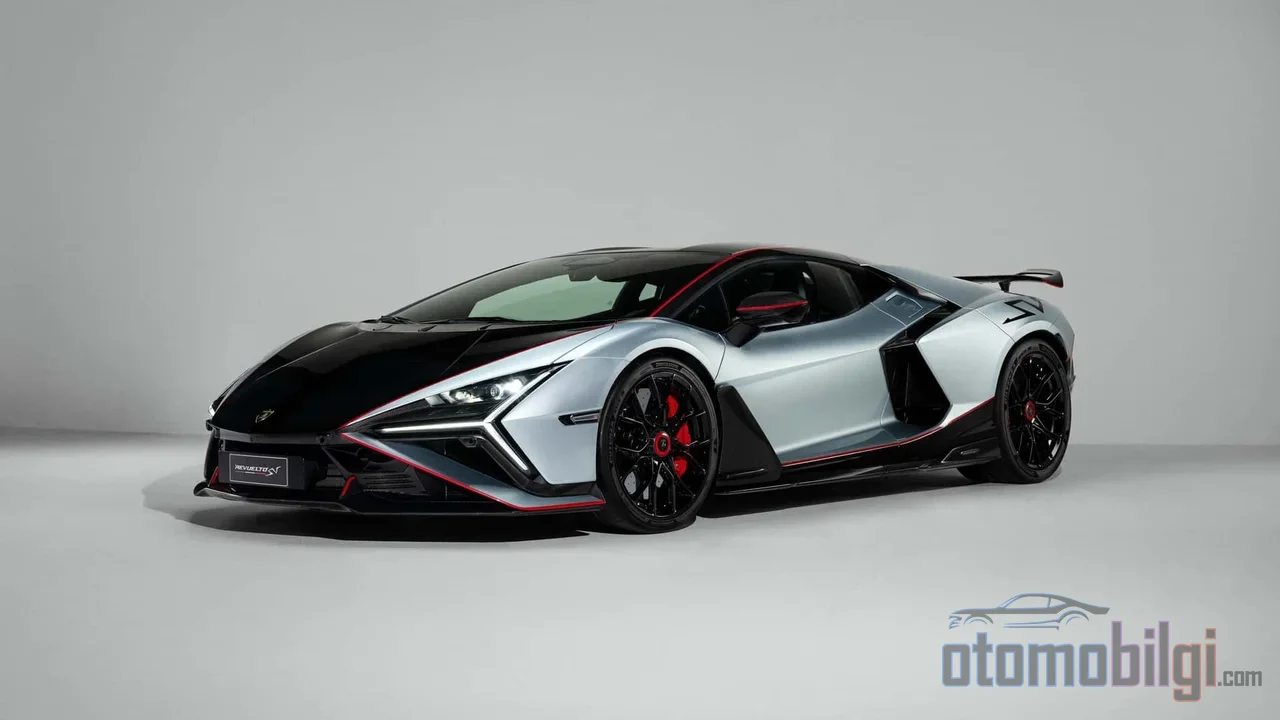
Bringing electricity together with a V12 looks easy on paper: you keep the engine, add electric motors, and announce the combined power output. The real engineering question is different - how do you control the weight and complexity introduced by the hybrid system without making any compromise on the naturally aspirated character? The Lamborghini Revuelto was unveiled on March 29, 2023 as the answer to exactly this question, and as the brand's new flagship following the Aventador, it began rolling off the production line in Sant'Agata Bolognese from July 2023. On this page, we will examine the Revuelto's powertrain architecture, chassis, and performance identity along with its figures; because this car's story is hidden in the data sheet.
HPEV: Lamborghini's New Category
The Revuelto is the brand's first true plug-in hybrid automobile. The earlier Sián FKP 37 and Countach LPI 800-4 used mild-hybrid setups that improved low-speed driving; external charging with a rechargeable battery and sustained electric driving came for the first time with the Revuelto. Lamborghini positions this concept as the HPEV - High Performance Electrified Vehicle - and highlights it as a category definition.
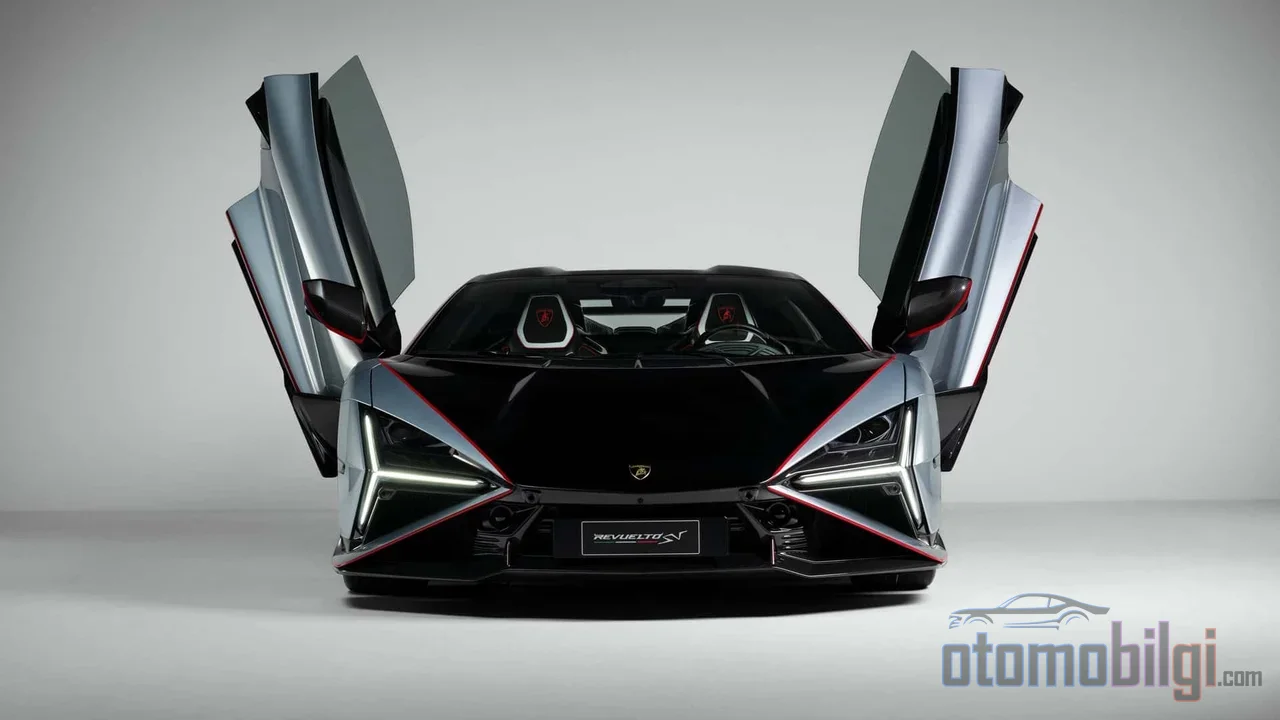
The name choice is also traditional: Revuelto comes from a Spanish fighting bull that fought in the Barcelona arenas in the 1880s. The design bears the signature of Mitja Borkert; scissor doors and the mid-engine layout are preserved, and the 2-door coupe body continues the familiar silhouette. So what happened to the machinery inside this traditional shell?
Highlights
- The 6.5-liter naturally aspirated V12 alone produces 825 PS (607 kW) of power and 725 Nm of torque.
- With three electric motors, the total system power is 1,015 CV (747 kW), and total torque is 807 Nm.
- 0-100 km/h in 2.5 seconds, 0-300 km/h in 15.3 seconds, top speed over 350 km/h.
- A fully carbon fiber monocoque: 10% lighter and 25% stiffer than the Aventador.
- Electric range (WLTP): 10 km - with a 3.8 kWh lithium-ion battery.
Why Did the Naturally Aspirated V12 Survive?
In the era of electrification, while most manufacturers looked to turbocharging for salvation, Lamborghini chose the opposite direction: a completely new naturally aspirated V12 engine, coded L545, with a displacement of 6,498.5 cm³. This engine produces 825 PS (814 hp / 607 kW) at 9,250 rpm of power and 725 Nm of torque at around 6,750 rpm. This power density per liter is a serious engineering achievement for a turbocharged-free engine - and its revving character offers a throttle response that a forced-induction engine could never imitate.
The logic chain is simple but resolute: a naturally aspirated V12 that breathes at high revs is, in terms of sound and throttle response, the brand's DNA. The electric assistance takes on instantly and with zero delay the very job turbocharging would do - filling the torque gap at low revs. Thus, electrification does not substitute the character; it becomes a layer that complements the character. Compared to the Aventador's V12 producing 739 hp and 690 Nm, the Revuelto's internal combustion unit makes a noticeable leap even on its own.
Beyond the V12: Transversely Mounted DCT
Behind the V12 comes an 8-speed dual-clutch transmission mounted transversely. There's a clever detail here: The Revuelto has no reverse gear set at all - the task of going backward is handled by the two front electric motors spinning in reverse. If needed, the third electric motor on the rear axle can also kick in. This approach keeps the transmission compact while saving weight.
How Were the Three Electric Motors Placed?
The electric side of the system consists of three permanent-magnet motors with a total contribution of 190 PS / 140 kW. Two motors sit on the front e-axle, within the e-axle structure; the third is at the rear, sitting atop the transmission. This layout allows the internal combustion engine to remain at the rear while preserving all-wheel drive.
The two motors on the front e-axle are axial-flux type and oil-cooled; each produces 110 kW of power while weighing only 8.65 kg. The motor manufacturer describes this application as the first use of axial-flux technology on a front e-axle. In terms of power-to-weight, this is a generation ahead of previous-generation hybrid motors. The front motors handle torque vectoring, regenerative braking, and electric assist functions; depending on the drive mode, fully electric all-wheel drive in a P3 configuration together with the rear motor is also possible.
The battery is a lithium-ion unit with 3.8 kWh capacity, high power density, and pouch cells. According to WLTP figures, the Revuelto can travel 10 km on fully electric power. That number may seem small at first glance; but this battery's job isn't range - it's instant power support and quiet city driving. WLTP combined consumption is 15 l/100 km + 4.7 kWh/100 km, with CO2 emissions of 350 g/km; with the battery empty, consumption rises to 17.9 l/100 km.
| Powertrain component | Value |
|---|---|
| V12 (L545), naturally aspirated | 825 PS @ 9,250 rpm, 725 Nm |
| Front electric motors (2x, axial flux) | 2 x 110 kW, 8.65 kg/motor |
| Total system power | 1,015 CV (747 kW) |
| Total torque | 807 Nm |
| Battery | 3.8 kWh lithium-ion |
| Electric range (WLTP) | 10 km |
Carbon Monocoque Chassis and Aerodynamic Architecture
The Revuelto's chassis is entirely new and entirely carbon fiber monocoque - moreover, the application has for the first time been extended all the way to the entire front end. High-strength aluminum alloys are used at the rear, while the front structure features Forged Composites material. The result is three measurable gains compared to the Aventador: the monocoque is 10% lighter, torsional rigidity is 25% higher, and the front frame is 20% lighter.
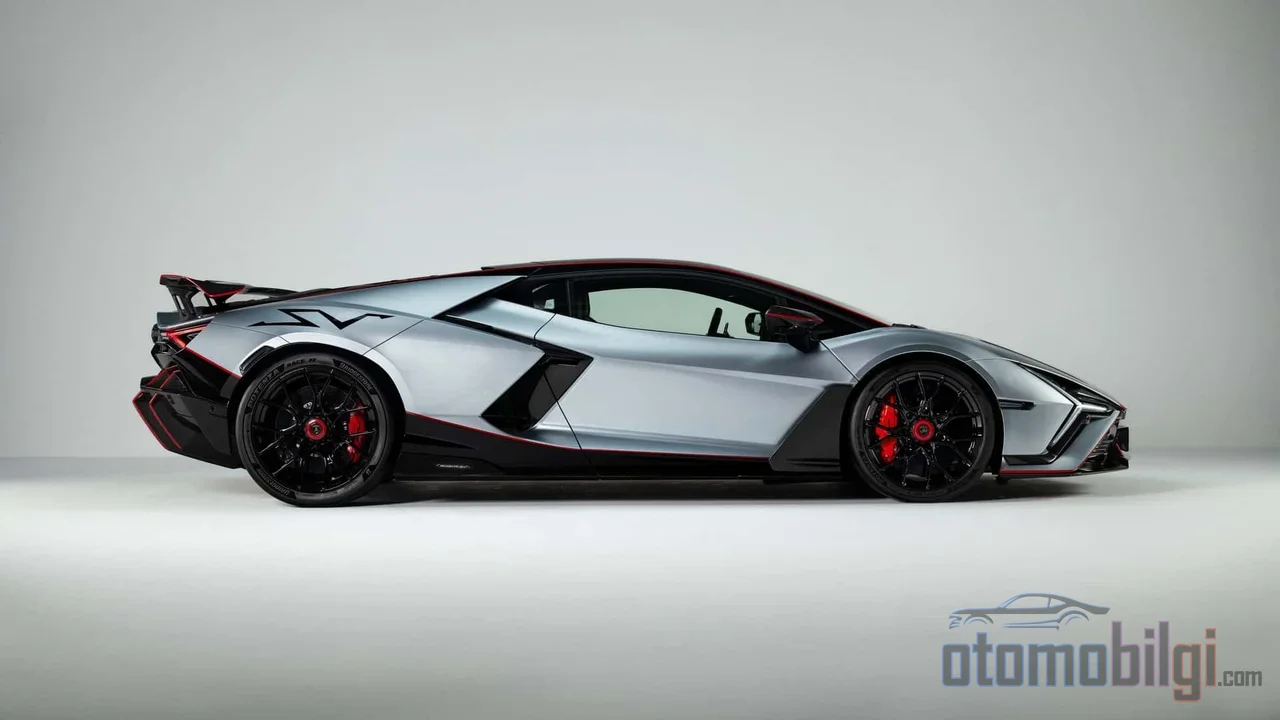
Dry weight is 1,772 kg, or 1,880 kg with fuel and fluids. The extra mass brought by the hybrid system is visible here: the Revuelto is somewhat heavier than its predecessor. In contrast, the chassis gains and the low-end rev range filled in by electric torque effectively compensate for this mass difference in practice. The wheelbase is 2,779 mm; the body is 4,947 mm long, 2,266 mm wide including the mirrors, and 1,160 mm high.
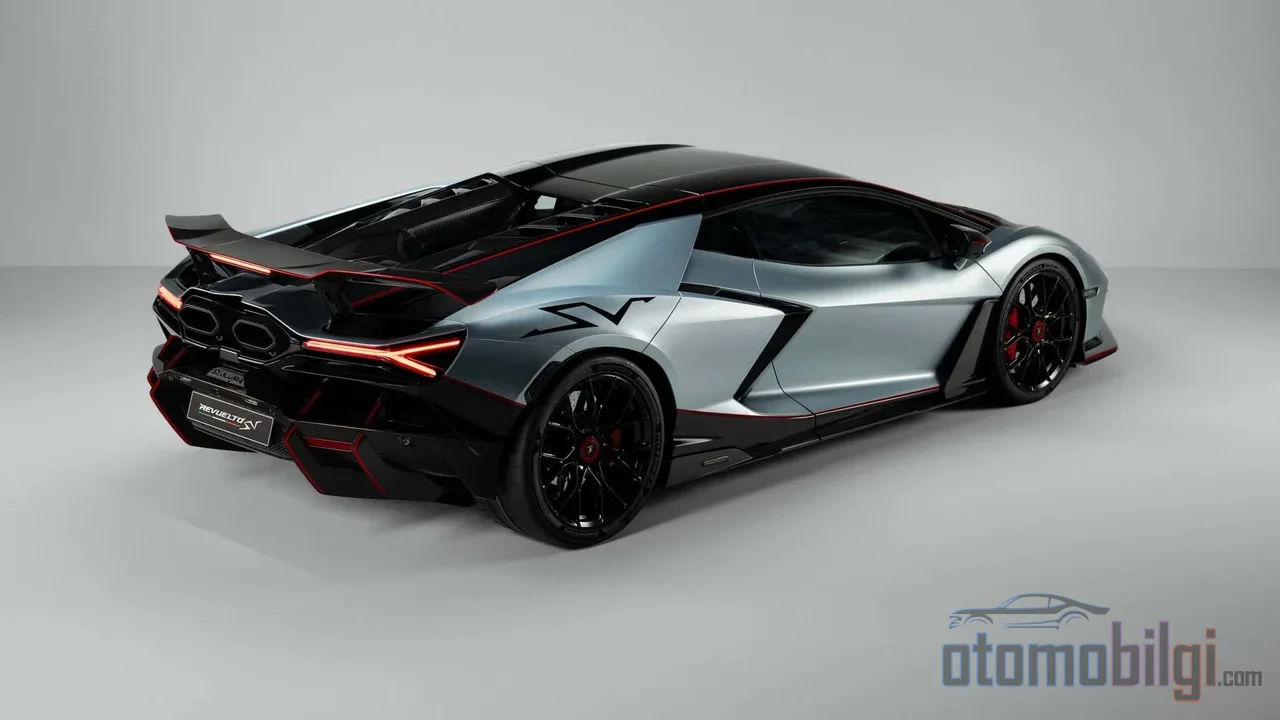
On the braking side, carbon-ceramic discs exceed the standard expectation: 10-piston calipers over 410×38 mm discs at the front, and 390×32 mm discs with 4-piston calipers at the rear. In active aerodynamics, the ALA (Aerodinamica Lamborghini Attiva) system is at work; Lamborghini states that the system is 80% lighter than equivalent hydraulic systems. Alongside the rear active spoiler, the exhaust tips located between the taillights and the fully open engine cover are distinctive design details.
Performance and Driving Modes
When the numbers are put on the table, the Revuelto's position becomes clear: 0-100 km/h in 2.5 seconds, 0-200 km/h in 6.6 seconds, 0-300 km/h in 15.3 seconds, and a top speed above 350 km/h. Independent measurements also confirm the factory data: In a test conducted in the United Kingdom, 0-60 mph was measured at 2.48 seconds, 100 mph at 4.8 seconds, and 150 mph at 10 seconds.
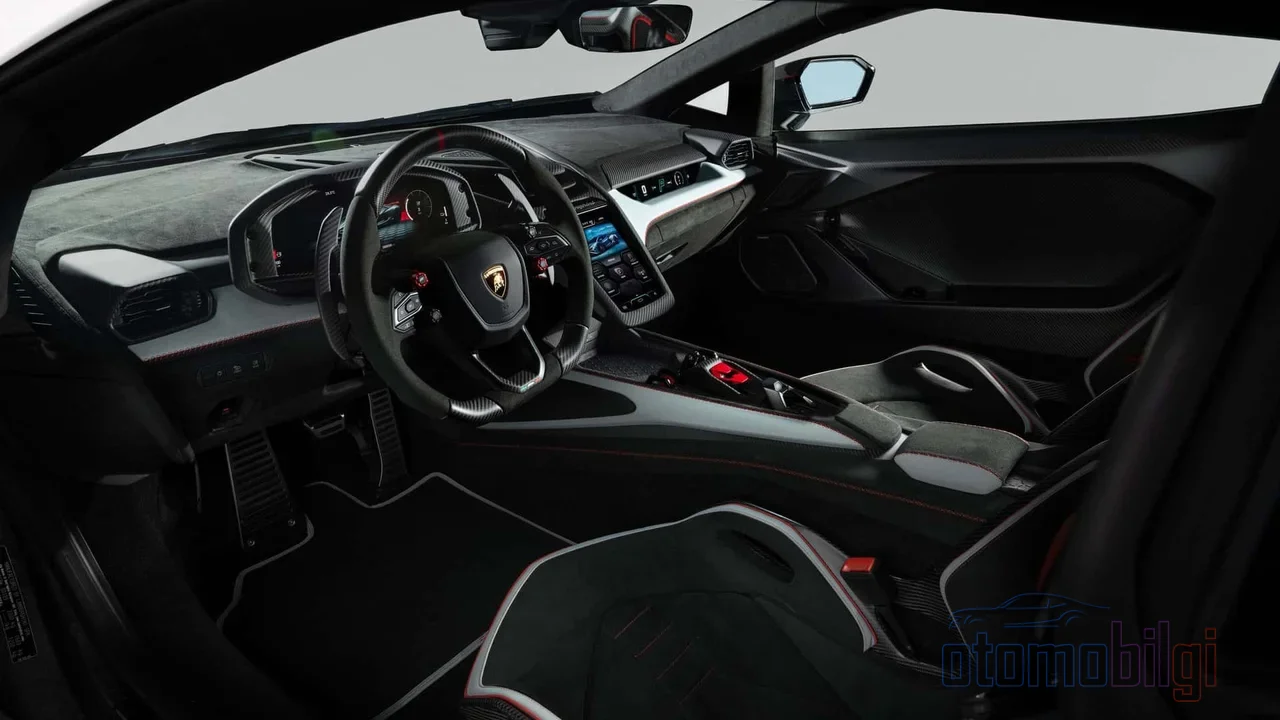
The range of driving modes is broad: In addition to Strada, Sport, and Corsa, a fully electric mode and the new Città - Italian for "city" - mode, specific to the hybrid era, reduce power for everyday use. The four rotary switches on the steering wheel bring mode selection to the driver's fingertips. The cockpit features an 8.4-inch vertical center display (with Amazon Alexa, Apple CarPlay, and Android Auto support), a separate screen in front of the passenger, and charge status and energy regeneration information on the instrument panel.
Revuelto or Aventador?
The comparison is inevitable. The Aventador, with its V12 producing 690 Nm of torque and 739 hp, was the reference of its era. The Revuelto sits clearly above its predecessor with a combined 1,015 CV of power and approximately 1,062 Nm of torque - the price being the extra weight brought by the hybrid system. The list prices in the United States market also reflect the generational gap: The Aventador is positioned at around $501,953, while the Revuelto sits at the $608,358 level.
The development on the chassis side is even more striking: A monocoque 10% lighter and 25% stiffer, electric torque vectoring, and an electrically enhanced version of all-wheel drive. The Aventador was a purely analog machine; the Revuelto carries the same spirit with a digital nervous system.
Revuelto SV: One Step Above the Summit
Unveiled in August 2026, the Revuelto SV raises the system power to 1,065 CV (783 kW) with the same 6,498.5 cm³ V12. According to official figures, 0-100 km/h drops to 2.4 seconds, and the top speed is announced as 348 km/h. The SV package stands out with more downforce, motorsport-derived improvements, and weight reduction with the carbon fiber racing seat option. While the standard model claims a top speed above 350 km/h, the SV's declared 348 km/h can be read as an indication that the aerodynamic setup has been rebalanced in favor of grip.
Conclusion: A Transformation Where the V12 Didn't Disappear but Grew Stronger
The Revuelto in a single sentence: It is the first true plug-in hybrid Lamborghini, keeping its 6.5-liter naturally aspirated V12, raising output to 1,015 CV with three electric motors, and keeping it all in check with a carbon monocoque chassis. Electrification here is not a compromise, but the fourth dimension of the powertrain. The V12's high-revving character remains exactly as it was; the electric motors fill the torque gap with zero lag and bring active torque distribution to the front axle. Production figures also show the scale of demand: 1,914 units were produced in 2024 and 2,079 in 2025. While the brand enters the hybrid V8 segment with the Temerario, the Revuelto proves that the summit is still held by the V12.