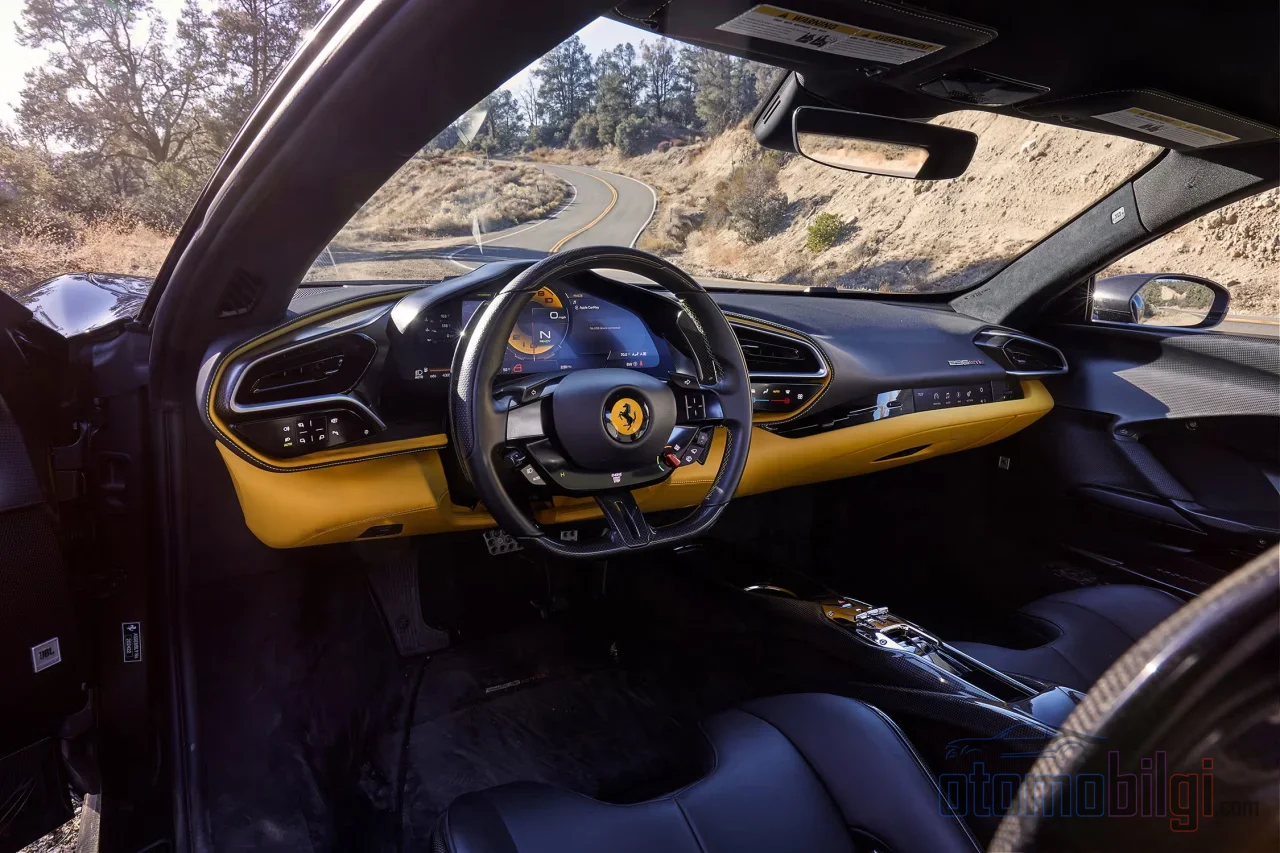
Ferrari 296 GTB: The Pinnacle of the Hybrid V6
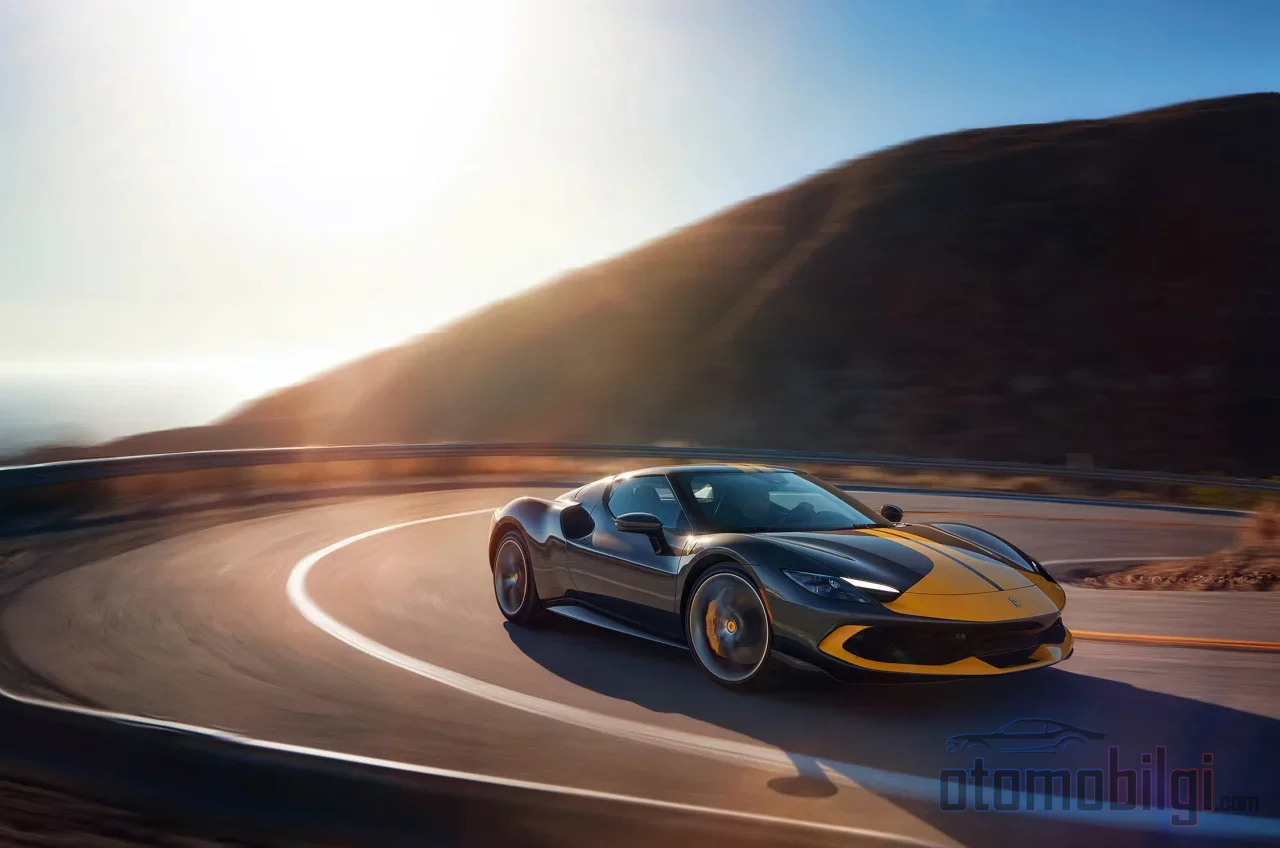
This hybrid berlinetta from Maranello is the model with which the brand stepped for the first time into an area considered taboo in its series-production history: a V6 used for the first time in series production. But once the numbers start speaking, it becomes clear how unnecessary the taboo was: a total of 830 PS of power, 2.9 seconds in 0-100 km/h acceleration and a top speed exceeding 330 km/h. So which components exactly deliver this performance, and what sets it apart from the other members of the 296 family? In this file, we examine the Ferrari 296 GTB's technical equipment, performance figures and its place within the model family one by one.
What Is the 296 GTB? The Meaning of the Name and Positioning
Ferrari 296, internally coded Type F171, is a two-seater sports car produced in Maranello since 2022. The coupé-bodied version is named 296 GTB, while the open-top version with a folding hard top carries the name 296 GTS. The model was introduced on June 24, 2021 and is considered the successor to the Ferrari F8; its relative sharing the same hybrid architecture is the SF90 Stradale.
The name is more descriptive than most Ferrari models. The number 296 refers to the engine's actual displacement (2,992 cc, i.e. approximately 2.9 liters) and the number of cylinders (6); GTB retains the classic designation: Gran Turismo Berlinetta. Excluding the models sold under the Dino brand, this is Ferrari's first series-production 6-cylinder car - and its design bears the signature of the Ferrari Styling Centre under the direction of Flavio Manzoni.
Even the launch strategy was atypical: Thanks to a collaboration with Epic Games, the 296 GTB became the first Ferrari added to Fortnite Battle Royale and remained in the game until October 2021. While this detail may seem to hide the real story under the engine hood, it is part of the positioning: Ferrari positioned the 296 outside the familiar hybrid supercar patterns, as a model addressing a new audience.
Highlights
- Total system power 830 PS (610 kW); combined torque 740 Nm
- 0-100 km/h in 2.9 seconds; top speed over 330 km/h
- 2,992 cc twin-turbocharged 120-degree V6 + 123 kW axial flux electric motor
- Electric range of 25 km; battery capacity 7.45 kWh
- Power-to-weight ratio 560 hp/ton; kerb weight 1,470 kg
How Is the 830 PS Produced? Architecture of the Powertrain
The heart of the 296 GTB is a twin-turbocharged V6 with a displacement of 2,992 cc, coded F163 BC. The engine's 120-degree bank angle allows the turbocharger units to be placed between the cylinder banks and provides a noticeably more compact block compared to the V8 format. On its own, this engine produces 663 PS at 8,000 rpm - a figure that is already an impressive level relative to its displacement.
But the second source that raises the total power to 830 PS is electricity. The electric motor placed between the engine and the transmission is a YASA-produced MGU-K -type axial flux motor with dual rotors and a single stator: it delivers 123 kW (167 PS) of power and 315 Nm of torque. The advantage of the axial flux architecture is that it offers higher torque density than conventional radial flux motors in the same size - in other words, this unit, packaged behind the rear axle, both adds power and saves space and weight.
The system operates with a plug-in hybrid (PHEV) layout: the internal combustion engine and the electric motor drive the rear wheels together. The energy storage is a lithium-ion high-voltage battery with a built-in 7.45 kWh capacity; electric range is 25 km. In electric mode, consumption is measured at 14 kWh/100 km, while the WLTP combined fuel consumption, as a natural result of its hybrid character, stands at 6.4 l/100 km and 149 g/km CO2. Although these figures are not the primary goal for a classic supercar, the ability to cover short urban distances on electric power alone adds to everyday usability.
Power is transmitted to the rear axle through an 8-speed dual-clutch transmission. The weight distribution and dimensions also support this positioning: length 4,565 mm, width 1,958 mm, height only 1,187 mm - in other words, the classic berlinetta silhouette - and a curb weight of around 1,470 kg.
Performance Data: What Do 2.9 Seconds and 330 km/h Mean?
When we put the numbers side by side, it becomes clear which league the 296 GTB plays in: 0-100 km/h acceleration in 2.9 seconds, top speed in excess of 330 km/h, and a power-to-weight ratio of 560 hp/ton. This ratio is the product of a lightweight body and high system output working together - because many hybrid supercar rivals carrying 830 PS have a noticeably higher mass.
A note should be made here: in the literature, it is possible to encounter two different power figures, 830 HP and 819 hp. This is not a contradiction, but the same value expressed in two different units - 830 PS is metric horsepower, while 819 hp is its equivalent in SAE hp. Similarly, the engine displacement is sometimes written as 3.0 liters and sometimes as 2.9 liters; the official figure is 2,992 cc, and both roundings are derived from this actual value.
Chassis and Aerodynamics: How Does the Active Rear Spoiler Work?
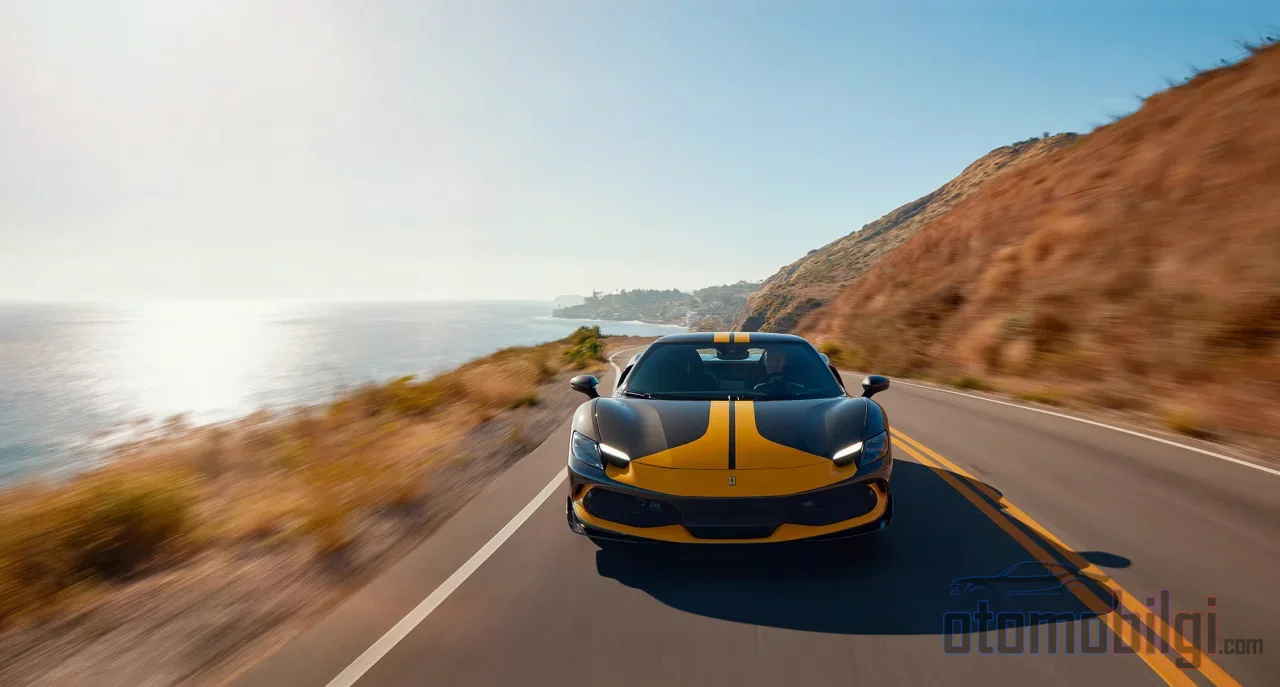
The main aerodynamic signature of the 296 GTB is the active rear spoiler integrated into the rear bumper. Conceptually inspired by the LaFerrari, the function of this solution is interesting: its aim is not to reduce drag, but on the contrary, to generate additional load (downforce) and increase steering balance. In the low drag (LD) configuration, the car produces 10% more downforce than the previous generation; when the active high downforce (HD) setting kicks in, it gains an additional 100 kg of load.
A 6w-CDS type body sensor and actuator set are active in body control; in other words, the aerodynamic surfaces do not behave like a fixed wing, but change position according to conditions. If track-focused use is desired, the Assetto Fiorano option package comes into play: with upgraded suspension, carbon fiber body components and a polycarbonate rear window, the balance of weight and stiffness is tipped in favor of the track.
The GTB's Place Within the 296 Family: Its Differences from the GTS and Speciale
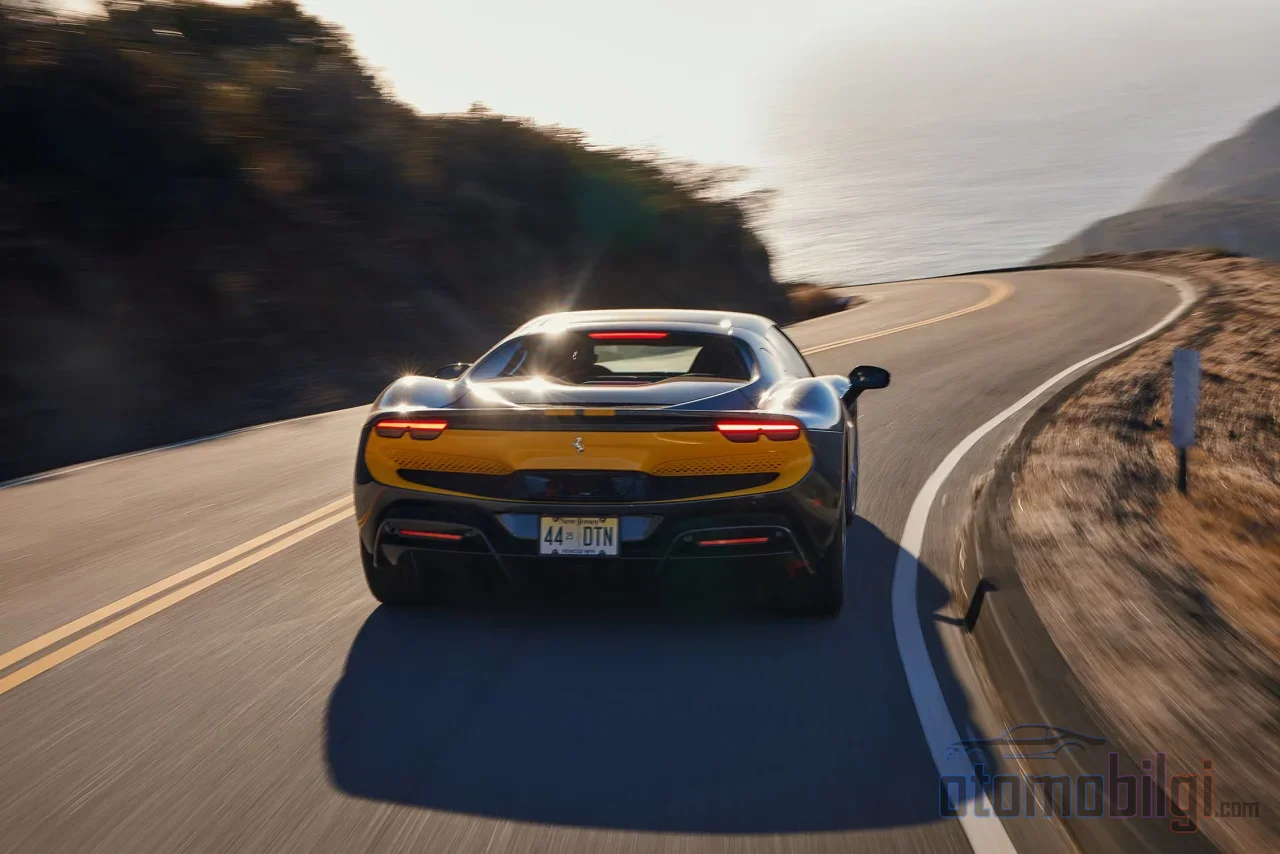
296 GTS: Same Heart, Open Body
The 296 GTS is the open version of the GTB with a folding hard top. The roof opens and closes in 14 seconds, and this operation can be done at speeds of up to 45 km/h - meaning switching to open-air enjoyment is practical even in city traffic. The fundamental difference on the engineering side is weight: due to chassis reinforcement components, the GTS is 70 kg heavier than the GTB. The performance figures remain the same; the open body has been kept rigid enough to compensate for the mass added by the folding mechanism.
296 Speciale: The Performance Version Climbing to 880 PS
Announced in April 2025, the 296 Speciale is the family's high-performance member. The 2.9-liter engine was raised to 700 PS (515 kW), and together with the hybrid system the total power reached 880 PS (868 hp) - that's an increase of 49 PS over the GTB and GTS. Part of the increase comes from improved hybrid system cooling, and this total figure sets a record level for a rear-wheel-drive Ferrari.
The Speciale's engineering resources are also different: thanks to a knock control system derived from F1, combustion chamber pressure was increased by 7% compared to the GTB; Multimatic adjustable dampers derived from the 296 GT3 race car, along with stiffer, lightweight titanium springs, tightened up the chassis with a track-focused setup. Dry weight dropped to 1,410 kg in the coupé version and 1,460 kg in the folding-top version. On the aerodynamics side, 20% extra downforce is claimed compared to the standard model; the Speciale is said to produce 435 kg of downforce at 250 km/h. The difference is also felt in the driving character: the steering response is quicker and weighted more heavily.
| Model | Total Power | Body / Roof | Key Difference |
|---|---|---|---|
| 296 GTB | 830 PS | Berlinetta coupé | Founding member of the series, 2.9 s 0-100 km/h |
| 296 GTS | 830 PS | Folding hard top | 70 kg heavier than the GTB, same performance |
| 296 Speciale (coupé) | 880 PS | Coupé, 1,410 kg dry weight | 20% extra downforce, suspension derived from the GT3 |
| 296 Speciale (open) | 880 PS | Folding hard top | 1,460 kg dry weight |
Limited-Production Special Versions
The family widens one step further. The 296 Speciale Piloti was introduced on the occasion of the 2025 24 Hours of Le Mans; with a livery reflecting the yellow-and-red colors of the Ferrari 499P in the Hypercar class, it stands as a tribute to Le Mans victories. At the more extreme end is the 296 GT Modificata, introduced in September 2026: a special model based on the 296 GT3 Evo, fully track-focused, usable independently of racing regulations, and producing 730 hp. The success of the 296 GT3 on the racing front is also tangible: the 2023 Nurburgring 24 Hours and 2024 Daytona 24 GTD PRO victories, the 2024 WEC LMGT3 wins, and the 2025 Macau FIA GT World Cup trophy - Ferrari's first victory in Macau.
Hybrid V6 Experience, or a Return in Classic Supercar Sound? Conclusion
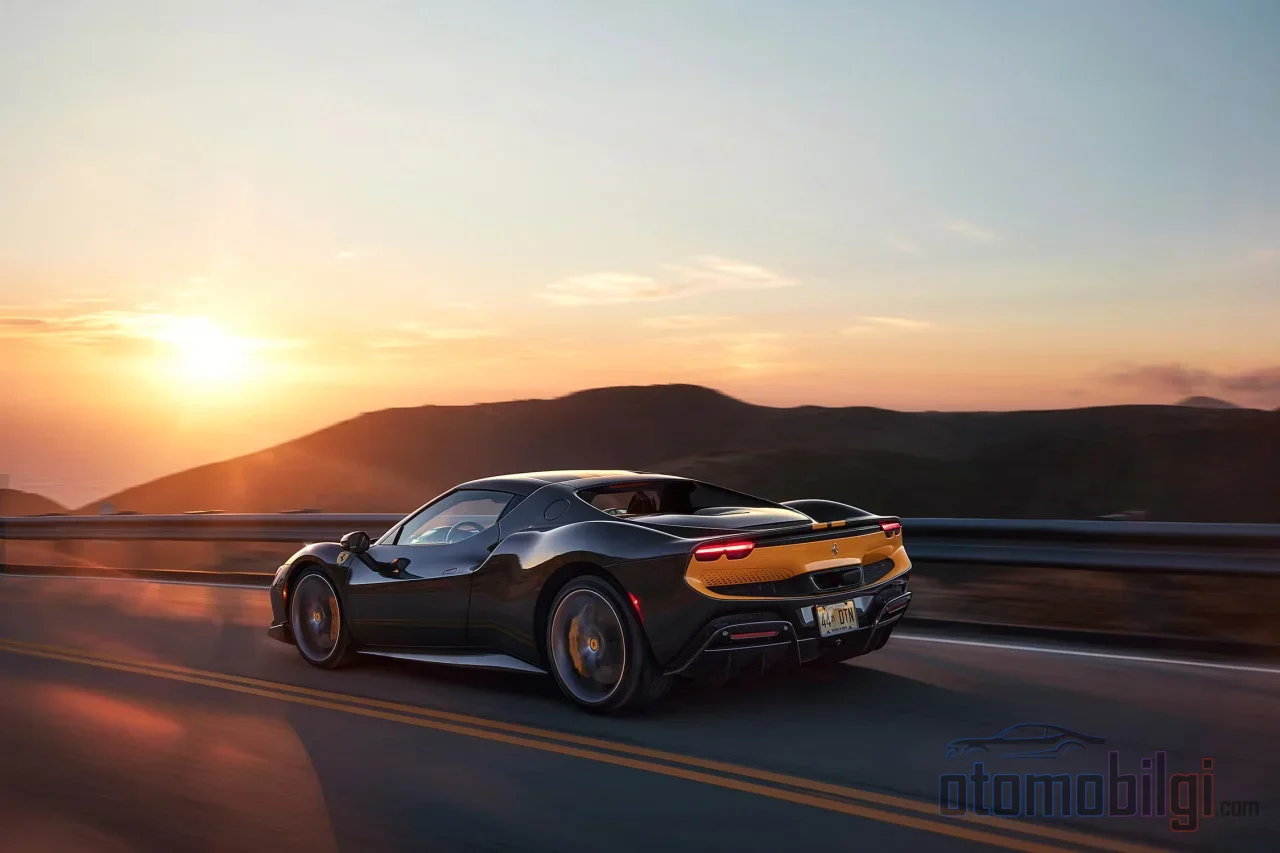
The question to be asked is simple: Can Ferrari's first series-production V6 truly do its job alongside the brand's 12-cylinder heritage? The technical table confirms it. The 120-degree V6 with a displacement of 2,992 cc produces 663 PS despite its compact size; the axial-flux electric motor adding 167 PS takes total output to 830 PS, and 740 Nm of combined torque delivers this power to the rear wheels with discipline. A 0-100 km/h sprint of 2.9 seconds and a top speed exceeding 330 km/h are measurable proof of this architecture's efficiency.
The GTB's strength lies beyond performance, in its balance: A 25 km electric range smooths daily use, while the active rear spoiler and LD/HD aerodynamic settings change its character according to conditions. For track-focused users, the Assetto Fiorano package and the 880 PS Speciale at the top of the family show the ceiling of the same architecture. In short, the 296 GTB maintains its position as the model with which Ferrari made its transition to the hybrid era not with dramatic compromises but with measurable gains - and the 296 family offers an almost complete range built on this foundation.
Sources