Lamborghini Temerario: The New Star of the V8 Hybrid Revolution
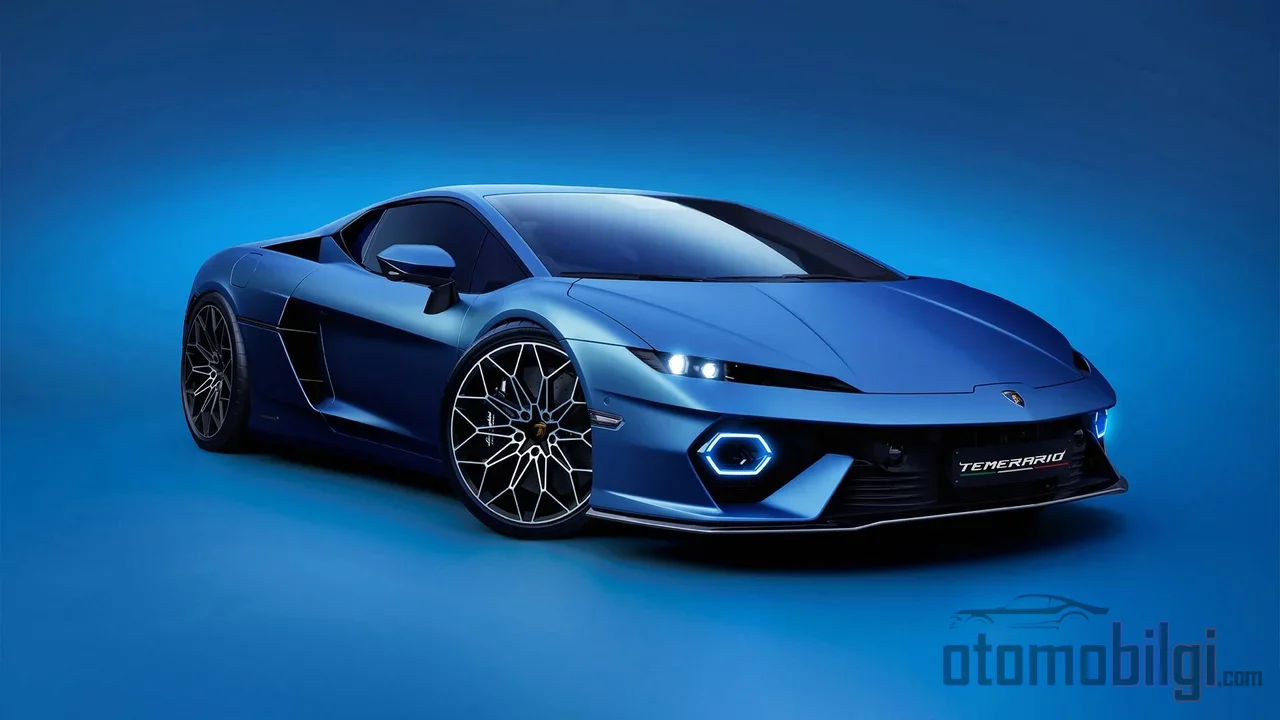
When Lamborghini introduced the car to replace the Huracán, everyone realized an era had come to an end in Motor Valley: the naturally aspirated V10 was gone, replaced by a twin-turbocharged V8 and three electric motors. But can this combination preserve the soul of a Lamborghini? The Temerario is the engineering answer to that question - and the first line of that answer features a remarkable number: 10,000 rpm. A turbocharged engine revving this high is unusual; Lamborghini did it deliberately.
In this review, we take a detailed look at the Temerario's hybrid powertrain, its real-world performance figures, its chassis and aerodynamic approach, and its place in the brand's electrification strategy.
What Is the Temerario and What Does It Bring to Replace the Huracán?
The Temerario was unveiled in August 2024 and went on sale as the Huracán's direct successor starting with the 2026 model year. Its name roughly translates into English as "fearless" or "bold," but the car's most significant calling card is that Lamborghini has combined a twin-turbo V8 with three electric motors in a series-production supercar for the first time. Total system output is 920 CV (677 kW).
In the brand's terminology, the Temerario is the second model of the HPEV - or High Performance Electrified Vehicle - family. The first was the V12 plug-in hybrid Revuelto. The common denominator of this family is clear: electrification is used for performance, not for savings.
Highlights
- 920 CV of total power: a combination of the twin-turbo V8 producing 800 PS and three electric motors
- 10,000 rpm redline - the first Lamborghini engine to exceed this rev limit
- 0-100 km/h in 2.7 seconds, top speed 343 km/h
- Aerodynamic load increases by up to 103% compared with the Huracán EVO
- Base price of $387,649; a notably more expensive entry than the Huracán
How Does the 920 CV Hybrid V8 Work?
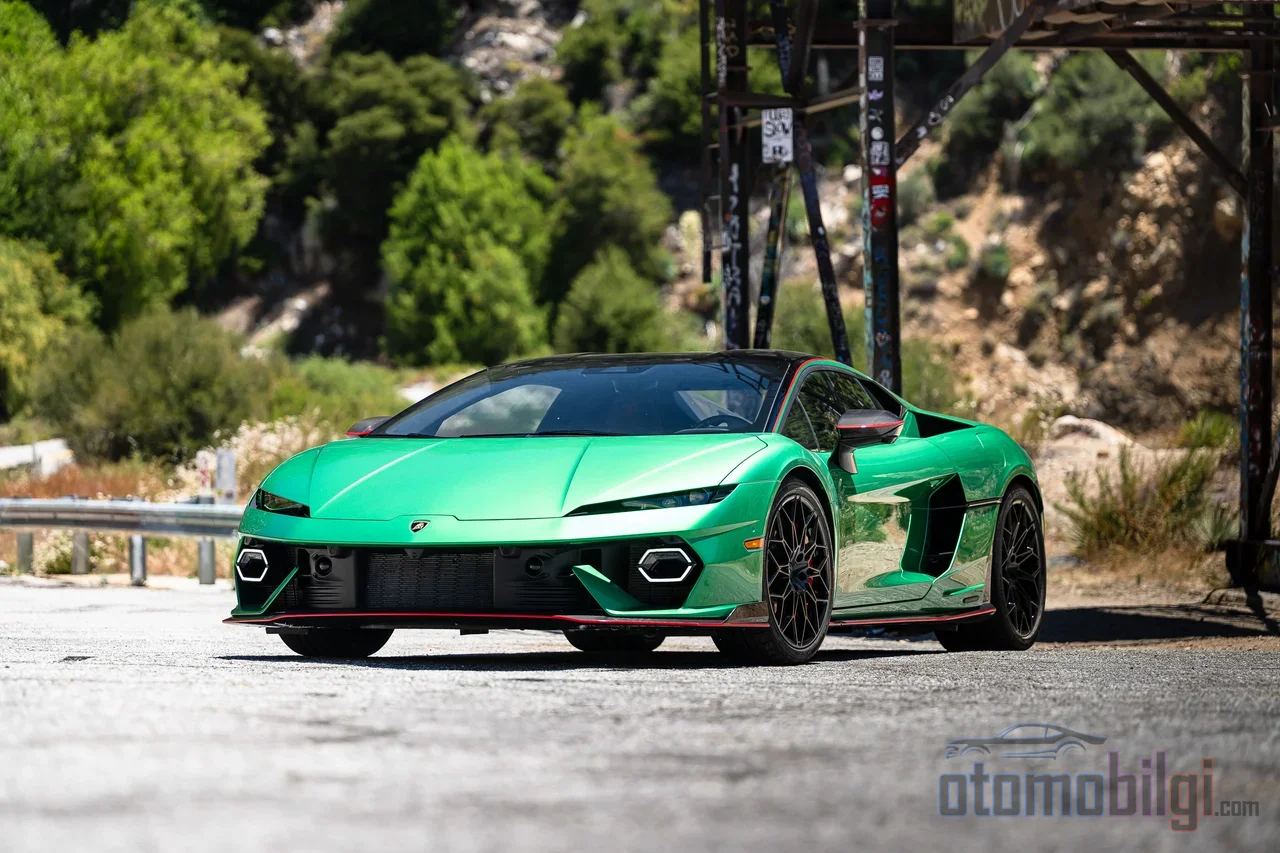
Engine: 4.0 Liters, Twin Turbo, Flat-Plane Crank
At its heart lies a twin-turbocharged V8 with 4-liter (3995.2 cc) displacement and a hot-vee architecture. The crank profile is flat-plane, which means a more eager character at high revs and a sound signature rarely associated with turbocharged engines. On its own, the engine produces 800 PS (588 kW); maximum power is delivered between 9,000 and 9,750 rpm, while torque peaks at 730 Nm between 4,000 and 7,000 rpm.
The truly bold decision lies in the rev limit: the redline is 10,000 rpm. Since turbocharged engines usually max out at low revs, this is an unusual figure in the industry. Here Lamborghini aims to combine the torque advantage of a turbo engine with the drama of high revs in a single package; taking a turbo engine to 10,000 rpm can be read as an attempt to approach the feel of a naturally aspirated engine in terms of character.
Three Electric Motors and the Real Owner of the Torque
On the electric side, three motors are at work, all using axial-flux technology. One is positioned ahead of the transmission, coupled to the engine, while the other two operate individually on each wheel of the front axle; each one producing 147 hp. With the electric motors engaged, total torque rises to approximately 800 Nm (590 lb-ft).
Power is sent to all four wheels through an 8-speed dual-clutch Graziano transmission. What the two motors on the front axle add is not just power: vectorial distribution of torque per wheel, meaning traction can be adjusted instantly when entering and exiting corners.
Performance: Official Figures and Track Tests
According to official figures, the Temerario completes 0-100 km/h in 2.7 seconds and reaches a top speed of 343 km/h. Independent tests turned out to be more optimistic about acceleration: in two separate independent measurements, 0-60 mph times were recorded as 2.1 and 2.2 seconds; the quarter mile was completed in 9.4 seconds @ 150 mph. These figures left the Revuelto behind in the same tests.
The gap between the official claim and the test results is not surprising: manufacturers usually declare acceleration under conservative conditions and according to the measurement procedure, while independent tests are run on an ideal track with roll-out correction. The important point here is this: the car's real-world acceleration is better than the figure on paper.
| Data | Temerario | Revuelto |
|---|---|---|
| Engine | 4.0 L twin-turbo V8 + 3 electric motors | 6,498 cc V12 + electric |
| Total power | 920 CV (907 hp) | 1,015 hp |
| Redline | 10,000 rpm | - |
| 0-100 km/h (official) | 2.7 sec | Somewhat faster |
| Top speed | 343 km/h | - |
| WLTP combined consumption | 10.3 l/100 km | - |
The Everyday Side of the Hybrid System: Battery, Charging, and Electric Mode
Although the Temerario's electric side is configured with supercar performance in mind, it also carries hardware for daily use. In the center tunnel, positioned alongside the transmission, the lithium-ion battery has a capacity of 3.8 kWh; energy is replenished both through regenerative braking and from the engine. With the 7 kW onboard charging unit, a full charge at a home outlet takes about 30 minutes.
Range in electric-only mode is short by supercar standards: approximately 6-7 km (4 miles). No official maximum electric range figure has been shared; the purpose here is to be able to move silently in traffic and during garage maneuvers, not long range. The WLTP combined consumption is declared as 10.3 l/100 km; with an empty battery this figure rises to 14 l/100 km, so keeping the battery charged is meaningful both for performance and efficiency.
Driving Modes and Drift Mode
There are 13 driving programs selected via a button on the steering wheel; launch mode and a three-stage drift mode are also included in this list. The hybrid system itself has three new modes: Recharge, Hybrid, and Performance. In short, the driver can choose any point in between, from prioritizing battery charging to full performance.
Chassis, Aerodynamics, and Dimensions
The Temerario sits on an all-new aluminum spaceframe chassis; structure, both lighter and stiffer than the Huracán's chassis, with a significantly reduced number of components. It should be noted that no carbon fiber monocoque is used: Lamborghini chose to stick with aluminum in this segment, deriving the weight and packaging advantage from it.
The leap in aerodynamics is remarkable: downforce increases by up to 103% compared to the Huracán EVO, and up to 158% in some versions. On the tire front, Bridgestone Potenza Race - 255/35ZR-21 at the front, 325/30ZR-21 at the rear - and carbon ceramic brake discs are standard.
The dimensions have grown compared to the Huracán: length is 185.3 inches, width is 78.6 inches, wheelbase is 104.6 inches; curb weight is approximately 1,905 kg. With a high-revving engine and hybrid components, this weight is one of the reasonable values in its class.
Interior: More Space, Three Screens, and Track Analysis
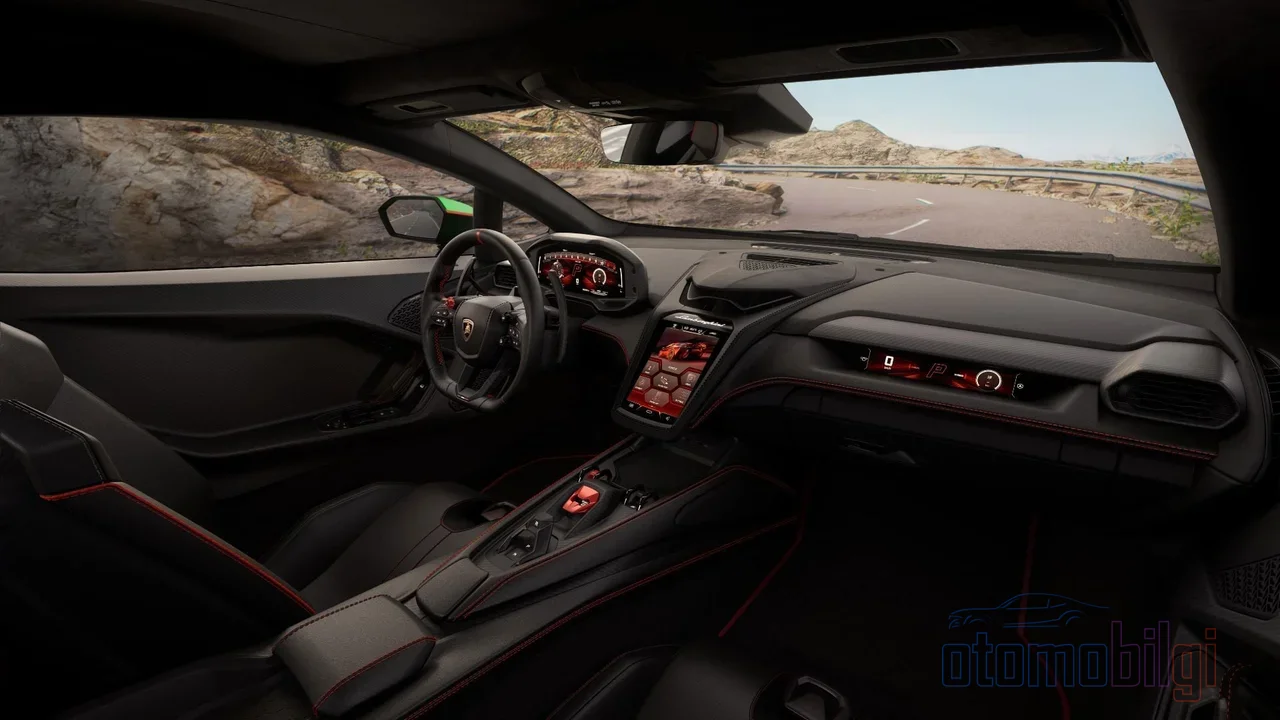
Lamborghini appears to have listened to the real-life complaints of supercar owners: headroom has increased by 1.3 inches and legroom by 1.8 inches compared to the Huracán; the cabin can accommodate a helmeted driver up to 1.93 m tall. The growth of the body has paid off.
On the technology front, there are three screens: a 12.3-inch instrument cluster, an 8.4-inch infotainment screen, and a 9.1-inch passenger screen. Wireless Apple CarPlay and Android Auto along with a Sonus Faber sound system are standard; the driver's seat is 18-way adjustable, heated, and ventilated.
The most interesting part is the Lamborghini Vision Unit (LAVU): a system that records driving footage with three cameras facing the road, the passenger, and the driver's shoulder, and can perform performance analysis with pre-loaded data for 150 tracks. It also features a two-minute "memories recorder" and a one-minute dashcam function - reviewing lap telemetry after a track day is now the car's own job.
The V10's Retirement and Lamborghini's Electrification Strategy
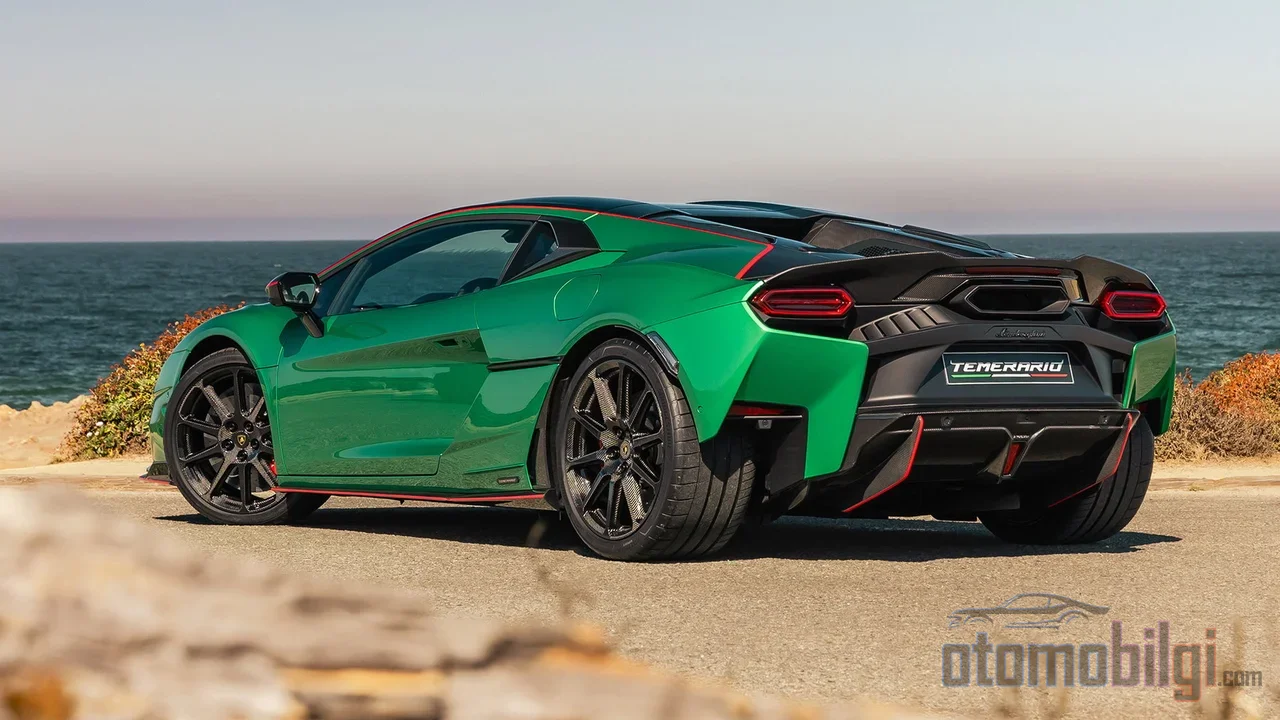
Moving away from the naturally aspirated V10 is a decision Lamborghini knows will upset enthusiasts; behind it lie tightening emission and noise regulations. The project first came to light in May 2024 under the codename "Lamborghini 634," and most of the pre-launch speculation turned out to be true: a twin-turbo 4.0 V8 with a 10,000 rpm redline and three electric motors.
From an engineering perspective, the rationale is clear: Abandoning the V10 avoids weight and packaging problems, while hybrid assistance ensures the extreme performance is preserved. In other words, emission targets are met here not by sacrificing power but through a new architecture.
Temerario GT3: The Track Side Is Hybrid-Free
Shortly after the road car's launch, the Temerario GT3 took the stage in July 2025; it will enter competition in the 2026 season as the flagship GT racing car replacing the Huracán GT3, which has served for a decade. An interesting detail: the racing version uses the same 4.0-liter twin-turbo V8 but lacks the hybrid components of the road version, and the gearbox is rear-wheel drive. On the track, weight, simplicity, and ease of maintenance take the place of the hybrid.
How Does the Temerario Distinguish Itself Within the Same Family as the Revuelto?
The Revuelto, with its 6,498 cc V12 plug-in hybrid architecture, produces 1,015 hp and 535 lb-ft of torque; it holds the advantage of more power on paper and slightly quicker acceleration. The Temerario's total output (907 hp) is exactly 94 hp behind the Revuelto's. However, the numbers alone aren't enough to see that the two cars don't share the same goal.
The Revuelto is the family's flagship; the Temerario, on the other hand, is a more compact, more driver-focused supercar with a high-revving character. Within the Super Sport Veicoli Elettrificata approach, the two divide different duties: one represents the summit, the other the act of driving itself. This distinction is also felt inside the cabin; the Temerario's dashboard comes with a more angular and aggressive design.
The Punchline: Is It the True Successor to the Huracán, and What's the Price?
The Temerario's base price is $387,649; a test vehicle came to the equivalent of $605,749. That means a noticeable price jump from the Huracán, and the criticism comes from here too: some rivals offer similar performance at a lower price, and some find the styling perhaps too plain. On the other hand, the same experience yields assessments that the powertrain is found to be "sensational" and that its track behavior remains fun.
So, the clear answer: Yes, the Temerario is the true successor to the Huracán - it arrives with a completely new design and a hybrid V8 architecture. Lamborghini's risky decision, to imitate the drama of the naturally aspirated engine through rev count, is measurably successful: a turbo V8 spinning to 10,000 rpm, three axial-flux electric motors, and 343 km/h. This is an engineering story worth reading even for those mourning the simplified end of the V10; you just need to check your wallet one more time before buying.