Ferrari 849 Testarossa: The Giant Replacing the SF90
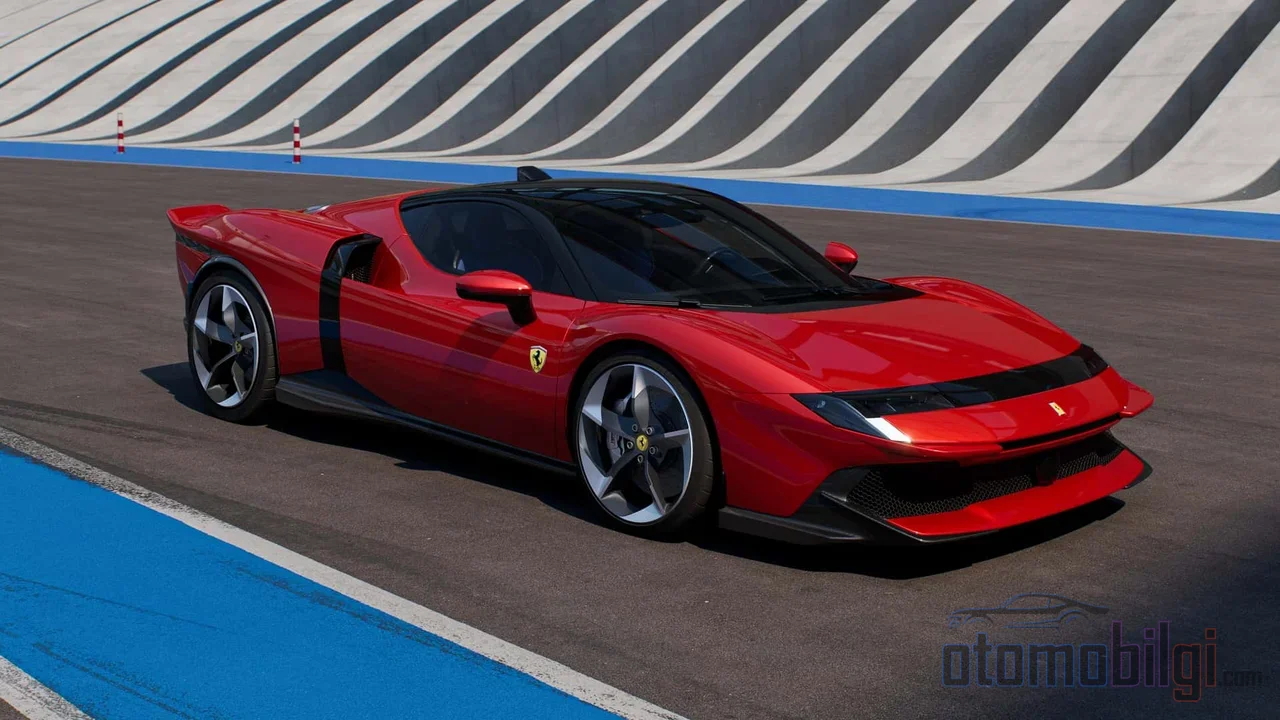
An icon recognized by its wide rear end in 1984 has returned in 2025 with a different philosophy: The Ferrari 849 Testarossa was unveiled on September 9, 2025 as the new flagship replacing the SF90 Stradale. The name is legendary; but the architecture under the hood is that legend adapted to an entirely different era. So why is this car getting so much attention?
The short answer: 1,050 cv of total system power, acceleration from 0 to 100 km/h in under 2.3 seconds, and a remarkable lap time set at Ferrari's own test track, Fiorano. But the real story is that these figures come not from a single massive V12, but from three electric motors working in harmony with an internal combustion engine. Here every component has its own distinct task, and the engineering lies precisely in this division of labor.
How Does the 849 Testarossa's Hybrid Architecture Work?
The 849 Testarossa has a plug-in hybrid (PHEV) architecture derived from the SF90 Stradale. The system consists of three main components: at the rear, a twin-turbocharged V8 gasoline engine mounted directly behind the driver; at the front, two electric motors working independently; and a lithium-ion battery with 7.45 kWh capacity connecting them.
The layout is built on this logic: The 4.0-liter (3,990 cc) dry-sump twin-turbo V8 engine alone produces 830 cv of power at 7,500 rpm and 842 Nm of torque at 6,500 rpm. Three electric motors are added to this; their combined peak output is at a level of approximately 220 hp. A motor placed between the engine and the transmission fills the torque gap during acceleration and recovers energy during gear shifts. The two front motors do more than just add power: they provide all-wheel drive on demand, and by managing each front wheel individually, they take on the torque vectoring function.
The result is 1,050 cv of total system power: Ferrari defines this figure as an absolute record for a series-production Ferrari. Power is delivered to all four wheels through an 8-speed dual-clutch (DCT) transmission. The battery offers the car a fully electric range of approximately 25 km; meaning the car can move silently with zero local exhaust emissions over short distances in the city.
Highlights
- Total system power: 1,050 cv (4.0-liter twin-turbo V8 + three electric motors)
- 0-100 km/h: under 2.3 seconds, 0-200 km/h: 6.35 seconds
- Fiorano lap time: 1:17.5 (SF90 Stradale: approximately 1:19)
- Fully electric range: approximately 25 km (7.45 kWh battery)
- A retractable hard top that opens in 14 seconds on the Spider version
Performance: What Do the Numbers Say?
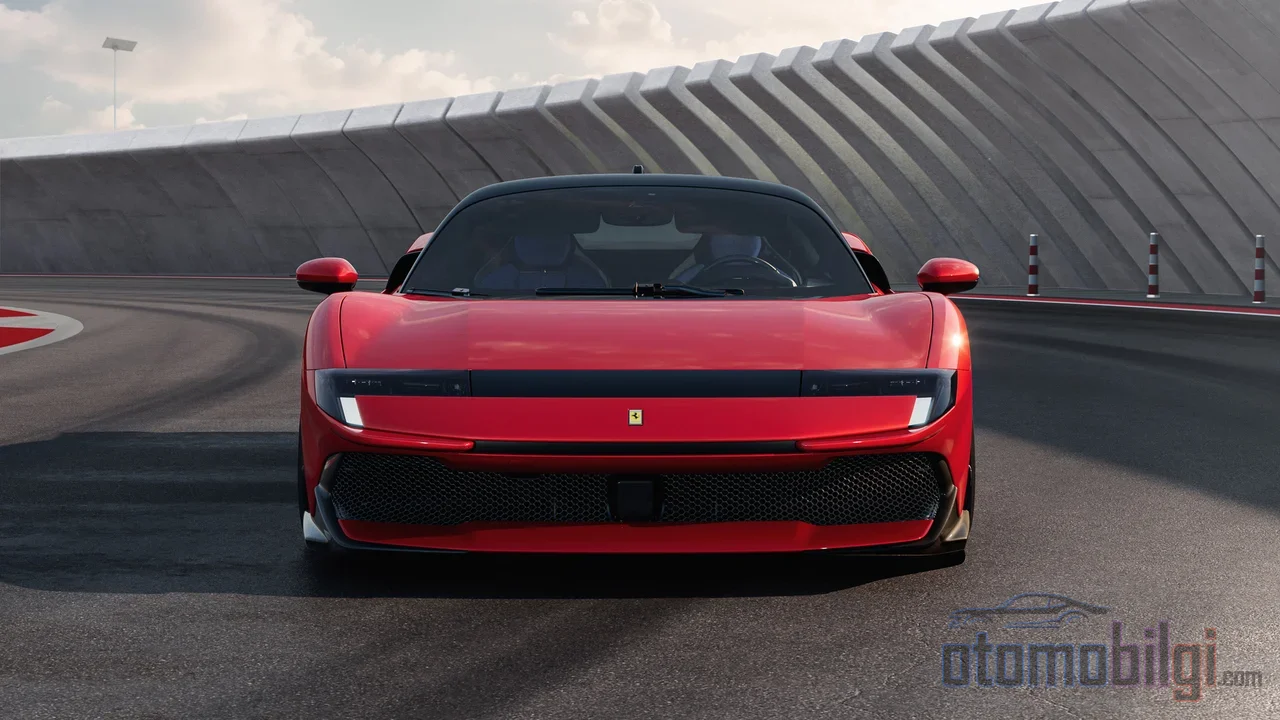
Acceleration figures are the most tangible gain of the hybrid architecture. The electric motors' instant response to the throttle covers the rev ranges where turbo boost has not yet built up. Thus, 0-100 km/h is completed in under 2.3 seconds; the 0-200 km/h time is 6.35 seconds. Top speed exceeds 330 km/h where legal limits allow.
On the track side, the most talked-about figure is the lap time at Fiorano. Ferrari states that the 849 Testarossa's lap at the factory track is 1:17.5; the SF90 Stradale completed the same track in roughly 1:19. So the new flagship holds an advantage of about 1.5 seconds per lap over its predecessor. The reported time attributed to the Spider version is 1:18.01; this difference is most likely due to the added weight of the fixed roof and the equipment difference.
Technical Specifications Table
| Feature | Value |
|---|---|
| Internal combustion engine | 4.0 L (3,990 cc) twin-turbo V8, dry sump |
| V8 power / torque alone | 830 cv (7,500 rpm) / 842 Nm (6,500 rpm) |
| Electric motors | 3 units (2 front, 1 between engine and transmission), total ~220 ps |
| Total system output | 1,050 cv |
| Battery / electric range | 7.45 kWh lithium-ion / ~25 km |
| Transmission / drivetrain | 8-speed DCT / all-wheel drive (AWD) |
| 0-100 km/h | under 2.3 s |
| 0-200 km/h | 6.35 s |
| Top speed | over 330 km/h |
| Dimensions (L/W/H) | 4,718 x 1,999 x 1,225 mm |
Aerodynamics and Chassis: What Has Changed Compared to the SF90?
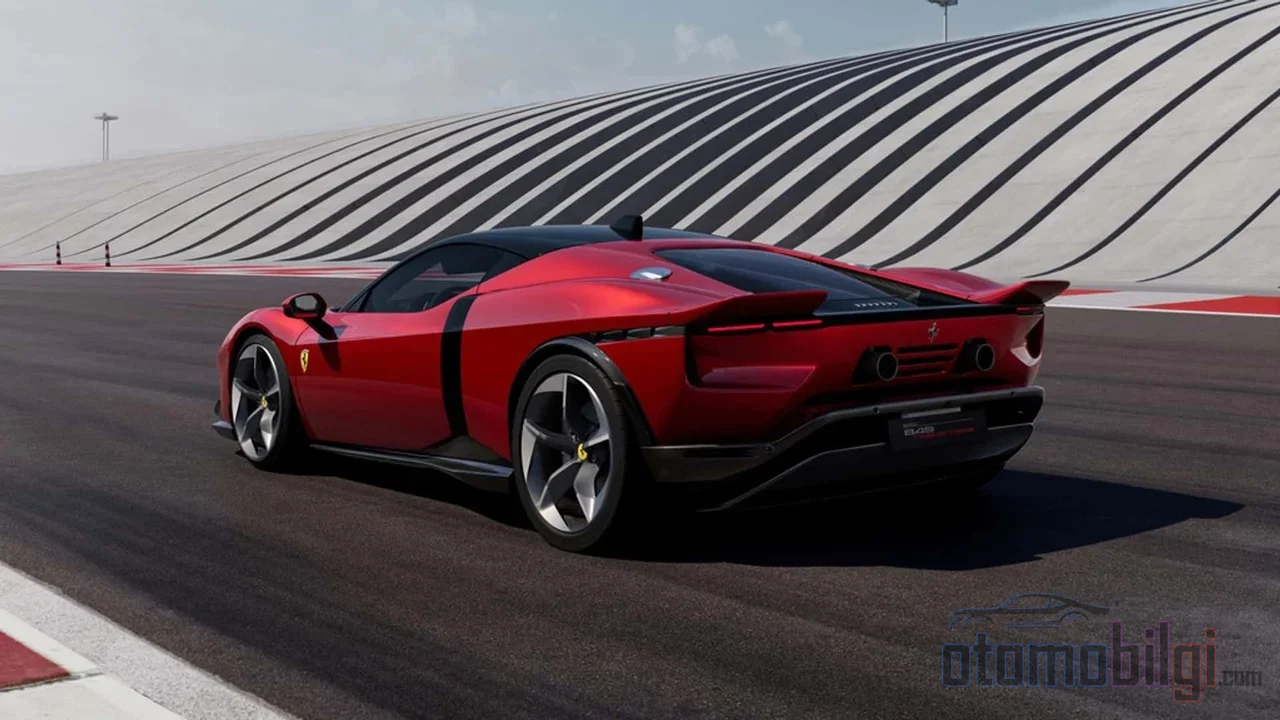
The gain at Fiorano cannot be explained by the increase in power alone; serious steps have been taken on the aerodynamics side. The 849 Testarossa needs 15% more cooling compared to the SF90; because the hybrid system and the twin-turbo V8 together generate a serious heat load. This need is met by wide air intakes integrated into the body and active aerodynamic elements.
The gain is measurable: the new car generates 25 kg more downforce than its predecessor; at 250 km/h this figure reaches 415 kg. At the rear, a twin rear spoiler arrangement with active aerodynamics can redistribute balance under braking and cornering.
FIVE: The Digital Twin in the Car
A new digital twin system called FIVE handles chassis management; it is accompanied by a brake-by-wire braking architecture. The concept is this: by continuously updating its own digital model, the car calculates in real time how braking force and aerodynamic balance will be distributed to each wheel. Combined with the torque vectoring of the electric motors, the driver's control loop also becomes part of this calculation.
Interior and Driver-Focused Equipment
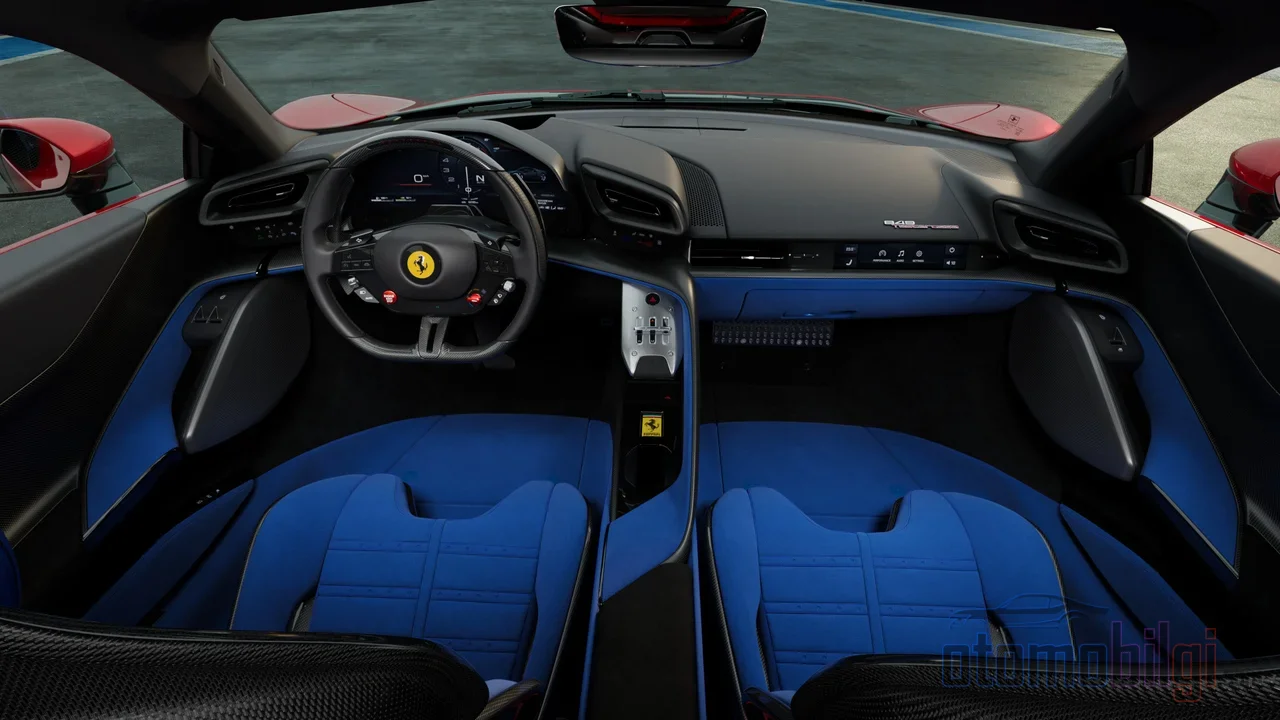
Two details stand out in the cockpit. The first is the return of physical buttons on the steering wheel derived from the F80: Ferrari has abandoned the previously criticized fully haptic setup. The second is the 16-inch digital instrument cluster and the 9-inch screen in front of the passenger; to these are added wireless CarPlay and Android Auto, a 7-speaker sound system, and wireless charging. On the safety side, there is the Side Slip Control system, equipment ranging from 4 to 6 airbags, tire pressure monitoring (TPMS), and driver assistance (ADAS) features.
Spider Version: Open-Top and the Most Powerful
The 849 Testarossa family is not limited to a single body type. The Spider version comes with a retractable hard top (RHT) structure; the roof can open and close in 14 seconds while moving at speeds up to 45 km/h. On the power side, it is the same as the coupe: 1,050 hp. Ferrari describes this figure as a first for an open-top model in a series-production Ferrari, positioning the Spider as the most powerful open-top Ferrari to date.
Where Does the Testarossa Name Come From?
The name means "red head" in Italian; it originates from the red covers (red valve covers) of Ferrari's racing engines in the 1950s, with traces going back as far as 1956. So the 849's nod refers not only, as many assume, to the road car introduced in 1984, but reaches further back to the racing engines known as testa rossa.
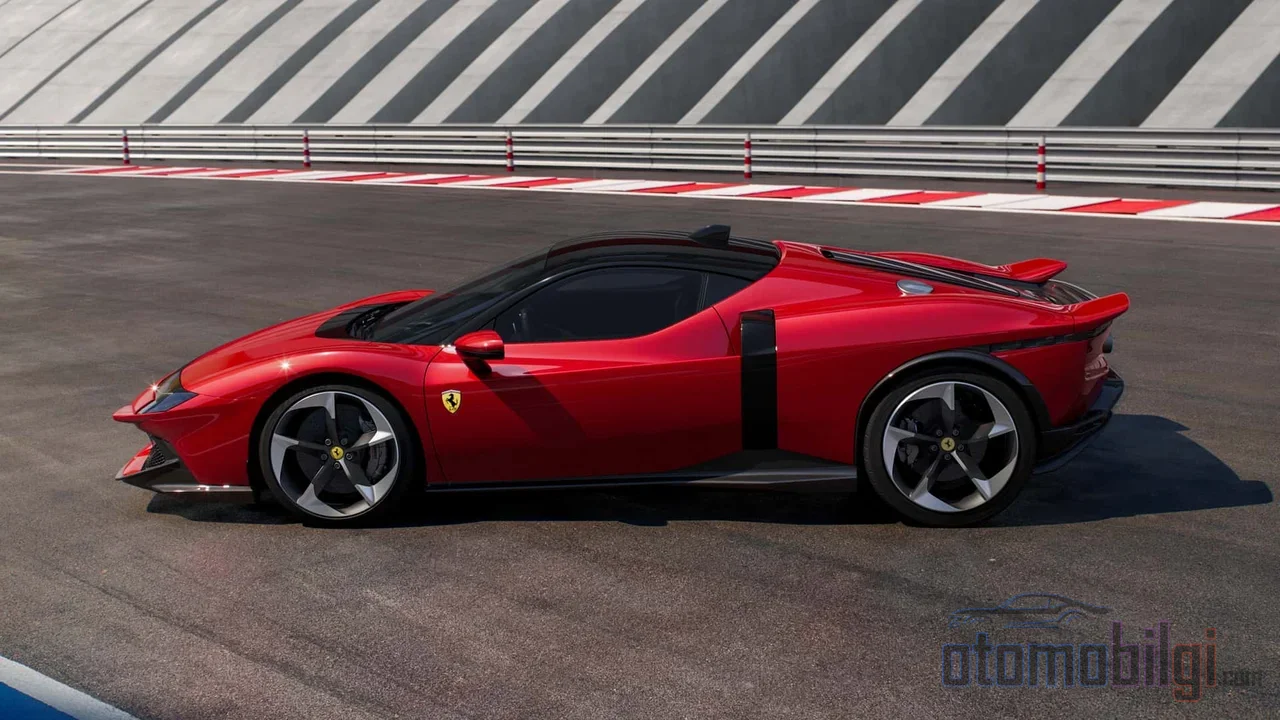
The 1984 Testarossa, meanwhile, is a cultural icon in its own right: Regarded as a design icon of the 1980s, the car gained popularity from the 1986 season of the TV series Miami Vice. The nods in the 849 do not deny this; the horizontal lines integrated into the body bring the 80s icon's side graphic language together with contemporary aerodynamic requirements.
Why a V8 with Three Electric Motors?
The engineering answer of the 849 Testarossa, in brief, is this: 1,050 hp of total power, acceleration from 0 to 100 km/h in under 2.3 seconds and an advantage of roughly 1.5 seconds over its predecessor at Fiorano - a combination that cannot be expected from a single naturally aspirated engine. The twin-turbo V8 delivers the high power density; the three electric motors add instant torque, four-wheel drive, torque vectoring and electric-only urban use. Ferrari has chosen to derive this architecture from the SF90 Stradale, building on a proven foundation.
But the full picture must be drawn: criticisms that the engine sound is found less emotional than previous naturally aspirated eras, that the design is polarizing and that the price is very high are also part of the debate surrounding this car. As for the price: No official price announcement has been made yet for Europe and the US; In the Indian market, the vehicle's pre-registration price was set at 10.37 crore rupees.
Conclusion: A Return Justified by Numbers
The return of the Testarossa name is not a symbolic gesture; it is an engineering decision justified by measurable results. With 1,050 hp, the 849 Testarossa holds the series-production Ferrari record, beats its predecessor with a lap time of 1:17.5 at Fiorano, and carries that performance to an open body with its Spider version. The legendary name speaks with a different vocabulary today; but the language it speaks is the only one the track stopwatch understands: seconds.
Sources
- Ferrari 849 Testarossa - Ferrari.com
- 849 Testarossa Technical Information - Ferrari.com
- Ferrari 849 Testarossa Spider - Ferrari.com
- Ferrari 849 Testarossa Technical Data and Price - CarDekho
- Ferrari 849 Testarossa vs SF90 Stradale - CarExpert
- Ferrari 849 Testarossa Replaces the SF90 - Top Gear
- Ferrari 849 Testarossa Official Presentation - Motor1
- Ferrari Testarossa - Wikipedia