Aston Martin Vantage: A V8 GT with 800 Nm of Torque
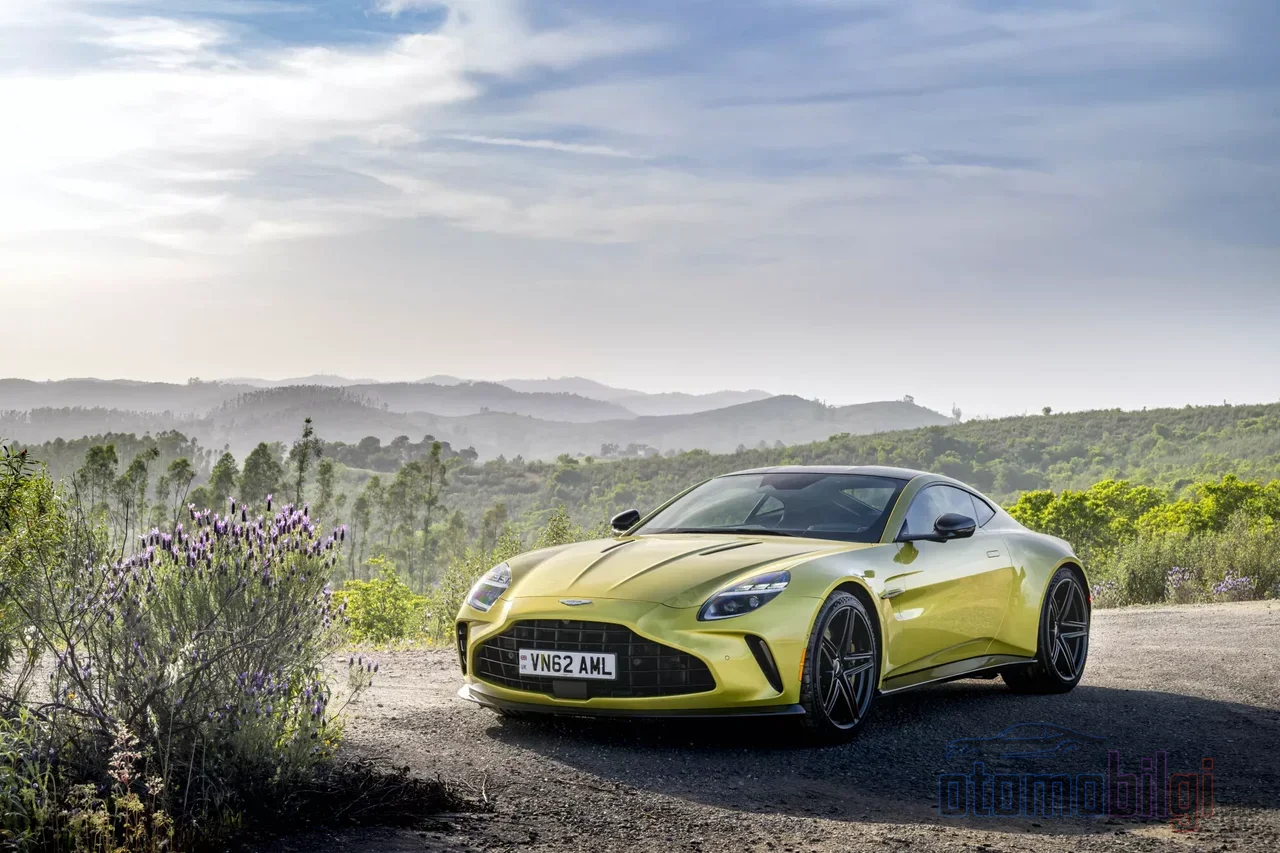
An 800 Nm torque output and a 0-100 km/h sprint in 3.5 seconds does not mean it is easy to drive to the grocery store. The current Aston Martin Vantage sits right in the middle of this tension: on paper it is a pure performance machine, while in practice it has plenty of features that make weekday use genuinely possible. But is it really so? On this page, we systematically examine the Vantage in terms of daily livability, transmission options and V8 character, together with the manufacturer's official technical data.
Hand-Built 4.0-Liter Twin-Turbocharged V8: What Do the Numbers Say?
At the heart of the current-generation Vantage lies a 4.0-liter twin-turbocharged V8 engine, hand-assembled in Aston Martin's engine workshop in Gaydon. Mounted in a front-mid position, the engine sends power to the rear wheels through an aluminum torque tube with a carbon fiber shaft. With an 8.6:1 compression ratio, the engine is equipped with dual variable valve timing, water-to-air intercooling and an electronically controlled exhaust system.
With the comprehensive update that arrived for the 2025 model year, this engine was revised from top to bottom: new low-inertia turbochargers, redesigned cam profiles, an optimized compression ratio and improved cooling. The result is a power increase of roughly 150 hp and 100 Nm compared with the previous model. Considering that the previous generation's strongest version was the Vantage F1 Edition, the scale of this leap becomes easier to grasp.
Highlights
- 680 PS (670 hp) of power and 800 Nm of torque across the 2000-5000 rpm range
- 0-100 km/h acceleration in 3.5 seconds, top speed of 325 km/h
- ZF 8-speed automatic transmission and E-Diff electronic differential
- WLTP combined consumption of 12.1 l/100 km
- Adaptive damping suspension and a 50/50 weight distribution
680 PS or 656 hp? Explaining the Power Debate
There are two different figures circulating regarding the Vantage's power: the manufacturer's official figure is 680 PS (670 hp), while US-based publications usually use the value of 656 hp. This is not a contradiction, but a difference in measurement standards. PS (metric horsepower) and hp (SAE horsepower) are different definitions of power; when you express the same engine in two different units of measurement, this difference naturally emerges. The practical result for the reader is this: at 6000 rpm the engine officially produces 680 PS of power and 800 Nm of torque across the 2000-5000 rpm range.
Technical Data: Acceleration, Dimensions and Weight
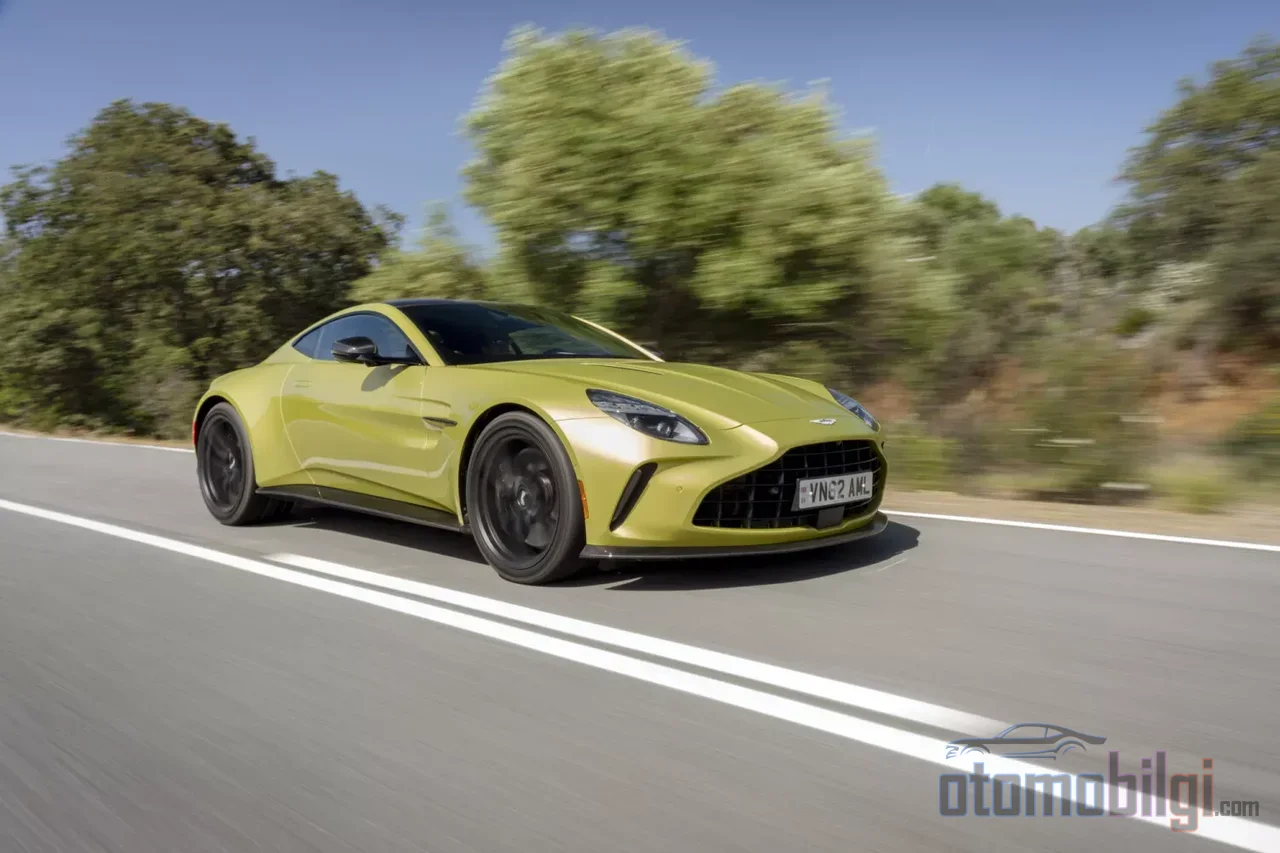
The Vantage's technical record also forms the basis of the daily usability assessment; because a car's livability cannot be considered independently of its dimensions, weight and consumption. The table below summarizes the manufacturer's official data.
| Specification | Value |
|---|---|
| Engine | 4.0 L twin-turbocharged V8 |
| Maximum power | 680 PS / 670 hp @ 6000 rpm |
| Maximum torque | 800 Nm (2000-5000 rpm) |
| 0-100 km/h | 3.5 seconds |
| Top speed | 325 km/h |
| Length / Width / Height | 4495 / 1980 / 1275 mm |
| Wheelbase | 2705 mm |
| Weight (EU kerb) | 1745 kg |
| WLTP combined consumption | 12.1 l/100 km |
| Fuel tank | 73 liters |
The 1745 kg weight, combined with a 50/50 weight distribution, places the Vantage in the same league as its segment rivals. In independent tests, the car completed 0-60 mph acceleration in 3.2 seconds and covered the quarter mile in 11.1 seconds at 133 mph; 1.01 g of lateral grip and braking performance stopping from 70 mph within 148 feet were also among the measured values. These figures show a firmness we are not used to seeing on daily-use pages; so how does the car carry this firmness into daily scenarios?
Transmission Options: The 8-Speed Automatic and the Manual Question
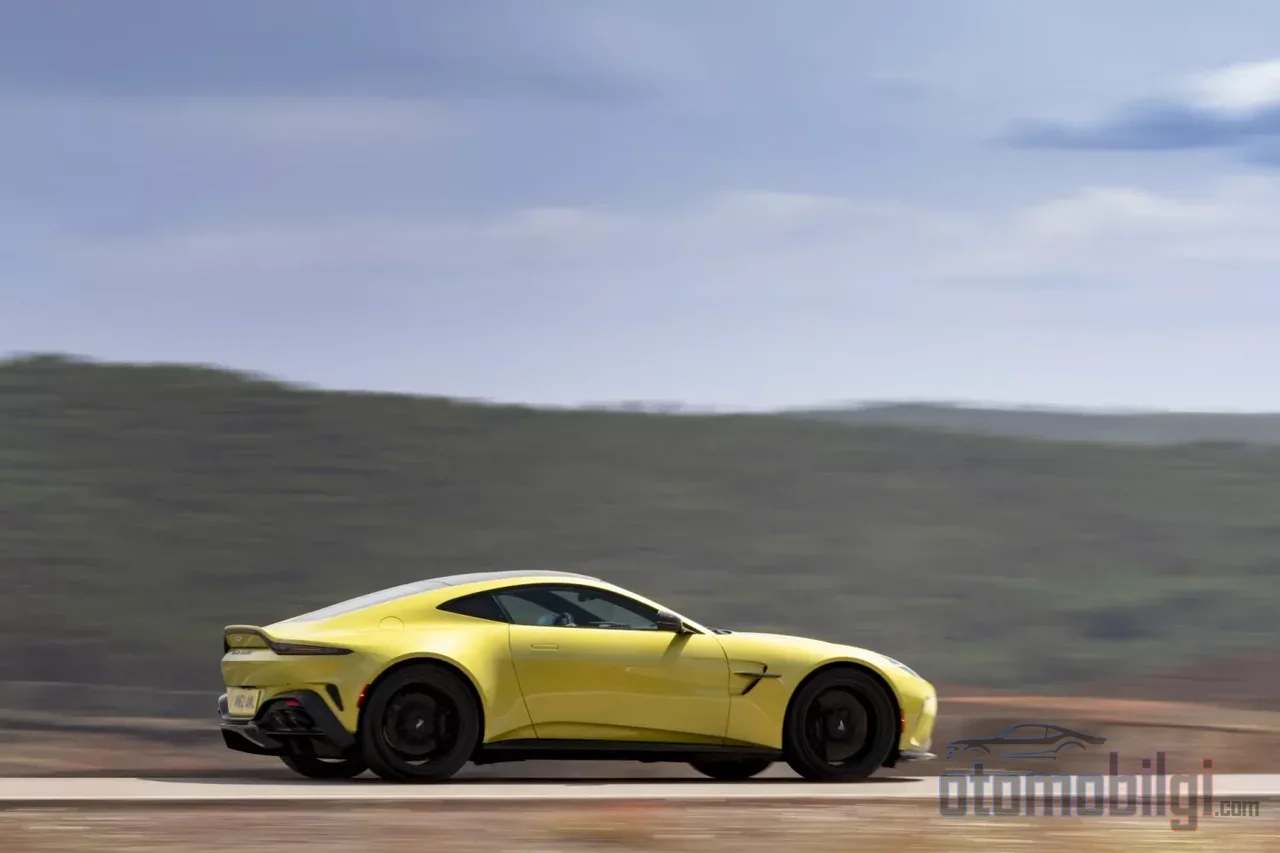
The current Vantage has a single transmission option: the ZF 8-speed automatic mounted at the rear center. With a 3.083:1 final ratio, this transmission works together with an electronically controlled differential called E-Diff. Aston Martin's choice here is no coincidence; the brand positions the ZF automatic with a more luxurious and smoother-feeling character compared to dual-clutch transmissions. Gear shifts are quick, but the aim is not last-millisecond sharpness; it is a fluidity befitting a GT car.
Is the Manual Transmission Coming Back?
For those yearning for a three-pedal Vantage, the situation is complicated. The original model of the 2018 generation had a dog-ring Graziano 7-speed manual transmission; but this option is not officially offered in the current generation. News has surfaced in the press that Aston Martin CEO Adrian Hallmark confirmed a manual transmission version is being developed under the name Vantage-M within 2026. This claim still comes from a single source and does not appear on the manufacturer's official model pages, so a cautious approach is needed. What is certain is this: a buyer wanting a Vantage today has to live with the ZF 8-speed automatic.
Suspension, Suspension Electronics, and Handling
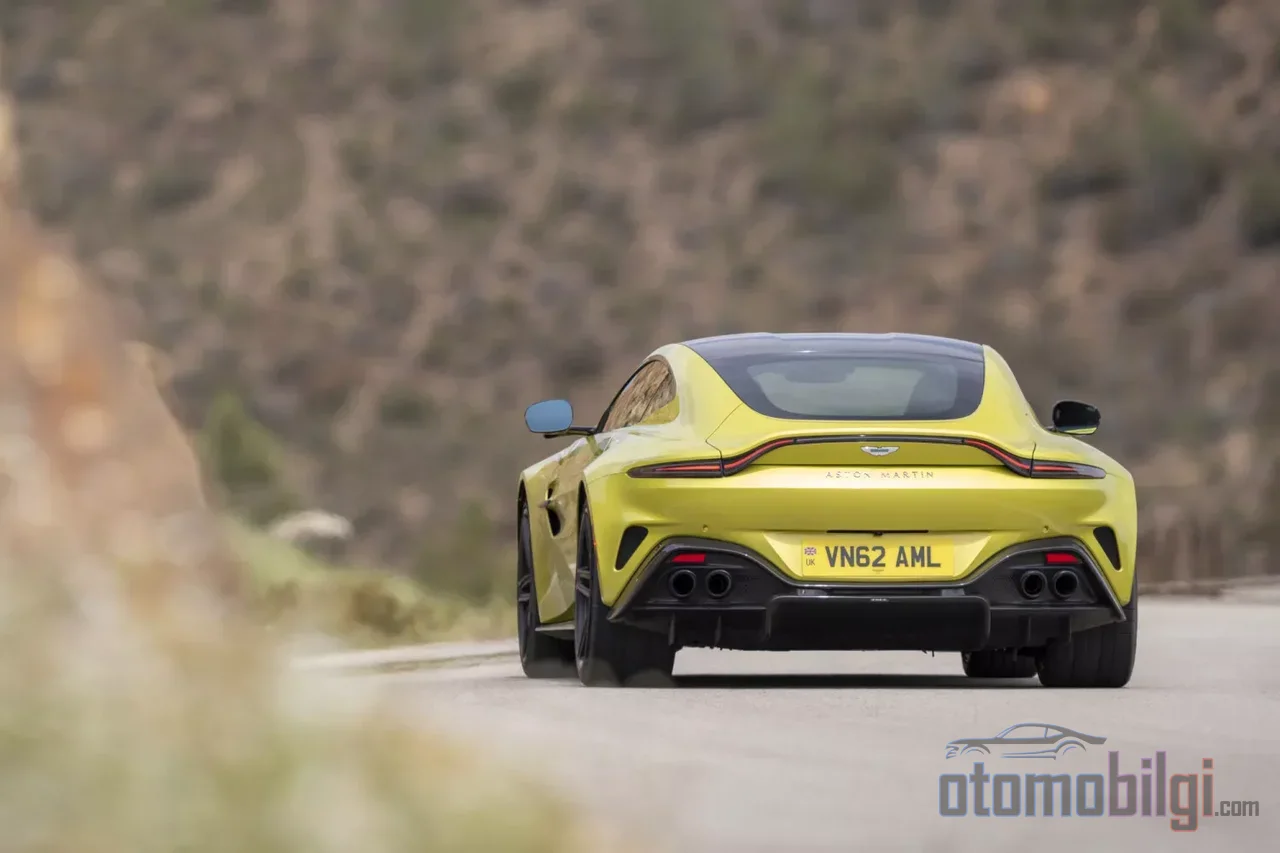
On the chassis side, the 2025 refresh is a serious step: body rigidity was increased by 7% compared to the previous model, adaptive dampers were recalibrated from scratch, and car-specific Michelin Pilot Sport S 5 tires became standard. The front axle is a double-wishbone design, and the rear axle is a multilink structure; at each of the four corners there are springs, anti-roll bars, and an adaptive damping system that changes the damping character according to the drive mode.
The electric power steering offers a direct feel with a 12.8:1 ratio. On the braking side, two-piece 400x36 mm steel discs with six-piston calipers work at the front, and 360x32 mm discs with four-piston calipers at the rear. The critical point is this: even in Comfort mode, the car carries a noticeable sense of sharpness. It offers a firm but balanced ride on smooth roads; this is not the softness expected from a sedan, but by sports car standards it cannot be called punishing either. Ride quality is balanced on a sporty but not overwhelming line.
The Vantage in Daily Use: Trunk, Cabin, and Livability
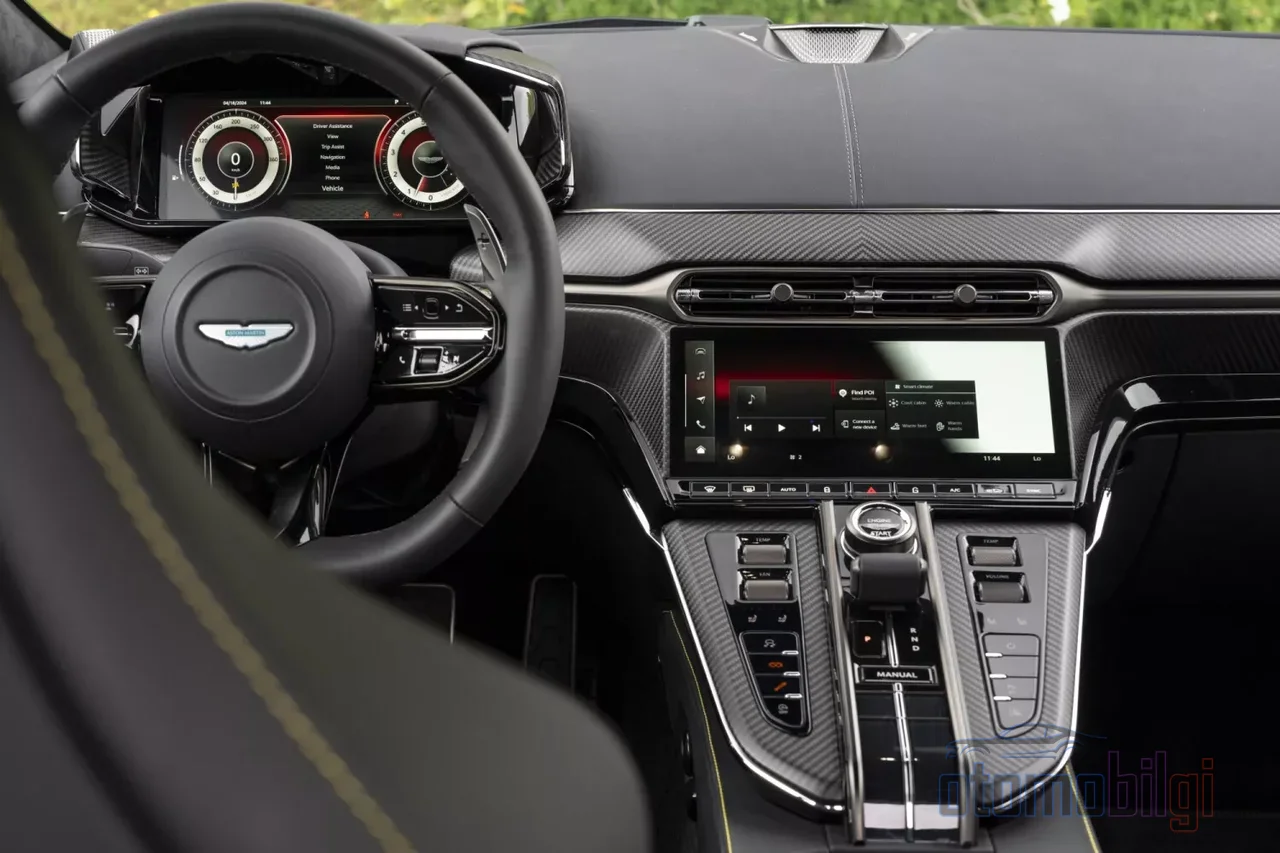
Here is the heart of the question. The Vantage has a two-seater cockpit and offers a narrow cabin; although every control is within easy reach, storage spaces are limited. The shallow console tray and door pockets offer practical solutions for everyday items. As for cargo volume, the manufacturer does not publish an official liter figure; industry data points to a range between 235 and 350 liters. That is enough for a weekend's luggage, but insufficient volume for a family of four to go on holiday.
Ground clearance is 94 mm and the turning circle is 12 meters; in city maneuvers the car's dimensions (4495 mm length, 2124 mm width including mirrors) remain manageable, but speed bumps and ramps require attention. WLTP combined consumption of 12.1 l/100 km means a practical range of about 600 km with the 73-liter tank; with careful driving this figure can improve slightly, while in city traffic it worsens noticeably.
Equipment and Technology
On the daily-use side, the technology package is strong: wireless Apple CarPlay and Android Auto, wireless charging, natural voice control, a 360-degree camera and a 3D Surround View system are available. While official pages give 10.25 inches for the center screen, some publications mention 12.5 inches; this difference depends on whether the display definition or the entire screen surface is measured. On the audio side, either a standard 390 W system with 11 speakers or a 1170 W Bowers & Wilkins option with 15 speakers is offered.
Driver assistance is also at a modern level: automatic emergency braking (AEB), forward collision warning, Adaptive Cruise Control with stop-and-go, traffic sign recognition, lane keeping assist, blind spot assist and rear cross traffic alert. Heated seats, two-zone climate control and an electric steering column are standard items on the daily comfort list. On the warranty side, 3 years and unlimited mileage are offered; the maintenance package is not included.
V8 Character: GT Heart or Sports Car Soul?
The most interesting engineering balance of the Vantage emerges here. 800 Nm of torque is ready and waiting from 2000 rpm; this is the value that allows a GT car to progress effortlessly in the city. Yet the car's brakes are lively and communicative, the steering precise, and its character neutral. Although it carries a GT heart, it gives the driver far more feedback than a typical GT. In fact, assessments regarding the last generation indicate that the Vantage S's ride quality is not behind the most benchmarked rivals in the same segment today.
Vantages since the 2018 generation are known to be durable and capable of high mileage; the only condition is regular use. A Vantage that sits in the garage for a long time does not like it. This is actually one of the clearest answers to the daily usability question, given through an engineer's eye: the car is not designed for daily use, but it gets used to daily use.
Price and Model Family
In the US market, the base Vantage's price started at $194,500 for the 2025 model year; test vehicles loaded with equipment could exceed $300,000. The Vantage S, a step above in the family, is offered with 670 hp and a recalibrated ZF automatic, with a base price of $199,500. On Roadster versions, the fabric roof opens quickly, and despite a trunk smaller than the Coupe's, a full-size golf bag still fits. Production of the V12 Vantage has ended; this revised V8 is now the backbone of the family.
Verdict: Is the Aston Martin Vantage Suitable for Daily Use?
The short and clear answer: yes, with the right expectations. The Vantage is a car suitable for daily use; but not like a sedan, rather like a well-mannered sports car. Adaptive damping in Comfort mode provides livable comfort at city speeds, the modern driver assists and infotainment package make up for practical shortcomings, and the 235-350 liter trunk is enough for weekend needs. In return, what you must accept are the cramped cabin, limited storage compartments, the 94 mm ground clearance, and consumption that can exceed 12 l/100 km. It is smaller than the Porsche 911 Turbo in the same segment, but ambitious in terms of the driving combination of the AMG-sourced V8 and ZF automatic. This balance, acting like a GT over short daily distances yet responding like a sports car in corners, is the very character of the Vantage.
Sources
- Vantage | V8 Twin Turbo Sportscar | Aston Martin
- 2025 Aston Martin Vantage Review, Pricing, and Specs - Car and Driver
- 2025 Aston Martin Vantage Track Test - MotorWeek
- 2025 Aston Martin Vantage First Test Review - MotorTrend
- Aston Martin Vantage Review 2026 - Top Gear
- Vantage S - Aston Martin
- Aston Martin Vantage Manual - F1rst Motors
- 12 Things To Know About an Aston Martin Vantage - HWM Aston Martin