Lotus Emira: The Last Analog Supercar with a Manual Transmission
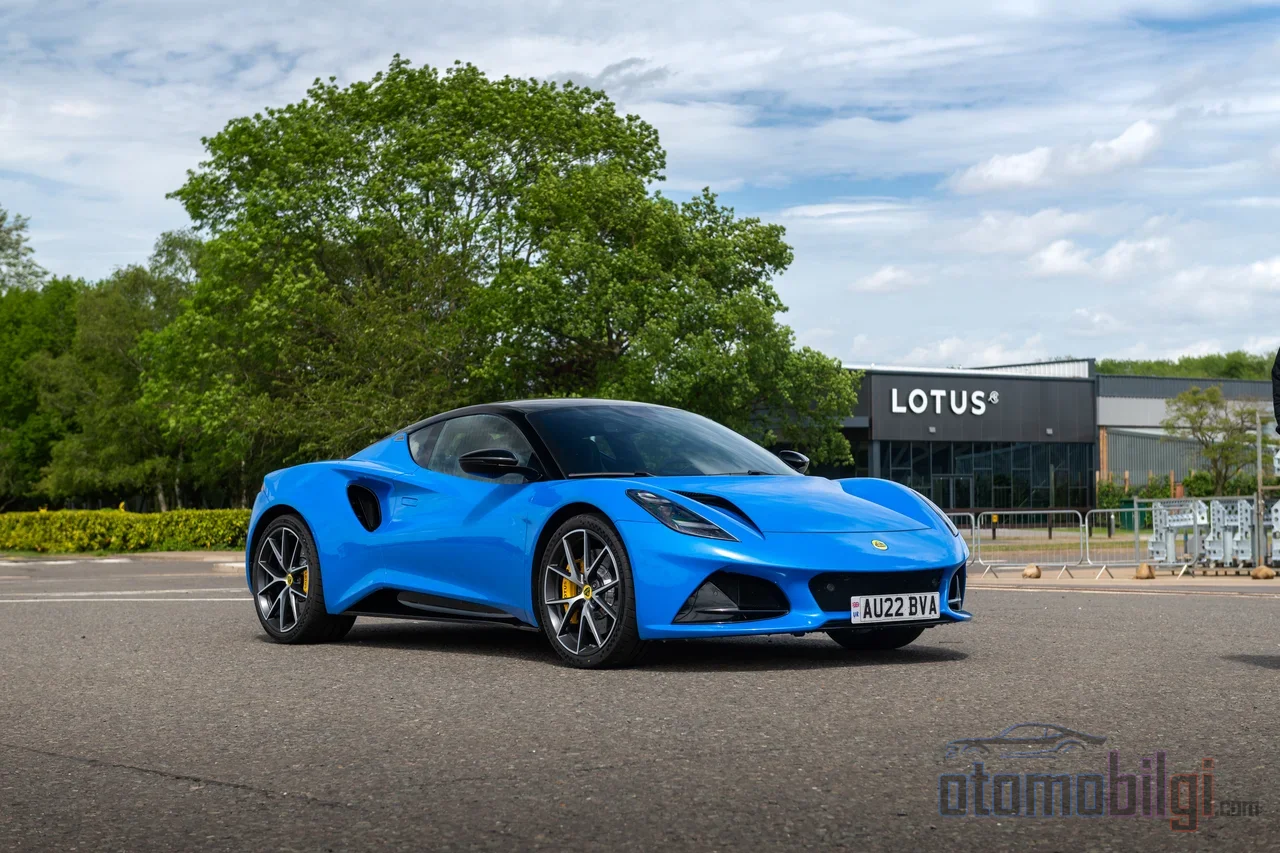
The Lotus Emira, as of 2026, is the most interesting paradox in the supercar market: in an era where four-digit power outputs, hybrid systems, and waves of electric-boosted torque have become the standard, it is sold with a power figure of around 400 hp. While its rivals push toward the 1,000 hp mark, this figure seems modest at first glance. So is this mid-engine, rear-wheel-drive coupe really a supercar, or is it a sports car that looks like a supercar? The answer lies not so much in the power itself as in the physics of the chassis and drivetrain.
First, A Technical Correction: The Emira's V6 Is Not Naturally Aspirated, It's Supercharged
We need to start from the most debated point: The Emira's V6 is widely believed to be a naturally aspirated engine, but that's not correct. This widespread misconception stems from the engine's character; because its power band works so naturally and linearly that the presence of the supercharger goes unnoticed. In reality, the Emira V6 uses the Toyota-sourced 3.5-liter V6 coded 2GR-FE equipped with an Edelbrock 1740 supercharger. So technically, we are dealing with a forced-induction engine. The reason we make this correction is purely engineering clarity: comparing the figures and expectations on the right footing.
The engine is a unit with a 60-degree V angle, 3,456 cc displacement, DOHC 24 valves, and an aluminum block and head. Lotus choosing this engine is no coincidence: the balance of lightness, compact physical dimensions, and proven durability is critical in this segment. Introduced at Hethel on July 6, 2021, and showcased at that year's Goodwood Festival of Speed, the Emira replaced the Evora, Exige, and Elise, and went on sale in March 2022.
Highlights
- Emira V6: 3.5-liter supercharged Toyota-sourced engine, 400 hp / 406 PS @ 6,500 rpm
- Torque 420-430 Nm, 0-100 km/h in 4.3 seconds, top speed 290 km/h
- With a curb weight of only 1,458-1,487 kg, it is among the lightest in its class
- One of the rare mid-engine models offering a 6-speed manual gearbox option
- After 2030, a transition to hybrid drivetrain with a 3.0-liter twin-turbo V6 + electric motor is planned
Power, Torque, and Acceleration: How Far Does 400 hp Get You?
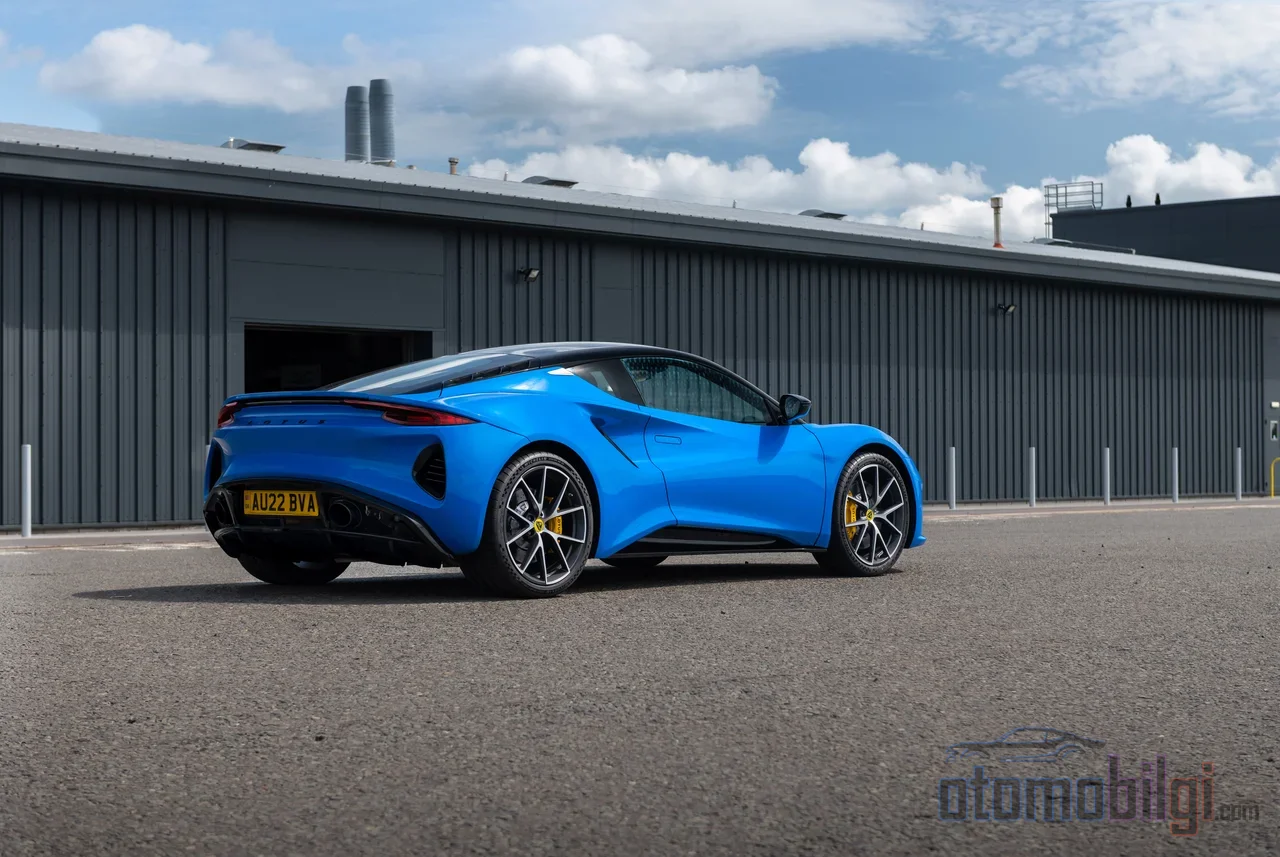
Let's get to the numbers. The Emira V6 produces 400 hp (406 PS, approximately 298 kW) at 6,500 rpm. On the torque side, two values are circulating: the manufacturer's initial statements cited 430 Nm, while current official technical data shows 420 Nm @ 3,500-6,800 rpm for the V6 SE. The difference stems from the version and the date of the statements; both values are delivered across the broad band between 3,500 rpm and 6,800 rpm, which points to a practical characteristic that reduces the need for downshifting in everyday use.
The acceleration figures paint a similar picture: the initial specifications stated 4.2 seconds for 0-100 km/h; the current official figure is 4.3 seconds. Top speed is 290 km/h. These figures remain calm by today's supercar standards: many rivals in the same price bracket are dropping below 3 seconds. However, independent measurements show the Emira completing 0-60 mph in 4.3 seconds with the manual V6, and covering the quarter mile in 12.7 seconds at 111 mph; so the figure on paper is verified in the real world. In short: the Emira is not slow; it simply represents a philosophy that puts its power on stage through chassis rather than weight.
Emira V6 Technical Specifications
| Specification | Value |
|---|---|
| Engine | 3.5 L supercharged V6 (2GR-FE), 3,456 cc |
| Power | 400 hp (406 PS) @ 6,500 rpm |
| Torque | 420 Nm @ 3,500-6,800 rpm (initial claim: 430 Nm) |
| 0-100 km/h | 4.3 s (initial claim: 4.2 s) |
| Top speed | 290 km/h |
| Transmission | 6-speed manual / 6-speed automatic |
| Kerb weight | 1,458-1,487 kg (depending on equipment) |
| Length / width / height | 4,412 / 1,895 / 1,225 mm |
| Wheelbase | 2,573 mm |
| WLTP consumption (V6 SE) | 10.4-11.3 l/100 km combined, 258 g/km CO2 |
The brakes come with 370 mm discs at the front and 350 mm at the rear; on 20-inch wheels it carries 245/35 tires at the front and 295/30 R20 at the rear. The 0.37 drag coefficient shows that the car was designed as a balanced road car, not a downforce-focused supercar.
Chassis Physics: What Makes the Emira an Emira?
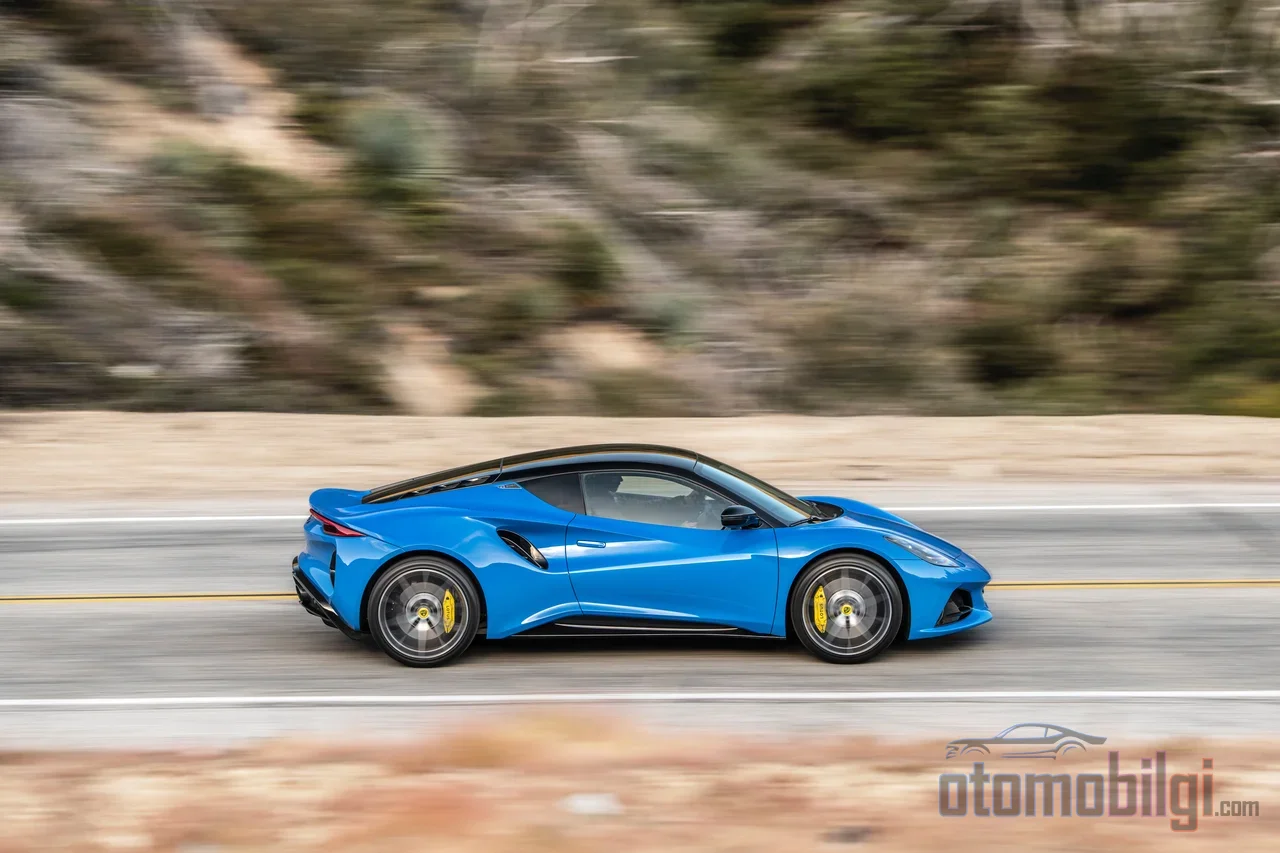
This is the Emira's real story. Its kerb weight of roughly 1.46-1.49 tons takes the power-to-weight ratio to a quite serious level when we think in kilograms rather than liters. But the real difference is what you feel: the Emira is the product of one of the last manufacturers to offer hydraulic steering. In a market where electric power steering systems have become standard, this is an engineering choice that still makes feedback flowing from the road surface to the palm of your hand possible. Independent reviews describe the car's chassis tuning as flawless; the suspension can stay engaged in corners yet comfortable on long journeys.
This chassis physics compensates in practice for the 400 hp that looks modest on paper. If we make a comparison: the Porsche 911 GT3, with a lateral grip value of 1.17 G, is above the Emira's 1.00 G. So the Emira loses in the pure grip battle. But the Emira's claim was never maximum grip; the claim is a level of communication in which the driver can read every movement of the car. This distinction also opens the door to the debate at the heart of the definition of a supercar.
Everyday Use: Do I Have the Right to Complain?
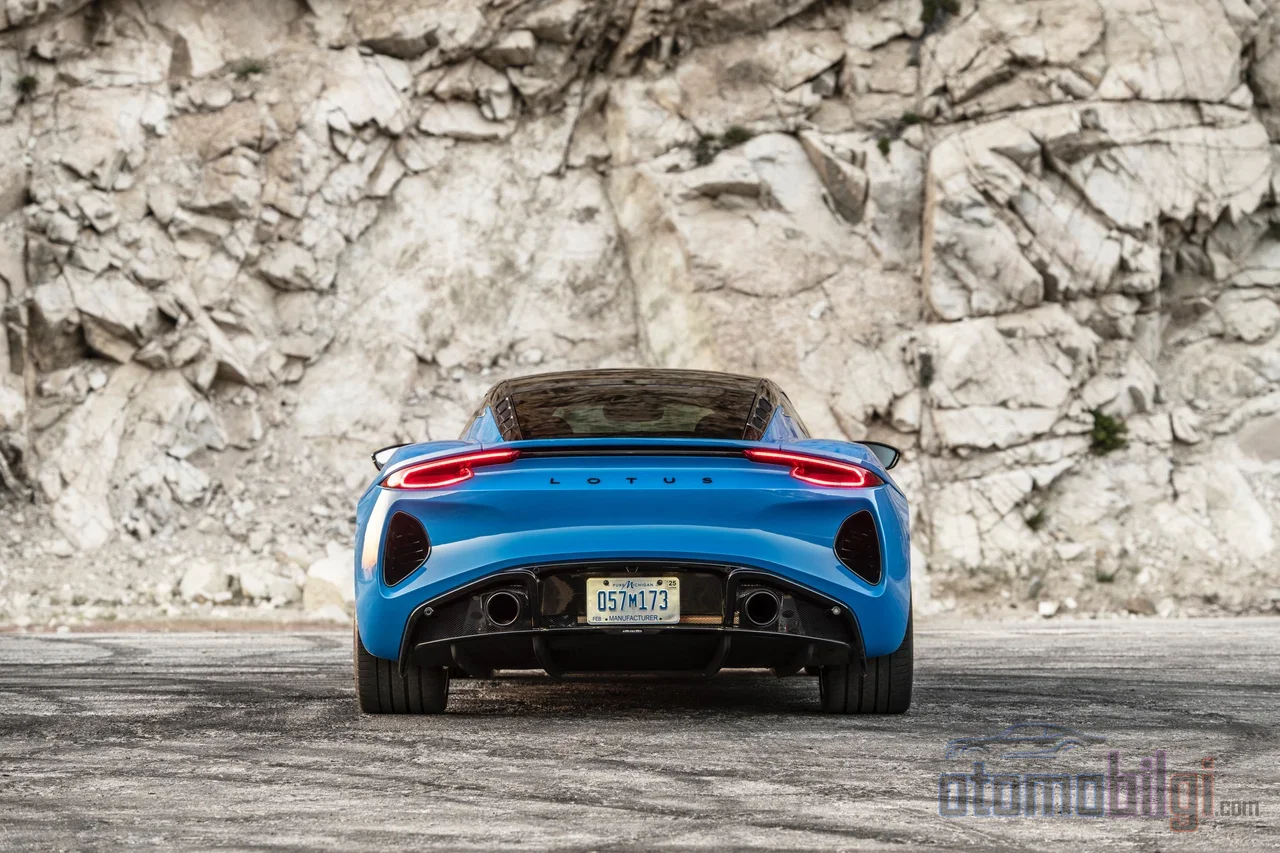
The most common criticism directed at the Emira is its everyday usability. The facts are complex. On the negative side: the gear lever demands high effort, the brake pedal feels grabby at first contact, and the interior is below the level of luxury implied by its price. Despite the 60-liter fuel tank, consumption is 21 mpg combined for the V6 automatic according to EPA data (about 11.2 l/100 km); the manual stays at 19 mpg. That is noticeably more than an ordinary daily car.
The positive side is surprising in size: ownership experiences carry serious persuasive power. Some owners report 28,000 miles in 14 months, others 27,000 miles in 9 months; another owner reports using the V6 as a daily car without any serious trouble. Inside, a 10.2-inch touchscreen, wireless Apple CarPlay and Android Auto, and a 12.3-inch digital instrument cluster come as standard; emergency braking and blind spot monitoring are present on the safety side, while Adaptive Cruise Control is optional. In short, the Emira is not a daily car with the innocence of the Lotuses of twenty years ago; but it stands as a sufficiently equipped, usable primary car by 2026 standards. There is some truth to the criticism, but not as much as it has been exaggerated.
The Trunk Debate
Trunk capacity is a subject that varies considerably between sources: different figures ranging from 151 liters up to 359 liters (with the seats in place) are in circulation. The common point is that the luggage is divided into two sections: the compartment behind the seats and the compartment behind the engine. The engine compartment is not suitable for temperature-sensitive items. Practical outcome: enough for a weekend trip, not for moving house.
Is an Analog Survivor Still Relevant in the Age of Hybrids and Electrics?
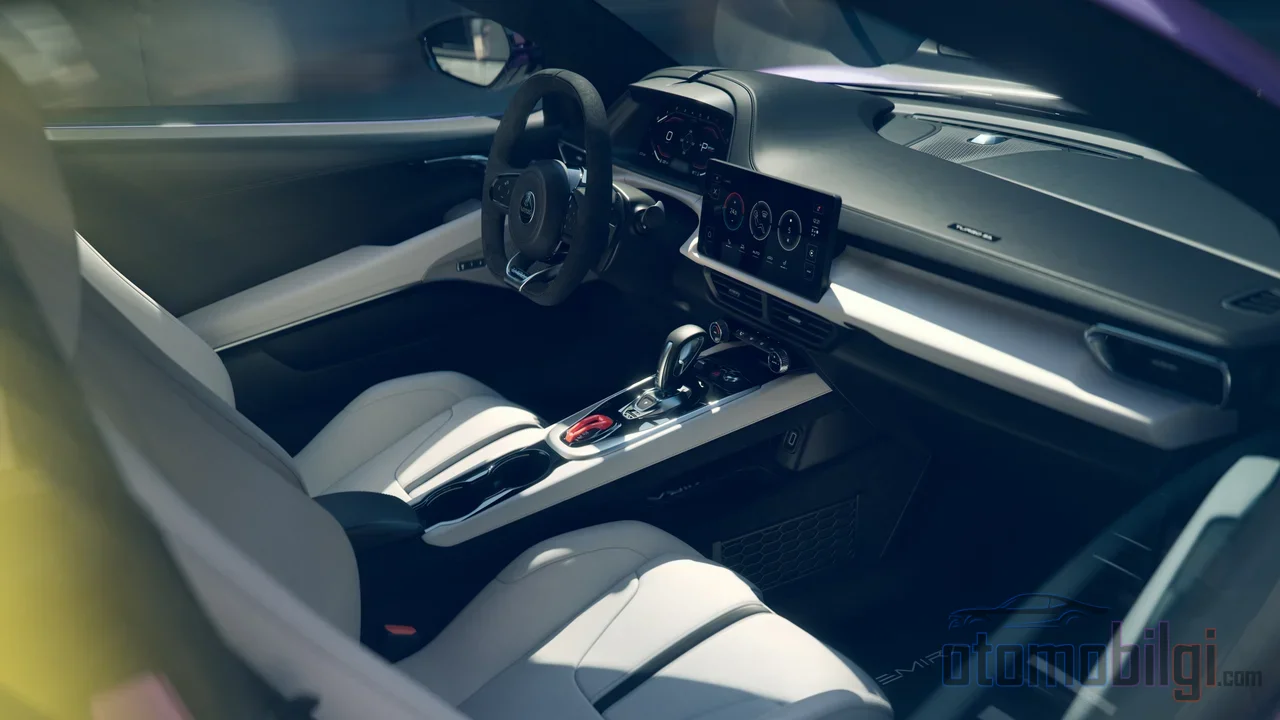
The Emira's market position becomes clear here. Lotus officially defines the car as a mid-engined premium sports car; while the marketing materials use the phrase exotic supercar appeal. This duality is deliberate: the Emira offers supercar aesthetics at a sports car price. While 2026 US prices start in a band of roughly 106,900-116,000 USD, the comparison Porsche 911 starts at 137,850 USD.
The question of where it stands in the segment is also debated among owners: it is an exotic car, but the view is widespread that it will not reach full supercar status unless production volume increases. On the other hand, its fully analog nature; the non-hybrid V6, the manual transmission option, the hydraulic steering; makes it one of the last representatives of a declining breed. Its timing also matters: Lotus initially planned the Emira as its last internal combustion engine car, but this plan was cancelled. From 2030 onward, the Emira will move to hybrid powertrains combining the 3.0-liter twin-turbo V6 with an electric motor; the current manual transmission will also be dropped. So today's Emira is a product of a transition period, and this adds a special value to its analog character.
The Four-Cylinder Alternative
The lineup also includes a Mercedes-AMG-sourced 2.0-liter turbo (M139) option: offered with an 8-speed dual-clutch automatic, this version starts at 360 hp, reaches 400 hp in SE trim, and 414-416 hp in the 2027 420 Sport version. The four-cylinder automatic completes 0-60 mph in 3.4 seconds; meaning it is faster than the V6 on the acceleration side. Nevertheless, demand for the V6 continues, because what is being bought is not just acceleration.
So the Conclusion: Is It a Real Supercar?
The clear answer to the question is this: By the measures of power and acceleration, the Emira is not a modern supercar; but when measured by analog values such as chassis communication, a manual gearbox and hydraulic steering, it offers one of the purest forms of the supercar experience. Its 4.3-second 0-100 km/h and 290 km/h top speed fall short of the 2026 supercar scale; in return, it delivers a driver's car character and a price advantage that most of its 1,000+ hp rivals cannot offer.
From an engineer's perspective, the assessment is simple: if your definition of a supercar starts with the numbers, the Emira falls outside the class. But if your definition starts with the driving experience, the Emira is a more genuine supercar than many pricier rivals on the list. This coupe rolling out of Lotus's assembly line in Hethel may lose the category debate; it wins the ownership experience debate by a wide margin.