Ferrari 12Cilindri: The V12 GT Replacing the 812
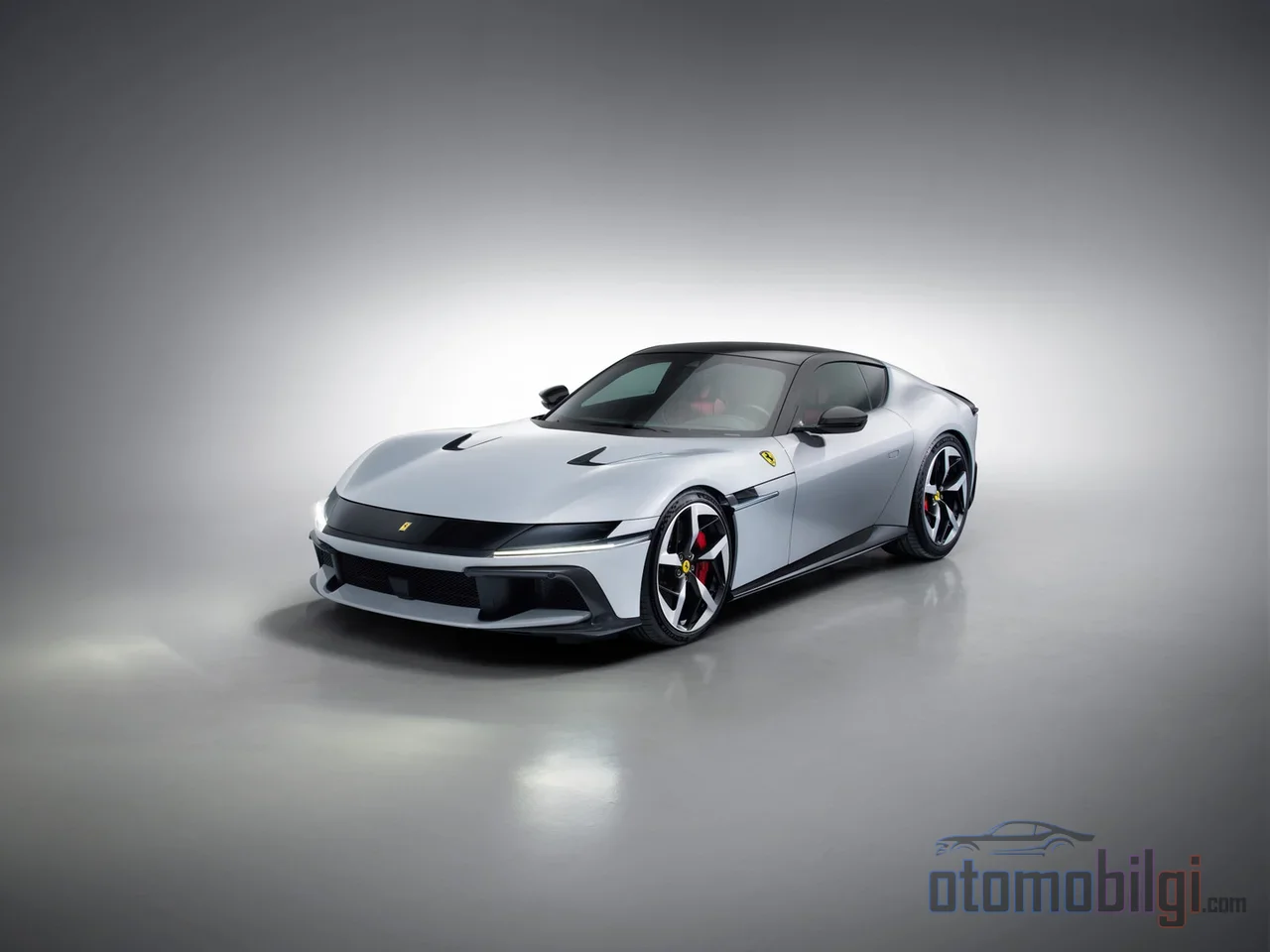
In the age of hybrids and turbos, you wouldn't expect a 6.5-liter V12 with no turbocharger, electric motor, or battery to find its way into a new model. The Ferrari 12Cilindri does exactly that: an atmospheric engine revving to 9,500 rpm and producing 830 cv, carried by a classic two-seat grand tourer layout. So why is Maranello still building this engine, and where exactly does this GT sit in the lineup?
What Is the 12Cilindri, and Who Took Its Production Spot?
The Ferrari 12Cilindri (Type F167) is a two-seat, front-engine, rear-wheel-drive grand tourer. Its name comes from the Italian expression meaning "12 cylinders" and directly references its engine. The car was unveiled on May 3, 2024, in Miami Beach; the date was chosen to coincide with Ferrari's 70th anniversary in the American market. Production takes place in Maranello, and the design carries the signature of the Ferrari Styling Centre under Flavio Manzoni. The car was also honored with the Car Design Award in 2025.
A common misunderstanding needs to be corrected here: the 12Cilindri is not the successor to the Roma. According to its official positioning and the product lineup, this model replaced the Ferrari 812 Superfast. The Roma, meanwhile, remains a separate, more entry-level model with a 3.9-liter twin-turbo V8, sold in parallel with the 12Cilindri. The 12Cilindri sits one full category above the Roma; the roughly $223,000 difference between their U.S. list prices clearly shows this hierarchy. The Roma starts at $247,308, while the 12Cilindri starts at $470,950.
The difference is also measurable in dimensions: the 12Cilindri is 7.7 cm longer and 0.9 cm lower than the Roma; its trunk volume is 1 percent smaller.
Highlights
- 830 cv (610 kW / 819 hp) of power @ 9,250 rpm, 678 Nm of torque @ 7,250 rpm
- 0-100 km/h in 2.9 seconds, top speed over 340 km/h
- 6,496 cc atmospheric V12, 9,500 rpm redline, 8-speed DCT
- Dry weight of 1,560 kg; U.S. starting price of approximately $465,994
- The Spider version carries the same performance figures as the coupé
The 6.5-Liter Atmospheric V12: The Numbers of the F140 HD
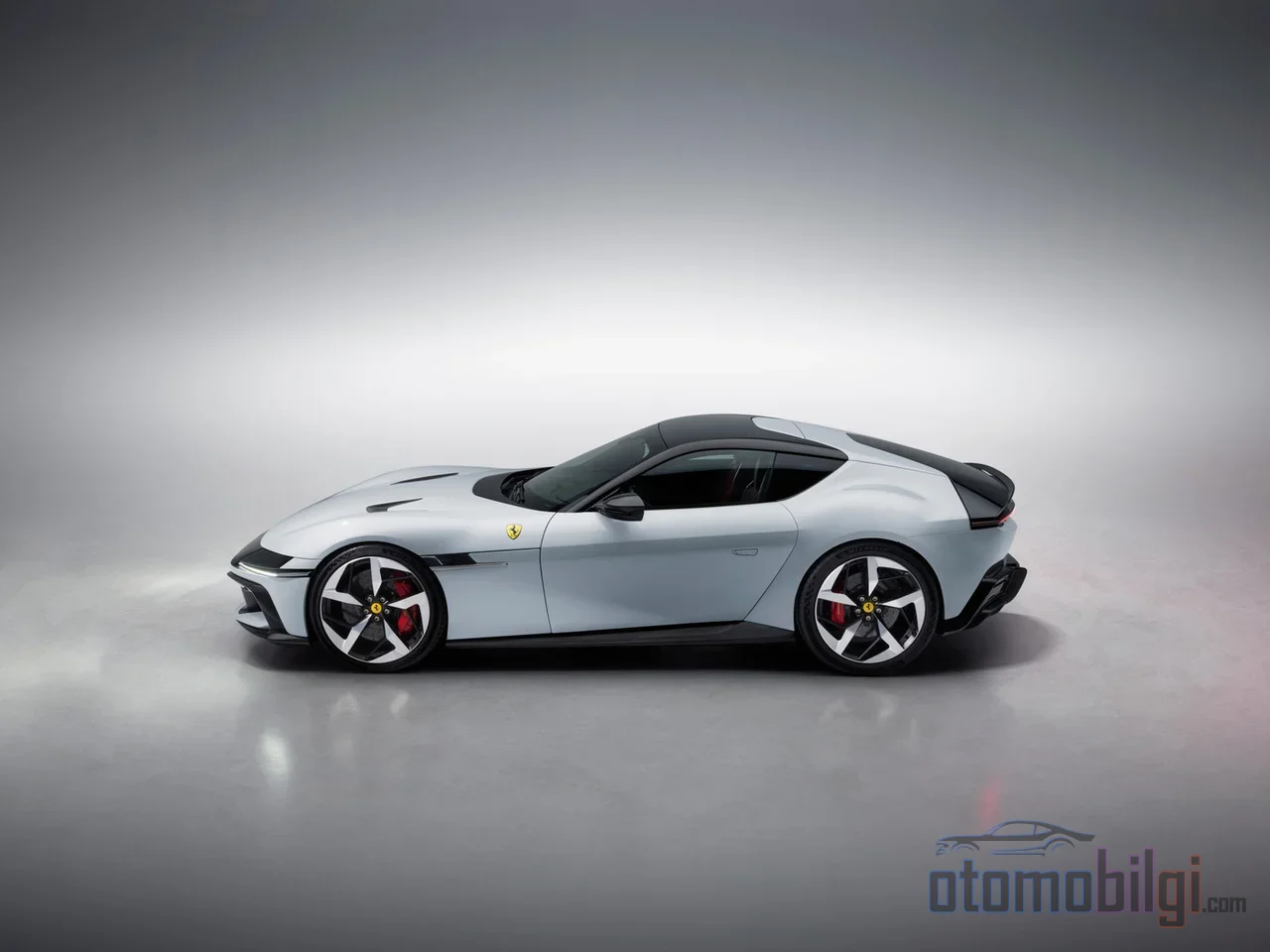
At the heart of the 12Cilindri sits a 6,496 cc, 65-degree V-angle atmospheric V12 engine, coded F140 HD, also used in the 812 Competizione. The engine produces 830 cv (610 kW, i.e. 819 hp) of power at 9,250 rpm and 678 Nm of torque at 7,250 rpm. Maximum revs are 9,500 rpm; the compression ratio is 13.5:1. A specific output of 128 cv per liter per cylinder is a remarkable figure for an atmospheric engine. Bore is 94 mm, stroke is 78 mm.
The difference between 830 cv and 819 hp is not a contradiction, merely a difference of units: the cv (PS) and hp measures express the same power on different scales. Ferrari uses the cv unit in its technical documents; both figures describe the same engine output.
What is interesting from an engineering standpoint is the torque character. Even at a low rev range such as 2,500 rpm, the engine delivers 80 percent of its maximum torque. Ferrari has applied the variable torque software it adapted from its turbo models to this naturally aspirated engine, actively shaping the torque curve in 3rd and 4th actively shaping the torque curve in the gears. Purpose-based torque distribution makes a large-displacement naturally aspirated V12 predictable and usable even at low revs.
Power is sent to the 8-speed dual-clutch transmission at the rear (Magna 8DCL900 DCT). One notable detail: Ferrari has added a simulated 6-speed manual mode to this transmission; the driver can choose the classic manual feel without a clutch pedal.
Performance and Consumption Figures
The 12Cilindri completes 0-100 km/h acceleration in 2.9 seconds and 0-200 km/h acceleration in 7.9 seconds. Top speed is stated to be over 340 km/h. Braking distances are also in keeping with the power: 31.4 meters from 100-0 km/h and 122 meters from 200-0 km/h.
On the consumption side, there is the picture expected from an 830 cv naturally aspirated V12: 15.5 l/100 km combined. In the EPA cycle, the coupé is rated at 12/19/14 mpg and the Spider at 12/17/14 mpg.
| Specification | Value |
|---|---|
| Engine | 6,496 cc naturally aspirated V12 (F140 HD), 65° |
| Power | 830 cv (610 kW / 819 hp) @ 9,250 rpm |
| Torque | 678 Nm @ 7,250 rpm |
| Maximum revs | 9,500 rpm |
| Transmission | 8-speed DCT, rear-wheel drive |
| 0-100 km/h | 2.9 s |
| Top speed | over 340 km/h |
| Dry weight | 1,560 kg |
| Dimensions (L/W/H) | 4,730 / 2,176 / 1,290 mm |
| Cargo / Fuel tank | 270 liters / 92 liters |
Chassis, Electronic Hardware and Active Aerodynamics
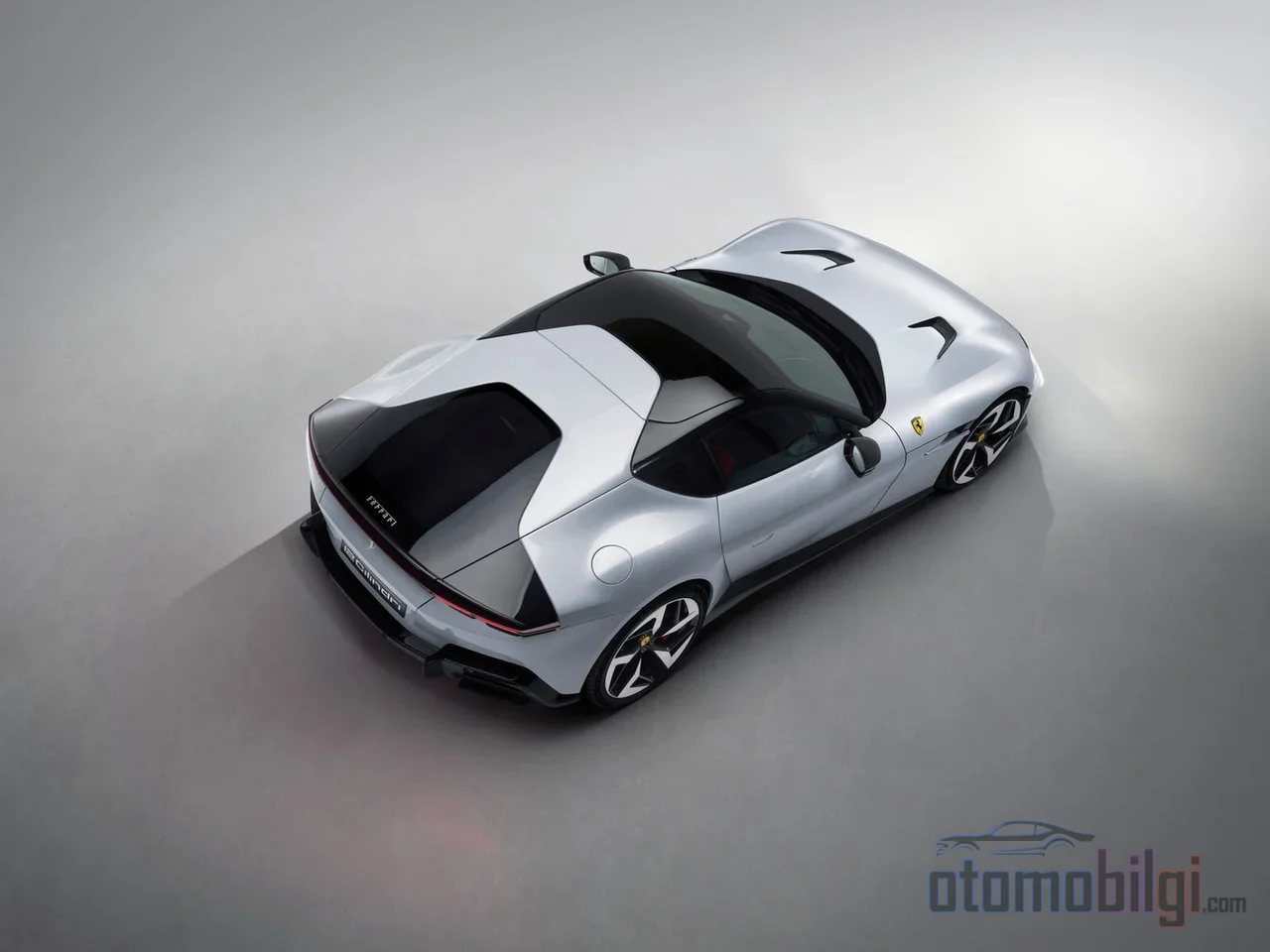
The body with its 2,700 mm wheelbase is equipped with a four-wheel steering system. The 21-inch wheels come with Michelin Pilot Sport S5 or Goodyear Eagle F1 Supersport tires. On the braking side, 398 mm front and 360 mm rear discs work with a brake-by-wire system.
The electronic layer is also at current Ferrari standards: Side Slip Control (SSC) 8.0, a six-axis chassis sensor and ABS Evo. When the 1,560 kg dry weight is combined with 830 cv of power, the power-to-weight ratio can be summarized not by per-liter values but by roughly 0.53 cv per kg; this is one of the sharpest ratios in the GT segment.
The aerodynamic solution is not twin-winged but concealed-mechanism: the side panels of the rear spoiler rise up to 10 degrees at 60 km/h, acting as an air brake and generating up to 50 kg of downforce at high speed. Thus, the necessary balance at high speed is achieved while the body's standing lines are preserved.
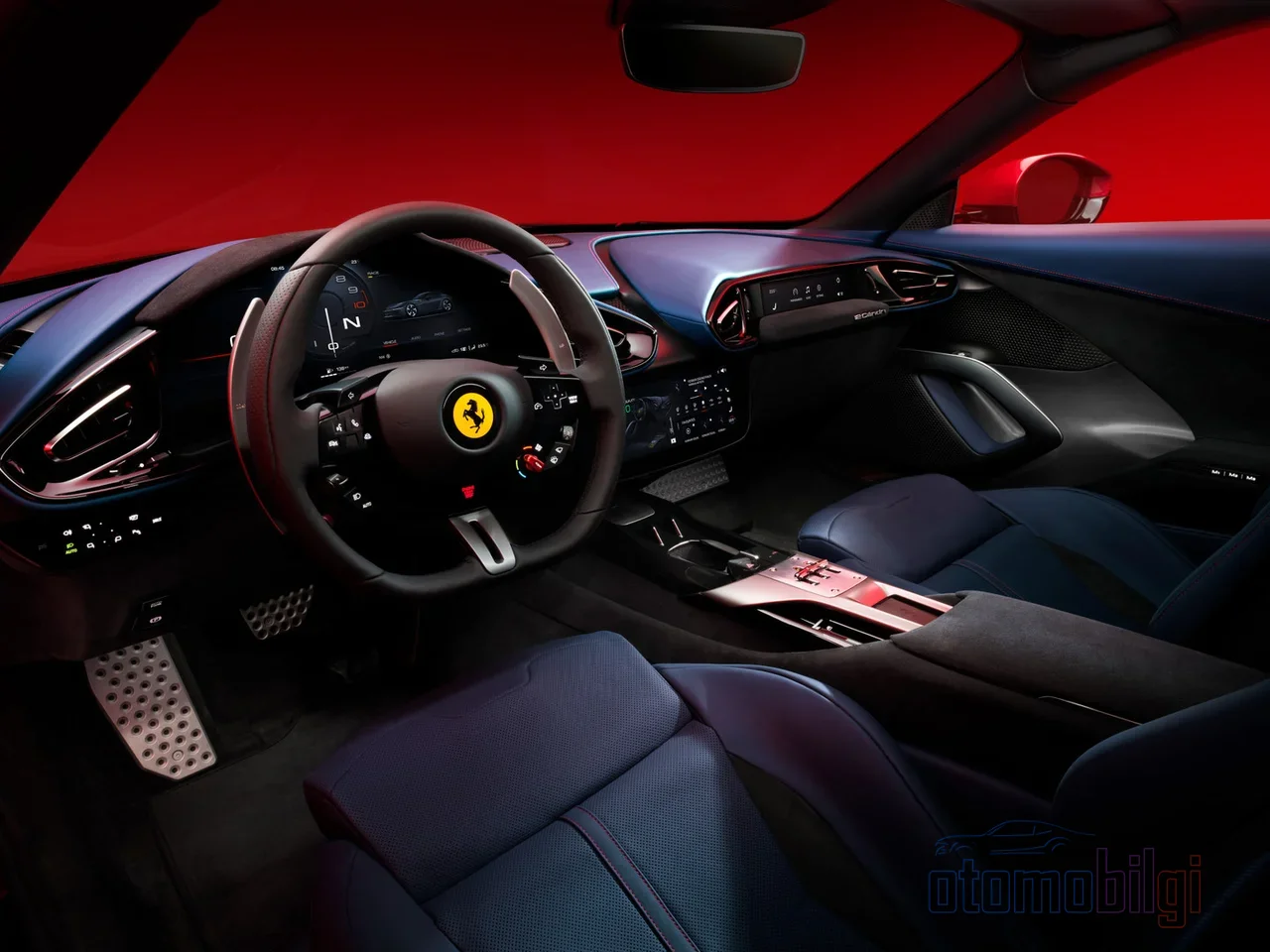
The interior features the digital architecture familiar from the Purosangue and 296 GTB. The 12Cilindri is the first Ferrari in the GT segment to carry no analog gauges.
Differences Between the 12Cilindri Spider and the Coupé
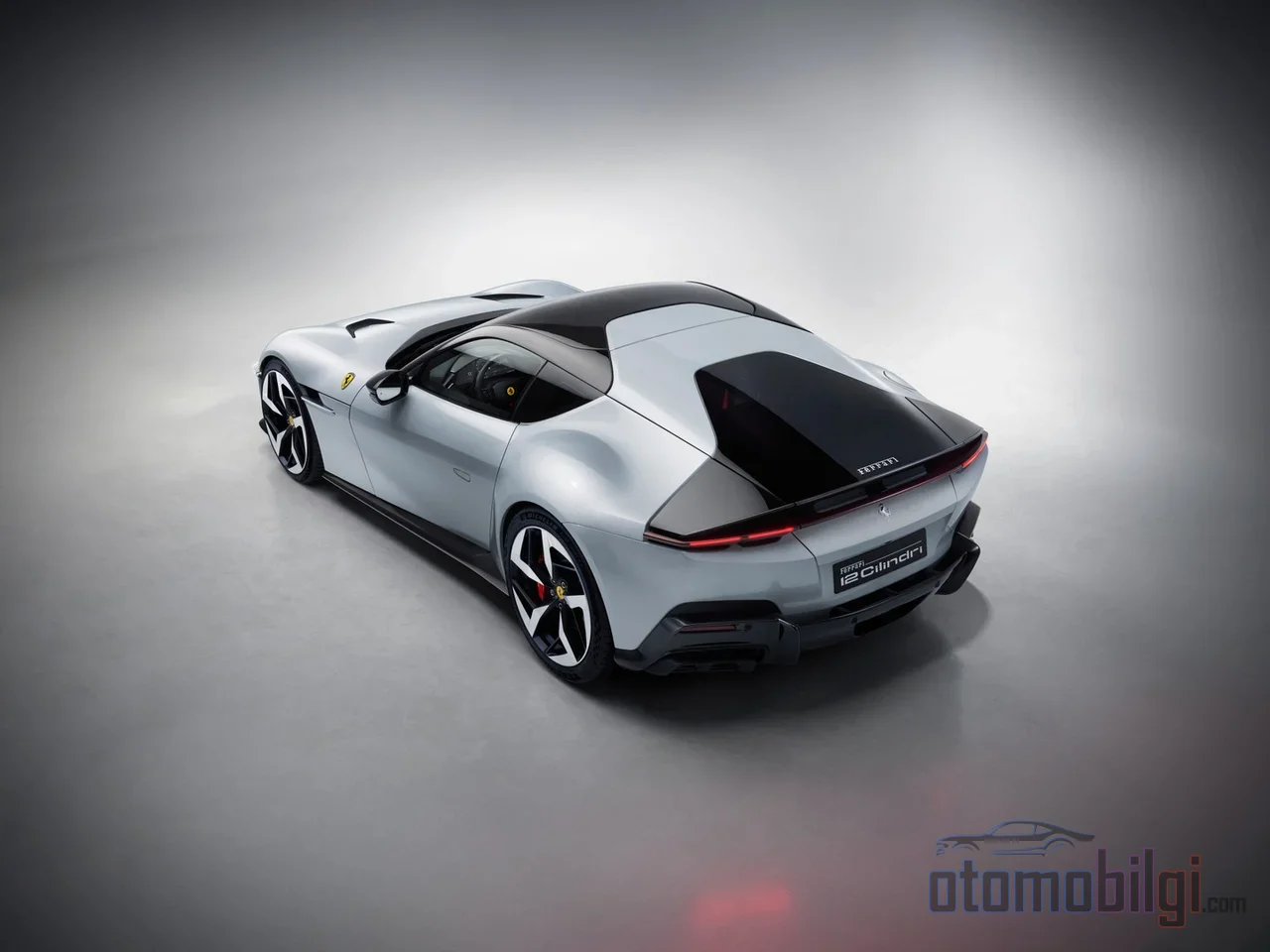
The Spider is, mechanically, largely the same car as the coupé: the same F140 HD V12, the same 8-speed DCT, the same power and torque figures. Ferrari quotes a 2.9-second 0-100 km/h time and a top speed of over 340 km/h for the Spider as well; meaning there is practically no performance difference. The weight difference is 60 kg in favor of the coupé. This increase has been offset with light structural reinforcements to compensate for the opening roof mechanism; Attention has been paid to the Spider's low center of gravity. balanced with lightweight structural reinforcements; Attention has been paid to the Spider's low center of gravity.
On the price side, the difference is clear: In the US, the coupé starts at around $465,994, and the Spider at around $512,394. The Spider's position within its segment is also interesting; its price stays below the Lamborghini Revuelto and above the Aston Martin Vanquish Volante. In Canada, a band between 550,000 and 650,000 Canadian dollars is being talked about.
Manuale: The Return of Three Pedals
The 12Cilindri Manuale, introduced in July 2026, added a new chapter to the story. This series, limited to 1,499 units, offers an open gear lever and three-pedal layout at Maranello for the first time since 2012. The technical solution is unusual: the existing 8-speed DCT is retained, but digital actuators simulate the feel and mechanical weight of a classic manual gearbox. we saw a similar approach in the Koenigsegg CC850. So the manual here is a fully simulated experience; and yet, the reality of three pedals reads as the clearest tribute to the V12 GT tradition.
Why Is a Naturally Aspirated V12 Still Being Produced in the Hybrid Era?
The short answer to the question is this: because it is still technically possible and there is still commercial demand. The 12Cilindri does not need turbocharging or electric assistance for power; with a 13.5:1 compression ratio and revving up to 9,500 rpm, this engine can be carried into a series-production car within strict emission and consumption norms. Moreover, the naturally aspirated V12, with its character of producing power linearly as revs rise, offers a driving experience that turbocharged or hybrid solutions find hard to imitate.
This decision is not a nostalgia gesture, but an engineering choice. Variable torque software, the 80 percent torque ratio at 2,500 rpm and the specific power of 128 cv/litre are proof that naturally aspirated architecture can be optimized with modern electronics. Ferrari does this with the segment's most powerful naturally aspirated series-production engine; 830 cv, a figure achieved without turbo or electric assistance.
The press generally evaluates this model as the final stop of the naturally aspirated V12. The design language inspired by the Daytona 365 GTB creates debate; the carbon strip on the hood, a reference to the Daytona, cannot be removed or recolored, and this is the focal point of criticism directed at the retrofuturist line. While some comments find the design robotic, the chassis engineering and open-air GT comfort are praised. One detail concerns the user side: the driving assistants can be switched off from the dense button cluster on the steering wheel; the lane-keeping assistant is also flagged as a questionable experience.
Evaluation: A V12 GT at the Top of the Range
The Ferrari 12Cilindri does not merely carry on the V12 grand tourer tradition as the successor to the 812 Superfast; it does so within a hybridizing product range, without any supercharging or electric assistance. 2.9-second acceleration, a top speed above 340 km/h, and 678 Nm of torque show that this architecture makes no compromise on performance. The Coupé and Spider duo share the same technical foundation; apart from the 60 kg weight difference and a price gap of roughly $46,400, the choice comes down to roof preference. The Manuale series adds a three-pedal variant to this pair, bringing the V12 GT idea closest to its purest form. In the hybrid era, the fact that a naturally aspirated V12 producing 830 cv remains in production is a data point that speaks not of engineering's limits, but of where priorities lie.
Sources
- Ferrari 12Cilindri - Ferrari.com
- Ferrari 12Cilindri: for the few
- Precise. Muscular. Sensuous - Ferrari Magazine
- Ferrari 12Cilindri Specifications - Autocar India
- Ferrari 12Cilindri - Wikipedia
- Buying a Ferrari 12Cilindri - MarqueCars
- Ferrari 12Cilindri vs Ferrari Roma dimensions - Carsized
- Ferrari 12Cilindri vs Ferrari Roma - Carzle