Aston Martin Vanquish: A New Peak for the V12 Legacy
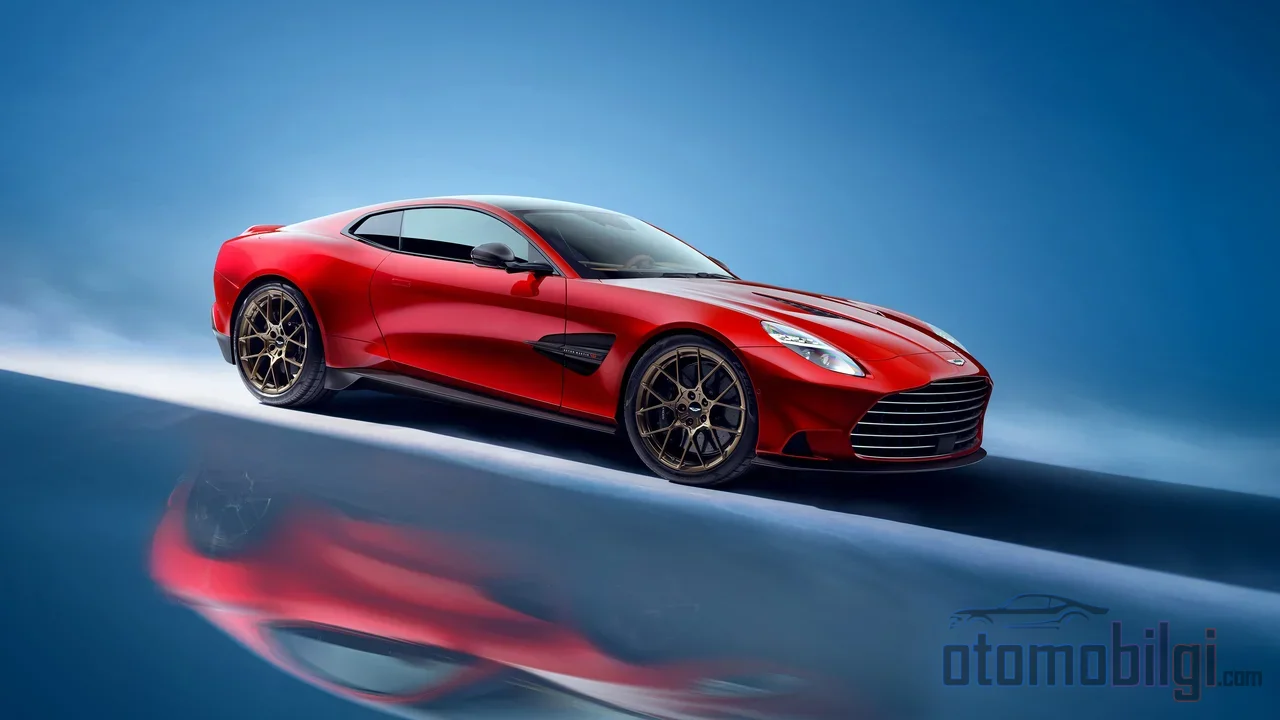
When you open the engineering file of a car produced in fewer than 1,000 units a year, you generally find a power figure dressed up in marketing language and a handful of acceleration times. Aston Martin's flagship Vanquish, however, tells a different story: Its 5.2-liter twin-turbocharged V12 has been completely re-engineered, its chassis lengthened with a stretched wheelbase to accommodate the V12, and behind it stands a quarter-century grand tourer tradition. So what does this 835-horsepower Super GT actually offer in technical terms? In this file, we examine the Vanquish in full technical detail, from its engine block to its tire composition, from performance data to its historical lineage.
Highlights
- 5.2-liter twin-turbocharged V12: 835 PS of power, 1.001 Nm of torque
- Top speed 214 mph (344 km/h) - the same in the coupé and the Volante
- 0-100 km/h: 3.2 seconds in the coupé, 3.4 seconds in the Volante
- Unveiled on September 2, 2024; production in Gaydon, England, at fewer than 1,000 units per year
- 2026 marks the 25th anniversary of the Vanquish name
Aston Martin Vanquish Technical Specifications: A Flagship on the Table
The third-generation Vanquish occupies the pinnacle of the brand's lineup as the successor to the DBS Superleggera. With its front-mid-mounted engine and rear-wheel-drive layout, it follows a classic Super GT architecture; its body dimensions, meanwhile, are unexpectedly large for its class. The wheelbase has been stretched to 2,885 mm - a direct result of modifying the platform shared with the DB12 and Vantage for the V12's requirements.
| Parameter | Value |
|---|---|
| Engine | 5.2 L AE31 twin-turbocharged V12 |
| Power | 835 PS (824 hp) @ 6,500 rpm |
| Torque | 1,001 Nm @ 2,500-5,000 rpm |
| Transmission | 8-speed ZF 8HP95 automatic |
| Length / Width / Height | 4,850 / 2,044 / 1,290 mm |
| Wheelbase | 2,885 mm |
| Weight (coupé) | 1,774 kg |
| Top speed | 344 km/h |
A note on power units is warranted: The 835 PS figure quoted by European sources and the 823 hp written by American sources are two different unit measurements of the same engine. The conversion difference between PS (metric horsepower) and SAE hp is the only difference here; the engine runs with the same calibration. Its specific output of 160.5 PS per liter is a remarkable level for a forced-induction V12.
The AE31 Engine: The Rebirth of a Decade-Old V12
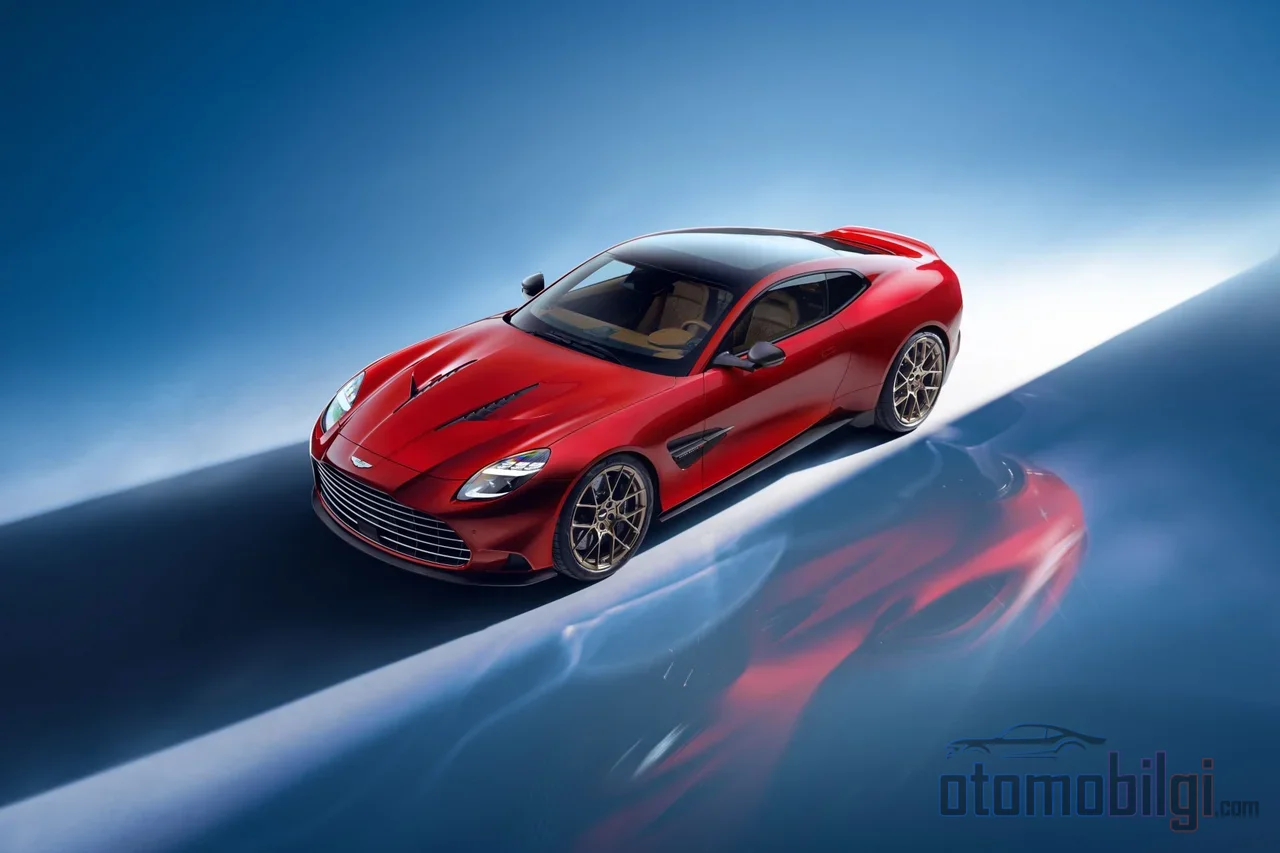
The 5.2-liter unit at the heart of the Vanquish is a thorough revision of the engine that debuted with the DB11 in 2016. A new block and cylinder heads, redesigned intake and exhaust ports, updated turbochargers - the engineering has been overhauled in every respect. With all-aluminum construction, a dual overhead camshaft layout, and four valves per cylinder totaling 48 valves, the engine is mounted in a front-mid position.
The most significant change on the turbocharger front is the new units running at higher speeds and a water-to-air intercooling system. Water-to-air charge cooling means shorter pipe lengths and more consistent cooling performance compared to a classic air-to-air intercooler; a sensible choice in grand tourer use for repeated power outputs at high revs. The result is a constant torque band of 1.001 Nm between 2,500 and 5,000 rpm - this curve, which stays flat across a wide rev range, makes the V12's character independent of turbo lag.
On the drivetrain side, an eight-speed ZF 8HP95 automatic transmission is on duty. The same engine is used with different calibrations in the brand's Valour and Valiant models; the setting in the Vanquish is the highest-output version of the three.
Chassis and Suspension: An Extended Foundation for the V12
The Vanquish uses a modified version of the platform shared with the DB12 and Vantage. The critical difference is in the wheelbase: the base has been extended to make room for the larger V12 and its weight. On the manufacturer's side, it is emphasized that body stiffening improvements give the chassis a solid platform, while the stiffness of the suspension bushings is optimized between ride comfort and dynamic balance.
At 1,774 kg, the Coupé is 89 kg heavier than the DB12 - a natural result, since the V12 twin-turbo setup carries more hardware than the V8. On the tire side, Pirelli P Zero compounds developed specifically for the Vanquish have been called into service; such collaborations between the manufacturer and the tire maker are important for tailoring traction and slip tolerances to the chassis in high-torque rear-wheel-drive models.
Performance Figures: 344 km/h Peak and Real-World Test Results
Official figures state 0-100 km/h in 3.2 seconds for the coupé; in the Volante, this time slips to 3.4 seconds. Top speed is 214 mph, or 344 km/h, in both bodies - the fact that an open-top model can reach this speed is a concrete indicator of the success of the body rigidity design. As Simon Newton, the manufacturer's vehicle performance director, also underlined, the roof position does not affect top speed.
Independent road tests back up the official figures: in a quarter-mile test, 0-60 mph was measured at 3.1 seconds and 11.0 seconds for the distance, with a trap speed of 134 mph. These values statistically place a grand tourer weighing around 1.8 tons right in the heart of the supercar class. When the power-to-weight ratio is calculated, it comes out to roughly 0.47 PS per kilogram - a range comparable to its rivals.
Vanquish Coupé or Vanquish Volante?
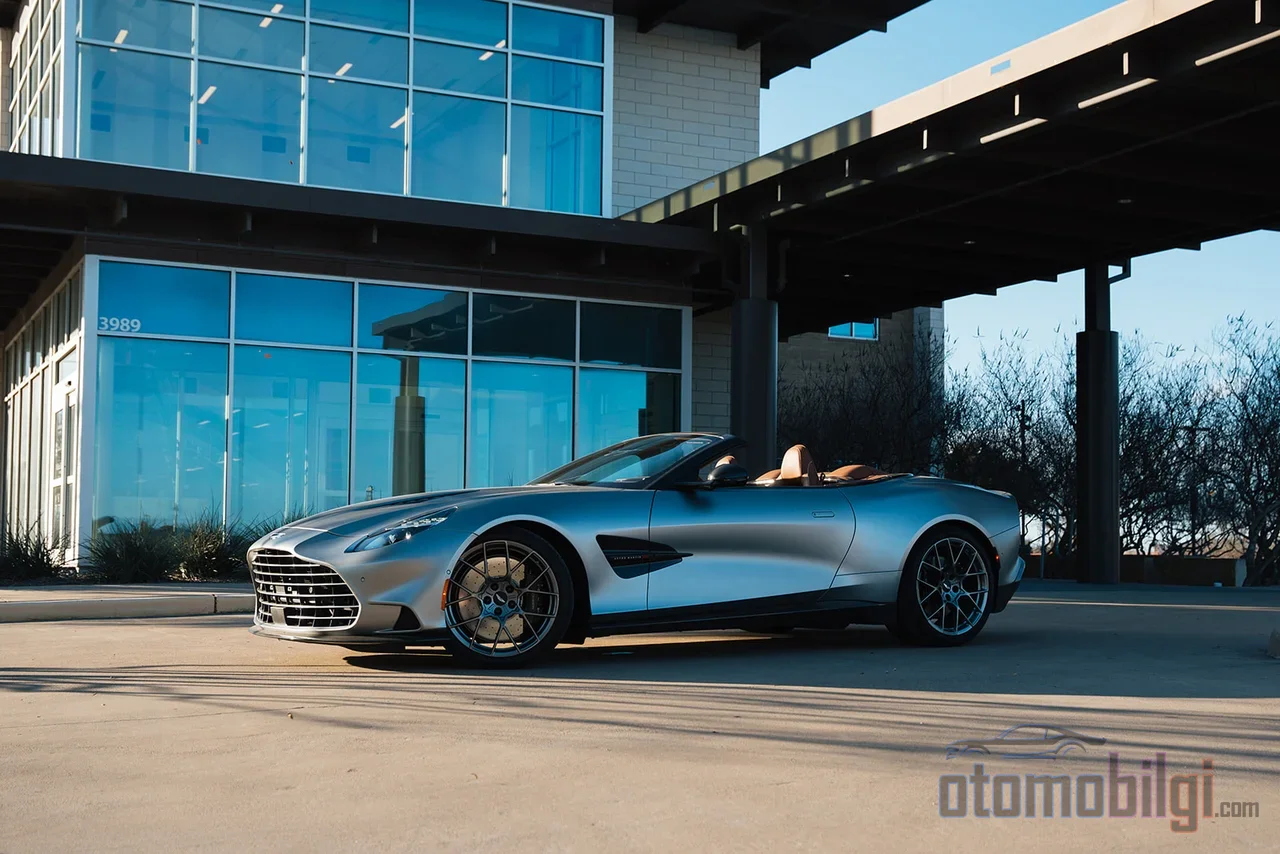
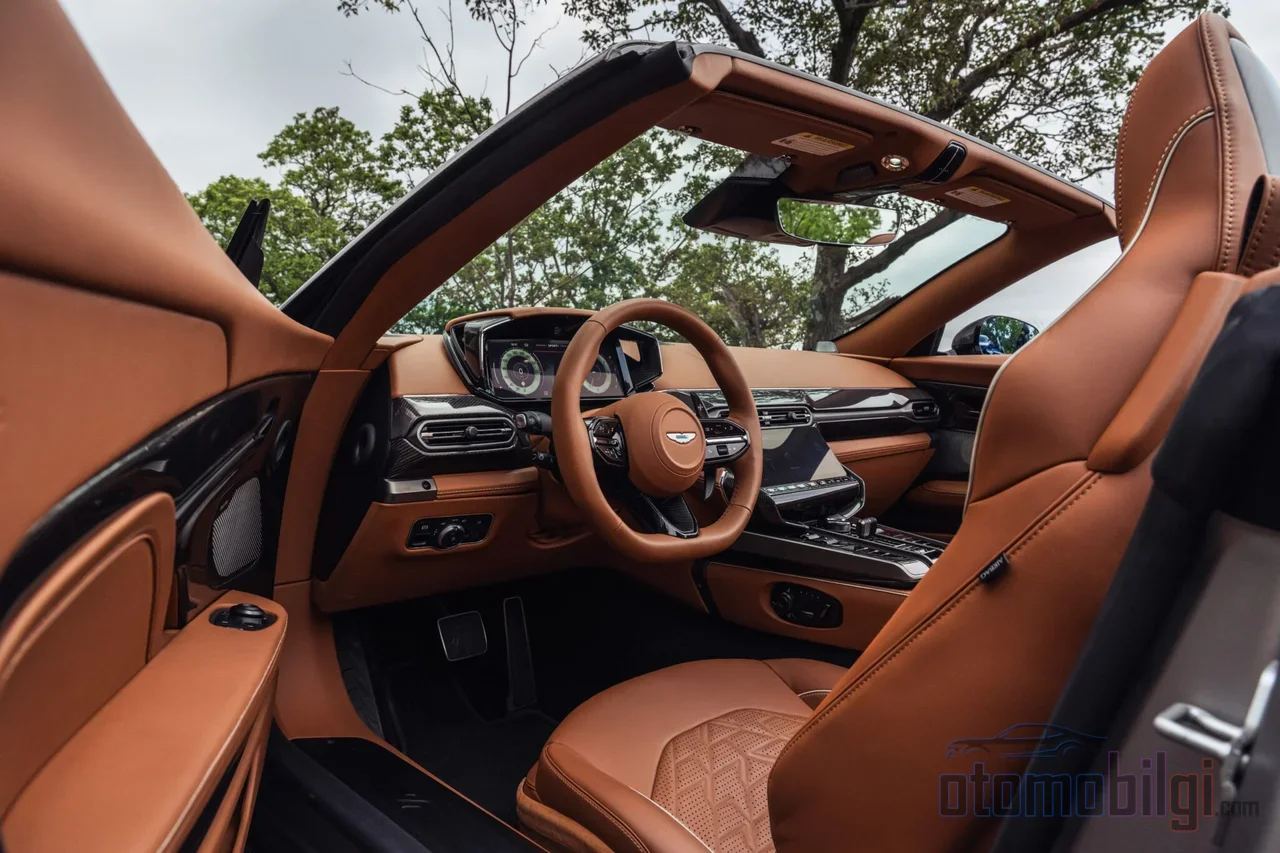
The open-top Volante was introduced on March 25, 2025, and carries the same engine, the same transmission, and the same 344 km/h top speed as the coupé. The differences come down to weight and acceleration times:
- Weight: The Volante weighs 1,869 kg - 95 kg heavier than the coupé
- 0-100 km/h: coupé 3.2 s, Volante 3.4 s
- Top speed: 344 km/h in both bodies
It is stated that special work was done on the chassis and suspension side for the open body, and that the drive modes were adjusted to cover all conditions. In other words, the Volante is not a closed coupé with its roof simply cut off; it is a derivative tuned to the dynamic requirements of open-top driving.
The V12 Legacy: A 25-Year Grand Tourer Line
The Vanquish name reaches its quarter-century mark in 2026. The first generation was produced in Newport Pagnell between 2001 and 2007; it was an Ian Callum design, derived from the Project Vantage concept shown at the 1998 Detroit Auto Show. Its 5.9-liter naturally aspirated V12 produced 460 hp, reached 306 km/h, and was described as the ultimate grand tourer in the car magazines of the time. In 2002, it also entered popular culture with a scene in a James Bond film. The Vanquish S, added in 2004, raised the power to 527 PS and the speed to 322 km/h; it lowered the drag coefficient from 0.33 to 0.32.
The second generation arrived in 2012 in Gaydon, on the VH platform: a 5.9-liter V12 with 573 PS, followed by the 2016 Vanquish S with 603 PS and 324 km/h. In 2018, the name was pulled behind the scenes, making way for the DBS Superleggera. A brief interim name never reached production: the mid-engine Vanquish Vision concept, introduced in 2019, was dropped from the production plan in 2023. This cancellation actually clarified the brand's identity choice - the Vanquish would remain where it belonged, as a front-engine V12 Super GT.
The third generation takes this line to its numerical peak as well: from 460 PS to 835 PS, meaning an approximately 81 percent power increase across generations. Over the same period, the top speed has stretched from 306 km/h to 344 km/h.
The Rival Arena: The Vanquish, Ferrari 12Cilindri and Lamborghini Revuelto
The Vanquish sits at the same table as the Ferrari 12Cilindri and Lamborghini Revuelto in its natural competitive arena; all three featured in one of 2025's notable comparison tests. In expert evaluations, the picture is not one-sided: it is said that Ferrari perhaps offers a more complete package with its suspension comfort and transmission sharpness, while the Vanquish is strong in torque management and character. Such divided assessments are natural - at the top of the class, it is increasingly difficult to find an objective weak link, and the debate shifts to preferences.
On the technical plane, the Vanquish's position is clear: unlike its rivals, it defends to the end a formula that is fully internal combustion, front-engine and rear-wheel drive. The 835 PS output comes without hybrid assistance, from a large-displacement twin-turbocharged V12 alone. This is not a step backward for the manufacturer; it means the grand tourer identity aligns perfectly with the engine architecture.
Conclusion: The Front-Engine V12 Has Not Said Its Last Word
The Aston Martin Vanquish answers the question in the middle - can a modern grand tourer stay at the summit without leaning on electricity - with technical figures: yes, with 835 PS, 1,001 Nm and 344 km/h. A thorough overhaul of a decade-old engine block, a chassis with an extended axle distance, and specially developed tires come together, and the result is a flagship kept below one thousand units per year. In the 25 years since the first generation, the formula has not changed; only the scale of every component has grown. This picture is more than enough to show that the big front-engine, rear-wheel-drive V12 tradition still has a future.
Sources
- Vanquish: Super GT V12 Sports Car
- Vanquish Volante | Open-Top V12 Super GT
- Aston Martin Vanquish
- 2027 Aston Martin Vanquish Review, Pricing, and Specs
- Aston Martin Vanquish III 5.2 V12 (835 Hp) ZF
- The 2026 Aston Martin Vanquish Performs as Good as It Looks
- 2026 Aston Martin Vanquish Volante Review
- V12 for victory: Aston Martin Vanquish vs Ferrari 12Cilindri
- Aston Martin Vanquish History
- 25 years of the Aston Martin Vanquish