Gordon Murray T.50: Lightness and Fan Aerodynamics
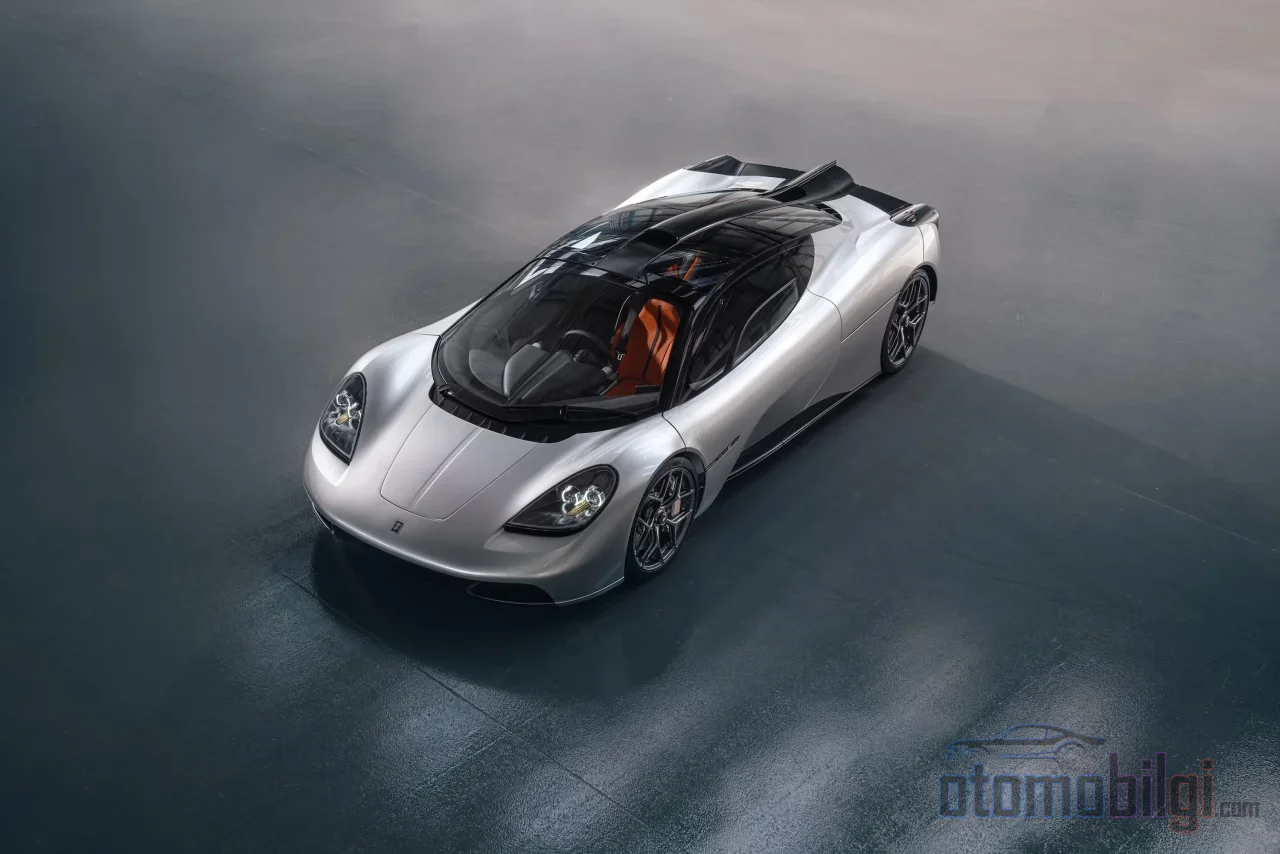
What you would get by placing a fan at the rear of a supercar, half the height of the cabin, would most likely be a visual joke. But in Gordon Murray Automotive's T.50, this fan sits at the very center of the car's entire aerodynamic philosophy. An idea used once in Formula 1 in 1978 and then erased from the rulebook returned, more than forty years later, as the very engineering solution in a car built for the road. So what does this fan actually do, and how does it differ from a conventional rear spoiler?
On this page, we examine the T.50's fan-assisted active aerodynamic system, its modes, its interaction with the Cosworth V12 engine, and how Murray's lightweight philosophy fits into this system, with engineering logic.
Where the Fan Idea Comes From: The Chaparral 2J and Brabham BT46B
The idea of producing downforce by sucking air from beneath the car is far older than the T.50. The 1970 Chaparral 2J created negative pressure under the car in the Can-Am series using a fan powered by a snowmobile engine. The auxiliary motor feeding the fan was a weak link in terms of reliability, and the project was withdrawn from the tracks when the car fell foul of the ban on movable aerodynamic devices.
The real turning point came in 1978. Gordon Murray, as Brabham's technical director at the time, had to answer the ground effect solution of the Lotus 79. The flat and wide Alfa Romeo flat-12 engine left no room for the Venturi tunnels that their rivals could open at the sides. Murray and consulting engineer David Cox developed the Brabham BT46B, with a fan mounted at the tail that both cooled the radiator and created negative pressure under the car.
The technical regulations of the era required the fan's primary function to be cooling, and Brabham exploited exactly this loophole. The car made its racing debut with a victory at the 1978 Swedish Grand Prix with Niki Lauda; while its rivals struggled on the oil-stained surface, Lauda being unaffected clearly demonstrated the car's mechanical grip advantage. Although the press of the time wrote that the car had been banned, the reality was different: the rule loophole was closed before the 1979 season, and Bernie Ecclestone, due to political pressure, never raced the car again. The BT46B was not formally banned; it was simply withdrawn from racing.
The McLaren F1 also proves that Murray never entirely abandoned this idea. That car used far more modest fans hidden in the wheel arches, increasing downforce by about 5% while reducing drag by about 2%. The T.50, however, is this legacy brought to life without limitations, as a full-scale engineering project.
How Does the T.50's Fan Differ From a Conventional Rear Spoiler?
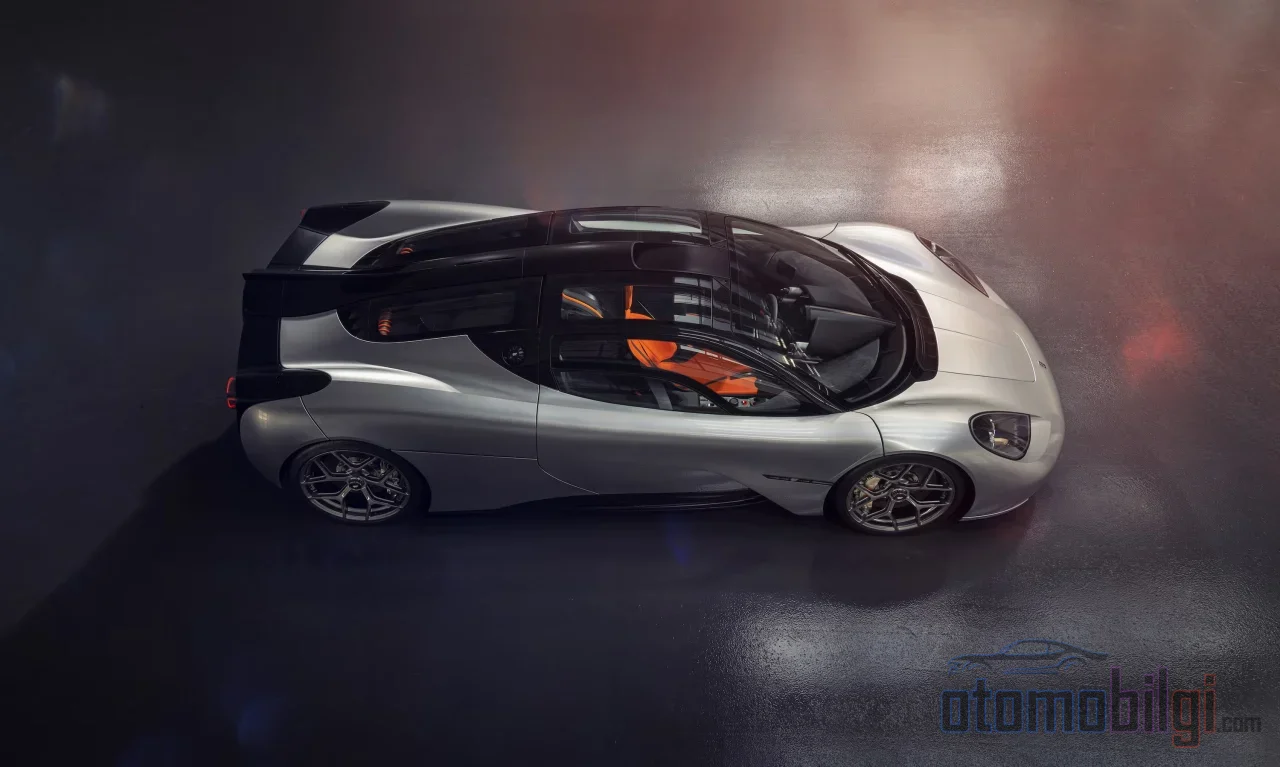
In the conventional solution, downforce is produced by a fixed or movable rear spoiler that directs the air over the car. This approach has two fundamental limitations: the wing works in proportion to speed, meaning its effect is small at low speeds, and producing downforce inevitably adds drag. In the T.50, the system is set up in reverse.
The fan mounted at the rear of the car is the heart of the system called Fan Interactive Aero System (FIAS). According to official technical data, the fan is driven by a 48-volt electric motor with a power of 8.5 kW; the fan kicks in at a maximum of 7,000 rpm and produces 15 kg of thrust force. Here is the critical point: the fan's downforce contribution does not come directly from its own suction power. The fan sucks air from the start of the diffuser's steep step, cleaning the boundary layer and keeping the flow attached to the surface. This allows both the diffuser and the rear spoiler to work much more efficiently. In other words, the fan is not a device that generates force on its own, but an activator that enables the car's underbody aerodynamics to operate at full capacity.
Highlights
- Fan system: 48-volt, 8.5 kW electric motor, 7,000 rpm, 15 kg of thrust
- Cosworth GMA V12: 663 PS @ 11,500 rpm, 467 Nm @ 9,000 rpm
- Dry weight: 957 kg, total vehicle weight 986 kg
- In Streamline mode, a 12.5% reduction in drag
- 220 kg of downforce at 150 mph, up to 460 kg at maximum speed
This architecture has another side benefit: by blowing air into the wake zone behind the car, the fan makes the car behave as if it virtually had a longer tail. This reduces the base suction, i.e. the pulling force created by the negative pressure area behind the car. A car with a short body can approach the drag characteristics of a long-tailed car.
Aerodynamic Modes: Downforce, Streamline, Brake and Vmax
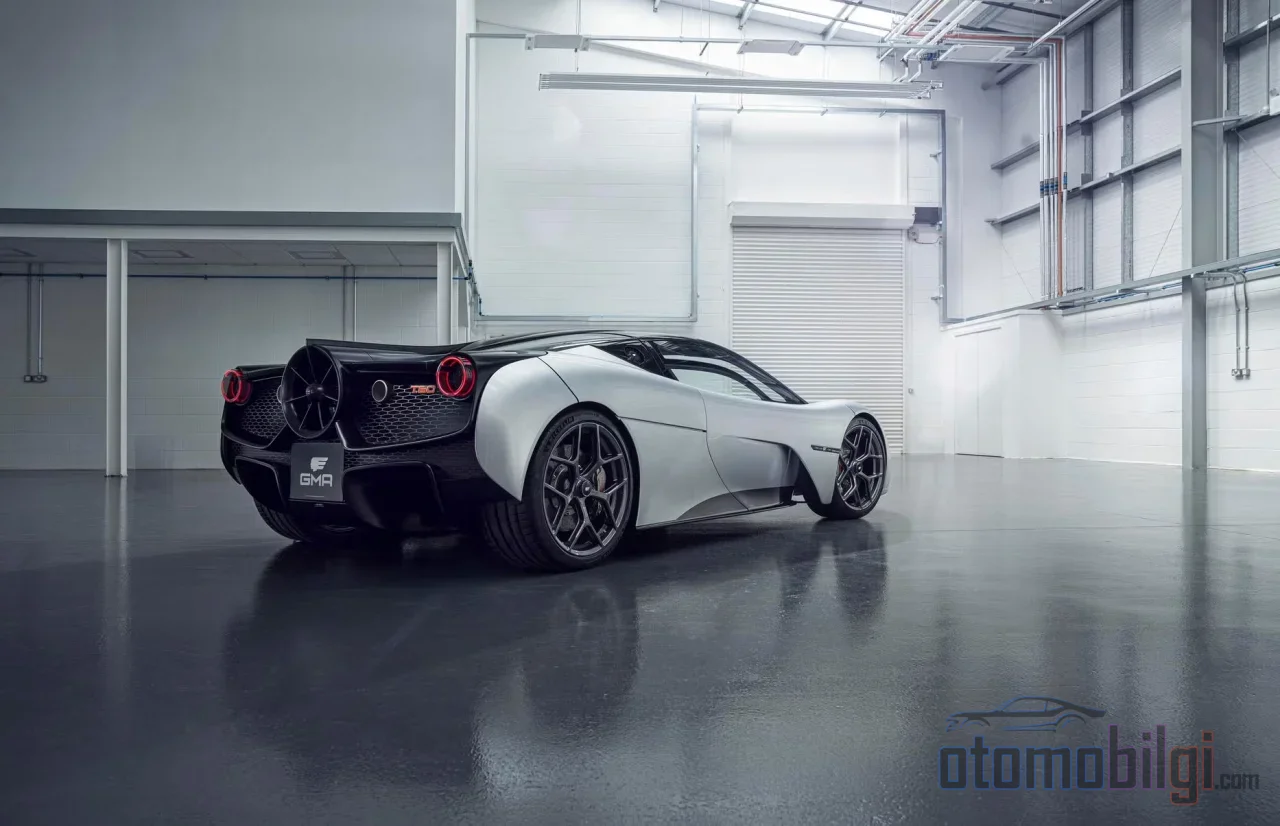
The T.50 has a total of six aerodynamic modes; two are automatic, and four can be selected by the driver. We can follow the logic of the system through the four main modes.
- Downforce (High Downforce): The fan and active surfaces work for maximum grip; in high downforce mode, total downforce increases by 50%. The ability to generate meaningful downforce even at low speeds is one of the most distinct advantages over the classic wing solution.
- Streamline: In low drag mode, total drag is reduced by 12.5%. The fan's 15 kg of thrust compensates for roughly 2.5% of the car's total drag.
- Brake: During braking, the active spoilers open to a 45-degree angle of attack, producing 100% additional downforce. This mode shortens the braking distance from 150 mph to a standstill by approximately 10 meters.
- Vmax: Aerodynamically identical to Streamline, but the fan is powered by the battery, removing the power load from the engine. Together with the ram-air intake system, this provides approximately 50 PS of additional power.
The measured values also concretize the system's capacity: in driving tests, the fan can produce up to 220 kg of downforce at 150 mph, and 460 kg of downforce at maximum speed. These figures are measurements tied to actual speeds, independent of the percentage increases each mode provides within itself, and should not be read interchangeably.
At high speed, should the fan or the engine be powered?
An aerodynamically interesting question is using the same production power to drive the fan instead of the crankshaft. It makes sense to direct the 8.5 kW of power to the fan for maximum speed targets, because the drag reduction and thrust the fan provides can deliver a more efficient overall result compared to applying the same power to the wheels. The logic of the Vmax mode is built precisely on this choice.
Cosworth V12: Interaction with 12,100 rpm and the Fan System
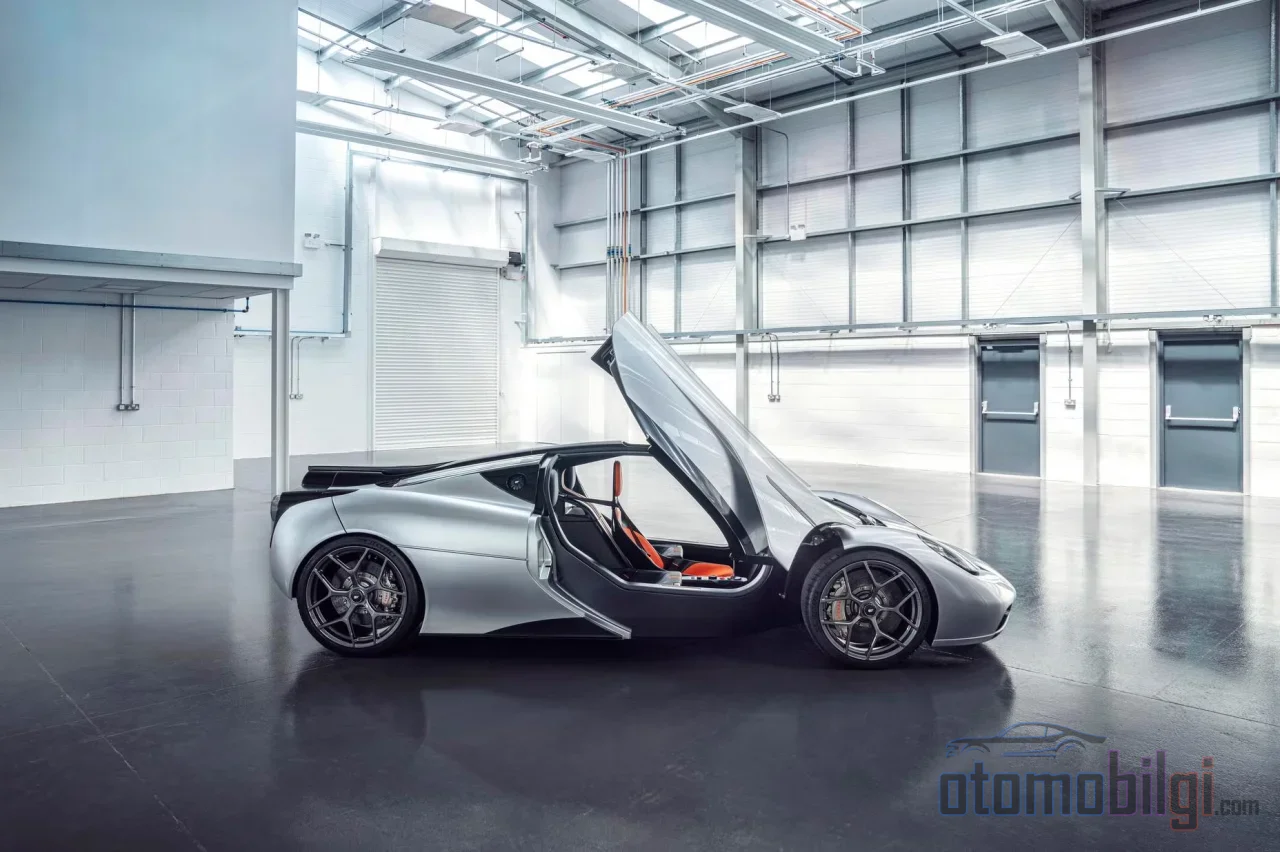
At the heart of the T.50 sits the Cosworth GMA V12 engine: a naturally aspirated unit with a displacement of 3,994 cc and a 65-degree V angle. According to official technical data, maximum power is 663 PS @ 11,500 rpm and maximum torque is 467 Nm @ 9,000 rpm. The engine has the highest power density among naturally aspirated road car engines: 166 PS per liter.
Its character is also built around everyday usability. 71% of the maximum torque is available from 2,500 rpm onward; the engine weighs 178 kg while the crankshaft weighs only 13 kg. Its titanium conrods and valves, dry sump lubrication and 14:1 compression ratio show that racing engineering discipline has been carried over to a road car. The engine's rev limiter kicks in at 12,100 rpm.
The interaction between the fan system and the engine is not limited to Vmax mode. Since the electric fan can be controlled independently of engine speed, the system enjoys a completely different freedom compared to the BT46B's engine-speed-dependent fan. On the 1978 car, the suction increased with engine speed, and the driver was informed of the loss of ride height via an aircraft altimeter system connected in the cockpit. The T.50 has no such mechanical dependencies.
| Feature | Value |
|---|---|
| Engine | Cosworth GMA V12, naturally aspirated, 3,994 cc |
| Maximum power | 663 PS @ 11,500 rpm |
| Maximum torque | 467 Nm @ 9,000 rpm |
| Rev limiter | 12,100 rpm |
| Dry weight | 957 kg |
| Fan power | 8.5 kW (48 volts), 7,000 rpm |
| Fan thrust force | 15 kg |
The Philosophy of Lightness: 986 kg and the Price of Aerodynamics
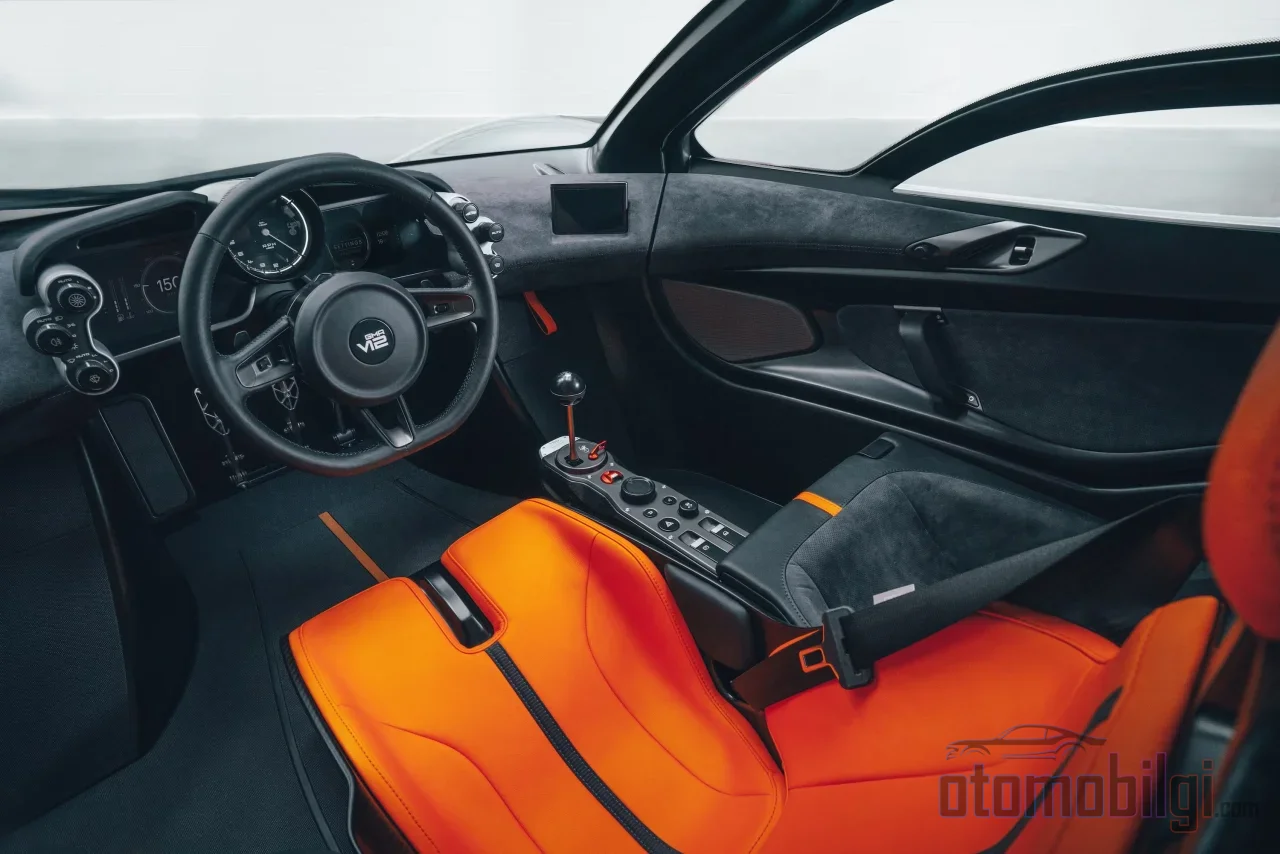
In Murray's design practice, weight is the parameter that comes before every decision. The T.50's dry weight is 957 kg according to the official technical specification; the total vehicle weight is stated as 986 kg. Murray's own goal was to keep the total weight below 1,000 kg. The three-seat, driver-in-the-middle layout weighs just 13 kg in total.
This philosophy is directly connected to aerodynamics. In the classic approach, when high downforce is desired, large wings, a wide body and a powerful engine are added; the car gets heavier, and then an even more powerful engine is needed to carry that weight. The T.50 breaks this spiral with its fan: without needing very large fixed aerodynamic surfaces, a lightweight car achieves both grip and low drag with an active system that opens when needed and closes when not. Thus, the 663 PS naturally aspirated engine produces the kind of performance that works in the territory of much heavier rivals with far less mass.
How Does the Fan Actually Produce Downforce? The Clear Answer
The short and clear answer to the question we asked at the beginning of the page is this: The T.50's fan, rather than creating downforce through direct suction under the car, produces downforce indirectly by allowing the diffuser and rear spoiler to work at full efficiency; it cleans the boundary layer, keeps the flow attached to the surface, and thus creates downforce at the rear, in the middle of the car and at the front.
This distinction seems simple but is decisive for understanding the system. A reader who thinks of the fan as a vacuum pump will question how an 8.5 kW motor can generate 460 kg of downforce. The answer lies in the chain of aerodynamic efficiency: the fan unlocks the potential of surfaces that already exist. The diffuser produces downforce at full capacity because it can operate at its aggressive angle without flow separation; the active spoilers attack at the right angle in the right mode; the air sprayed rearward reduces base suction. The whole is greater than the sum of its parts.
Conclusion: Fan Car Without a Rule Constraint
In the BT46B, the fan's primary function had to satisfy the technical regulations; in the T.50 there is no such constraint. The fan was placed at the center of the car's real function, namely an active underbody aerodynamics package. Downforce at low speed, reduced drag at high speed, shorter braking distances under braking, and power returned to the engine at Vmax: all of it comes from the same 8.5 kW electric motor and its control software. An idea that lived through a single race in 1978 was transformed, in a road car whose official technical specification was published in 2020, into one of the most refined expressions of engineering.
The T.50's fan aerodynamics is one of the finest examples of the balance struck between advanced technology and lightness. The system neither adds weight to the car nor confronts the driver with the visual burden of large fixed wings. In Murray's approach, the solution has always been found not by adding to the problem, but by subtracting more cleverly; the T.50 is the most tangible expression of this approach in the field of aerodynamics.
Sources
- Gordon Murray Automotive - T.50 official page
- GMA T.50 official technical specification (PDF)
- Gordon Murray Automotive T.50 Engine - Racecar Engineering
- The Gordon Murray Automotive T.50 - Revs Automedia
- Gordon Murray T50 Aerodynamics - AirShaper
- Explained: How does the V12-engined GMA T.50's fan create downforce? - Top Gear
- Gordon Murray Automotive T.50 review - Top Gear
- Gordon Murray Explains the Huge Fan on the T.50 Supercar - Supercars.net
- Gordon Murray Automotive T.50 - Wikipedia
- Here's How The Giant Rear Fan Works On Gordon Murray's T.50 - The Drive