Pagani Huayra R Evo: A Track Monster
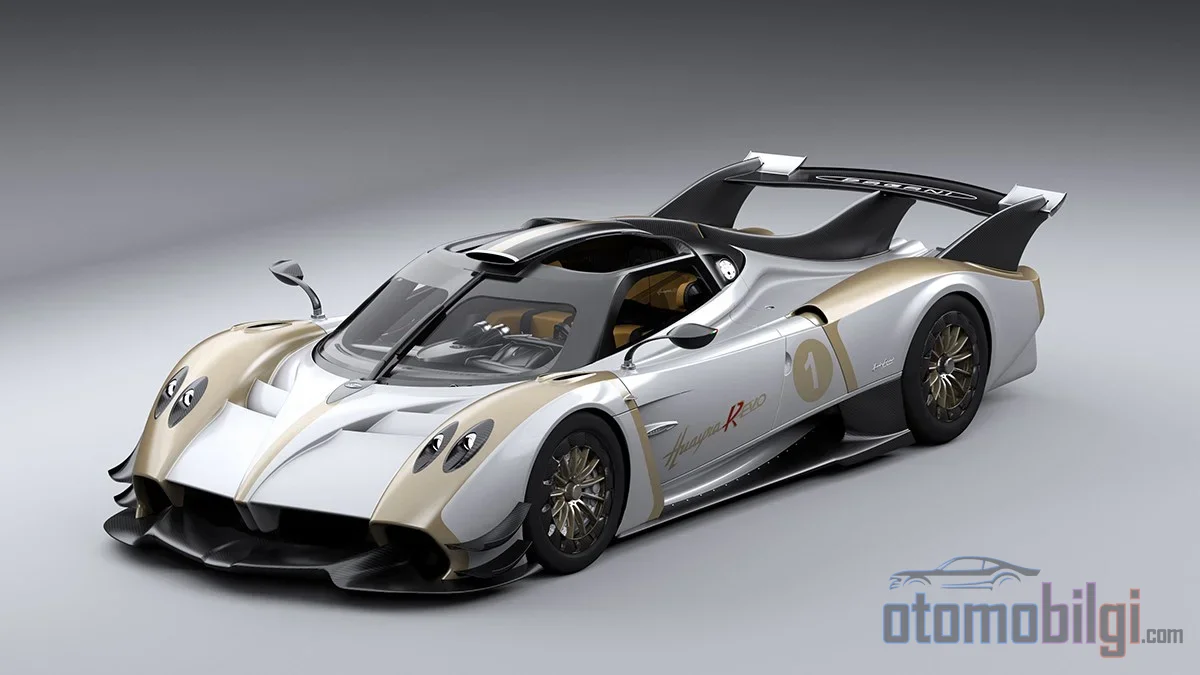
What happens if you remove the roof on a track car? From an aerodynamic standpoint, the expected answer is clear: downforce drops, balance is upset, and engineers set to work on extra measures to compensate for the loss. With the Huayra R Evo, Pagani did exactly the opposite. On this open-top track hypercar, removing the roof panels increases total downforce by 5 percent. On its own, this is a detail that sums up what kind of engineering project the Huayra R Evo is: While the road-born DNA of the Huayra family was transformed into a machine fully dedicated to track use, every decision was recalculated.
The result is an open-top hypercar usable only on the track, unveiled on February 8, 2024 at the Pagani facilities in San Cesario sul Panaro. Pagani's claim is bold: The Huayra R Evo can reach the performance level of current Le Mans Prototype 2 class race cars. On this page we will examine the engineering behind this claim piece by piece: A naturally aspirated V12 revving to 9,200 rpm, long-tail aerodynamics, a carbon composite monocoque and a dry weight of 1,060 kg on Pirelli slick tires.
Highlights
- 6.0-liter naturally aspirated V12 engine: 900 hp and 770 Nm of torque, with a 9,200 rpm rev limiter
- Dry weight of only 1,060 kg; power-to-weight ratio of approximately 851 hp/ton
- Total downforce increased by 45 percent with the long-tail body, and aerodynamic efficiency improved by 21 percent at the same drag
- The open-roof configuration increases downforce by an additional 5 percent, contrary to expectations
- Top speed of 350 km/h; An 80 kg 6-speed sequential gearbox developed with HWA AG
From Road-Going Huayra to Track Car: The Logic of the Transformation
The engine Pagani used in its road models was the AMG-derived 6.0-liter twin-turbocharged M158 V12. This combination was the right decision for road use: a broad torque band, a calm character, and long-term durability. But with the Huayra R, Pagani departed from this path and moved to a fully naturally aspirated engine developed from scratch with HWA AG. Why? Because in a track car, the engine's job is no longer comfort, but a power curve that grows seamlessly as revs rise, and a throttle that responds instantly under the driver's foot.
The Huayra R Evo is the second phase of this philosophy. The car is part of Pagani's Arte in Pista program aimed at Hypercar owners: under the program, owners of the Huayra R, Zonda R and Zonda Revolución are offered non-competitive events on FIA-approved circuits, engineering support, data analysis, driver coaching and motorsport physiotherapist services. In other words, the car sits at the center of the track ecosystem the manufacturer itself has built. Its noise level is so high that the car fails the sound tests of most standard track days; which is why Pagani organizes its own events.
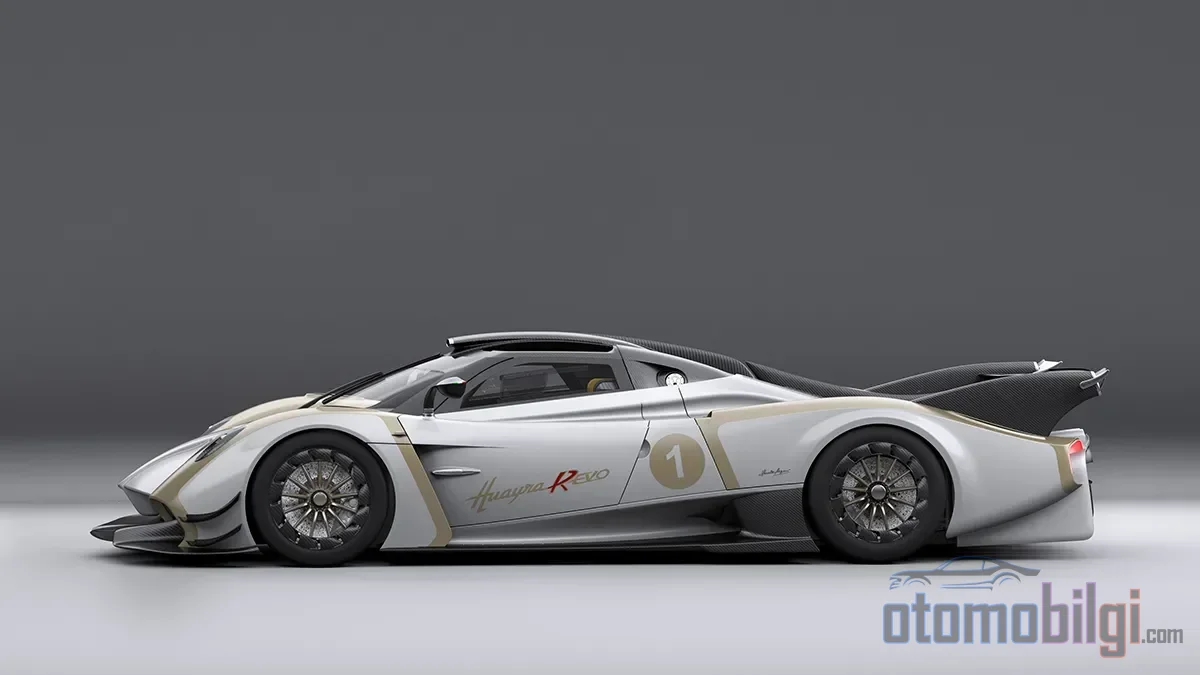
The design inspiration comes from two different roots. An IndyCar race Horacio Pagani watched in Nashville gave birth to the idea of Aeroscreen protection and removable roof panels. The long-tail prototypes of 1960s and 70s Le Mans, in other words the codalunga tradition, defined the car's silhouette. The project took about two years, and the result is a body noticeably longer than the road-going Huayra, at 5,180 mm.
The 900 HP V12-R Evo: Rev Character of an Atmospheric Heart
The 5,987 cc 60-degree V12 engine developed with HWA AG is mounted longitudinally in a mid-rear position. The numbers are clear: 900 hp (662 kW) around 8,500 rpm, 770 Nm of torque between 5,800 and 8,200 rpm, and a rev limiter at 9,200 rpm. Specific output of 150.3 hp per liter is among the highest of its era for a naturally aspirated engine.
The Huayra R's engine produced 850 hp and 750 Nm; the increase of 50 hp and 20 Nm in the transition to the Evo is no coincidence. The trumpet-design intake manifold, new camshafts, recalibrated ECU and revised exhaust design work together to increase both power and the width of the torque curve. The rev limiter has also been raised from 9,000 to 9,200 rpm.
The 80-Kilogram Gearbox and Its Contribution to the Chassis
The trust has been resolved in the drivetrain. The 6-speed sequential gearbox developed with HWA AG weighs only 80 kg thanks to its dog-ring structure without synchronizers and a sintered-metal triple-disc racing clutch; friction efficiency is at the 95 percent level. The striking engineering detail is this: the gearbox connects to the monocoque and the engine, acting as a structural element and contributing to the chassis's rigidity. Gear changes are made from the steering wheel with its paddle shifters.
Codalunga Aerodynamics: How Does a Long Tail Produce Downforce?
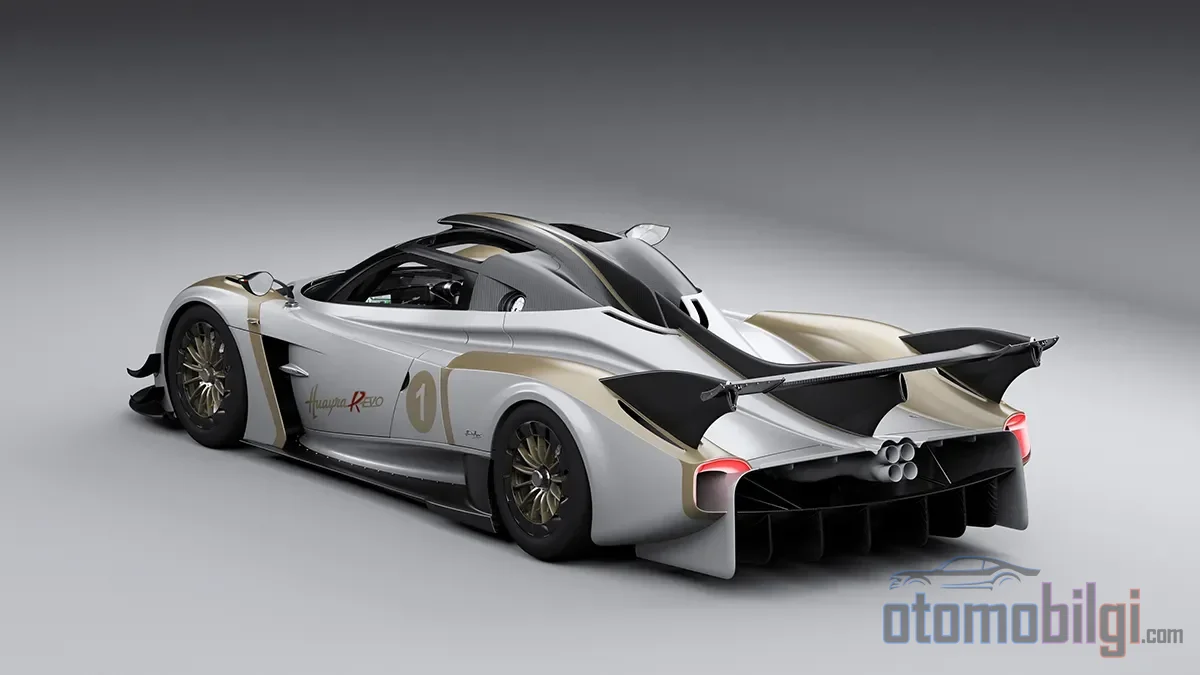
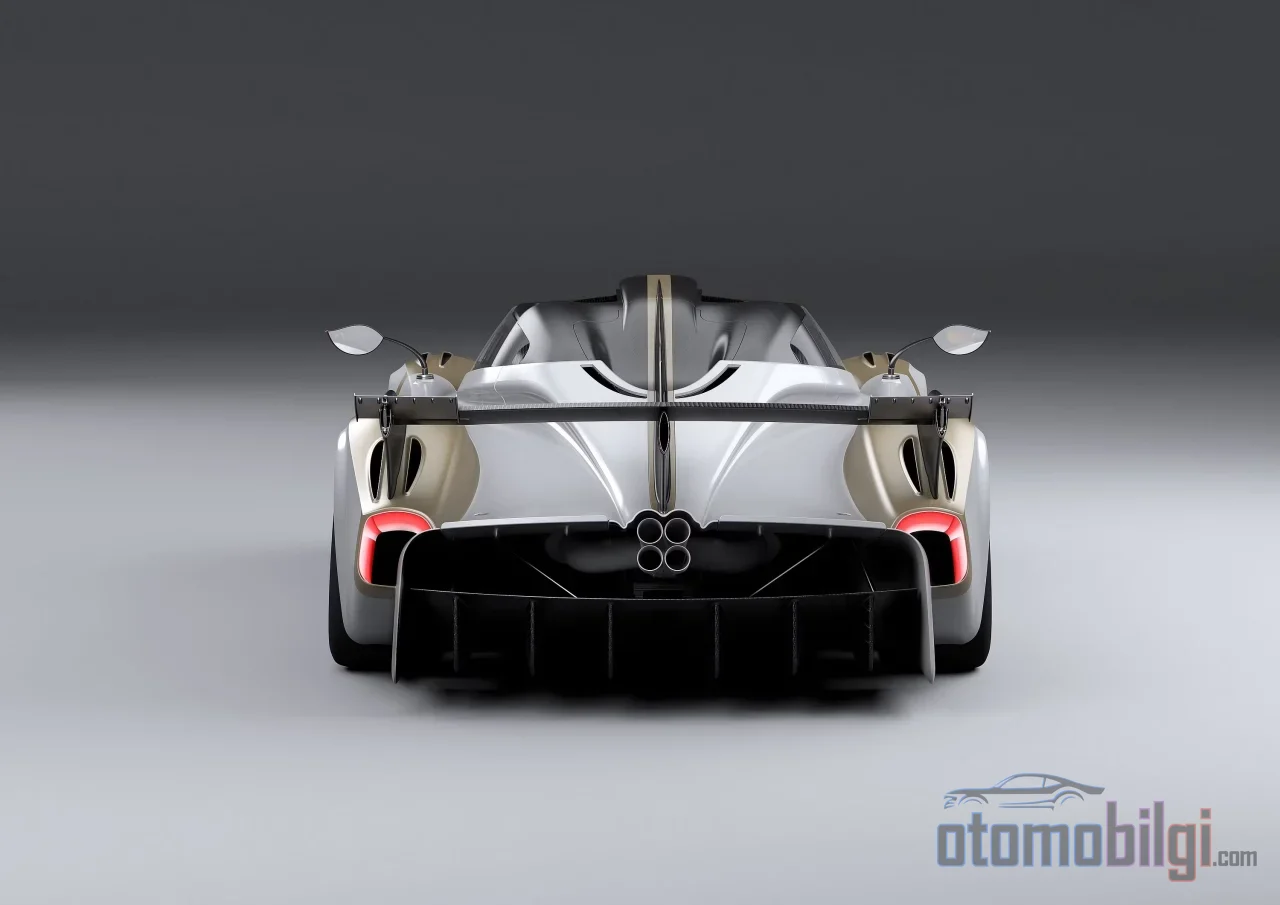
The body of the Huayra R Evo was reshaped according to the logic of the Le Mans codalunga prototypes. The front splitter was extended 101 mm forward and the rear section 190 mm. These extensions are not merely cosmetic: the long body allows the air to be managed over a longer distance and increases the efficiency of the large rear spoiler. The new central stabilizer wing, the large rear spoiler with integrated supports, the double rows of flicks on the hood, the shark fin and the rear diffuser complete this system.
The numerical result can be summarized under two headings: Compared to the Huayra R, total downforce increased by 45 percent and aerodynamic efficiency improved by 21 percent at the same level of air resistance. In aerodynamics, these two goals usually work against each other; as downforce increases, drag also increases. The result Pagani achieved shows that the downforce gain was realized without paying a drag penalty.
The most striking finding concerns the open roof. When the roof panels are removed, vertical load increases at both the front and rear axles, and total downforce rises 5 percent higher than in the closed configuration. The opposite is generally expected for open-top cars; Pagani explains this reversal by managing the airflow passing over the cabin so that it places additional load on the body. The two movable rear flaps and active aerodynamic management support braking and cornering stability.
At 320 km/h, in its lowered setting, the vehicle produces more vertical aerodynamic load than its own total running weight. Maintaining a 45-55 percent weight/aero distribution across the entire speed range and reducing ground sensitivity are among the design's core goals.
Chassis, Brakes and Tires: How Is 1,060 kg Managed?
The monocoque is built from Carbo-Titanium HP62 G2 and Carbo-Triax HP62 carbon composite structures; the body panels use Class-A carbon fiber developed for the Utopia, a material that delivers 38 percent higher stiffness at the same weight. The integrated seats are part of the monocoque; the front and rear subframes are made of Cr-Mo alloy steel. The forged aluminum double-wishbone suspension is equipped with coil springs and electronically controlled dampers; an additional heave damper on each axle, meaning a third hydraulic element, controls the body's dive and squat movements. Elasto-kinematic settings provide camber recovery and bump steer correction.
The braking system consists of self-ventilating CCM-R carbon-ceramic discs developed in collaboration with Brembo: 410x38 mm discs at the front and 390x34 mm discs at the rear work with six-piston monobloc calipers. The double-row drilled disc geometry in the front system increases the swept surface area by 100 percent and the disc-and-pad braking area by 14 percent; the result is lower thermal load and temperature. The tires are Pirelli P Zero Slick, in dry and wet versions; 280/680 R19 at the front and 345/725 R20 at the rear, developed with Pirelli Motorsport through virtual simulation methods.
Comparison with the Huayra R: What Did the Evo Change?
| Specification | Huayra R (2021) | Huayra R Evo |
|---|---|---|
| Power | 850 hp @ 8,250 rpm | 900 hp @ 8,500 rpm |
| Torque | 750 Nm | 770 Nm |
| Rev limit | 9,000 rpm | 9,200 rpm |
| Dry weight | 1,050 kg | 1,060 kg |
| Downforce target | 1,000 kg at 320 km/h, 46-54% distribution | 45% more total downforce |
| Body | Standard wheelbase | Long tail (codalunga) |
The table clarifies the character difference between the two cars: The Evo has turned the 10 kg weight penalty into a major aerodynamic gain. The power-to-weight ratio measures in the range of roughly 849-851 hp/ton; the small difference here depends on which units the power and weight figures are defined in, i.e. metric and imperial measurement methods, and does not change the assessment. The Huayra R Evo's top speed is stated as 350 km/h; for a track-focused car, this figure means a sufficiently high ceiling at the end of long straights.
What Does a Race Car Look Like Inside the Cabin?
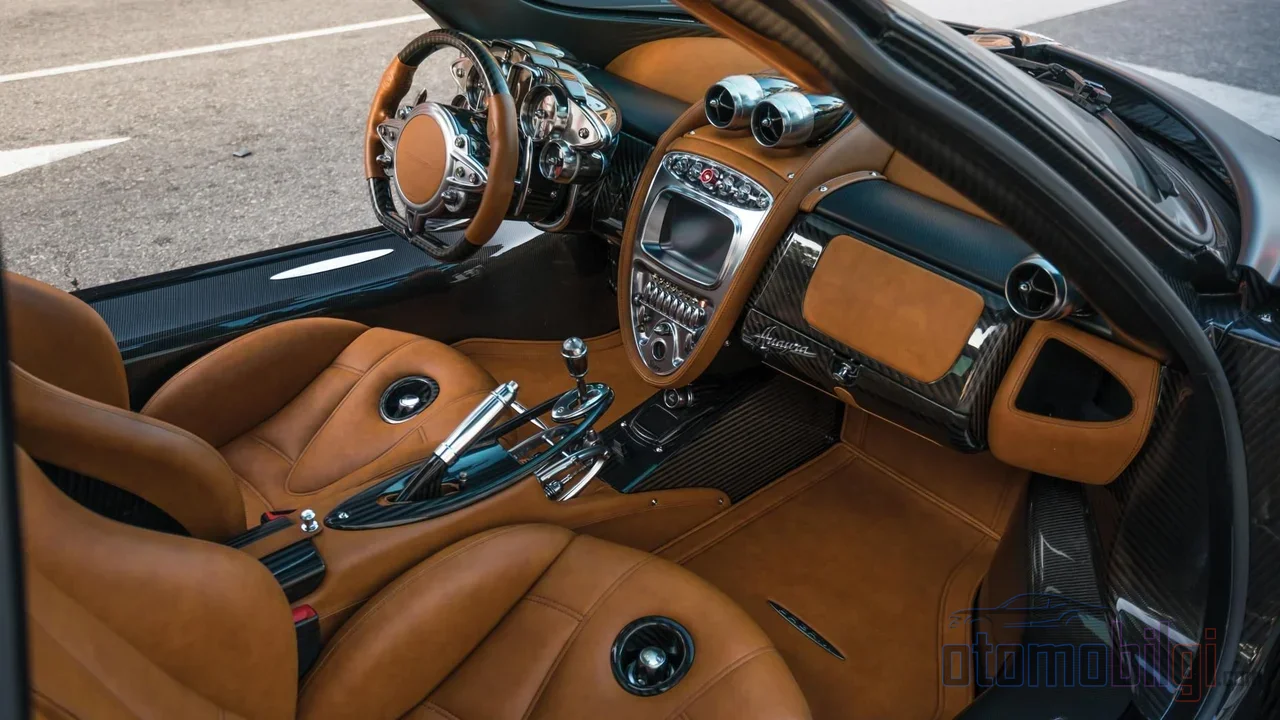
The interior carries the traces of racing regulations. Six-point harnesses, seats covered in fireproof material, Ener-Core EC 50 foam filling and carbon fiber headrests with side protection are standard equipment. The adjustable pedal set was specially developed with AP Racing; the steering column has a quick-release mechanism. The Targa body-style vehicle is a two-door, two-seater that can be configured with left- or right-hand drive; its dimensions - 5,180 mm length, 2,077 mm width, 1,164 mm height and 2,792 mm wheelbase - define a bulky body for a limited-production track car.
Track Performance: Is the LMP2-Level Claim Real?
Pagani states that the Huayra R Evo can match the performance level of current LMP2 race cars; independent track impressions also support this aspect. In driving sessions at Monza, the car was considered to have the potential to lap at times equivalent to an LMP2 pole position; even for an experienced driver, approaching the car's limit takes serious effort, because exploiting the limits of a car at this level demands the very highest tier of driving skill.
So how did the Pagani Huayra R Evo become a track hypercar? The answer lies in the convergence of three engineering decisions: a 9,200-rev naturally aspirated V12 developed from scratch with HWA AG instead of an AMG-derived road engine, a 45 percent increase in downforce achieved with the codalunga long-tail body, and carbon-composite lightness weighing just 1,060 kg. When these three combine, the result is a car designed directly with racing-prototype logic, without ever resorting to the comfort language of road hypercars.
The story of the Huayra R Evo is a measurable record of how far a manufacturer can go with its most extreme product. Counterintuitive results such as the open roof increasing downforce are only possible in a project where every parameter is recalculated. With this car, Pagani appears to have written the final chapter of the Huayra legend on the track side.
Sources
- Pagani Huayra R Evo Roadster official press release
- Pagani Huayra R Evo Roadster technical specifications document
- Pagani Huayra R Evo Roadster official page
- Motor1 - Pagani Huayra R Evo news and technical review
- auto-data.net - Pagani Huayra R Evo technical data
- evo - Huayra R Evo Roadster driving review
- Motor1 - Monza track driving review
- CAR Magazine - Huayra R Evo Roadster review