Mercedes-AMG One: Bringing a Formula 1 Engine to the Road
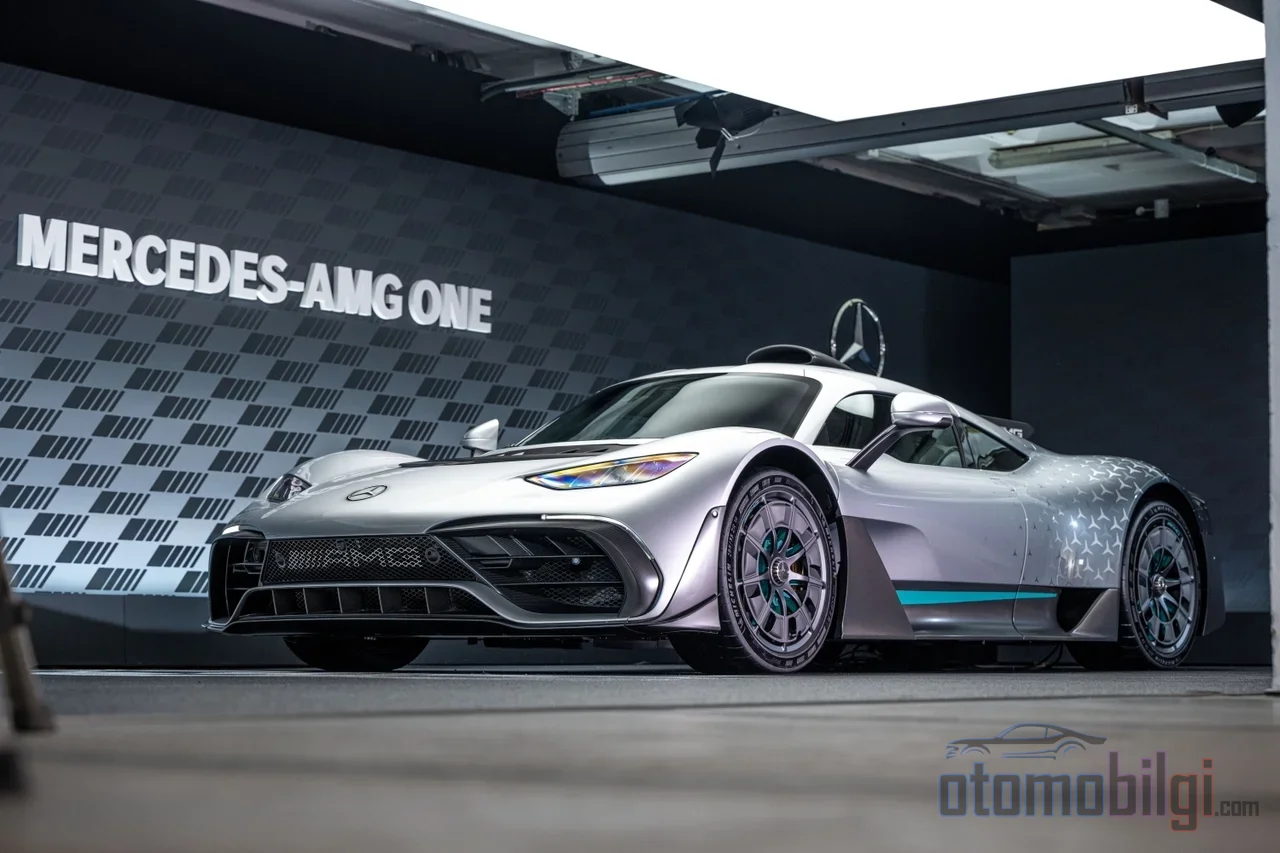
The lifespan of a Formula 1 power unit is calculated in terms of a few race weekends: it goes in for a rebuild after a few thousand kilometers, revs above 15,000, and has no concern whatsoever about running on commercial fuels. This is exactly where the engineering ambition of the Mercedes-AMG One begins: this car adapts a genuine F1 power unit developed in Brixworth to license plates, traffic lights, and pump gasoline. There is no other series-production car in the hypercar class that takes its engine directly from Formula 1; which is why the story of the AMG One is not a story of power figures, but a story of adaptation engineering.
From the W06 to the Road: The Power Unit's Pedigree
The 1.599 cc 90-degree turbocharged V6 at the heart of the car is a modified derivative of the Mercedes-Benz PU106B Hybrid power unit. The hardware it is based on is the engine of the Mercedes-AMG F1 W06, which won consecutive championships; in other words, this is not a unit inspired by an F1 engine, but that very unit revised for use in a road car. The engine sits in a mid-mounted position, ahead of the rear axle, and on its own produces 422 kW (574 hp) at 9,000 rpm. Like in F1, the valvetrain uses a pneumatic system that operates on air pressure; because at these rev levels, mechanical springs can no longer do the job.
However, not every parameter inherited from F1 could remain as it was. This engine, which on the track barely ever encountered the concept of idle speed, had to be able to join traffic at an intersection when the clutch was released. The solution was to pull the idle down to 1,280 rpm and cut the rev limit at 11,000 rpm. These two figures are the most significant compromises that shaped the car's character.
Highlights
- 1.599 cc turbocharged V6 + 4 electric motors: a combined 782 kW / 1,063 PS
- Rev limit of 11,000 rpm, idle of 1,280 rpm - the F1 unit revised for the road
- 0-100 km/h in 2.9 s, electronically limited top speed of 352 km/h
- Total production run of 275 units, all of them sold
- Nordschleife record: 6:29.090 (September 2024, Maro Engel)
How Was the Task Distribution of the Four Electric Motors Established?
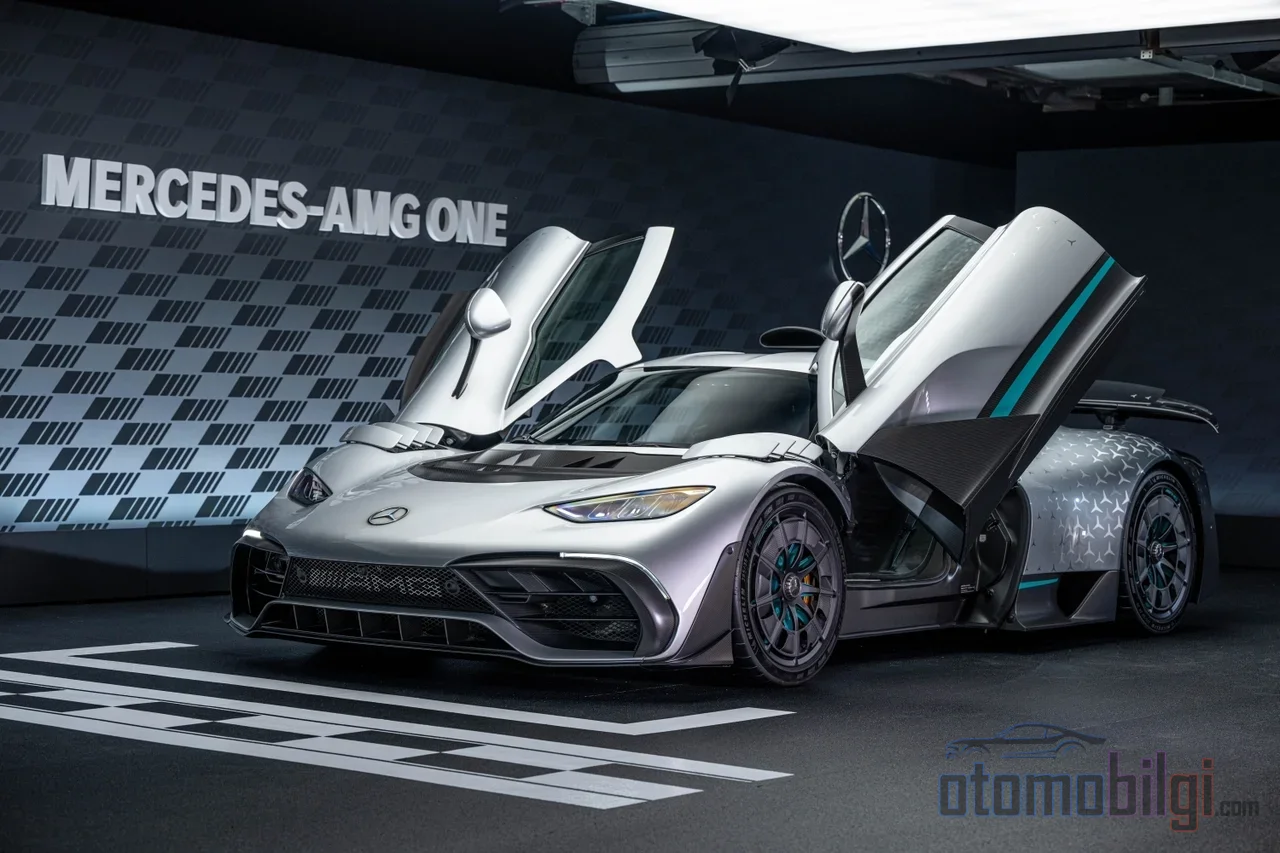
The AMG One's 1,063 PS of system output is the sum of four electric motors carefully placed on top of the internal combustion engine. Each one has a distinct task definition, and this distribution is the key building block that preserves the car's F1 character.
- MGU-K - A 120 kW (163 PS) unit connected to the crankshaft; during braking, it converts kinetic energy into electricity.
- MGU-H - A 90 kW (122 PS) unit connected to the turbocharger shaft; it recovers energy from exhaust heat and can spin the compressor wheel electrically up to 100,000 rpm before the exhaust gas takes over. Turbo lag is thereby effectively eliminated.
- Front axle motors - Two motors, each rated at 120 kW (163 PS), take on electric front-wheel drive and torque vectoring.
The four electric motors add an effective 360 kW to the system; the hybrid V6 system drives the rear wheels, while the electric motors drive the front wheels. Even the car's daily-use scenario is coded into this architecture: the battery offers a fully electric 18.1 km range (the provisional WLTP figure from 2022), meaning departures and short distances can be covered silently. The 800-volt, 8.4 kWh lithium-ion battery is cooled directly at cell level - because the current drawn simultaneously by the four motors and the V6 cannot be managed with a passive cooling setup.
A Deliberate Simplicity in the Transmission
Power is delivered to the road at the rear via a 7-speed single-clutch automatic transmission. The decision not to use a dual-clutch box rests on two grounds: weight and the demanding durability conditions created by the 11,000-rpm engine. Hydraulic shift actuators and a 4-disc carbon racing clutch enable F1-level fast gear changes while keeping the overall system light. On the drivetrain side, there is a fully variable AMG Performance 4MATIC+ all-wheel-drive layout. As for total torque, it is not officially disclosed because it cannot be expressed as a single meaningful figure in this multi-component architecture.
What Compromises Were Made for Road Laws?
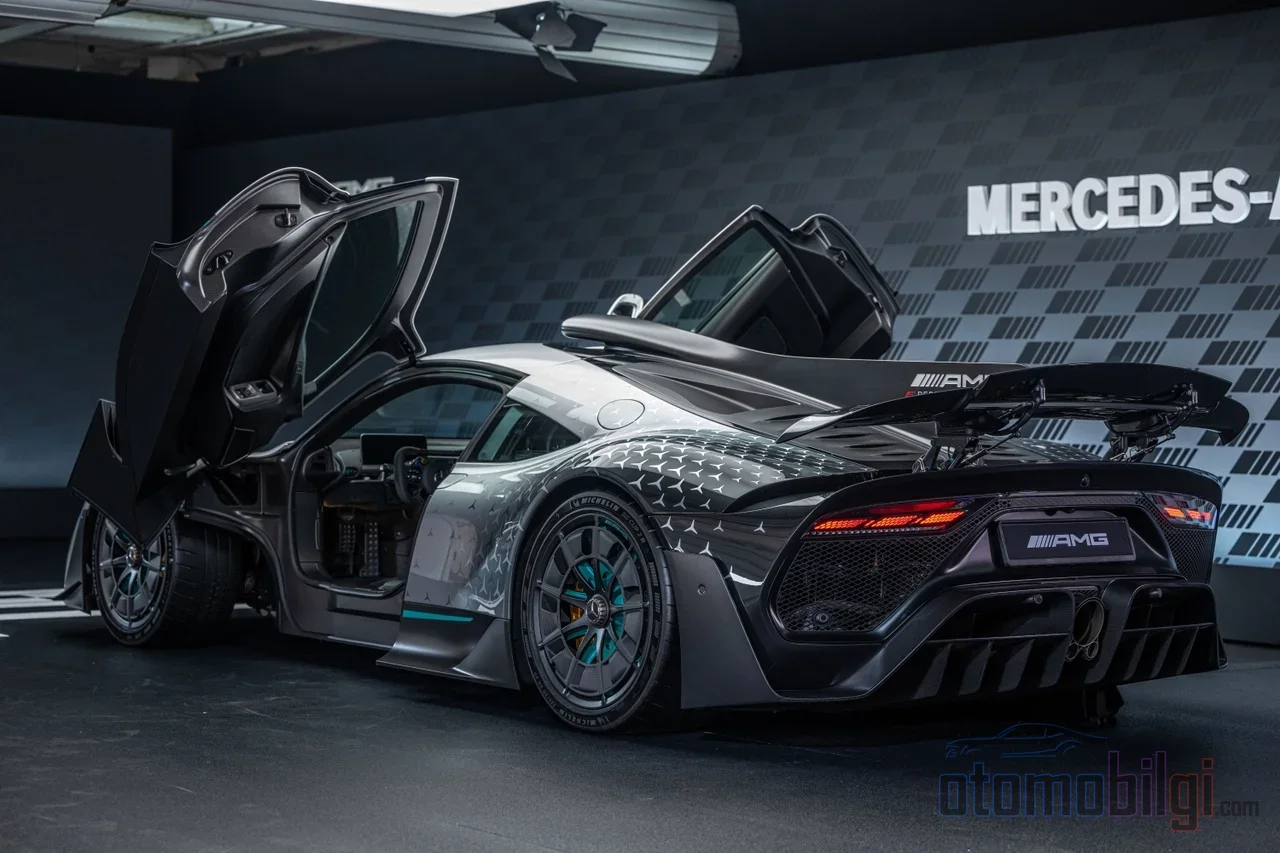
This is the most engineering-heavy part of the story. Making an F1 power unit usable both on the track and in traffic was the project's biggest single challenge; in the development team's own words, the task was to make the racing engine work in both worlds. Its concrete manifestation can be summed up under three headings.
Rev Limit and Engine Life
The rationale for keeping the rev limit at 11,000 rpm is long-term durability and the use of commercially available super fuel: the track unit's higher rev limit is not compatible in the long term with the properties of fuel drawn from the pump. Still, this is not immortality; according to initial statements, the engine returns to the factory for overhaul after approximately 50,000 km. It is the racing world's mileage-based lifespan logic scaled to road-car dimensions.
The 100,000-Rpm Shaft and the Durability Problem
Since the shaft connected to the MGU-H can spin up to 100,000 rpm, its durability under vibration conditions was one of the toughest issues in the development process. At these revs, bearing tolerances, thermal regimes, and material fatigue create a problem space that exceeds classic automotive scales; in Mercedes-AMG's hybrid technical briefings, this topic is explicitly described as a heavy engineering struggle.
Emissions, Exhaust, and Drive Modes
Low idle, a capped rev limit, and emissions regulations made recalibrating the engine mandatory; this is also the source of the car's sound character being different from that of an F1 car. On the user side, five drive modes manage this adaptation: Race Safe, which provides electric starts in traffic; standard Race; fully electric EV; Race Plus, which brings active aerodynamics and a 37 mm front / 30 mm rear suspension drop; and Strat 2, which delivers full power from all motors with firm suspension in the character of an F1 qualifying lap. In Race Plus and Strat 2, downforce increases up to fivefold; the DRS mechanism borrowed from F1 reduces downforce by 20 percent to unlock speed.
Performance: The Relationship Between the Numbers
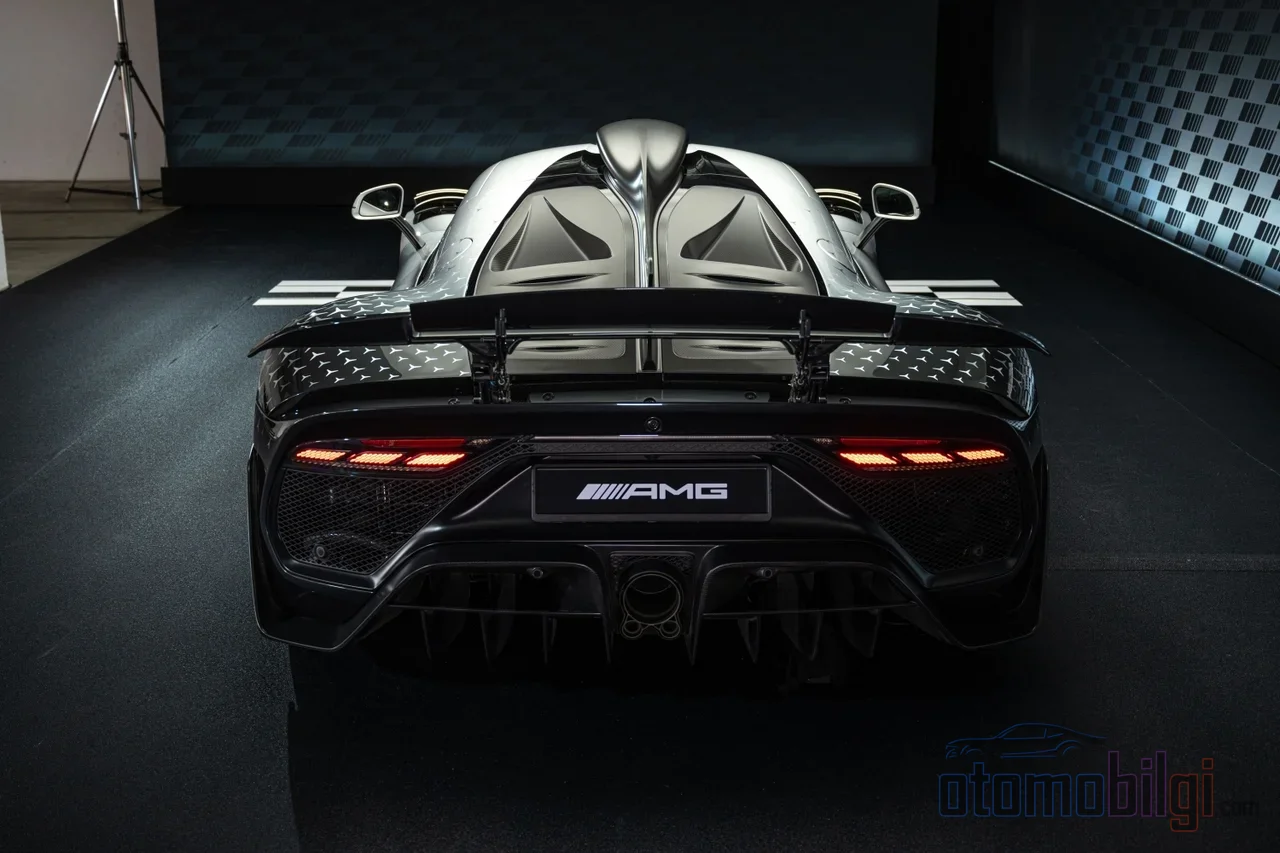
With a kerb weight of 1,695 kg and a full carbon fiber body, this car completes its 0-100 km/h acceleration in 2.9 seconds, 0-200 km/h in 7.0 seconds, and 0-300 km/h in 15.6 seconds; top speed is electronically limited to 352 km/h.
| Body / Drivetrain | Value |
|---|---|
| Engine | 1,599 cc turbocharged V6 (PU106B derivative) |
| Internal combustion power | 574 hp / 566 PS (9,000 rpm) |
| Electric motors | 4 units, 360 kW total effective power |
| System power | 782 kW / 1,063 PS |
| Battery | 800 V, 8.4 kWh Li-ion |
| Transmission | 7-speed single-clutch automatic |
| 0-100 km/h | 2.9 s |
| Top speed | 352 km/h (limited) |
A note: some publications list a power figure of 1,049 hp; this is 782 kW converted into mechanical horsepower (bhp). The official figure in metric horsepower (PS) is 1,063, and the two numbers are the same power expressed in different units, not a contradiction.
275 Units and the Exhausted List
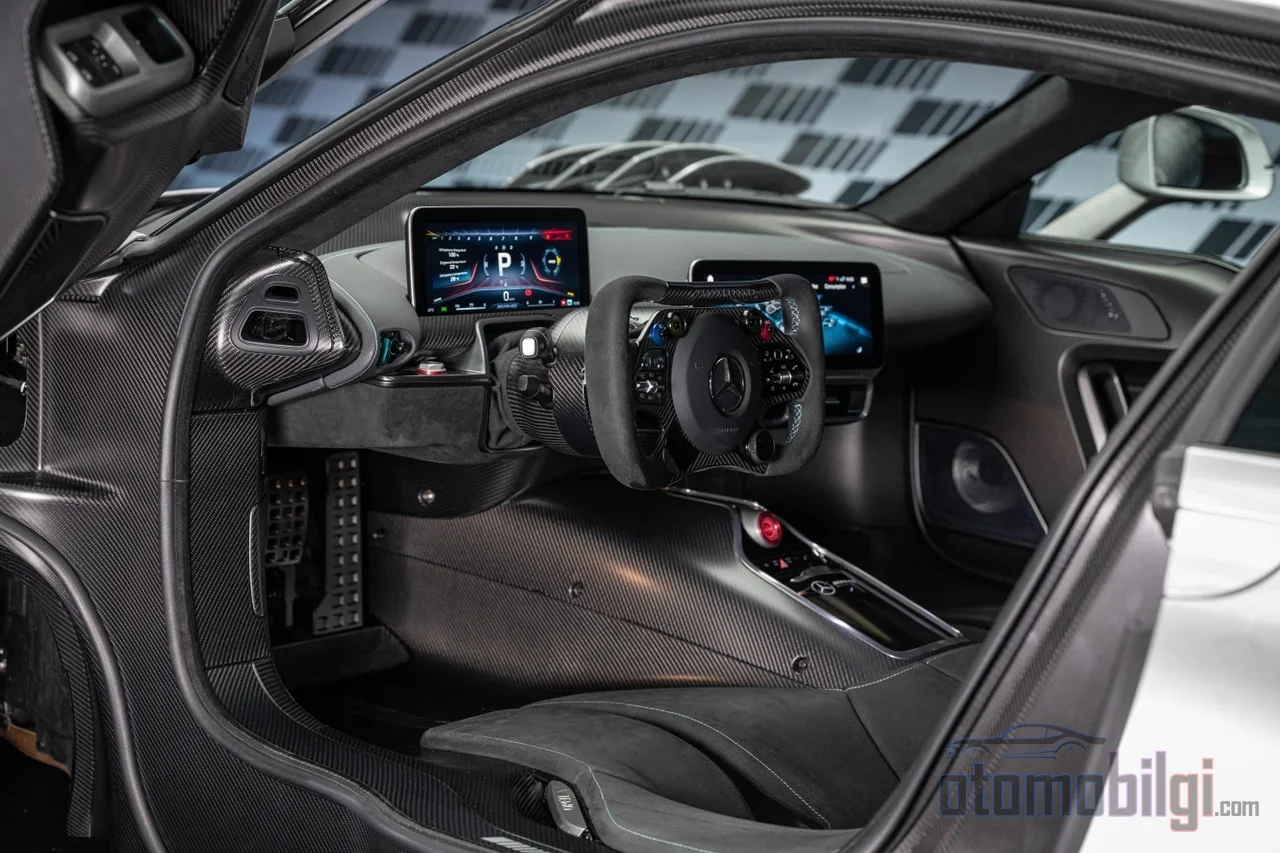
The concept was first unveiled at the 2017 Frankfurt Motor Show; the production version was revealed on June 1, 2022, and production began in August of the same year. The first delivery was made on January 16, 2023, in a special color inspired by the paint of the F1 W12 E Performance car. Total production is limited to 275 units, and all were sold at a price of approximately 2.72 million US dollars per car. When the order demand exceeded four times the planned production, Mercedes-AMG did not raise the limit; preserving exclusivity was preferred over the returns of additional production. Every car is hand-built.
Nurburgring 6:29.090: Proof of the Adaptation
The most measurable proof that, despite all these compromises, the car lost nothing of its character came in September 2024. Maro Engel set a notarized lap of 6:29.090 on the 20.832 km Nordschleife; improving his own record from November 2022 (6:35.183) by roughly six seconds. The AMG One became the first road-legal series-production car to drop below the 6:30 barrier. It is worth adding that the 2022 lap was set in wet track conditions and that Mercedes-AMG had said since then that a sub-6:30 was possible in ideal conditions - Engel's lap confirmed this prediction. The car also holds track records at the Nurburgring GP, Hockenheimring, Red Bull Ring and Monza.
In summary: How Was the F1 Engine Brought to the Road?
The short answer is this: Mercedes-AMG One brought the W06's power unit to the road by raising the rev limit to 11,000 rpm, lowering the idle to 1,280 rpm, closing turbo lag and the low-rev gap with four electric motors, and engineering durability to road-car scale. In return, the delivered car, with its 1,063 PS system power, 0-100 km/h in 2.9 seconds and 6:29.090 on the Nordschleife, amply rewards the price of this adaptation. There are criticisms too: assessments describing the car as at once flawed and the most original work of its class correctly summarize the tension between usability and an engineering showpiece. For the 275 owners, this tension is the very thing they bought.
Sources
- Mercedes-AMG ONE - Official Page
- The new Mercedes-AMG ONE: Formula 1 technology for the road
- Mercedes-AMG ONE breaks its own lap record
- AMG ONE Hypercar - Mercedes-AMG High Performance Powertrains
- Mercedes-AMG One - Wikipedia
- Mercedes-Benz AMG One Review - Top Gear
- Mercedes-AMG Project One: 11,000 RPM Confirmed, 50,000km Re-Builds - Drive