Yangwang U9 Xtreme: Chasing Records with 3000 Horsepower
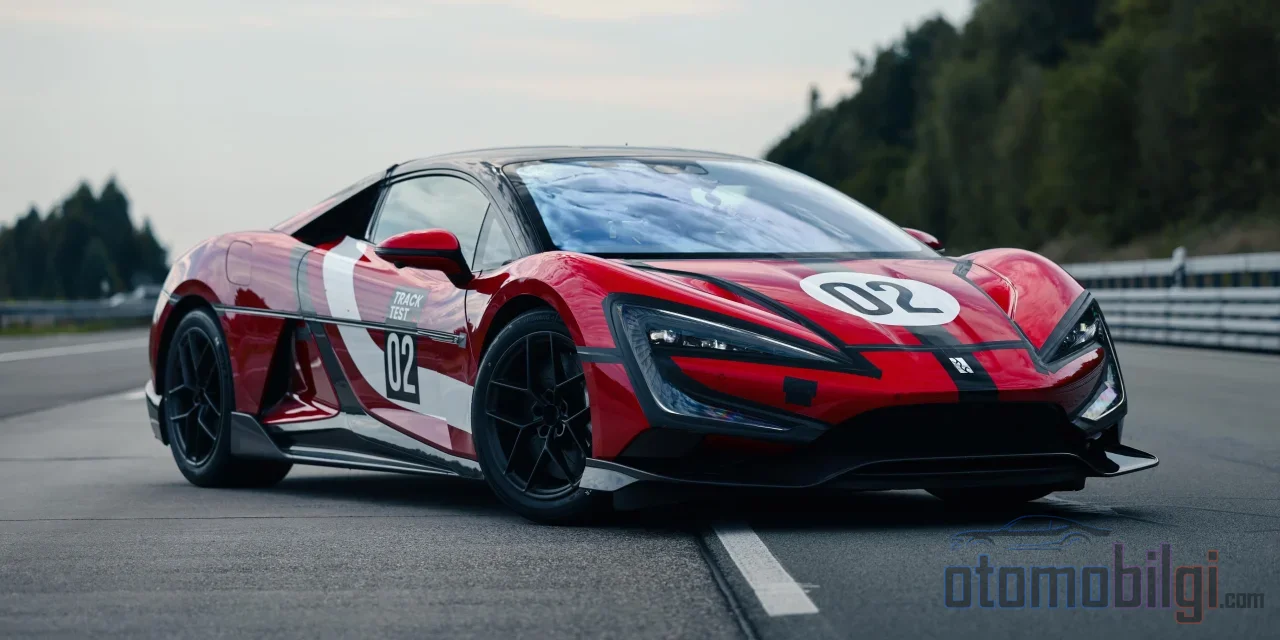
On 1 November 2026, on a closed section of roughly seven kilometers on the E11 road in Abu Dhabi's Al-Dhafra region, an electric hypercar driven by Marc Basseng reached a speed of 503.17 km/h. This figure, verified by the FIA, marked the moment a production car broke the 500 km/h threshold for the first time; and the name behind the car was neither Rimac nor Lotus. With only 30 units to be produced, sold exclusively in China and producing around 3,000 horsepower, the Yangwang U9 Xtreme is an engineering statement from Yangwang, BYD's luxury brand. So how did a Chinese manufacturer's track-focused electric hypercar reach this speed?
What Is the Yangwang U9 Xtreme?
The U9 Xtreme is a limited-production electric hypercar developed for track use, unveiled in September 2025. The car was initially known as the Yangwang U9 Track Edition; and the distance from the road version of the standard U9 is not limited to just the body panels. Four electric motors, a 1,200-volt electrical architecture and a specially developed battery carry this model to an engineering platform fundamentally distinct from the standard U9. The comparison is clear: while each motor in the standard U9 produces 240 kW, that figure rises to 555 kW in the Xtreme, and the motors rev up to 30,000 rpm.
Four Motors, 1,200 Volts and 30C Discharge: Anatomy of the Power System
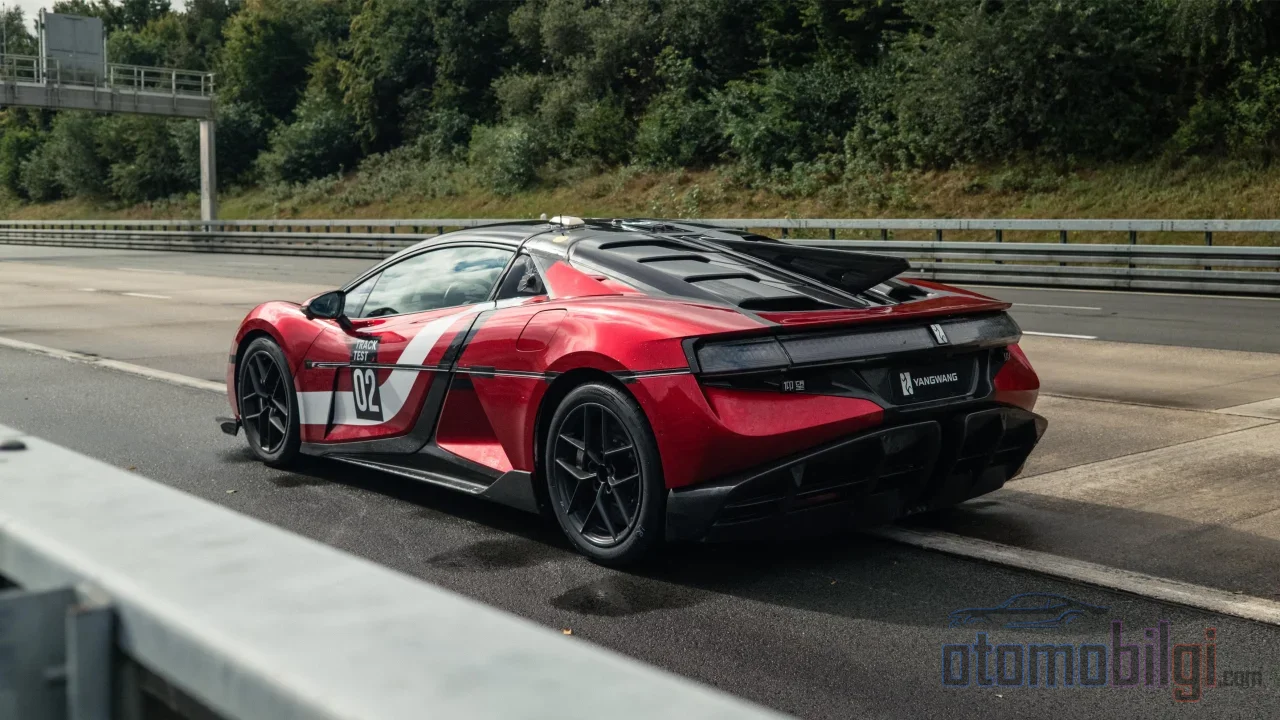
At the heart of the car lies BYD's e4 (Yi Sifang) system: four electric motors, one for each wheel. Each motor produces 555 kW (744 hp); total system output is 2,220 kW, or approximately 2,978 hp. Third-party databases also report this figure as 3,018 PS; essentially different roundings of the same power. On the torque side, unofficial figures point to a value of 1,679 Nm; the manufacturer has not yet published a torque figure for the Xtreme.
Highlights
- Total output: 2,220 kW (~2,978 hp), four motors, 555 kW per wheel
- 1 November 2026, Abu Dhabi: 503.17 km/h, the first production car to exceed the 500 km/h threshold
- Nurburgring Nordschleife: 6:59.157, the first electric production car under seven minutes
- 1,200 V silicon carbide architecture, 80 kWh Blade LFP battery, 30C discharge
- Production limited to 30 units, official list price not announced
1,200 Volts: A First in Series Production
The Xtreme marks a first in series production with its 1,200-volt silicon carbide (SiC) platform; the standard U9 uses an 800-volt architecture. The logic behind raising the voltage is simple: less current is required for the same power, which allows thinner cables and reduces losses. The system supports currents of up to 1,000 amperes. Without this architecture, managing the instantaneous power demand of 2,200 kW would not have been practically possible.
Battery: 30C Discharge and Dual-Layer Cooling
The pack consists of BYD Blade LFP (lithium iron phosphate) cells prepared for track use; it has a gross capacity of 80 kWh and a net capacity of 75 kWh. The critical figure is the discharge rate: 30C. This means the battery can deliver 30 times its nominal capacity in power; It is stated that 1,800 kW of power was delivered even at a 20 percent state of charge. On the regenerative braking side, the figure exceeds 700 kW. All of these loads are tamed by a dual-layer cooling system. The power-to-weight ratio is 1,217 PS/ton: more than one horsepower per kilogram, not per liter.
The records: Nurburgring and the 500 km/h Threshold
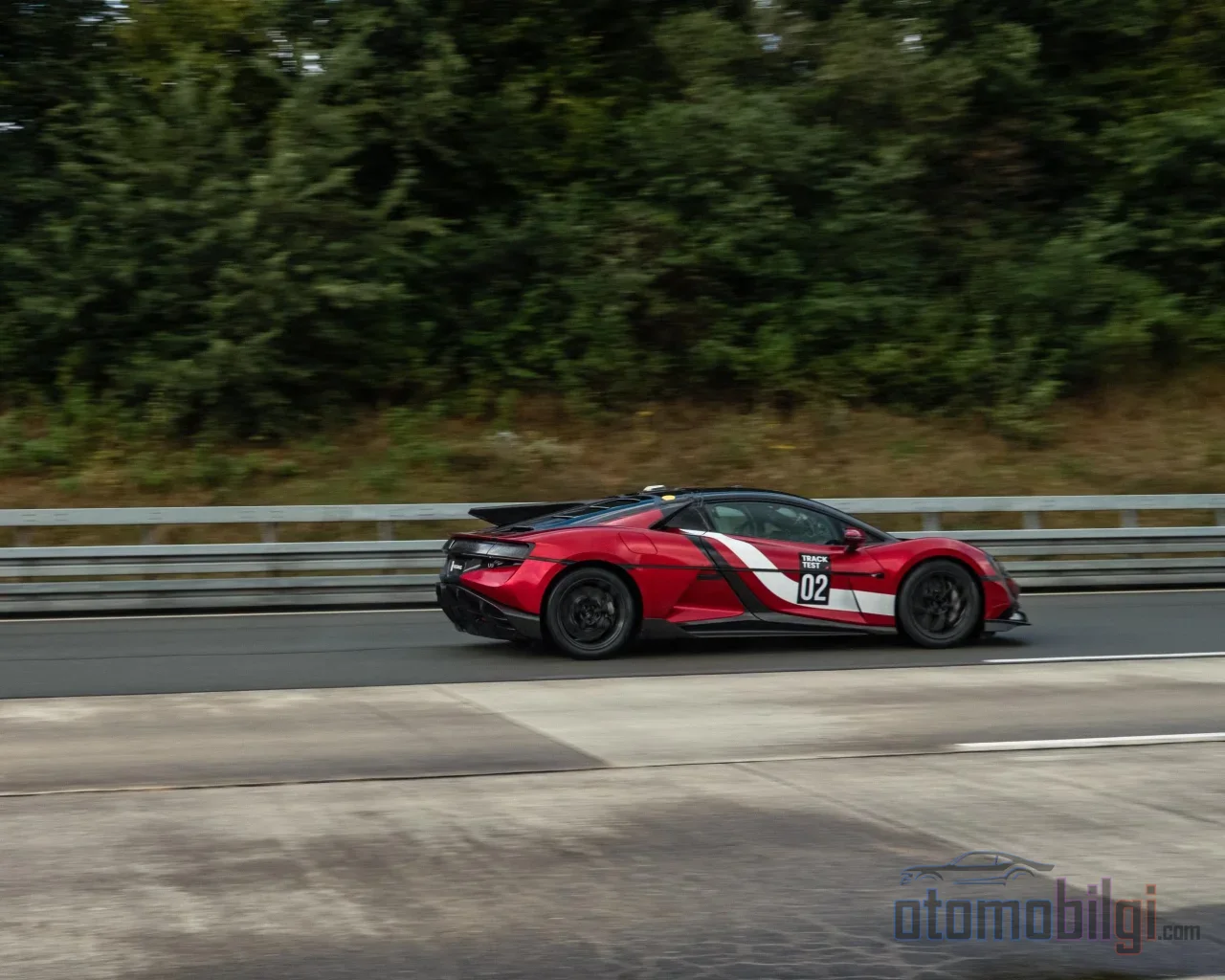
The Xtreme's benchmarks came on two separate courses. On August 22, 2025, Moritz Kranz set a lap of 6:59.157 at the Nurburgring Nordschleife: this is the record broken by an electric production car and it was the first electric production vehicle to break the seven-minute barrier. The previous electric record was held by the Xiaomi SU7 Ultra with 7:04.957.
As for top speed: On September 14, 2025, 496.22 km/h was measured at the ATP Papenburg test track in Germany, recording the highest production car speed at that date. The real threshold, however, was crossed on November 1, 2026. On the first day of the two-day Abu Dhabi attempt, 490 km/h was seen; overnight, battery and motor temperatures, rear spoiler angle, suspension software and tire pressures were readjusted. The 503.17 km/h that came the next day was only 6.95 km/h above the previous record, but it guaranteed being the first production car to exceed the 500 km/h threshold. The FIA verified the speed; Guinness World Records lists the achievement as the highest speed in a one-way run in the production car and electric production car categories.
The Star of the Record: Methodology Warning
The delicate point here is the record method. Traditional speed records are determined by the average of runs made in two opposing directions to balance the effect of wind. The U9 Xtreme's 503.17 km/h figure, however, comes from a single-direction run; for this reason, the car has been excluded from some fastest production car lists. The FIA and Guinness explicitly recognize it as a one-way run record; in other words, the achievement is real, while the classification is a matter of definition.
Nurburgring Context
Lap times also require context: the track's overall production car record is still held by the Mercedes-AMG ONE with 6:29.09. With a mass of roughly 2.5 tons, the U9 Xtreme is about 30 seconds behind on this lap. These two figures clearly show that electric vehicles still pay a weight penalty in corners and compensate on the straights.
Chassis, Tires and Aerodynamics: The Systems That Press the Speed Into the Ground
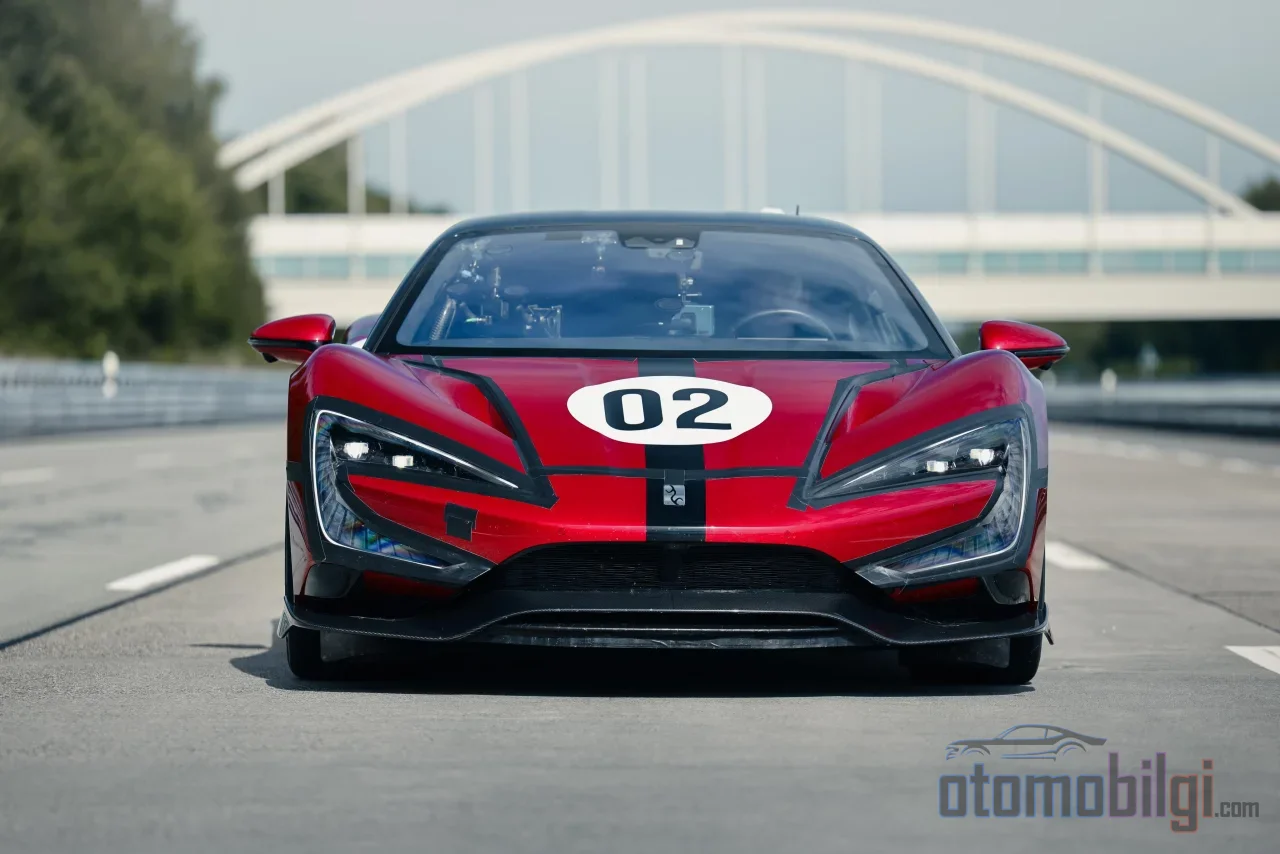
Power alone does not deliver 500 km/h. The DiSus-X active body control system and dual-valve suspension manage grip while the car distributes torque to each of the four wheels individually; torque vectoring is recalculated more than 100 times per second. On the braking side, titanium alloy calipers and carbon-ceramic discs do the job.
The tires are GitiSport e·Gtr2 Pro semi-slick compounds co-developed with Giti: certified up to 500 km/h, reinforced with aramid fiber, and with a friction coefficient increased by more than 36 percent compared to the standard formula. The aerodynamic package consists of a large carbon fiber front splitter, twin-channel hood, swan-neck rear spoiler and a two-layer diffuser. For road use, speed is electronically limited to 350 km/h; record runs were made beyond this limit, under controlled conditions.
Technical Specifications: Yangwang U9 Xtreme vs Standard U9
| Feature | U9 Xtreme | Standard U9 |
|---|---|---|
| Number / type of motors | 4 x electric motors (e4) | 4 x electric motors (e4) |
| Power per motor | 555 kW (744 hp) | 240 kW |
| Total power | 2,220 kW (~2,978 hp) | Manufacturer figure: around 960 kW |
| Maximum motor speed | 30,000 rpm | Lower rev range |
| Electrical architecture | 1,200 V SiC | 800 V |
| Battery | 80 kWh Blade LFP, 30C discharge | Blade LFP, standard discharge |
| 0-100 km/h | Official value not disclosed | 2.36 seconds |
| Length / width / height | 4,991 / 2,029 / 1,351 mm | 4,966 / 2,029 / 1,295 mm |
| Wheelbase / weight | 2,900 mm / ~2,480 kg | 2,900 mm / ~2,475 kg |
| Road-use speed limit | 350 km/h (electronic) | Stated limit is lower |
As for the 0-100 km/h figure for the Xtreme: the manufacturer has not published an official acceleration figure for this variant. The standard U9 carries a factory value of 2.36 seconds; prominent third-party estimates for the Xtreme range from 1.9 to 2.4 seconds. It is also clear from the drivetrain priorities that the car is tuned for maximum speed rather than acceleration.
Power and Speed Comparison with Rivals
When we place the figures within their class, the picture is striking. The Rimac Nevera produces 1,914 hp, while the more aggressive Nevera R produces 2,078 hp; the U9 Xtreme sits clearly above both, and produces roughly 50 percent more power than the Lotus Evija and the standard Nevera. But in acceleration the picture reverses: the Nevera R completes 0-60 mph in 1.66 seconds, while the reported value for the U9 Xtreme is 1.90 seconds.
At maximum speed, however, the class has been rewritten: the Xtreme was measured in the 308-312 mph band, while the Nevera R stayed at 268 mph and the Aspark Owl at around 272.6 mph. This is concrete proof of just how far apart different engineering priorities can diverge within the same segment.
Production, Price and Market Position
Production is limited to 30 units worldwide and the car is sold only in China; it has not entered the European or US markets. No official list price has been announced, but the single concrete data point is the sale of a U9 Xtreme for over 20 million yuan (approximately 2.76 million dollars) at the April 2026 Beijing Auto Show: the most expensive BYD ever sold and roughly ten times the price of the standard U9. For comparison, the standard U9 stands at 1.80 million yuan (~268,000 dollars) after its list price was raised by 7 percent in October 2025. As of November 2026, the first customers have completed their configurations and the process has moved to the contract and production planning stage.
Conclusion: How Significant Is the U9 Xtreme?
The short answer is this: Yangwang U9 Xtreme, a limited run of 30 units, is an electric production hypercar that reaches 503.17 km/h with its 2,220 kW four-motor power unit, 1,200-volt architecture and 30C-discharge battery; it is the first production car to exceed the 500 km/h threshold, albeit with a one-way run record. The methodology of the record is open to debate, and it sits 30 seconds behind its hybrid rival at the Nurburgring; but with this car it has been proven that Chinese automotive engineering is now a serious player on the speed and electric architecture front. Being the first member of the 500 km/h club in automobile history is a headline that will be remembered, regardless of the conditions under which it was measured.
Sources
- YANGWANG U9 Xtreme surpasses 500 km/h with speed achievement recognised by the FIA
- YANGWANG U9 Xtreme - official model page
- BYD unveils the Yangwang U9 Xtreme, achieving 496.22 km/h, a Nürburgring lap of 6:59.157
- BYD Yangwang U9 Xtreme sold at 2,760,000 USD
- BYD's electric hypercar hits 312 mph, first production car over 500 km/h
- BYD's Yangwang U9 Xtreme breaks the 500 km/h barrier
- Yangwang U9 Xtreme Achieves 496kph Top Speed And Sub-7-minute Nürburgring Lap
- 2025 Yangwang U9 Xtreme Specifications & Performance
- Rimac Nevera R vs Yangwang U9 Xtreme, specs compared
- BYD Yangwang hikes U9 electric supercar price by 7%