Rocket Thrusters Broke the Limits in the Tesla Roadster
Share This Page
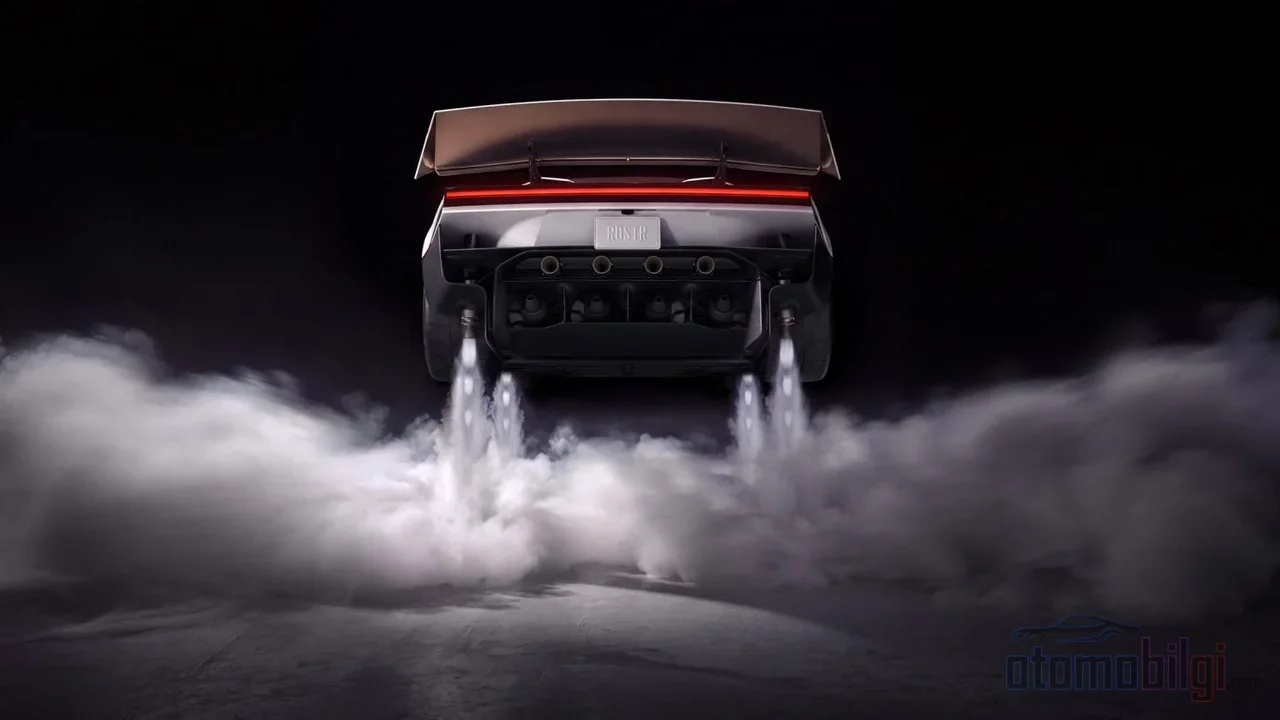
The new-generation Roadster, which Tesla unveiled in Texas on the evening of October 15, gave an official answer to a question long discussed in the automotive world: does rocket technology really work in a road car? With its cold gas thrusters of SpaceX origin enabling brief moments of lift-off, the vehicle - with an acceleration target below 1 second and a top speed above 370 km/h - reopened the debate about where the limits actually lie. In this article, I look at the details of the presentation, the differences between the three configurations, how the thruster system works, and of course the expectations on the Türkiye side.
Highlights
- Unveiled on October 15, 2026 at the SpaceX test facility in McGregor, Texas; the October 1 date had been postponed due to bad weather.
- Three configurations: Performance, Thrust, and Rocket; in the Thrust version, 0-96 km/h is targeted in under 0.9 seconds.
- Cold gas thruster system with 10 nozzles; carries approximately 600 liters of pressurized air in carbon fiber tanks.
- Top speed in all three versions is above 370 km/h, with a range target of over 480 km.
- Series production target is 2028; the exact price has not been announced, and the Türkiye sales date is uncertain.
Presentation Night: Ramp, Somersault, and Vertical Take-Off
Even the venue of the presentation was part of the message: the SpaceX test facility in the town of McGregor, Texas. Tesla had originally planned it for October 1; unfavorable weather conditions pushed the event to the night of Thursday, October 15. During the show, the vehicle climbed a huge curved ramp and, thanks to a suction system of powerful fans beneath it, traveled along the ramp while inverted, performed a somersault in the air, and landed on its wheels. In the second demonstration, the vehicle rose vertically off the ground and somersaulted over parked Tesla models.
Elon Musk also anticipated the doubts that the footage was an AI product: he said that spectators were specially invited, and that this approach was taken so that witnesses could see the event with their own eyes. The detail an experienced reader would immediately notice is this: the technology enabling inverted travel works differently from the thrusters. While the driving on the ramp is handled by the vacuum and suction fans on the underside, the lift-off is provided by the pressurized air thrusters. The two systems are not alternatives to each other, but complements.
The Three Configurations of the Tesla Roadster: Performance, Thrust, and Rocket
The new Roadster was presented not as a single car, but in three separate configurations. The difference between them shows itself not only in performance targets, but also in the number of seats inside the vehicle and the placement of the thruster system:
| Configuration | Character | 0-96 km/h target | Thruster system |
|---|---|---|---|
| Performance | 2-seater, road-ready | Under 1.6 seconds | None |
| Thrust | 2-seater, track-focused | Under 0.9 seconds | Cold gas thrusters at the rear |
| Rocket | Single-seater, sold by invitation only | Under 0.59 seconds | The vehicle's surroundings are equipped with thrusters |
The figure shown in the test at the event was 0.81 seconds; whether the claim of under 0.59 seconds would be measured under standard conditions or under special conditions prepared with SpaceX support was conveyed in different ways during the presentation. The difference between laboratory and real road conditions for such extreme values is a subject well known to anyone who has spent long years in this profession. Top speed is stated to be above 370 km/h in all three versions, with a range target of over 480 km.
On the hardware side, it stays far from being an ordinary electric sports car: steer-by-wire steering and brake-by-wire braking are used; magnesium, titanium and carbon fiber materials stand out in the body. The fact that the design inspiration was taken from the SR-71 and F-35 jets is essentially a summary of the message Tesla wanted to give to its target audience.
How Do Cold Gas Thrusters Work, Do They Really Make the Car Fly?
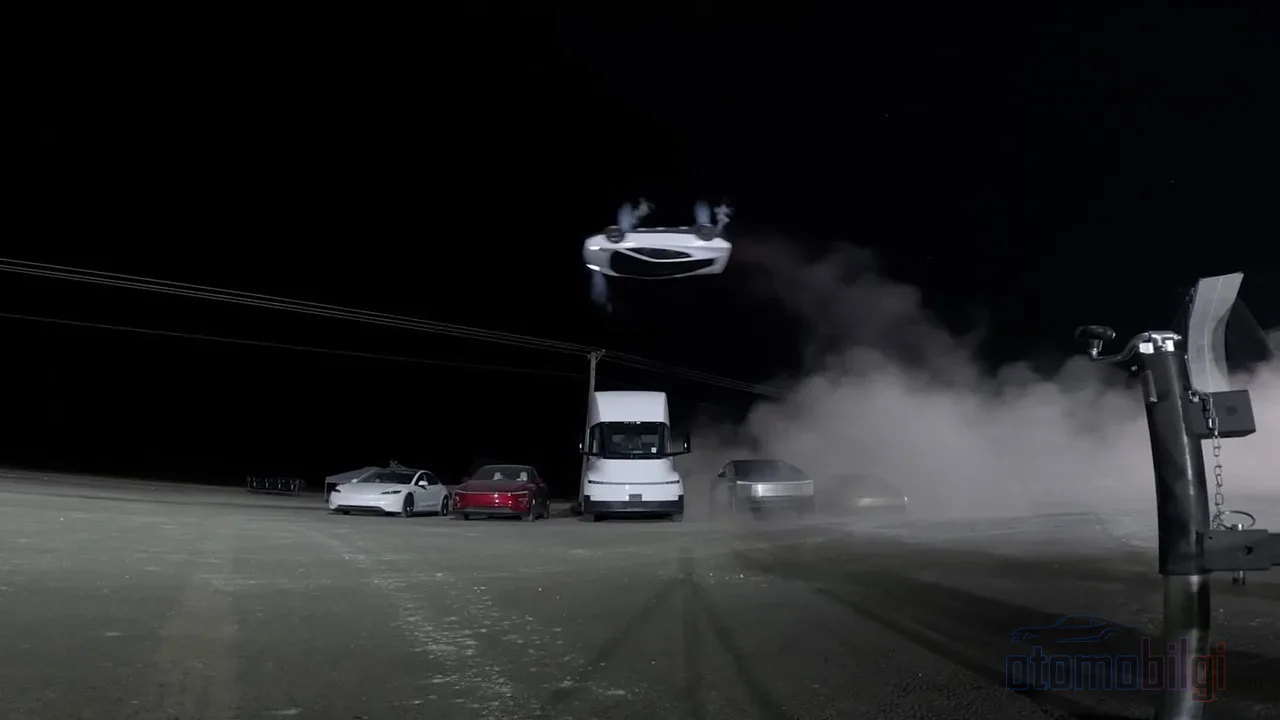
The system's origin goes back to SpaceX. The car has a cold gas thruster system with a total of 10 nozzles positioned at different points; the tanks are carbon fiber and carry approximately 600 liters of pressurized air. According to the information conveyed by Tesla's Vice President of Engineering Lars Moravy, the tank's total volume is 600 liters, and Tesla says the tank can be refilled using the vehicle's own pump. The suction system on the ramp is stated to be capable of generating forces of up to 2G.
But is this system flight? The clear answer is no. The common emphasis of the sources is this: what is involved is brief liftoff and gliding, not sustained flight. A cold gas thruster produces thrust by spraying compressed gas through the nozzles without combustion; its efficiency is lower than a rocket engine, but it is easier to control. It being enough for the car to flip over is made possible also by the contribution of the vehicle's lightness and powertrain. Tesla gave no figure on the pressure side; independent calculations show that a pressure of around 425 bar is needed to fit approximately 250 kg of air into 600 liters. In short, setting aside the reality of the car lifting off the ground, it would be misleading to think we are talking about a flying car for everyday use.
Price, Production Schedule and Sales Expectations in Türkiye
Series production target was announced as 2028. The exact sales price is not yet clear; the reservation fee is a total of 50,000 dollars. It is reported that the "flying" configuration's deposit is 500 thousand dollars, that the car will be produced in limited numbers, and that orders have already been placed. The fact that the Rocket version is sold by invitation only suggests that this model is more of a showcase piece than a genuine sales product.
The Türkiye side is unclear for now: as of October 16, there is no definitive statement that the Roadster will be offered for sale in our country; the sales date and price are uncertain, and the car is not expected to be launched in Türkiye in 2026. To give some context, Tesla's Türkiye price list starts at 2,474,985 TL for the Model Y RWD as of October; the company also made a tax-free price increase of around 100,000 TL on the Model Y Premium versions this month. You don't need to be an economist to predict that a car like the Roadster, if it entered the Turkish market, would be priced several times above this picture; however, at this point it would be right to wait for an official statement rather than produce rumors.
Show or Strategy? Tesla's Real Message
In the past, a sports car's launch was all about acceleration figures and torque curves; now we are watching a car doing somersaults on stage. Behind this change lie Tesla's own realities: vehicle deliveries fell 2 percent year-on-year to 486,532 in the third quarter of 2026, and the company's strategy is shifting toward the driverless taxi Cybercab and the humanoid robot Optimus. Musk openly admits that he does not expect Roadster sales to make a big difference in financial performance. In other words, this model's job is not to sell, but to keep Tesla's image as an innovative manufacturer alive.
That said, Musk's own words honestly draw the car's limits: he said the stunt vehicle was driven autonomously for safety, that the car "should not be considered an optimized car in terms of safety," and that he was not sure it is legal in every country or region. His emphasis that the new model will also be Tesla's only hand-driven car is both ironic and meaningful; a company building a driverless future releasing its most passionate hand-driven car can be read as the industry's self-dialogue.
This car will be one of the very best machines still driven by humans.
What Does It Mean for Türkiye in Terms of the Space and Defense Technology Ecosystem?
The real debate the launch sparked in Türkiye's automotive circles was less about acceleration figures and more this: the boundary between the automobile and space and defense technology is shifting. Cold gas thrusters, carbon fiber high-pressure tanks, steer-by-wire and brake-by-wire systems, the use of titanium- and magnesium-weighted materials... All of these are examples of technologies that have matured in the defense industry for years being carried over to the road car.
For Türkiye, this picture offers a two-way reading. On one hand, in a country where the domestic aerospace and defense technology ecosystem has gained momentum in recent years, it becomes clear how valuable the bridges to be built between automobile manufacturing and this ecosystem could be; the Roadster stands as a concrete reference point for what the builder of these bridges can achieve. On the other hand, whether such technologies can spread to mass-production cars is still a matter of debate; it is not certain that all the features in the prototype will be present in the vehicle going on sale in 2028. To put it moderately: for now, we have a very well-crafted show and a hard-to-dispute engineering claim, while the real test of the application will be given on the production line.
Conclusion: Has the Boundary Really Been Removed?
The new Roadster managed to shake old assumptions about what a car is and is not in a single night; but it must be added right away that a brief hover is not the same thing as a flying car. The production target is 2028, the price is uncertain, and even Musk's own statements leave its legal status unclear. In Türkiye, it is not expected to be offered for sale in the coming period. Still, this presentation has an aspect that leaves a mark: showing that, from an engineering standpoint, the wall between the automobile and aviation has become permeable. What remains is to answer in 2028 whether this permeability is merely a showcase or a beginning.
Sources
- Roadster: Here is Tesla's new flying car
- Roadster - Electric Sports Car
- Tesla Roadster comes in 3 variants: Here's how they differ
- How did the Tesla Roadster stay airborne, is it a flying car?
- A new era in the automotive world? The Tesla Roadster took off
- The new Tesla Roadster has been unveiled and it really flies!
- The new-generation Tesla Roadster will be showcased on October 15
- Tesla Next-Gen Roadster: Performance, Thrust & Rocket Configs
- Tesla Unveiled Its New Roadster Model: Features and Performance