Škoda Fabia 130: The Fastest Fabia of Series Production
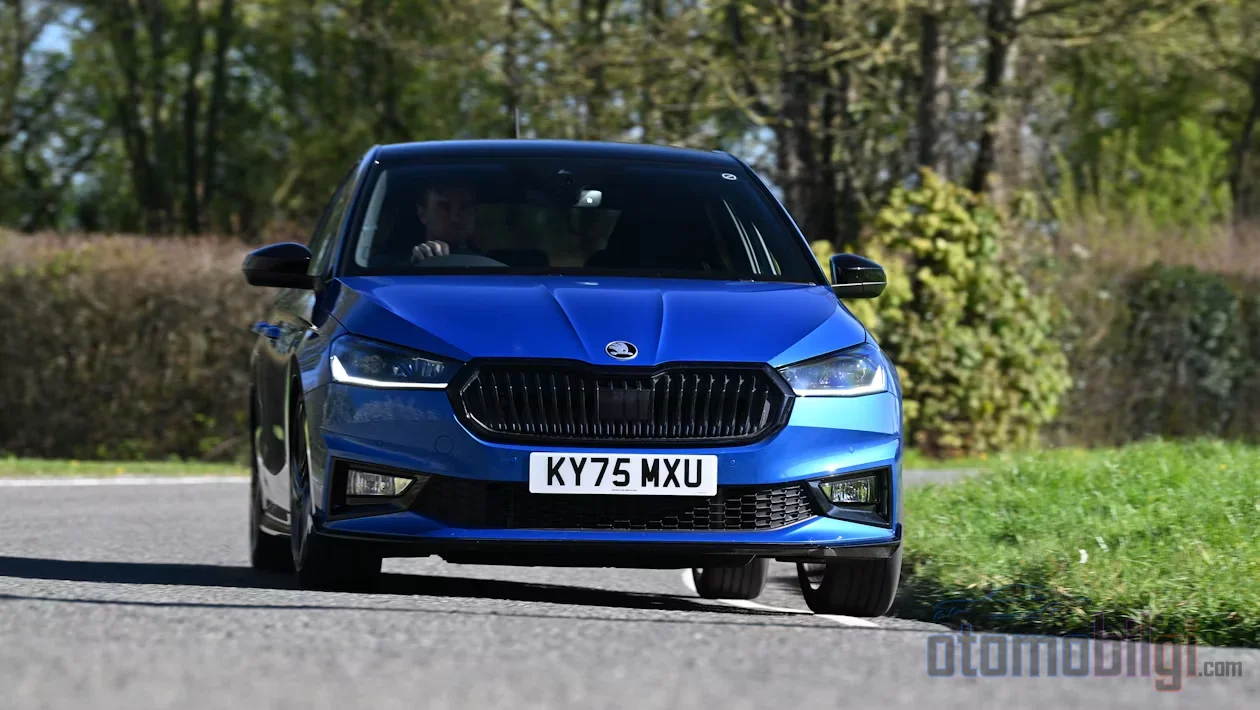
A 7.4-second 0-100 km/h time for a B-segment hatchback was knocking on the door of hot hatch territory thirty years ago. Today, that same figure is Škoda's 130. being discussed around the Fabia 130 Edition it built for the anniversary celebration: The answer lies less in the power figure and more in the power/weight balance, transmission character, and practicality equation. The Fabia 130 is the fastest production Fabia, positioned above the Monte Carlo trim level and currently on sale in various markets around the world.
The number 130 in its name has three layers: The 130 in its name has three layers: the 130 kW of engine output, and the brand's 130th. and the legendary 130 RS, winner of the 1977 Monte Carlo Rally. So this is not a marketing gimmick - it is a meeting of engine power and brand history in the same number. So what does a Fabia with 177 PS really offer in the B segment?
How Did the 1.5 TSI EVO2 Engine Reach 177 PS?
At the heart of the Fabia 130 is a 1,498 cc turbocharged inline four-cylinder engine, based on the standard Fabia's 1.5 TSI EVO2 unit but subjected to serious engineering intervention. Producing 27 PS more power than the standard unit, this engine delivers 177 PS (130 kW) between 5,750-6,000 rpm and 250 Nm of torque between 1,500-4,000 rpm. the engineers reinforced the intake manifold, vibration damper, and valve rockers to ensure the engine operates reliably at high revs as well. From an engineering standpoint, the critical point is the power/weight ratio achieved with a 1,206 kg body.
From an engineering standpoint, the critical point is the power/weight ratio established with a 1,206 kg body. This balance, which works out to roughly 6.8 kg/PS per kilogram, creates an impressive sense of agility for the class; the lightness is clearly felt in the car's driving character despite the relatively small increase in power.
1.5 TSI EVO2 engine:
- 1.5 TSI EVO2 engine: 177 PS, 250 Nm of torque
- 0-100 km/h: 7.4 seconds; top speed 228 km/h
- Sold exclusively with the 7-speed DSG dual-clutch transmission
- Boot: 380 liters, or 1,190 liters with the seats folded
- Lowered by 15 mm sports suspension and 18-inch wheels are standard
Performance and Transmission Character
The 0-100 km/h time is 7.4 seconds; 0.6 seconds faster than the standard 1.5 TSI. The top speed, according to Škoda's official figures, is 228 km/h (although some market publications mention 222 km/h, the manufacturer's data supports 228 km/h). However, in intercity use, the real storyteller is the mid-range acceleration values: The 60-100 km/h range is completed in 3.8 seconds (previously 4.1), and the 80-120 km/h range in 4.8 seconds (previously 5.3). In overtaking maneuvers, these 0.4-0.5 second differences directly change the driver's sense of confidence at the wheel.
What Has Changed in the DSG?
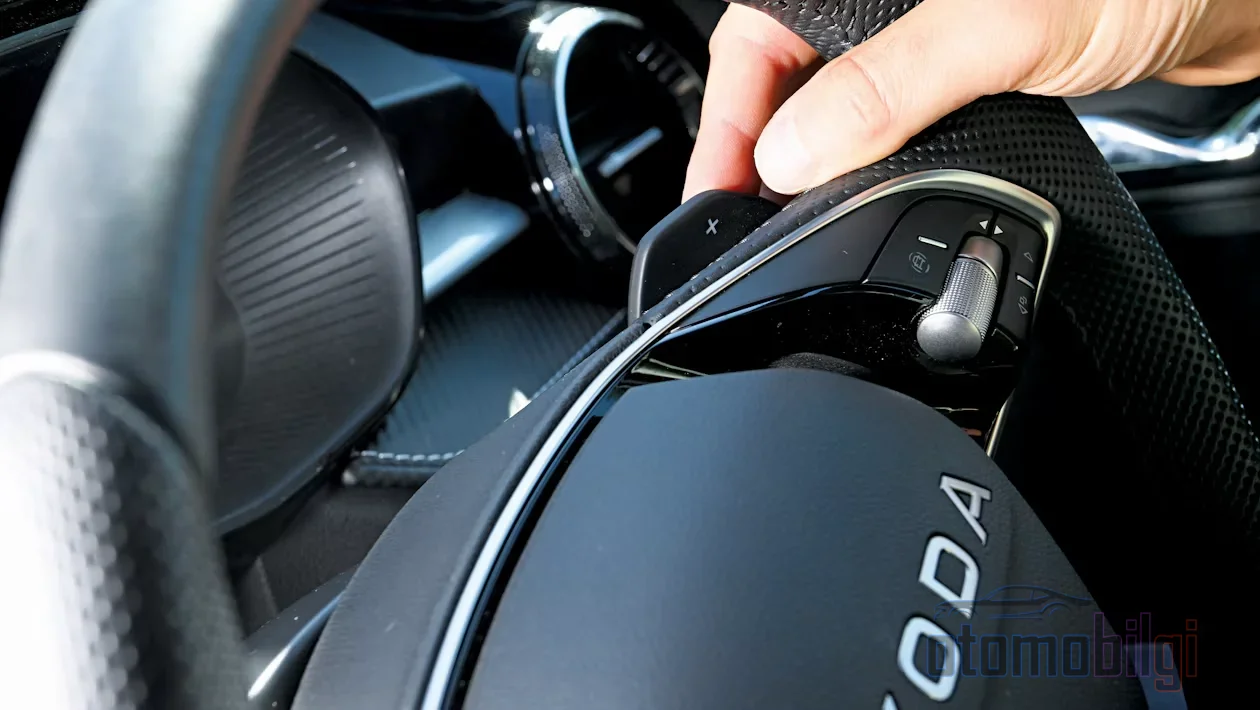
The Fabia 130 is offered only with the 7-speed DSG dual-clutch transmission; there is no manual option, and this is one of the most debated decisions about the car. The transmission has been specially recalibrated: shift points have been raised, and in Sport mode the rapid downshift logic characteristic of the dual-clutch setup and a revised braking strategy have been added. In practice, the picture is clear: in Sport mode the system works consistently, in Normal mode there can be a slight delay felt in throttle response, and automatic downshifts can show hesitation. For this reason, using the paddle shifters has become almost a standard ritual for active driving.
Driving Dynamics
What has been done to the chassis is measured but focused: 15 mm lowered sport suspension, 18-inch black Libra wheels, recalibrated steering, Normal/Sport driving modes, two-stage traction control and ASR Sport + ESC Sport modes. There is no limited-slip differential (LSD); this shortcoming makes itself felt at the limits of the front axle during aggressive throttle applications mid-corner. Press assessments largely agree: the Fabia 130 is the best-driving but least comfortable Fabia version in its class. The chassis stays on the softer side of sportiness; a character likened to the old Suzuki Swift Sport places it not quite in the full hot hatch class but in the "warm hatch", i.e. moderate sporty hatchback category.
What Is There in the Exterior and Interior Design?
The visual identity is woven with Rally2 racing car references. All four color options (Moon White, Velvet Red, Race Blue, Black Magic) come with glossy black roof, pillars and mirrors. Black front and rear spoilers, rear diffuser, special 130 badges on the tailgate, a black horizontal stripe referencing the Rally2 look, dual exhaust tips and painted brake calipers complete the package. Inside, electrically assisted sport seats, a three-spoke steering wheel with DSG paddles, stainless steel pedals, gray-black aluminum trim and special sill plates are standard. On the digital side, there is a 10-inch Virtual Cockpit along with a 9.2-inch infotainment screen.
It is worth noting without haste: the carbon-look strips used in the interior trim are imitation, and the seats are not full racing seats either. The design remains on a modest line overall; the Fabia 130 should be read as a project where the budget was transferred to the mechanical side rather than to showiness. The standard equipment list, however, is generous: metallic paint, Bi-LED headlights, keyless system, rear view camera and privacy glass are all included.
Is the Boot and Interior Practicality Still the Class Leader?
Yes, and this is the Fabia 130's strongest card. The body inherited from the standard Fabia offers a loading volume of 380 liters with the rear seats upright and 1,190 liters with the seats folded. This figure is a volume approaching the boot of the Golf, a C-segment hatchback; a serious advantage next to the Toyota Yaris's 286 liters and the Ford Fiesta's 311 liters. The cabin is spacious too: comfortably sufficient for four adults, the rear seats are well shaped, and it is considered one of the widest interiors in the supermini class.
On the fuel side, the picture is again balanced: combined consumption is 50.4 mpg (~5.6 l/100 km) and 126 g/km CO₂. For a sporty B-segment car, these figures are satisfying in terms of running costs; the lightweight body is doing its job here too.
How Does It Stand Out From Its Rivals?
Its most natural rival is the VW Polo GTI. With its 2.0-liter engine, the Polo GTI is more powerful and ahead in pure performance; the Fabia 130, however, has the advantage in price (starting from £29,995 in the UK, while the Polo GTI is £31,415) and in economy (52 mpg versus the Polo's 44 mpg). While the Polo offers a more premium feel and brand prestige, the Fabia brings more space, lower running costs, and a slightly softer suspension balance. A similar picture emerges in the comparison with the MINI Cooper S: character and prestige go to the MINI, space and practicality to the Fabia.
| Attribute | Fabia 130 | VW Polo GTI |
|---|---|---|
| Engine | 1.5 TSI, 177 PS | 2.0 TSI, 207 PS |
| Torque | 250 Nm | 320 Nm |
| 0-100 km/h | 7.4 s | 6.5 s |
| Boot | 380 l | Smaller |
| Combined consumption | ~52 mpg | ~44 mpg |
| Starting price (UK) | £29,995 | £31,415 |
The real question here is: with faster rivals at around the same money, what justifies the Fabia 130's price? The answer lies not in a single scale; it lies in performance, economy, boot capacity, and motorsport heritage being gathered into one package. Moreover, the Fabia name has been going strong since 1999 with more than 5 million units produced, and the Fabia Rally2 holds the title of the world's best-selling rally car, with WRC2 and ERC victories since 2015. This heritage is an indispensable part of the 130 Edition's identity.
The production run issue varies by market: while a limited allocation of 650 units is planned for the UK and orders opened on October 30, 2025, in some markets it is stated that the model may not be counted as a limited series. This uncertainty is a detail that those expecting collector value should watch carefully.
Strengths and Weaknesses
- Plus: The fastest production Fabia ever; striking mid-range acceleration figures and a 228 km/h top speed
- Plus: Class-leading boot and interior practicality
- Plus: Rich standard equipment and an identity rooted in the Rally2 motorsport heritage
- Minus: No manual transmission option
- Minus: Quiet engine and exhaust note; lack of an LSD
- Minus: The sport suspension being available as an option on other trims as well reduces the exclusive feel
There is also the criticism that faster rivals exist in this price band; the Fabia 130's defense is that it should be measured not by speed alone but by the combination of space + economy + character.
Who Is the Fabia 130 For, and What Is Its Real Value?
To sum up: The Fabia 130 combines 7.4-second 0-100 km/h performance with a 177 PS turbo engine, the largest boot in its class (380/1,190 liters), and low running costs in a single body; it is not a full-blown hot hatch, but a mildly sporty hatchback that is unique in its balance. It will not satisfy those looking for a track car at the level of a Fiesta ST or Polo GTI; but the formula is compelling for those who want the one car that works generously in the city on weekdays with its roomy boot and puts a smile on your face with its torque on weekends.
There is also an interesting epilogue: Talk suggests that if the 650-unit allocation in the United Kingdom sells out, Škoda could bring forward a real Fabia vRS using the Polo GTI's 207 PS setup - the first since 2014. The possibility of filling the gap in the hot hatchback category implies that the Fabia 130 may actually be a starting point. Until that day, this Fabia with 130 written on its tailgate is one of the most balanced performance-practicality equations in the B segment.
Sources
- Škoda Fabia 130: Special edition celebrates Škoda Auto's anniversary and motorsport heritage
- 2026 Skoda Fabia 130 | PH Review
- 2026 Skoda Fabia 130 Pricing, Research, & Pictures
- Skoda Fabia 130 review (Top Gear)
- Skoda Fabia 130 vs Volkswagen Polo GTI twin test
- Skoda Fabia (2026) boot space & practicality
- 2026 Skoda Fabia 130 review: Quick drive
- Skoda Fabia Review 2026 (RAC)