Was the Rolls-Royce Silver Ghost the Best Car in the World?
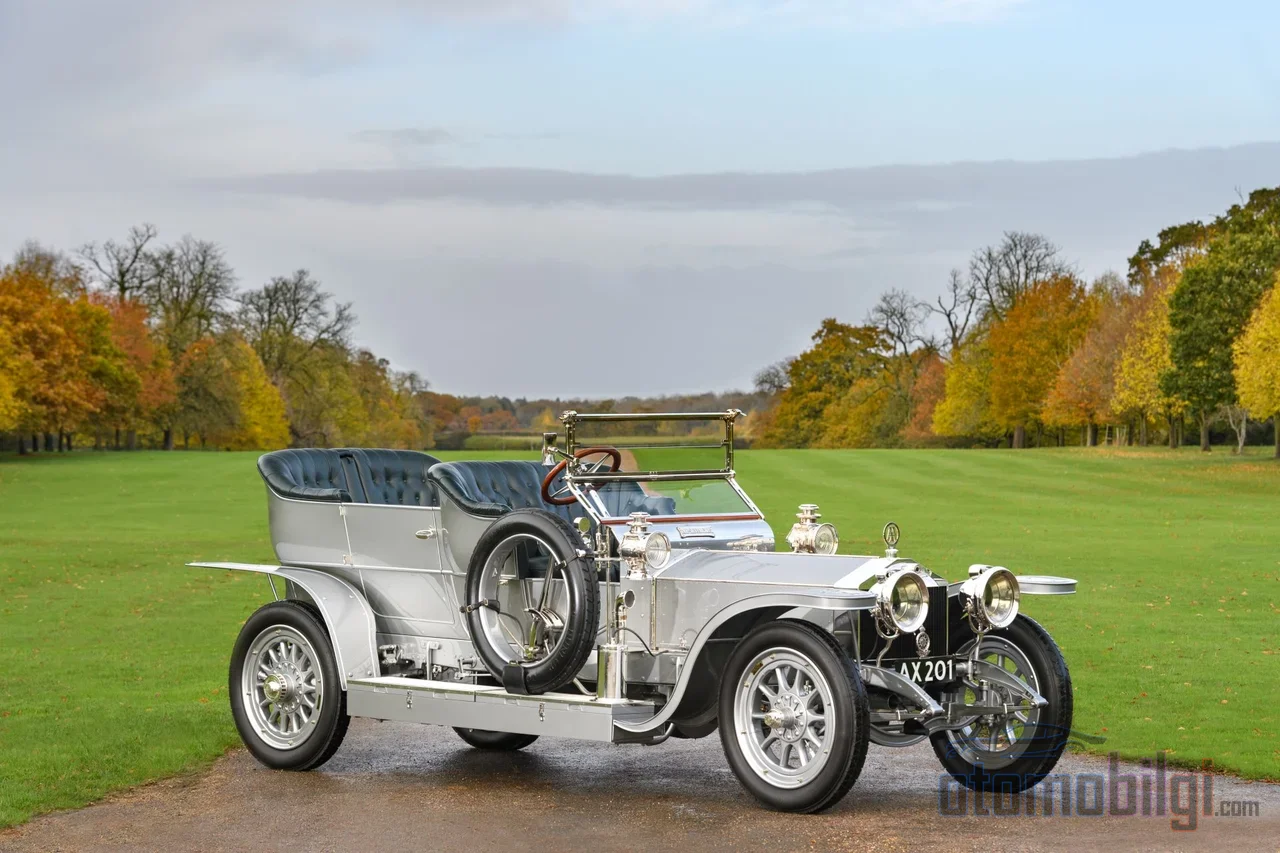
In the summer of 1907, a silver-colored car keeps driving back and forth nonstop on Scotland's provincial roads: It makes 27 round trips between London and Glasgow, accumulating a total of roughly 15,000 miles. In those days, even a car going 100 miles without a breakdown was news; this vehicle, however, covered half the distance around the world and came back with a total maintenance cost of two pounds. This car's name is Silver Ghost, and it is precisely why a phrase was born that would be repeated for about 120 years: the best car in the world. But did it really deserve that title? Get ready, because the answer is more complicated than you think - and much more fun.
On this page, we're at the oldest, most noble, and perhaps most impressive stop of our iconic cars series. If you're used to the Mustang, the 911, or the Beetle, the Silver Ghost is a completely different planet: the car of kings, lords, and desert rebellions. Let's get started.
Not Silver Ghost, but 40/50 HP: The Birth of a Name
First, let's clear up the confusion: Rolls-Royce never officially sold this car as the Silver Ghost - at least not at first. The vehicle's actual name was the 40/50 HP chassis, and it was introduced at the Olympia Motor Show in London in November 1906. Production first began at the Royce facilities in Manchester, then moved to Derby in July 1908.
So where did "Silver Ghost" come from? Here's the interesting part: the name actually belonged to just one car. The 12th chassis produced - number 60551, plate AX 201 - was given a silver appearance coated in aluminum paint and silver-plated parts. The car ran so quietly that this name, a nod to its ghost-like silence, was bestowed upon it. The press loved the name so much that they began using it for all the 40/50s. Rolls-Royce officially accepted the name only in 1925, with the launch of the Phantom. So the brand's most famous name was actually a nickname given by journalists.
Highlights
- Introduced as the 40/50 HP in 1906; "Silver Ghost" was first the nickname of a single vehicle
- The 15,000-mile 1907 Glasgow trial concluded with ~£2 in service costs
- Between 1907-1926, a total of 7,874 vehicles were produced, 1,701 of them in the USA
- The "best car in the world" title came from the press, not from Rolls-Royce
- AX 201 was cited in 2005 with an insurance value of 35 million dollars
15,000 Miles in 1907: How Did Reliability Become a Legend?
Now let's get to the turning point of the story. In 1907, the word "reliability" was almost a fantasy for the cars of the era; breaking down on the road was the rule, arriving was the exception. Claude Johnson, Rolls-Royce's commercial and managing director, made a risky but brilliant move to reverse this picture: he had the AX 201 prepared as the company demonstrator, entered it first in the Scottish reliability trials, and immediately afterward subjected it to a test of over roughly 15,000 miles (24,000 km) in total by going back and forth 27 times between London and Glasgow.
The result? The cost of the service performed after 7,000 miles was only 2 pounds 2 shillings 7 pence - an expense of two pounds thirteen shillings in today's money. Yes, you read that right: half a world tour's worth of distance, maintained for the price of a few cups of tea. Even that alone was enough to build the brand's reputation overnight.
The reputation kept solidifying: in 1911, a support car completed the London-Edinburgh round trip using only top gear. Imagine - today we're afraid to leave our car in a parking spot in a single gear, while that vehicle crossed the entire city back and forth in just one gear.
So Whose Words Were "The Best Car in the World"?
Here's the detail most people don't know: this famous title did not come out of Rolls-Royce's marketing department. The prestigious Autocar magazine used the phrase in 1907, and it went down in history. In Rolls-Royce's own account, the title truly took hold after the overwhelming dominance at the 1913 Alpine Trial. Both narratives converge at the same point: this was a title the press gave the car - and a smart brand never objected to it.
A Continuously Evolving Engineering Marvel
To understand the Silver Ghost, you must think of it not as a single car but as a 20-year continuous development program - like the annual updates your phone receives, but in the steam age.
| Feature | Common Application |
|---|---|
| Engine | Inline 6-cylinder, side-valve; 7036 cc (7428 cc from 1910 onward) |
| Power | from 48 hp (1,250 rpm) up to 80 hp (2,250 rpm) |
| Transmission | 3-speed; 4-speed from 1913 onward |
| Electric lighting | optional in 1914, standard in 1919 |
| Brakes | Initially only rear-wheel and transmission brake; servo-assisted four-wheel option in 1923 |
Even the engine itself was designed for silence: the cylinders were cast in two units of three each, the seven-bearing crankshaft rotated with fully pressurized lubrication, and the center main bearing was specially enlarged to absorb vibration. The chassis also grew over time: while it was 135.5 inches between 1906 and 1913, in the following years it went up to 143.5, 144, and 150.5 inches. Development work was suspended during World War, it was suspended; the chassis and engine formed the basis of the famous Rolls-Royce Armoured Cars.
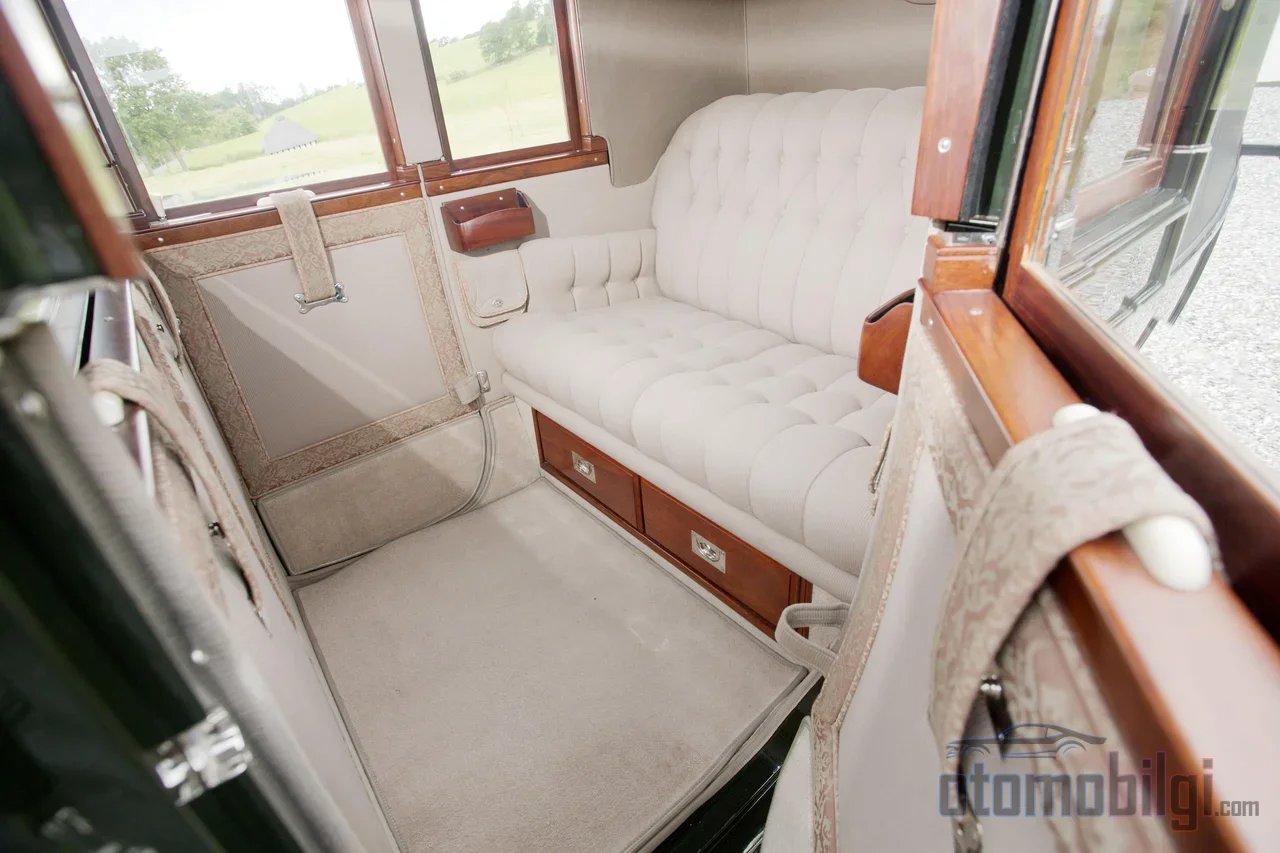
Then there's the way the car was sold, which doesn't align at all with today's logic: Rolls-Royce sold only the chassis. The customer had the body built by a coachbuilder according to their own taste. So two Silver Ghosts could look completely different from each other on the outside - like buying an SUV today and outfitting the interior to your own taste, but a far more imposing version of it.
The 1913 Alpine Trial and the Birth of the "Alpine Eagle"
The second act of the legend was written in the mountains. At the 1912 Austrian Alpine Trial, James Radley entered on his own initiative, but the 3-speed transmission proved insufficient for the Katschberg Pass climb. Rolls-Royce took this lesson seriously: for 1913, exactly four cars were prepared, the transmission was upgraded to 4 speeds, the compression ratio was increased, a larger carburetor was fitted, and power was raised from 60 hp to 75 hp.
The investment bore fruit: the team won a total of six awards, among them the Archduke Leopold Cup. Copies of the winning cars officially went into production as the Continental model; but the chief test driver - later to become general manager - Ernest Hives preferred to call them "Alpine Eagles," and the name stuck. The Silver Ghosts that attract the most attention at auctions today are precisely these Alpine Eagle derivatives. A test pilot who took the Archduke's trophy and gave a car the eagle nickname - he is one of the unforgettable characters of this industry, I must say.
Springfield, Massachusetts: A Silver Touch on the American Dream
The story of the Silver Ghost does not only take place in England. The USA was the largest automobile market of the era, and high import tariffs were putting pressure on the British manufacturer. Rolls-Royce of America was founded in November 1919; more than 50 British employees relocated across the ocean, and the first Springfield Silver Ghost was completed on January 17, 1921.
The first 200 chassis were Derby copies; American parts were added over time. The bodywork was also mostly handled in-house: Rolls-Royce Custom Coachwork produced standard designs with aluminum bodies and steel fenders. The documented chassis price of the 1921 model was $11,750 - roughly $212,000 in today's money. So even back then, the saying "half the car's cost is the bodywork" held true; indeed, you paid that money for the chassis alone, without even buying the car.
As for total production: between 1907 and 1926, 7,874 Silver Ghosts were built, of which 1,701 came out of Springfield. (Some records give 1,703; the two-vehicle difference stems from a small ambiguity in counting methods.)
Lords, Archdukes, and a Desert Legend
For Edwardian aristocracy, the Silver Ghost was not a sports car but a luxurious long-distance - "town carriage" - automobile: calm in the city, flawless on the road. The famous Spirit of Ecstasy figurine atop the radiator - the work of sculptor Charles Sykes - was used for the first time on Lord Montagu of Beaulieu's Silver Ghost. The first home of that figure gliding on the hoods of thousands of Rolls-Royces today was a Silver Ghost.
The customer list is in itself a history lesson. In the Arab Revolt, Lawrence of Arabia used a blue Silver Ghost as his personal command vehicle - the car's name was "Blue Mist." Lawrence's relationship with this car was so deep that his only wish for the future was to have his own Rolls-Royce with plenty of tires and gasoline. In December 1923, four friends came together and gifted a Silver Ghost, modified for easier entry and exit due to his illness, to US President Woodrow Wilson. From a desert revolt to the White House - what other car could visit both of these addresses?
Between the Opposite Poles of Bugatti and Ford
On other pages of our series, we often talk about "the people's cars": machines like the Ford Model T, produced for everyone, cheap and loyal. The Silver Ghost sits at the exact opposite pole of this philosophy - against both the race-focused lightness of Bugatti and Ford's mass production: expensive, heavy, silent, and flawless craftsmanship. In the world of automobiles they represented two different worldviews, and each changed its own domain. The Model T brought mobilization; the Silver Ghost brought prestige. The fact that luxury automotive is still built on the formula of "silence + perfection + low production volumes" today is largely this car's legacy.
But let us not forget: no throne belongs to its owner forever. In the early 1920s rivals advanced rapidly and the Silver Ghost's superiority eroded; annual sales fell from 742 vehicles in 1913 to 430 in 1922. It was replaced in 1925 by the New Phantom (Phantom I) - and to avoid confusion, the old 40/50s finally began to be officially referred to as the "Silver Ghost." Production was completed in 1926.
So Was It Really the Best Car in the World?
The answer depends on the time. Yes - by the standards of its own era, the Silver Ghost more than deserved the title of "the best car in the world": it completed the 15,000-mile reliability marathon of 1907 with just two pounds' worth of maintenance, dominated the most demanding Alpine passes in 1913, and was quieter, more reliable, and more refined than any rival of its age. But the real magic of the title lies not in the car, but in its acceptance: it is hard to find a second example in automotive history where a brand's identity owes so enduringly to the success of a single model. "The best car in the world" ceased to be an automobile and became the very definition of luxury - and the Silver Ghost was the vehicle that first wrote that definition.
The own story of the AX 201 at the heart of the legend is like a novel: it was sold for 750 pounds in 1908, bought back by the company in 1948, restored in 1991, and recorded in 2005 as the world's most valuable car with an insured value of 35 million dollars. It passed from the Bentley collection to collector Sir Michael Kadoorie in January 2020. At 2026 auctions, Silver Ghosts are finding buyers in a range of roughly 95,000 to 340,000 dollars - while Alpine Eagle derivatives receive star treatment of their own. Many are still running, and a fine example is on display at the national motor museum in England. They say it was as quiet as a ghost; what remains of it is the noise of a reputation that has not fallen silent for a full century.
Sources
- Rolls-Royce Silver Ghost
- 120 Years of the Rolls-Royce Silver Ghost
- Rolls-Royce Marks Alpine Trial's 110th Anniversary
- Rolls-Royce Silver Ghost Model Guide
- 1907-1926 Rolls-Royce Silver Ghost
- 100th Anniversary of the Springfield Silver Ghost
- 1926 Rolls-Royce 40/50 HP Silver Ghost Salamanca Landaulette
- 1919 Rolls-Royce Silver Ghost - Hagerty Valuation Tools
- Rolls-Royce Revisits 1913 Alpine Rally