What Can Be Done to Avoid Fraud When Buying a Classic Car

You have found the classic car listing of your dreams. The photos are flawless, the description is enchanting: it is coming out of a collection, the owner is an elderly uncle, it has just been waiting in the garage. I agree with all of that story - right up until you send your money without checking the chassis number. The classic car market is on one hand full of passion, and on the other hand one of the fraudsters' favorite hunting grounds; because most buyers make emotional decisions and excitedly forget the checklist. That is exactly why today I will explain the concrete ways to protect yourself from fraud when buying a classic vehicle: we will go through, one by one, what to look for both at the listing stage and at the sales desk.
Where Do the Traps Awaiting the Classic Car Market Come From?
First, let's get to know the field. The used car market in Türkiye has grown rapidly in recent years; in 2023, the automobile and light commercial vehicle market grew by nearly 57.4% and exceeded 1 million for the first time, reaching 1,232,635 vehicles, while more than 1.8 million sales took place in the online used car market. This activity is good news, but like every active market, it also attracts the attention of fraudsters. In addition, classic vehicles carry a special risk: tracking the history of vehicles older than 30 years is more cumbersome than with current models, the documents may be outdated, and the vehicle may have changed hands.
We can summarize the most common methods as follows:
| Method | How Does It Work? |
|---|---|
| The sucker loop | A deposit is taken with a listing far below market price, then the seller disappears the vehicle is never delivered |
| The deposit trap | A deposit is taken via an ad at a price far below the market, then the seller disappears |
| The "change" vehicle | The chassis and engine information of a stolen or heavily damaged vehicle is swapped with another vehicle |
| Odometer rollback | The mileage is shown as lower and the vehicle is sold above its actual value |
| Hidden defect | Airbag, chassis, or electronic faults are concealed from the buyer |
This table is a general map of the used car market; the part that concerns the classic car buyer is even more critical, because matching numbers, meaning the integrity of the original chassis and engine numbers, is the backbone of value in these vehicles. If the numbers have been tampered with, what you have bought is both a vehicle with an unknown history and a collectible whose value has been damaged.
Highlights
- The Notary Safe Payment System has been mandatory in used vehicle sales since September 27, 2024; the money is blocked in an escrow account.
- The VIN, that is, the chassis number, is 17 characters long and is like the vehicle's identity card.
- Damage records are entered into TRAMER within 45 days, so recent accidents may not appear in a query.
- Classic vehicle inspection examines vehicles under two separate headings: original and renewed/modified.
1. Defense: Verifying the Chassis and Engine Number On-Site
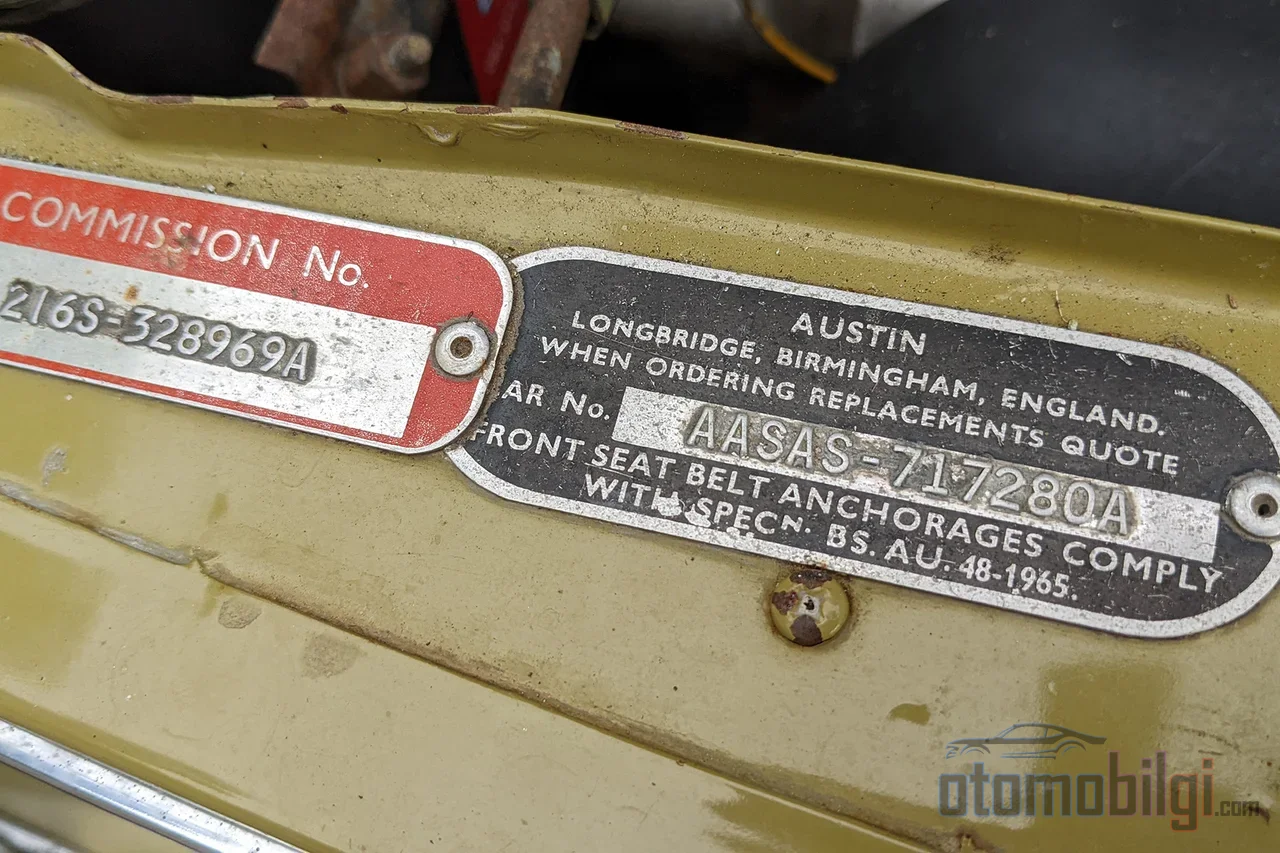
The chassis number, that is, the VIN, is the vehicle's identity; every door, from history queries to theft checks, opens with this number. With classic cars, one more criterion comes into play: the match between the engine number and the chassis number. If they don't match, the car may have been fitted with a different engine during restoration, or - worse - it may be a vehicle that has undergone a change procedure. Vehicles with a change record can be seized; meaning it cannot be registered for road use until the record is corrected, and you end up with your money locked in a vehicle.
Where should you look for the numbers? The VIN is usually located in the engine bay, on the door sill, at the bottom corner of the windshield, under the front passenger seat, or on a plate on the chassis. Then you will make three matches:
- Is the number on the vehicle the same as the number on the registration certificate?
- Is the engine number on the registration certificate the same as the number on the engine block?
- Are the details in the insurance policy and queried via e-Devlet consistent with these?
If you see grinding, paint, or filler marks around the number, that is a red flag; the number may have been ground off or transferred to a different plate. If you have such a suspicion, never proceed to the contract stage without having the vehicle inspected by an expert.
2. Defense: Verifying Documents Through Official Channels, Not from the Seller
Our second line of defense is the paperwork desk. You will trust the information in the official record, not the document presented. The rule is simple: work with documents obtained from official institutions as much as possible, and make sure the person registered as the vehicle's owner is the same person you will pay. If the person selling the vehicle is different from the vehicle's owner, do not proceed without checking the power of attorney; with classic cars, since the vehicle changes hands, it is not at all rare for the seller and the person named on the registration to differ - and it is precisely through this gap that scammers slip in.
The collecting world has its own traps, too. You hear stories like coming out of a collection, first owner, auction-documented very often; most of them are true, but some are merely tales woven around vehicles that do not exist. Abroad, scammers target buyers with classic cars that never existed, through fake websites; an absurdly attractive price, a fake escrow service, constant pressure of urgency, and emotional manipulation are the main signs of this scheme. A vehicle's claimed history only turns into value when supported by documents and records - it is not the story that speaks, it is the paperwork.
3. Defense: Knowing the 45-Day Rule in TRAMER Queries
The third defense is the damage history. A TRAMER query gathers the damage records of all insurance companies in a single center; you see the date of the damage, the amount, and the details of the replaced parts. A vehicle with a major damage record gives itself away in this query. But there is a detail in the mix that sellers don't like you to know: damage records are entered into the system within 45 days of the accident. So a vehicle that was just in an accident may appear damage-free. For this reason, a TRAMER report alone is not enough; before buying, you must always physically inspect the vehicle and have a paint-and-body check done.
With classic cars there is another problem: damages accumulated over the years may be missing from very old records. So treat the report as a starting point, not as a final verdict. Query the chassis, damage, and mileage records together; odometer inconsistencies also expose the mileage rollback trap.
4. Defense: Let the Inspection Expert Speak, Not the Seller
The fourth defense is the most enjoyable: leaving the job to an expert. The basic rule is this - you should have the vehicle inspected not at a place the seller sends you to, but at an inspection center of your own choosing. The inspection report gives detailed information about the vehicle's mechanical condition and market value, protecting you from surprise expenses after the purchase.
Classic cars have their own inspection process. These vehicles are examined under two separate headings: those stated to be original and those that have been renewed or modified. This distinction directly affects value; a completely original vehicle does not sell for the same price as a restored one. There are expert organizations in Türkiye that provide classic car inspections, and you can easily book an appointment online or through a call center. In short, even if you love a car as much as your own heartbeat, it takes measurement, not heart, to approve it.
5. Defense: Protecting Your Money with the Notary Secure Payment System
The final defense is the journey of your money. As of September 27, 2024, the Notary Secure Payment System is mandatory for second-hand vehicle sales. The system works like this: the sale price is deposited into a blocked escrow account before notary approval; once the notary procedure is completed, the money is automatically transferred to the seller. This mechanism, which secures cash, wire transfer, EFT and FAST payments, closes exactly the gap that the carp scam feeds on. Authorized sellers, moreover, cannot accept payment without issuing an order form.
How Exactly Does the Carp Scam Work?
The typical scenario goes like this: the scammer takes down the listing from the real seller at a price above market, then posts a new listing with the same vehicle details at a price far below market. You jump at that bargain price; the other side says I'm out of town, a relative of mine will come, send the deposit. The money goes into the scammer's account, and the car never arrives. This method takes both the buyer's money and the original seller's vehicle; its frequency has increased along with market activity in recent years.
What Should You Say to Someone Asking for a Deposit?
A deposit request following a cheap listing is a classic deposit trap; the money goes, the seller disappears. There are also fake buyers who target sellers: people who find you through your listing, take extensive information, then say we're contacting you through the notary, there's a secure payment and get you to send money to a fake site or bank account. An above-market price offer, pressure that the sale won't happen unless you send the deposit, and a wire transfer to an account you don't know - if you see this trio, end that conversation right there.
- Never pay without seeing the vehicle and inspecting it in person.
- Never send money to third parties' accounts; pay only to the person named on the registration certificate.
- Show the door to advance payment and deposit requests.
- Count it as a red flag when the notary procedure is squeezed into the end of business hours and you are rushed along.
- Do not put your trust in a platform's or payment service's claim that it will protect you; such guarantees are classic bait.
What Can I Do If I Have Been Scammed?
If you did everything right but still fell into the trap, no panic - there is evidence. Keep the receipts, messages, and screenshots of the listing, and apply to the prosecutor's office or the police as soon as possible. If a hidden defect emerges in the car you bought - such as a concealed chassis damage, a deployed airbag, or a covered-up electronic fault - you can exercise your rights to a refund, a discount, or repair. Time is critical here; act without delay to avoid losing your rights.
Summary Checklist: Things to Keep in Mind at the Sales Table
The essence of protecting yourself from fraud when buying a classic car is turning these five defenses into a reflex: match the numbers on the spot, verify documents through official channels, check TRAMER but remember the 45-day rule, choose the inspection service yourself, and route the money through a notary escrow. The best part is that none of these five steps requires special knowledge or connections; they are all concrete checks that even a beginner collector can carry out. Passion is what keeps this market alive - but when you carry a skeptical eye and a checklist alongside your passion, the car of your dreams arrives in your garage both safely and enjoyably. Which defense do you think gets overlooked the most? My guess: the one in third place, that famous 45-day rule.
Sources
- Secure Payment System - Union of Turkish Notaries
- What Is "Sazan Sarmali" Fraud in Vehicle Trade? - Garanti BBVA
- What Is "Sazan Sarmali," the Car Scam? - Mapfre
- Fraud in Vehicle Sales (2026) - harbiyehukuk
- Used car fraud: common methods and protection - Mimoza Hukuk
- If you are planning to sell your car: a new fraud method - NTV
- Most Common Fraud Methods on Vehicle Listing Sites - Arabam.com
- Secure Payment System Becomes Mandatory - Arabam.com