Why Does the 12V Battery Drain in a Hybrid Car?
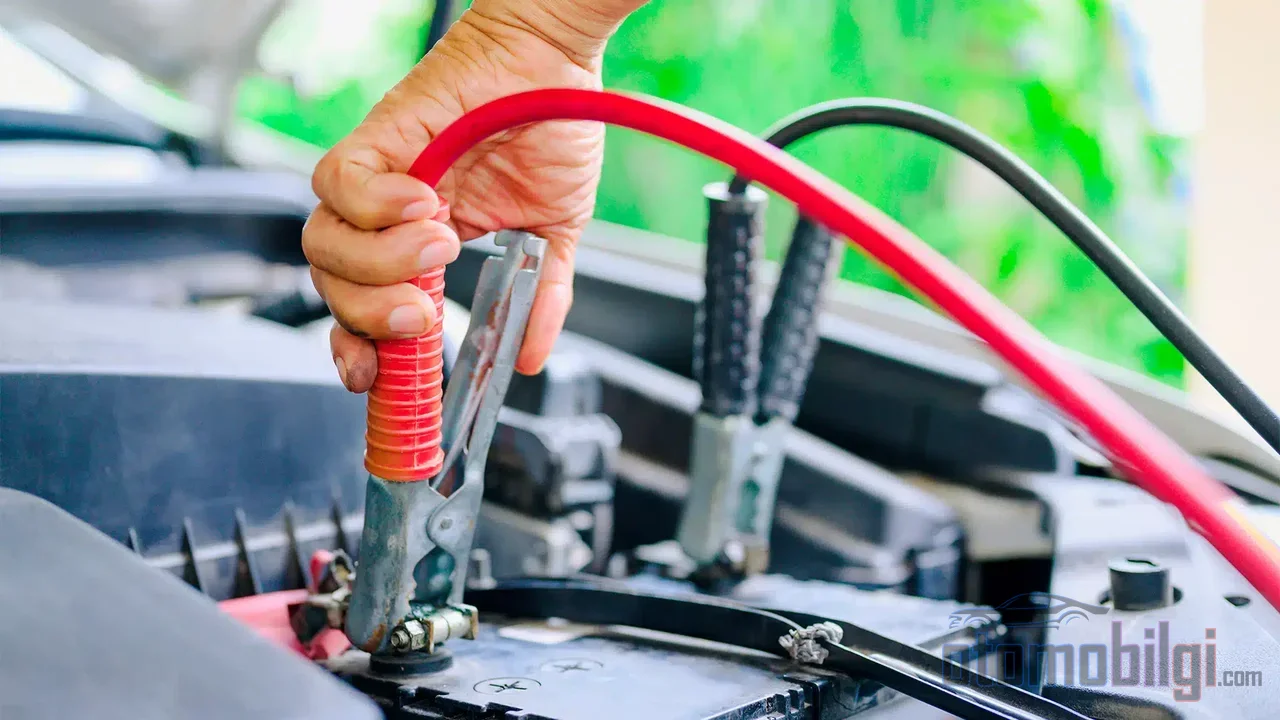
Your hybrid's high-voltage battery is fully charged, and the fuel tank is full; but while rushing to work in the morning, the key fob gives no response at all, and when you open the car with it, the instrument display is dead. Most hybrid owners suspect the system's big battery the first time they experience this scene - yet the culprit is almost always the small, seemingly ordinary 12V auxiliary battery. The interesting part is that it is this component, worth only a few thousand liras, that can bring a hybrid system worth tens of thousands of dollars to a standstill.
What Role Does the 12V Battery Play in a Hybrid System?
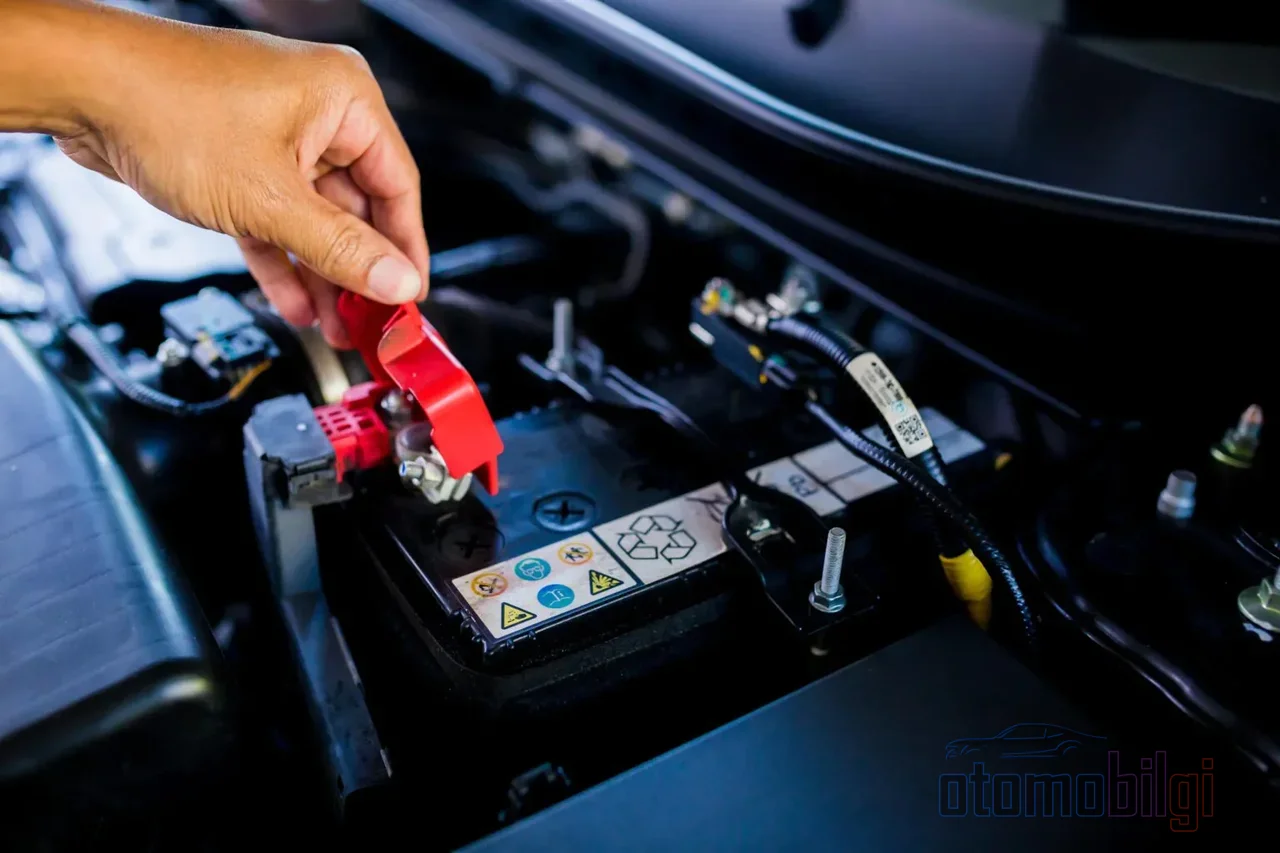
A hybrid vehicle has two separate batteries whose duties are completely different from each other. The high-voltage (HV) traction battery powers the electric motor; the 12V auxiliary battery, on the other hand, is the low-voltage system that keeps the car's computer world alive. The instrument panel, locks, interior lighting, windows, safety systems such as airbags and ABS, navigation, radio, USB ports - they all run on this battery.
Its most critical job is less visible: feeding the main computer that wakes up the hybrid system when you press the start button. In other words, if the 12V battery is dead, the system will not start at all, no matter how healthy the rest of the car is. Even if the HV battery fails, the critical safety systems continue to operate on the 12V side; in the opposite case, the car is left completely motionless.
The charging side is also different from gasoline cars. A hybrid has no alternator; a power electronics unit called a DC/DC converter steps down the direct current coming from the high-voltage battery to 12V and feeds the auxiliary battery. This detail will come in handy when explaining the correct jump-start method.
Signs of Discharge: Door Won't Open, No READY
The symptoms usually follow the same sequence. First, the key fob does not respond remotely; the lock can be opened mechanically, but when you press the button, the car does not wake up and no display appears. Even if the HV battery gauge appears full, the system remains in a "not ready to drive" state (the READY light does not come on). In hybrids, it is normal for READY not to appear with the ignition off; the problem is that it does not light up when you turn the ignition on either.
When you encounter this picture, the steps to follow are simple:
- Check the HV battery gauge; if it is full, shift your suspicion to the 12V side.
- If the connection has been disconnected in the past (for example, after an oil change), a false "not ready" warning may appear on some systems; wait a few minutes and try again.
- Try a jump start to get the READY light to come on - I explain the correct method below.
- If the jump start works but the problem recurs when you shut the car off, the battery may have reached the end of its life, or there may be a deeper fault in the charging system.
There is also a version of recurring discharges that needs to be investigated: there may be a constant parasitic drain source that consumes the battery while the hybrid is parked without interruption. In some models, the telematics system constantly feeding on the battery leads to this picture, and the solution is often not a new part but a software update applied at the dealership. If you experience frequent discharges, make sure you rule out this possibility before replacing the battery.
Highlights
- 12V battery; It powers the computer that starts the ECU, locks, safety systems and the hybrid system.
- Standard battery life is 3-5 years, extending to 4-6 years with proper use.
- Driving at least 20 minutes per week keeps the battery's charge balance maintained.
- The high-voltage pack is never jump-started; an incorrect operation can cause expensive damage to the inverter.
- The 12V battery in hybrids is usually of the AGM type; upgrading from EFB to AGM is possible.
Why Does the Battery Drain? The Most Common Causes
The first cause is the most innocent one: the vehicle is not used for days. In hybrids, the 12V battery's capacity is deliberately kept small; light but constant consumers (alarm, telematics, key detection) quickly erode the capacity. Considering that drain of up to 5% per day has been reported in electric vehicles, in hybrids too, a week or two of silence in a closed garage can bring the battery down to a critical level.
The second group consists of behavioral causes: waiting for a long time with the ignition on while the door is left open, and driving only short distances in the city at very low speeds. Modern systems monitor the charge status of the low-voltage battery and start charging from the HV battery when necessary; but for this, the vehicle must remain running for a certain period of time. In a vehicle used less than half an hour per week in total, this balance cannot be established.
The third cause is the technical one: a fault in the DC/DC converter or the charging system. A battery that drains again shortly after every jump start is solved not by replacement but by diagnosing the converter. Also, in some models requiring coding/adaptation, even if the battery is newly installed, the problem persists if it is not properly integrated with the system. In other words, the same symptom can stem from three different roots - you should not spend money without understanding which one it is.
AGM or EFB? The Difference, Lifespan and Replacement Cost
The 12V battery of hybrid vehicles is usually of the AGM (Absorbent Glass Mat) type. In AGM, the electrolyte is trapped in a glass fiber mat; it is resistant to deep charge-discharge cycles and is leak-proof. EFB (Enhanced Flooded Battery) is an improved version of the classic liquid-electrolyte battery, designed for basic start-stop applications; it offers approximately 50% higher capacity than AGM and up to 52% longer life at high temperatures, but it has its limits.
| Feature | AGM | EFB |
|---|---|---|
| Construction | Electrolyte inside a glass fiber mat | Enhanced liquid electrolyte |
| Durability | High cycling, high-tech systems | Moderate demands, basic start-stop |
| Price | More expensive (approximately 30-40%) | Cheaper upfront |
| Long-term cost | Balanced by lifespan and reliability | Can increase due to short lifespan |
When replacing, upgrading from EFB to AGM is possible and increases performance and lifespan; a downgrade in the opposite direction is not recommended, as it is not suitable for the battery charging strategy. In mild hybrid (48V) systems, the matter is even more delicate: with the right diagnosis, replacing only the 12V battery can solve the problem, but if the battery is not installed with correct coding and adaptation, integration problems arise with the 48V battery. Here, the data capability of the source (an authorized or specialist service) is more decisive than the part price.
It is hard to give a clear figure for the cost question; 12V battery replacement varies by model, capacity, and labor. For comparison, know this: the frequently feared hybrid main battery replacement (do not confuse it with the 12V) typically falls in the $2,000-8,000 band in the international market. The cost on the 12V side is negligible next to this figure - the real cost is unnecessary part replacement due to misdiagnosis or inverter damage following an incorrect jump-start.
How to Jump-Start a Hybrid Correctly Inverter Risk
First, the most important rule: the jump-start procedure concerns only the 12V auxiliary battery. Attempting to connect external power to the high-voltage pack is both impossible and extremely dangerous; it can cause rapid overheating, gas venting, and fire. Never touch the orange-colored cables (high-voltage lines).
Step-by-step safe jump-start
- Shut the vehicle down completely. In many hybrids, the 12V battery is in the trunk or under the rear seat; you can find a jump-start point with a red cap under the hood.
- Connect the red (+) cable to the jump-start point. Connect the black (-) cable not to the battery but to an unpainted metal chassis point - this eliminates the risk of the hydrogen gas at the terminal igniting from a spark.
- After connecting, wait about 5 minutes, then start the vehicle and check that the READY light has come on.
- Disconnect in the exact reverse order of how you connected the cables and run the vehicle for at least 20 minutes so the auxiliary battery charges.
Mistakes to avoid
- Reverse polarity: it can instantly blow the main hybrid fuse; an expensive carelessness.
- Poor grounding and hasty connections: spark risk and incomplete charging.
- Using a hybrid vehicle as a donor for another gasoline car: the 12V battery cannot supply the cranking current.
- Jump-starting another EV with an EV or hybrid vehicle: it can seriously damage the small 12V battery; moreover, many manufacturers explicitly prohibit using the hybrid as a jump-start source in the user manual.
The preferred method is actually not cables: a surge-protected portable booster pack. When jump-starting from another vehicle, irregular current can flood into the system and cause expensive damage in the DC/DC converter - a unit that tolerates overload far less than an alternator does. While jump-starting from a gasoline vehicle is an acceptable alternative, it is conditional on the two vehicles not touching each other and both being switched off first.
Usage Habits That Extend Life
A quality, properly used battery lasts 4-6 years; with careless use, this period drops to 3-5 years or even less. The influencing variables are user habits, climate, electrical load, and maintenance routine. The habits that solve the problem in practice are:
- Use the vehicle at least 20 minutes a week (ideally close to 1 hour in total); this is enough time for the HV battery to balance the 12V battery.
- If you are not going to leave the car unused for weeks, get a smart trickle charger.
- Have the battery voltage tested regularly; keep the terminals clean and tight.
- When choosing a replacement battery, keep the type (AGM/EFB) and capacity your vehicle requires.
- If discharge happens frequently, have parasitic drain and software checked before replacing any part.
It is generally safe to assume that in a car where jump-starting works but becomes necessary every week, the battery has reached the end of its life: jump-starting is a temporary solution, while replacement is the permanent one.
Conclusion: Small Battery, Big Responsibility
This small component, often overlooked in hybrid ownership, is the real control key of the vehicle. If the doors will not open or the READY light does not come on, think of the 12V battery first; jump-start it correctly, and if the problem recurs, do not skip the steps of replacement and, if necessary, diagnosis. With the correct type (AGM), correct coding, and a habit of a twenty-minute drive per week, this issue is in practice a completely manageable maintenance item - without touching the hybrid's truly valuable components.
Sources
- How Do Hybrid Electric Cars Work?
- Can you jump-start a hybrid or electric vehicle?
- How to Safely Jump Start a Hybrid Car Battery
- Do Hybrid Vehicles Get Discharged?
- Secondary "12 V" battery: breakdown recovery - user manual
- Can You Jumpstart a Hybrid?
- EFB vs. AGM for Start-Stop and Hybrid Vehicles
- AGM vs EFB – Which Battery Do I Need?
- How Many Years Does a Battery Last
- Why Does the 12V Battery Drain in an Electric Vehicle?