Why Does the NASCAR Charter System Protect Teams?
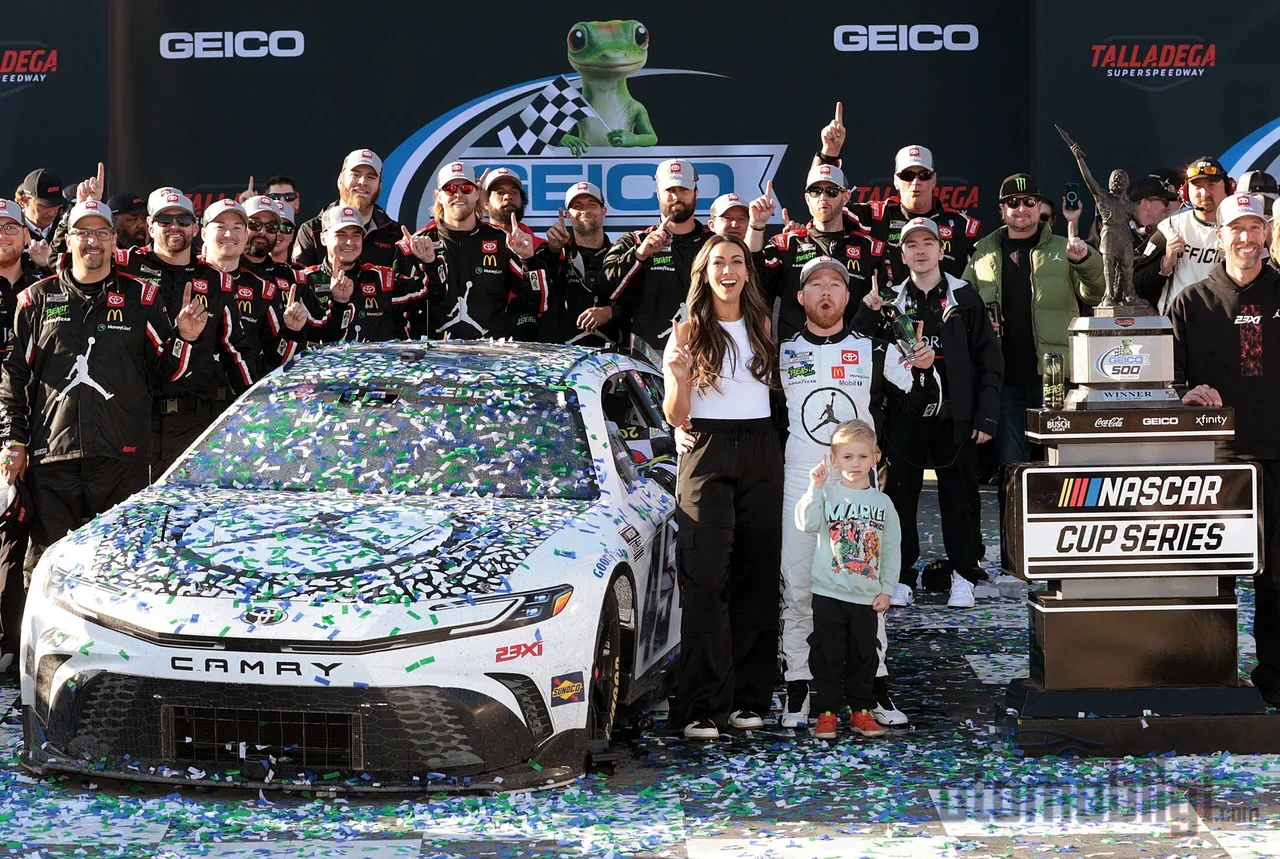
While 40 cars battle it out on the track, the real big game plays out off the track: The NASCAR charter system, held by 36 teams, tradeable, and now permanent forever. This license, which allows a Cup Series team to stand on the grid every week without worrying about qualifying, take a share of the prize pool, and gain corporate value, has been one of the most talked-about economic structures in motorsport since 2016. Let's dive in: what exactly does a charter do, why did its price race from 40 million dollars to 100 million, and why did Michael Jordan's team take NASCAR to court?
What Is a Charter? The Guaranteed Ticket in the Team's Hand
Let's start with a very simple analogy: Imagine you had to enter open qualifiers every season just to join your school's basketball team. You would sweat every week, trying to prove your form. Now imagine the school gave you a special license, and you automatically take the court in every game. That's exactly what a charter in NASCAR is: it gives a Cup Series team the right to a guaranteed entry into every points race and a share of the money pool distributed over the race weekend. More importantly, this license is not a physical trophy in your hands, but a sellable asset; meaning even if a team hits hard times, it can sell its charter on the open market and turn it into serious money.
The system's birth date is also known: it was announced on February 9, 2016, in Charlotte, North Carolina. NASCAR implemented this structure after negotiations with a team association called the Race Team Alliance. The goal was for teams, whose money had been lost on paper for years, to be able to stay financially afloat. Because the truth is: running a race team is an expensive business, and finding sponsors for a team with no guarantee of racing every week is nearly impossible.
The 36 + 4 Formula: How Is the Grid Divided?
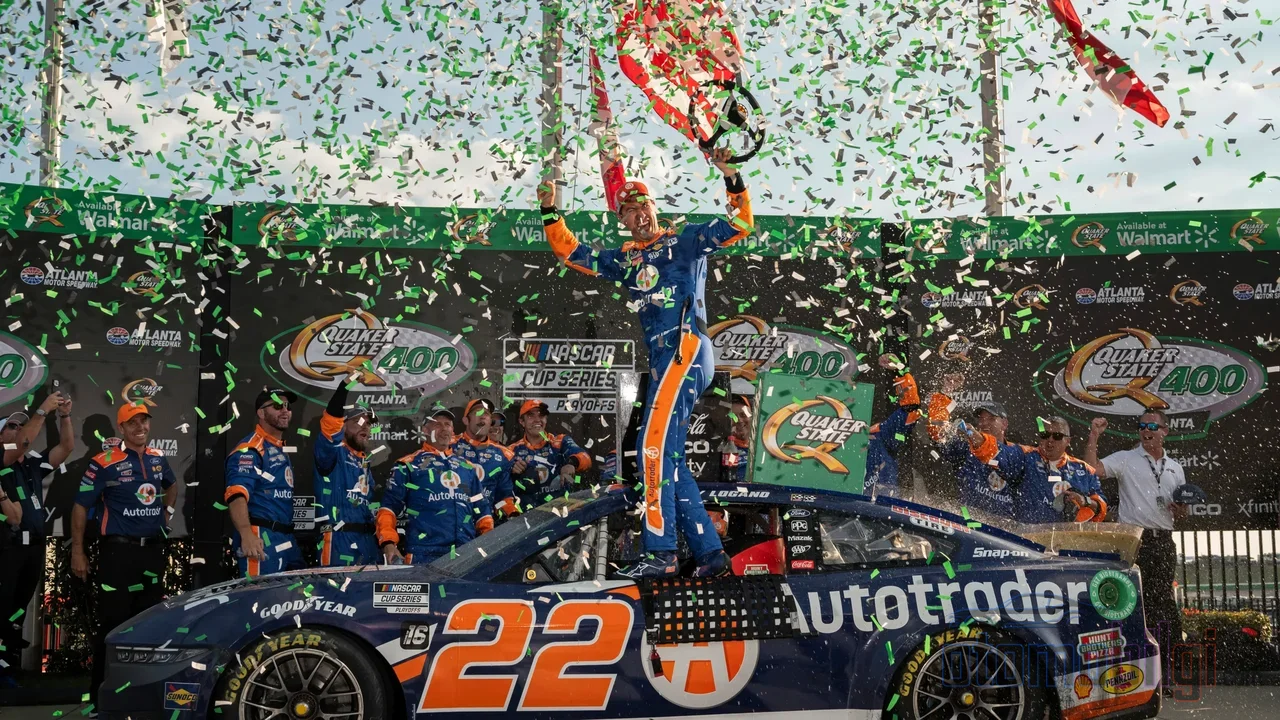
With the charter system, the Cup Series field dropped from 43 cars to 40 cars. 36 of these 40 belong to charter-holding teams; they are guaranteed a spot on the grid every week. The remaining 4 are "open" teams. These teams without a charter must enter qualifying and prove their time for the leftover spots each week. If more than 40 cars apply that week, the slowest open cars go home. No guarantee, no safety net.
So why exactly 36? The number wasn't determined arbitrarily, actually. NASCAR arrived at this figure by analyzing the teams that had tried to qualify every week over the previous three years. In other words, the baseline for entering the system was drawn based on the reality on the track. There was also a cap for organizations: an organization could originally hold a charter with a maximum of 4 cars; the option for a fifth car was later removed. So even the giant teams cannot expand indefinitely, no matter how much they want to.
One more interesting detail: There are no tiers like "Tier 1" or "Tier 2" in the system. A charter is a charter; there is no class of license more valuable than another. Value is shaped by the historical importance of the charter's owner and recent-season performance - but it is a matter of negotiation, not an official ranking.
Highlights
- The Cup Series has 36 charters and 4 open teams; the field is 40 cars.
- The lowest recorded charter sale is $1.25 million, the highest $40 million.
- With the December 2025 settlement, all charters gained permanent (evergreen) status.
- The 23XI and Front Row antitrust lawsuit ended in a settlement on day 9 of the trial.
The Money Side of the Charter: Prize Pool and Revenue Sharing
The second thing that makes a charter valuable is money. A chartered team receives a share of the prize pool distributed at every race and also collects its share of the points fund at the end of the season. The picture becomes clear when the numbers speak: excluding sponsorship revenue, chartered teams can earn $7-18 million per season. Total revenue per car - meaning charter share, prize money, and sponsorship combined - runs around $8.2 million at the lowest-performing organization, while the highest reaches $43 million. The end-of-season points fund was $33.7 million in 2025 and is set to grow past $40 million by 2031.
The original 2016 system also had a team safety net: a charter team finishing in the bottom three for three consecutive years in the owner standings could have its charter revoked by NASCAR. A performance clause, in other words. Also, for the first five years, a charter could be leased to another team with a one full-season transfer right. These rules changed in the new era; but first let's look at the story of the prices, because that's where the real shock is.
From $1.25 Million to $40 Million: The Soaring Price of Charters
A charter has no fixed price list; buyer and seller meet on the open market. The records reflected in court filings, however, draw an incredible upward curve:
| Year | Sale | Price |
|---|---|---|
| 2016 | Michael Waltrip Racing charters | $1.25 - 3.25 million |
| 2018 | Team Penske charter sale | $3.5 million |
| 2021 | 23XI, Germain Racing charter | $4.7 million |
| 2022 | 23XI, StarCom Racing charter | $13.5 million |
| 2024 | To Trackhouse (Stewart-Haas) | $26.5 million |
| 2024 | To 23XI (Stewart-Haas) | $28 million |
| 2024 | To Front Row (Stewart-Haas) | $29.5 million |
| 2024 | Spire, Live Fast charter | $40 million |
A nearly tenfold increase in eight years - no investment portfolio would ignore this curve. The charters sold when Stewart-Haas shut down showed how much fresh blood the market had. In December 2025, it was said that the value of a charter for which Legacy Motor Club paid $45 million could quickly rise to $90-100 million; as of 2026, market talk points to the ~$100 million range. Dale Earnhardt Jr. is among those who predict charter costs will climb even further. So the answer to our question becomes clear here: a charter is no longer just a racing right for the teams, but a corporate asset on the company's balance sheet.
Why Did Michael Jordan's Team Go to Court?
So why did a lawsuit emerge when everything seemed so bright? On October 2, 2024, 23XI Racing, co-owned by basketball legend Michael Jordan and Denny Hamlin, along with Bob Jenkins' Front Row Motorsports, filed an antitrust lawsuit against NASCAR and CEO Jim France. One of the main reasons was very specific: the lack of permanence of charters. Someone who invested millions of dollars to build a team was being told that this investment could one day lose its value. The two teams became the only ones not to sign the new charter agreement, pursuing NASCAR on claims of monopolistic practices.
The course of the lawsuit itself is a thriller. The two teams were first allowed to start 2025 with charters; in June 2025, the appeals court reversed this, and 23XI and Front Row ran the second half of 2025 as open teams without charters. In other words, the teams that filed the lawsuit experienced firsthand the very uncertainty they opposed. The trial began on December 1, 2025 at the federal court in Charlotte; Hamlin, Jordan, Jenkins, Jim France and Richard Childress took the witness stand. In the testimonies, the charter system was described less as a collaborative partnership and more as an economic control mechanism. On day 9 of the trial, the parties settled before the jury could reach a verdict: December 11, 2025.
How Did the Settlement Change the System? The Evergreen Era
The settlement signed in December 2025 became a turning point in charter history. When you read its terms, you understand why everyone got excited:
- Permanent (evergreen) charters were granted to all chartered teams; licenses are no longer a gamble renewed year after year.
- 23XI and Front Row's six charters were returned, and the teams were paid as if they had gone through 2025 with charters.
- The teams began receiving a share of NASCAR's international media rights revenue; they will receive a third of new agreements that use teams' intellectual property.
- The teams' right to veto agreements was increased from three to five grounds.
- Permanent charter renewals became subject to the approval of two-thirds of the teams.
- NASCAR's cut from charter sales rose from 2% to 10% - the winner of this system is not just the teams.
The charter documents made public in October 2025 were also groundbreaking in terms of transparency: charter value is now calculated using a two-year moving average. On February 4, 2026, the lawsuit was officially dismissed and the case was closed. Even an analysis from Yale's business school emphasizes that this settlement changed the structure of stock car racing. There is also a striking nuance: While Rick Hendrick and Roger Penske openly supported NASCAR during the lawsuit process, Hendrick, in a letter he sent to the president during the same period, wrote that the new agreement ignored the teams' value, and it was also reported that his teams were losing money. In other words, the picture is not one color everywhere; the teams won, but the bargaining continues.
What Do Open Teams Do? The Price of the Missing Charter
The 4 cars left without a charter are the most tense corner of the grid. Teams without a charter have to prove their speed every single week; if the car count exceeds 40, the slowest open cars fail to make the race. To soften this a bit, NASCAR introduced an exception for successful drivers from around the world: this right, granted by the organization's invitation independent of the legendary driver status, was first used for Helio Castroneves at the 2025 Daytona 500. At the 2026 Daytona 500, Jimmie Johnson benefited from this exception with Legacy Motor Club's No. 84 car, and the field reached 41 cars that day. However, there is a small detail: a car racing under this invitation can win the race and the trophy, but it cannot earn championship points or prize money. In other words, the door is open, but the prize vault is closed.
As of 2026, the picture looks like this: the number of charters is fixed at 36. RFK Racing is using a charter rented from Rick Ware for Ryan Preece's No. 60, and management says they are willing to run as an open team if they cannot obtain their own charter. Haas Factory Team, on the other hand, has chosen to continue with a single car and is not considering selling its charter. Charters can also be transferred between car numbers without being sold; in 2026, two of Trackhouse's charters moved to the No. 88 and No. 97. Legacy Motor Club, meanwhile, reached a settlement with Rick Ware and will move up to a third car in 2027, Riley Herbst's No. 84.
So, the Answer: What Exactly Do Charter Teams Guarantee?
Here is the clear answer we promised. A NASCAR charter is a licensable asset that can be bought and sold, providing a Cup Series team a guaranteed entry into every points race and a share of the prize pool. The 36 charters form the permanent backbone of the 40-car field; the remaining 4 spots are left to the qualifying battle of open teams. Since the settlement in December 2025, charters are permanent, meaning teams no longer carry the worry of having to re-qualify every season. This triple composition - a guaranteed race entry, regular income, and a sellable asset - is what makes the charter the foundation of a team's corporate value; this is precisely why prices starting at 1.25 million dollars have moved into the 100 million dollar range today.
Behind a car that hits the track next week, there are actually two races: one on the track, and one in courtrooms and at the negotiating table. Watching it with this knowledge makes the checkered flags look completely different - which team's charter story are you curious about?
Sources
- How the NASCAR Charter system works
- NASCAR Charter System Explained: How Charters Work in 2027
- NASCAR Charters - History, Transactions & News
- 2016 NASCAR Charter Information
- 23XI Racing v. NASCAR
- How NASCAR's Ownership Charter System Works
- How the NASCAR Charter System Works After the Antitrust Settlement
- What is the NASCAR charter system?