Why Is Red the Preferred Color for Ambient Lighting?
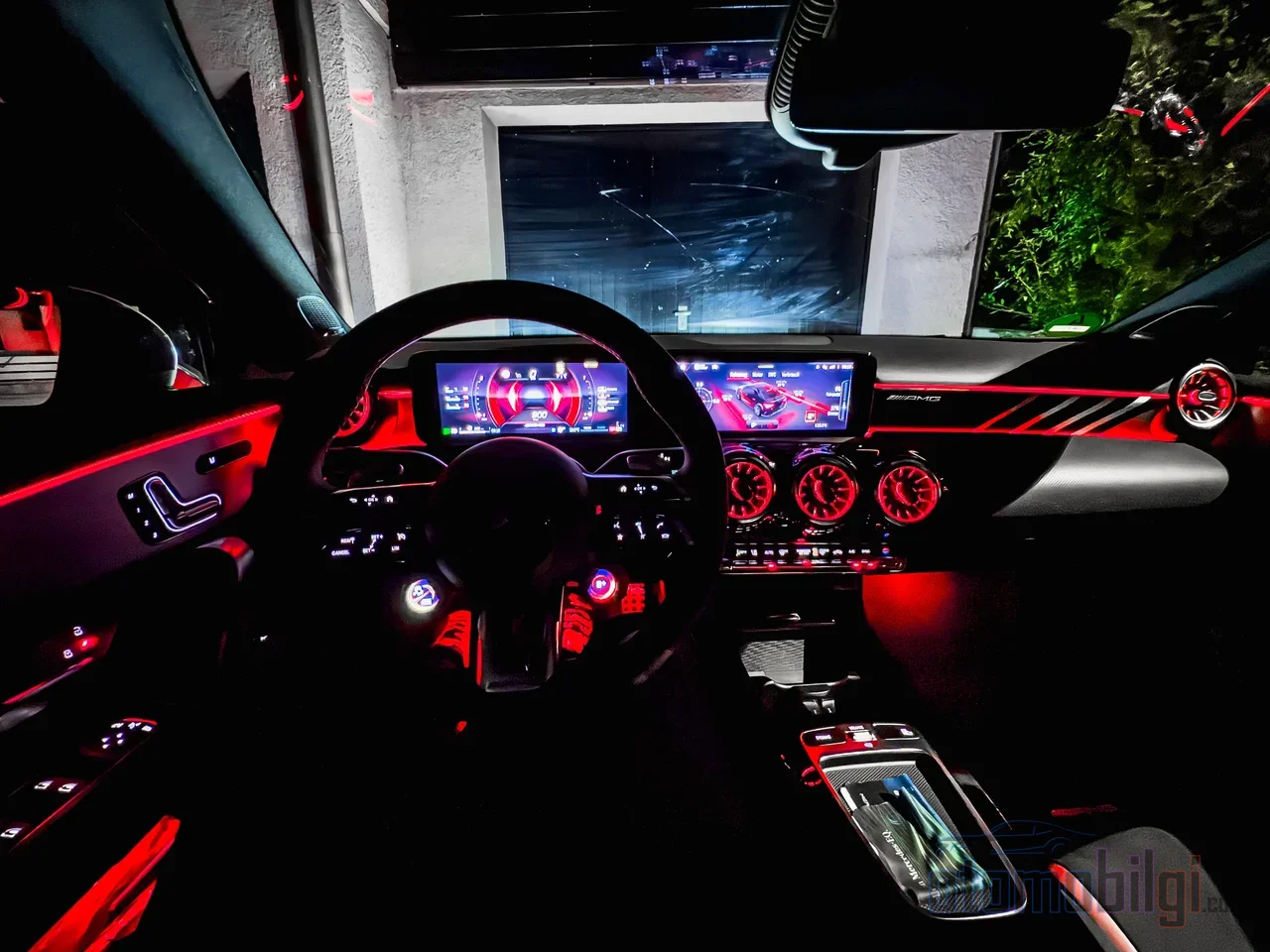
Have you ever gotten into your car at night and paid any attention to that dim orange or deep red glow of the dashboard? For many of us, ambient lighting is just a stylish detail, maybe even Instagram story material. But for engineers, the color of this light is not an aesthetic choice, it is a serious matter of physiology. Yes, you read that right: The color of the light illuminating the cabin genuinely affects how well you see at night. So why red, specifically? The answer to this question lies in our eyes' most hidden ability.
The Eye's Night Mode: Rod Cells and Adaptation to Darkness
Our retina has two types of photoreceptors, that is, light-detecting cells. The ones that work in bright light and allow us to see colors are called cone cells. The heroes of our black-and-white vision, which kick in in dim light, are the rod cells. Our night vision is entirely handled by these rod cells, and here is an incredible detail: Rods are far more sensitive than cones.
But these heroes have a weakness: They take a very long time to warm up. The eyes need roughly 20-30 minutes to fully adapt to darkness; rods only reach their maximum sensitivity at the end of this period. Cones adapt in about 10 minutes, but their sensitivity remains limited. During this adaptation, the eye physically enlarges the diameter of the pupil and prepares itself for darkness through photochemical changes in the retina. Let me offer an analogy: Rod cells are like a battery that keeps charging to full. When they encounter a bright light, however, the battery suddenly drains; the photopigments are instantly bleached, and refilling them takes time. In short, turning your eye, adapted to the darkness of night, toward a bright white light means erasing hours of work in seconds.
Highlights
- Full dark adaptation of the eye takes about 20-30 minutes.
- Rod cells, responsible for night vision, practically do not respond to red light.
- In aviation, red light is preferred in cockpit lighting to preserve night vision.
- In modern vehicles, ambient lighting is controlled by RGB LED arrays whose brightness is adjusted via PWM.
- Under test conditions, ambient lighting is recommended to be at or below 0.2 lux.
Why Doesn't Red Light Disrupt Night Vision?
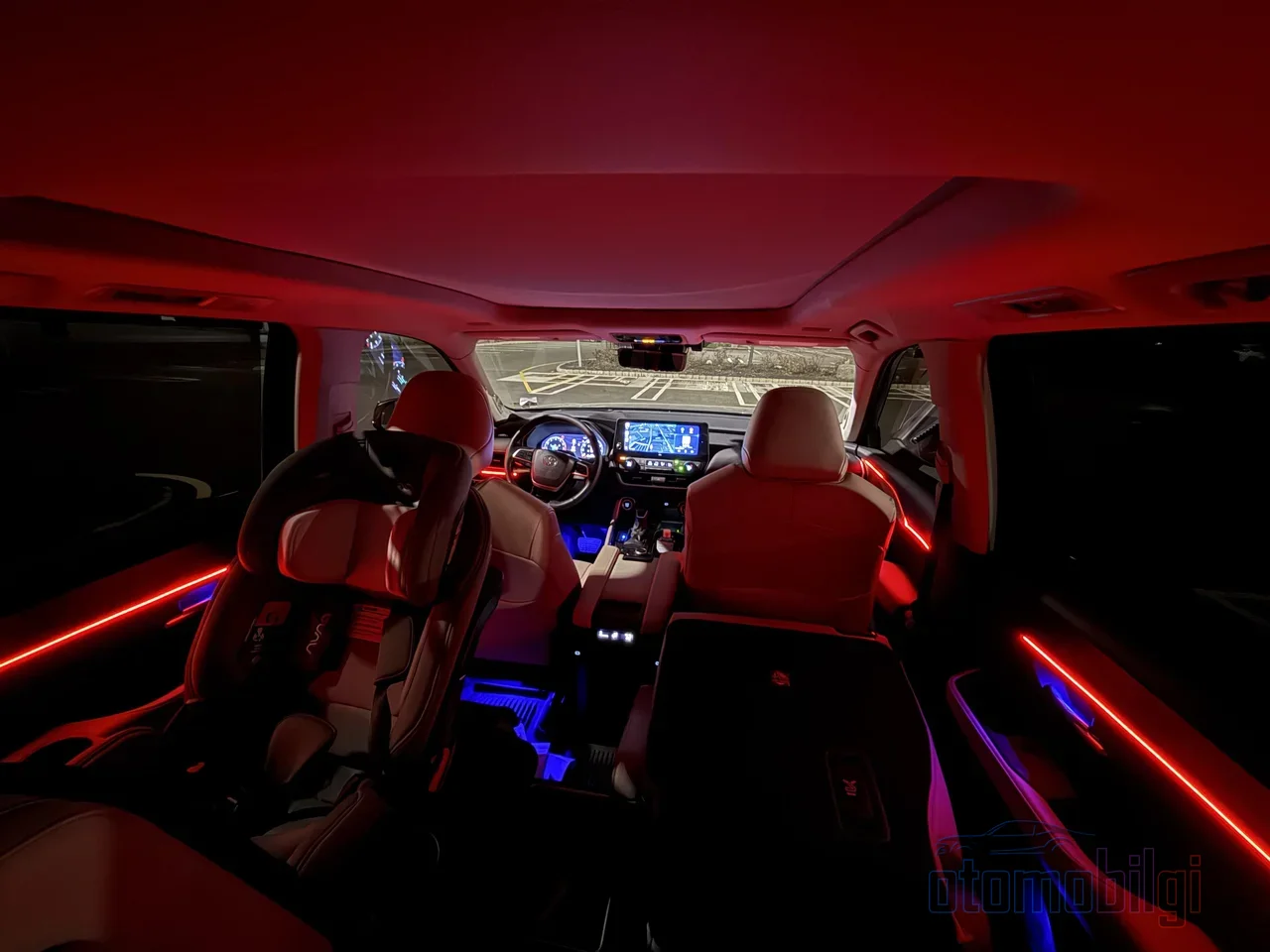
This is where the heart of the entire mechanism lies. Rod cells, the engine of our night vision, are insensitive to long wavelengths. Since red light sits exactly at the long-wavelength end, rods hardly respond to it at all. This is not a newly discovered fact: The foundational scientific study on the subject dates back to 1945 and has stood as established knowledge in the physiology literature ever since. It is also known that red light does not bleach rhodopsin, the pigment responsible for night vision; which is why astronomers and security organizations use red light for nighttime illumination.
What does this mean in practice? When the cabin is illuminated with a dim red light, the cone cells that detect red are working, so you can see the panel and buttons; but the rods, adapted to darkness, are barely disturbed at all. When you look outside the car, your eyes are still in night mode. If you did the same thing with white light, the rods would have to wait for minutes to readjust to the darkness under the effect of the stimulus. The aviation world absorbed this fact long ago: The FAA's official flight handbook explicitly states that glare-free red lighting does not impair night vision in the cabin. Pilots use red cockpit lighting both to read their instruments and to preserve their night vision so they can see outside. Military vehicles follow a similar logic; compared to white, red interior lighting is far less visible from a distance and reduces eye fatigue.
Is Red Always the Best? The Points Science Debates
Now let me be honest with you: It would not be accurate to say "red is the champion in every condition." This topic is debated even in astronomy and flashlight communities. The best-known objection is this: At very low light levels, seeing with red may require higher brightness compared to a lower level of white. In other words, in some situations, very dim white light can be a better option for preserving night vision.
A second debate concerns the rod-cone balance. Explanations based on the idea that red light reduces the red sensitivity of cone cells while keeping blue sensitivity and rods at full capacity cannot be considered valid in every condition. Some communities advocate that blue light should also be debated as an alternative. So red's dominance is not a universal law; we are talking about engineering preferences that vary according to light level, task, and conditions. But it is clear why the automotive world still favors red: It remains the color that strains the eyes of a driver adapted to darkness the least.
The Technology That Lights Up the Cabin: RGB LEDs and PWM Control
So how are all these colors produced in the vehicle? RGB LEDs are at the core of modern interior lighting. The brightness and color of each LED on the color strip can be controlled individually; this way, the lines of light running along the cabin can take on different tones. Research also uses RGBW LEDs, meaning four-piece sets with an added white diode.
The magic word for brightness control is PWM, or pulse-width modulation. The LED does not stay on continuously; it switches on and off thousands of times per second, and we adjust the perceived brightness by varying how long it stays on. Just like the moving image in a film, which is actually a rapid flow of still frames. And one of the beauties of it is that the driver never notices. The infrastructure that keeps this entire system running is LIN-based smart LED solutions; they simplify the interior lighting architecture, increase brightness, and improve color consistency. And the work is not done on the optics side either: The collection, transport, and distribution of the light produced by LEDs inside the cabin is controlled by special ambient lighting optics.
The Role of Light Color: Perceived Quality, Brand Identity, and Driver Perception
Let's step a bit away from the technical side and look at how the cabin feels. Ambient lighting, especially in the premium segment, has become a tool that shapes the driving experience and emotional perception. Brands signal cabin quality through their color choices; manufacturers in the economy segment also resort to the same path to raise perceived interior quality. In other words, you can guess what class a vehicle belongs to by looking not at its seats but at its lighting; and that would hardly be an exaggeration.
Light also has a function. Dim ambient lighting enhances spatial perception at night and makes the cabin feel more spacious. Some systems change color according to driving modes, making the state transitions in the cockpit visible; switching from a blue tone in Comfort mode to red in Sport mode is like a silent message telling the driver that the car's character has changed. Systems can also integrate with safety warnings such as blind spot or lane departure alerts.
But note, there is an interesting research finding here: With ambient light, drivers' performance was not significantly different from those without light in the first half. And ambient lighting alone is not enough to redirect the driver's attention unless accompanied by clearer meaning or behavioral alignment. So red light does not magically make the driver more attentive; its function is more about comfort and stimulus control.
Glare Control and Measurement Tolerances: How Many Lux Is Enough?
Cabin light can be a comfort, but it can also be a distraction. Fast animations, excessive brightness, or poorly prioritized color changes are a real risk for the night driver; market reports explicitly mention this as a constraint. For this reason, the effectiveness of every light source in vehicles is measured and verified with photometric tests. Displays and ambient lighting modules require photometric measurement in terms of safety, aesthetics, and usability.
On the standards side, there is an interesting figure: Under the Federal Motor Vehicle Safety Standards in the USA, a proposal includes the requirement that the ambient lighting recorded with photometers be 0.2 lux or below to minimize ambient light under certain test conditions. What we call 0.2 lux is close to faint moonlight, a level truly close to darkness; so even regulators want to leave the cabin in near-total darkness during night tests. The global framework is also shaped by FMVSS, SAE, UNECE, and ISO standards; ambient lighting also falls within the scope of these regulations. The brightness and limits approved by manufacturers, that is, the tolerances for controlling glare, are the product of this measurement culture.
The Engineering Rationale Behind Red Light: The Short Answer
Rod cells are responsible for night vision in eyes adapted to darkness, and these cells practically do not respond to red light. That is why illuminating the cabin with dim red light allows the driver to see the instrument panel while preserving night vision and long-lasting dark adaptation; and the preference extending from aviation to automotive rests on exactly this engineering logic.
So the next time you get in your car at night, as you look at that dark red light wrapping the cabin, remember this: What stands there is not just a stylish design detail, but a tribute written to the rod cells of your eye. Engineers chose the wavelength to protect eyes that had spent their minutes adapting to darkness. In my opinion, this is the quietest but smartest engineering decision inside a car. Which cabin color do you think is cooler? I think by now you know the answer too: The right color is the one that tires you the least.
Sources
- Dark Adaptation of the Human Eye and the Value of Red Flashlights - U.S. National Park Service
- Airplane Flying Handbook Chapter 11 - FAA
- Photoreceptors (Rods & Cones): Anatomy & Function - Cleveland Clinic
- Dark Adaptation Following Light Adaptation to Red and White Light - Hecht, JOSA 1945
- The Rods and Cones of the Human Eye - HyperPhysics, Georgia State University
- The Benefits of Red Interior Lighting for Night Missions - Venta Global
- Interior Automotive Lighting Control Redefined - LED professional
- How Automotive Lighting Solutions Are Impacting Modern Automobiles - Embitel
- Federal Motor Vehicle Safety Standards; Lamps, Reflective Devices - Federal Register, 12 Oct 2018
- Ambient Light Conveying Reliability Improves Drivers - Figalová, 2022, MDPI