Bugatti Tourbillon: V16 Hybrid Hypercar
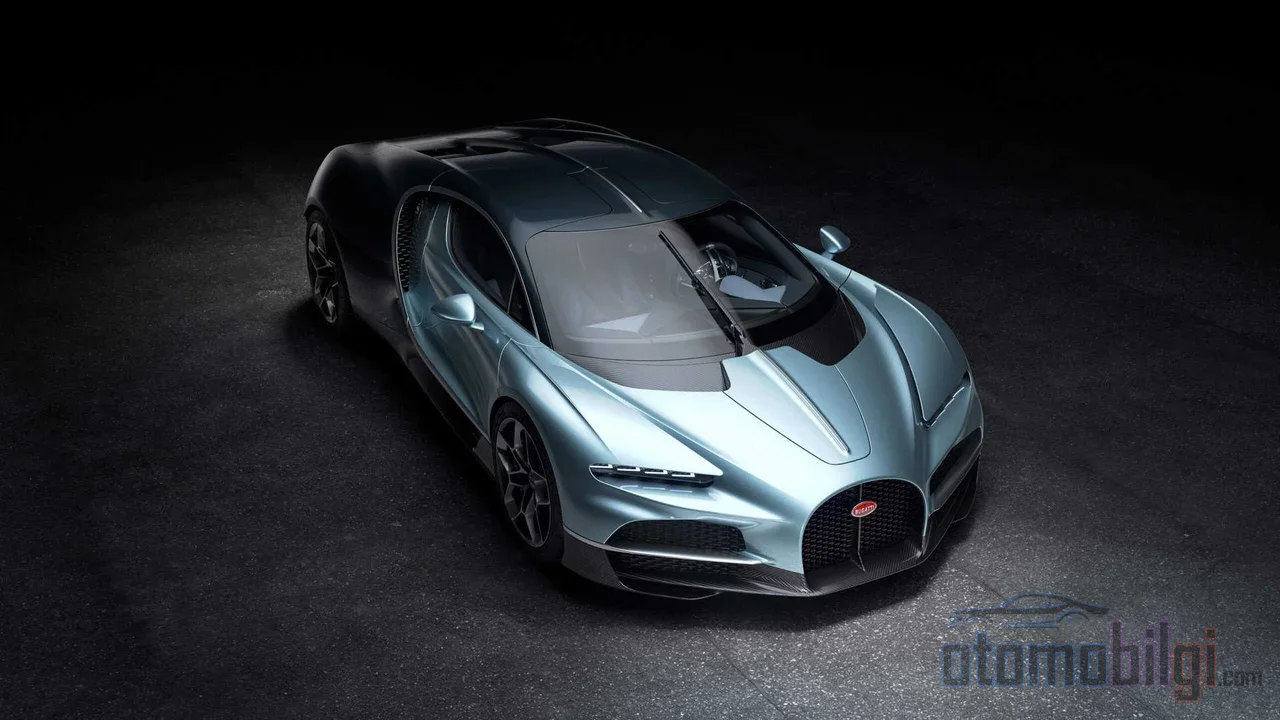
It is a rare engineering decision for a car replacing a hypercar to share no part whatsoever with its predecessor. Even when Bugatti moved from the Veyron to the Chiron, it largely preserved the fundamental architecture. With the Bugatti Tourbillon, however, everything was approached completely from scratch: a naturally aspirated V16 instead of four turbos, three electric motors alongside it, and an entirely new carbon platform beneath. The result is the brand's first series-production model of the Rimac era and, at the same time, the official successor to the Chiron.
This page covers the Tourbillon's power unit, performance targets, design philosophy, and production timeline along with its technical data. The real question to be asked is this: As Bugatti departs from the classic architecture of the twentieth century and shifts to a hybrid structure, what has it lost and what has it gained?
What Is the Tourbillon and Why Does It Replace the Chiron?
The Tourbillon is a mid-engine hybrid hypercar to be produced by Bugatti at its Molsheim workshop in France, and it is limited to 250 units. It takes its name from a watch complication dating back to the early 1900s: a tourbillon is a continuously rotating mechanism developed to counteract the effect of gravity on a mechanical watch. Given that Bugatti executes its super sports cars with watchmaking precision, the choice of name is not a coincidence but a deliberate message.
The most critical technical fact is this: The Tourbillon shares no parts with the Chiron. An entirely new architecture, a new monocoque, and a new power unit are used. The Chiron's W16 engine and quad-turbo system are replaced by a naturally aspirated V16 and hybrid electrification. This means a fundamental shift in the brand's roughly twenty-year power unit philosophy - and the architecture of this shift is detailed in the section below.
Highlights
- 1,800 hp total power: 1,000 hp internal combustion + 800 hp electric
- Naturally aspirated V16 engine with 8.3-liter displacement and three electric motors
- 0-100 km/h in 2 seconds; top speed of 445 km/h with the Speed Key
- Limited to 250 units; net starting price of EUR 3.8 million
- Production begins in 2026, and the delivery schedule is fully booked through 2029
How Does the V16 Hybrid Power Unit Work?
At the heart of the Tourbillon sits a naturally aspirated V16 engine with a displacement of 8,355 cc. On its own, this engine produces 1,000 hp and reaches its rev limiter at 9,000 RPM. The naturally aspirated choice is noteworthy: The Chiron's W16 drew its power through four turbos, while the Tourbillon reaches the same point without turbo lag, with mechanical simplicity. Its high-revving character is also the typical signature of classic naturally aspirated engines.
The electric side: three motors and an 800V architecture
On top of the internal combustion engine, three electric motors totaling 800 hp are added: two on the e-axle at the front, one at the rear. This layout enables full torque vectoring; that is, independent and instantaneous torque distribution to each front wheel is possible. Total system output reaches 1,800 hp. Electric motors can rev up to 24,000 RPM - quite a high figure for series-production electric motors.
Energy is stored in a battery with a 25 kWh capacity; it runs on an 800V architecture and is oil-cooled. In pure electric mode, the range is over 60 km. This range is a claim of daily usability for a hypercar: it is possible to leave the factory gate and cover short city distances quietly and without emitting smoke.
For the first time in Bugatti's history, the hybrid system does not impose a weight penalty on performance. Despite the electric motors and battery, the Tourbillon is lighter than the Chiron. We cover how they achieved this in a separate section.
Performance Targets: Tourbillon vs Chiron
When the figures are placed side by side, the Tourbillon's scope becomes clear. The Chiron was revolutionary for its era; the Tourbillon, while maintaining the same torque figure, moves distinctly forward in terms of speed and acceleration.
| Specification | Bugatti Tourbillon | Bugatti Chiron |
|---|---|---|
| Total power | 1,800 hp | 1,500 hp |
| Torque | 1,600 Nm | 1,600 Nm |
| Top speed | 445 km/h (276 mph) | 420 km/h (236 mph) |
| 0-100 km/h | 2.0 s | under 2.4 s |
| Power unit | Naturally aspirated V16 + hybrid | W16, four turbos |
The top speed applies over the course of four kilometers in the mode unlocked with the Speed Key; this is a continuation of the locking mechanism introduced with the Chiron. A small note should be made about the acceleration figures: at the initial reveal, the system output was given as 1,775 hp in some channels; this difference most likely stems from measurement and the way it was stated (the scope difference between brake horsepower and PS), and in practice the model's official figure is 1,800 hp. On the torque side, the equality of the two models offers an interesting engineering lesson: the instant torque delivery of the electric motors guarantees low-end fullness without changing the character of the internal combustion side.
How Was Weight Brought Under Control?
The greatest enemy of a hybrid hypercar is weight; batteries and electric motors do not come free of charge. The Tourbillon's engineering team's answer has three layers:
- A new-generation T800 carbon composite monocoque was used, and the battery was integrated into the platform as a structural element - meaning its weight is not a penalty but a contribution to rigidity and torsional resistance.
- Parts such as suspension arms were produced hollow using 3D printing technology; this approach achieved a 45% weight reduction in the components in question.
- The naturally aspirated architecture of the power unit eliminated the extensive piping, intercoolers, and supporting parts belonging to the four-turbo system.
A detail summarizing CTO Emilio Scervo's approach: the rear wing is a 3D-printed hollow structure produced with AI-assisted design methods. A single part serves both aerodynamic and dynamic functions - the boundary between form and function being deliberately thinned by design.
Design Language: Form Follows Performance and the Management Change
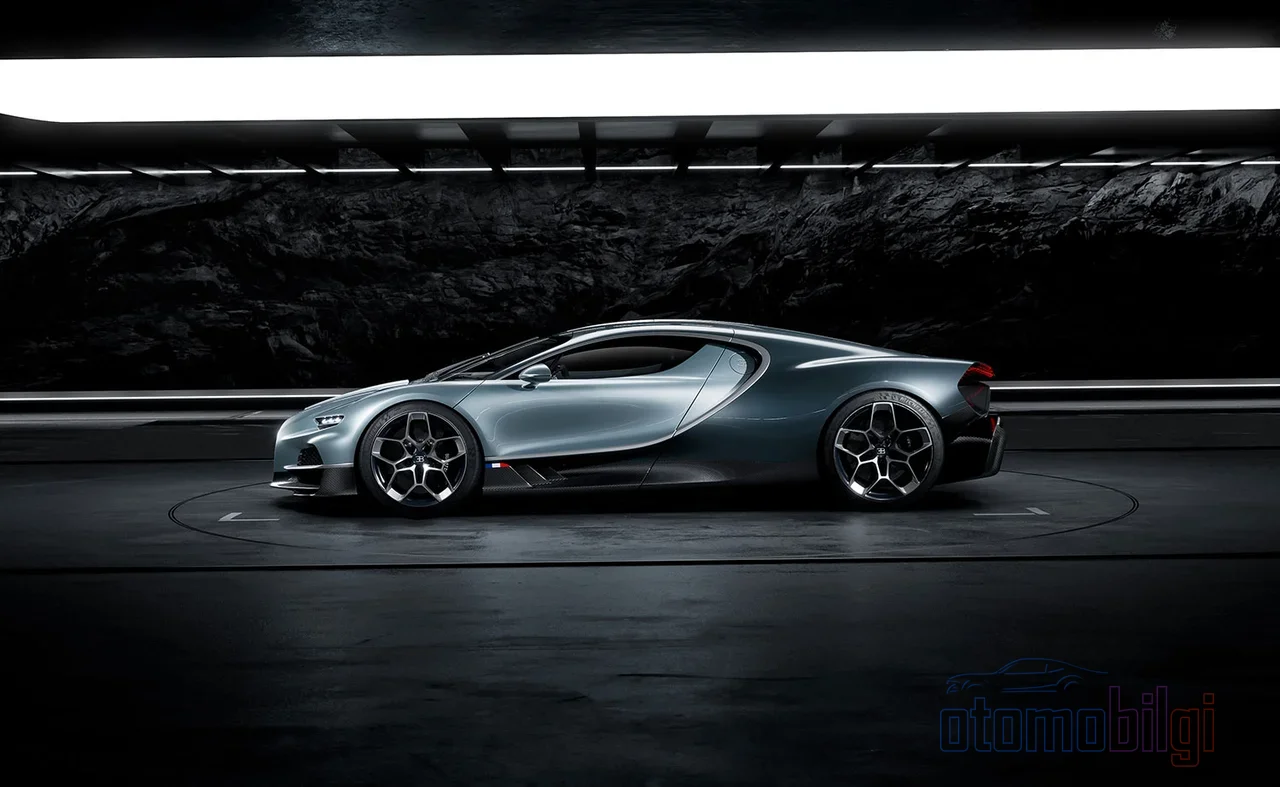
The Tourbillon's design philosophy is summed up with the tagline Form Follows Performance: technical requirements and aesthetics are developed together, around the same table. This vision matured during the tenure of Achim Anscheidt, who led the Design Directorate from 2004 to 2023. After completing the design of the Chiron's successor, Anscheidt handed over the role in 2023 to Frank Heyl, who had long served as his deputy.
Heyl's Bugatti pedigree runs deep: He joined in 2008 as an exterior design designer, became Head of Exterior Design in 2014 and Deputy Design Director in 2019; he took part in the Veyron Super Sport, Vision Gran Turismo, Chiron and Divo projects and is a graduate of the Royal College of Art. In other words, the Tourbillon is not the work of a name that arrived at the studio from the outside, but of someone who carries the brand's design DNA within. The elements of this DNA are also familiar: the horseshoe grille, the two-tone duotone split, the Bugatti Line that traces the side profile from end to end, and the centerline.
Interior: an analog rebellion
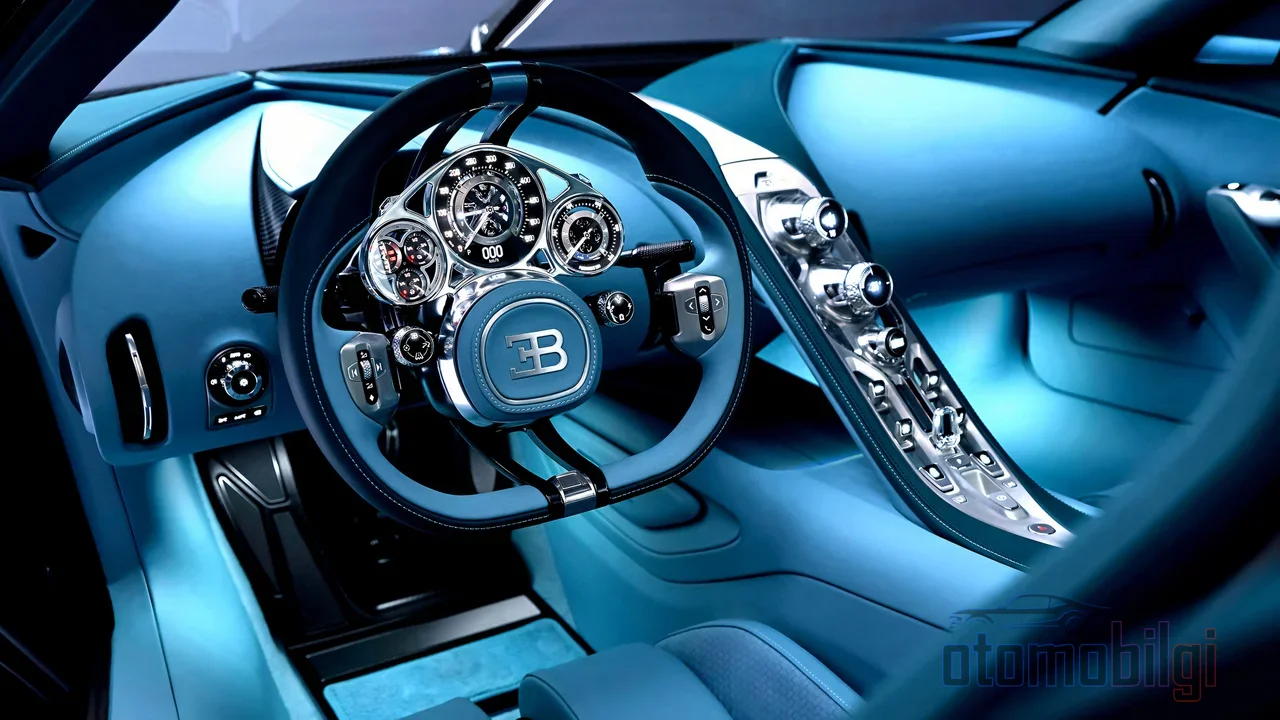
The cabin has made a choice that runs counter to the era: instead of a digital screen extravaganza, analog gauges take center stage. This choice is consistent with the name taken from a watch complication - in the light of mechanical watchmaking, the Tourbillon's interior offers a touchable and rotatable surface. The practical side is not neglected: luggage capacity has been increased compared to the previous model, and a bespoke luggage set is offered for the car. While a luggage compartment detail may seem like an exaggeration in a hypercar, it is a detail that could prove decisive in the daily-use scenarios of each of the 250 owners.
Engineering in the Rimac Era: Who Contributes What?
The Tourbillon is the first all-new model of the Bugatti Rimac era. CEO Mate Rimac positions the model as proof that preserving heritage and pursuing innovation can go hand in hand, and shares the development process publicly, including test footage and the sound of the V16 engine. On the technical side, the signature of Rimac Technology is clear: the hybrid system, meaning the battery, electric motors and power electronics, is supplied by Rimac Technology. This is a collaboration model in which the engineering expertise in Zagreb meets the handcrafted production tradition in Molsheim.
The development geography also reflects this structure: the design and engineering facilities in Berlin work under Jan Schmid, while those in Zagreb are led by Ignacio Martinez. Prototypes were being tested on the roads in 2024, and customer deliveries were planned for 2026. Thus, the model's development line does not originate from a single center; it is carried out in parallel across the triangle of Germany, Croatia and France.
Price, Production and Delivery: Who Can Buy It, and When?
The Tourbillon's net starting price is 3.8 million EUR; this figure is projected to be approximately 4.6 million USD in the US market. The small differences in quoted prices stem from currency conversion and the net/gross distinction - given the magnitude of the figure, this distinction is actually of secondary importance. The most striking figure lies in the options: hardware options alone can exceed USD 960,000. That means a customer can spend roughly one fifth of the base car's price on extras.
Production is limited to 250 units and nearly all of them have already been sold; the production line starts operating in 2026, and the delivery schedule is filled up to 2029. Assembly is carried out by hand at the Bugatti Atelier in Molsheim. As of late 2026, the model has made no official new announcement regarding the start of deliveries; the first phase of the schedule is expected to proceed as planned. For a new buyer, the practical answer is simple: buying this car through ordinary channels is no longer possible, and the second-hand market has in fact begun to form even before production is completed.
Assessment: What Changed After the Chiron?
Three concrete changes can be counted in the Tourbillon compared to the Chiron. First, an architectural change in the power unit: a naturally aspirated V16 instead of the supercharged W16, plus hybrid electrification - a choice that directly affects the sound character, throttle response and rev range. Second, the performance leap: top speed rises to 445 km/h, the 0-100 km/h time drops to 2 seconds, and all of this comes with a lighter body despite the hybrid system. Third, structural: a completely clean architecture sharing no parts lays the foundation that will carry Bugatti through the coming decades.
The transition from the turbo era to atmospheric electrification is not an ordinary power unit update; it is the way the hypercar concept is carried into the 2030s. The Bugatti Tourbillon, with its 8.3-liter naturally aspirated V16 and three electric motors, is a car that aims to combine the emotional value of the internal combustion engine with the efficiency of the electric era, limited to 250 owners with a production schedule filled up to 2029 - in other words, the first page of Bugatti's new chapter.
Sources
- Bugatti Tourbillon - Wikipedia
- Bugatti Tourbillon - Bugatti official website
- An era ends: Achim Anscheidt passes the baton at Bugatti - Bugatti Newsroom
- This is it: the brand new, 1,775bhp, V16-engined Bugatti Tourbillon - Top Gear
- Bugatti Tourbillon (2026) specs - NetCarShow
- 2026 Bugatti Tourbillon: What We Know So Far - Car and Driver
- Bugatti's Tourbillon: A New Benchmark in Hypercar Luxury - Luxfanzine
- Rimac Technology powers the Bugatti Tourbillon - ElectricMotorNews
- Designing a Bugatti - Motor1 (Frank Heyl interview)
- Bugatti Tourbillon vs. Chiron - Woodside Credit