Chery Is Holding Firm: Chinese Brands Are Retreating in Türkiye
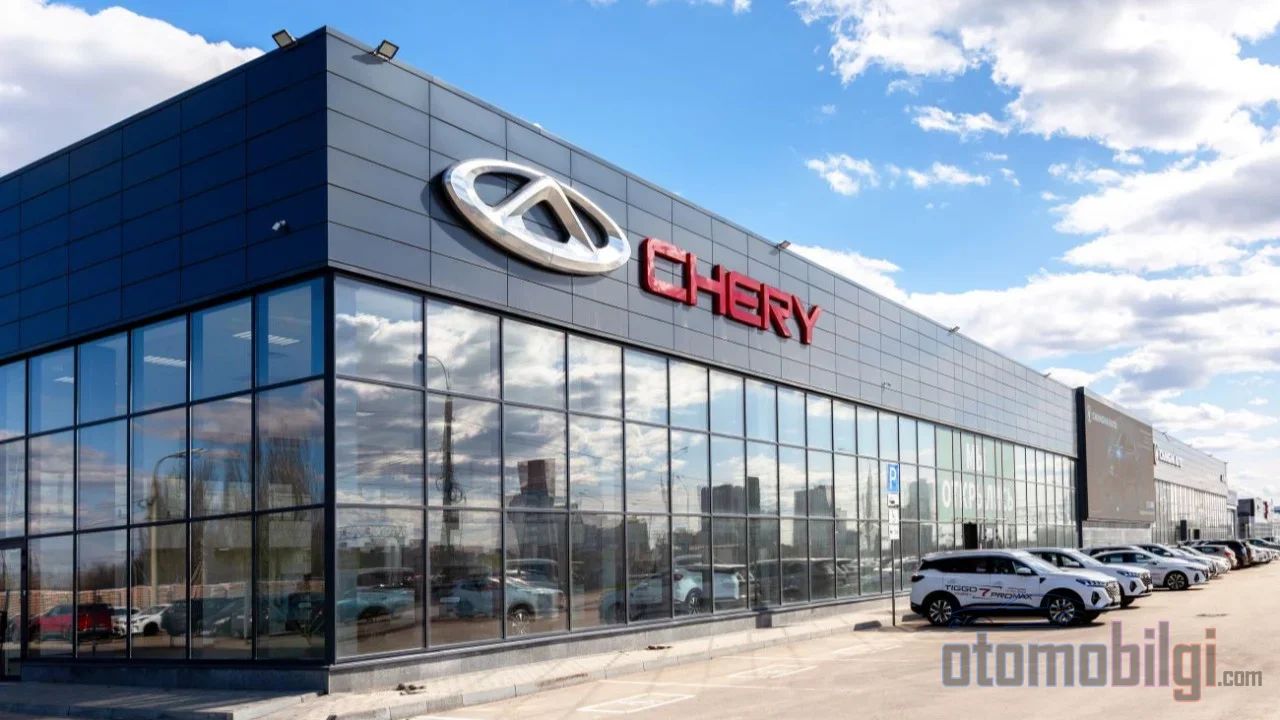
The 13.39 percent contraction in the first nine months of Turkiye's car market did not affect everyone equally. While the overall market struggled, the situation of Chinese-origin brands is even more striking: In the first half of 2026, Chinese brands' sales fell 39.6 percent to 28,602 units, and their market share dropped from 7.8 percent to 5.1 percent. However, there is one exception within this picture. The Chery group maintained its leadership among Chinese brands by a wide margin, with the Chery brand alone selling 12,690 units and reaching a volume of 19,313 units together with OMODA & JAECOO. How did one of the brands hitting the same tax wall collapse while the other managed to stay standing?
The Decline of Chinese Brands in Turkiye in Numbers
ODMD data shows that Turkiye's passenger car and light commercial vehicle market contracted by 8.19 percent in the first half of 2026. This contraction accelerated as the year progressed: Between January and September the market shrank 13.39 percent, with annual contractions of 25 percent in July and 24.33 percent in September. In October the shrinkage rose to 30.84 percent; the postponement of purchases due to the funding crisis and the effect of second-hand sales were decisive in this sharp drop.
Chinese brands suffered losses far beyond this environment. The most striking decline in the first half came from BYD: The brand, which sold 25,501 units in the same period of 2025, fell to just 6,809 units in the first half of 2026. That is a decline of 73.3 percent. In June 2026, BYD's sales in Turkiye dropped to only 83 units. The brand-by-brand picture for the first half took shape as follows:
| Brand | 2026 January-June Sales |
|---|---|
| Chery | 12,690 units |
| BYD | 6,809 units |
| OMODA & JAECOO | 6,623 units |
| MG | 1,412 units |
| Foton (commercial) | 1,026 units |
| Tenax (commercial) | 458 units |
| Hongqi | 13 units |
The losses were not evenly distributed among the brands. The Chery group closed the first half with 19,313 units, slightly above the previous year's total of 19,026 units. So the headline "Chinese brands are declining" is correct, but almost the entire decline was carried by brands with an electric-focused product lineup.
Highlights
- Chinese brands' sales in Turkiye fell 39.6 percent to 28,602 units in the first half of 2026.
- BYD suffered a 73.3 percent loss in the first half; its sales dropped to 83 units in June.
- The Chery group (Chery + OMODA & JAECOO) remained the leader among Chinese brands with 19,313 units.
- Chery's October campaigns offer 6-month 0 percent interest credit up to 600,000 TL.
- The overall market shrank 13.39 percent from January to September.
The Structural Reasons Behind the Decline
Additional Customs Duty and the Electric Vehicle Communique
Two regulations stand out in determining Chinese brands' position in Turkiye. The first is the additional customs duty applied to Chinese-origin vehicles. With the latest regulation, the standard duty was applied to origins outside the EU and free trade agreement countries; while internal combustion, diesel and hybrid vehicles face an additional burden of over 10 percent, this burden is applied at an even higher level for electric and plug-in hybrids.
Second, the communiqué that effectively locks electric vehicle imports. Importing electric and plug-in hybrid vehicles from countries outside the EU and FTA has become nearly impossible due to requirements such as the service network obligation. Chinese brands other than BYD, which received investment incentives, cannot easily bring their electric models to Turkiye. This means a direct loss of sales for brands with an electric-heavy product structure.
Credit Conditions and Market Withdrawals
The picture is also harsh on the demand side. Individual auto loans fell to 43.2 million TL as of June 2026; nominally 54.87 percent below the 95,943 million TL peak of 2023. The fact that the usable loan amount remains around 2 million TL, combined with average new car prices being at similar levels, has made purchasing on installments considerably harder. High interest, tax burden and uncertainty dragged luxury segment sales down 30 percent in the first months.
Meanwhile, the ranks have thinned: In 2025, Hozon Meta, Lynk & Co and Seres withdrew from the Turkish market; in 2026, the DFSK process began. For someone who has been watching this market for thirty years, this picture is familiar: every contraction period filters out the brands that entered with temporary solutions and leaves behind those with solid cost and product planning.
Why Did BYD Fall So Much?
BYD's decline lies at the intersection of its product structure and regulations. It is building a factory in Manisa worth about 1 billion dollars with an annual capacity of 150,000 vehicles; production is expected to start at the end of 2026. During this transition period covered by investment incentives, the brand lost its import momentum, the number of models in Turkiye fell from 8 to 4, and the entry segment emptied out. In other words, BYD's decline should be read not so much as a demand problem but as a strategic pause before the transition to local production. On the global side, while the company's third-quarter net profit rose 28 percent annually, the 4.5 percent decline in sales in the domestic Chinese market between January and September confirms the central importance of exports.
The Three Pillars of Chery's Resilience
Product Structure: Gasoline Turbo SUVs
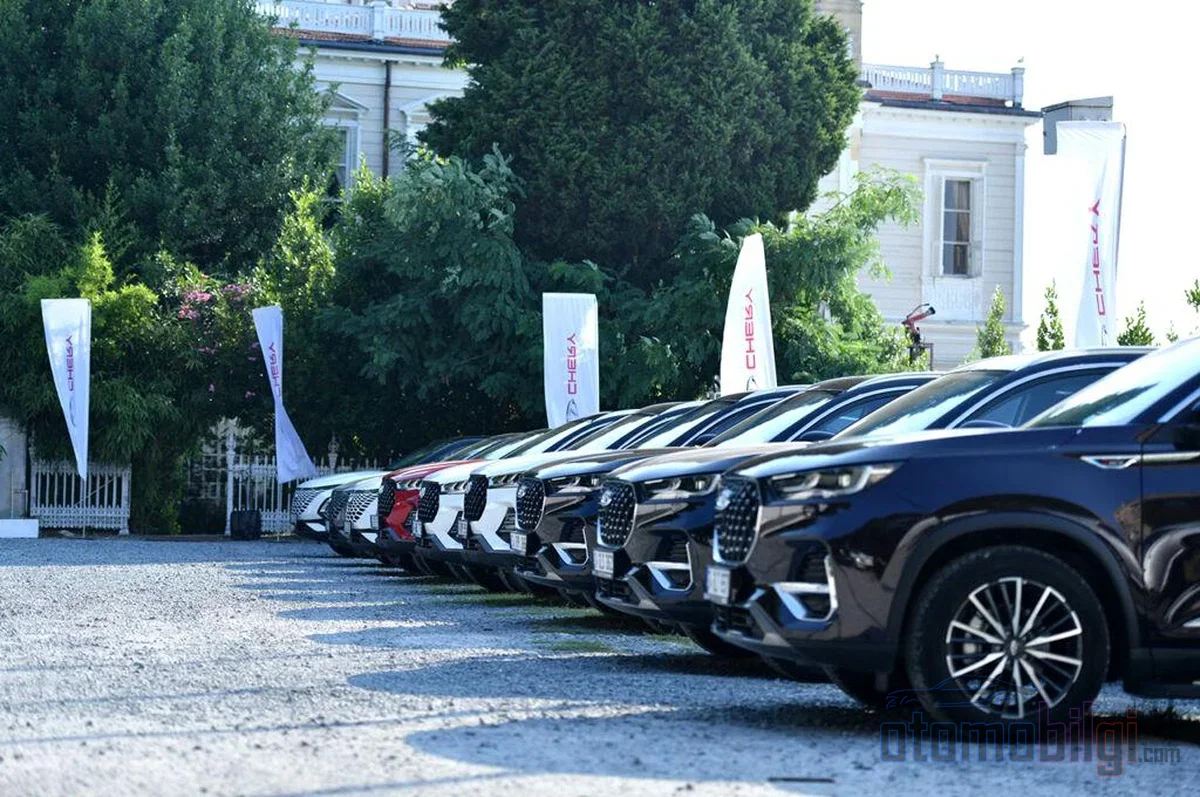
Most of Chery and Jaecoo's sales in Turkiye come from internal combustion, gasoline turbo-engined SUVs. This product structure is far less affected by the import restrictions that electric-heavy brands face. The fewer electric Chinese models there are in the market, the stronger the relative position of the Chinese brand selling gasoline turbo SUVs becomes.
Tax Optimization: Engines Under 1,600 cc
The second pillar is the deliberate keeping of engine displacements low. For example, the Jaecoo J7's 1,598 cc engine falls into the SCT bracket below 1,600 cc. This alignment with the cc-based brackets of the Turkish tax system turns directly into an advantage in the list price. According to the approximate price table compiled by Araclo, the Omoda 5 starts at around 1,800,000 TL, the Tiggo 7 is in the 2,000,000-2,100,000 TL band, the Jaecoo 7 starts at around 2,150,000 TL, and the Tiggo 8 Pro sells from around 2,200,000 TL. For comparison, the MG HS starts at around 2,380,000 TL.
Financing and Campaign Moves
The third pillar is aggressive financing support during a period when credit conditions tightened. In Chery's October 2026 campaigns, the TIGGO 8 offers commercial customers a cash discount of up to 200,000 TL and 0% interest loans for six months on 600,000 TL. On the TIGGO 7 Prestige 4x2, there is support of around 400,000 TL. In dealer price lists, while the TIGGO 8 Prestige 1.6 TGDI list price is 2,930,000 TL, it drops to 2,730,000 TL with the campaign; the TIGGO 7 Comfort 4x2 starts from 2,264,400 TL. In a market where credit availability is squeezed within the 2 million TL band, such supports become decisive at the moment of purchase.
Between Global Records and Local Squeeze
When evaluating Chery's performance in Turkiye, the global picture also needs to be seen. In the first half of 2026, the group recorded its highest first half in history with 1,357,533 vehicle sales; in the first nine months, it reached 2,206,789 units. First half exports increased by 71.5% to 943,817 units; in September, a Chinese manufacturer export record was broken with 207,814 units. In Europe, sales increased by 193% in the first 8 months; in August, it rose to the top of the brand rankings in the United Kingdom with 8,618 units.
It is also a fact that this global momentum has not fully reflected on Turkiye. Turkiye remains a marginal market in Chery's global scale; however, the group is also connected here to the market it entered in 2023 with the TIGGO 8 PRO and TIGGO 7 PRO, through 54 authorized dealers across 7 regions. As for the OMODA & JAECOO side, the Turkiye total reached 31,902 units as of the end of July 2026; of this, 30,470 units are the OMODA 5.
The Place of the Chinese in the Overall Market Rankings
In Turkiye's first nine-month brand rankings, Renault leads with 102,818 units; Volkswagen with 66,112 and Fiat with 65,875 units follow it. The total of Chinese brands, which fell to 5%, appears as a small player in this picture. The balance can change when domestic production comes into play: With BYD's Manisa plant starting production at the end of 2026, Chinese brands being freed from the additional customs tax burden and regaining their price advantage is the most concrete scenario for market share to rise again. There are also statements regarding production feasibility in Turkiye from Chery and MG.
Conclusion: How Did Chery Stay Afloat?
The short answer is this: Chery positioned itself entirely outside the areas where Turkiye imposed restrictions. Its gasoline turbo SUV product structure did not get caught in electric import restrictions, its engine displacements under 1,600 cc slipped below the SCT tax brackets, and during a period when credit dried up, it kept demand alive with zero-interest financing. There are aspects to criticize as well: this strategy depends on the current state of the regulations, and the question of second-hand value and the service network is still on the buyer's agenda. However, preserving a group volume of 19,313 units in a year when the market shrank by 13% and the Chinese lost 40% overall is no coincidence. The determining question in the coming period will be how long this resilience can last with an import-based model and which brand local production will carry to the next advantage.
Sources
- What Is the State of Chinese Car Brands in Türkiye? First Half 2026 Analysis
- ODMD Press Release - September 2026
- Global Growth and Record Exports 2026 - Chery Türkiye
- Chery Group September 2026 Sales Results
- Second Year in Türkiye and 50 Thousand Sales Milestone - OMODA & JAECOO
- Chery Price List October 2026
- Chinese Brands Losing Momentum in Türkiye: BYD Down to 4 Models
- Top 10 Best-Selling Brands in Türkiye in the First 9 Months of 2026
- The Chinese Downshifted: Sales Fell, Market Share Dropped to 5 Percent
- Fund Crisis Spills Over into the Automotive Market: October Sales Fell 30.84 Percent