Consumer Rights and Right of Withdrawal for Defective Second-Hand Vehicles

Share This Page
The signature happens at the notary, the keys are handed over, you get in the car. Then one morning a service invoice or the sound of the compressor begins to tell the real story of the purchase. And this is exactly the least-discussed section in the pages that explain the buying process: what happens if a hidden defect emerges after the vehicle has been delivered? The answer to this question is clearer than most people think, but narrower than what they see. Rights do exist; only, they do not extend equally to everyone, in every channel, and at all times.
What Is a Defective Vehicle and What Is Its Legal Basis?
In the language of the law, a defect means that the thing sold lacks the qualities the seller stated, or has shortcomings that reduce, or even eliminate, its value and the benefits expected under the contract. With a simple example: a vehicle with a rolled-back odometer, a hidden damage record, or a gearbox that fails three weeks after delivery is considered defective. The key point is that the defect must be hidden; that is, it could not be detected through an ordinary inspection at the time of purchase. The seller is not liable for defects the buyer knew about at the moment of sale.
There are two main legal bases for a second-hand vehicle. The first is the defect provisions of the Turkish Code of Obligations No. 6098, and the second is the Law on the Protection of Consumers No. 6502. Which one comes to the fore depends on whether the sale qualifies as a consumer transaction. For a vehicle bought from a dealership or a commercial seller, the Consumer Protection Law applies; for a vehicle bought from a private individual, the protection remains largely limited to the defect provisions of the Code of Obligations. For dealerships, the Regulation on the Trade of Second-Hand Motor Vehicles also comes into play, and this regulation makes it mandatory to provide a 3-month / 5,000 km warranty on the vehicles they sell.
The Consumer's Four Optional Rights for a Defective Vehicle
When the vehicle is found to be defective, the consumer may exercise one of four claims, the choice belonging entirely to them, and the seller is obliged to fulfill the chosen claim:
- Declaring readiness to return the vehicle and requesting rescission of the contract, that is, a refund of the price with interest,
- Keeping the vehicle and requesting a reduction in the sale price in proportion to the defect,
- Requesting free repair, provided it does not require excessive expense and all costs are borne by the seller,
- Replacing the vehicle with a defect-free equivalent, if possible.
Who holds the optional right is the real issue here. There is no rule in business practice that a refund or replacement cannot be requested just because the vehicle has been to the service twice; the law leaves this choice to the consumer. The rights to free repair and replacement with a defect-free equivalent can also be exercised against the manufacturer and the importer. A buyer who rescinds the contract may claim the sale price with interest, the costs of legal proceedings, and the expenses incurred on the vehicle.
Highlights
- Defects that emerge within 6 months of delivery are presumed to have existed on the delivery date; the burden of proof lies with the seller.
- The general limit for optional rights is 2 years from delivery; this period does not apply if the seller concealed the defect with gross fault.
- Every second-hand vehicle purchase has no valid 14-day unconditional return right; 14 days applies only to distance sales.
- Dealers are required by regulation to provide a 3-month / 5,000 km warranty on the vehicles they sell.
- A Consumer Arbitration Committee application is free of charge, and a timely application interrupts the statute of limitations.
How Soon Must a Defect Be Reported? Time Limits and Burden of Proof
The six-month defect presumption
This is the strongest tool in consumer law in this area: defects that appear within six months of the delivery date are presumed to have existed on that date. A seller who claims the vehicle was defect-free at the time of delivery must prove this themselves. In other words, an engine failure appearing two months after delivery is, as a rule, charged to the seller's account. For hidden defects beyond six months, there is no special provision and the defect provisions of the Code of Obligations apply.
The two-year general limit and the gross negligence exception
The general period within which optional rights such as a refund or replacement can be exercised is two years from delivery. In lawsuits arising from defects, the statute of limitations is also counted as two years from the date the defect was discovered. However, if the seller concealed the defect with gross negligence, the two-year period does not run; in that case, the period may be extended against the seller. It should also be remembered that when a defect is discovered long after the sale, the seller can no longer be held liable unless there was fraudulent concealment or gross negligence.
How Should Notification Be Made?
The buyer is obliged to inspect the vehicle as soon as possible and, if a defect is found, to notify the seller within a reasonable time. Delaying the notification means being deemed to have accepted the vehicle together with its defects; hidden defects must be reported as soon as they are discovered. The law does not require any particular form of notification, but there is a simple piece of advice born of thirty years of experience: do it in writing. A corporate email, a registered letter with return receipt, or a notarized notice of default is the strongest backbone of proof if the matter later goes to court. After the notification, an independent inspection report forms the second pillar of the case file.
Is There a 14-Day Right of Withdrawal for Second-Hand Vehicles?
This is one of the most common misconceptions. The right of withdrawal is a right granted to consumers in distance contracts, meaning purchases made over the internet or through remote sales: the contract can be rescinded within 14 days without giving a reason and without paying a penalty. The seller, in turn, takes back the purchased item within ten days from the date of refunding the price. However, a contract signed at a dealership visited in person, or in an individual sale, is not covered by this protection. In other words, there is no general unconditional return right for second-hand vehicle purchases; the route to return goes through the defect provisions and relies on proving a defect. The right of withdrawal only comes into play if the sale was made remotely.
How Do Rights Differ Depending on the Sales Channel?
Where the car was purchased determines the cards in your hand. A vehicle bought from a dealer constitutes a consumer transaction, and the full protection of the Consumer Protection Law comes into play; the warranty mandated by the regulation is a bonus. In a commission sale, the dealership bears responsibility equivalent to the seller's. In a private purchase, the picture is more modest: there is no full statutory protection; the basis is the defect provisions of the Code of Obligations and the available means of proof.
| Sales Channel | Applicable Regime | Additional Protection |
|---|---|---|
| Dealership / commercial seller | CPCL + COL | 3-month / 5,000 km legal warranty, mandatory inspection report |
| Authorized dealer | CPCL | Manufacturer/importer liability, minimum 2-year warranty |
| Private seller | COL defect provisions | Protection is limited; notification and proof are decisive |
If there is a hidden defect originating from production, the chain of liability can extend to the manufacturer, the importer, and the first seller. As a rule, the warranty period also starts running from delivery and is at least two years.
Inspection Report, Notary Statement and Tramer: What Removes the Seller's Liability?
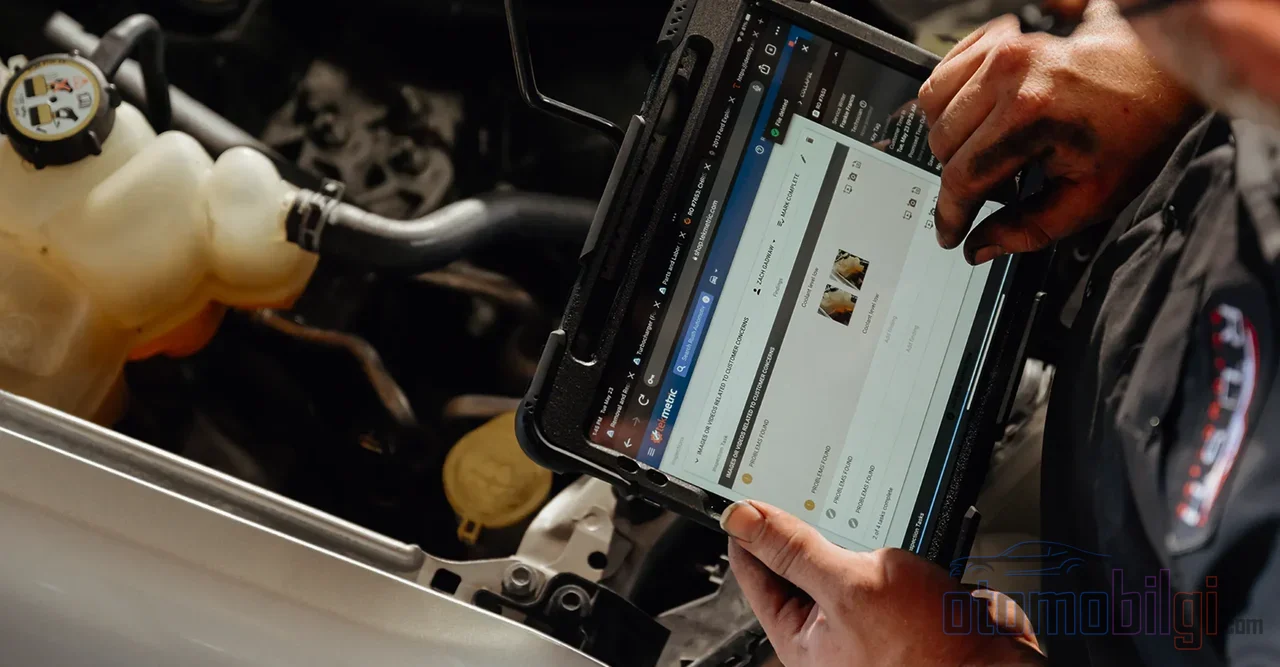
Sellers have three favorite sentences: there's a report, you signed it, the record was in Tramer. Here is their real legal meaning. The seller is not held liable for defects stated in the inspection report; liability continues for issues not included in the report. If a faulty or fraudulent report comes into question, the inspector's own legal liability is also debatable. The fact that an inspection was carried out does not mean every fault that emerges after the sale falls on the buyer; the report is not an insurance that eliminates the seller's liability of every kind.
General statements in the notarial contract such as "I inspected the vehicle and accept it as is" do not erase the seller's liability either. However, defects specifically listed one by one in the contract remove liability with respect to those defects. For damages visible in the Tramer record, defect provisions cannot be invoked; conversely, if a damage was repaired without ever being reflected in Tramer and not disclosed to the buyer, it is a defect. The seller must also prove the defense that the buyer knew of the defect in advance; the fact that the vehicle was sold below its market value does not mean the buyer knew of the defect. Nor does the seller's ignorance of the defect eliminate their liability.
Consumer Arbitration Committee or Consumer Court?
If the dispute cannot be resolved, the path is like an inn with two doors. Applying to the Consumer Arbitration Committee is free of charge, and a timely application interrupts the statute of limitations; its decisions are binding and enforceable. If the vehicle's value is below the committee limit, which is redetermined every year, you go directly to the committee without filing a lawsuit; if it is above the limit, you apply to the consumer court. Since the limit amount changes from year to year, confirming the current amount before applying is essential. In disputes under the CPCL, the competent court is the consumer court; in defect lawsuits based on the Code of Obligations, the court of general jurisdiction and the defendant's place of residence are competent. If the committee's decision is unsatisfactory or the seller does not implement it, the court route is also open. Patience is required too: Lawsuits for the return of a defective vehicle can take between 2 and 4 years depending on expert assessments. Selling the vehicle to someone else while the case is ongoing is not an obstacle; if the vehicle is sold below its value, the difference can also be claimed.
The proportionality limit of the courts
There is a notable balance in Court of Cassation case law: if the defect can be remedied for a very small amount, demanding the complete return of the vehicle may be considered an abuse of rights. If returning the vehicle for a minor fault causes disproportionate difficulty for the seller, the court may order repair or a price reduction instead. The closer the defect gets to the sale price, the stronger the buyer's position becomes; in that case, only claims for rescission of the contract or replacement with a defect-free equivalent come into play.
What to Do If the Vehicle Turns Out to Be Defective
Distilled from thirty years of experience, here is what should be done, in order, the moment a vehicle turns out to be defective:
- As soon as you notice the defect, notify the seller in writing and in a provable manner; a notarized notice of default is the safest route.
- Obtain a report from an independent inspection service; compare whether the existing report covers the defect.
- Clarify whether the purchase was made from a dealership or a private seller; accordingly, your four optional rights and the path for recourse are determined.
- If you are within six months of the delivery date, the presumption of defect is in your favor; also keep an eye on the two-year general limitation period.
- If no agreement can be reached with the seller, apply to the Consumer Arbitration Committee or the consumer court depending on the value.
In a used vehicle, your rights do not end after the signature; but they do not begin automatically either. The buyer who notices the defect in time, does not miss the written notification, and knocks on the right door according to the sales channel holds the law of this business in their hands. A late notification, however, counts as accepting even the best rights along with the vehicle. That is why the most expensive fault is not the unnoticed one, but the unreported one.
Sources
- Consumer Protection Law (Law No. 6502) – UYAP Legislation
- Information on Defective Goods and Services – Ministry of Trade Consumer Guide
- Frequently Asked Questions on Current Consumer Disputes – Ministry of Trade
- Seller's Liability in the Sale of a Used Defective Vehicle
- Consumer's Optional Rights in Defective Goods and Defective Vehicles
- Manufacturer, Importer and Warranty Liability in Used Vehicles
- Hidden Defect in Used and New Vehicles
- Hidden Defect in a Used Vehicle: What Can Be Demanded from the Seller?
- Defective Vehicle Rights: Dealership or Private Seller?
- The Concept of Defective Goods in the Consumer Protection Law
- Defective Goods: Consumer Rights, Seller's Liability
- Sale of a Defective Vehicle: Consumer Arbitration Committee or Court?
- The Vehicle I Bought Turned Out to Be Faulty: What to Do in a Defective Vehicle Sale
- The Inspector's Liability in a Faulty Inspection Report
- Is an Inspection Report Valid in Court?
- Used Car Buying and Selling Guide: Liability for Defects
- Defect Rights in New and Used Vehicles
- Consumer Rights for Defects in New Vehicles
- Lawsuit for the Return of a Defective Used Car
- Right of Withdrawal and Return of Defective Goods in E-Commerce
- New Regulations in Used Car Sales
- Liability in the Sale of Defective Used Cars
- Hidden Defects and Inspection Reports in Used Car Sales